In Conversation with Madoda Fani
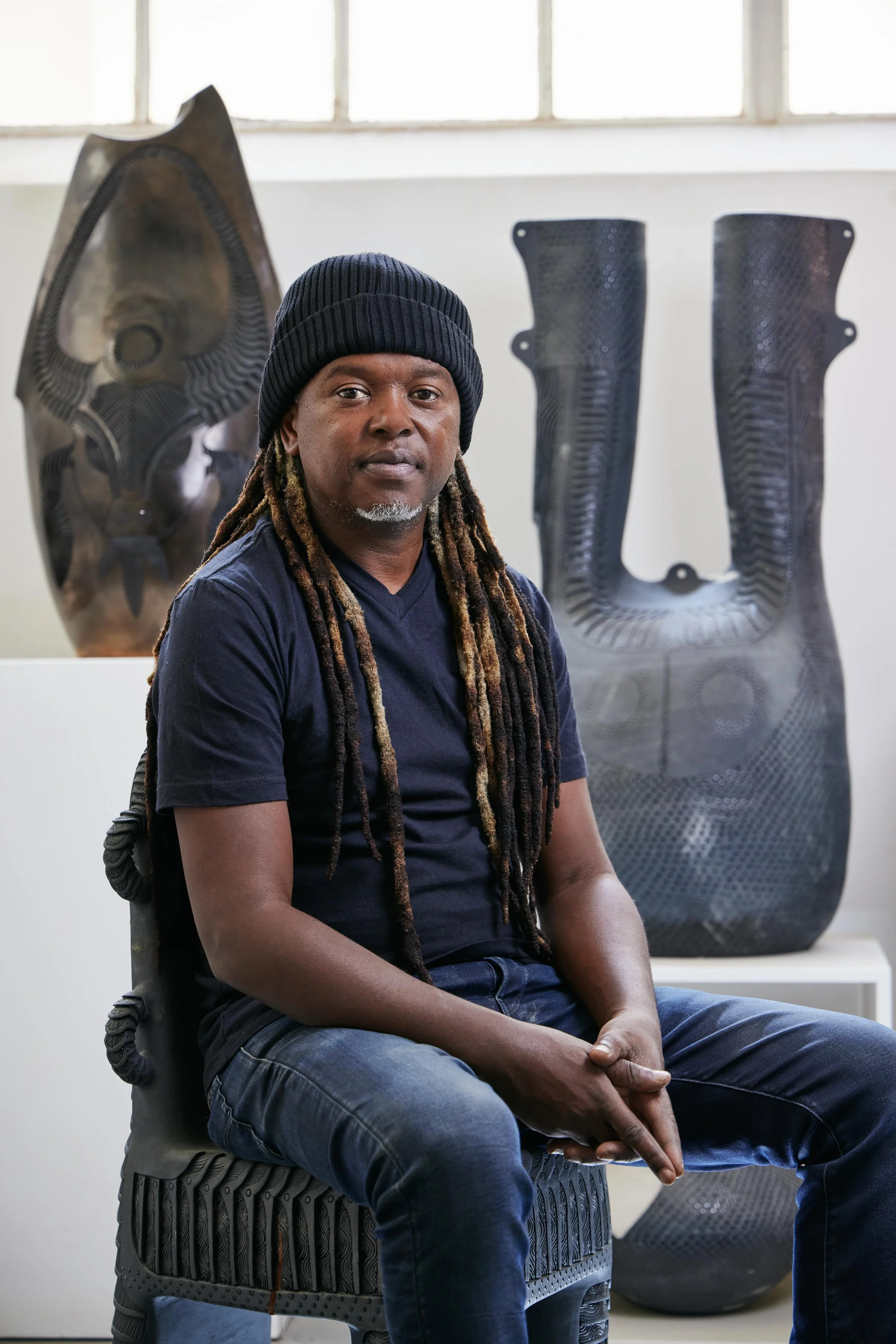
Inspired by his Xhosa heritage, Madoda Fani makes hand-coiled, burnished and smoke-fired pieces that are a contemporary evolution of the traditional ceramics indigenous to Southern Africa. Born in 1975, Fani grew up in Gugulethu township, Cape Town and studied graphic design at Sivuyile College.
Fani credits South Africa’s lineage of traditional clay masters as seminal influences. He was schooled in smoke-firing techniques by Molelekoa Simon Masilo and Nic Sithole, while Jabu Nala – a member of the renowned Nala family of Zulu beer-pot makers – taught him to burnish clay with a stone.
Although he uses traditional techniques, Fani's curvaceous, coiled sculptures and hand-carved embellishments are entirely distinct. He works on a large scale, building organic-shaped forms whose smooth surfaces are punctuated by intricate, repetitive patterns lending them a scaled appearance. He has exhibited widely with Southern Guild, including a collaborative exhibition with Chuma Maweni, Idangatye, in 2017, and a solo presentation in 2021, iQweqwe (meaning “crust”), which saw his patterned incisions become an all-encompassing ‘skin’ inspired by insect exoskeletons.
Fani’s 2024 solo exhibition, Madoda: Let Us Know Praise Famous Men, marks a formal and conceptual turning point for the artist. Reimagining ubiquitous domestic objects in clay, this body of work deconstructs reductive cliches of Black masculinities, re-fashioning them with masterful skill and attention to craft in ambitious, sculptural shapes. His forthcoming body of work, Inzonzobila (The Deep), which will be exhibited at Southern Guild Cape Town in November 2025, draws from indigenous knowledge systems and his own introspective practice.
Fani was a featured artist at the 2024 Indian Ocean Craft Triennial, with a solo exhibition at Bunbury Regional Art Gallery in Western Australia. Titled Imbokodo, this body of work draws its inspiration from the Nguni word meaning “rock” or “stone”, commonly used metaphorically to depict resilient women.
Over the course of his career, Fani has branched out into clay seating, timber furniture, and bronze sculpture. He has participated in residency programmes in Argentina (2009), France (2013), Austria (2023), Mexico (2023), and Australia (2024) and taught a summer workshop at Haystack Mountain School of Crafts in Maine, US (2023). His work has been featured in Clay Formes, edited by Olivia Barrell (Art Formes, 2023), and Handbuilt Ceramics by Jo Taylor (The Crowood Press, 2021).
Fani was a finalist for the LOEWE Foundation Craft Prize in 2022 and received first prize at the 2016 Ceramics Southern Africa Exhibition, among others. He has works n the Philadelphia Museum of Art and the Mint Museum in Charlotte, North Carolina, and in the collections of the LOEWE Foundation, Princeton University Art Museum, Jorge M. Pérez, and HRH Franz, Duke of Bavaria.
I had the pleasure of asking Madoda what he hopes the audience will take away from your show, what keeps him inspired, and so much more.
U: How can art decolonise the narrative of Africans, as well as the representation of Africans in the art world?
MF: Whenever I create, I turn inward; I’m never trying to follow anyone’s rules or ensure my work fits into any external understanding of what art should be. The making of my latest solo exhibition, Dumalitshona, was a returning to my own centre, to the knowledge I grew up with, to the materials and the spirituality that shaped my identity. That is where decolonisation begins – it begins in the heart and the mind, it takes root when we allow ourselves to be fully African without apology. Making authentic, representative work can only happen when we trust our traditions, our spiritual systems, our materials, and our ancestral memory. My work is a reminder that African stories do not need translation or permission. They are strong enough, clear enough, and sacred enough to stand on their own.
U: How do you stay inspired?
MF: I remain inspired by staying connected to the earth, to my ancestors, to silence, to intuition, and to the traditions that inform how I perceive the world. Everything I need is already there; I just have to still myself and listen.
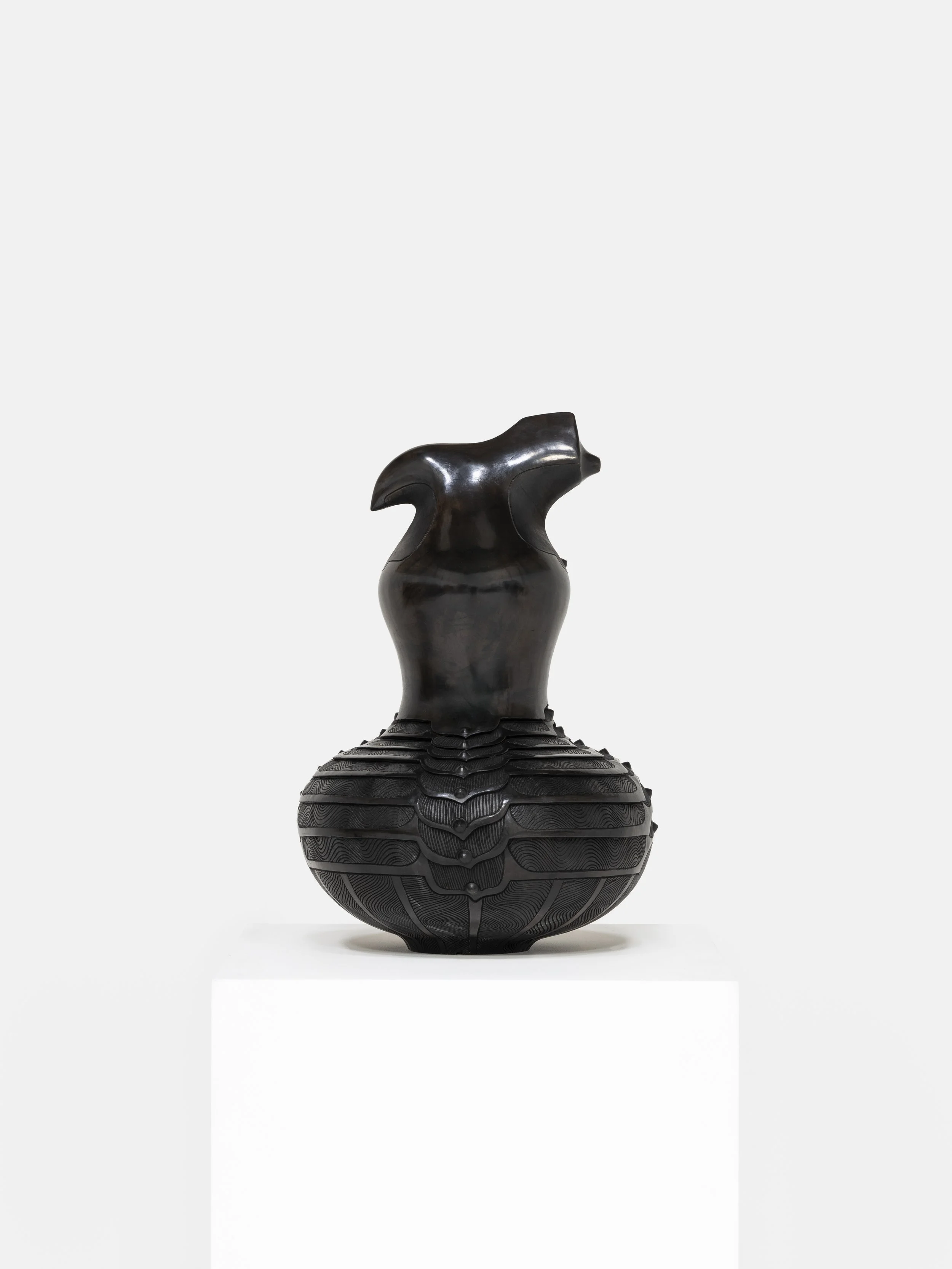
Madoda Fani Lathitha (TheSunrise)2025 Photo Credit Lea Crafford & Souther Guild
U: In Dumalitshona, you pay tribute to the Xhosa lineage, where you explore a new anthropomorphic language that creates a symbiotic combination between earth and spirit. What was the most important message that you wanted to convey with this direction in your artwork, and why is it significant?
MF: My practice is deeply connected to my Xhosa lineage, and through it, I’ve been able to continually refine my practice. I wanted this body of work to feel alive, spiritual, and deeply rooted in the earth. The most important message that I want to convey is that humanity, spirit, and the earth are inseparable.
Through my sculptures, I want to show that we are not separate from nature or from those that came before us. Our bodies, our history, our essence, and the land we walk on are always in dialogue – we are living, breathing, thinking, feeling extensions of the earth itself.
This direction is significant because it reclaims African cosmology and philosophy at a time
when so many reductive narratives seek to disconnect us from our land, our ancestors, and our knowledge systems. By grounding my work in my Xhosa lineage, I want to affirm the value of my African identity and its inherited wisdom. I hope viewers understand that African traditions are alive, evolving, and capable of expressing complex ideas. These works are not just material forms, but rather they are carriers of memory, energy, and identity. They remind us that our connection to where we come from is not abstract – it is active and essential.
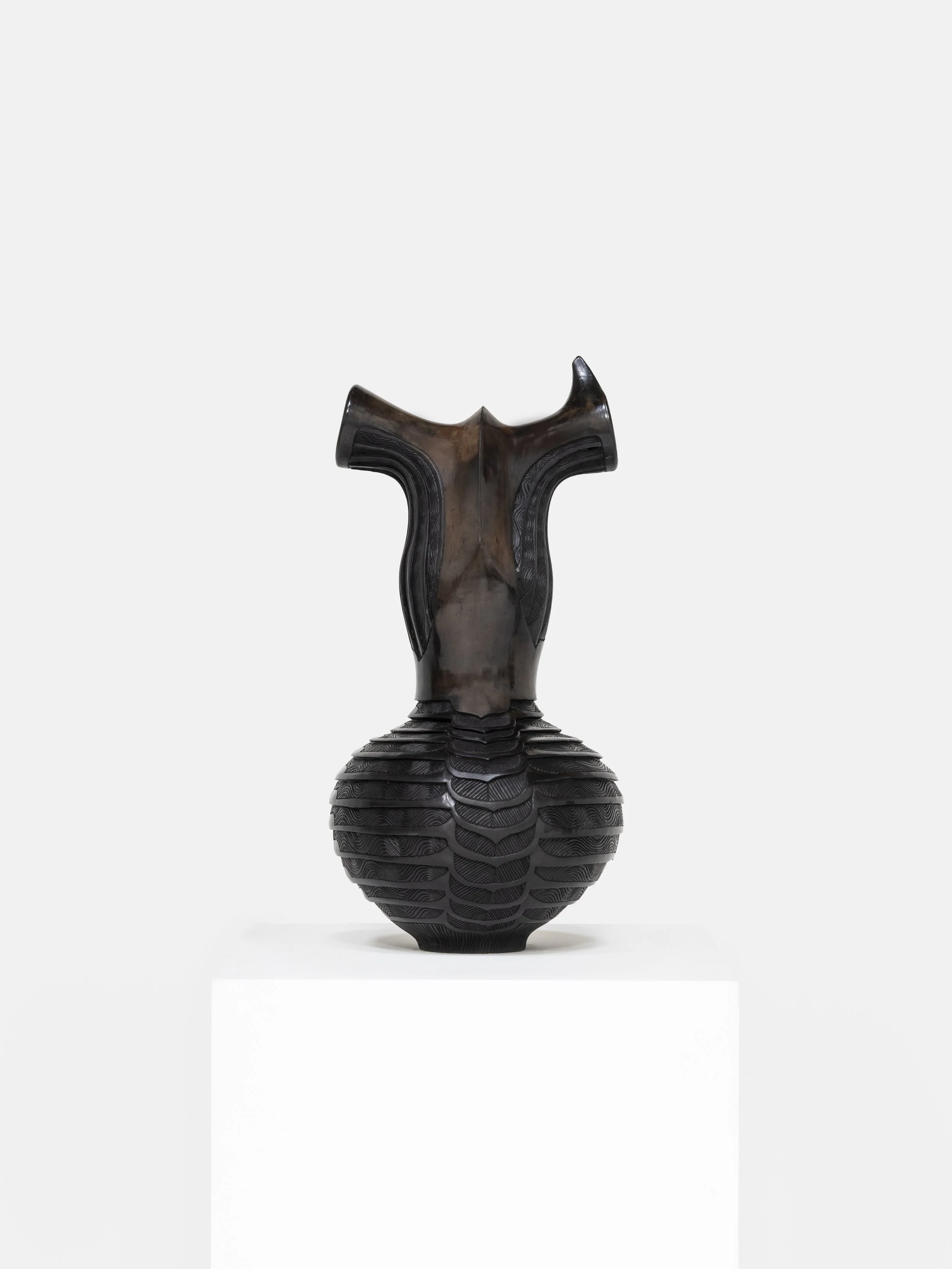
Madoda Fani Nontembiso (MotherofHope) 2025 Photo Credit Lea Crafford & Souther Guild
U: How have other artists, poets, or writers influenced your artwork? Can you name the biggest influence and share the personal connection you have with their work?
MF: Simon Masilo has shaped my work by teaching me the power of voice, presence, and
authentic storytelling. His art reminds me that true influence comes from engaging deeply with your own culture and heritage, while remaining open to inspiration from those who have walked similar paths. Through his example, I continue to create sculptures that are grounded in African philosophy, carrying forward the dialogue between past, present, and future.
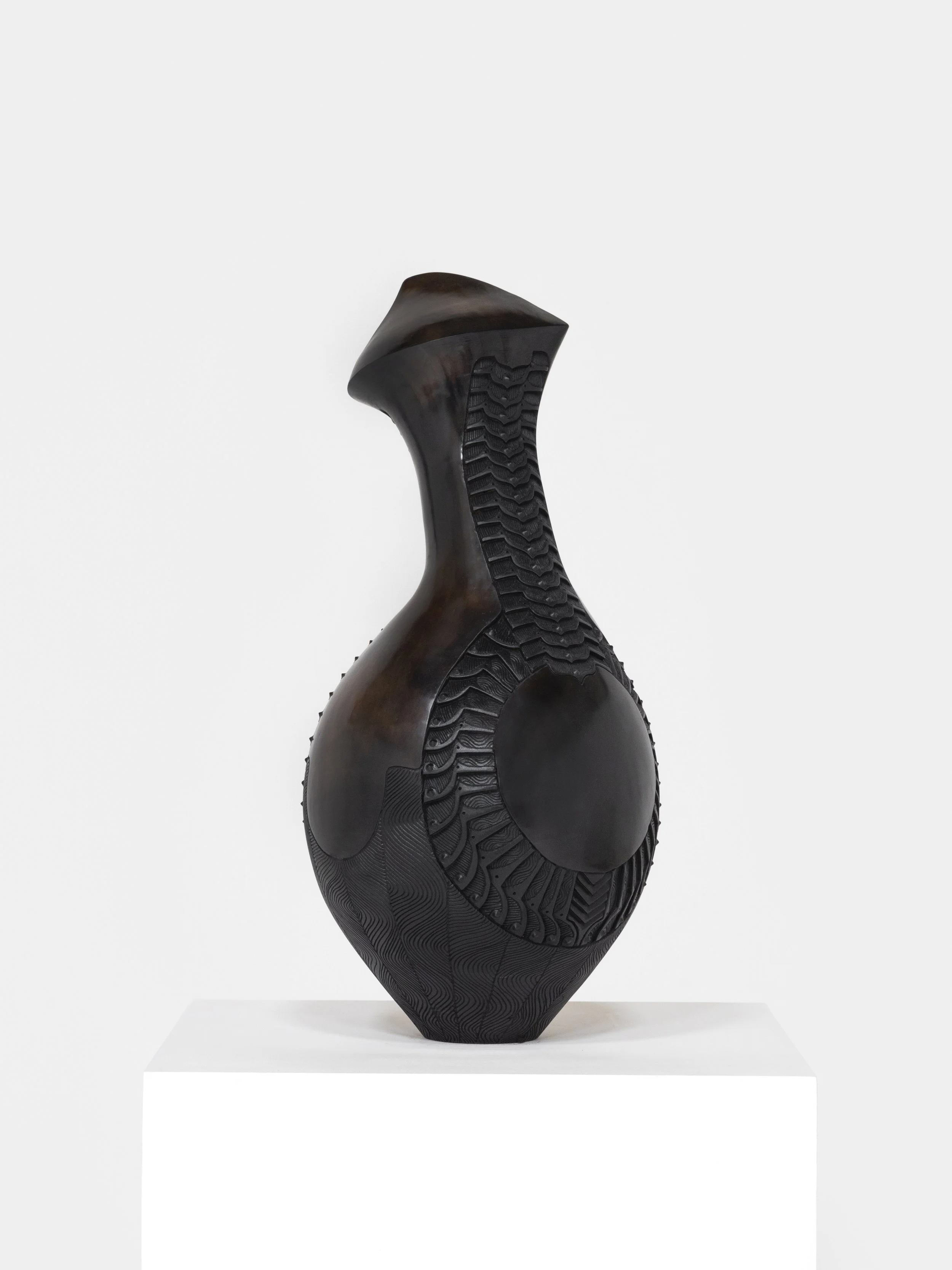
Madoda Fani uNomkhubulwane (Goddess of Fertility)2025 Photo Credit Lea Crafford & Souther Guild
U: Can you describe the significant role of an artist in society as you see it and what their responsibility is? How do you see your role and what you have to contribute to societal discourse?
MF: I believe that an artist’s role is to reflect, to question, and to guide. An artist is a keeper, a storyteller, and a provocateur. My responsibility is to speak truthfully through my work, to
honour my ancestors, and to contribute to society by reclaiming African identity and wisdom in ways that are both thoughtful and transformative.
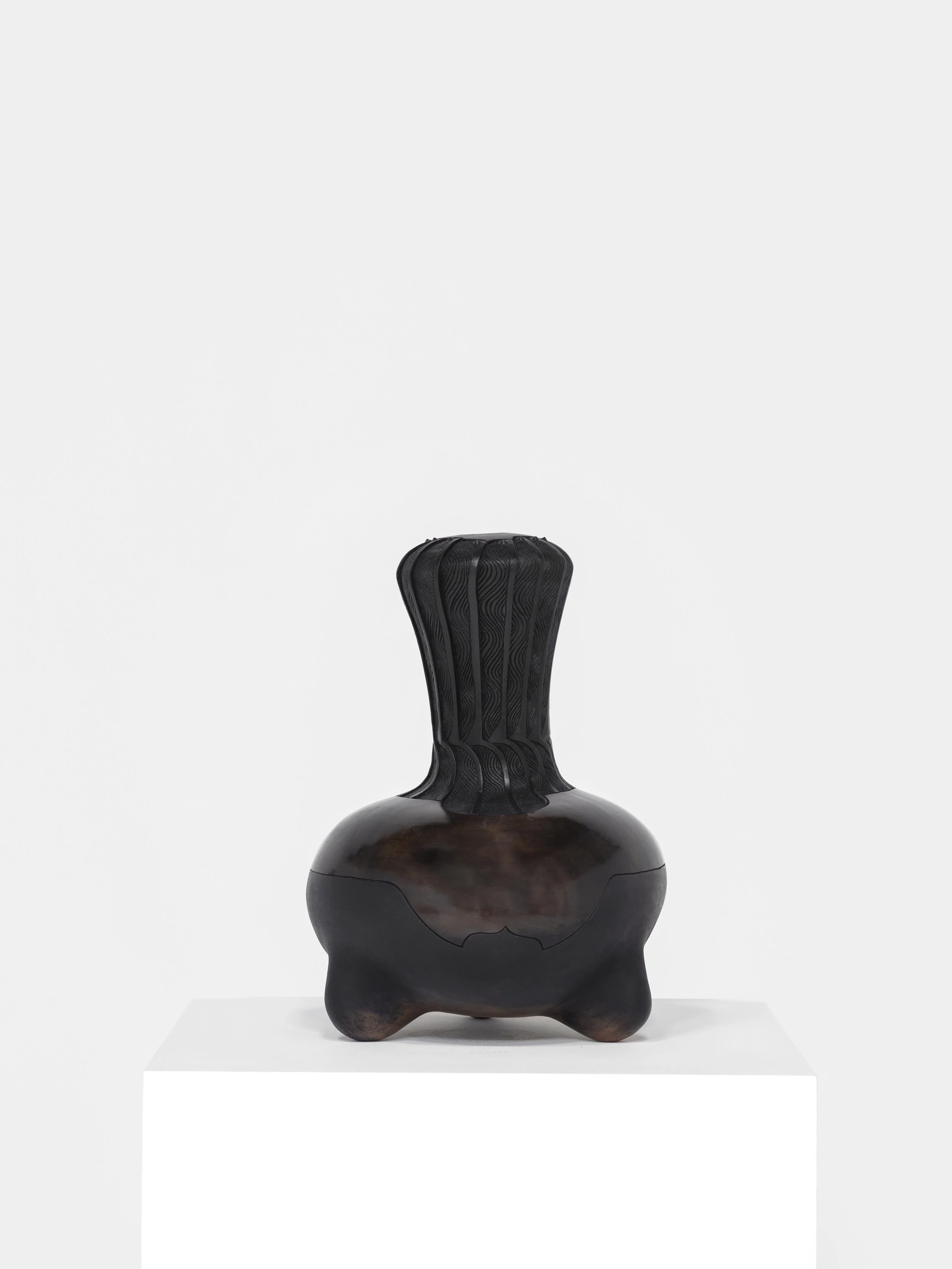
Madoda Fani_Zinzile(Firmly Rooted) 2025 Photo Credit Lea Crafford & Souther Guild
U: What do you hope the audience will take away from your show?
MF: I want people to leave Dumalitshona with a deep sense of connection – to ancestry and to the earth. I want them to understand that African art is dynamic, diverse, evolving, and conceptually abundant. Most importantly, I hope they feel that we are all part of a larger web of life, memory, and creative energy, and that African art speaks powerfully in a language all its own.
For more information about Madoda art, please follow him on Instagram here. The magazine featured his recent exhibition, Dumalitshona, with Southern Guild, which can be found here.