In Conversation with Marguerite Wibaux
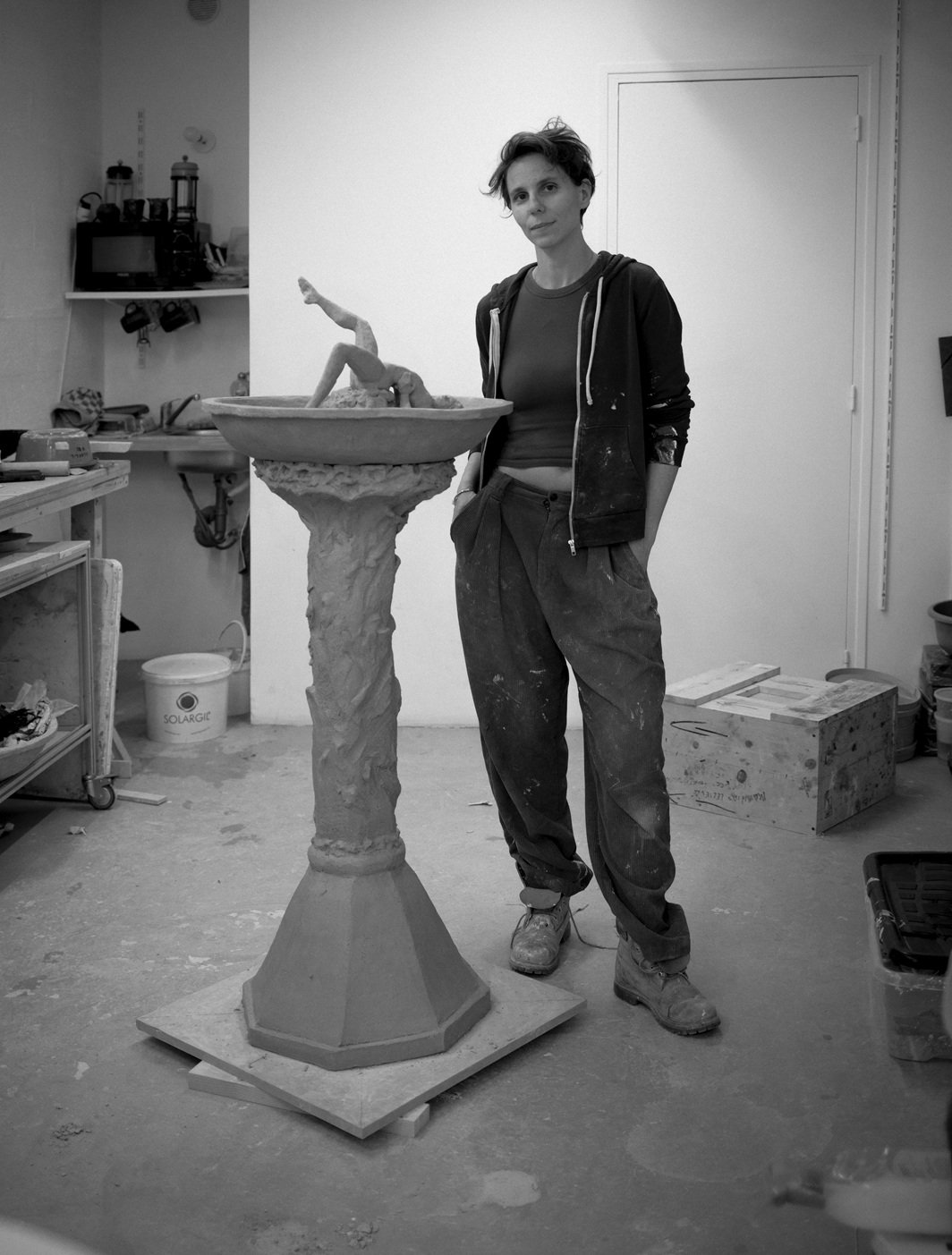
Marguerite Wibaux with Femme Fontaine in her studio, courtesy of artist
Raised in Rome where her father worked for the Vatican overseeing diplomatic relations with France, Paris-based artist Marguerite Wibaux grew up steeped in incense, iconography, and baroque ritual. Wibaux once believed she had a religious calling—until she realized what truly captivated her was not faith, but the body and its image. She first studied at HEC Paris and spent a decade at France's top ad agency crafting narratives for fashion & luxury brands like Cartier, Givenchy, Armani, Carolina Herrera before answering a deeper pull toward artistic practice. Working in painting, sculpture, and multimedia installation, she explores devotion & desire in her work—often through a feminist lens, unfiltered & unapologetic (and her fashion experience helped sharpen her eye). She had her first solo show in 2019 at the French Cultural Institute in Boston, followed by a residency at the French Embassy in Jamaica. She's also shown at Untitled Miami & Marseille Art Week.
I had the pleasure of asking Marguerite how she sees her role as an artist, her residency at the French Embassy in Jamaica and why they are important, and so much more.
UZOMAH: Utilizing mediums such as painting, sculpture, and installation, the body replaces faith as the site of devotion. Can you describe your process in creating art that uses the body as a vehicle for exploring dual meanings within religion?
MARGUERITE: The starting point of the exhibition is its title, Covet Thy Neighbor. I was interested in the contradiction embedded in the commandment itself — desire is forbidden yet constantly named and imagined.
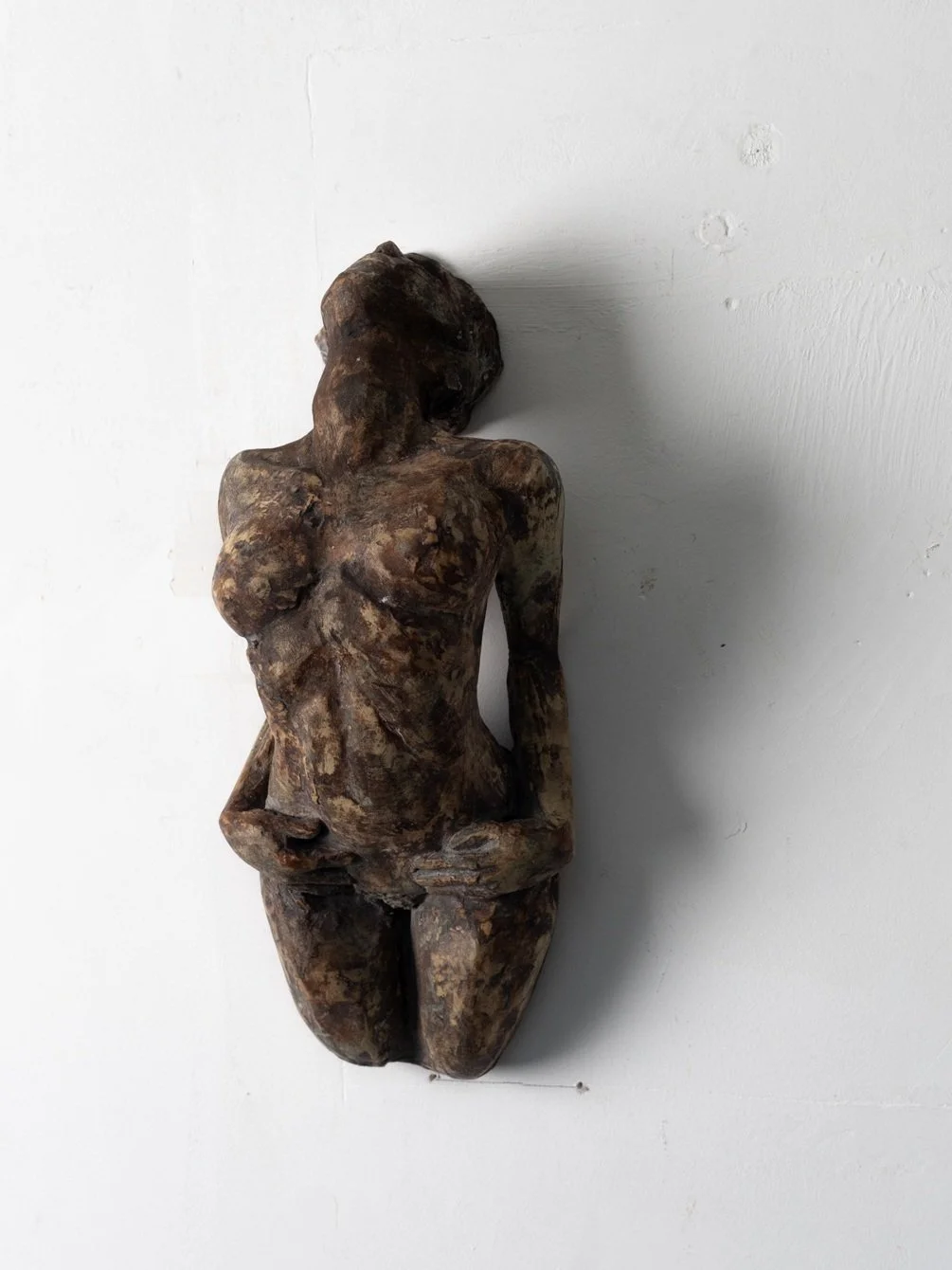
Catholic art has always placed the body at the center of spiritual experience. Christ is God made flesh, everywhere exposed, wounded, half-naked. The body is not secondary to belief: it is its primary vehicle.
The singularity of my work comes from placing the female body at the center of devotion. Doing so, I reveal the contradictions within the familiar language of faith. This displacement is not a critique, but a way of working from inside a deeply physical visual tradition.
courtesy of the artist
U: Your art often contains a sense of ambiguity and an energetic, erotic tension. In your view, how can art help an individual recognize or acknowledge their innermost desires, especially those shaped or restricted by society's views on sexuality?
M: Images can hold ambiguity without explanation. Something can be funny and unsettling, tender and disturbing at the same time.
In my work, erotic tension is not something I seek to provoke; it emerges naturally. I approach the body from a place of ease, allowing desire to appear as complex rather than transgressive. What often surprises me is how quickly discomfort arises for viewers, revealing how strongly desire remains shaped by social expectations.
U: Which medium do you prefer and why?
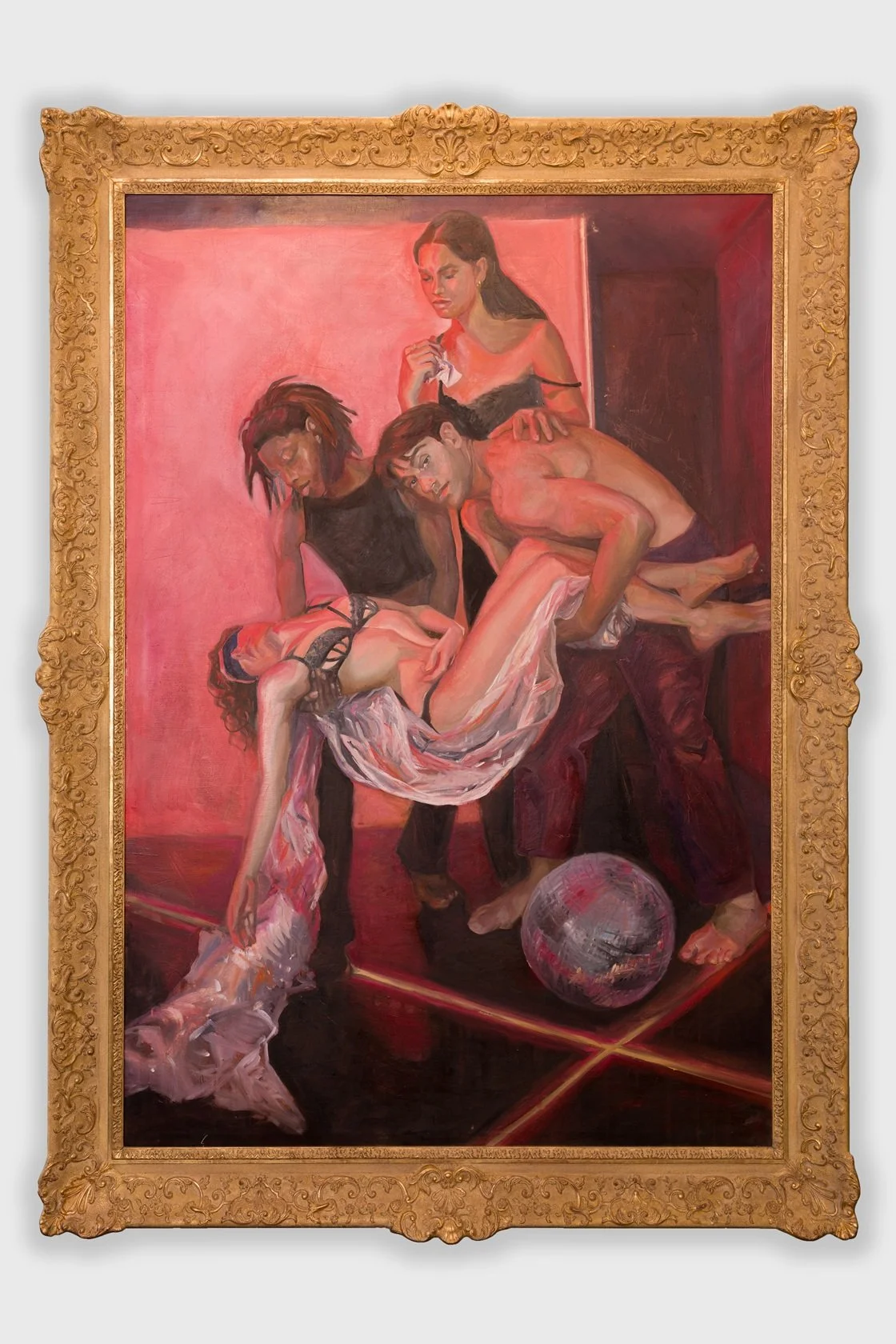
M: Each medium places me in a different state and plays a distinct role in the work. Large paintings allow for immersion and complex opposing forces, drawing in part from Caravaggio.
The miniature paintings function differently. They are more immediate, and carry a devotional dimension, closer to icons. Their scale invites intimacy, they act as whispered thoughts.
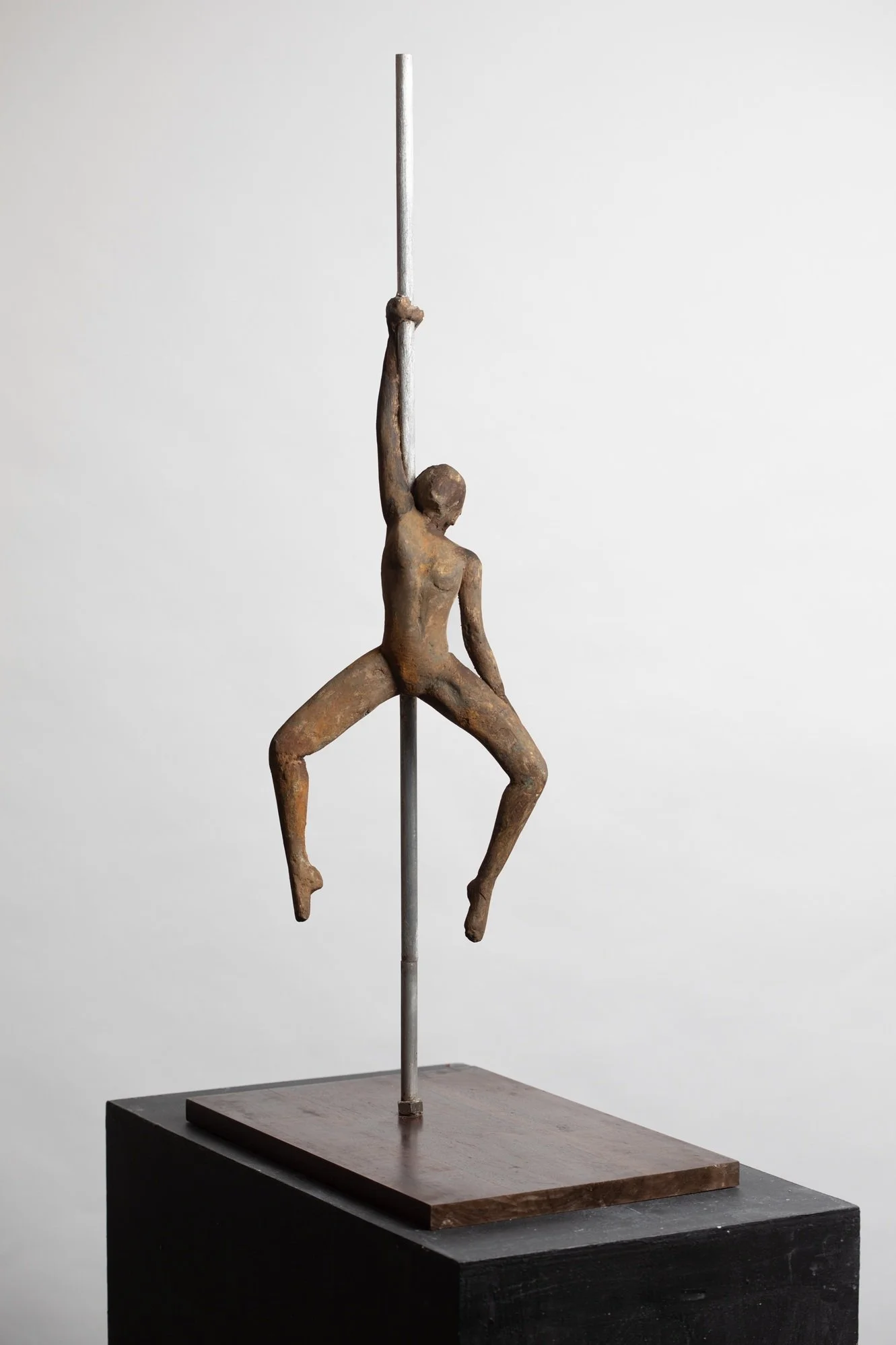
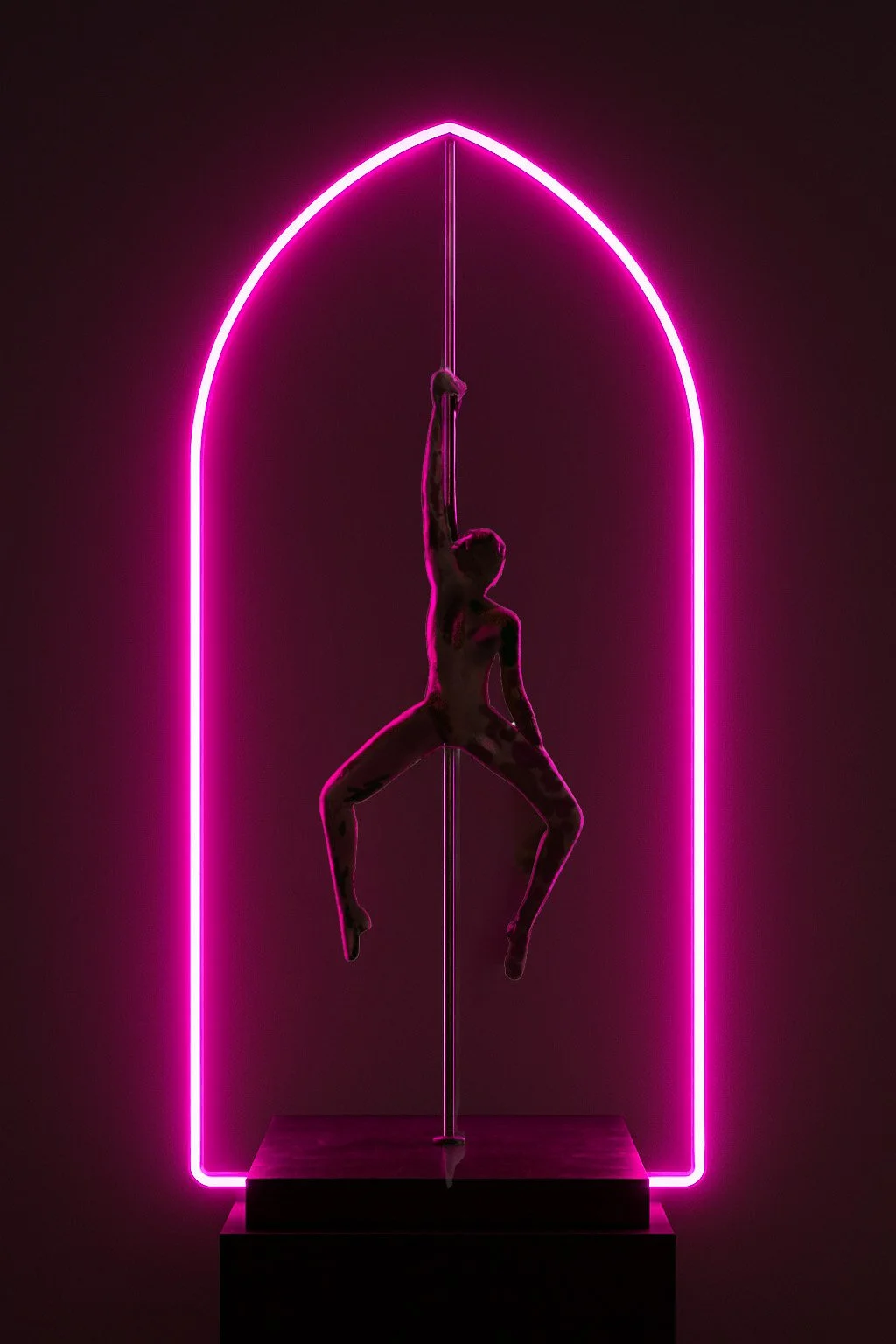
Sculpture extends my practice into space in a more physical and unpredictable way. I work with twisted, contorted figures, whose surfaces are layered with oxidized, soiled patinas. It’s a place where I allow myself to explore darker mental states, but also where I have to relinquish control.
Moving between these practices keeps me balanced. Each one pushes intensity in a different direction, and this alternation recharges me and keeps me returning to the studio.
courtesy of the artist
U: Can you explore the inspiration behind your latest exhibition and how it extends your artistic statement?
M: The exhibition is conceived as a church stripped of doctrine. Its scenography follows a symbolic path, borrowing familiar architectural markers while emptying them of moral instruction, replacing it with bawdy humor and a quiet thrill of transgression.
Here, kitsch is embraced not as irony, but as a mechanism through which devotion converts vulgarity into a possible form of the sublime.
This exhibition expanded my practice by unfolding a concept across multiple mediums in space. It opened a desire to work with places already charged with history, and to develop a sharper attention to space and context.
U: In your opinion, how does art communicate messages in ways that might differ from or surpass other forms of communication?
M: I’m not sure art communicates messages in a direct sense. It allows contradictory meanings to coexist without resolution, giving each viewer a point of entry shaped by their own experience — in a way, faith operates similarly.
courtesy of the artist
U: What made you start making art in the first place? What keeps you creating art?
M: I’ve been making images for as long as I can remember. What came later was allowing myself to take it seriously and recognize that this activity could become a practice.
What keeps me creating is the constant flow of images and desires that insist on being made. The studio is where that energy takes form.
U: You were raised in Rome, where your father worked for the Vatican. How did that shape your views on life and sexuality, including this new exhibition?
M: Growing up in Rome meant being immersed in a Baroque visual language present in architecture, art, and music. Sensual figures, fighting turmoil or surrendering to ecstasy, were all around me. I spent long hours surrounded by incense during mass at Saint Peter’s, absorbing that atmosphere as part of everyday life.
During those formative years, artistic, sexual, and spiritual awareness emerged together. This exhibition returns to that origin.
courtesy of the artist
U: After your residency at the French Embassy in Jamaica, how do you view the value of residencies for artistic focus and growth?
M: The residency in Jamaica was important primarily on a human level. It offered time and focus but also encounters with people from very different backgrounds.
My practice is grounded in presence, working with live models and listening to their stories. That experience reinforced my belief that art operates through encounter and shared vulnerability.
U: What is the artist's responsibility to society?
M: I see the artist’s responsibility toward images themselves, and toward the myths and representations they carry within the collective psyche. By revisiting or inventing images, art questions their meaning in the present and helps us stay alive.
U: How do you see your role as an artist?
M: I love the freedom, as an artist, to play with our artistic and cultural heritage, with all its beauty and excess, and to let it evolve. Creating new representations, particularly for female bodies, feels like a way of extending that legacy.
Her solo NYC exhibition debut, Covet Thy Neighbor, opened in Tribeca on Jan 15 at The Locker Room (253 Church St) thru Feb 28. There was an Opening Reception on Jan 15, 6pm-8pm. With a collection of over 25 new paintings & sculptures (including her take on a Holy Water fountain and a confessional), Wibaux examines the charged threshold where desire becomes devotion and the sacred & sensual share the same temperature: baroque sensuality infused with dangerous femininity and the charged atmosphere of contemporary nights. For Covet Thy Neighbor, The Locker Room has been transformed into a church stripped of doctrine. Nightclub reds, bedroom violets, and hints of half-remembered altars frame bodies entering new, ambiguous relationships: neighbors, lovers, disciples, strangers.
For more information about Marguerite’s work, please visit her site. She can also be found on Instagram here. Also, the magazine featured her exhibition, which can be found here.