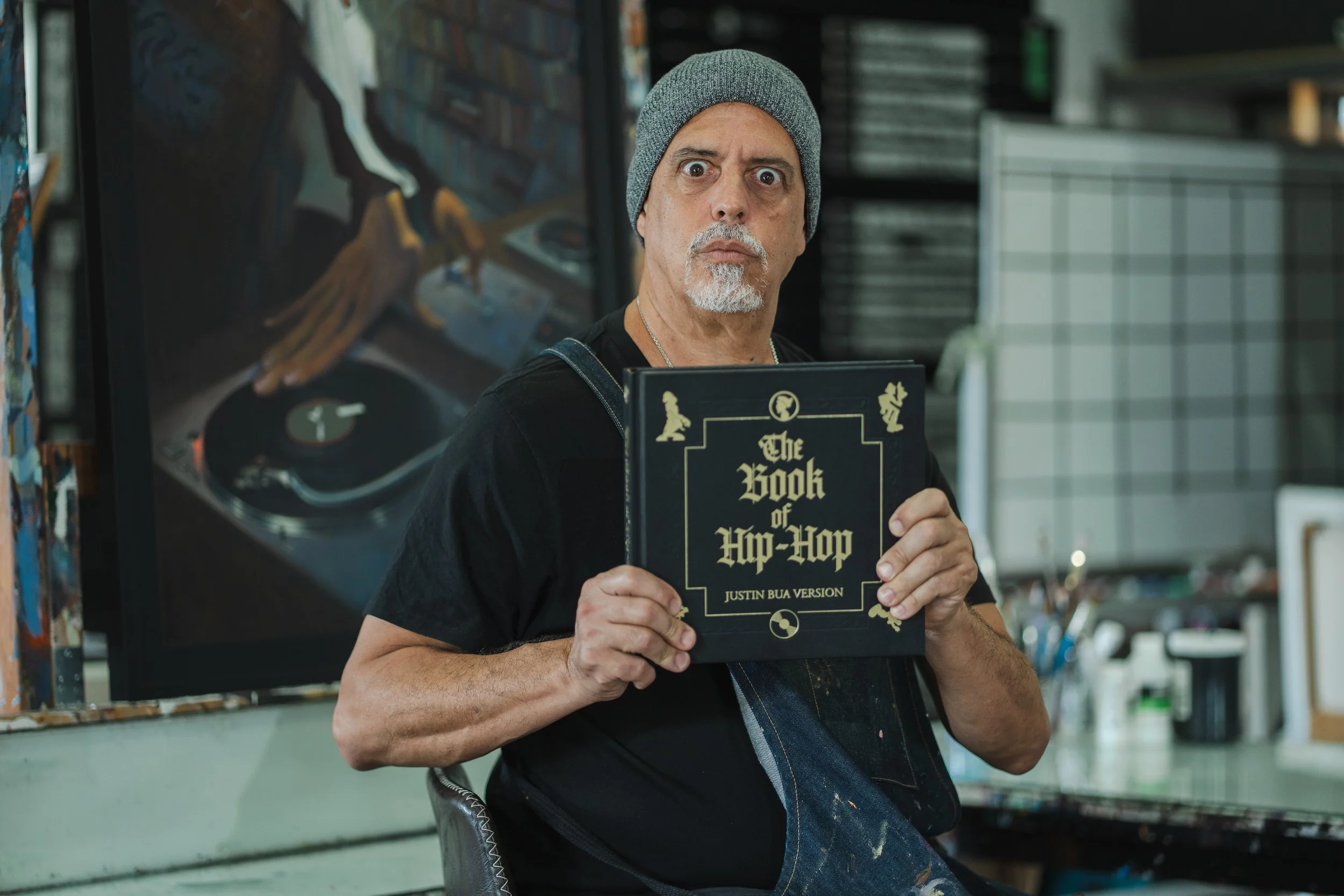
Courtesy of Artist
Justin BUA is an American painter, author, filmmaker, and educator whose work places Hip-Hop culture within the tradition of figurative art. For more than three decades, he has developed a visual language that joins classical draftsmanship to the rhythmic invention of graffiti, breaking, jazz, and urban life. His paintings approach cultural memory through the human figure: the hands of a DJ, the balance of a dancer, the psychological presence of an MC, and the character of people often absent from official histories.
Born on Manhattan’s Upper West Side and raised between Manhattan and East Flatbush, Brooklyn, BUA came of age within the culture he would later chronicle. A graffiti writer and professional B-boy, he brought the physical intelligence of dance and the expressive force of the street into his formal education. He attended Fiorello H. LaGuardia High School of Music & Art and Performing Arts and earned a B.F.A. from ArtCenter College of Design in Pasadena.
His signature approach, Distorted Urban Realism, uses elongated anatomy, dramatic perspective, and rhythmic composition to give his subjects emotional and monumental presence. His iconic painting The DJ has sold more than 16 million prints worldwide, establishing a remarkable connection between his studio practice and a global audience. His existing master biography also records the sale of The Arrival for more than $1.2 million at Scottsdale Art Week in March 2026.
BUA’s work has been presented at institutions including the Los Angeles County Museum of Art and Tucson Museum of Art. His visual storytelling extends across EA Sports’ NBA Street and NFL Street, MTV’s The Lyricist Lounge Show, and Slum Village’s “Tainted” music video. He hosted, co-judged, and executive produced Oxygen’s Street Art Throwdown; hosted Ovation’s American Revolutionaries; and directed Walk This Way: The DMC Story. In 2012, he received an NAACP Image Award and a Telly Award for his art direction on Kareem Abdul-Jabbar’s documentary On the Shoulders of Giants.
A figure-drawing instructor at the University of Southern California for a decade, BUA has made education central to his practice. In 2014, he was appointed to the Citizens’ Stamp Advisory Committee, contributing to the selection of subjects commemorated on United States postage stamps.
His books include The Beat of Urban Art, The Legends of Hip Hop, and The Book of Hip-Hop. Now based in Texas, he continues a practice grounded in observation, craft, and lived experience. Across painting, publishing, and moving images, his work asks who is granted permanence in American culture—and makes a lasting place for the people who shaped his own.
I had the pleasure of asking Justin what some of his favorite HIP HOP MCs are, about his new book about HIP HOP, and so much more.
UZOMAH: How has creating art about and surrounding Hip-Hop shown you its impact on you, the world, and society?
JUSTIN: Hip-Hop gave me a language before I had the vocabulary to explain my life. Growing up in New York, I saw people turn limited resources into extraordinary invention. A record became an instrument. A sidewalk became a stage. A name on a train became a declaration: I exist.
That shaped how I see the world. When I paint a DJ, a B-boy, or somebody from the neighborhood, I’m painting the intelligence and humanity behind the gesture. People who were overlooked were creating something the entire world would eventually speak. I was there sketching it.
Watching that language travel has been profound. But the global reach means very little if we forget the people who built it. My work is about keeping those people visible. I want the paintings to hold the memory, dignity, humor, and contradictions of the culture. This is the way of every great artist: Rembrandt, Velázquez, Goya, and all the court painters in art history.
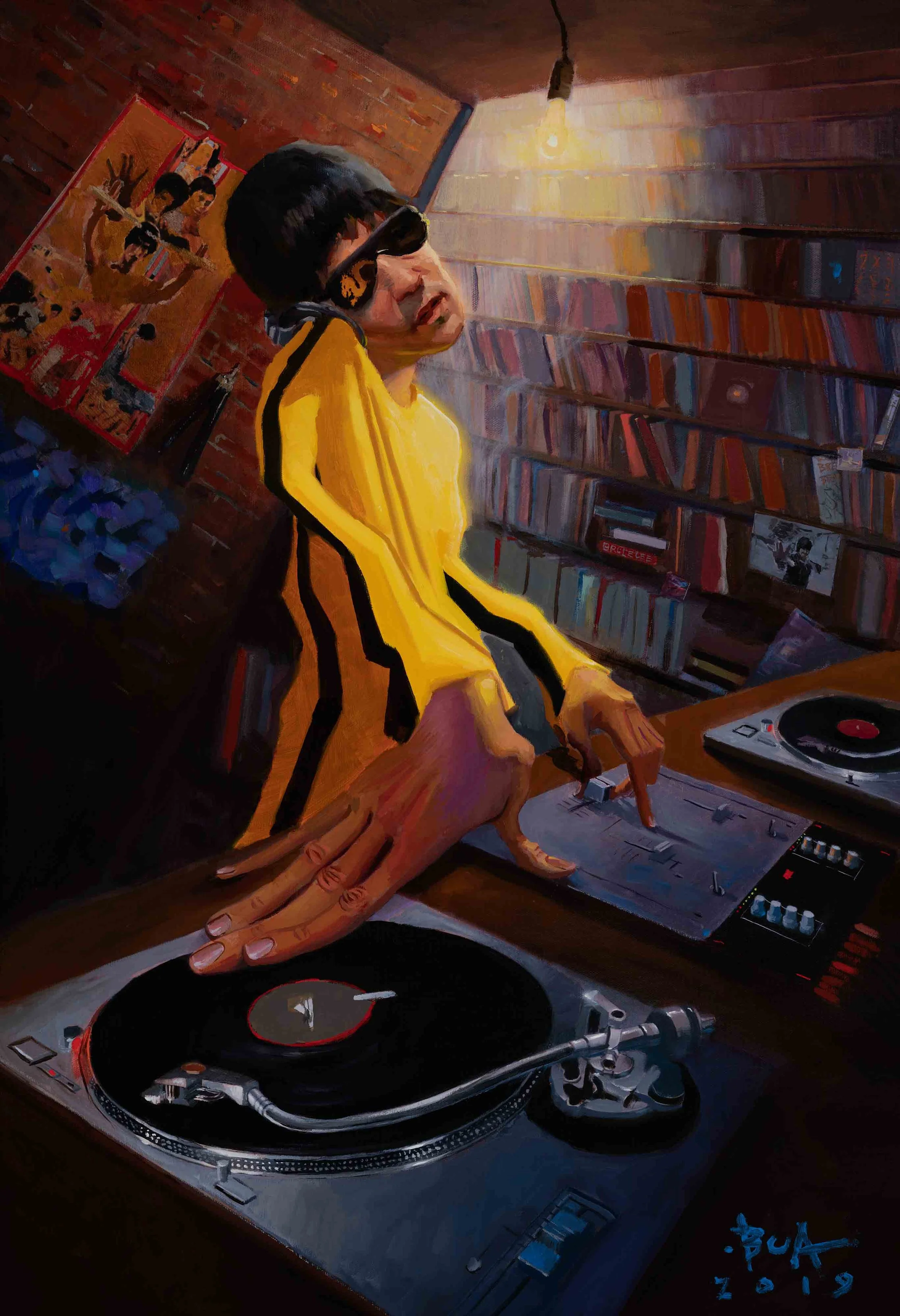
The DJ (Bruce Lee)(Variant), Courtesy of Artist
U: What has been your favorite part of capturing music so far? What element of Hip-Hop do you like capturing most?
J: My favorite part is finding the moment when sound becomes physical. You can see it in a shoulder, a tilted head, the tension in a hand. A musician can be completely still and you can feel an entire rhythm moving through the body. Translating that into a painting is endlessly interesting to me.
The DJ has a special place in my work because so much is happening at once: listening, selecting, remembering, anticipating, moving a room. Those hands are making decisions in real time. As a painter, that gives me anatomy, psychology, rhythm, and storytelling in one image.
I also came out of breaking and graffiti, so I see those elements as connected. The line has to move. The figure has to have rhythm. The composition has to have a pulse.
U: How do you stay inspired?
J: I stay a student. The minute you decide you’ve figured it out, the work starts getting smaller.
I go back to drawing, observation, and the people around me. A face can give you an entire painting. So can a memory of a New York block or a gesture you’ve seen a thousand times and suddenly understand differently.
I’m interested in the relationship between craft and life. Studying anatomy sharpens my understanding of the body. Paying attention to people gives that body something to say. I need both. Inspiration opens the door; discipline gets the painting finished.
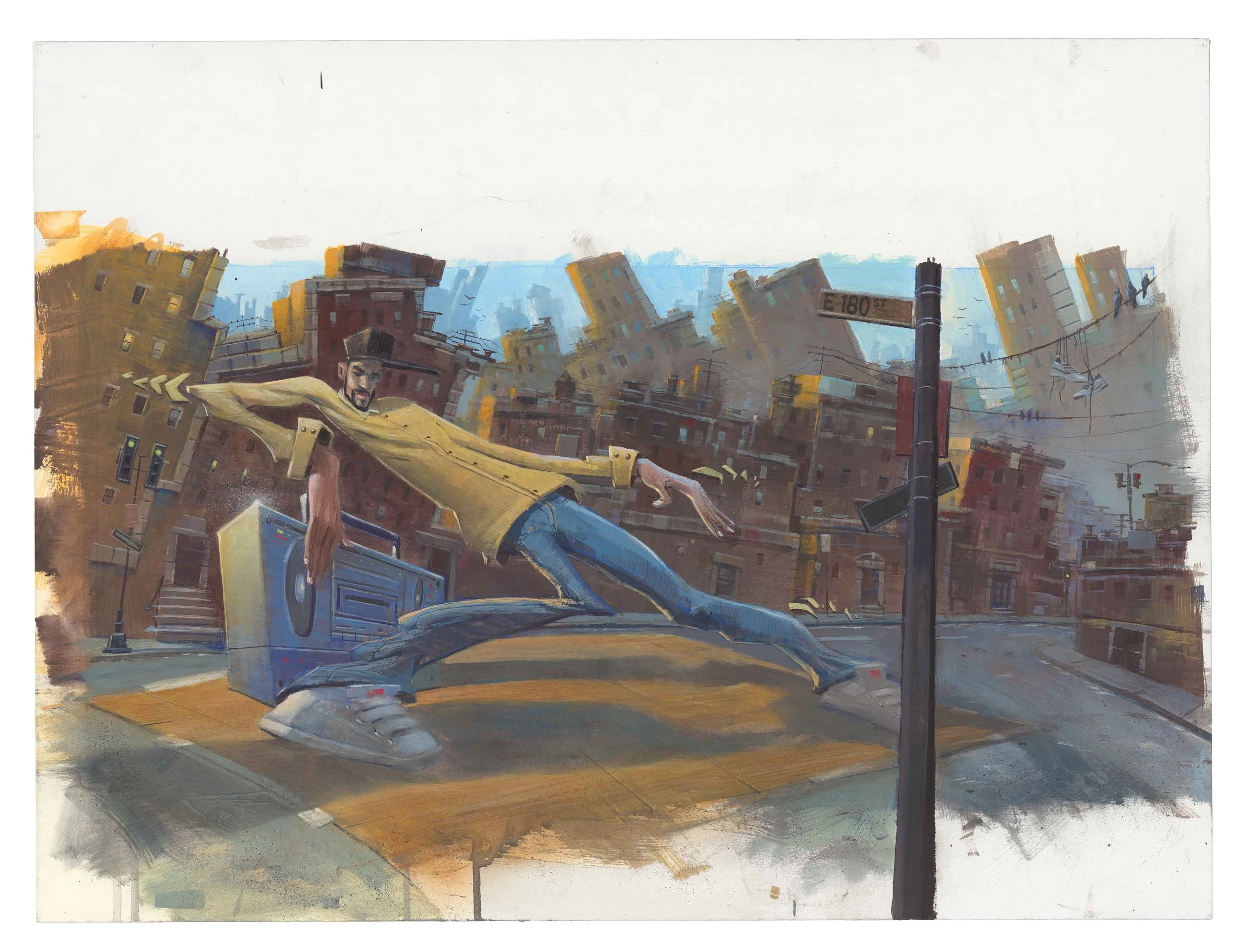
Mr. Wiggles (The Popper), Courtesy of Artist
U: Do you listen to music when you create? Are there any artists you always listen to?
J: Yes. Always. All kinds. Music is part of the atmosphere I’m painting from. Sometimes it gives the work momentum; sometimes I need enough quiet to hear what the painting needs. I’m interested in phrasing, space, and the way a musician builds tension. Those same questions exist in a composition. My regular studio rotation includes old-school 80s R&B, funk soul, classic rock ‘n’ roll not one genre, all genres.
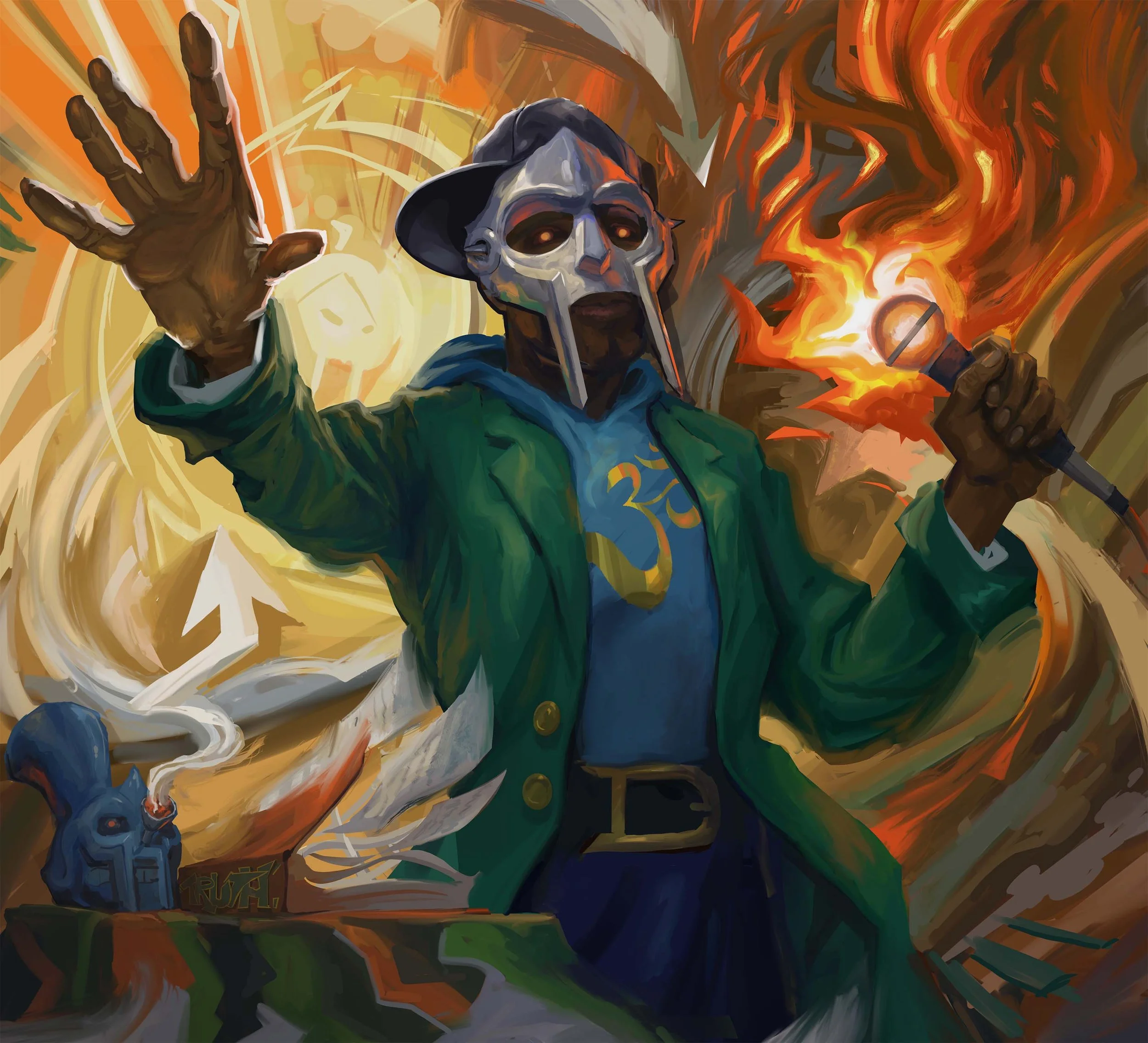
MF DOOM (The Villain) (Warm), Courtesy of Artist
U: When did you know you wanted to make being an artist a career?
J: Drawing was already how I processed the world. The career developed as I found ways to turn that instinct into a living through illustration, skateboard graphics, and eventually my own prints.
The real turning point was seeing people respond react to the world I actually knew. I had been told there wasn’t an audience for paintings of Hip-Hop. Then people began connecting with those images because they recognized something of themselves.
That gave me a tremendous sense of responsibility. I could build a life around drawing, but I could also use it to preserve the culture that had raised me.
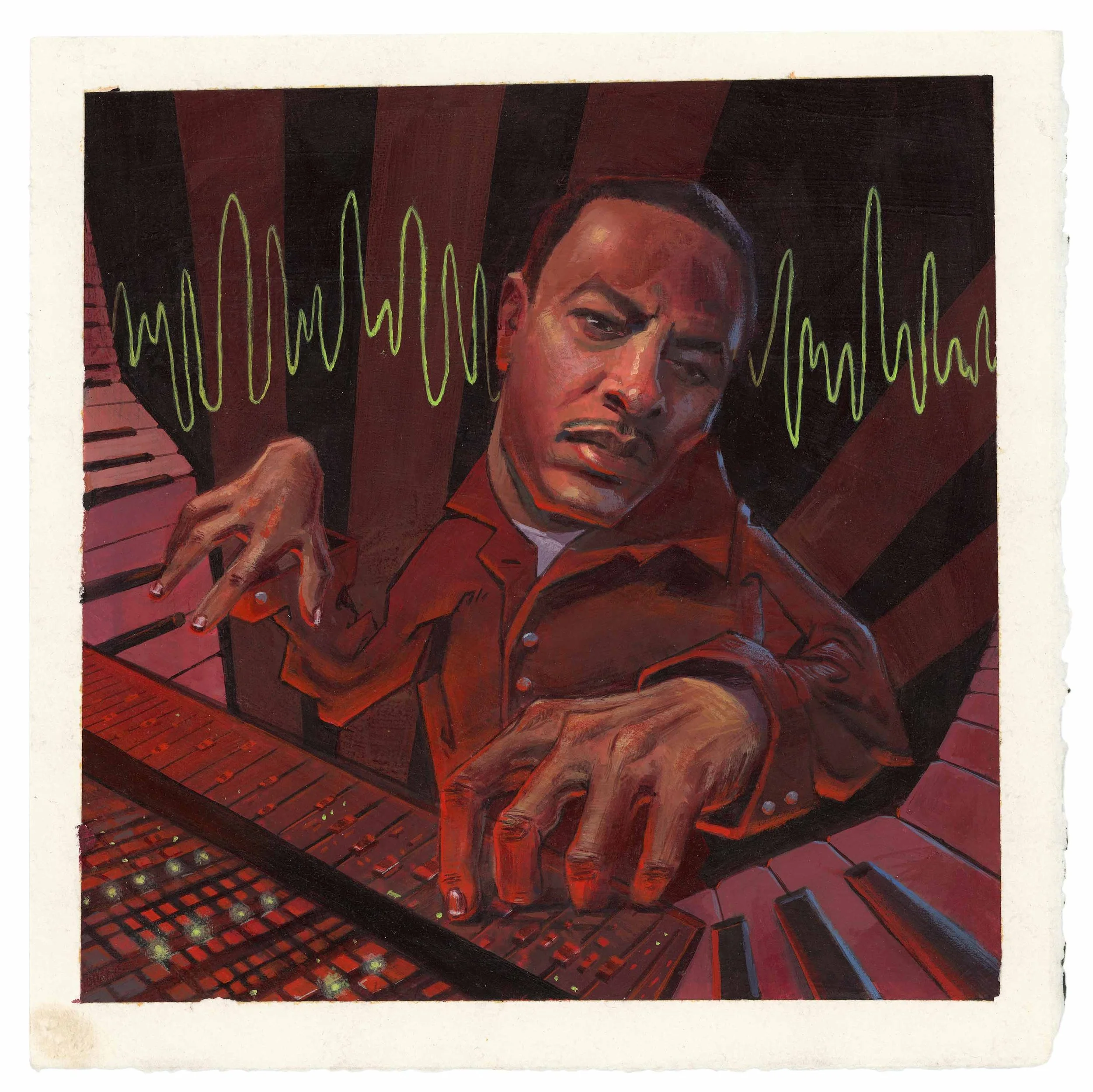
Dr. Dre (Painting), Courtesy of Artist
U: Who are your top five MCs of all time?
J: Rakim, Melle Mel. Jay Z, DMC, Ice Cube.
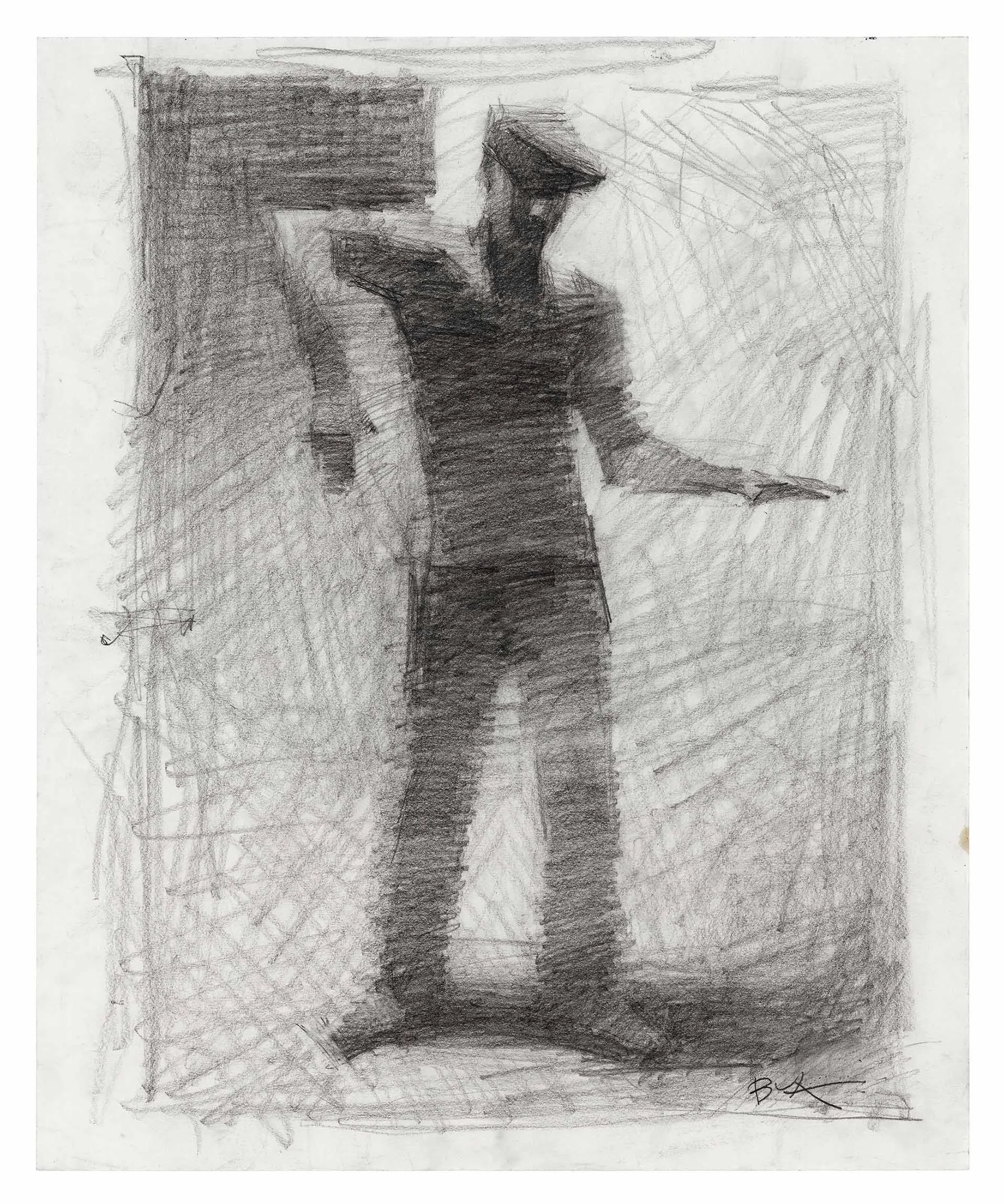
Salah Popping, Courtesy of Artist
U: Can you explain how important the DJ is to Hip-Hop and what it meant for you to have your print of a DJ get so much popularity?
J: The DJ is foundational. Before the MC became the most visible figure, the DJ was building the environment: finding the break, extending the energy, bringing people together. That required an extraordinary ear and an understanding of how a crowd moves.
With The DJ, I wanted you to feel that concentration. The hands, the posture, the relationship between the person and the equipment, everything had to carry the rhythm.
Seeing that image reach millions of people meant that an experience I knew intimately could resonate far beyond my neighborhood. People made room for it in their homes and their lives. That’s a powerful relationship to have with an audience.
I wanted that figure to have the gravity you see in a great historical portrait. The popularity showed how many people were ready to see their own culture given that attention.
U: What lessons or advice have you learned that have made you not just a better artist, but also a better person?
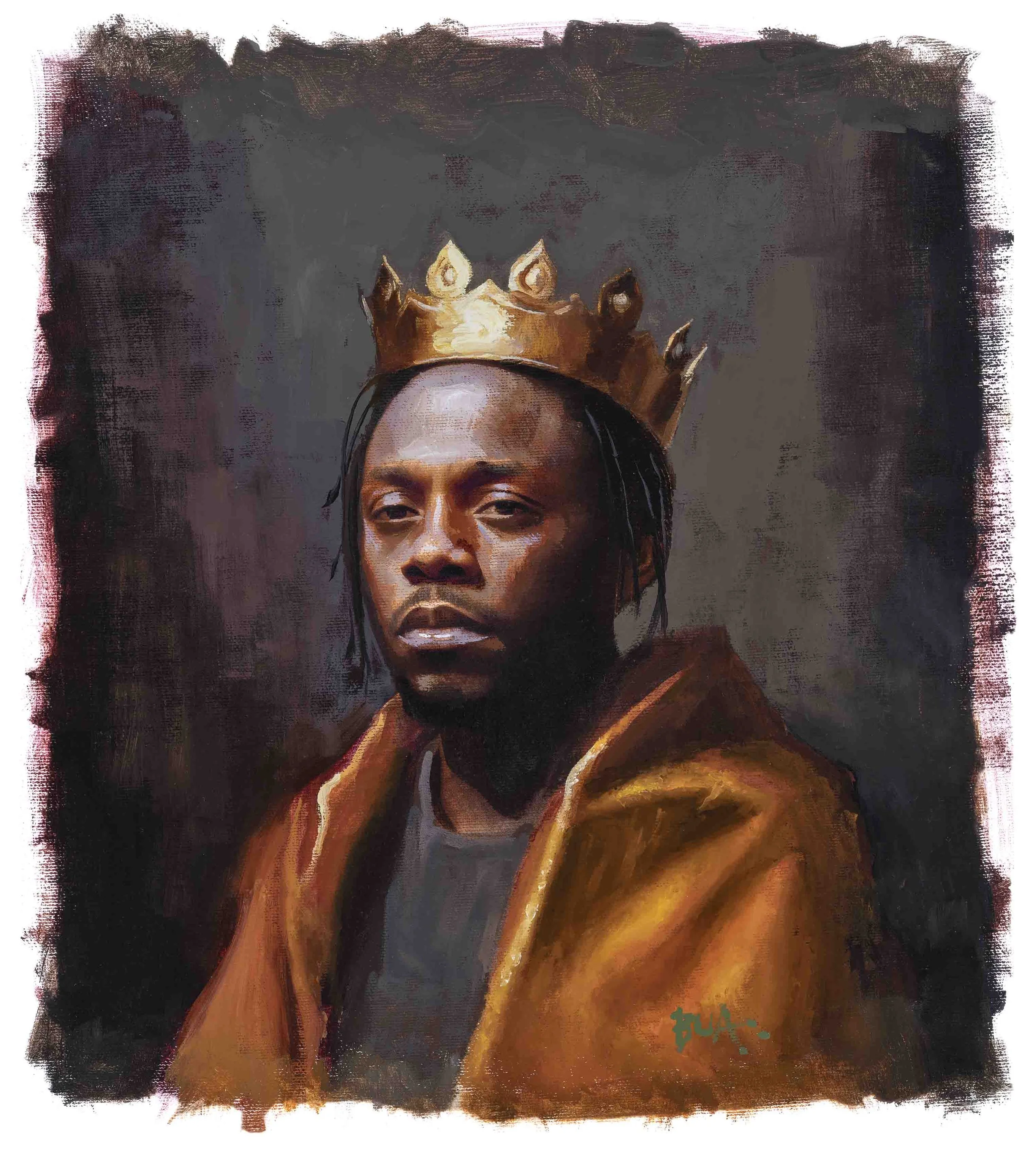
Kendrick Lamar, Courtesy of Artist
J: Pay attention. Drawing teaches you how quickly an assumption can get in the way of what’s actually in front of you. That lesson applies to people, too.
Teaching sharpened that for me. You have to meet a student where they are. You can demand rigor and still have compassion. In fact, the best teaching requires both.
I’ve also learned that talent needs discipline, and generosity needs boundaries. Understand your business. Protect your work. Be thoughtful about what you sign. Those things give you the ability to keep creating and to take care of the people who depend on you.
And stay teachable. Experience should deepen your curiosity.
U: What is a typical day in the studio for you?
J: 9 am. Coffee, another coffee, busy work then art.
A studio day is a series of decisions. I’m looking at gesture, structure, light, and the story the painting is telling. Something can be beautifully rendered and still be wrong for the picture.
Drawing is the foundation. I want the figure to have weight and intention before I ask the paint to do anything. Then there’s a constant movement between getting close to the work and stepping back to see the whole composition.
There’s also the business around the studio, but I need protected time with the work. The goal is to leave the painting clearer, stronger, and more alive than it was when I walked in.
U: Now living in Texas, coming from the birth of Hip-Hop, how do you see Hip-Hop’s influence on the South? Can you display your lyrical narrative in your paintings to show that influence?
J: Living in Texas gives me another vantage point on a culture I grew up inside. The South has its own voices, histories, rhythms, and ways of occupying space. You have to listen to those differences instead of treating every place as a variation of New York.
That matters in painting. A lyrical narrative can come through posture, clothing, architecture, color, or the distance between figures. A painting has a cadence. Your eye moves through it; certain shapes repeat, and others interrupt.
If I’m painting a Southern story, I want the specific people and environment to shape those decisions. My New York upbringing gives me a foundation, but observation has to lead. The work has to earn its relationship to the place.
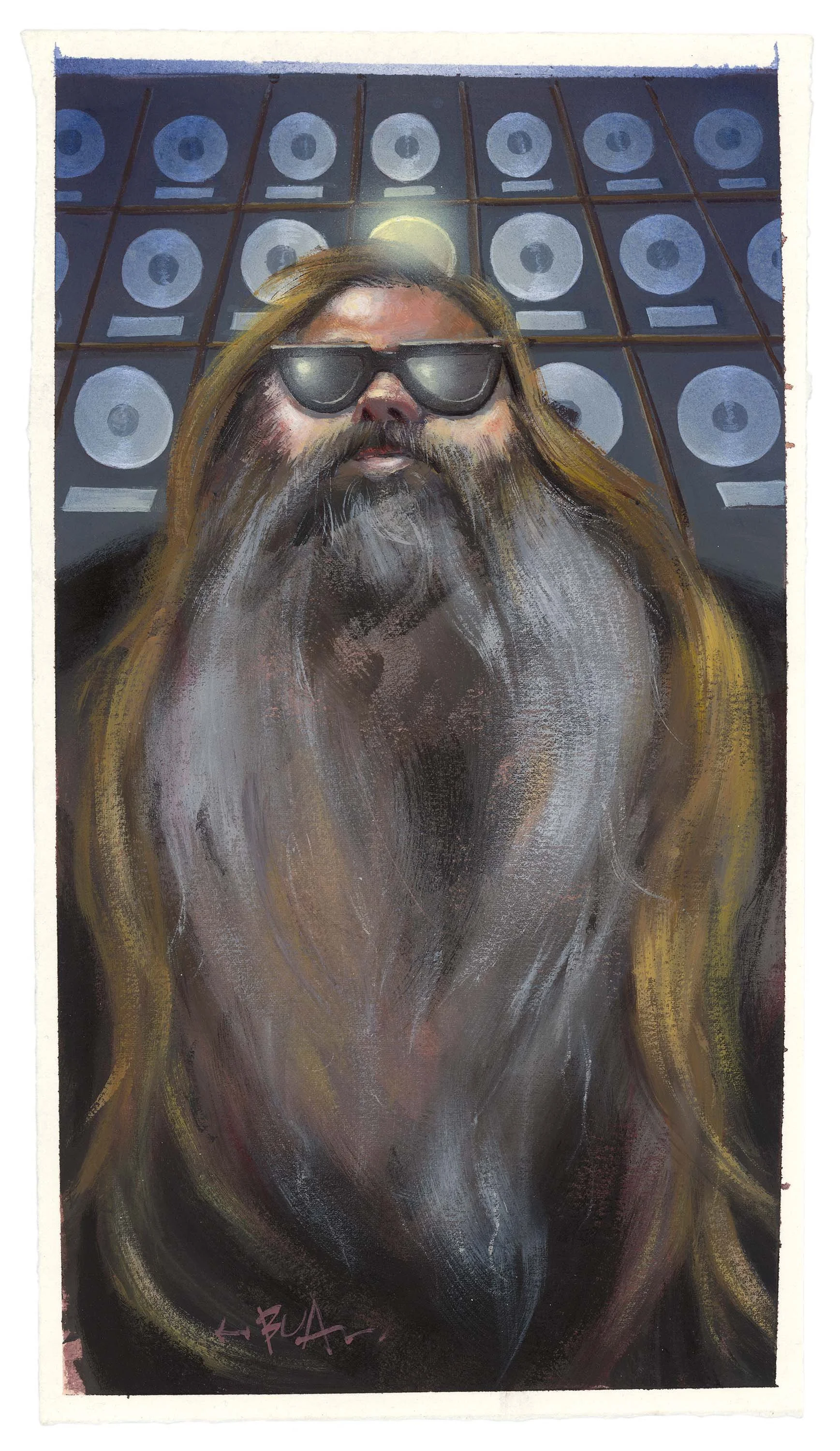
Rick Rubin (Painting), Courtesy of artist
U: How can featuring Hip-Hop artistically in the visual arts help it gain more respect as fine art, not just as a musical genre?
J: Hip-Hop already contains a sophisticated visual language: graffiti, movement, dress, design, and the way people construct an identity. Painting can make those connections visible and give them a sustained place in cultural memory.
Portraiture has always helped determine who gets remembered. For centuries, painters gave rulers, patrons, and religious figures an enduring presence. I’m interested in giving that same sustained attention to the people who shaped my world.
That requires serious work: strong drawing, composition, psychological presence, and knowledge of the subject. When those things come together, the painting can be both a compelling work of art and a historical document. It gives future generations a way to encounter the people behind the sound.
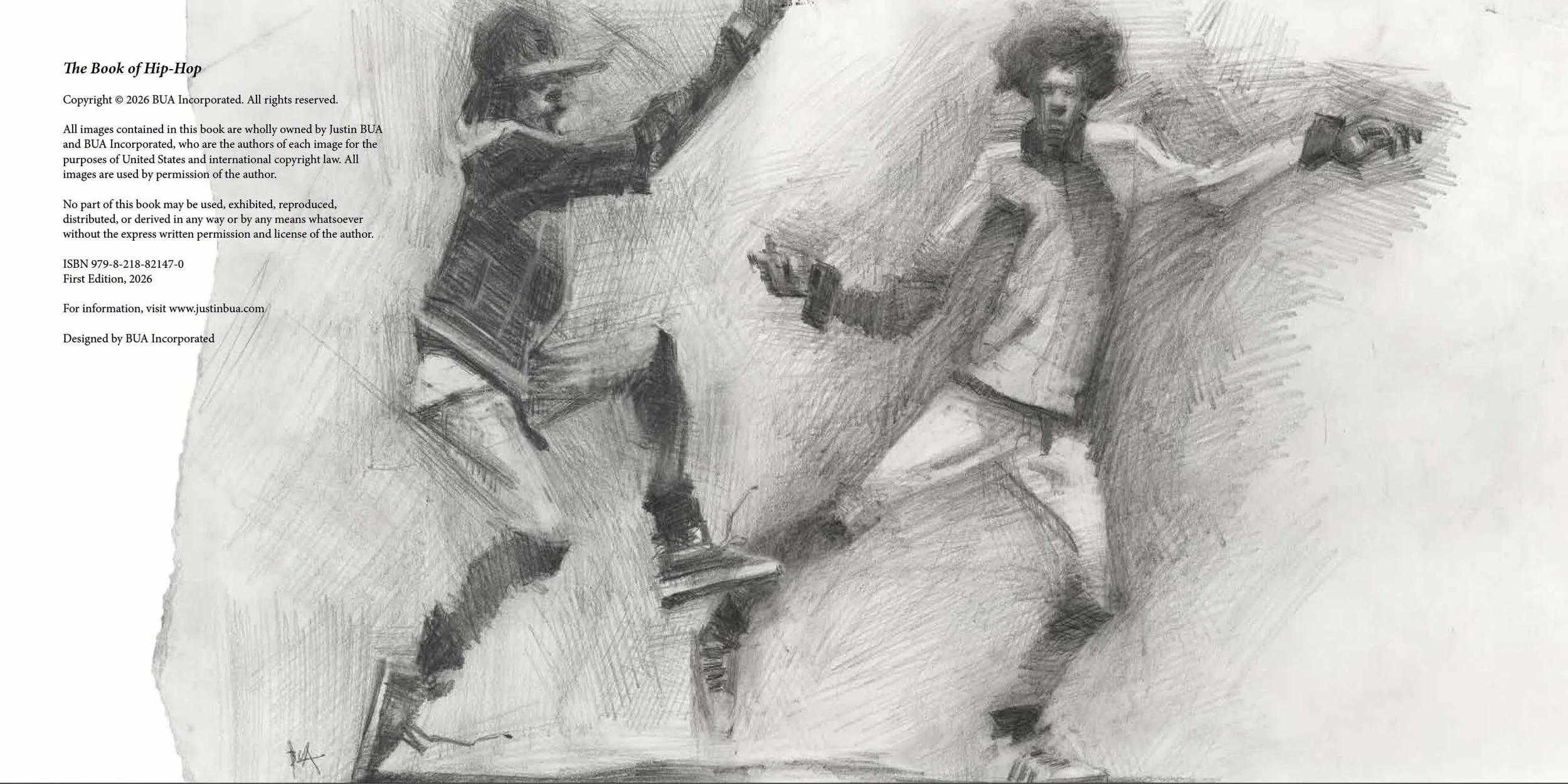
The Book Of Hip Hop (Copyright Page), Courtesy of Artist
U: Can you discuss the importance of your book, the Book of HIP-HOP?
J: BOOK OF HIP-HOP:
The Book of Hip-Hop brings together years of painting, drawing, writing, and living inside the culture. I wanted to give people a way to spend time with these figures—to study their faces and consider the lives and innovations behind the names.
It’s also about continuity. Younger people deserve to know where the language came from, and the originators deserve to be remembered with respect. A book lets those generations exist in conversation. For me, it’s an act of cultural memory and one of the most important things I’ve made.
For more information about Justin’s artwork and new book, please visit his site here. He can also be found on Instagram and YouTube.