In Conversation with Judith Vollmer
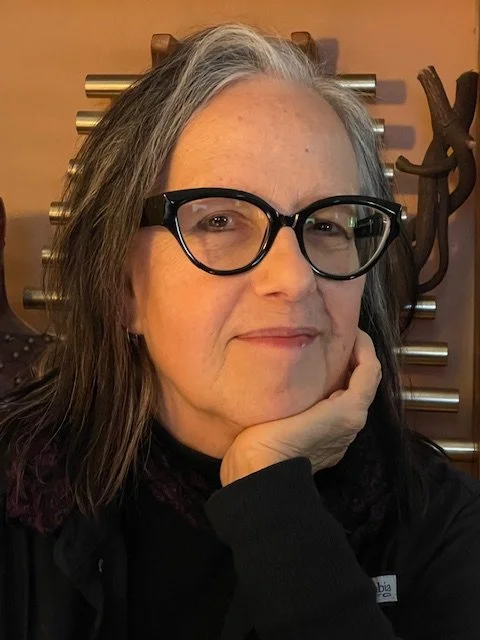
Courtesy of Poet
Judith Vollmer is the author of The Sound Boat: New and Selected Poems, which was awarded the 2022 University of Wisconsin Press Four Lakes Prize. Other collections have been awarded the Brittingham, the Cleveland State, and the Center for Book Arts prizes. Vollmer is a recipient of fellowships and residencies from the National Endowment for the Arts, the Pennsylvania Council on the Arts, Yaddo, the American Academy in Rome, and others. She is Professor Emerita of the University of Pittsburgh/Greensburg, and recipient of the Chancellor’s Distinguished Teaching Award of the University of Pittsburgh. She lives in Pittsburgh’s Nine Mile Run watershed.
I had the pleasure and honor of asking Judith why poetry matters, who some of her favorite poets are, what her favorite thing about poetry is, and much more.
UZOMAH: What is the most important part of the poem?
JUDITH: Everything is fluid, everything moves in a poem. When I am writing, I always focus on a central image and the power that it carries, via sounds and voices. I would say Paul Klee’s idea of “painting music,” which I credit to Hajo Düchting’s wonderful book (Pegasus Library, Prestel 1997) bearing that title. The book studies Klee’s practice of combining music and painting and was a gift to me from poet Michael Waters. A companion-example would be Frost’s theory of “sound of sense,” included in his letters. His theory, too, evokes interwoven connections.
U: How do you know when to break a line, and how do you format your lines so they flow best?
J: I try to listen and look. I read the draft of the poem, listen to sounds, pause or enjamb when I get tuned into the poem. Or I don’t. If I don’t know where or if the poem is moving, then I might try shaping or structuring, but rarely scanning or counting or measuring, if I can help it. This is a complex process with no easy answer.
U: Why is poetry important?
J: I write about the natural world(s) and destructions; fusions and complications inside those worlds. I say natural worlds because, obviously, the last centuries have influenced our knowledge about elsewhere. How do natural forces and mysteries, political powers, combine and emerge? Those are among my themes; and like many poets, I write about love and family, death and the seasons.
Poetry is central for me and how I read what is going on. Seems unquestionably essential, especially in the face of AI.
U: Who are some of your favorite poets? Is there a poem of theirs that stands out as an example of why you became a poet?
J: James Wright, Denise Levertov, Lucille Clifton, Gerald Stern, Octavio Paz are a few of a very long list. Czeslaw Milosz, Zbigniew Herbert, Charles Reznikoff. Among contemporary poets, I find it imperative not to leave out anyone whose work I adore—long, long list. But I can remember dropping out of an MFA class where Wright was on the syllabus. I stupidly dismissed the great poet of the Ohio Valley—I live in Pittsburgh—he sounded, I idiotically thought, too “familiar.” Then I read “Redwings,” and my life catapulted me into somewhere unknown/known. “It turns out/You can kill them./It turns out/You can make the earth absolutely clean.” I was just about 30 years old, and I didn’t, then, understand where I came from. Because Wright physically resembled my father or an uncle, in part because he wrote political poems colliding with the natural worlds, in part because he loved and lived in Italy, where I’ve studied and lived—if only months at a time—Wright set a path. Levertov’s Vietnam-era poems set another course; Clifton’s poem “at last we killed the roaches”—mama and me. she sprayed,/i swept the ceiling, and they fell/dying onto our shoulders, in our hair. Lorna Dee Cervantes’s book Emplumada was central to my writing.
U: How does your newest collection of poems differ from your first collection when it was published? How have you evolved as a poet?
J: The Pavese Stone, my newest book (Alice James Books, March 2026), differs from Level Green (University of Wisconsin Press Brittingham Prize 1990) focuses on many of the same subjects I’ve addressed across time: places—Poland, Rome, Pittsburgh and its three rivers; political and environmental destructions; family and matriarchal women. But I’m trying to be in an immediate present, and looking at closer range, at things I can’t “summarize,” or merely “describe.” Death and eros, deep ecology even as “it” disappears. I’m still evolving, exploring, can’t name how or where.
U: In poetry and writing, there are various literary devices one can use. Which ones do you think are interchangeable and can be used in poetry and other forms of writing? Which ones do you think are best used in poetry?
J: Narrative bridges and riffs are useful, whether sparingly or not. As are scouts—pieces of research, say, that we can send out and bring back to the poem. Sometimes we’re the scouts or reporters, or voices we haven’t heard before showing up when we’re listening. But I come back to the image, whether visible or liminal.
U: If you could give someone new to your writing one poem or book to understand you as a poet, which would you choose and why?
J: I’d give someone a copy of my newest book, The Pavese Stone, which I’ve worked on for several years. The poems in it are indicative of where and how several things came together for me, but really burst into the unanswerable questions I’m interested in. I’d also give someone Reactor, an earlier book which wrestles with some of the unanswerables: among them science and nuclear fusion—in many forms of love, family origins, work, environment and destruction and/or renewal.
U: Is there any theme or subject matter you want to write about in your next collection?
J: I’m listening for and locating newer ways of addressing spaces and rooms, love, mortality. Right now I’m simply working with titles, a practice I relied on several years ago, and titles might lead to something; if not poems, then research for poems.
U: How has writing shaped your views, and even questioned how you see the world and others?
J: I read every day. I read novels and poems, often in English translation—though I can read, slowly, Italian and French poetry and novels—sometimes nonfiction on science and the natural world. Reading and being as socially responsible as I can be in this shifting and controlled global existence is my way of focusing my life. Plus I talk regularly with other poets and writer friends to check in with what they’re reading and how they’re thinking. I’m devoted to my family, extended, blended, all. How I’m seeing it, let’s say I’m talking about my home city, Pittsburgh; I see acute replications of economic, familial, health, language, and learning segregation that are essentially global at a microcosmic level.
U: Why should writing be a regular activity in classrooms? How can doing exercises such as basic writing assignments help students think more about themselves and the world they live in?
J: I taught undergraduates for many years, and the last 20 or so years I’ve taught MFA students in New England and New Jersey and now Pittsburgh. In every setting I’ve found there is no substitute for in-person writing, in-class, in-presence-of-other voices and readers. It’s the solitary drafting in the presence of others—no electronic devices, no AI distractions—that can keep us going. The major changes I’ve seen in the last decade or so are a lack of reading, a rush to publish. As a teacher, I fight against those trends: urging students to slow down, just a bit, read more, read everything, read something that was written well before you, or your parents, or grandparents, were born.
U: What is your favorite thing about poetry?
J: I’ve spent the last several years reading first books by young poets. Many of them are astonishing, and I learn from them. I also love re-reading. I see the poems of Brooks, Cavafy, Leopardi, Dickinson, Dante, as if for the first time.
For more information about Judith’s latest release, please visit her website here.