In Conversation with Juan Antonio
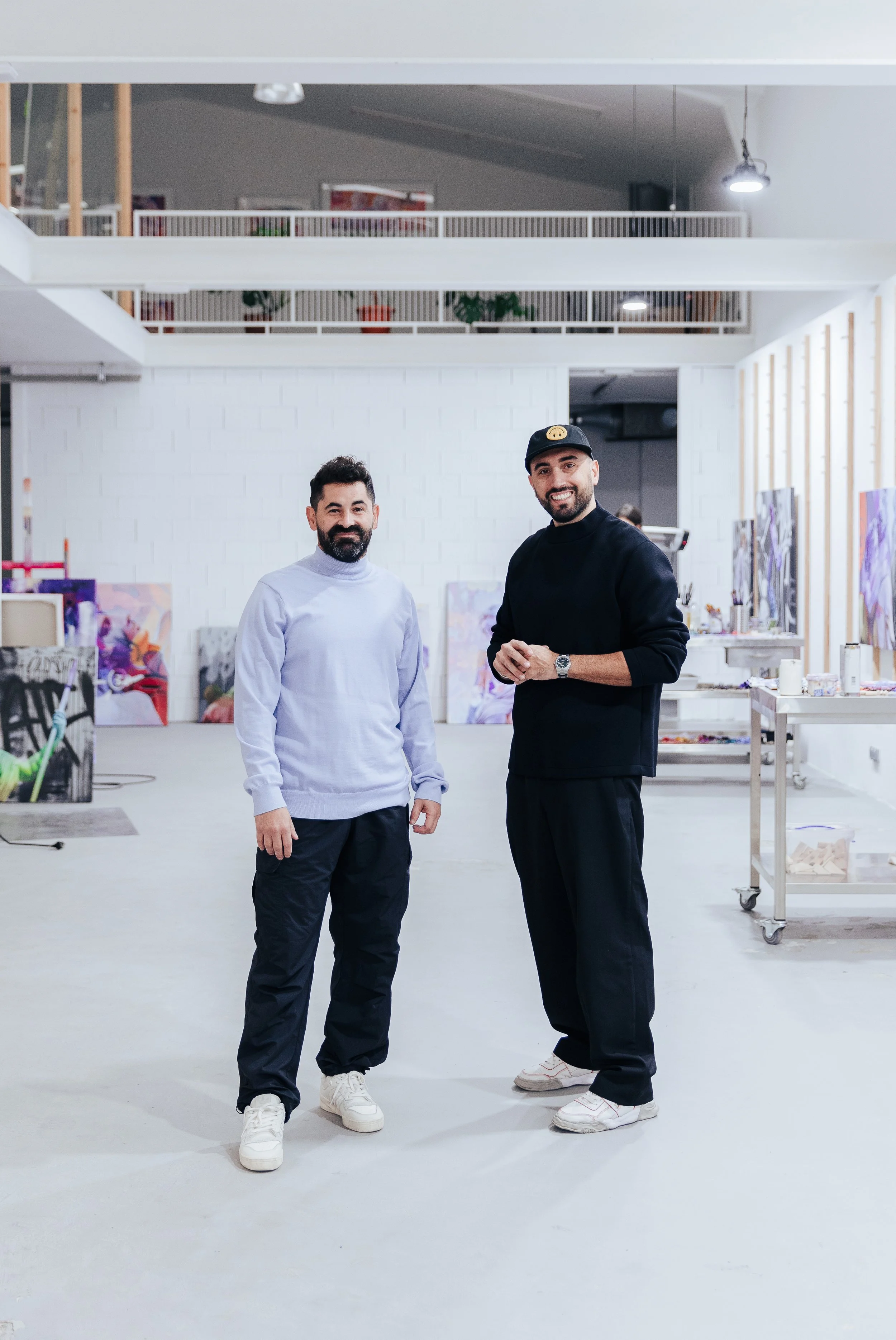
photo courtesy of ©PichiAvo.
PichiAvo is Juan Antonio (Pichi, b. 1977) and Álvaro (Avo, b.1985), a duo of artists from Valencia (Spain). Recognized for their ability to merge painting and sculpture in urban environments, PichiAvo take an innovative approach to their artistic fusion. A balanced combination of classical art and the most contemporary urban artistic expression can be identified in their work. From the outset, they rejected artistic individuality, instead joining forces to create a truly unique body of work that speaks a distinctly urban language—both in the streets and in the studio.
They studied Fine Arts and Design and met through Valencia’s graffiti scene, forming the PichiAvo duo in 2007. From that moment, they worked on developing joint projects, pursuing an unremitting search for a style of their own. To achieve this, they went through various stages as painters, initially focusing on skill and technique before reaching a point where they felt the need to express themselves through what defines them most today: the fusion of graffiti and classical art. They work both outside and inside the studio, in painting, sculpture, and installation, embracing a wide and versatile range of materials and painterly approaches.
In 2015, PichiAvo created their first large-scale mural at the North West Walls Festival in Belgium, invited by fellow artist Arne Quinze. This work marked the beginning of their international career. From then on, they have undertaken projects at some of the most prestigious urban art venues worldwide, including the Wynwood Walls (2015) and the Hard Rock Stadium (2016) in Miami, as well as the Houston-Bowery Wall in New York (2017), where they became the first European artists to paint there. In 2019, they designed a monumental 26-meter-high sculpture for the Fallas festival in Valencia and held their first major exhibition at a public art center. That same year, they collaborated with renowned Portuguese artist Vhils to create the second-largest mural in the world, located in Porto. In 2020, they moved into their new studio in Valencia, and in 2024, they developed two projects for the Paris Olympic Games, one indoor and one outdoor, reflecting the two environments central to their practice. In October of that year, they published Our Odyssey, their first anthology, an editorial project tracing their extensive artistic journey and offering deeper insight into the duo’s distinctive style.
PichiAvo’s career has earned them artistic recognition and international popularity, establishing them as among the most prominent artists in the current urban art scene.
I had the pleasure of asking Juan about how the Fallas de Valencia arose, if he were not doing art, what he would be doing, and so much more.
UZOMAH: In 2014, as a duo, you created your first large-scale mural at the North West Walls Festival in Belgium. Can you describe your creative process? What specific challenges did you encounter when turning artistic ideas into reality, and vice versa?
JUAN: If I go back to 2014, the creative process was quite different from how we work now. At that time, we used to paint the sculptures first and then add the graffiti on top.
In that specific mural, we faced several challenges. One of them was working from a boom lift, which was not easy at that time. Also, something more basic, like preparing material lists, we didn’t calculate things very well back then.
From a visual point of view, we painted the sculptures in grayscale and added color later through the graffiti. Today, we work in a different way, and we have refined our technique a lot since then.
U: Why is creating art important in today's society?
J: In my opinion, art goes beyond other fields that are maybe more rigid. It usually connects with an emotional or intangible dimension that you don’t find in other forms of expression.
In today’s society, which is full of constant stimuli, art and the act of observing it help create a moment for reflection. It allows a more introspective and intellectual exercise, which I think is very necessary.
Art helps you grow; it communicates ideas, it can move people, and make them think. For me, it’s definitely something essential today.
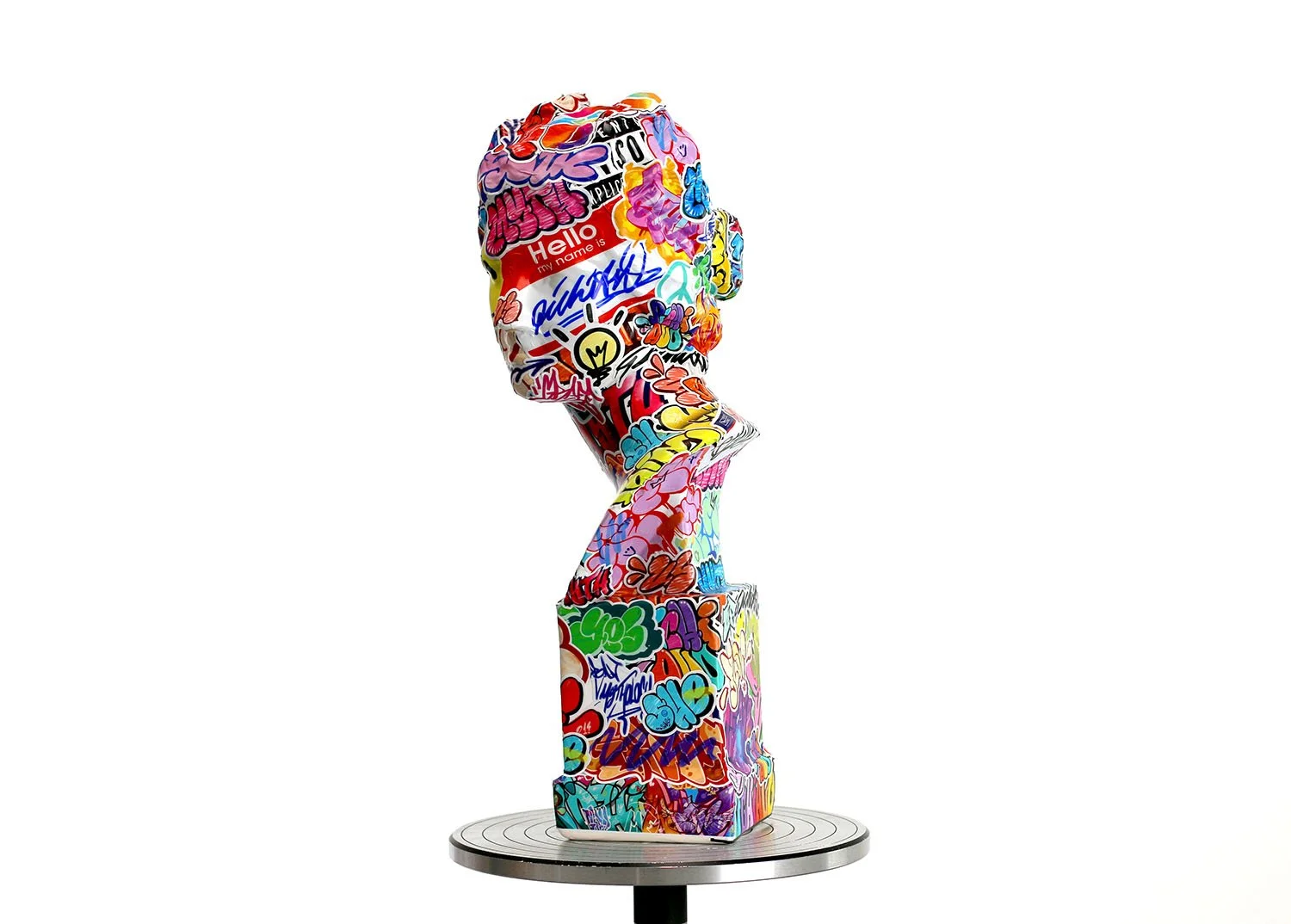
Aftokollita 1 Venus 2021 ©PichiAvo
U: PichiAvo works across many mediums and disciplines. Which one has been most effective in describing PichiAvo's artistic vision?
J: The medium we have worked with the most is painting. It’s where we have spent most of our time, and without a doubt, it’s the one that best represents our artistic language and vision.
This painting extends not only through our murals, but also through our studio work, mainly oil on canvas.
Working collaboratively with another artist who shares your vision can offer unique benefits. From your experience, what are some specific reasons or situations where collaboration has proved to be more rewarding or productive than working alone?
For me, collaborations always create interesting synergies. Just the act of combining our work with another artist can produce something completely new, something that probably wouldn’t exist otherwise.
We have collaborated with many artists, like Vhils, Julio Anaya, and, more recently, Add Fuel. I see it as a very productive and enriching process.
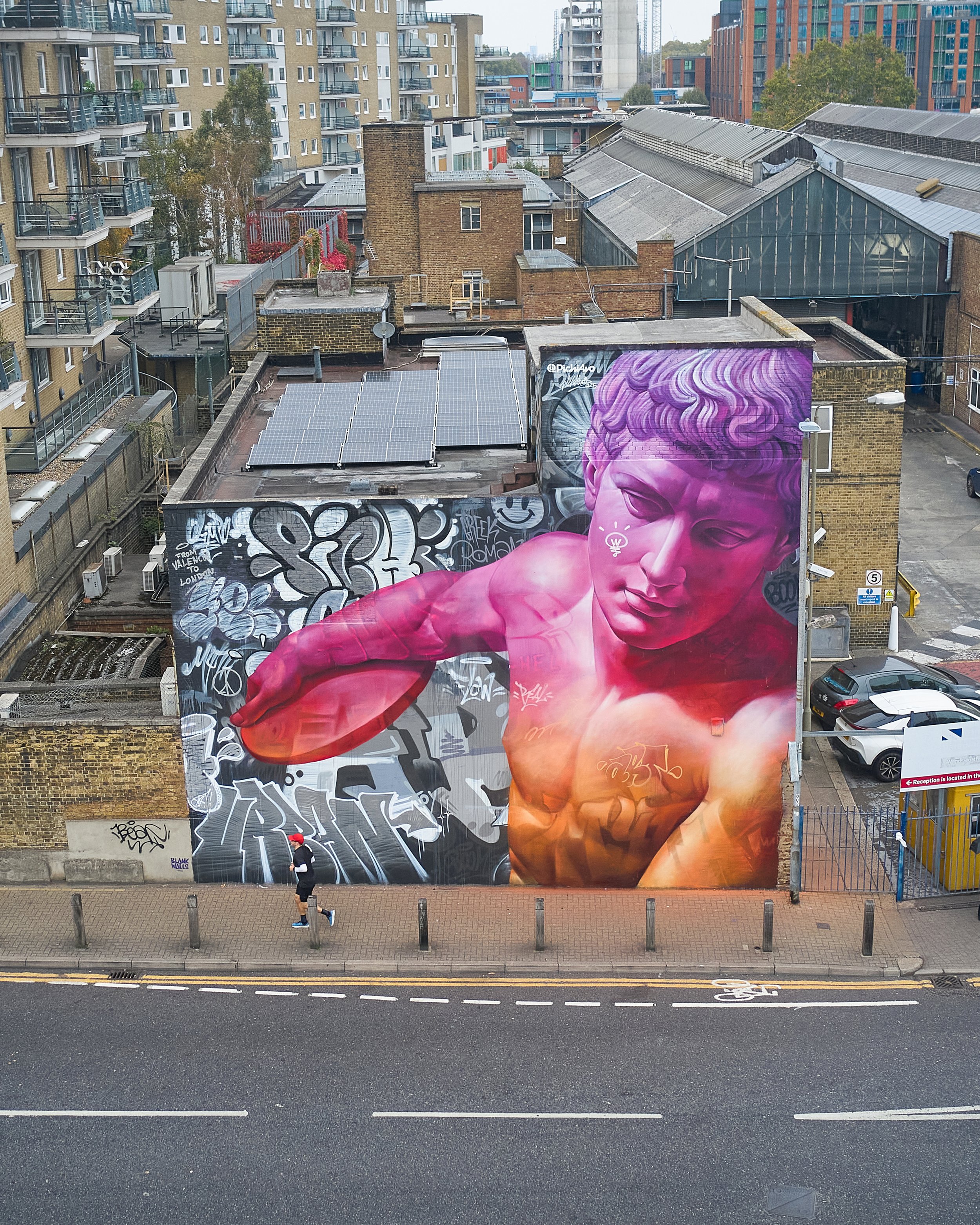
2025 London Chromata ©PichiAvo
U: How does art challenge perspectives and provide new insights into society and culture?
J: Art is a reflection of the time we live in, so it’s key to understanding the present, both visually, through styles, trends, aesthetics, and conceptually, through ideas and messages.
At the same time, art can also come from imagination, creating scenarios that haven’t happened or could happen.
For me, art is a form of expression without limits, and art spaces should also be places without restrictions or imposed ways of thinking.
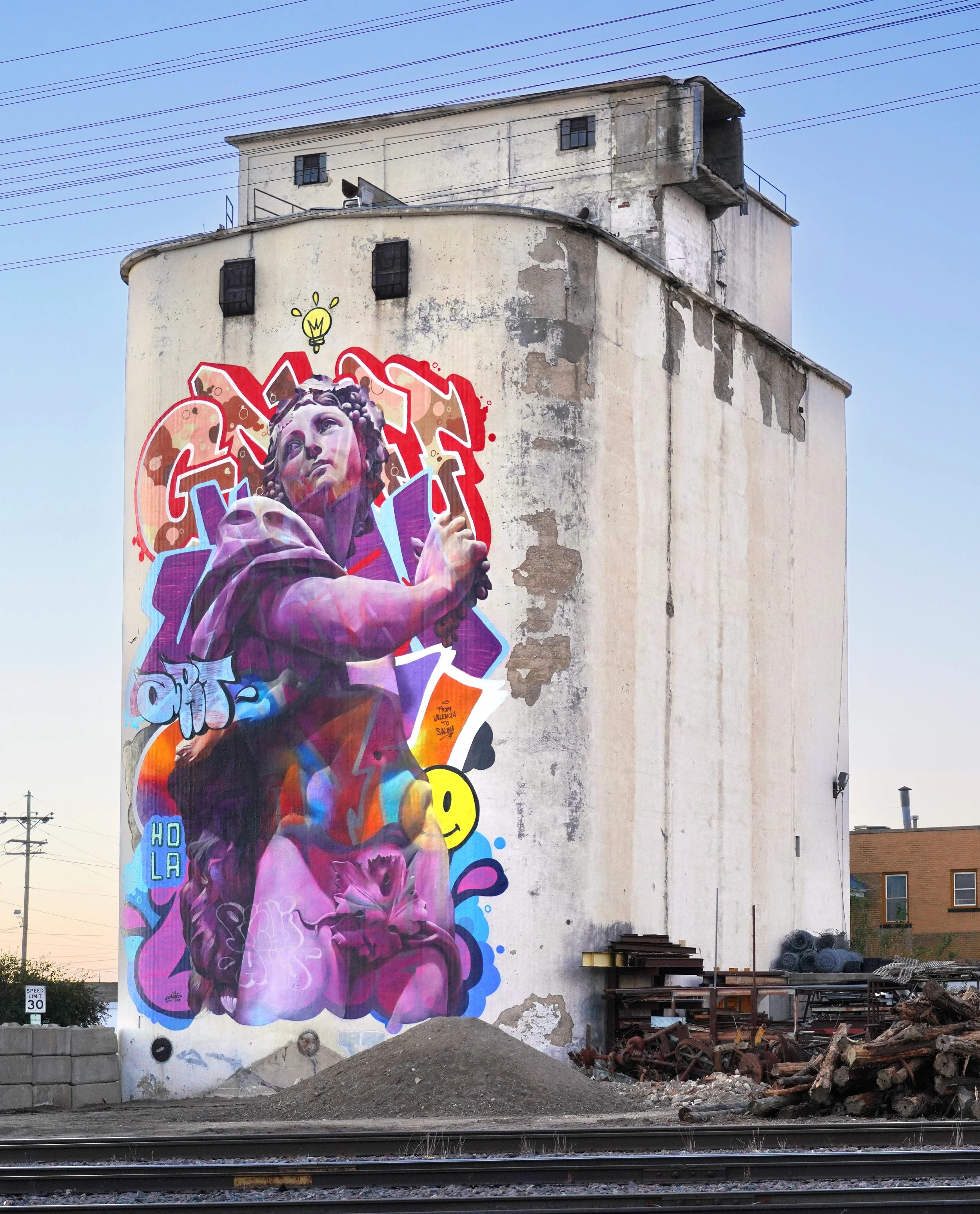
2023 Mural in Salina ©PichiAvo.
U: How did the Fallas de Valencia arise? Was it a commission, and what did you learn from the project? Would you have done anything differently?
J: It was not a commission; it came from our own idea. In 2024, we had leftover paper from printing our anthology, Our Odyssey. The origin of Fallas is about burning things you want to leave behind at the end of winter, so we thought about using that paper to create a falla.
In Valencia, there are more than 300 fallas, but only around 20 are considered “experimental,” and that’s where we wanted to be. After meeting with several commissions, we decided to work with the one from Borrull-Socors.
From this project, I learned mainly how to work with other professionals who didn’t always share our artistic vision, especially because we depended on traditional fallas artisans to build the piece. The project lasted many months, and we only saw it fully assembled when it was installed in the street, so we had to trust the process a lot.
Looking back, I think I would pay more attention to the interior of the structure, adding more detail to the elements and thinking more about the experience of the audience when they entered to leave their offering. That’s probably the main thing I would improve.
U: If not art, then what? Is there anything you could see yourself doing but art, and why?
J: It’s a difficult question. I think if not art, I would still do something creative. Maybe I would be a cook or a chef. Something that allows me to experiment and keeps the work dynamic and stimulating that would be important for me.
For more information about PichiAvo, please visit their site here. The duo can also be found on Instagram here.