In Conversation with Álvaro
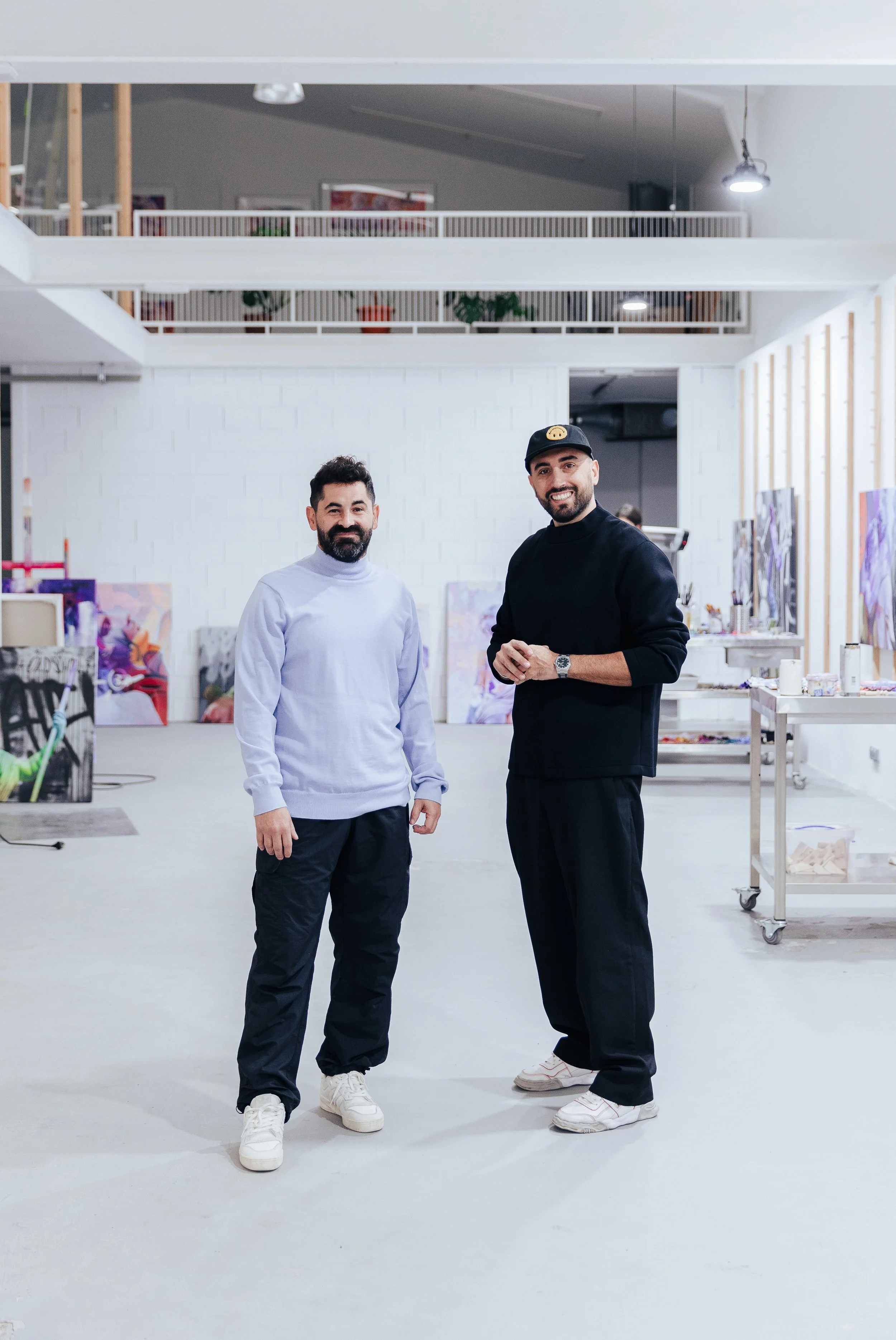
photo courtesy of ©PichiAvo.
PichiAvo is Juan Antonio (Pichi, b. 1977) and Álvaro (Avo, b.1985), a duo of artists from Valencia (Spain). Recognized for their ability to merge painting and sculpture in urban environments, PichiAvo take an innovative approach to their artistic fusion. A balanced combination of classical art and the most contemporary urban artistic expression can be identified in their work. From the outset, they rejected artistic individuality, instead joining forces to create a truly unique body of work that speaks a distinctly urban language—both in the streets and in the studio.
They studied Fine Arts and Design and met through Valencia’s graffiti scene, forming the PichiAvo duo in 2007. From that moment, they worked on developing joint projects, pursuing an unremitting search for a style of their own. To achieve this, they went through various stages as painters, initially focusing on skill and technique before reaching a point where they felt the need to express themselves through what defines them most today: the fusion of graffiti and classical art. They work both outside and inside the studio, in painting, sculpture, and installation, embracing a wide and versatile range of materials and painterly approaches.
In 2015, PichiAvo created their first large-scale mural at the North West Walls Festival in Belgium, invited by fellow artist Arne Quinze. This work marked the beginning of their international career. From then on, they have undertaken projects at some of the most prestigious urban art venues worldwide, including the Wynwood Walls (2015) and the Hard Rock Stadium (2016) in Miami, as well as the Houston-Bowery Wall in New York (2017), where they became the first European artists to paint there. In 2019, they designed a monumental 26-meter-high sculpture for the Fallas festival in Valencia and held their first major exhibition at a public art center. That same year, they collaborated with renowned Portuguese artist Vhils to create the second-largest mural in the world, located in Porto. In 2020, they moved into their new studio in Valencia, and in 2024, they developed two projects for the Paris Olympic Games, one indoor and one outdoor, reflecting the two environments central to their practice. In October of that year, they published Our Odyssey, their first anthology, an editorial project tracing their extensive artistic journey and offering deeper insight into the duo’s distinctive style.
PichiAvo’s career has earned them artistic recognition and international popularity, establishing them as among the most prominent artists in the current urban art scene.
I had the pleasure of asking Álvaro about what strategies he uses to stay creative and continually find inspiration for his art and so much more.
UZOMAH: How do you maintain your individual artistic identity while working collaboratively as a duo, ensuring you don't lose your creative essence?
ÁLVARO: I try to keep my personality, values, and ideas clear, even when working as part of a duo, as long as they contribute to the final result. I think both of us bring our own individuality, and from that combination, our work comes out.
Sometimes we think as a duo, but other times I also think individually, and both ways work well. In the end, it’s about finding a balance where both identities can exist together without losing what makes each one different.
U: What is your experience working as a duo, and what are the key advantages of this collaboration?
Á: I think our work already reflects this experience, which has been very positive and still is. There are many advantages, having two minds thinking is always more productive than one, and the contribution is very clear.
For me, being part of a duo also helps to avoid the idea of the individual artist as a single figure, which is often over-romanticized. I prefer to be understood as part of a collective. I’m proud to work this way and that it works well.
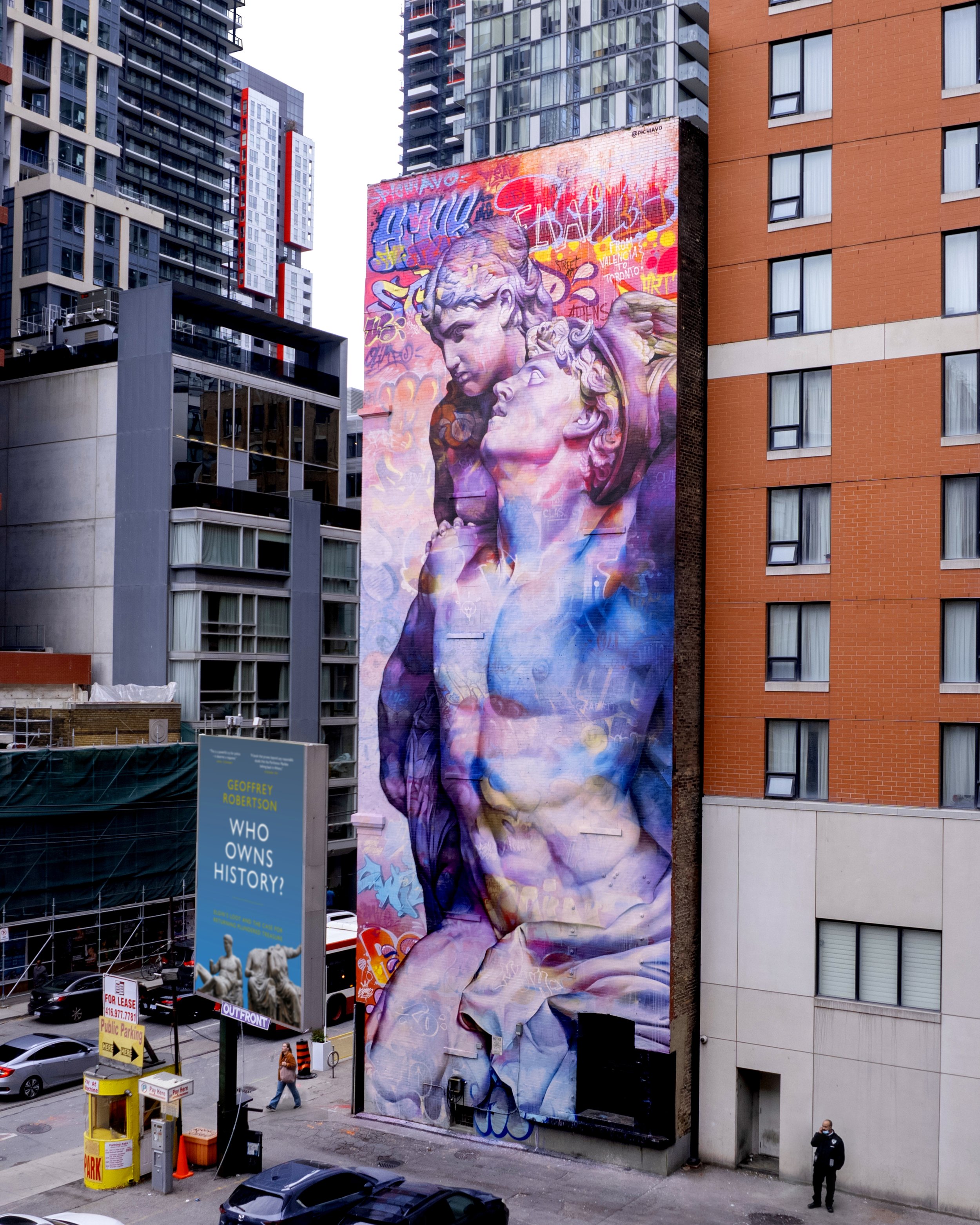
2022 Toronto Adelaide St. W ©PichiAvo.
U: How did PichiAvo come to form as a duo?
Á: It started in 2005 when we met in a very natural way in the graffiti scene in our city, Valencia. We were young, and what we wanted was just to paint and improve our technique.
After a short time, we started painting together in the street, and later we began to create murals under the same name. Our name comes from the combination of our nicknames.
We kept working together and started joining competitions, which we began to win. In 2014, we had an important opportunity when we painted at North West Walls in Belgium. That project had an international impact, and from there, our careers really started to grow.
U: If you were not an artist, is there any profession that you think would provide the same joy as making art does for you
Á: I studied product design at university in Valencia, so probably I would be an industrial or product designer like my father. Maybe today I would choose architecture, because our work for Fallas de Valencia has a strong connection with it. I think in the future I could continue developing projects in that direction.
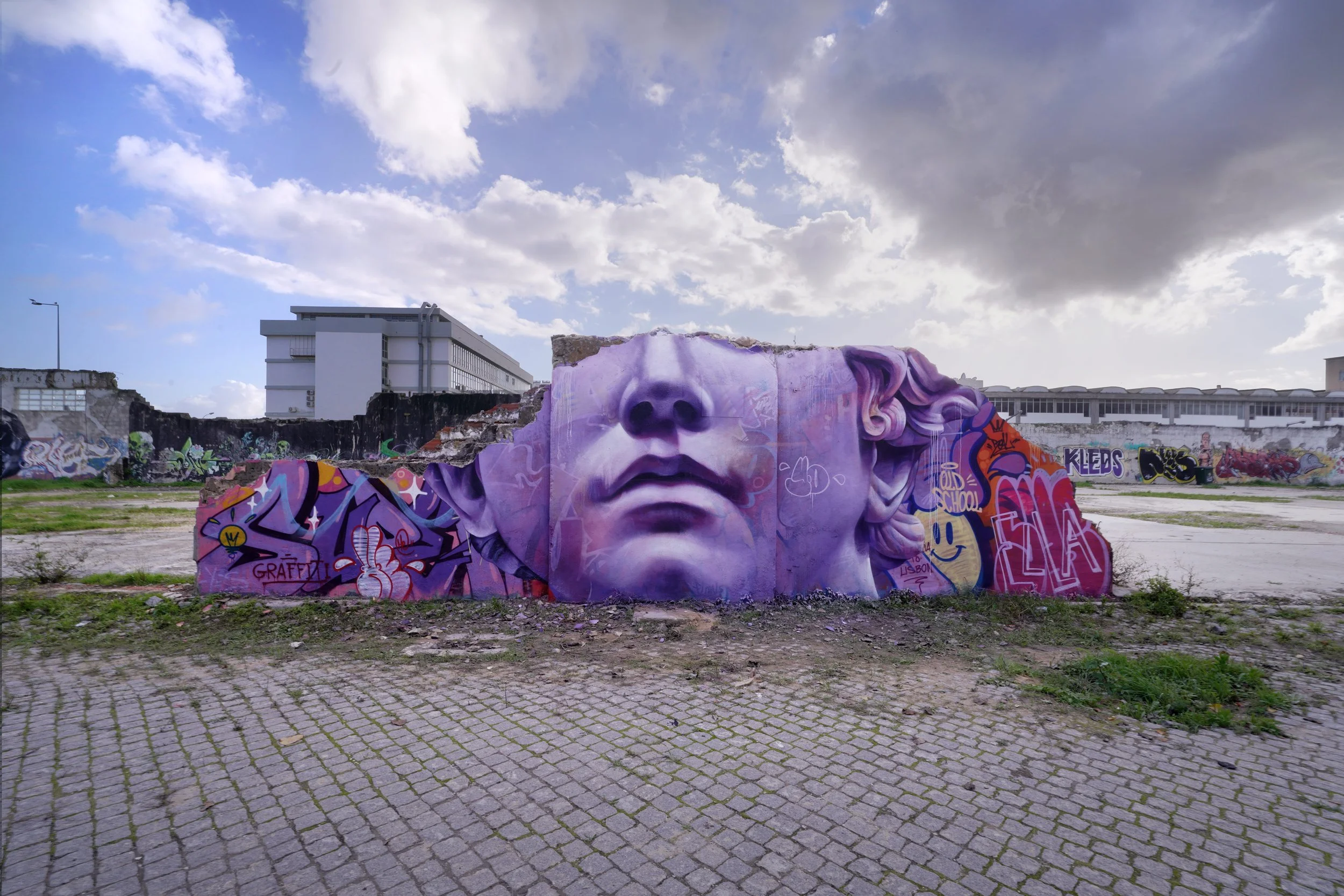
2022 Lisboa Diaspasis mural ©PichiAvo.
U: As pioneers in the fusion of classical art and graffiti, is there a sense of responsibility for what and why you create more?
Á: Not really, actually it’s the opposite. I feel that working between classical art and graffiti gives me a much wider space to experiment and evolve.
The fact that not many artists are working exactly in this language gives me some freedom and confidence when creating. More than a responsibility, I see it as an opportunity to keep exploring and pushing our style.
I know our work can inspire others, and I see that as something positive, but my main focus is still to enjoy the process and stay true to what I want to express.
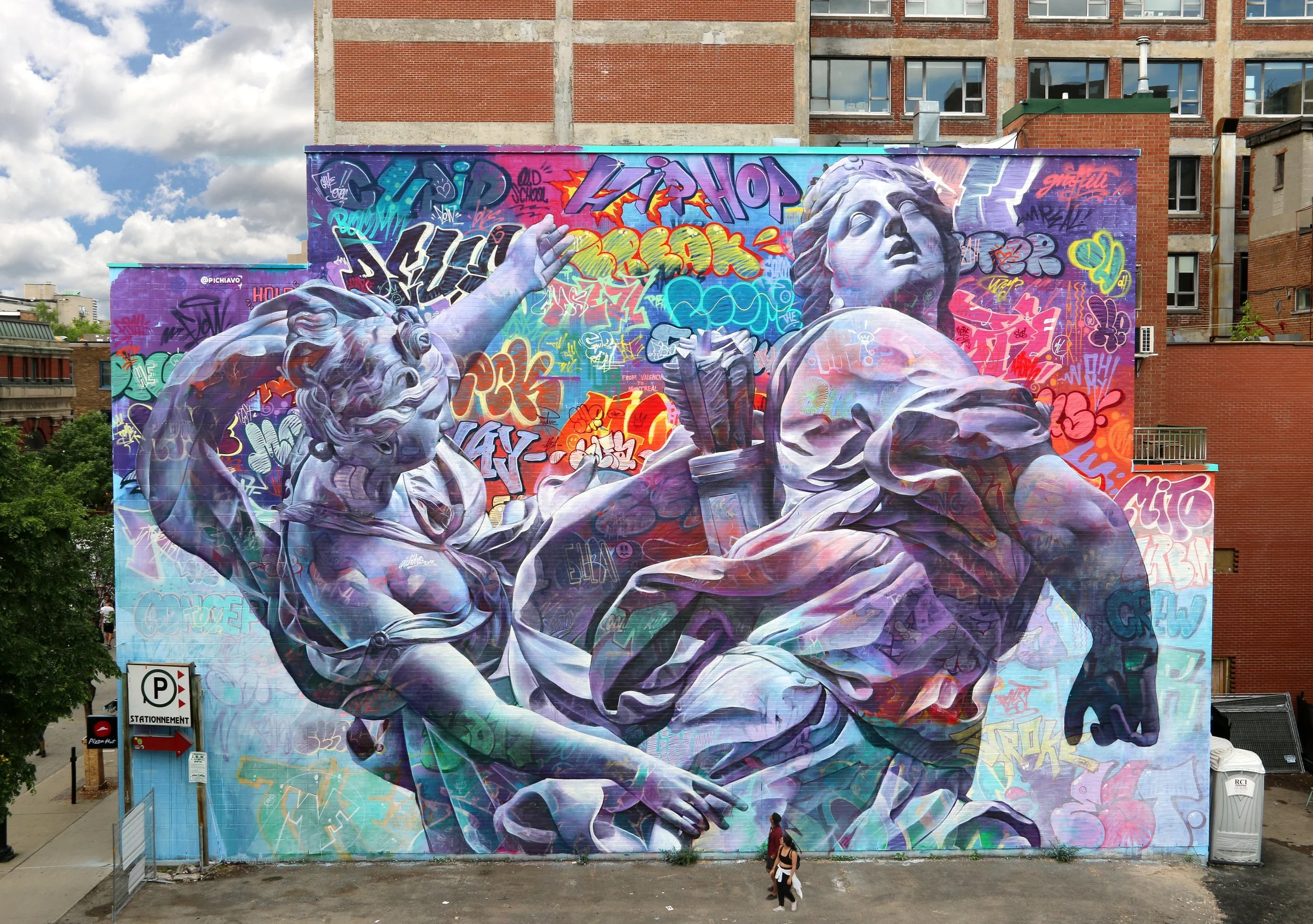
2019 Mural Fest in Montreal ©PichiAvo.
U: PichiAvo’s most recent project, which was created and presented, was a monumental installation for the Fallas de Valencia, which existed for only a few days before it was burned. When commissioned for a project, how does the process go in terms of how to meet the requirements of the commission and also meet the requirements of your artistic statement?
Á: As Pichi mentioned, in this specific case, it was not a commission, so we had total freedom to develop the project as we wanted. That allowed us to take the idea as far as we believed without external limits.
When it is a commission, the process becomes more collaborative. I carefully analyze the client’s intention and all the information they give us, and from there, we develop a proposal that is presented and adjusted together with them. It’s an open process, with constant communication and follow-up during each phase.
At the same time, I always try to keep my philosophy and stay true to my artistic criteria. Finding that balance is not always easy, but it’s important that the final result still has our identity.
U: What strategies do you use to stay creative and continually find inspiration for your art?
Á: In my case, I try to stay open to new visual stimuli, seeing different things, visiting exhibitions, traveling, or discovering new references. Going outside my usual environment is important to keep feeding creativity.
At the same time, it’s also important to have a clear and calm mind. Being good with myself, having time to disconnect, and even allowing myself to get a bit bored, helps ideas come more naturally.
In the end, it’s about finding a balance between absorbing new influences and having the mental space for those ideas to grow.
For more information about PichiAvo, please visit their site here. The duo can also be found on Instagram here.