In Conversation with Glenis Redmond
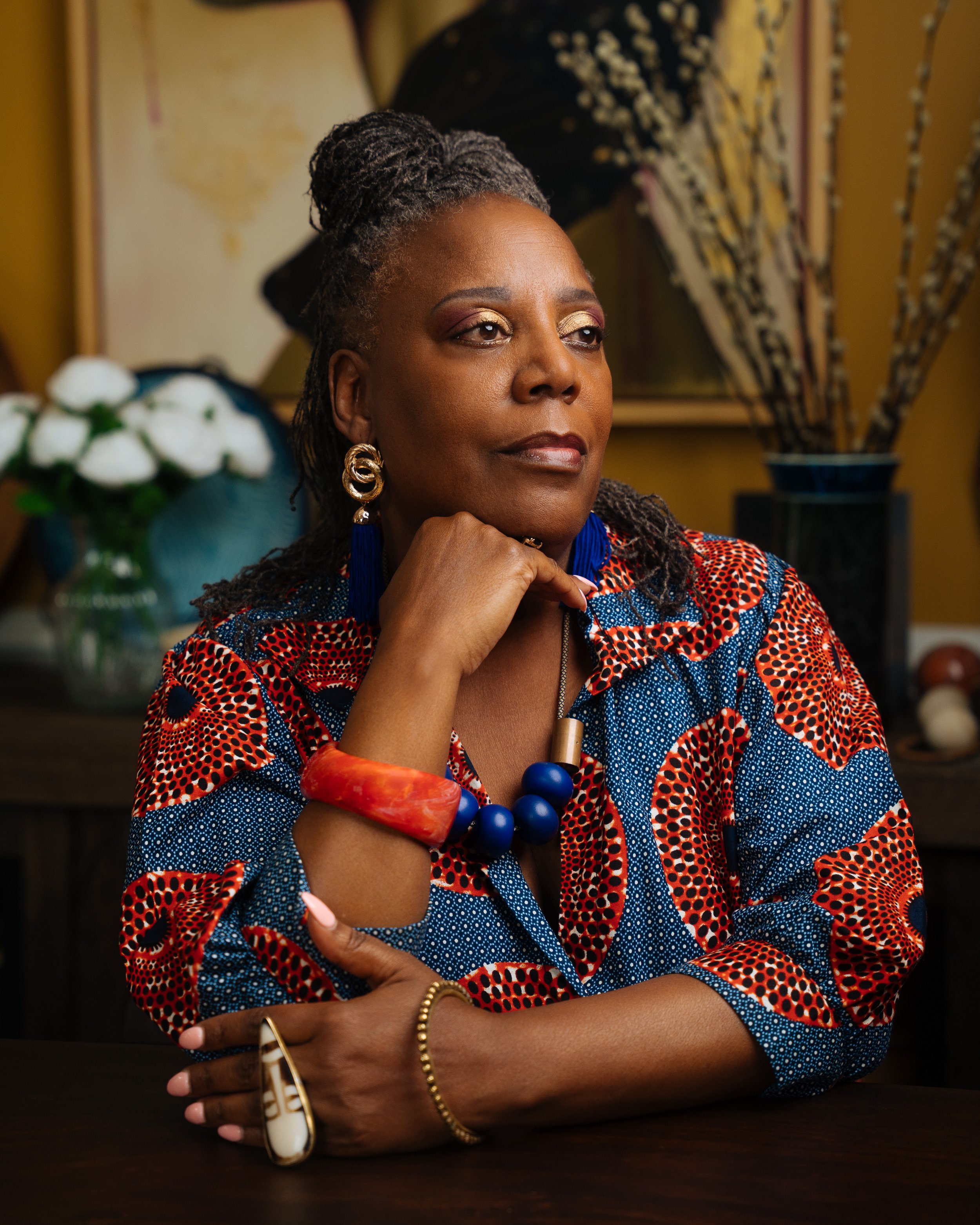
Photo Credit: Will Crooks
Glenis Redmond is Greenville, South Carolina’s inaugural Poet Laureate and a 2025 recipient of the Order of the Palmetto, the state’s highest civilian honor. A 2023 Poet Laureate Fellow of the Academy of American Poets, Baldwin Fellow, and Cave Canem alumna, she has worked for more than three decades as a performance poet, teaching artist, and literary citizen. She is the author of eight books of poetry, including The Listening Skin and Praise Songs for Dave the Potter. Her work explores lineage, place, cultural memory, and Black Southern history. Founder of Greenville’s first poetry slam in 1994, Redmond continues to foster literary engagement through workshops, performances, mentorship, and community initiatives, including Glenis Redmond Outreach with Words (GROWW).
I had the pleasure and honor of asking Glenis how she decides which poems to open her collection with, what she thinks makes a great poem, and so much more.
UZOMAH: Of all your poetry collections, which would you gift to someone wanting a clearer understanding of your work and your personal journey as a poet?
GLENIS: Most likely, I would gift them The Listening Skin. It is my latest full collection of poetry. It is an uneasy walk through what it means to be an HSP, a Highly Sensitive Person, moving through this world and doing my best to truly listen to the land, to others, and to myself. Living as an HSP means living with my nervous system turned up. Yet, even though I have been battered by systemic and situational racism, familial dysfunction, and generational poverty, I am still greeted by grace and beauty. Poetry is the tool that helps me dismantle and navigate the world and my walk through it.
U: How do you decide which poem opens your collection, and how does this choice establish the reading experience and intent for the rest?
G: Generally, I choose the opening poem after all the poems have been written. Ordering the poems is part of the creative process as well. Finding the door opener is not an easy feat, but generally, the poem will announce itself. It will tell me that it is the one to greet my readers.
In The Listening Skin, “Afro-Carolinian” takes this role. The poem was written earlier than all the other poems in the manuscript. It was crafted in 2008. I had started referring to myself as an Afro-Carolinian in the early 2000s, and I do believe I coined the term. This bilateral walk speaks not only of me, but specifically of what I am trying to do in this collection—straddle the worlds that brought me into being.
U: Do you intentionally create a routine or dedicate specific times to writing, and what motivates this discipline?
G: Generally, I do. However, with health issues, caretaking my mother, and my duties as Poet Laureate of the City of Greenville, it has become less routine and more about writing whenever I can. I am disciplined and have goals and target dates that I must meet.
I love writing in the morning. I do not write at a desk. I write on my couch or on my patio listening to the birds. I write in bed or in my little library nook. I always have multiple projects unfolding at once, and I give myself timelines for when drafts need to be completed.
U: In what ways is writing therapeutic and a healing agent for you? Did writing help you find strength during your cancer diagnosis?
G: I am a former counselor by trade. I do not see writing as therapy, but it can be therapeutic and cathartic. Yes, when I was diagnosed with cancer and fighting for my life, I worked on three different manuscripts as distractions and healing threads to sew my life together. Where there is meaning, there is reason to get up. I had to write myself into life.
U: Is there a poet, writer, or visual artist you wish to interview, and what draws you to this person from an artistic intent perspective?
G: Lucille Clifton is no longer living, but she is the poet I would most love to sit down with and discuss everything. Her work speaks to me personally and culturally. Her memoir, Generations, taught me that our path from Africa to America was worth investigating. She taught me to take the bits and pieces you have and sew them together into a document.
That is what I am doing with my own lineage. I have not found anyone else in the poetry world who speaks directly to my spirit the way her work still does. She gives me instructions on how to be a Mystic Black Woman Poet in the world. I believe we remain in contact with people even after they cross over.
U: How can writing support veterans returning from service in dealing with their experiences of war and symptoms of PTSD?
G: Veterans need to receive the help they need: financial, medical, and emotional. When they feel safe, when their nervous systems have calmed enough, then I believe it can serve them to write—to take inventory of what they have been through and where they are going. Writing poetry or prose can be a lifeline. I am an advocate for all veterans writing their stories, especially women veterans.
U: Which writers or poets have intentionally inspired you, and how do you reflect on their influence in motivating your own writing?
G: Lucille Clifton is my literary mother. Other poets who influenced me early on include Nikki Finney. Her book Rice deeply inspired me. I have also been influenced by Joy Harjo, Louise Erdrich, Crystal Wilkinson, and Patricia Smith.
Newer writers who inspire me include NitaJade Jackson, Starry Walker, Shakema Smalls, and Aurielle Marie.
U: When did you first start writing, and what motivated the intentional shift toward treating it as a potential career?
G: I started writing at age 13. In August, I will have been writing for 50 years. I began writing in English class at Woodmont Jr. High School for a journal assignment. I never stopped.
I began writing professionally in 1993 after I was diagnosed with fibromyalgia and heard Lucille Clifton on The Language of Life with Bill Moyers recite her iconic poem “won’t you celebrate with me.” That poem woke me up, and I decided to fully step back into poetry. I have now been a professional poet and teaching artist for 33 years.
U: What makes a poem great?
G: A poem that lifts off the page each time you read it. It uplifts something in you. It acts as an electrical charge. It gives you life or mirrors something in your life.
U: As poet laureate, what has been the most thrilling part of your position? What lessons have you learned about the power of poetry and its use in the community?
G: Being Poet Laureate has allowed me to continue serving as a mouthpiece advocating for poetry. It has given me opportunities to help others—not necessarily to become poets, but to find the poetry in their lives.t I have written over 50 commissioned poems for organizations throughout my community. Here is one:
Storytellers
For Greenville Tech Charter High School
February 15, 2023
Be bold in your broadcast.
You know you have something
to say, so say it.
You are not a whim of God.
but a wonder.
Live. Be.
Some may call you a mistake.
or say that you do not measure up.
Do not listen to mouths as scissors
Do not let anyone shrink you
or your story.
Last time I looked
They were lost.
Stand ten feet tall in your Joy.
take up the whole room.
We need your light
in this darkened place
where we are living.
Last time I checked
you. Me. We were put
here on purpose.
You know how I know?
No matter how much
they blast
we come back
Blacker and Better.
Yes, we mourn.
We hold the loss
Deep. The deepest.
We don’t always speak
of this night,
but we got the scars and graveyards
wit headstones
to prove it.
They’re still here around us
those with halos of brightness
they’re our hearts and our heaven.
Those that fought
picked through history
Survived and Strived
now beckon to you
to spread yourself petal-like.
Unfurl. Golden into Green.
When others say, Stop. No. You can’t.
Say, watch.
Seek the Sun. Reach.
Remember all rain
ain’t sorrow
but some for growth.
This is what you are: brilliant bold blooms.
Know you are not meant to be here
for a small stint and stunted,
but to last as long
as your dreaming
as high as our ancestors’ prayers.
Do not flatten your life or your lineage.
Write you, me, and we in
indelible ink
signatures
they cannot erase.
Replace you. Us. Our history.
Raise your head.
Use your mouthpiece.
Loud or low, as long as it’s on blast.
Tell our stories—
your story,
but say it whole.
For more information about Glenis’s writing, please visit her website here. She can also be found on Instagram and Substack.