In Conversation with Alison Braun
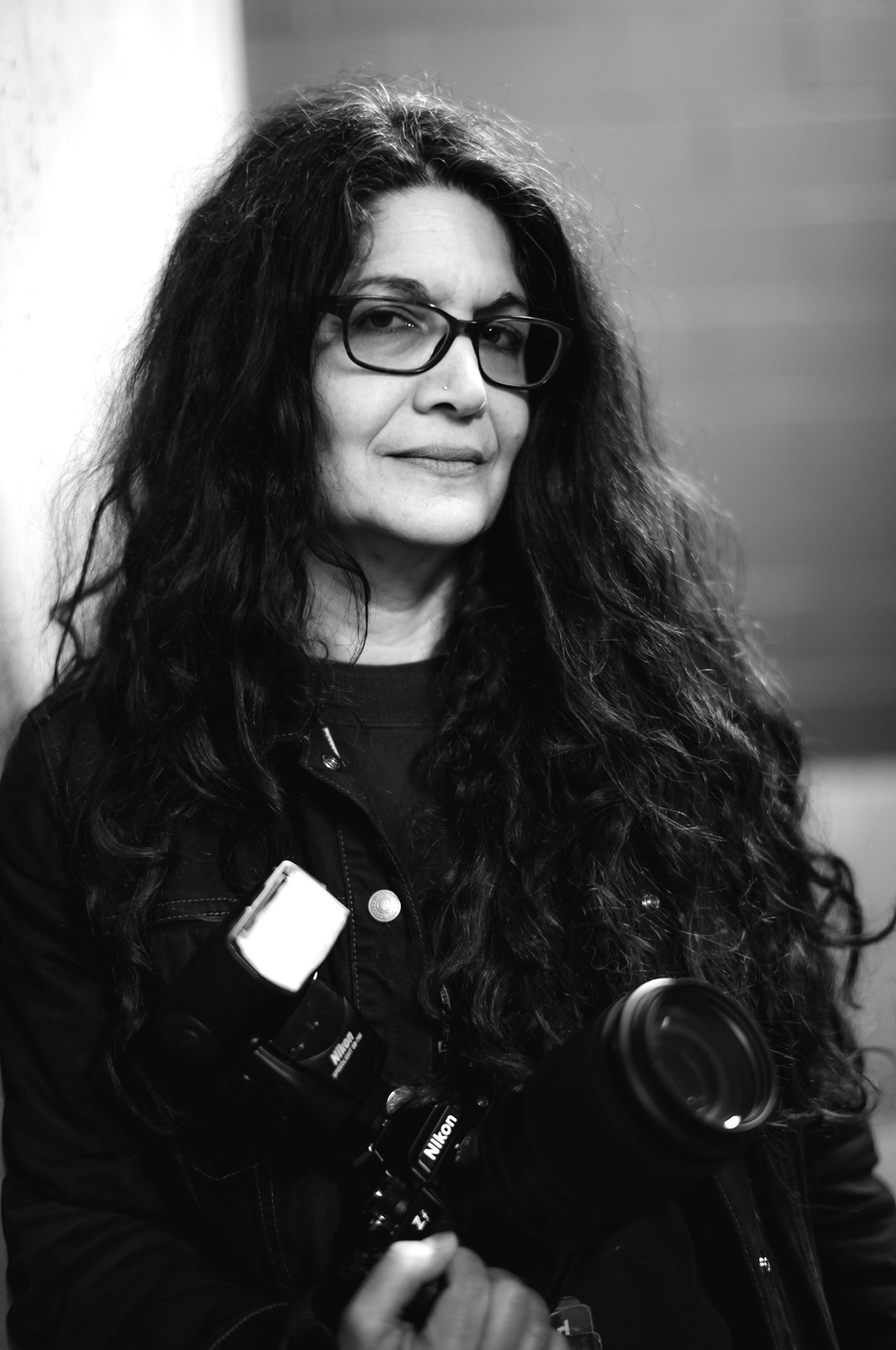
Photo credit Randy Blythe.
Alison Braun is an American Photographer whose career began with a camera given to her by her father, a serious amateur photographer who showed her the qualities of light and the alchemy of darkroom techniques. After traveling to parks like Yosemite National Park, among the ancient sequoia trees and waterfalls, she thought she wanted to become a landscape photographer, but life had other plans, and she embarked on a voyage into the punk rock scene, frame by frame. After fourteen, she found her tribe on the Sunset Strip, and her camera transformed her from witness to participant. Her 1981 photos of Wasted Youth were the first of thousands of images she would create, a personal document of a time, a place, and an explosive new sound.
She swapped print photos for access to guest lists at the Whisky a Go Go, the Starwood, and the Roxy, expanding her portfolio while increasing her audience. She has provided photography services for Mystic Records, a small independent label in Hollywood, and conducted band interviews and authored scene reports for local, national, and international punk rock fanzines, including Maximum Rock’n’roll and We Got Power
After college, Alison moved north, drawn by Seattle’s thriving music scene, where she continued documenting live shows and expanded into portraiture and special events. Her work is represented by Getty Images’ archival collection, and today her archive—thousands of images capturing the heart of punk and metal—is scanned and preserved for future generations of fans. Alison is currently the co-founder, staff photographer, and archivist of the Punk Rock Museum.
I had the pleasure of asking Alison what her top five concerts were, and if she has a favorite Punk band. What makes them stand out to her, and so much more.
UZOMAH: How do you want future generations to use your photos to learn about Punk music?
ALISON: I want them to see it as evidence, not nostalgia. Punk wasn’t a look or a slogan. It was a reaction. These photos show what it felt like when things were changing in real time, before anyone labeled it or cleaned it up. If someone studies my work, I want them to understand the energy, the tension, and the sense that something new was happening right in front of us. This is how we spent our formative years, before the internet and social media even existed.
U: How did you know you wanted to start a journey into photography, especially within music scenes?
A: I didn’t set out with a plan. I got a camera from my dad as a father-daughter activity. I quickly turned my lens onto the music scene. That’s where the action was. The energy, the people, the collision of ideas, and the do-it-yourself mentality of independent creation. Once I stepped into that space, there was no going back.
U: How can art challenge stereotypes about Punk while emphasizing its positive cultural impact?
A: By showing what was actually there. Punk gets reduced to chaos or attitude, but it was also community, creativity, and independence. We were like insects to a flame. You had to be careful how close you flew; otherwise, you would be consumed by the heat. When you document the real moments, not the clichés, you start to see how much they have influenced music, fashion, and the way people think about doing things on their own terms. Nobody told me how to think or approach these phenomena. I just showed up.
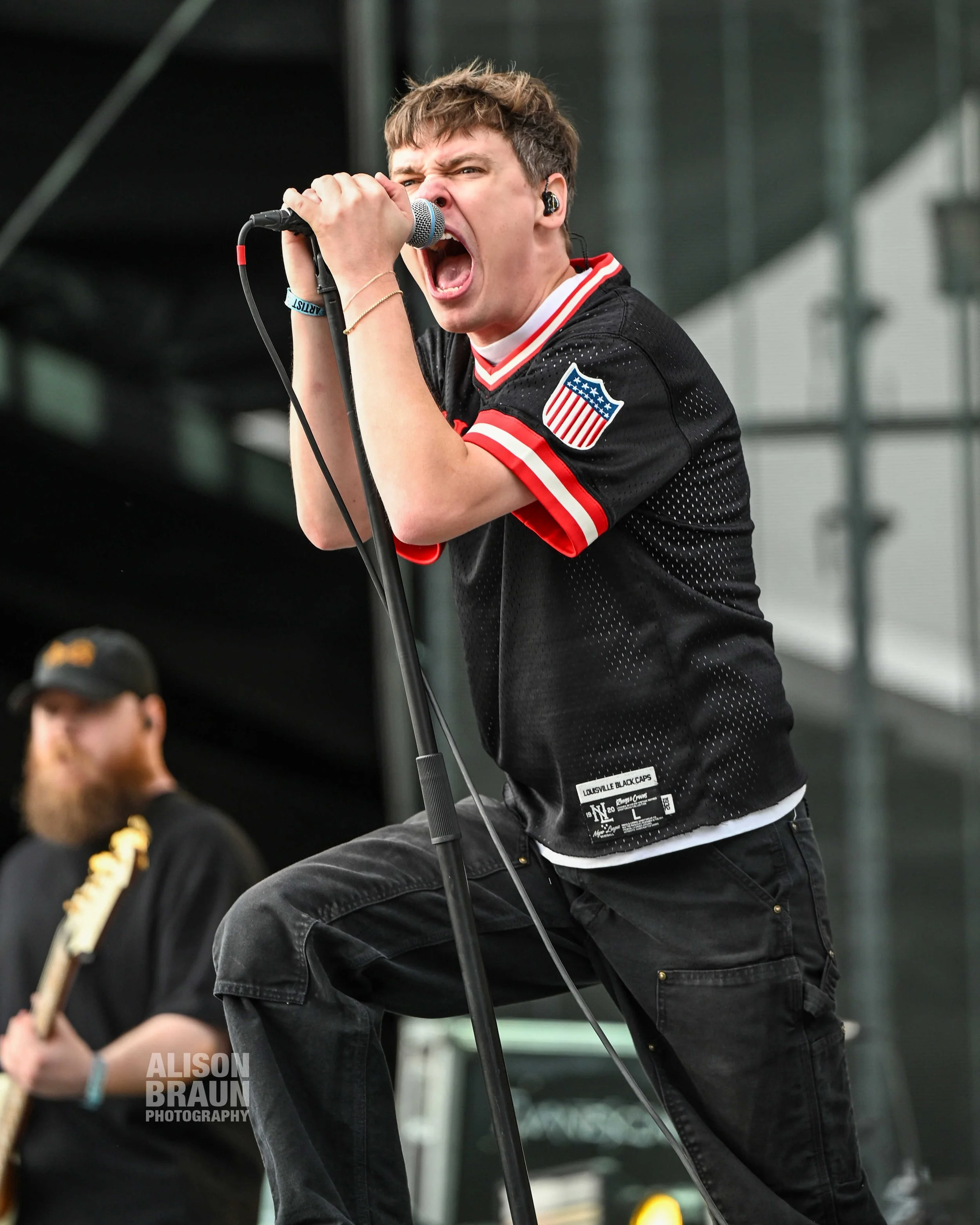
Bryan Garris, Knocked Loose - Sick New World Festival, Las Vegas April 25, 2026
U: Music shows are full of motion. How do you ensure your captions capture this energy and reflect both the music and the audience’s experience?
A: Like most art, if you have to pontificate the significance through lengthy explanations, you have lost the plot. I don’t over-explain. The image does most of the work. The caption just anchors it. A place, a moment, maybe a detail that puts you there. If you write too much, you kill the energy. The goal is to let people feel like they’re in the room, not reading about it.
U: What role does an archivist play in preserving music history for future generations?
A: An archivist decides what survives. That’s the responsibility. It’s not just storing images; it’s collecting, giving context so people understand what they’re looking at. Without that, it’s just pictures. With it, it becomes history. My focus is on the images, negatives, and now digital files. If I had to do it again, I would have saved more of the ephemera of the time – Ticket stubs, flyers, and all of those things a lot of us thought of as disposable.
U: Do you have a favorite Punk band? What makes them stand out to you?
A: Bands like Discharge and Dead Kennedys stand out because they pushed everything forward. They had a message, something to say. They were angry and intentional, holding up a mirror to the system that didn’t reflect a pretty picture. 45 years later, their lyrics are still relevant.
They weren’t repeating a formula; they were defining it in real time.

Randy Blythe, Lamb of God, WAMU theatre, Seattle, WA, March 31, 2026
U: How important was it for you to have your parents' support to shape your passion? What advice do you have for young artists who lack that support but are still passionate about the arts?
A: Having that early support mattered. It gave me a starting point. Look, it was a 2-way agreement with the parents. I didn’t do drugs, I did well in school, and I was truthful about my intentions and accountable for my actions. In short, I gave them nothing to focus on. I also involved my father as a wingman (before I had a driver’s license). It was important that he saw what I saw and understood that the kids weren’t the problem; the police and a corrupt system were the larger issues.
That’s all fine and good, but a lot of people don’t have that type of support. People still need it to keep going. Find your community. Build your own support system. The scenes I came up with were full of people figuring it out together.
U: What are the top five concerts you photographed early in your career that inspired you?
A: There weren’t just a few concerts. It was a run of shows where everything felt like it was accelerating. Bands like Dead Kennedys, GBH, Discharge, and Bad Brains were certainly highlights. But for me, I preferred the rooms to be smaller, the energy high, and you as part of the audience were close to your heroes on stage.
For instance.
Dead Kennedys, TSOL, Butthole Surfers – July 4th, 1982, Whisky-a-go-go. I came to this conclusion recently as I was looking at images from the show I had recently posted. There we all were, young, standing on the stage and around the perimeter. The images feature friends I would meet, mentors, people I would form decades-long relationships with, people who would be taken from us too soon. It was all there in one piece of history captured at 1/60 of a second.
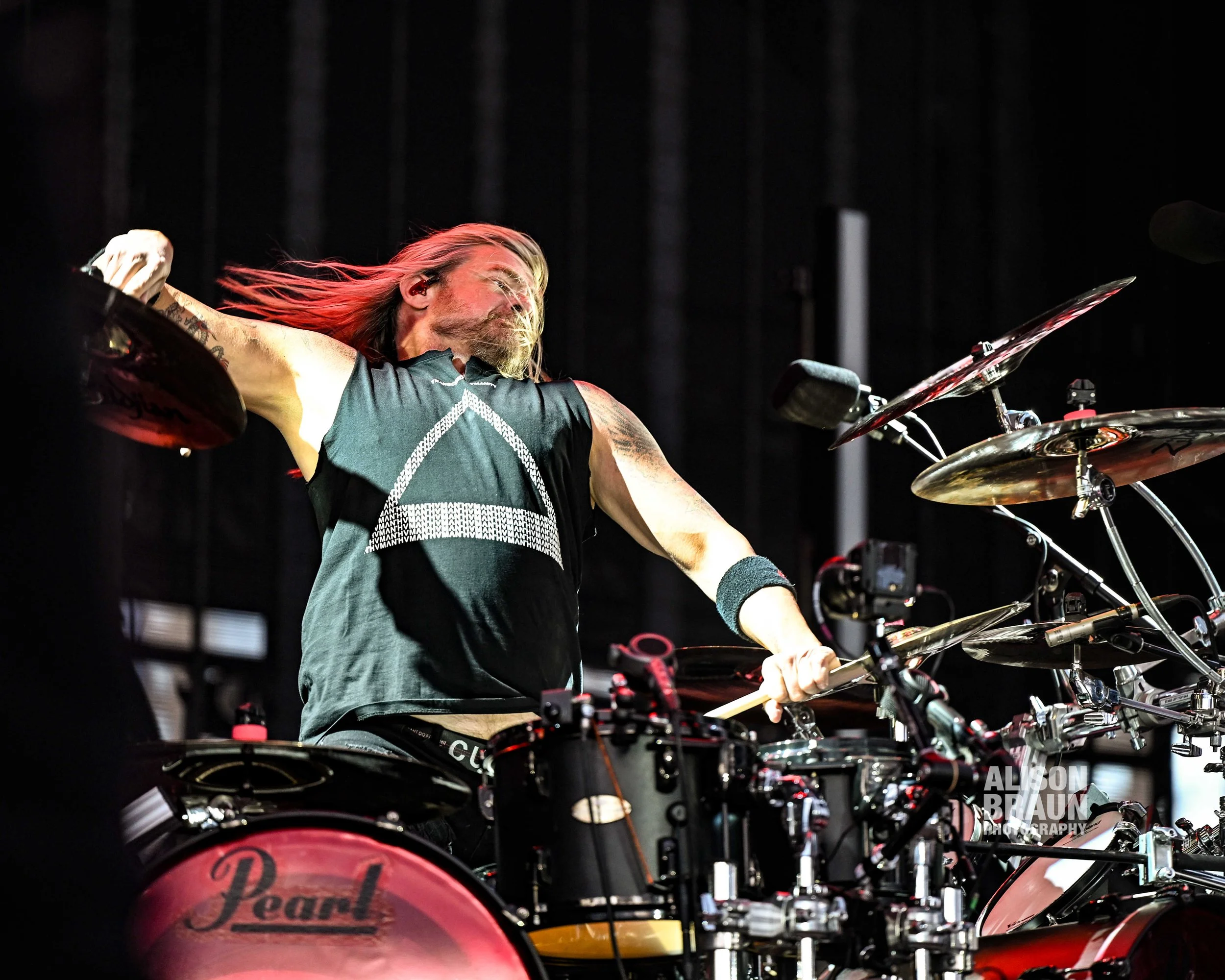
Evanescence- Will Hunt, Sick New World Festival, Las Vegas April 25, 2026
U: Who are your favorite metal bands, and what draws you to them?
A: Right now, Bloodywood is at the top for me. They’re doing exactly what crossover has always been about, pulling influences together musically and culturally, and pushing the sound forward. Bands like Slayer and Lamb of God hit for the same reason. Its intensity, but it’s also evolution.
I photographed Bloodywood twice, and the intensity with which they hit the stage elicits a deeply positive reaction in my very soul.
U: When did you decide to devote yourself to music photography as your artistic expression?
A: There wasn’t a single decision. It was built over time. I realized I kept showing up, kept shooting, and kept being drawn back to it. At some point, it stops being something you do and becomes the way you see things. I’ve recently retired from my corporate job and have decided that for the time I have left, I’m just gonna keep showing up with my camera.
U: How would you like to be remembered as an artist?
A: As someone who documented a shift while it was happening. Not after the fact, not once it was defined. Right in the middle of it. I also want to be a positive influence for young women who follow in my path. I hope that my work speaks to future generations in a positive way and lets people know what is possible.
U: Can you explain the origins of the Punk Rock Museum and the importance of having the museum?
A: The museum actually started as a COVID-era project that Fat Mike put together. Funny enough, one of the reasons I initially signed on was because Mike promised to return some of my old NOFX negatives. That part’s true.
But once it started coming together, it became something much bigger to me. I’ve spent decades documenting punk, hardcore, and metal culture, and so much of that history lived in boxes, archives, old prints, negatives, and memories. The museum became a place where that work could continue to live publicly rather than disappear into storage.
For our small initial group, co-founding the museum was not just about preservation, but also about connection. We wanted subsequent generations to be able to see what these scenes actually looked and felt like while they were happening. Not just the bands, but the community, the energy, the sometimes violence, the joy, and the creativity that came with it.
Punk changed people’s lives, including mine. The museum gives us a way to make sure that history stays visible and accessible instead of fading away.
For more information about Alison’s artwork and latest projects, please visit her site here. She can also be found on Instagram and Facebook.