Kohei Nawa: Photon Camp
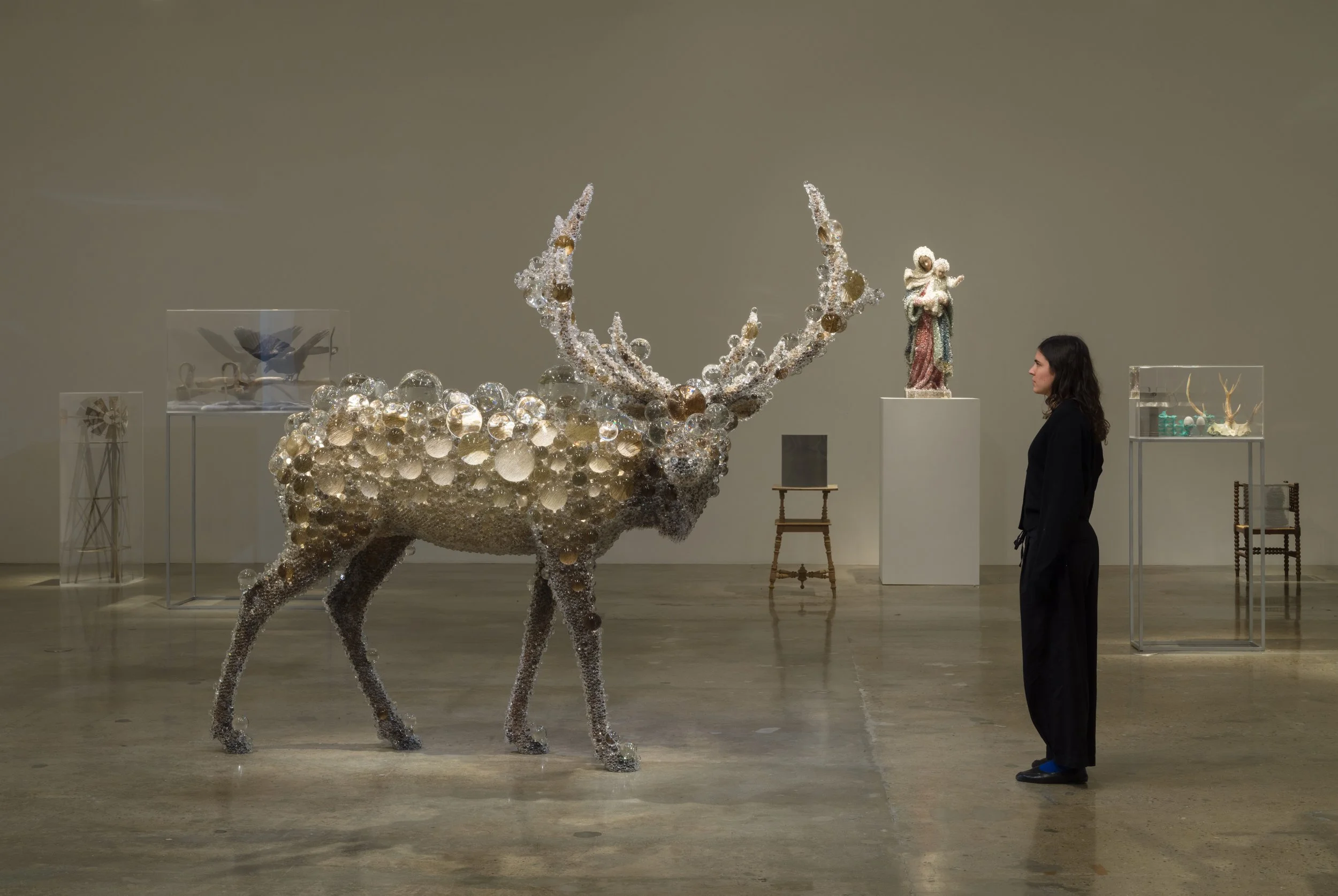
Kohei Nawa: Photon Camp 1201 South La Brea Avenue, Los Angeles, CA 90019 April 11 – June 6, 2026 Photography courtesy Pace Gallery
Los Angeles — Pace will present an exhibition by Kohei Nawa at its Los Angeles gallery from April 11 to June 6. Marking the Japanese multidisciplinary artist’s first solo show in Los Angeles, this presentation will bring together 20 new works from two of his iconic sculptural series—PixCell and Prism—creating a cohesive environment in which his sculptures engage directly with the architecture of the gallery’s main exhibition space.
Drawing out the unique properties of various traditional and unconventional materials in his paintings, sculptures, and installations, Nawa explores nuanced relationships between physical and virtual spaces, synthetic and natural forces, and the individual and the collective. Intrinsic to his practice is a rigorous engagement with technologies that traverse eras and cultures, particularly information technologies. Visual distortions and transformations cut across his artworks, encouraging viewers to consider the ways that digital technologies impact their relationship to and experience of the physical world.
Nawa has also expanded his practice into the fields of architecture and performance—he is currently presenting Mirage and Planet [wanderer], performance works created in collaboration with choreographer Damien Jalet, in select European and Asian cities.
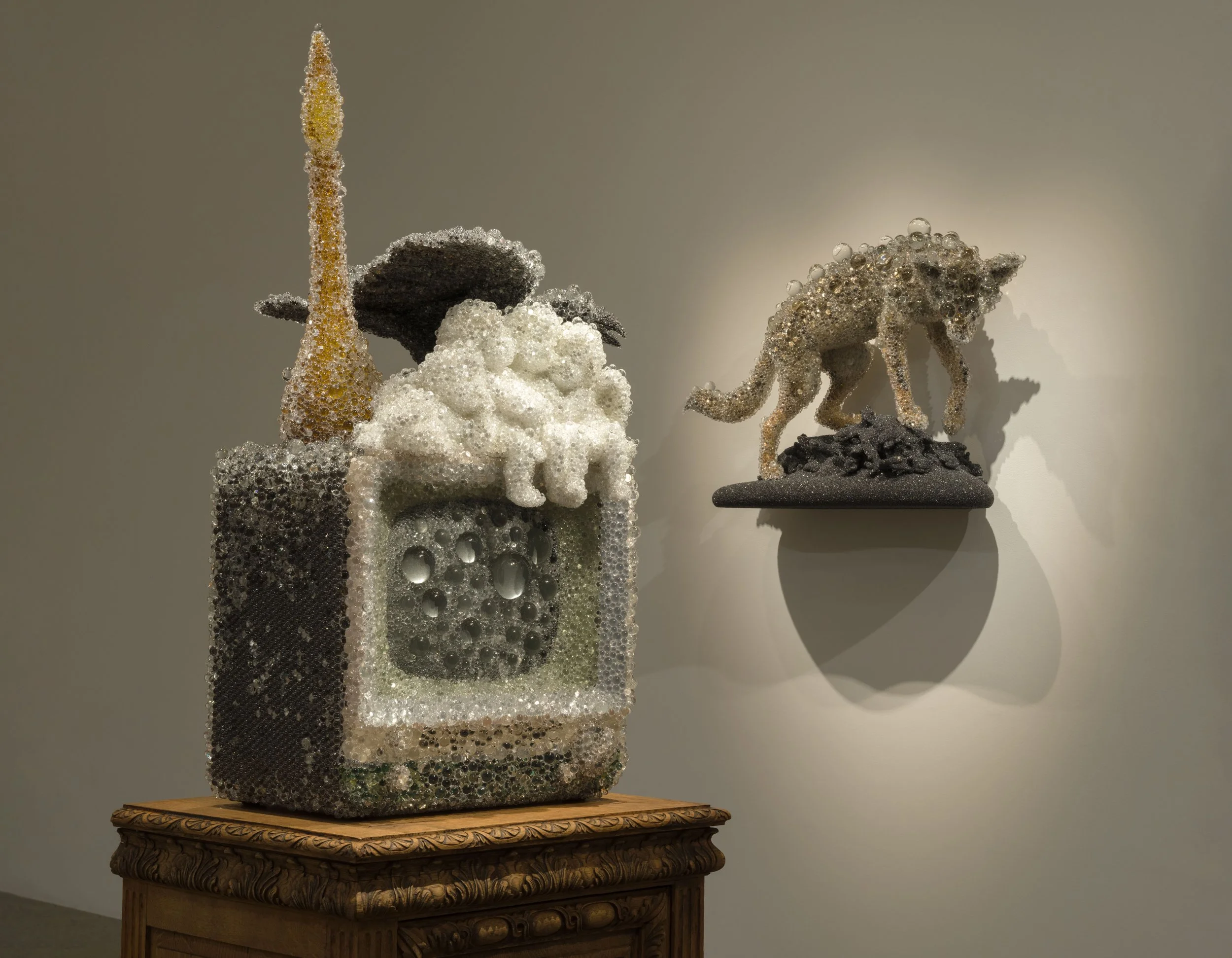
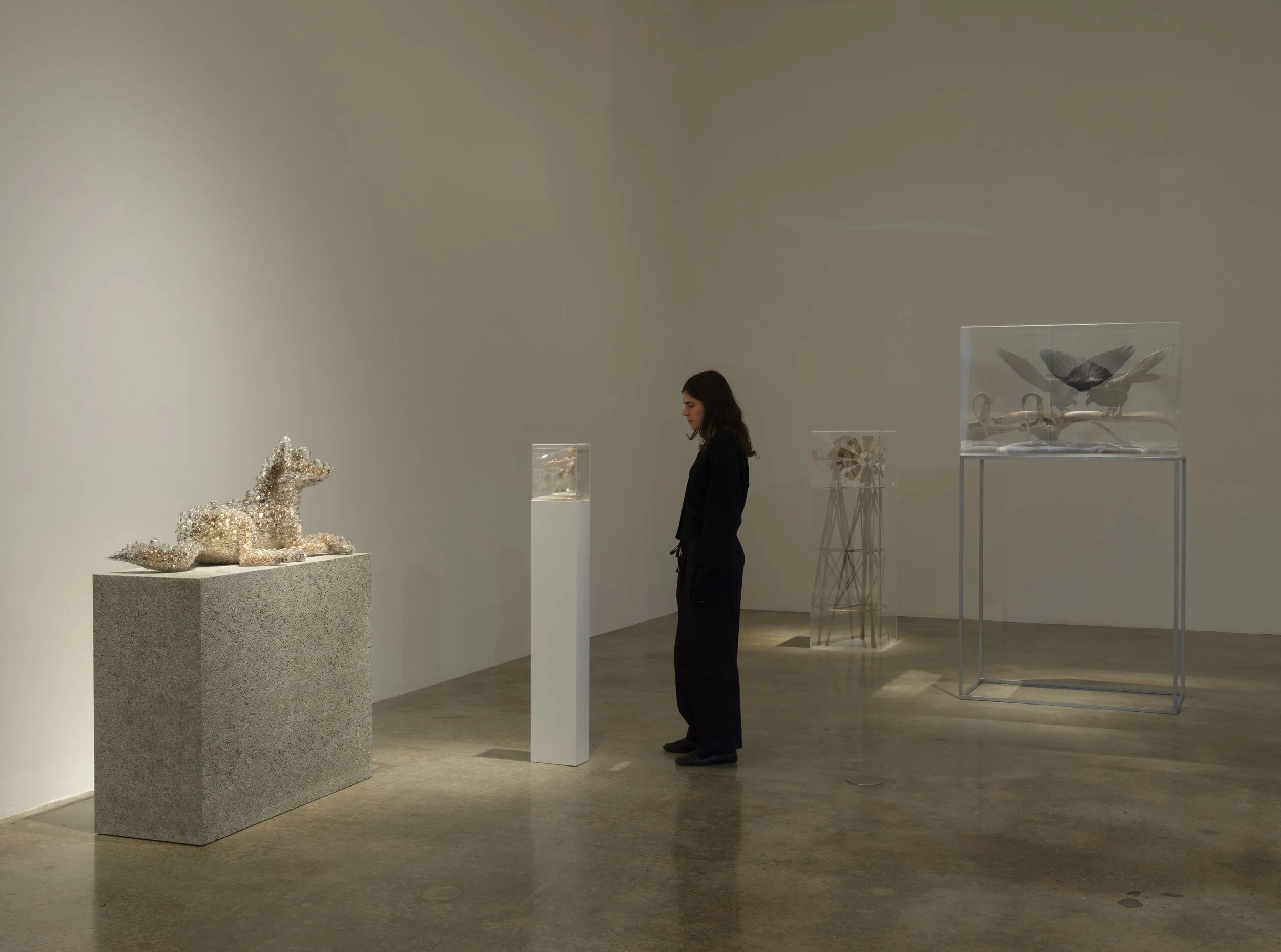
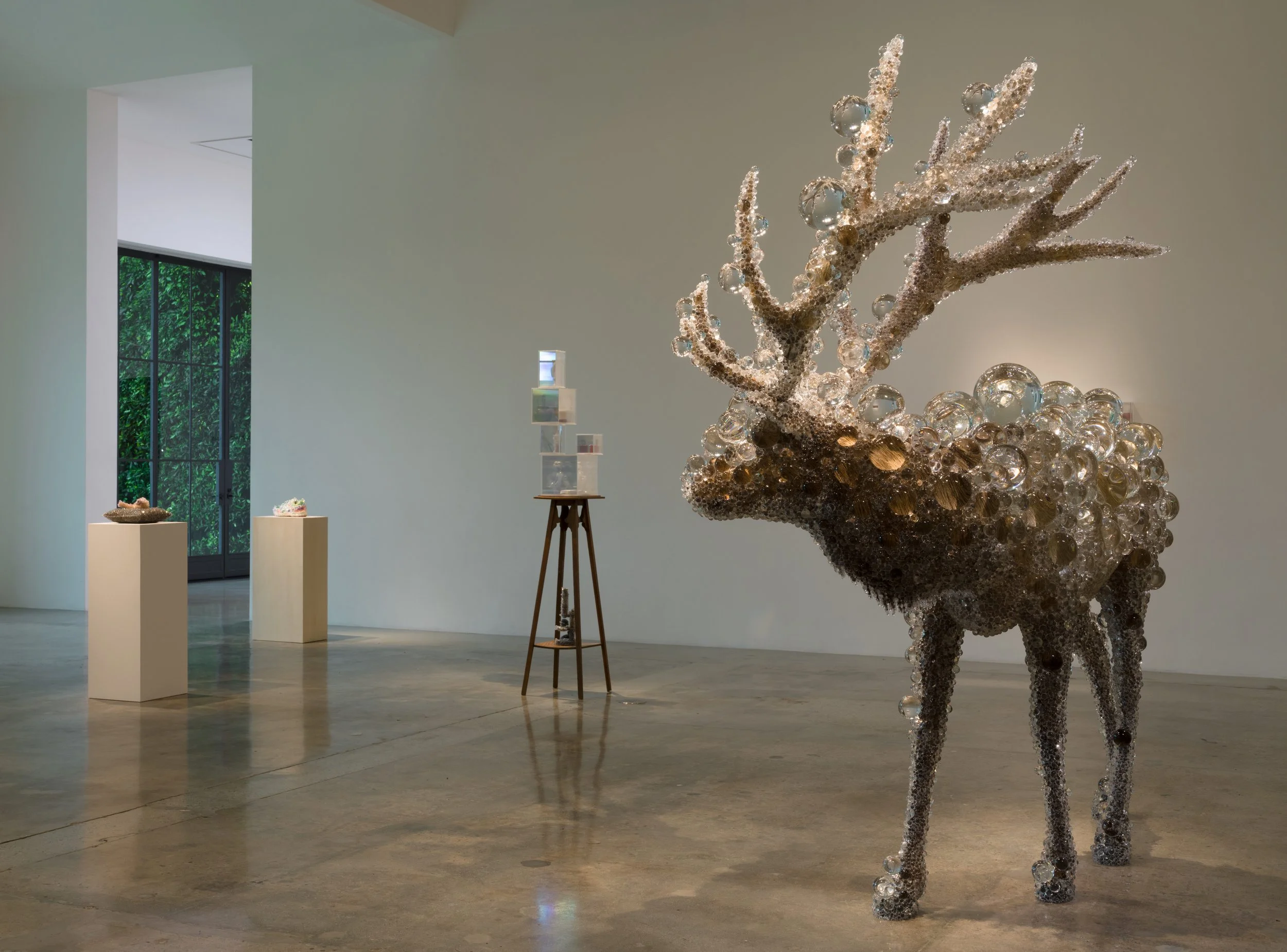
Kohei Nawa: Photon Camp 1201 South La Brea Avenue, Los Angeles, CA 90019 April 11 – June 6, 2026 Photography courtesy Pace Gallery
Titled Photon Camp, the artist’s exhibition at Pace Los Angeles foregrounds his expansive investigations of perceptual and sensory phenomena and reflects new directions in his recent work. For Nawa, an artwork is not a static entity fixed by a single interpretation. Rather, it is a phenomenological event that occurs when swarms of photons momentarily and miraculously come together. His first installation comprising both his PixCell and Prism series—which he has developed continuously over the course of his career—explores tensions between the natural and the artificial, the real and the fictional, and the sacred and the profane.
Memories of disaster—including the 1995 Great Hanshin-Awaji Earthquake and the 2011 Great East Japan Earthquake— have also profoundly shaped Nawa’s worldview and artistic practice as well as his vision for Photon Camp. Nawa understands the works in his installation at Pace as “drifting objects.” Japan has welcomed drifting objects carried on the sea throughout its history, forging its culture through processes of mixture and hybridization. Within the global circulation of matter, drifting objects wander, linger, and arrive in unintended places. For Nawa, they symbolize the cyclical nature of civilization on a planetary scale. Notions of fluctuation and impermanence cut across his work, inviting meditations on cycles of destruction and regeneration.
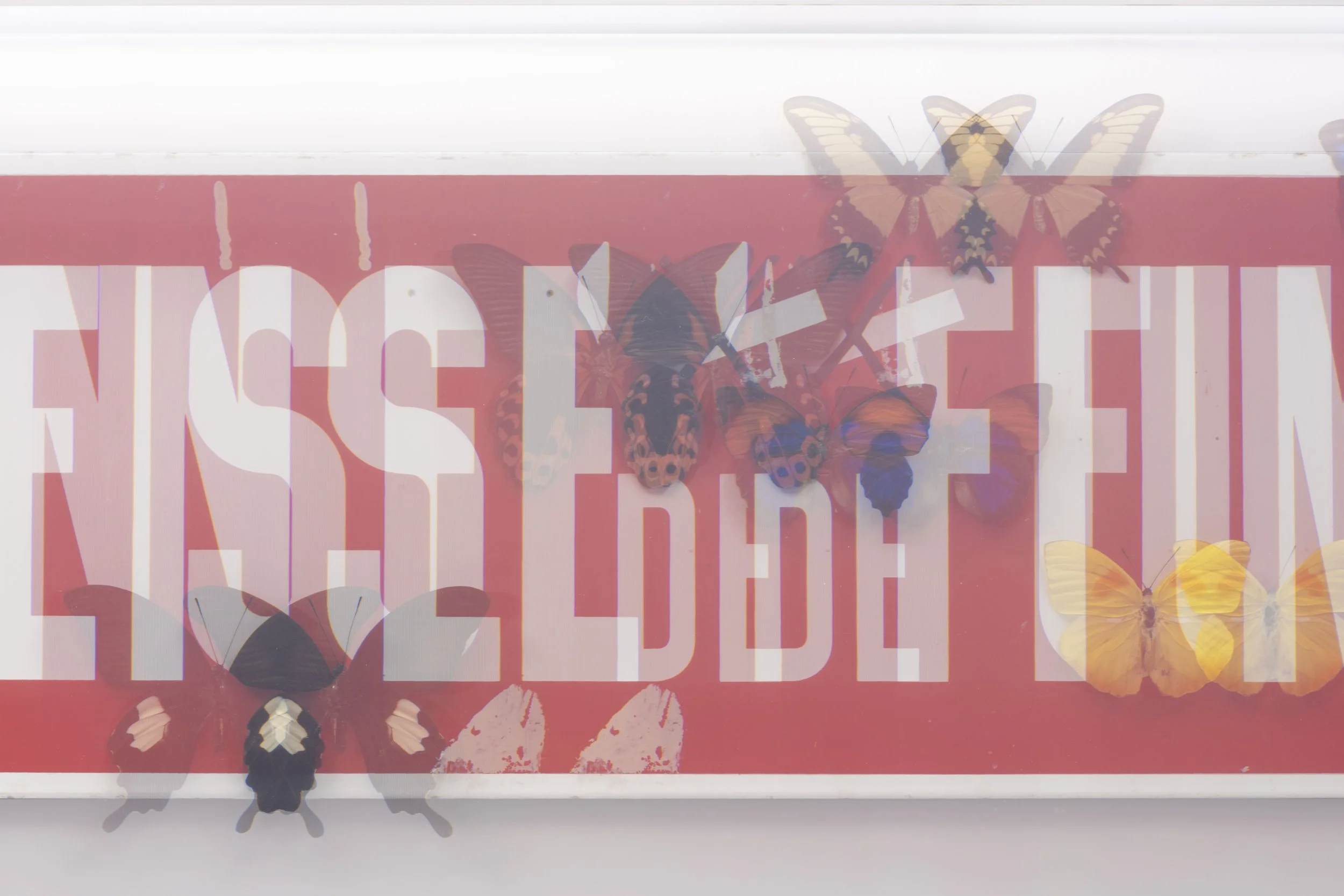
Kohei Nawa, Prism[Butterflies/Sign], 2026MIXED MEDIA ©Kohei Nawa, courtesy Pace Gallery. Photo: Nobutada OMOTE
The artist’s new PixCell and Prism works reflect his enduring engagement with the history of Surrealism. Incorporating taxidermized animals and found objects he has collected from different places and during various periods of his life, these sculptures juxtapose new technologies and modes of making with analogue materials. In his celebrated PixCell works, which he began producing 25 years ago, Nawa covers the surfaces of objects with transparent spheres, or cells, to distort viewers’ perceptions of the forms beneath. With his Prism works, he houses objects inside transparent boxes, which fragment and transform the appearance of their contents depending on the viewer’s position. Works in both series pose questions about the nature of reality through visuo-tactile experience.
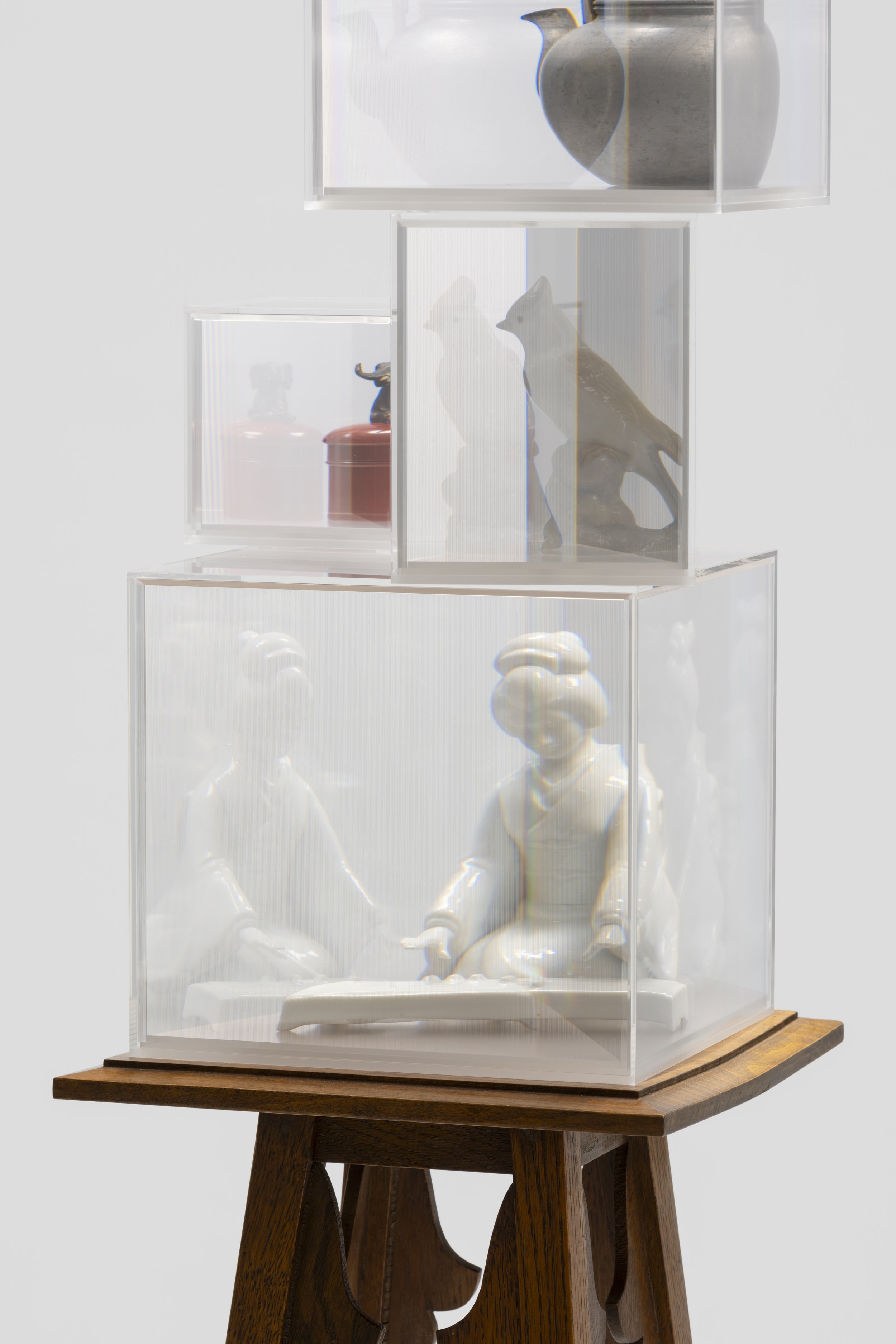
Kohei Nawa, Prism[Maria]/Prism[Kettle]/Prism [Toy-Bird]/Prism [Toy-Elephant]/Prism[Woman&Koto]/PixCell Microscope/Alex(detail),2026MIXED MEDIA ©Kohei Nawa, courtesy Pace Gallery.Photo: Nobutada OMOTE.
A large-scale, freestanding sculpture titled PixCell-Elk#3, which takes a taxidermized elk as its motif, is the centerpiece of Nawa’s presentation at the gallery. Other works surround the elk—a symbol of the majesty of the natural world—to create a cohesive environment, with some displayed atop pedestals and others situated on the floor or mounted on walls. Casting its gaze beyond the viewer, into the void, the elk presides over the artist’s installation, which unfolds through space along the elk’s axis. Together, these sculptures form a holistic, dynamic installation that pushes the boundary between artifice and nature.
Kohei Nawa (b. 1975, Osaka, Japan) is a multidisciplinary artist whose diverse practice explores the perception of virtual and physical space and probes the borders between nature and artificiality. He examines relationships between the individual and the whole, illustrating how parts aggregate, like cells, to create complex and dynamic structures. His practice spans painting, drawing, sculpture, and installation, as well as various facets of design and collaborative projects through his Kyoto-based creative platform, Sandwich. Nawa’s use of synthetic compounds underscores a recurring theme wherein materials such as polyurethane foam, translucent beads, ink, paint, glue, and silicone oil become devices that prompt an awareness of our mediated environment.
Notable one-artist exhibitions include L_B_S, Ginza Maison Hermes, Tokyo (2009); Synthesis, Museum of Contemporary Art, Tokyo (2011); SCULPTURE GARDEN, Kirishima Open-air Art Museum, Kagoshima, (2013); Kohei Nawa: ESPUMA, Japan House São Paulo, Brazil (2017); Kohei Nawa: Japonisms 2018, Throne, Musée du Louvre, Paris (2018–2019); Kohei Nawa: TORNSCAPE, SCAI The Bathhouse, Tokyo (2021); and Kohei Nawa: vol.3 Cell, Gallery Nomart, Osaka, Japan (2023); Sentient, SCAI The Bathhouse, Tokyo (2025), among others. He has participated in the 6th Asia Pacific Triennial in Brisbane, Australia, 2009; the 14th Asian Art Biennale Bangladesh in Dhaka, Bangladesh, 2010 (Grand Prize winner); Busan Biennale 2010, Korea, 2010; and Aichi Triennale in Nagoya, Japan, 2013 and 2016. His work is held in public collections worldwide, including Hara Museum of Contemporary Art, Tokyo; Long Museum, Shanghai; The Metropolitan Museum of Art, New York; Mori Art Museum, Tokyo; National Gallery of Victoria, Melbourne; Queensland Art Gallery, Brisbane, Australia, among many others. Nawa is currently a Professor at the Kyoto University of Art and Design.
Pace is a leading international art gallery representing some of the most influential contemporary artists and estates from the past century, holding decades-long relationships with Alexander Calder, Jean Dubuffet, Barbara Hepworth, Agnes Martin, Louise Nevelson, and Mark Rothko. Pace enjoys a unique U.S. heritage spanning East and West coasts through its early support of artists central to the Abstract Expressionist and Light and Space movements.
Since its founding by Arne Glimcher in 1960, Pace has developed a distinguished legacy as an artist-first gallery that mounts seminal historical and contemporary exhibitions. Under the current leadership of CEO Marc Glimcher, Pace continues to support its artists and share their visionary work with audiences worldwide by remaining at the forefront of innovation. Now in its seventh decade, the gallery advances its mission through a robust global program— comprising exhibitions, artist projects, public installations, institutional collaborations, performances, and interdisciplinary projects. Pace has a legacy in art bookmaking and has published over five hundred titles in close collaboration with artists, with a focus on original scholarship and on introducing new voices to the art historical canon.
Today, Pace has seven locations worldwide, including European footholds in London and Geneva as well as Berlin, where the gallery established an office in 2023. Pace maintains two galleries in New York—its headquarters at 540 West 25th Street, which welcomed almost 120,000 visitors and programmed 20 shows in its first six months, and an adjacent 8,000 sq. ft. exhibition space at 510 West 25th Street. Pace’s long and pioneering history in California includes a gallery in Palo Alto, which was open from 2016 to 2022. Pace’s engagement with Silicon Valley’s technology industry has had a lasting impact on the gallery at a global level, accelerating its initiatives connecting art and technology as well as its work with experiential artists. Pace consolidated its West Coast activity through its flagship in Los Angeles, which opened in 2022. Pace was one of the first international galleries to establish outposts in Asia, where it operates permanent gallery spaces in Hong Kong and Seoul, along with an office and viewing room in Beijing. In spring 2024, Pace will open its first gallery space in Japan in Tokyo’s new Azabudai Hills development.
Kohei Nawa’s exhibition Photon Camp is being exhibited at the Pace Gallery location at 1201 South La Brea Avenue, Los Angeles, CA 90019 from April 11 to June 6, 2026. For more information about this exhibition and others, please visit the Pace Gallery’s website here. Pace Gallery can be found on Instagram and Artsy, too.