Ellen Gallagher: Fast-Fish and Loose-Fish
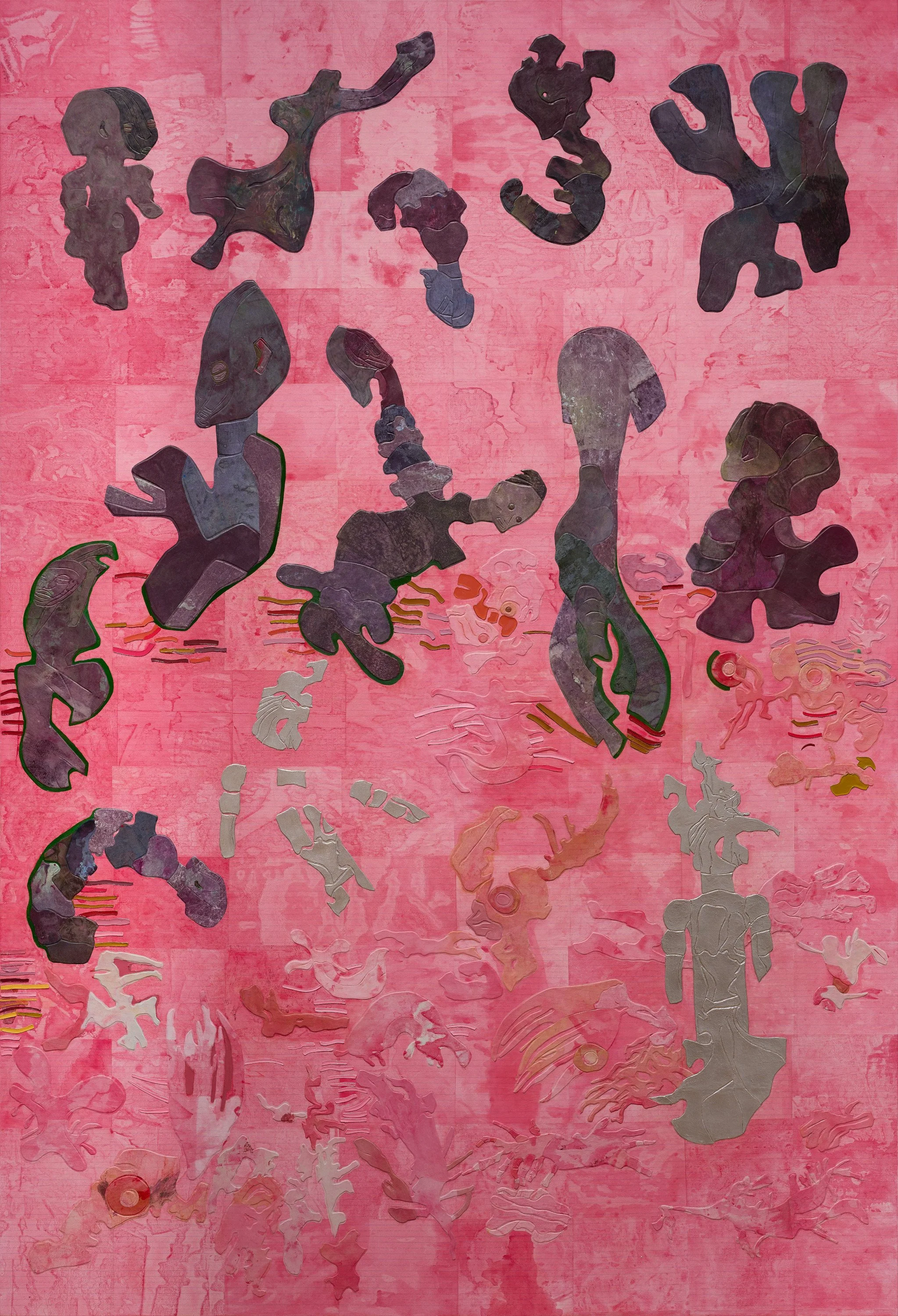
Ellen Gallagher Fast-Fish and Loose-Fish, 2023 Oil, pigment, palladium, and paper on canvas 116 1/2 x 79 1/2 inches (295.9 x 201.9 cm) © Ellen Gallagher Photo: Tony Nathan Courtesy the artist and Gagosian
PARIS, —Gagosian is pleased to announce Ellen Gallagher: Fast-Fish and Loose Fish, on view through May 23 at the rue de Ponthieu gallery. The exhibition features a cycle of three large-scale paintings titled Fast-Fish and Loose-Fish that Gallagher produced between 2023 and 2026. Among these is a work featured in Gallagher’s exhibition All of No Man’s Land Is Ours at the Stedelijk Museum, Amsterdam (2023–24).
Built upon canvas-mounted sheets of ruled, gridded paper that are stained in a vibrant pink hue, then layered with brilliantly colored, thickly impastoed pigment and incised palladium leaf, each of the Fast-Fish and Loose-Fish paintings employs a material abundance from which Gallagher’s playful meditations emerge. She takes a sculptural approach to her process, often working paintings from multiple positions. Exploding their compositional grids into groupings of vibrant lines and biomorphic shapes, she melds Post-Minimalist abstraction with imagined ocean-floor topographies and phantasmal worlds.
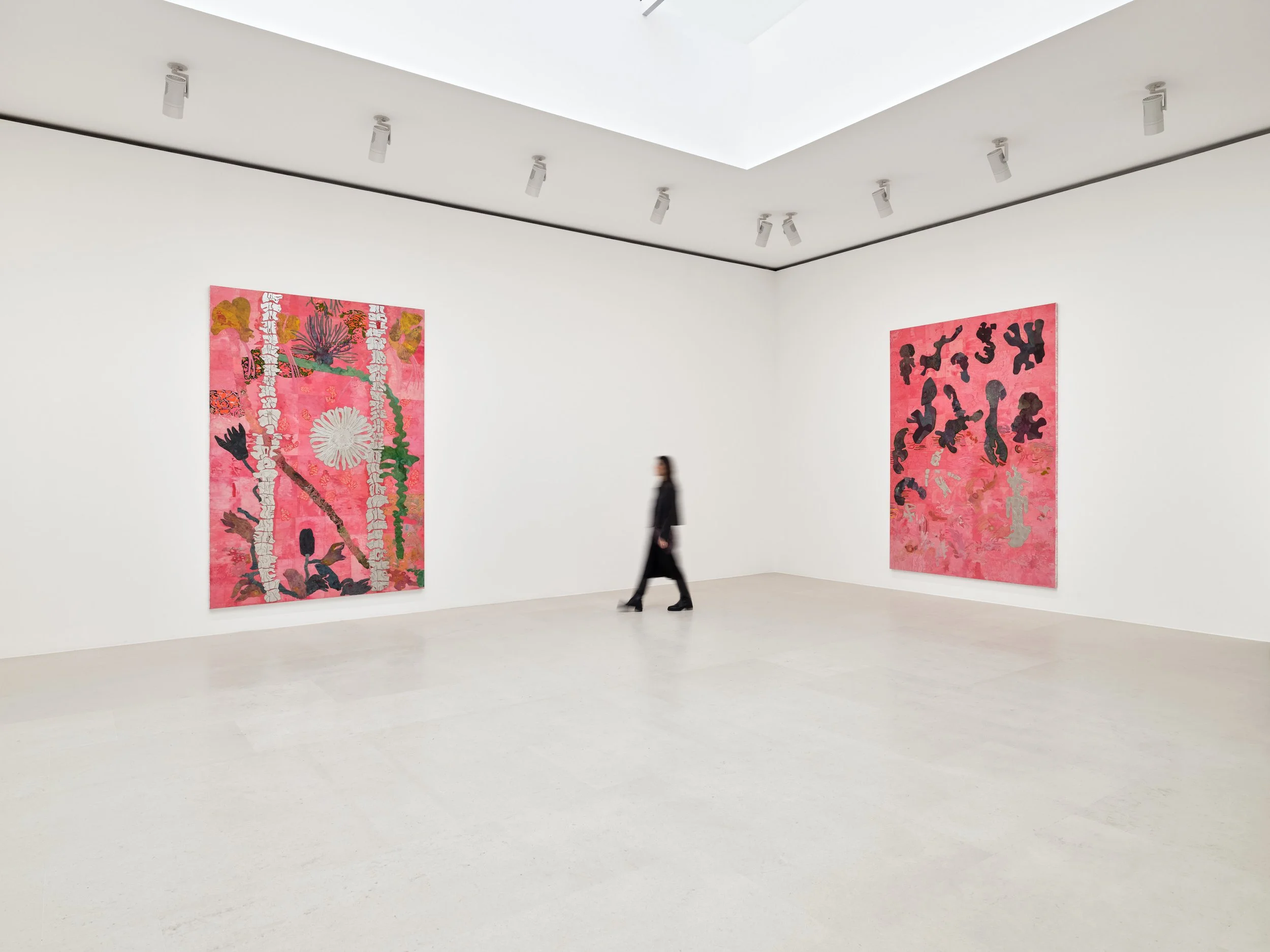
Ellen Gallagher Fast-Fish and Loose-Fish, 2026, installation view © Ellen Gallagher Photo: Thomas Lannes Courtesy the artist and Gagosian
Gallagher has long been fascinated by the ocean. Her 2010 film installation Osedax, a collaboration with Edgar Cleijne, opens with a shipwreck off the coast of Rhode Island, interspersing animated imagery of a whale fall—the descent of a whale carcass to the abyssal depths of the ocean floor—within a radiant network of sea flora and fauna.
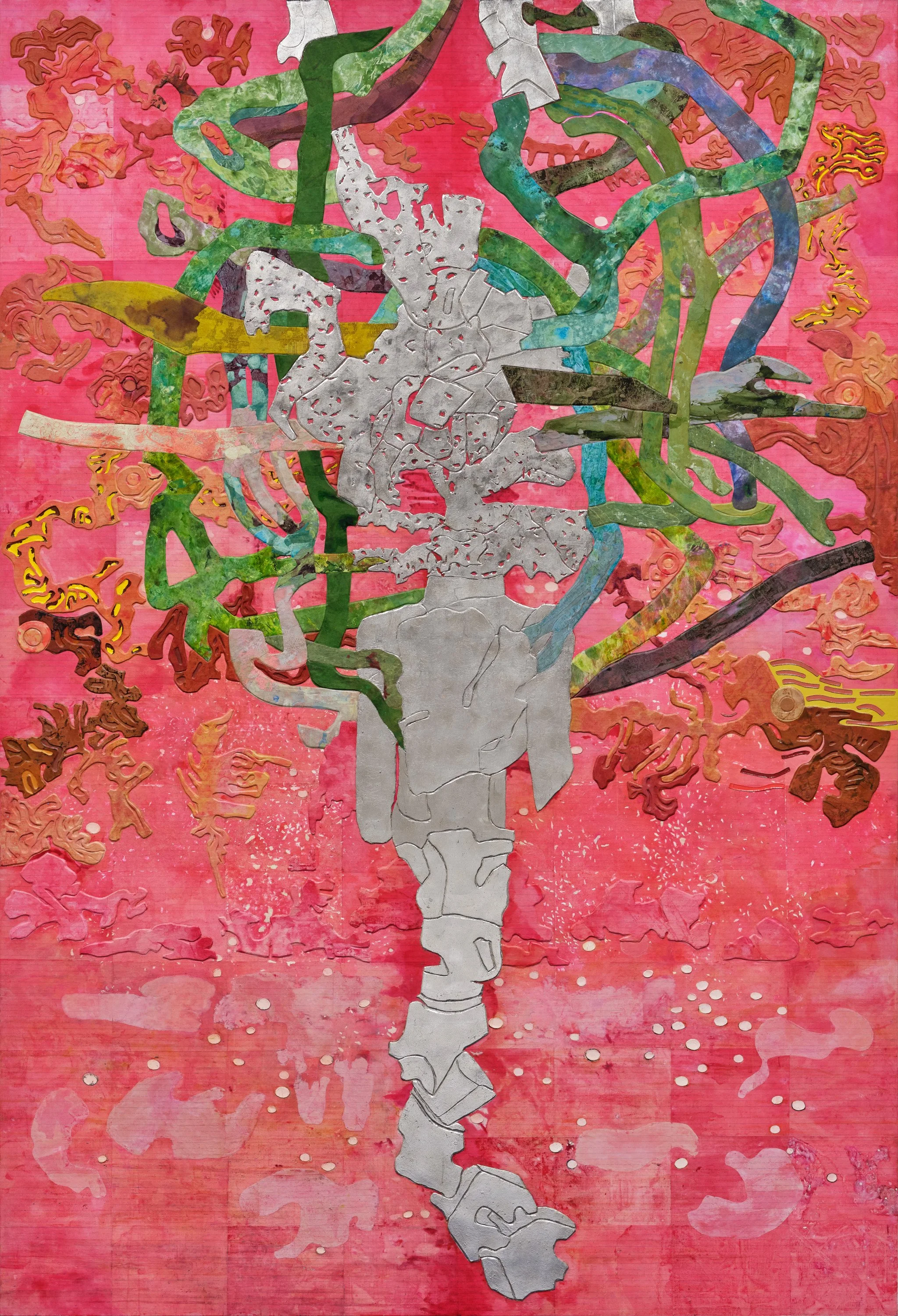
Ellen Gallagher Fast-Fish and Loose-Fish, 2025 Oil, pigment, palladium, and paper on canvas 116 5/8 x 79 1/2 inches (296 x 202 cm) © Ellen Gallagher Photo: Thomas Lannes Courtesy the artist and Gagosian
The Fast-Fish and Loose-Fish series similarly considers this phenomenon of slow decomposition becoming an intertwined regenerative ecosystem. The whales’ bodies support a profusion of life, from crustaceans and mollusks to bone-eating Osedax worms and specialized bacteria. Cross sections of the same bones suggest a shifting orientation within each picture plane, exploring the permeability between bodies and the environments they inhabit. For Gallagher, the seabed is inseparable from the historical marks of colonization and enslavement. In these works, tumbling caryatid forms inspired by African Fang sculptures join the whale bones amid strands of kelp and crinoid fossils.
Herman Melville’s Moby-Dick (1851) is an important source of inspiration for Gallagher. The series title, Fast-Fish and Loose-Fish, alludes to chapter 89 of the famously discursive novel, in which the author departs from the book’s primary narrative to define “fast-fish,” which have been claimed by a whaler, versus “loose-fish,” which remain free of such claims.
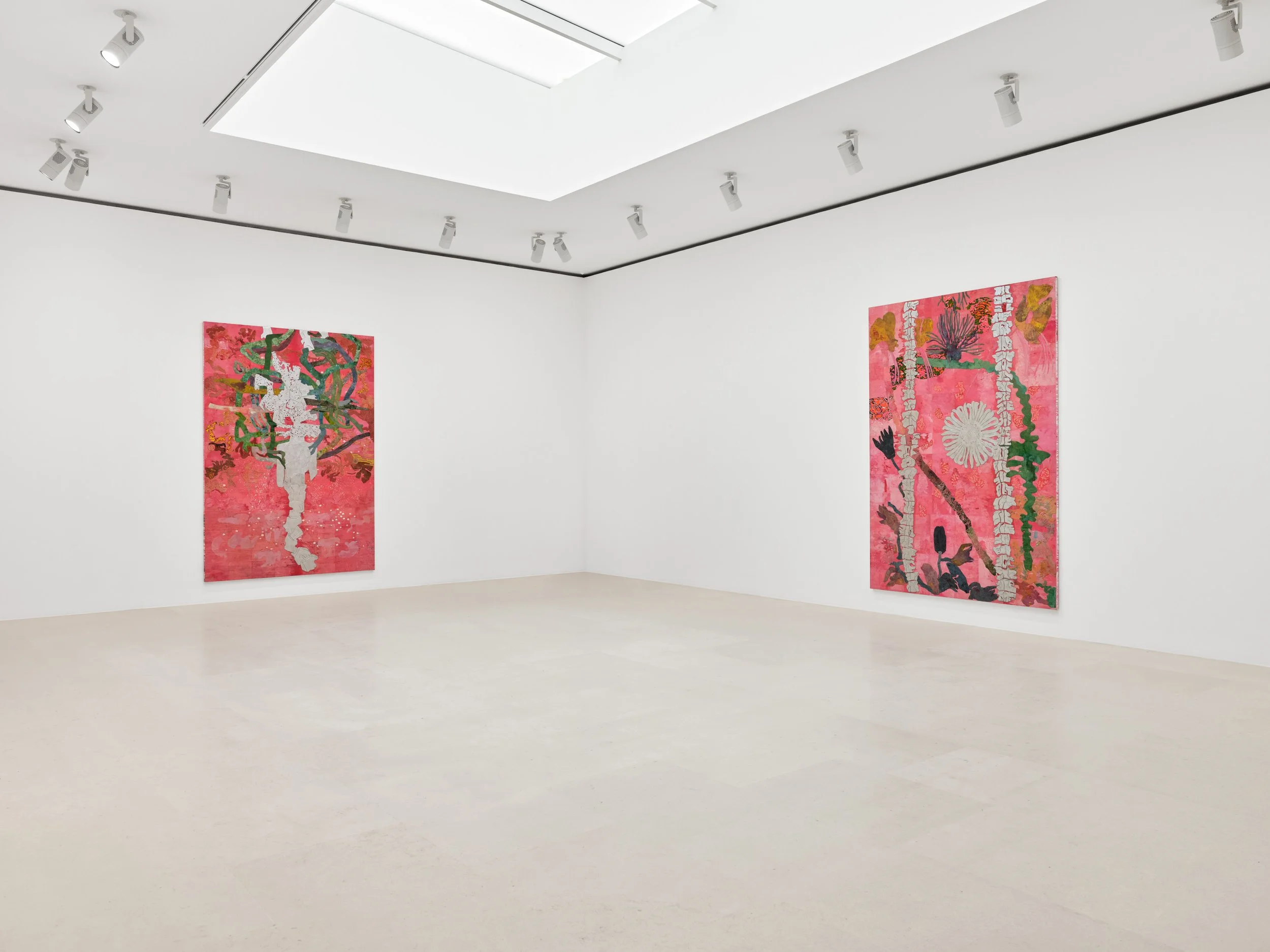
Ellen Gallagher Fast-Fish and Loose-Fish, 2026, installation view © Ellen Gallagher Photo: Thomas Lannes Courtesy the artist and Gagosian
This discussion develops into a wide-ranging reflection on the nature of possession and freedom. Melville further uses the microcosm of human conflicts and frailties on the ship to suggest broader struggles in American society. The book’s publication coincided with the enactment of the Fugitive Slave Act (1850), which legally obliged free states to return escaped fugitives to their enslavers. in the South. Whaling ships were a place where Black men might find refuge. For the artist, we are the progeny of the novel’s Pip, one of the earliest significant Black characters in American literature, whose grammars we inherit whether we like it or not. Pip’s descent to the seabed is obliquely referenced in each of the Fast-Fish and Loose-Fish paintings. With their underlying grids of penmanship paper, above which hover imaginative and interspecific realms, Gallagher’s works suggest a wealth of resources that can constitute possibilities on the other side of the Middle Passage.
A conversation between the artist and Robin D. G. Kelley, the Gary B. Nash Endowed Chair in United States History at the University of California, Los Angeles, was held at the gallery on Saturday, March 28, at 11:30am.
The exhibition Fast-Fish and Loose-Fish opened on March 26 and will be on view until May 23, 2026, at Gagosian’s Paris location 4 rue de Ponthieu, Paris. There was an opening reception on Thursday, March 26, from 6–8 pm .For Ellen Gallagher’s biographical information and exhibition history, please visit here.For more information about the artists represented by Gagosian and other exhibitions at the gallery, please visit the gallery’s site here. The gallery can also be found on Pinterest, X, YouTube,Facebook, Instagram, and Artsy.