ALIOUNE DIAGNE: Saytu
Toutes les images / All images: © Courtesy of the artist and TEMPLON, Paris - Brussels - New York
Following his national pavilion at the 2024 Venice Biennale, painter Alioune Diagne returns to Paris with “Saytu” a new body of work rooted in two years of research across Senegal. This exhibition foregrounds the preservation, transformation, and transmission of cultural heritage as key themes.
In Wolof, saytu means searching, examining, and preserving what is most precious. The artist spent months traveling through Senegal's central and southeastern regions, meeting minority communities in remote areas, including the Bassari, Bédik, Dialonké, and Coniagui. He documented their ancestral customs and rituals as they work to sustain and protect them.
Toutes les images / All images: © Courtesy of the artist and TEMPLON, Paris - Brussels - New York
The project began with a two-month stay in Etiolo, Bassari territory. Diagne then visited the Bédik communities of Ethiwar, Ibel, Iwol, and Andjel, visiting the latter twice. He shared daily life with the Dialonké in Madina Baffé and traveled to central Senegal to meet the Coniagui in Koupentoum, where certain rituals are gradually disappearing.
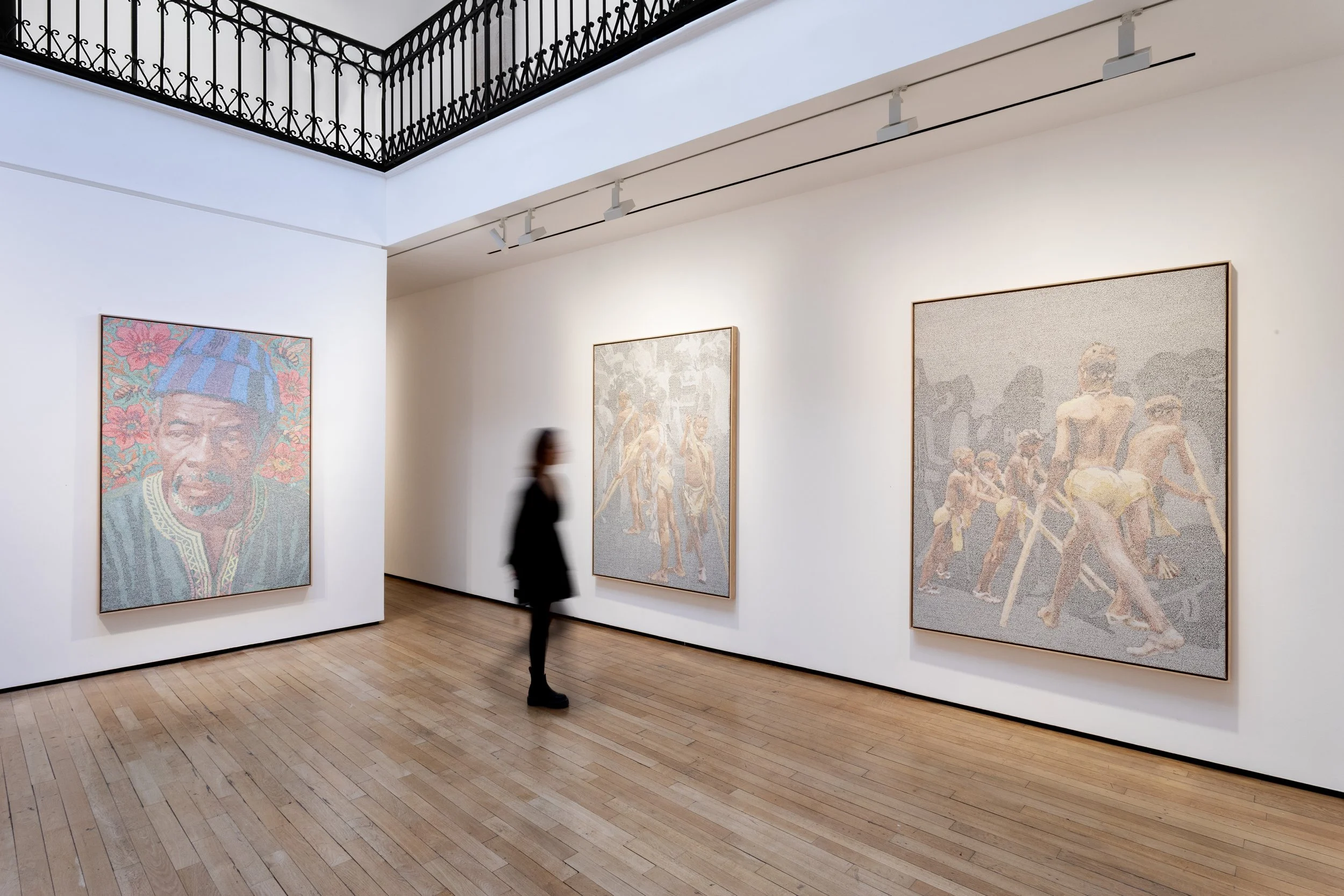
Working closely with these communities, the artist patiently observed, documented, and reinterpreted these traditions through his highly distinctive visual language. His technique - developed gradually over the years - is based on assembling small units he calls “unconscious signs.” When brought together, they form vivid, figurative scenes of striking intensity. Masks, dances, costumes, music, and song are thus translated into painting to capture the vibrant energy and spiritual essence of these ceremonies.
Toutes les images / All images: © Courtesy of the artist and TEMPLON, Paris - Brussels - New York
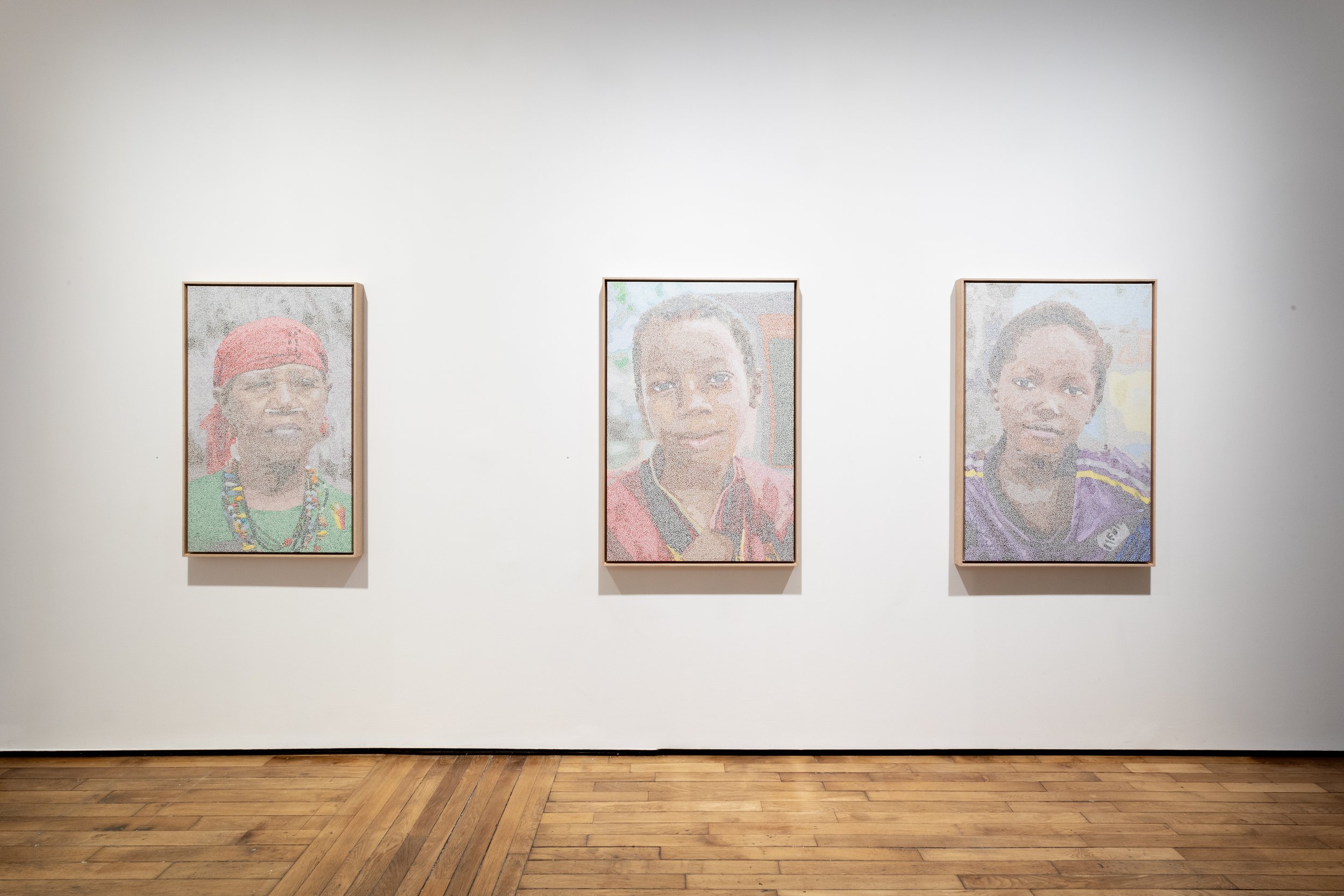
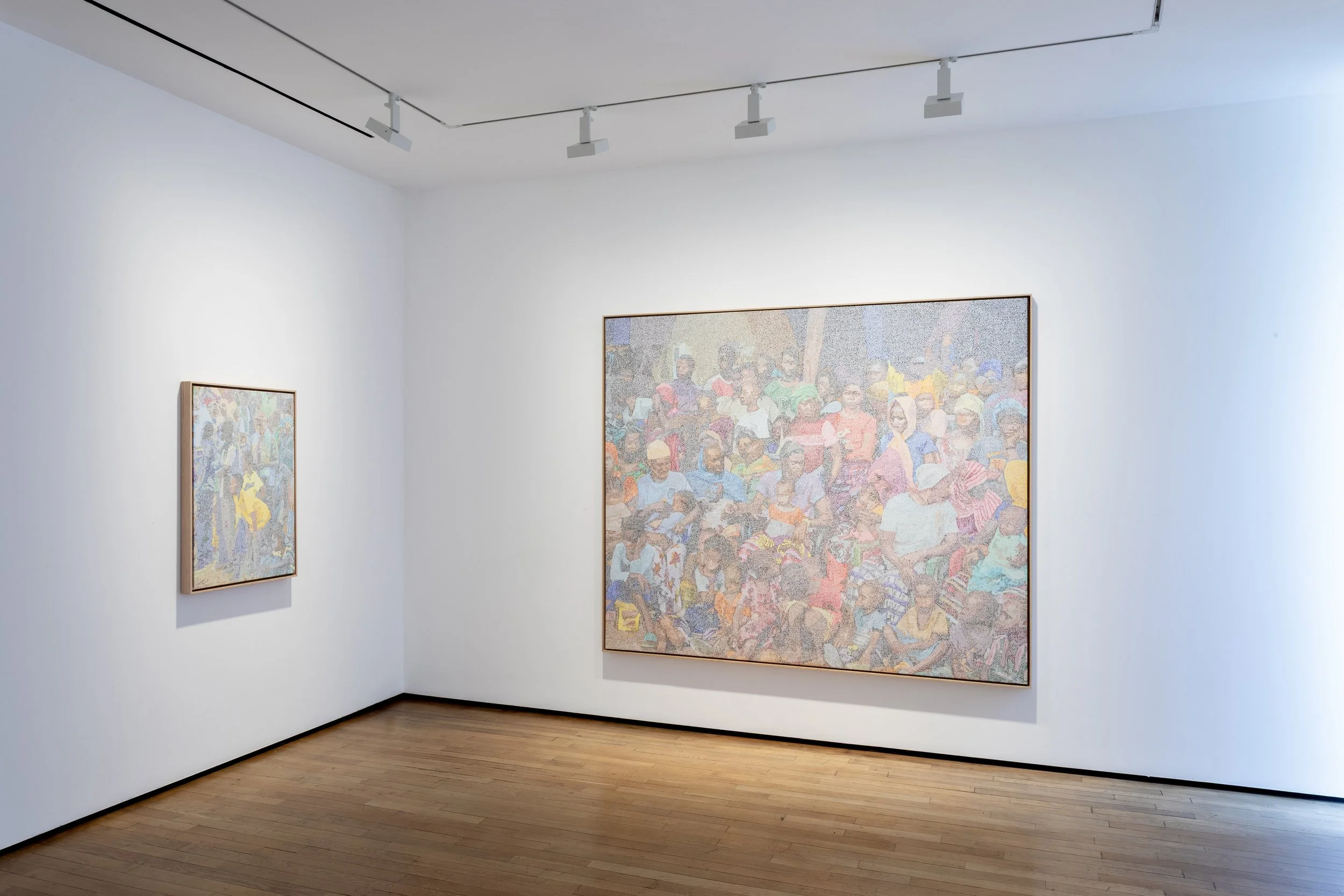
Initially, and unconsciously, influenced by his grandfather, a Qur’anic teacher, Diagne developed an almost pointillist vocabulary he sees as a universal language for the inexpressible. Moving between abstraction and figuration, some works - such as Jeune fille Bassari [Young Bassari Girl] (2025) - reveal themselves instantly, while others, like La foule qui danse [The Dancing Crowd] or Sous l’arbre sacré [Under the Sacred Tree] (2025), invite slower, more attentive decoding, preserving the mystery inherent in traditions passed down orally through generations.
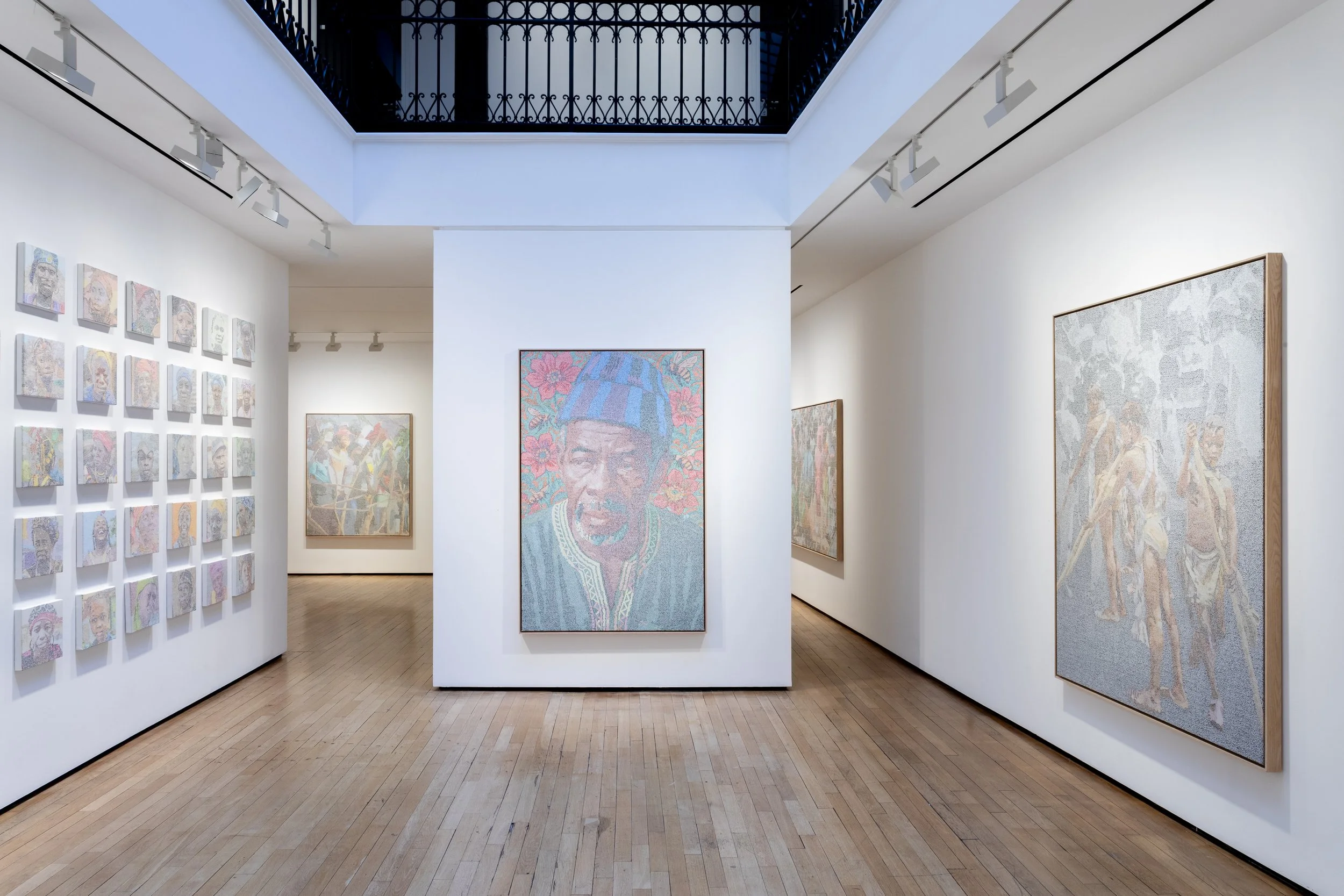
A chronicler of his time, the artist aims to create, in his own way, the future archives of Senegal. Faces/Times, his monumental installation, presents 100 portraits of individuals he met during his journey and embodies his ambition. The anonymous faces reflect two central themes: the preservation of personal stories and memories, and the transient nature of digital identity. In this sense, “Saytu” explores how knowledge and cultural legacies are transmitted and transformed in the context of social media and globalization, raising these central questions: How are such legacies evolving, and what roles will they play in the future?
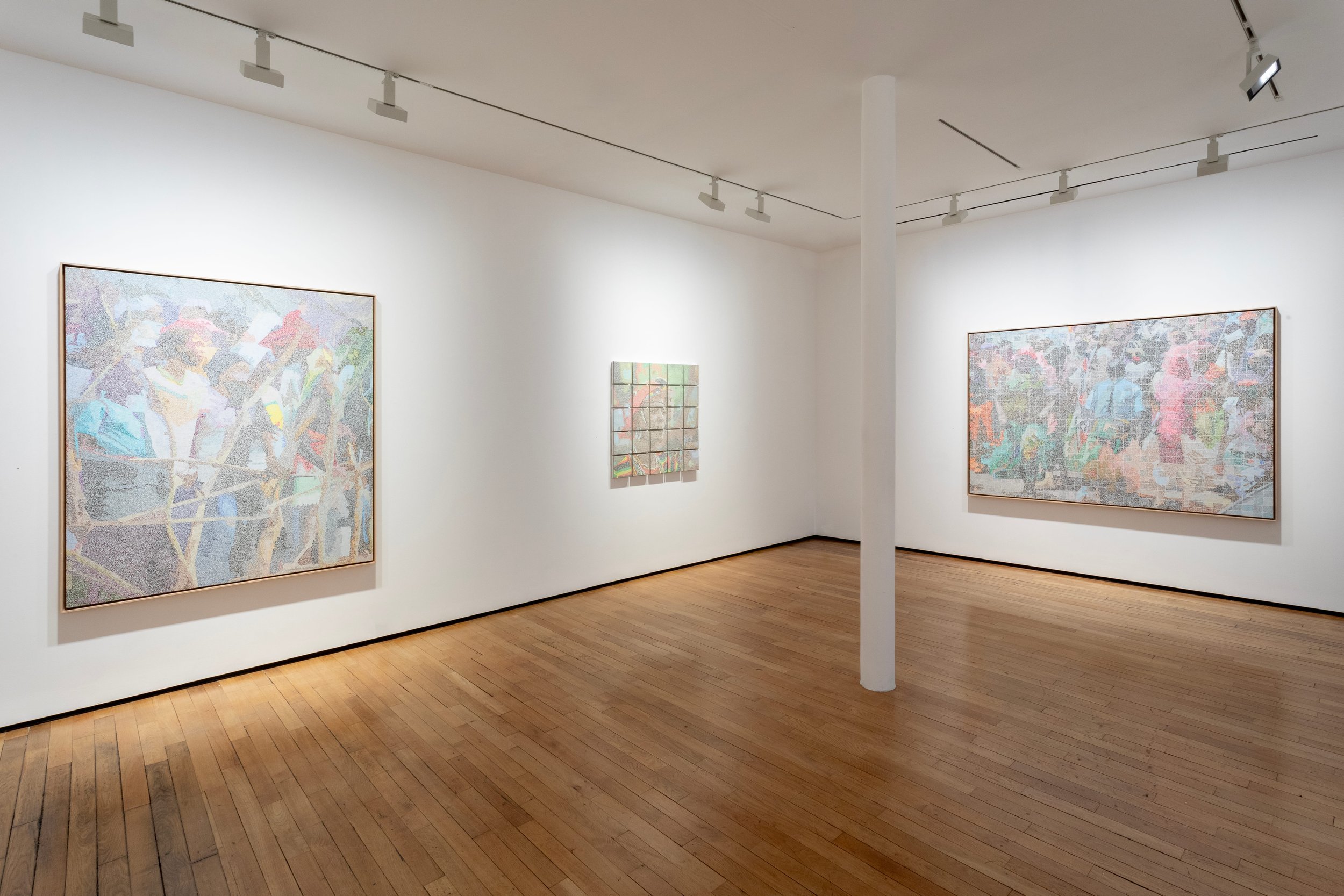
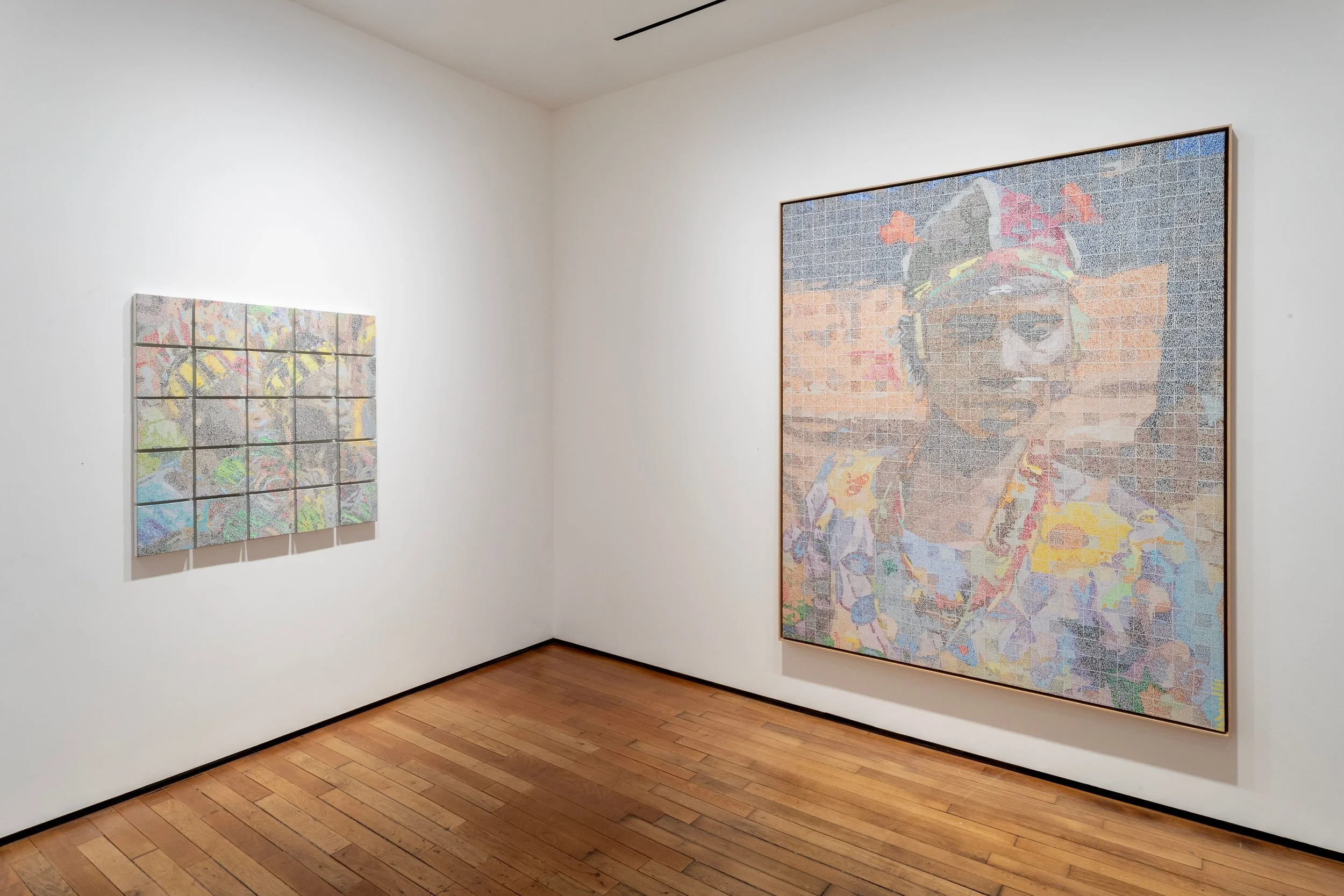
Toutes les images / All images: © Courtesy of the artist and TEMPLON, Paris - Brussels - New York
Among the communities he encountered, Diagne focused on women and their rituals, highlighting their central role in social life and knowledge transmission. La première ligne [The Front Line], (2025) and Rythme Dialonké [Dialonké Rhythm], (2026) honor their strength and creativity, situating these traditions in a contemporary dialogue about women's roles in society.
More broadly, the project explores the vulnerability of global cultural heritage, focusing on themes of preservation, reinvention, and transmission of tradition. Using a contemporary painterly language, Alioune Diagne invites reflection on how today's societies address these concerns.
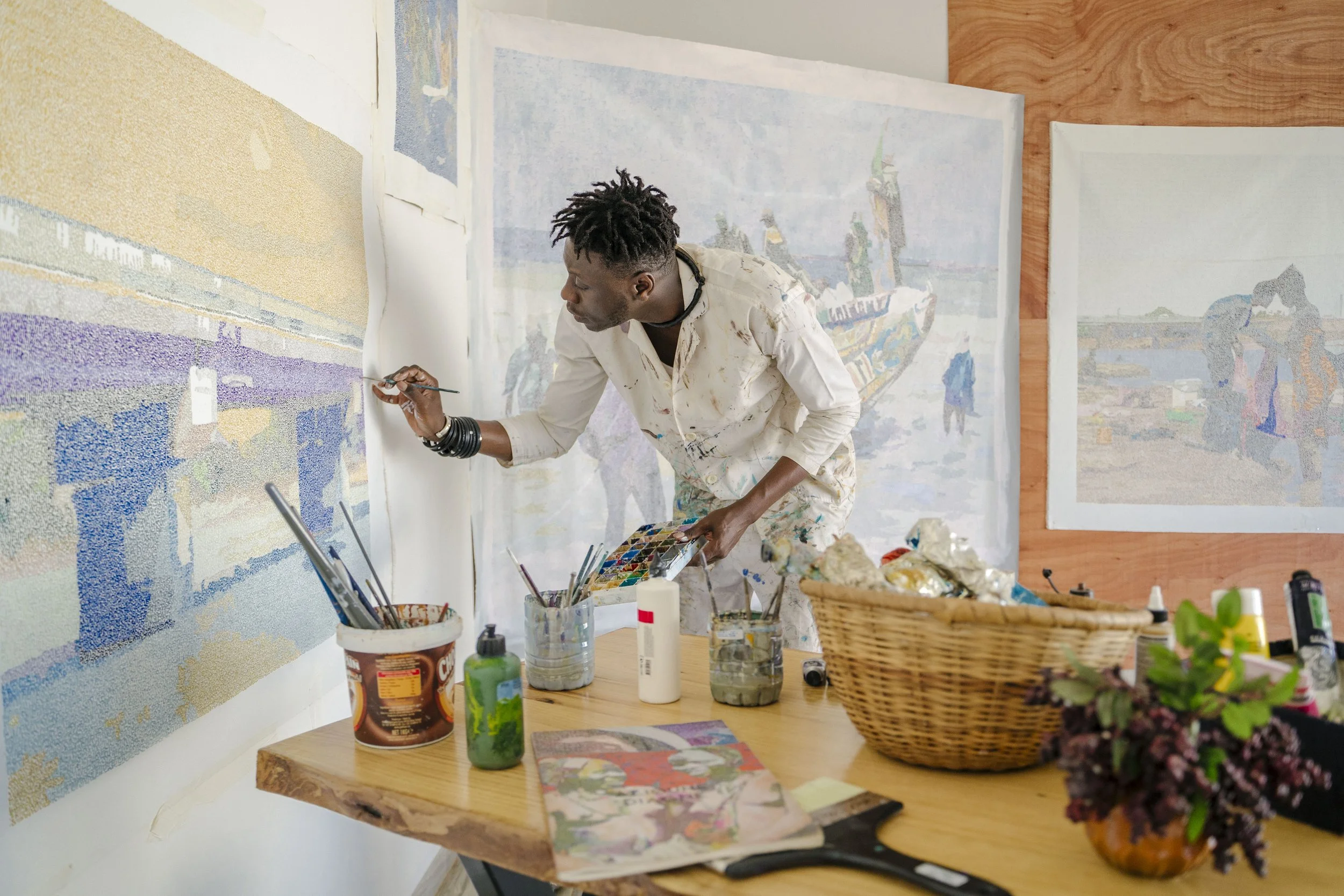
Photo Credit: © Carmen Abd Ali
Biography
Born in 1985 in Kaffrine, Senegal, Alioune Diagne lives and works in Senegal. He studied at the École nationale des Beaux-Arts in Dakar in 2008. A socially engaged artist, his work paves the way for a profound exploration of major contemporary issues: ecology, the role of women in society, racism, as well as the ideas of transmission and heritage. Since 2011, his work has been featured in numerous solo and group exhibitions in Europe, Africa, Asia, and the United States, including “Sink or Swim,” 11th Dakar Biennale, Villa Spivey, Dakar, Senegal (2014); “Itinéraire en Couleurs,” Espace Jean Drevon, Saint-Jean-de- Bournay, France (2014); the Art Basel Off-Site exhibition, Basel (2017); “Un nouveau regard,” Aosta, Italy (2017). In April 2024, he represented Senegal at the 60th Venice Biennale with the project “Bokk – Bounds.” He has also participated in several editions of the Dakar Biennale, notably in 2022 with an exhibition at the Grand Théâtre de Dakar, as well as in the 2024 edition. Winner of the Norval Foundation Public Vote Prize in 2023, he exhibited that same year in the Netherlands as part of the group exhibition “Africa Supernova,” as well as at the Musée des Beaux-Arts in Rouen with his solo exhibition “Ndox-Glint.” In January 2024, the Templon gallery in Paris presented his solo exhibition “Seede.” In 2025, he unveiled his first exhibition on American soil, “Jokko,” at Templon New York. That same year, his work was featured in a group show at the Musée Rath in Geneva, Switzerland. His works have been acquired by several prestigious collections, including the Denver Art Museum (United States), the François Schneider Foundation (France), the Museum of Black Civilizations in Dakar (Senegal), and SAMoCA (Saudi Arabia Museum of Contemporary Art). Alioune Diagne has been represented by Templon since 2022.
The exhibition opened on May 21 with an opening on Thursday, May 21, from 12 pm to 8 pm, and will run until July 18, 2026. For more information about this exhibition and others, please visit Templon’s site. The gallery can also be found on Instagram, artnet, Facebook, YouTube,and Artsy. The magazine also did an interview with Alioune which can be found here.