In Discussion with Nicolas Vamvouklis
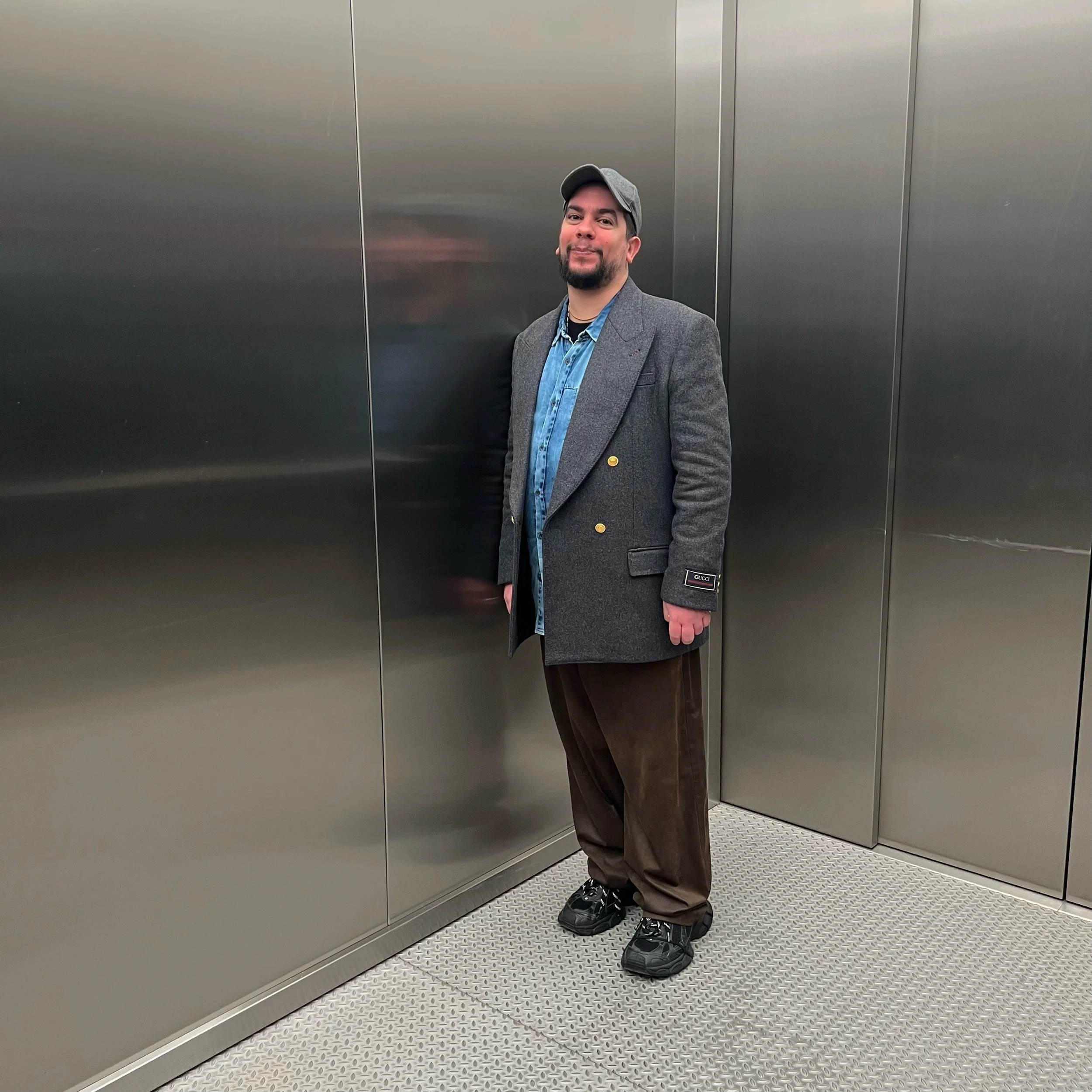
Courtesy of curator
Nicolas Vamvouklis is an Athens-based curator and writer working across contemporary art and performance. His practice explores the body as a meeting point between visual and live forms, alongside questions of mediation, access and care. He has curated exhibitions and public programs for the Mediterranea Young Artists Biennale, the Thessaloniki Biennale, the Athens Conservatoire, and the Fondazione Sandretto Re Rebaudengo. He previously served as Senior Curator at the Benetton Foundation and Associate Director at The Breeder, and has collaborated with institutions including Béjart Ballet Lausanne, Triennale Milano, the Onassis Foundation, White Cube, Mennour and Contemporary Fine Arts. His writing has appeared in Flash Art, CURA, Observer, tanz, Domus and Afterall Journal. Since 2024, he has led the performance section of Art Athina. He is also the founder of K-Gold Temporary Gallery on Lesvos.
I had the pleasure of asking Nicolas what inspired him to curate, what he learned about himself as a curator while curating this exhibition, how he chose work for the exhibition, and so much more.
UZOMAH: What inspired you to start curating exhibitions?
NICOLAS: I came to it through dance, which taught me how bodies, images, and space can affect one another. After leaving the stage, I wanted to keep creating situations where different forms could meet. Curating gave me that possibility. I could bring together people from separate fields and build something that none of them would have made alone. That sense of exchange still motivates me.
U: Could you talk more about what a curator does? Why do you think curators are important for exhibitions?
N: For me, curating begins with listening. You need to understand what each artist is trying to do before deciding how their contribution should enter a larger structure. Then comes the storytelling: finding an order, setting a rhythm, and making room for unexpected links. A curator helps visitors approach the show without dictating what they should think. The role is important because it can open a path into material that might otherwise feel distant.
U: You work with both well-known living artists and artists who are no longer with us. What challenges did you face when including works by artists who have passed away and making sure they fit with the exhibition’s theme and the work of living artists?
N: With living artists, I can ask questions directly and adjust the presentation through conversation. When someone is no longer here, the responsibility feels different. I speak with estates, galleries, and people who knew the practice closely. I also spend more time with archives and earlier installations. The challenge is to avoid using the piece only to support my own idea. It must retain its history while entering a fresh relationship with everything around it.
U: What did you learn about yourself as a curator while working on this exhibition?
N: SPECTRAL made me realise how much I am drawn to traces. I often remember a gesture, an image, or a phrase long after I have forgotten where I first encountered it. These fragments stay with me until they find their place. I also learned to trust silence more. Not every relationship needs to be explained. Sometimes two works can sit near each other and create a tension that is stronger than any wall text.
U: Was there an artist you were especially excited to feature in this exhibition? If so, who and why?
N: There is a small tribute to Dutch choreographer Hans van Manen, who shaped my earliest years in dance. Last November, I interviewed him in Amsterdam during Erwin Olaf’s retrospective FREEDOM at the Stedelijk Museum. Our conversation was published in Observer. The meeting was very moving, and only a few weeks afterwards, Hans passed away. Dutch National Opera & Ballet shared footage from Two Pieces for HET, which we present beside Olaf’s photographic portrait of him. Bringing them together feels deeply personal.
U: What do you enjoy most about being a curator and working in the art world?
N: I enjoy bringing people into contact. A project can begin with one conversation and gradually grow into a wider network of trust. Through this work, I have met people whose ideas have changed the way I see things. I also value the feeling of belonging to a community that extends beyond one city or institution. The most rewarding moments are often very simple: an introduction, a shared meal, or a discussion that continues after the show has closed.
U: When you work closely with artists on certain shows, what stands out to you about what makes each artist unique? How do you help present both their work and their artistic vision as a curator?
N: Every artist has a different way of making decisions. Some begin from material, while others start with a personal experience or a precise question. I try to understand that process before discussing display. Once I know what must remain intact, we can think together about how the piece might respond to a new setting. My role is to protect its character while allowing another reading to emerge. That requires trust rather than imposing a solution from the outside.
U: When people come to the exhibition, what is one thing you hope they experience and take away with them?
N: I hope they notice a connection that I have not explained. My curatorial approach is associative, so relationships can appear through color, form, scale, or atmosphere rather than a clear narrative. Someone may recognize a line that continues into another room or feel that two images are quietly speaking to each other. I would like visitors to leave with one detail still in their mind, even if they cannot immediately say why it stayed with them.
U: Can you describe what it was like to choose the works for this exhibition?
N: The process started as a game with friends. I kept asking them: what are the ghosts of today? Their answers brought up memories, fears, and people who seemed absent but still present. One idea led naturally to another. Bruce Nauman’s Good Boy Bad Boy had already been in my mind for years. Its language is repetitive, aggressive, and strangely hypnotic. Once I knew it belonged in SPECTRAL, the rest of the selection began to gather around its uneasy energy.
For more information about Nicolas’s work, please find it here on Instagram.