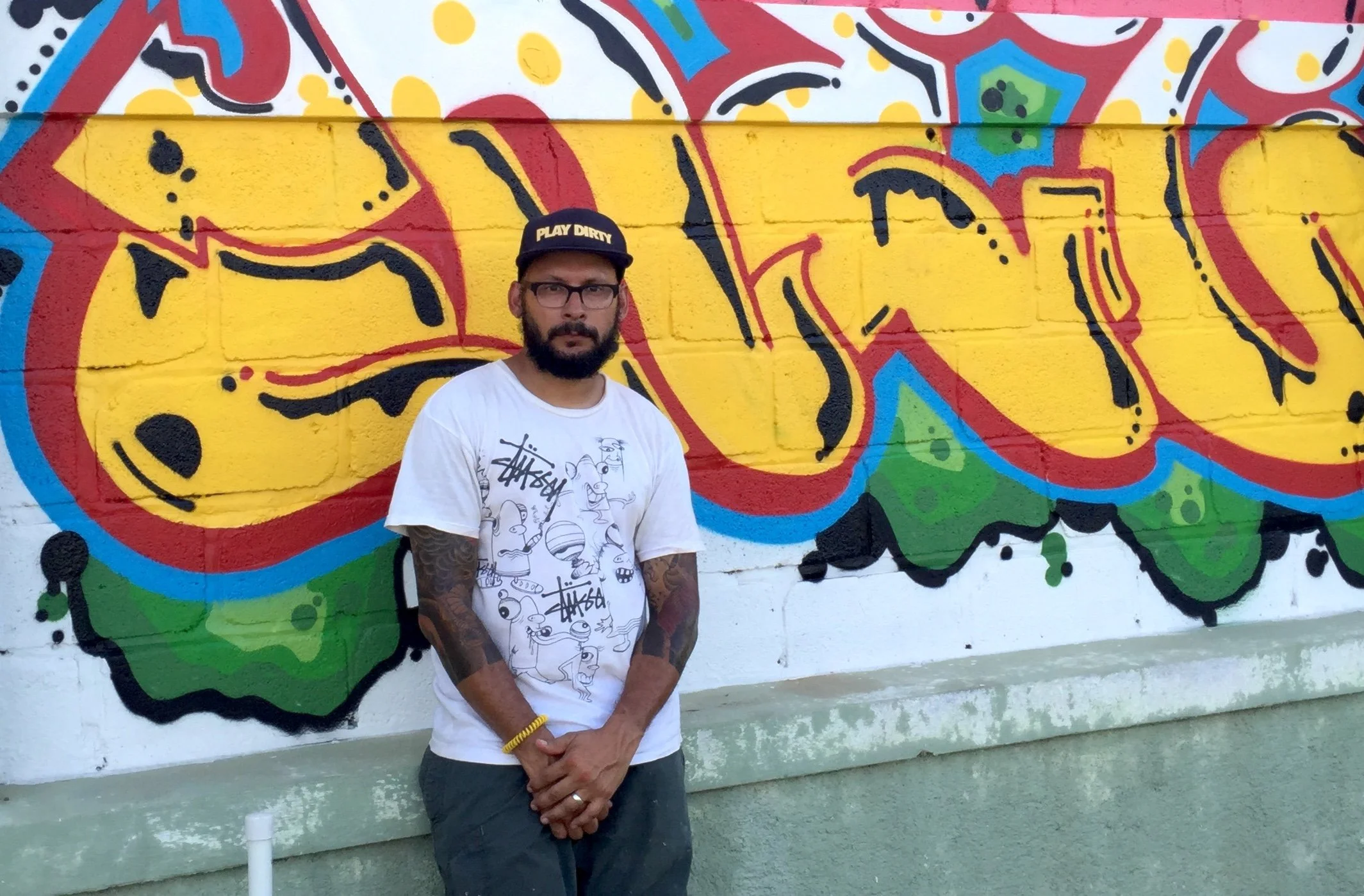
Photo Credit: Daze; it was taken in Haiti.
Alan Ket is an artist, graffiti historian, and co-founder of the Museum of Graffiti in Miami's Wynwood neighborhood, the first museum in the world dedicated exclusively to graffiti art, and of the newly formed Museum of Graffiti Foundation. He is the author of The Wide World of Graffiti (Monacelli, 2023), a history of the movement told through the voices of the artists who shaped it. Ket has contributed to the 1990s cult zine Stress and to Complex and Vibe, has consulted on product launches rooted in street culture, and has worked with art institutions to develop programming. He has documented graffiti around the world while painting with many of the movement's leading artists.
I had the pleasure and honor to ask Alan about the highlights of his job, the origins of graffiti, and so much more.
UZOMAH: How do you curate exhibitions that give the audience a real-life experience, as if they are interacting with the graffiti, as if they are there on location?
ALAN: That's not how our exhibitions typically work. Our exhibitions focus on the history, artists, and themes within this art movement. Occasionally, we feature site-specific installations that match the size and scale of outdoor works to provide an immersive environment. Currently, our exhibition, "Names on the line - Graffiti, Monikers, and the American Railroad," features train-scale installations by artists Maple, Hindu, and Mecro. The film, "Who is Bozo Texino," is shown in a black box theater stylized like a train yard.
U: What are some highlights of your job? What is your favorite, and why?
A: I enjoy working with artists to share their artistic journey and history through exhibitions. Additionally, finding and showcasing rare ephemera, including sketches, letters, and other historical items, is a top priority for me. This work allows me to highlight the unsung artists of this movement and show the real history created by young artists.
U: How would you explain to someone who has never been to the museum what it is like?
A: Visiting the Museum of Graffiti uncovers the world of this underground art movement and affords visitors the opportunity to learn about the world's most popular art movement, which for many has been hidden in plain sight. Visitors often have 'aha moments' when the nuances of the graffiti movement are explained once and for all. Visitors also learn about some of the best and most important figures from the graffiti world.
U: The museum highlights graffiti so it finally gets the respect it deserves as fine art. How can the museum help others, including those who see it as non-art, see that?
A: The exhibitions always offer a deep dive into subjects and themes that educate visitors. The wall text and audio tours highlight the significance, beauty, and brilliance of the graffiti art movement. Visiting is a worthwhile endeavor, certain to open minds to the expansiveness of this art form.
U: What is the hardest part of your job?
A: The hardest part of my job is quitting for the day. I am so immersed in the work that I am doing that hours fly by like minutes, and there never seems to be enough time to accomplish all I want to do and see.
U: As one of the elements of hip hop, how do you incorporate hip hop's role in graffiti?
A: Hip Hop culture appears in exhibitions from time to time but is not always a staple in the museum. As graffiti predates Hip Hop, we show how other street movements impacted the growth and the youth who created this movement, including punk, gangs, and even skateboard culture.
U: Can you name one exhibition that really explores graffiti's impact on culture?
A: The "Wide World of Graffiti" exhibition delved into graffiti's impact on graphic design, fashion, tattoos, and even toy design. This exhibition highlighted important artists like Futura, Phase2, Slick, Shirt King Phade, Doze Green, Dug One, Kaws, and others. Tracing the innovations and development dating back to 1971 helped us showcase not only the artists but also monumental moments in history where we saw a shift in popular culture. This exhibition was turned into a book, out now on Monacelli Books, which I recommend everyone pick up.
U: Who are some of your favorite graffiti artists in the USA and around the world?
A: My favorites include RAMS from New Zealand, SABE from Denmark, EGS from Finland, FAIPE from New York, and FUZI from France. Each artist has an original style and is a master of both lettering and illustration. They can paint legally or illegally and still achieve great results. My favorites of all time are Phase2, Blade, Noc167, and Lee Quiñones - they are some of the early architects of this art movement.
U: Who are some of your favorite hip hop artists?
A: All-time favorites include Rakim, KRS-One, Nas, Kendrick Lamar, GZA, Yasin Bey, and MF Doom. They are all incredible lyricists and have made songs that last the test of time.
U: How has graffiti changed the way people see art, and how has it made art more accessible on a global and fine art scale?
A: Graffiti has shown the world that young people and inner-city kids have just as much talent as art school-trained people. Self-trained artists have just as much worth and positive contributions as the MFA ones.
About the Museum of Graffiti
Founded in 2019 by Alan Ket and Allison Freidin, the Museum of Graffiti is the first museum in the world dedicated exclusively to the preservation, exhibition, and celebration of graffiti art. Located at 276 NW 26th Street in the heart of Miami's Wynwood neighborhood, the museum campus also includes the Museum of Graffiti Artist Studios and the Wynwood Art Gallery. Its exhibitions, public programs, and educational initiatives showcase the global impact of a once-underground movement. For more information about Alan’s role at the museum and about exhibitions, please visit the museum’s site here. The museum can also be found on Facebook, Instagram, TikTok, and X.