
Miquel Barceló | Flores, peces, toros

Installation Views: Miquel Barceló | Flores, peces, toros, All images: © Courtesy of the artist and Galería Elvira González
“Painting is linked to childhood. It is probably true that we learn what is important before we are ten years old. I have the impression that, in painting, at the age of ten I had already done almost everything I have done and continue to redo. In Mallorca I learned the names of trees, fish, birds. learned to whistle, throw stones, fish, kill and gut hares and lambs, and cook them. I usually paint what I kill or what I eat”.

Miquel Barceló, Tropicalismo, 2024, 235 x 235 cm, técnica mixta sobre lienzo
Galería Elvira González is pleased to announce the fourth exhibition of Miquel Barceló in the gallery which opened on Wednesday, January 29. Flores, peces, toros will feature paintings, ceramics and watercolors with marine topics, bullfighting themes, still life and nature.

Miquel Barceló, Vanitas au melon, 2024, 160 x 240 x 4 cm, técnica mixta sobre lien
The first room revolves around bullfighting. The art of bullfighting is a constant subject for Barceló, who painted his first bullfight in 1980; since then it has been a theme he has obsessively used and worked with in detail. From a bird's eye view or as a spectator in the bullring, Barceló's bullfight paintings capture passes and moments that only those who know the universe around bullfighting in depth can describe. Or paint. Continuing with the exhibition, ceramics with various types of masks and fishes will be on display; masks that may look like the portrait of the artist himself. The sea is another theme widely depicted in his work. “My day-to-day life is summed up in painting, swimming and reading” the artist says. Interested in the organic life and the passage of time, Barceló considers ceramics an extension of his painting.


Installation Views: Miquel Barceló | Flores, peces, toros, All images: © Courtesy of the artist and Galería Elvira González
The third room in the gallery displays still life paintings, flowers, marine and under the water fauna as well as works on paper and ceramics of all kinds, where once again, the toros, the marine theme, animals, fauna and flora are intermingled. The artist acts like the prehistoric cave painter who paints out of an imperious need to transmit. In the studio, Barceló cannot refrain from painting what he sees and captures in his daily life and transforms it into art reflecting what surrounds him and the universe in which he is immersed.
Miquel Barceló (Felanitx, 1956) first exhibited in the mid-1970s and quickly gained international recognition. He started his art studies in Barcelona but ended up quitting in order to start an independent pictorial career. In 1974 he had his first solo exhibition at the Picarol Gallery in Mallorca bursting onto the international scene at the Sâo Paulo Biennial in 1981, and at Documenta VII in Kassel (Germany) in 1982.
Miquel Barceló has had exhibitions in major museums such as the CAPC (Bordeaux), the IVAM (Valencia), the Jeu de Paume, the Centre Pompidou, the Musée des Arts Décoratifs, the Bibliothèque Nationale de France and the Museé du Louvre (all five in Paris), The Galleria Nazionale d'Arte Moderna (Rome), the Museu d'Art Contemporani (Barcelona), the Museo Nacional Centro de Arte Reina Sofía (Madrid), the Museo Nacional de Arte de Osaka (Japan) and recently the Küppersmühle Museum in Duisburg (Germany). He has also made major interventions in public spaces such as the ceramic covering in the Chapel of Sant Pere in the Cathedral of Mallorca or the dome of Room XX of the Palais des Nations Unies in Geneva. Throughout his career, Miquel Barceló has received awards such as the National Prize for the Arts in Spain 1986 and the Prince of Asturias Award for the Arts in 2003.
For more information about this exhibition and others, please visit the Galería Elvira González’s website. The gallery can be found on Vimeo, Facebook and Instagram.

Beatriz Milhazes: Rigor and Beauty

Installation view, Beatriz Milhazes: Rigor and Beauty, March 7, 2025 – September 14, 2025, Solomon R. Guggenheim Museum, New York. Photo: David Heald © Solomon R. Guggenheim Foundation, New York
(NEW YORK, NY) The Guggenheim New York presents the first museum exhibition in New York devoted to the work of Beatriz Milhazes (b. 1960, Rio de Janeiro), a global contemporary artist who engages with her Brazilian cultural heritage and identity through the language of abstraction. This focused exhibition features a group of fifteen paintings and works on paper from 1995 to 2023, drawn from the museum’s permanent collection and augmented by key loans, which together contextualize the broader narrative of her artistic evolution.
Renowned for her bold, colorful abstractions, Milhazes’s complex body of work spans four decades, from the 1980s to the present. Her practice encompasses sculpture, collage, print, textiles, public art, and especially painting, all featuring intricate patterns and dynamic forms grounded in geometry.

Beatriz Milhazes, In albis, 1995–96. Acrylic on canvas, 72 1/2 × 117 7/8 in. (184.2 × 299.4 cm). Solomon R. Guggenheim Museum, New York, Gift, The Bohen Foundation 2001.219. © Beatriz Milhazes. Photo: Ariel Ione Williams, Solomon R. Guggenheim Museum, New York
Milhazes’s work is deeply rooted in Brazilian history and tradition, drawing from colonial art and architecture, decorative arts, and the vibrant celebration of Carnival—a week-long festival in Rio de Janeiro that showcases Brazilian culture through parades, music, performances, and elaborate costumes. She is also influenced by Tropicália, a 1960s cultural movement that blended art, music, and literature to celebrate Brazilian identity while protesting the repressive military regime. The rhythms and colors of bossa nova, a musical style born in Rio de Janeiro in the late 1950s, also echo throughout her work. Beyond these influences, she engages with the work of artists like Henri Matisse, Piet Mondrian, and Tarsila do Amaral, whose creations were fundamental to the visual and aesthetic developments of Brazilian Modernism.

Beatriz Milhazes, Santa Cruz, 1995. Acrylic on canvas, 76 1/4 × 120 1/4 in. (193.7 × 305.4 cm). Solomon R. Guggenheim Museum, New York, Gift, The Bohen Foundation 2001.220. © Beatriz Milhazes. Photo: Ariel Ione Williams, Solomon R. Guggenheim Museum, New York
“The Guggenheim is thrilled to present the first New York museum exhibition of Beatriz Milhazes. Her colorful abstractions interweave references to art history and the natural world while merging Brazilian cultural motifs with modernist influences. The show offers a rare opportunity to engage with her unique creative process and see how she reinforces her Carioca roots, creating an elaborate lexicon of allusions and symbols within a vernacular Brazilian context, ” states
Geaninne Gutiérrez-Guimarães, Curator, Guggenheim Museum Bilbao and Solomon R. Guggenheim Museum and Foundation, New York.

Beatriz Milhazes, O cravo e a rosa (The Carnation and the Rose), 2000. Acrylic on canvas, 94 1/2 × 95 in. (240 × 241.3 cm). Solomon R. Guggenheim Museum, New York, Gift, The Bohen Foundation 2001.223. © Beatriz Milhazes. Photo: Ariel Ione Williams, Solomon R. Guggenheim Museum, New York
In 1989 Milhazes developed an innovative technique she calls “monotransfer, ” inspired by the monotype printing process, in which a painted image is transferred from a plate to paper, producing a mirror image. The artist’s methodical process begins with painting motifs onto clear plastic sheets with acrylic paint. Once the acrylic dries, she layers and adheres the painted films to canvas one by one, constructing her abstract compositions through the careful arrangement of these distinct motifs. She then peels away the plastic sheets, revealing the forms in reverse. Since the painting process is unpredictable, her canvases often contain incomplete or faint structures formed by residual traces of paint from previous works, as she reuses the same plastic sheets over many years. Milhazes embraces these elements as acts of chance and improvisation, integrating them into new pieces as fortuitous inclusions. The result is a densely textured composition in which vibrant colors, organic shapes, and geometric patterns interact harmoniously on a surface imbued with the memory of the artist’s actions.
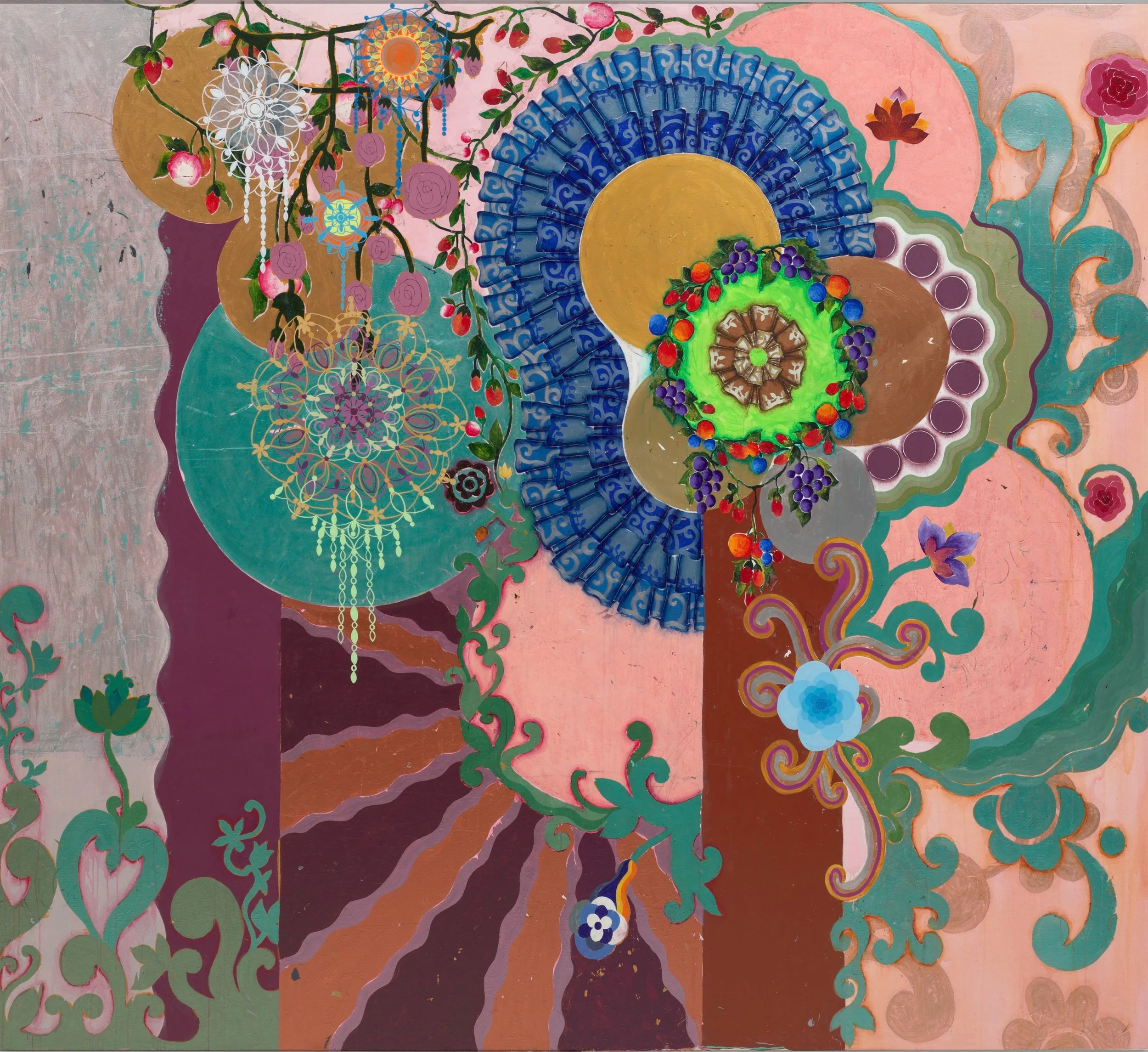
Beatriz Milhazes, As quatro estações (The Four Seasons), 1997. Acrylic on canvas, 101 1/2 × 112 1/8 in. (257.8 × 284.8 cm). Solomon R. Guggenheim Museum, New York, Gift, The Bohen Foundation 2001.222. © Beatriz Milhazes. Photo: Ariel Ione Williams, Solomon R. Guggenheim Museum, New York
The early paintings in this exhibition, primarily from the museum’s collection—such as Santa Cruz (1995), In albis (1995–96), and As quatro estaçōes (The Four Seasons, 1997)—draw inspiration from the opulence of 18th-century Brazilian Baroque colonial churches and ornamental garments. Milhazes synthesizes these influences into abstract and representative motifs, with circles and arabesques, delicate crochet and lace, flowers and floral patterns, decorative ruffles and ribbons, and ornate pearls and ironwork emerging throughout her compositions. By 2000, Milhazes began exploring optical effects in her paintings, using linear repetitions to create undulating patterns and visual rhythm, as seen in Paisagem carioca (Carioca Landscape, 2000), O cravo e a rosa (The Carnation and the Rose, 2000), and O Caipira (The Caipira, 2004).

Beatriz Milhazes (b. 1960, Rio de Janeiro), Carioca Landscape (Paisagem carioca),2000. Acrylic on canvas, 67 × 79 in. (170.2 × 200.7 cm). Solomon R. Guggenheim Museum, New York, Gift, The Bohen Foundation 2001.224. © Beatriz Milhazes. Photo: Ariel Ione Williams, Solomon R. Guggenheim Museum, New York
The works on paper in this exhibition, spanning 2013 to 2021, demonstrate Milhazes’s continued experimentation with the medium, particularly since she began formally creating collages during a 2003 residency at the Centre d’art contemporain du Domaine de Kerguéhennec in Bignan, France. Combining mass-produced elements like branded shopping bags, chocolate bar wrappers, and patterned paper with cutouts from solid-colored screenprints, Milhazes creates patterns with recurring motifs such as arabesques, stars, leaves, flowers, circles, squares, and rectangles. Her collages function like personal journals, reflecting fragments of the artist’s reality and her commitment to color and inventive form.
Her recent paintings, including Mistura sagrada (Sacred Mixture, 2022), mark a shift toward exploring the spiritual power of nature in the wake of the COVID-19 pandemic. Although references to the natural world have been present since her early career, here she delves into cycles of renewal—life and death—through colorful, angular forms and intricate patterns. Organic elements, reflective of Milhazes’s proximity to Rio de Janeiro’s Botanical Garden, Tijuca Forest, and Copacabana Beach, are echoed in the harmonious geometries, conceptual systems, and chromatic universes that span her oeuvre.
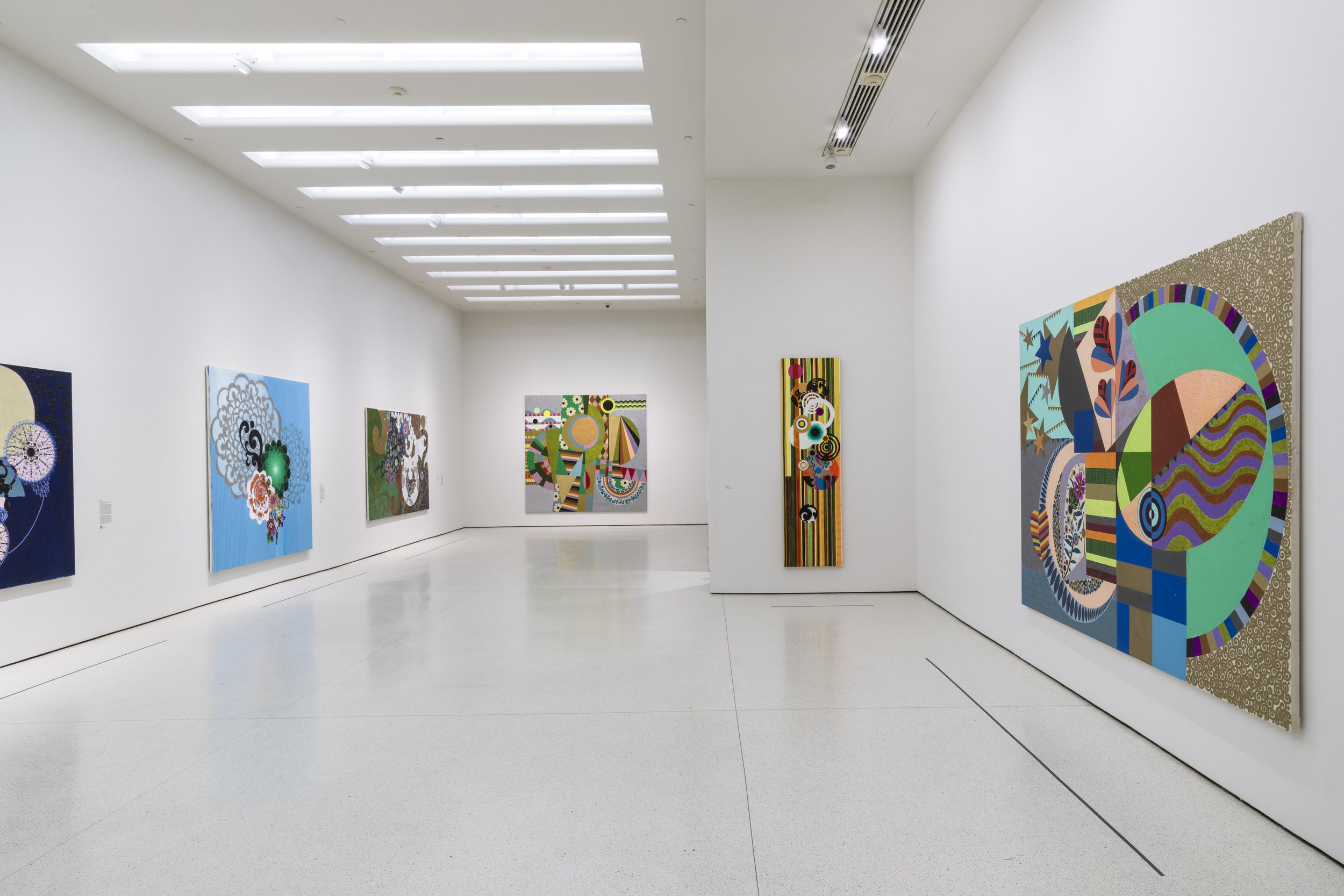
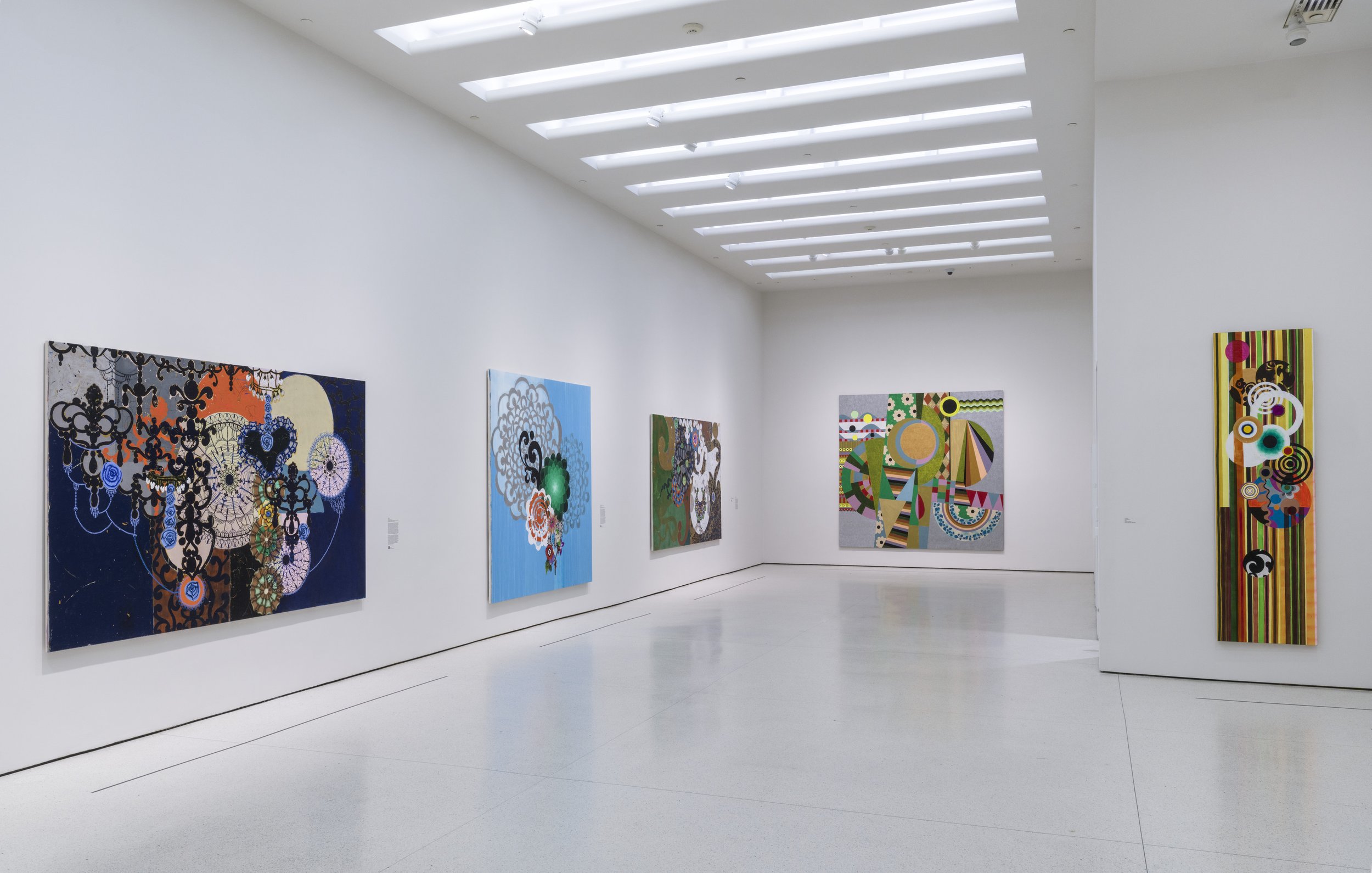
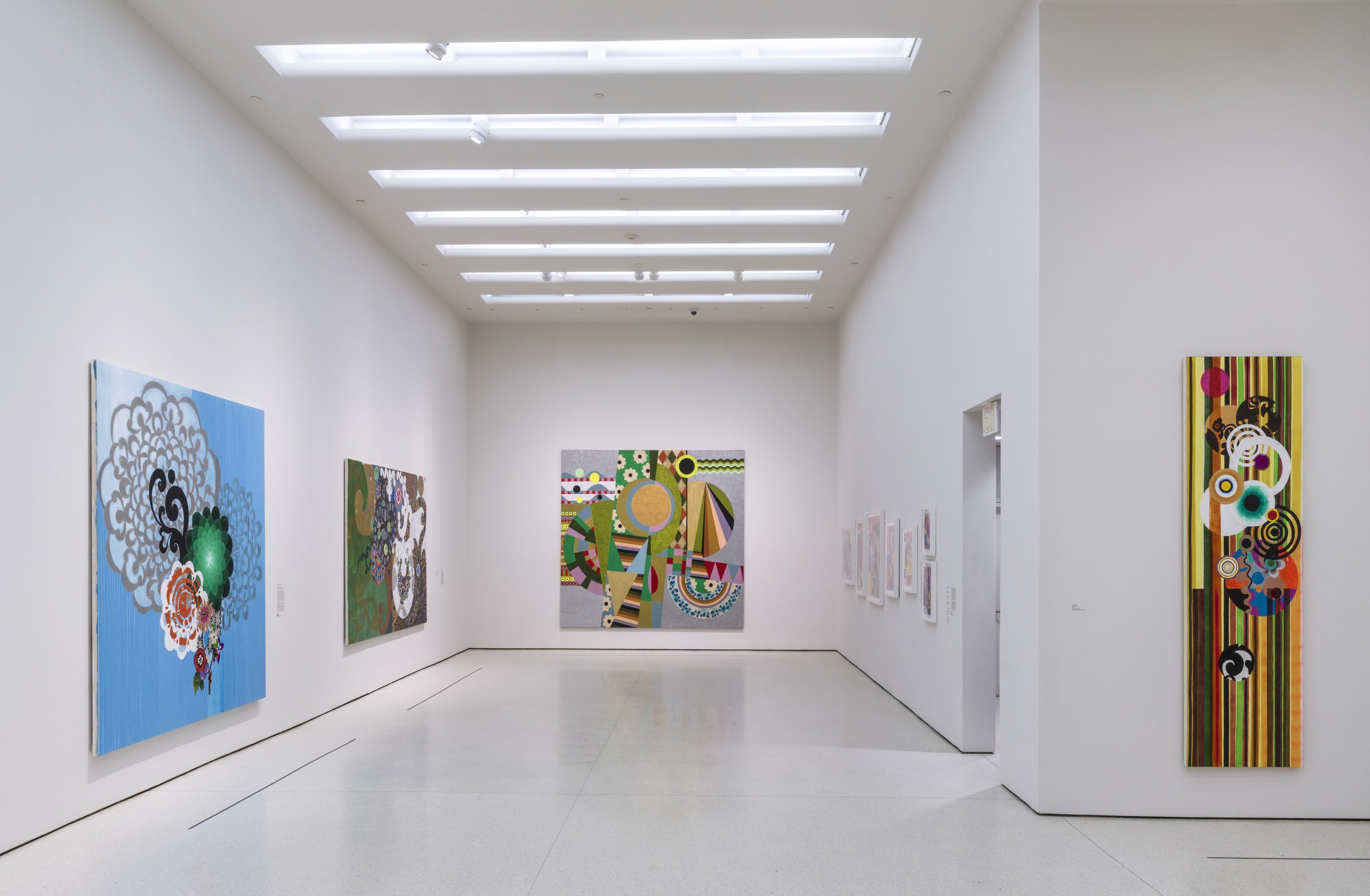


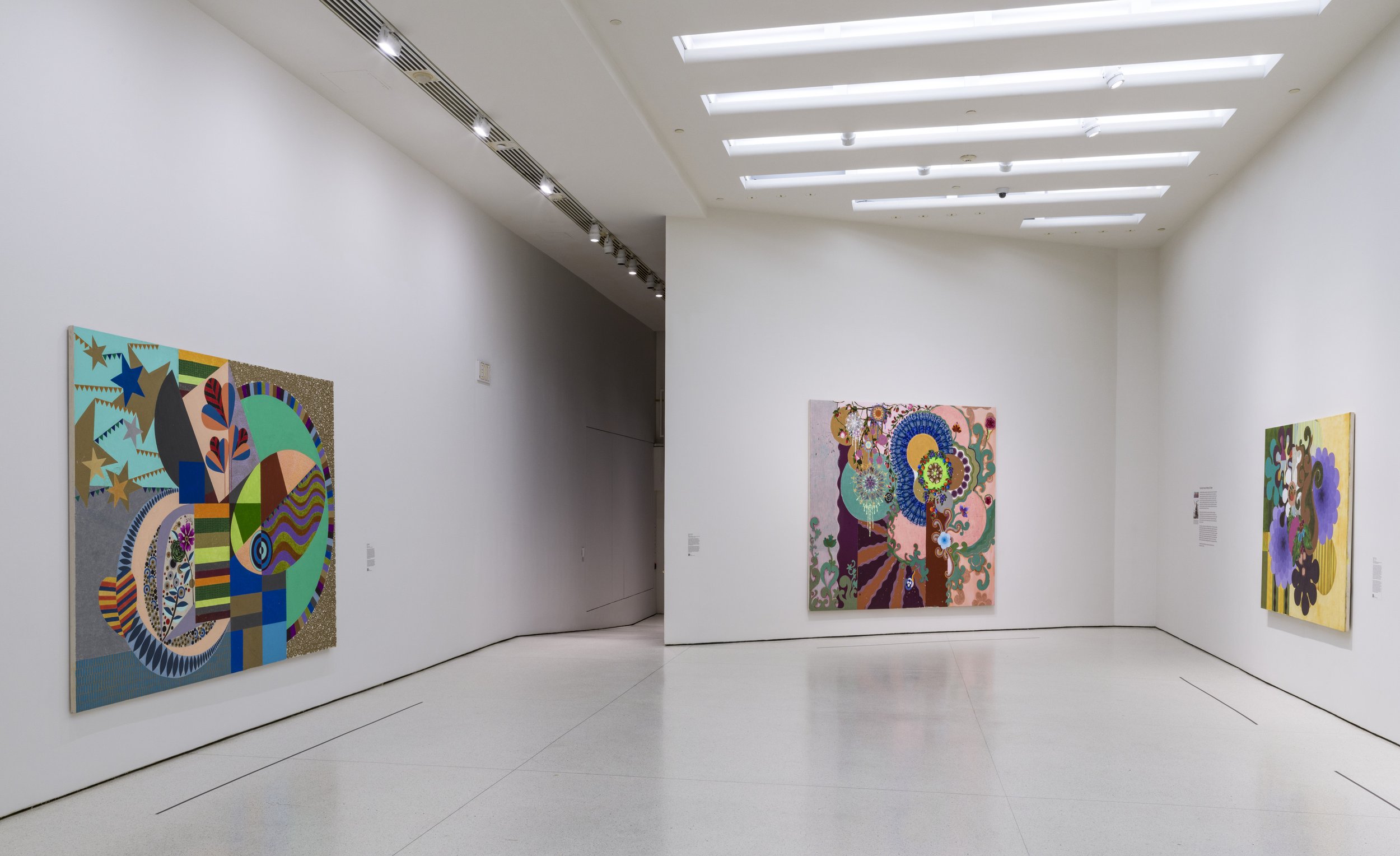

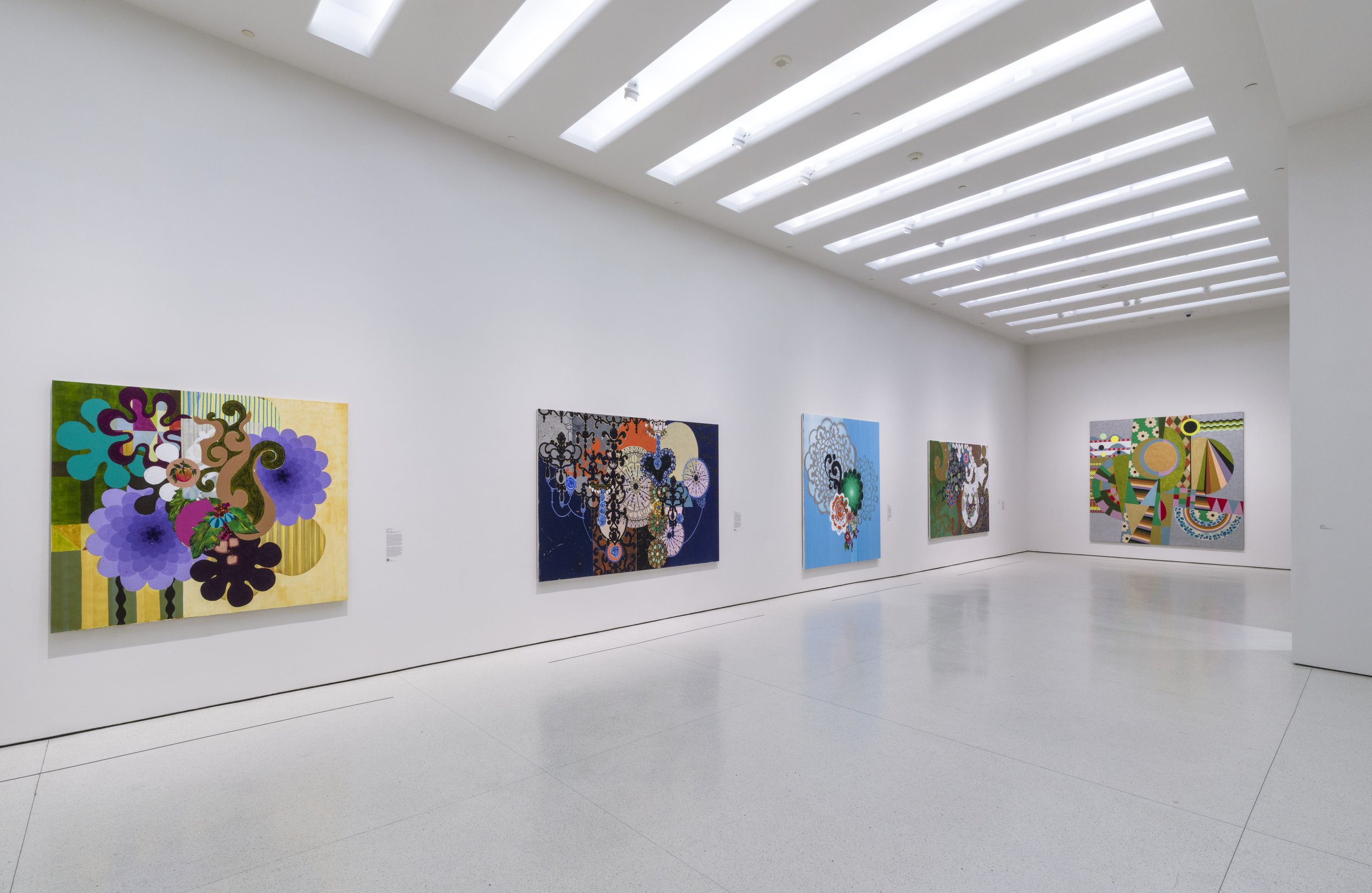
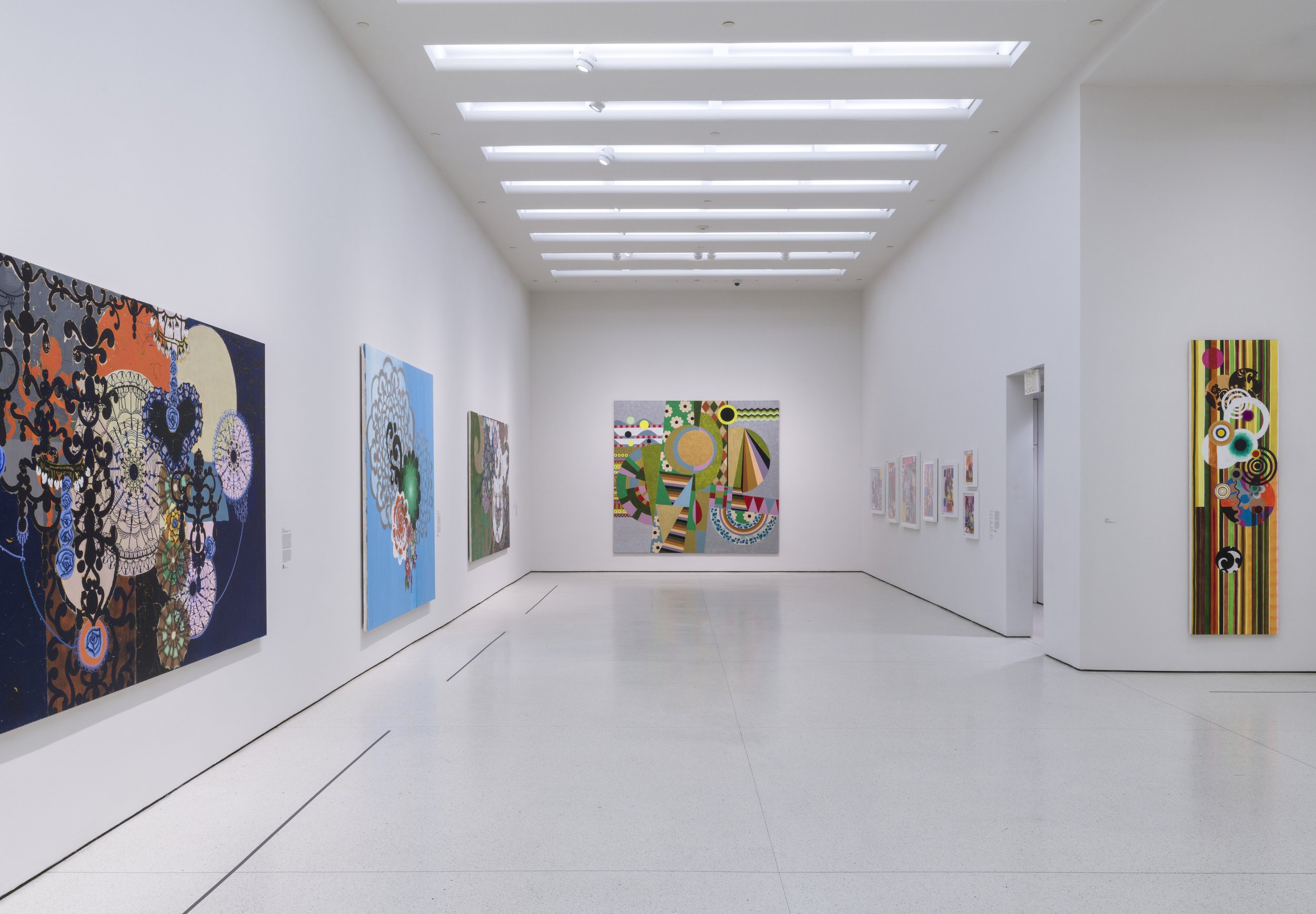


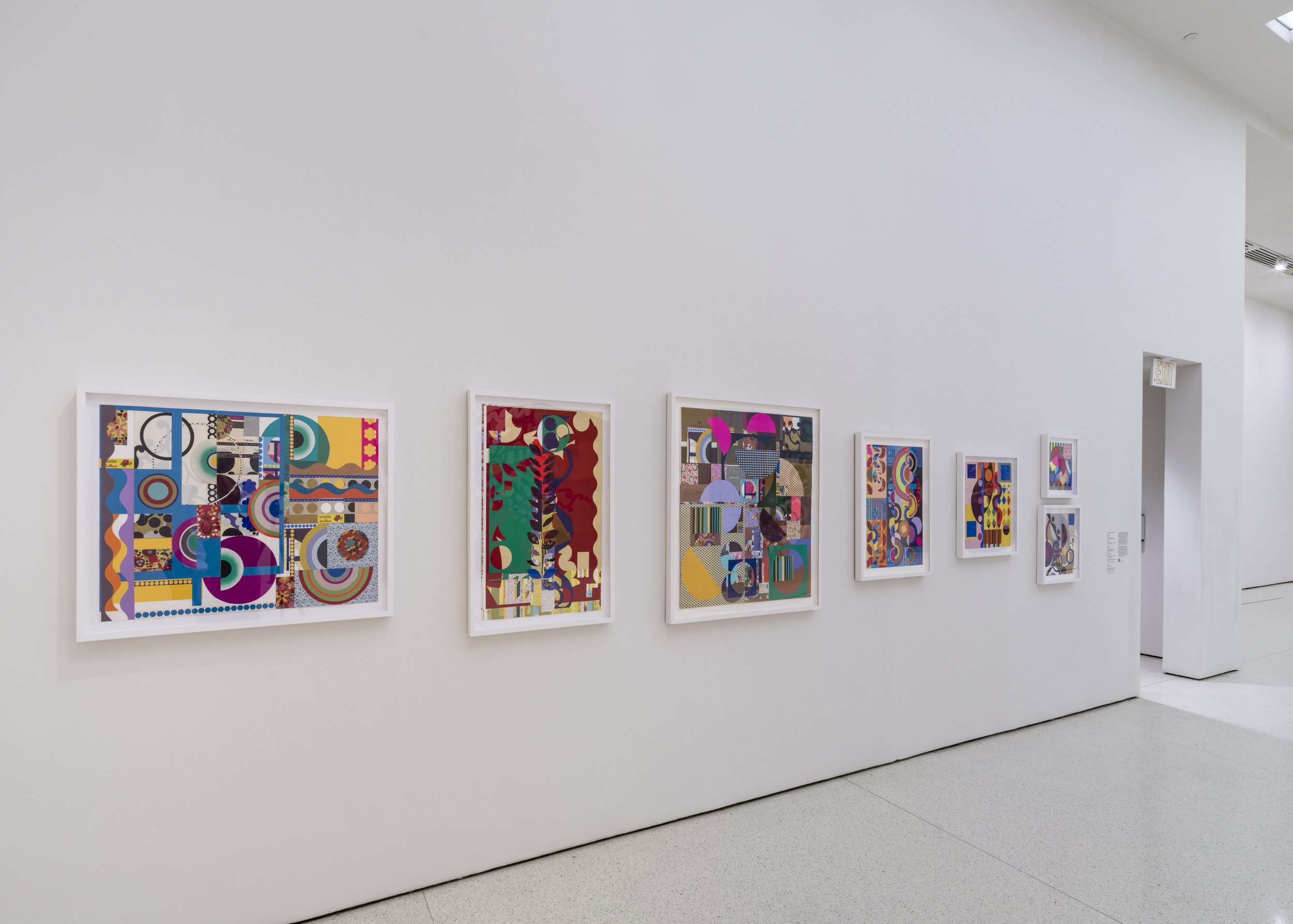
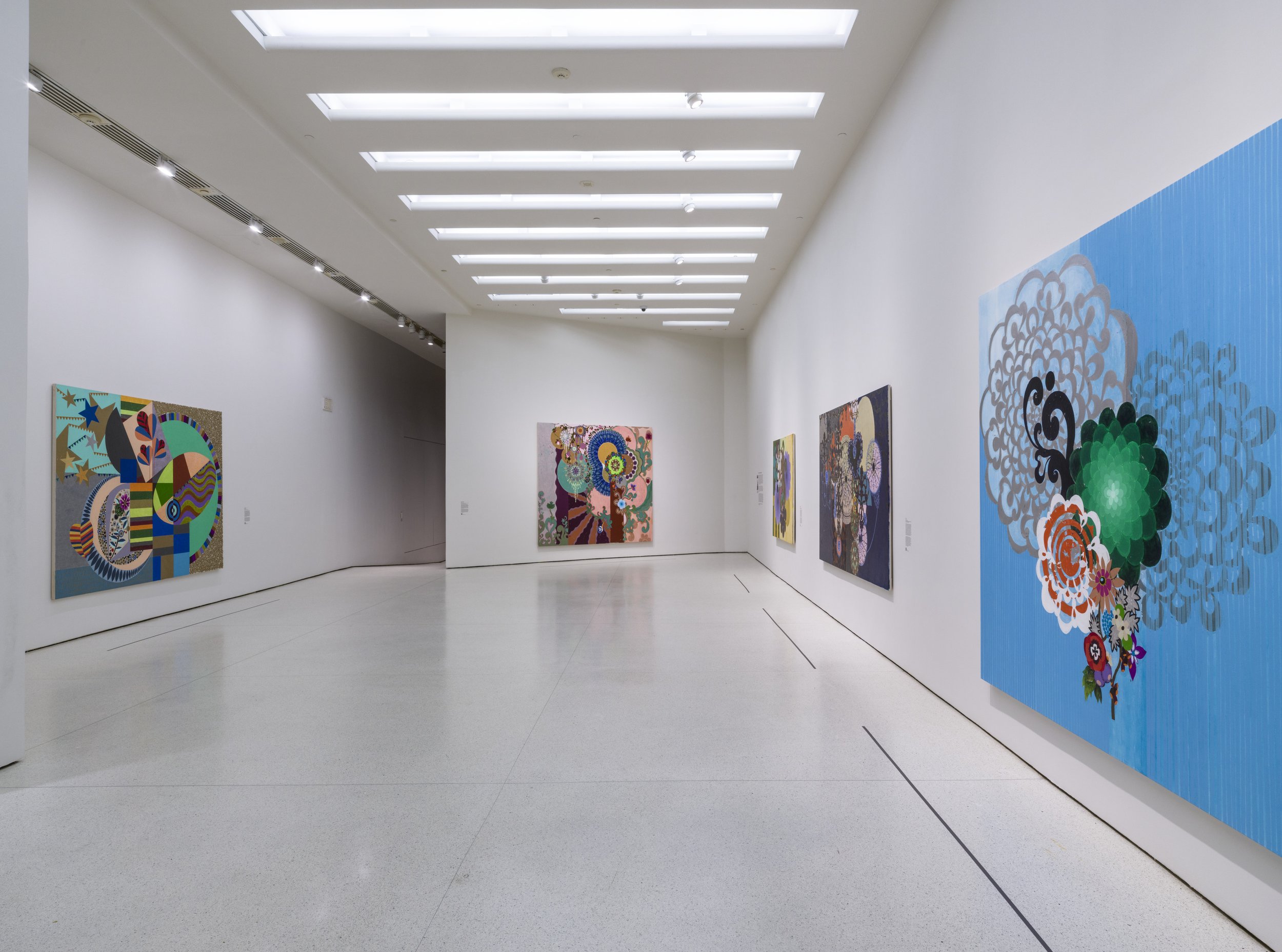
Installation view, Beatriz Milhazes: Rigor and Beauty, March 7, 2025 – September 14, 2025, Solomon R. Guggenheim Museum, New York. Photo: David Heald © Solomon R. Guggenheim Foundation, New York
“With almost thirty years between the earliest and most recent works in this exhibition, the pieces interact in remarkable ways, creating a strong and distinctive visual confrontation while offering a valuable opportunity to observe their evolution. I would especially note the convivial relationships between abstraction, figuration, geometry, and free forms in these works, as well as the superposition of their paint layers. The colorful compositions diverge from dark and melancholic to bright and intricate, creating a dynamic atmosphere in the exhibition ”
This exhibition is the second installment in the exhibition series Collection in Focus, which highlights the museum’s permanent collection. The series is part of a reinvigorated effort to make the Guggenheim New York’s world-renowned holdings more accessible to the public. Beatriz Milhazes: Rigor and Beauty is organized by Geaninne Gutiérrez-Guimarães, Curator, Guggenheim Museum Bilbao and Solomon R. Guggenheim Museum and Foundation, New York.
Programming
On the occasion of the exhibition, Beatriz Milhazes will participate in a public program on May 20, 2025, as part of the museum’s Conversations with Contemporary Artists series. Additional educational activities will include gallery talks within the exhibition, which will be free with museum admission.

Beatriz Milhazes in front of her painting The Four Seasons (As quatro estações, 1997) in 2024. © Solomon R. Guggenheim Museum, New York. Photo: David Heald, Solomon R. Guggenheim Museum, New York
About the Artist
Beatriz Milhazes was born in Rio de Janeiro in 1960 and continues to live and work there. She earned a degree in journalism from Faculdades Integradas Hélio Alonso in 1981 and attended open courses at the Escola de Artes Visuais do Parque Lage (EAV) from 1980–82. In 1984, she participated in Como vai você, Geração 80?, a seminal exhibition marking the return to painting in Brazil. In 1986, she became a teacher at EAV, where she taught for ten years. In 1989, she developed her signature “monotransfer” painting technique and dedicated herself fully to her artistic practice.
Milhazes has a longstanding relationship with the Guggenheim New York, dating back to 1992 when curator Richard Armstrong (former director of the Solomon R. Guggenheim Museum, New York, 2008–23) and Fred Henry, president of the Bohen Foundation, visited her studio in Rio de Janeiro at the recommendation of Brazilian art critic and curator Paulo Herkenhoff. Milhazes later participated in Armstrong’s Carnegie International 1995 exhibition at the Carnegie Museum of Art, Pittsburgh, in 1995—her first major show outside of Latin America—earning international recognition. In 1998, Herkenhoff included her work in the São Paulo Biennial, while Armstrong continued to follow her career. Moreover, Fred Henry became an avid collector of her work and eventually acquired five of Milhazes’s paintings for the Bohen Foundation. In 2001, the Bohen Foundation donated a sizeable collection to the Guggenheim Museum under former director Thomas Krens (1988–2008). This significant bequest, primarily consisting of film, video, new media, and installation art, also included six works by Milhazes, along with pieces by other Brazilian artists.
In 2002, Milhazes had her first museum solo show at the Centro Cultural Banco do Brasil, Rio de Janeiro. Since then, she has held numerous national and international solo exhibitions and received several artist commissions, including at Pinacoteca de São Paulo (2008); Fondation Cartier pour l’art contemporain, Paris (2009); Fondation Beyeler, Riehen, Switzerland (2011); Pérez Art Museum Miami (2014); the Jewish Museum, New York (2016); Museu de Arte de São Paulo (MASP) with Itaú Cultural, São Paulo (2020); Long Museum, Shanghai (2021); Turner Contemporary, Margate, England (2023); and Tate St Ives, Cornwall, England (2024). She also participated in the Biennial of Sydney (1998), São Paulo Biennial (1998, 2004, 2013), Shanghai Biennial (2006), Mercosul Biennial (2015), and the Venice Biennale (2003, 2024), with a special project at the Pavilion of Applied Arts at the most recent Venice Biennale
Support
Visionary support for Collection in Focus is provided by Aleksandra Janke and Andrew McCormack.
The Leadership Committee for Beatriz Milhazes: Rigor and Beauty is gratefully acknowledged for its generosity, with special thanks to Laura Clifford, Peter Bentley Brandt, Christina and Alan MacDonald, Cristina Chacón and Diego Uribe, Alberto Cruz, Ilva Lorduy, Karina Mirochnik and Gaby Szpigiel, Pace Gallery, White Cube, Fortes D’Aloia & Gabriel, and Galerie Max Hetzler. Additional funding is provided by the Guggenheim New York’s Latin American Circle.
About the Guggenheim New York
The Solomon R. Guggenheim Foundation was established in 1937 and is dedicated to promoting the understanding and appreciation of modern and contemporary art through exhibitions, education programs, research initiatives, and publications. The international constellation of museums includes the Guggenheim New York; the Peggy Guggenheim Collection, Venice; Guggenheim Bilbao; and the future Guggenheim Abu Dhabi. An architectural icon and “temple of spirit” where radical art and architecture meet, the Guggenheim New York is now among a group of eight Frank Lloyd Wright structures in the United States recently designated as a UNESCO World Heritage site. To learn more about the museum and the Guggenheim’s activities around the world, visit guggenheim.org.
Beatriz Milhazes: Rigor and Beauty will be on view at Guggenheim New York, 1071 Fifth Avenue, New York in Tower 5. From March 7 to September 14, 2025
To learn more about the museum, this exhibit, past exhibits, current exhibits, upcoming exhibits, and the Guggenheim’s activities around the world, visit here. The museum can also be found on YouTube, TikTok, X, Facebook, and Instagram.

SOPHIE CALLE

SOPHIE CALLE Calle-Joconde (Wrong turn), 2025 (detail) text panel in artist’s frame, two pigment prints in artists frames, thread, pigment print in cardboard frame © 2025 Artists Rights Society (ARS), New York / ADAGP, Paris
Fraenkel Gallery is pleased to present an exhibition by Sophie Calle. For more than forty years Calle has made work that draws from her life, transforming elements from her public and private relationships into intimate narratives. The exhibition features several series exploring questions about legacy and loss, topics Calle approaches with her typical humor and candor. Making its U.S. debut, Catalogue Raisonné of the Unfinished focuses on projects Calle previously conceptualized but didn’t pursue. Each piece pairs fragments from the project with Calle’s text about its failure. Another series, Picassos in Lockdown, comprises photographs Calle made at the Musée National Picasso in Paris during the pandemic. Each shows a painting covered for protection while the museum was closed. The exhibition also features a selection of works looking at death and remembrance through the lens of Calle’s relationship with her parents. This will be Calle’s fifth exhibition at Fraenkel Gallery since 1994. A public reception with the artist will take place on Saturday, March 1, from 2- 4pm.
Catalogue Raisonné of the Unfinished collects photographs, handwritten notes, comic books, and other documents, each paired with a short text describing the artwork Calle had originally imagined and how it came to (not) be. A red stamp across each text pronounces her reason for rejecting the work. The projects range from Calle’s request for museum visitors to propose ideas for her to enact (“Not exhilarating”), to an attempt to insert herself into a Mexican comic book collection that included the word “Calle” in the title (“Anecdotal”). Together, the series presents a sort of self-imposed salon des refusés, revealing glimpses of Calle’s process and celebrating the transformation of many dead ends into a final positive form.

SOPHIE CALLE Shiner, 2020 pigment print mounted on aluminum, in wooden box © 2025 Artists Rights Society (ARS), New York / ADAGP, Paris
In 2023, Musée National Picasso presented a solo exhibition of Calle’s work, timed to the 50th anniversary of the death of Pablo Picasso. The deliberately retrospective exhibition, titled À toi de faire, ma mignonne, (“It’s up to you, my darling”) included photographs Calle made while the museum was closed during the pandemic, recording the cloth and paper coverings that shielded Picasso’s paintings from light and dust. Calle has described her encounter with the paintings: “The Picassos were under protection, wrapped up, hidden. Underneath — a ghostlike, less intimidating presence,” she writes. Titled after the works they conceal, the photographs in Picassos in Lockdown encourage the viewer to recall the original painting.

SOPHIE CALLE Portrait de Marie-Thérèse, 2022 pigment print © 2025 Artists Rights Society (ARS), New York / ADAGP, Paris
A third gallery presents selections from Autobiographies and other elegiac, family-focused works, pairing photographs and texts in frames or urn-like wooden boxes. In Autobiographies (Morning), Calle awaits her father’s last words, while Autobiographies (My Mother Died) reproduces notes about death from Calle’s diary and her mother’s. A glass-fronted box titled Unforeseen presents the obituary Calle commissioned for herself, hidden behind pinned butterflies to remain unreadable. The piece incorporates Calle’s commentary about her decision to obscure the writing: “So as not to attract too much attention from death, I decided it was best to cover up what I did not want to read,” she notes. In these and other works, Calle addresses her own mortality with characteristic honesty and wit, taking on the question of how we remember and are in turn remembered.
Sophie Calle was recently featured in Sophie Calle: Overshare at the Walker Art Center in Minneapolis, and Absences: Sophie Calle & Toulouse-Lautrec at the Mitsubishi Ichigokan Museum, Tokyo. Her work was presented in the solo exhibition Finir en Beauté (Neither Give Nor Throw Away), held in the cryptoporticus at Arles as part of the photography festival Rencontres d’Arles in France. Her work has been shown in museums around the world and is in the collections of the Metropolitan Museum of Art, New York; Museum of Modern Art, New York; Solomon R. Guggenheim Museum, New York; Los Angeles County Museum of Art; San Francisco Museum of Modern Art; Centre Pompidou, Paris; and Tate, London, among many others. Calle is the recipient of numerous awards, including most recently the Praemium Imperiale Award in 2024, as well as the Royal Photographic Society’s Centenary Medal, an Infinity Award from the International Center of Photography, and the Hasselblad Foundation International Award in Photography, among others.
The exhibtion opened on Februrary 27th and will conclude on April 12, 2025 . A public reception with the artist will take place on Saturday, March 1, from 2- 4pm. Please visit the Fraenkel Gallery's site for more information about Sophie’s exhibit.

Francis Picabia. Éternel recommencement / Eternal Beginning

Installation view, ‘Francis Picabia. Éternel recommencement / Eternal Beginning,’ Hauser & Wirth Paris, 2025. Courtesy Hauser & Wirth. Photo: Nicolas Brasseur
In collaboration with the Comité Picabia, Hauser & Wirth Paris will present an exhibition of over 40 post-war artworks by Francis Picabia. Curated by Beverley Calté and Arnauld Pierre, this will be the first major solo exhibition exclusively exploring Picabia’s unique final period, created after his return to Paris in 1945 until the year before his death in 1953. Often overshadowed by other periods of his oeuvre, Picabia’s last series saw the artist abandon his famous wartime Nudes, coupled with a particular interest in surface texture and new sources of inspiration. Characteristic of Picabia’s restless artistic talent, these paintings represent his own definitions of nonfigurative art, creating a new visual language which distinctly sets this bold group of works apart from anything he had done before. This exhibition will travel to Hauser & Wirth New York, 22nd Street from 1 May – 25 July 2025.
The final phase of Picabia’s work, whose prolific career was marked by a ‘complex alternation of styles and techniques’ (Arnauld Pierre), is reflective of an unprecedented visual language and a singular approach to abstraction. This period testifies to the artist’s unwavering commitment to a core principle, a method that has persisted through all his transformations: the use of pre-existing visual material. This material was drawn either from a vast collection of images or from his own earlier paintings, which he continued to revisit.

Installation view, ‘Francis Picabia. Éternel recommencement / Eternal Beginning,’ Hauser & Wirth Paris, 2025. Courtesy Hauser & Wirth. Photo: Nicolas Brasseur
In 1945, Picabia returned to Paris, facing challenging economic and artistic circumstances and needing a fresh start. The painter appeared to return to the Dada ‘anti-painting’ ethos of the past. The most striking examples of this resurgence are found in his Points series, which were controversially reviewed by critics. Works include ‘Silence’ (1949) or ‘Six points’ (1949), in which a handful of dots—resembling a constellation—is set against a monochrome background subtly clouded by surface effects, resembling turbulent currents or signs of wear and tear.

Francis Picabia Colloque (Colloquium) 1949 Oil on canvas 97 x 130.5 x 2 cm / 38 1/4 x 51 3/8 x 3/4 in 116 x 150 x 4 cm / 45 5/8 x 59 x 1 5/8 in (framed) Photo: Nicolas Brasseur
During this period, Picabia was far from a recluse. On Sundays, he regularly opened his studio to artists like Henri Goetz, Christine Boumeester, Raoul Ubac, Jean-Michel Atlan and Georges Mathieu. These figures sought to forge a third path, particularly at the Salon des Surindépendants, between the legacies of Surrealism and the rigors of abstraction. While Picabia resisted being confined to group labels, he was nonetheless willingly associated with the ‘informels’ in the post-war period. This connection is perhaps best justified by his distinctive treatment of the material, the very substance of the painting. This can be seen, for example, in ‘Rapport avec les vertus (In Relation to the Virtues)’ (1949), with its dark colored areas that defy the uniformity of a flat field, or in ‘Colloque (Colloquium)’ (1949), with its sharp folds and textured impasto.

Francis Picabia, Cherchez d’abord votre Orphée ! (First Seek Your Orpheus!), 1948 Oil on canvas, 170 × 70 cm / 66 ⅞ × 27 1/2 in. Musée-bibliothèque PAB, Alès, France Ó Musée-bibliothèque Pierre-André Benoît (PAB), Alès, France. Courtesy Archives Comité Picabia, Paris
Picabia remained steadfast in following his own path and the post-war period was no exception. He continued to employ his tried-and-tested technique of sampling, borrowing and assimilating. Notably, the exhibition highlights the role that prehistoric artistic sources had in Picabia’s paintings during the time. This inclination towards mythologized origins can manifest as an expected engagement with the forms and teachings of the African continent or Oceania. Masks became one of Picabia’s particularly favored motifs, as seen in ‘Niagara’ (ca. 1947), where a cranial form swells into a bulb and is divided into three sections by a Y-shaped groove. The mask motif reminds us that this final phase of Picabia’s work, often labelled ‘abstract,’ was not entirely so. Alongside the masks, the exhibition features ‘Villejuif [I],’ an oil on wood from 1951. Its evocative power and emotional resonance remain undeniable.

Francis Picabia Symbole (Symbol) 1950 Oil on plywood in original frame 100 x 85.5 cm / 39 3/8 x 33 5/8 in Musée - bibliothèque Pierre André Benoit, Alès, France Photo: Mercatorfonds, Belgium and Archives Comité Picabia, Paris
Picabia’s collection of imagery was not restricted to distant geographical sources. Catalan Romanesque art, along with prehistory, were among the artist’s favorite inspirations. His borrowings also included ‘self- borrowings,’ as seen in his repainted works, such as ‘Elle danse (She Dances)’ (1948). Picabia also appropriated words, often drawing on Nietzsche for his titles. Examples include ‘Cherchez d’abord votre Orphée ! (First Seek Your Orpheus!)’ (1948) and ‘Le négateur du hasard [?] (The Denier Of Chance [?])’ (1946), both inspired by ‘Le Gai Savoir.’ This approach is hardly surprising—until the very end of his life, Picabia made his own rules when it came to aesthetics.’
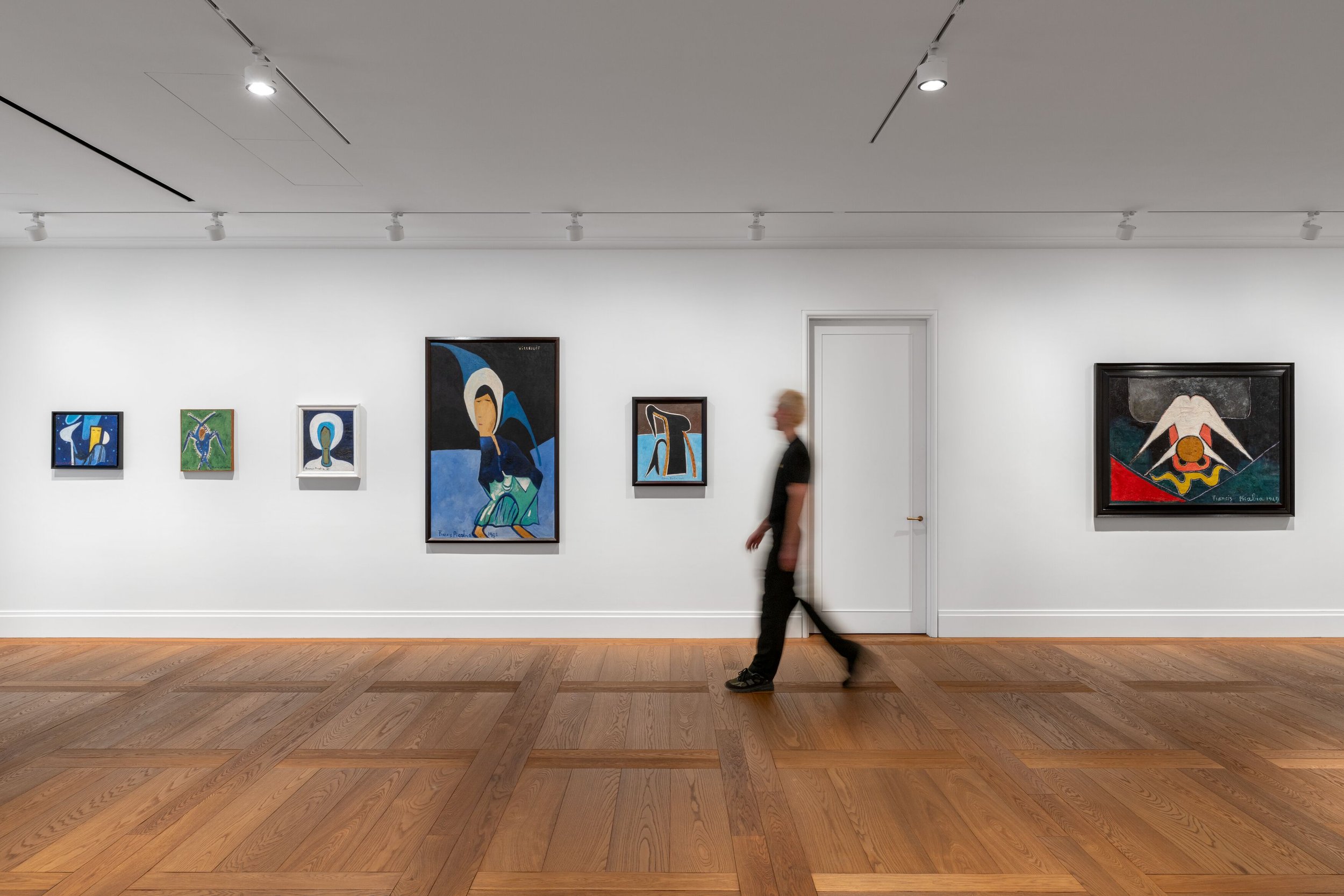
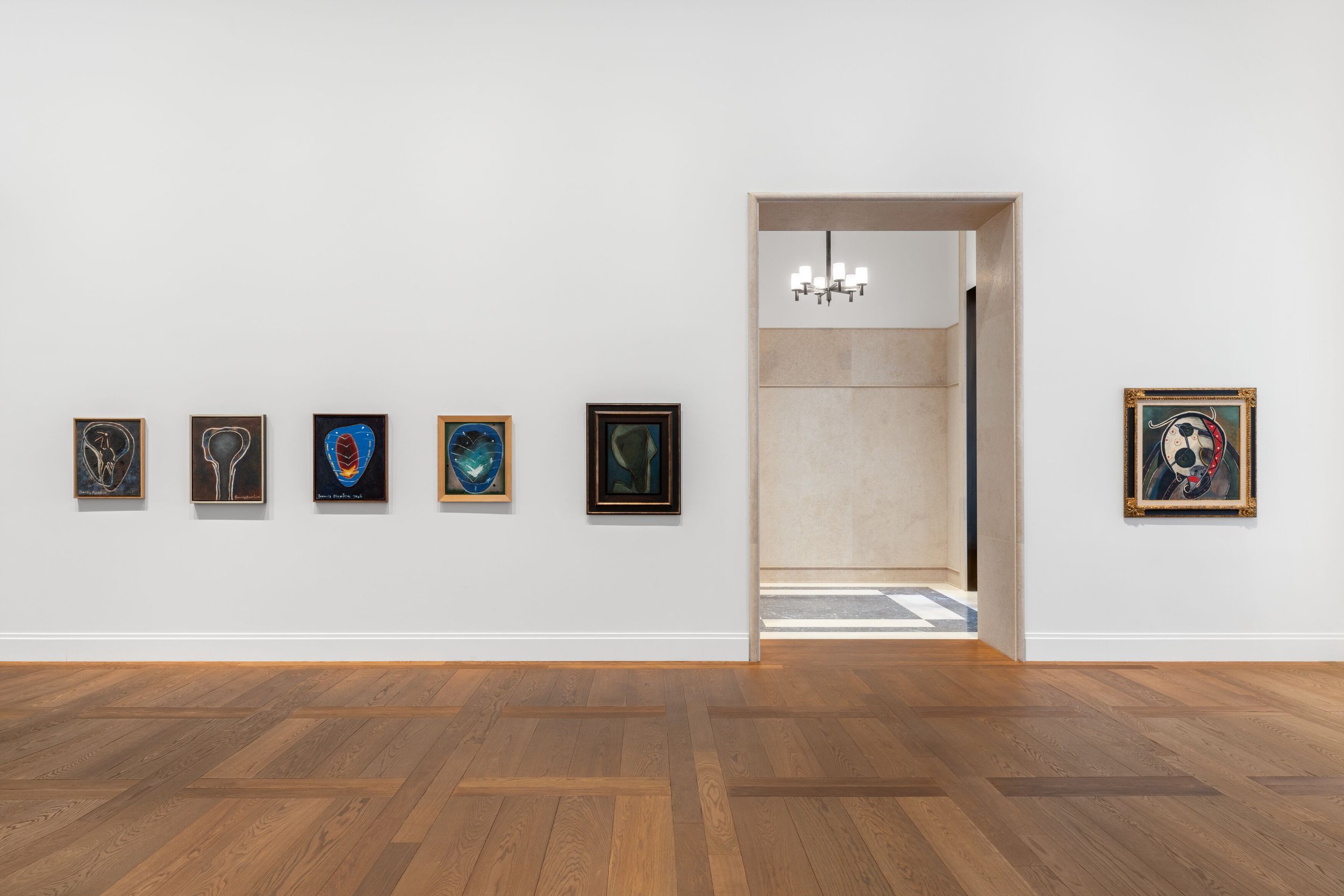
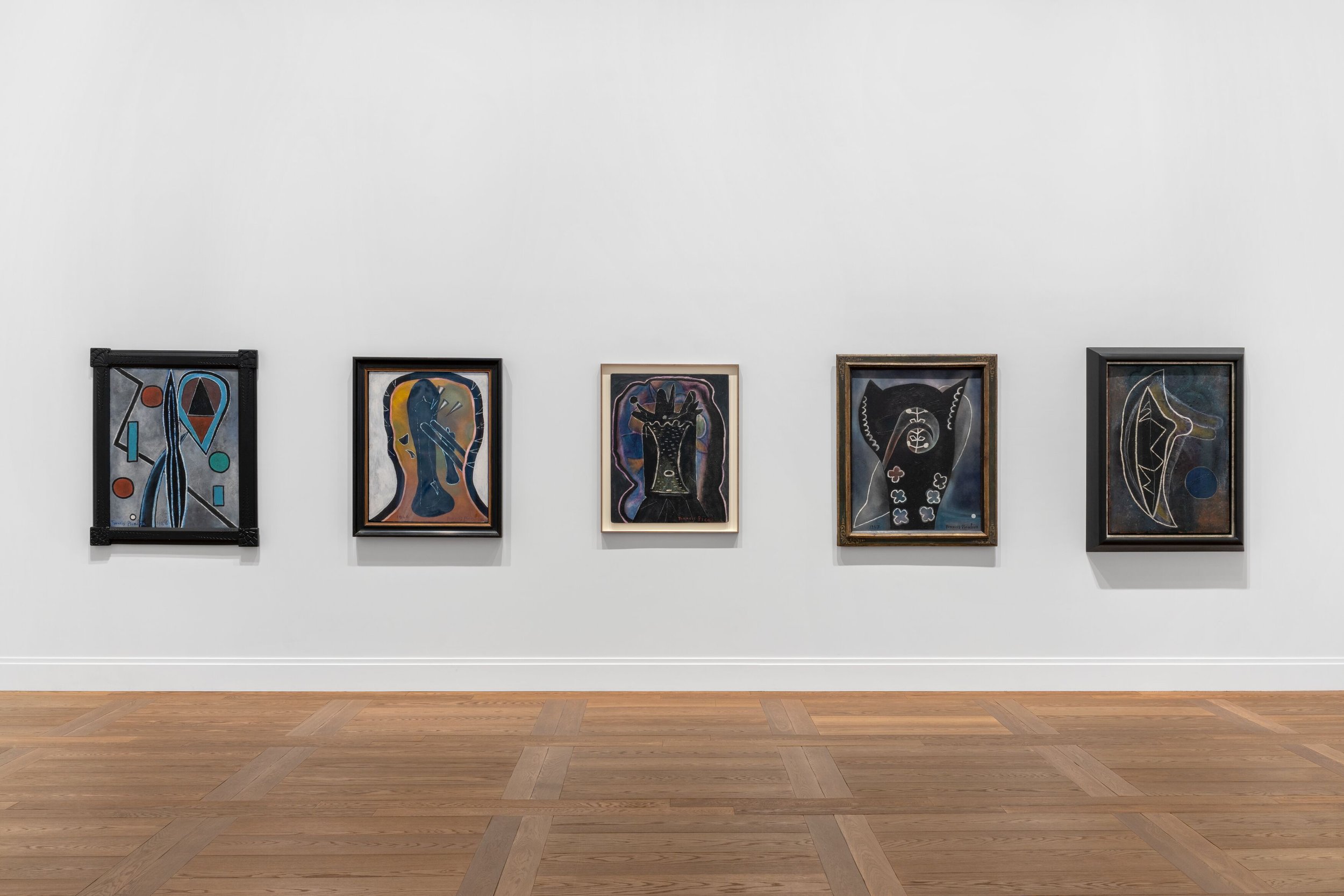
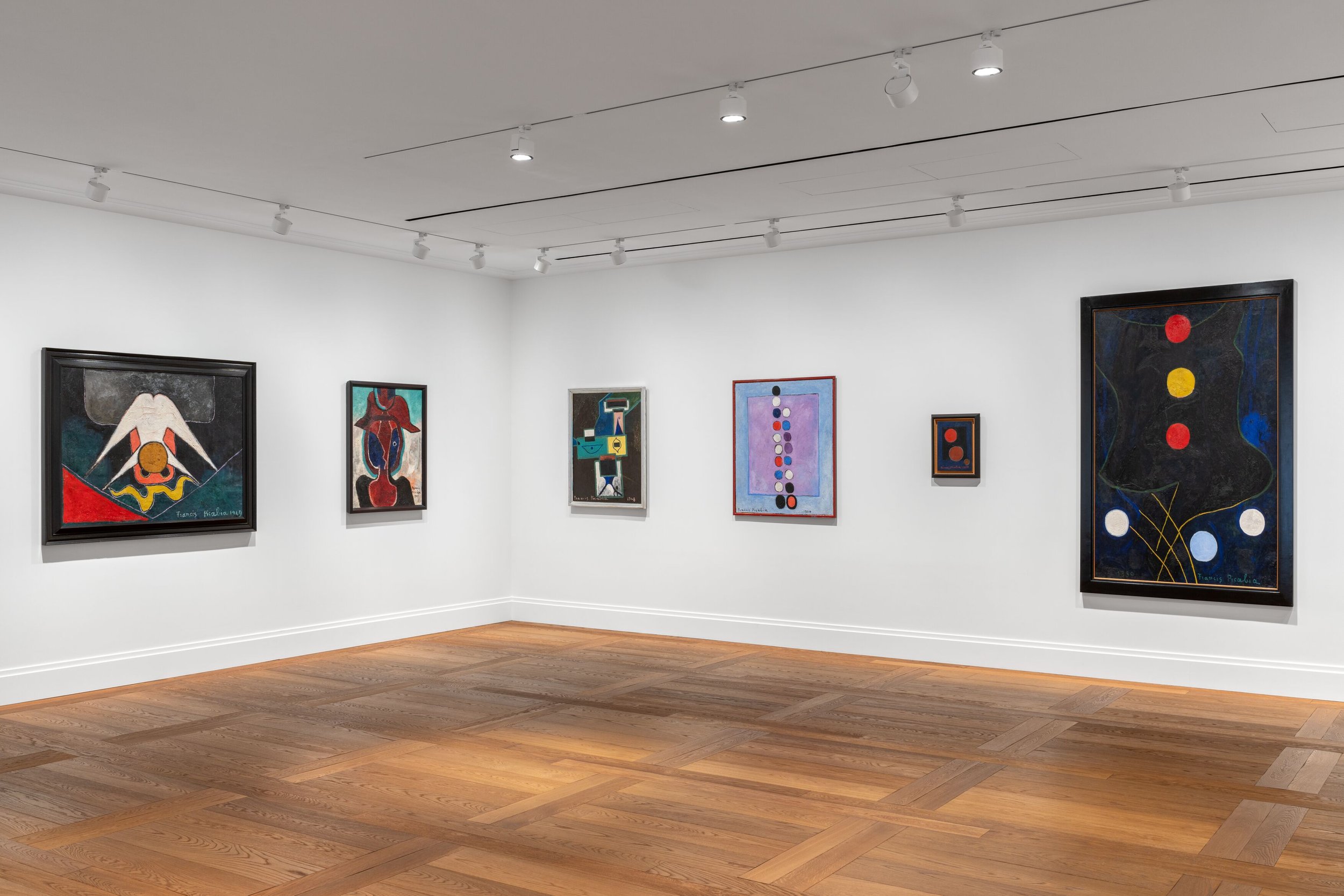
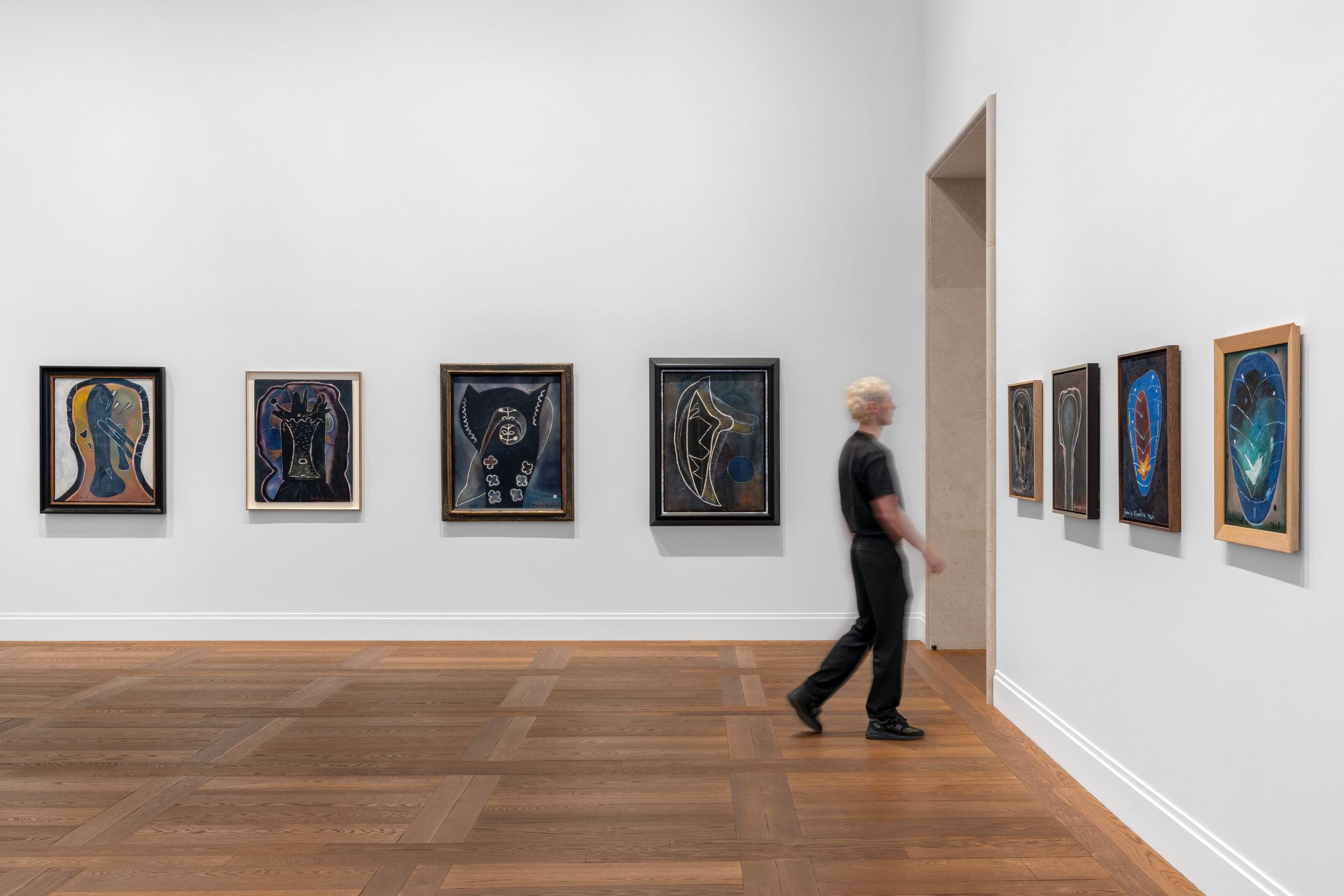
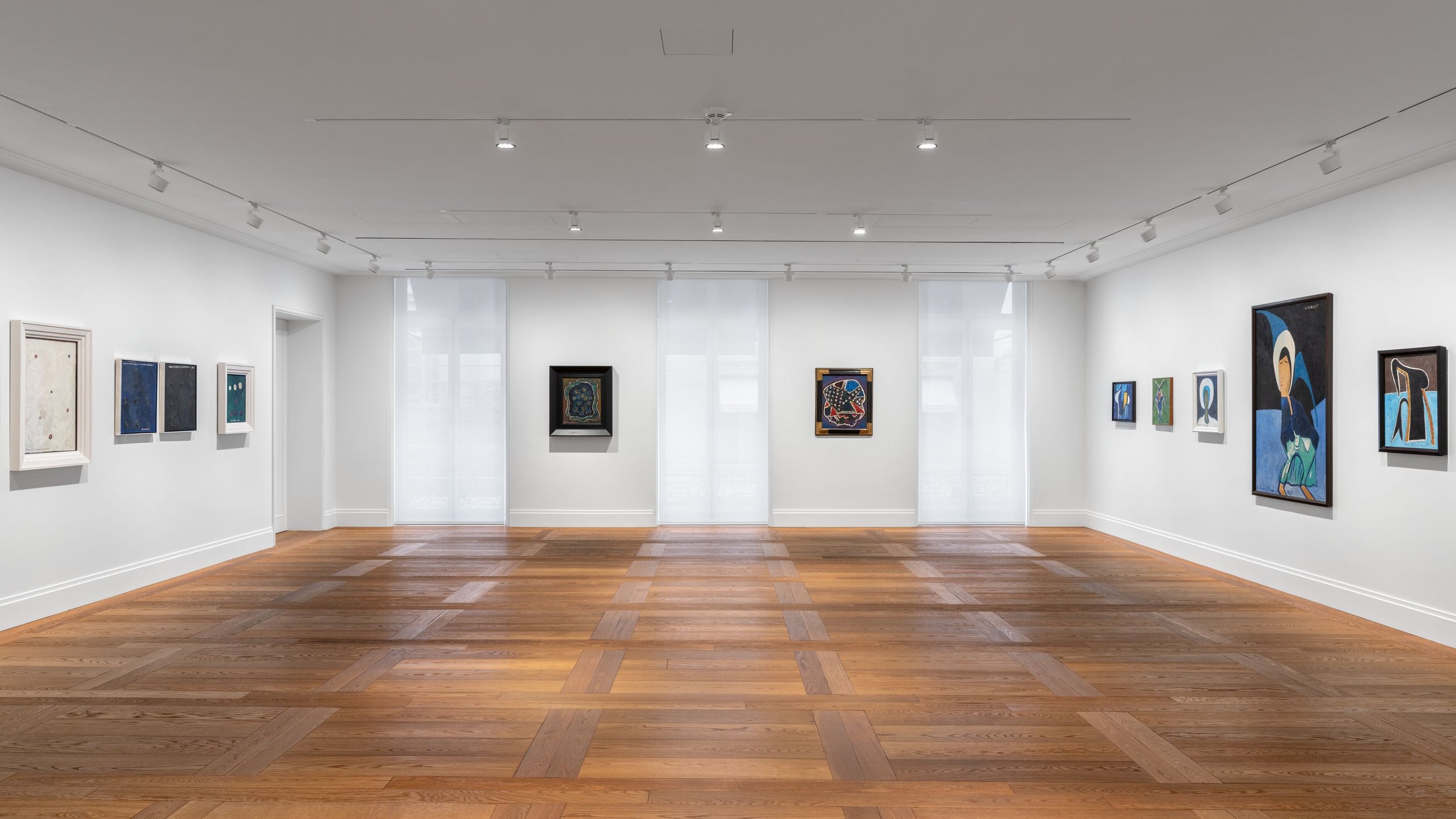
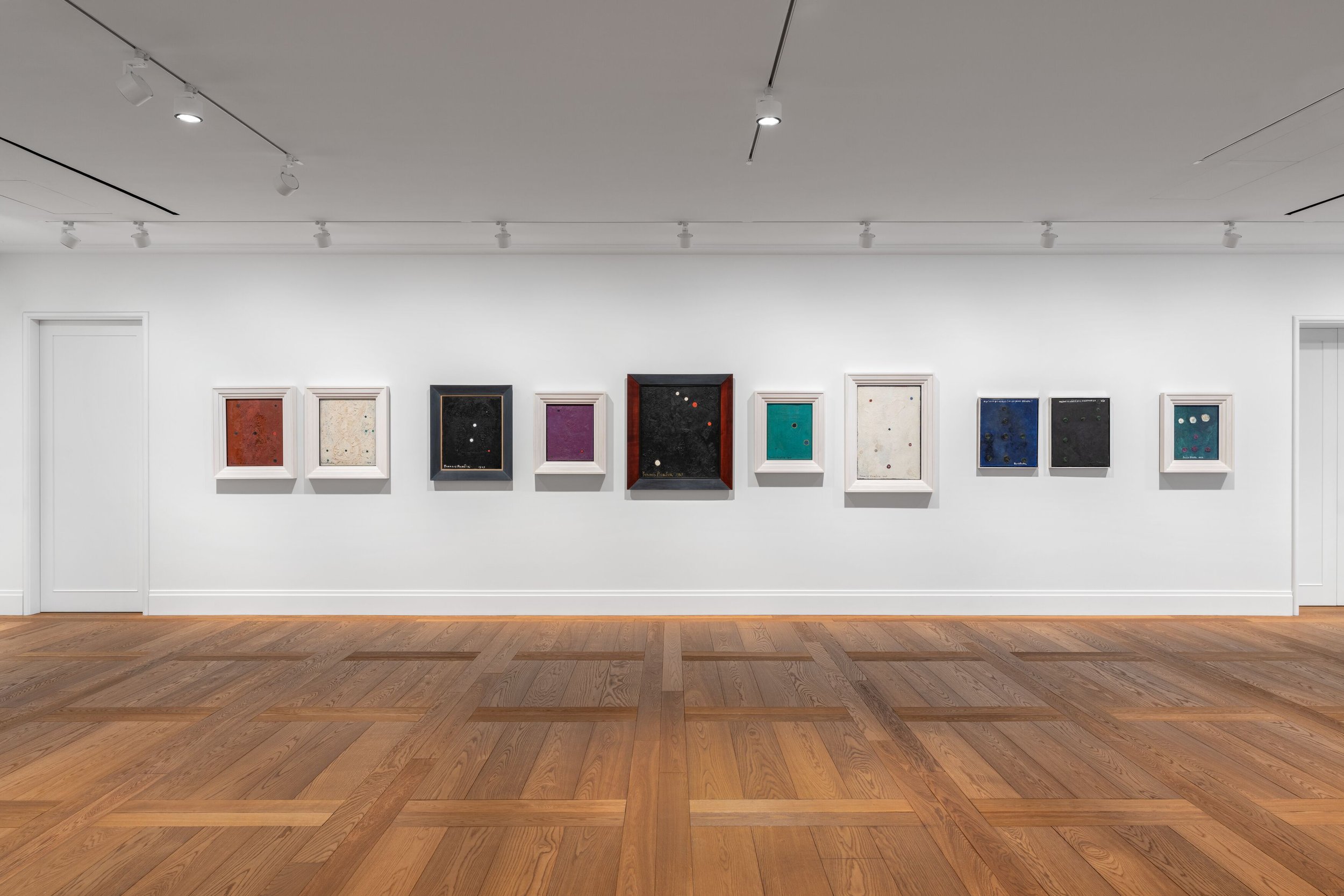
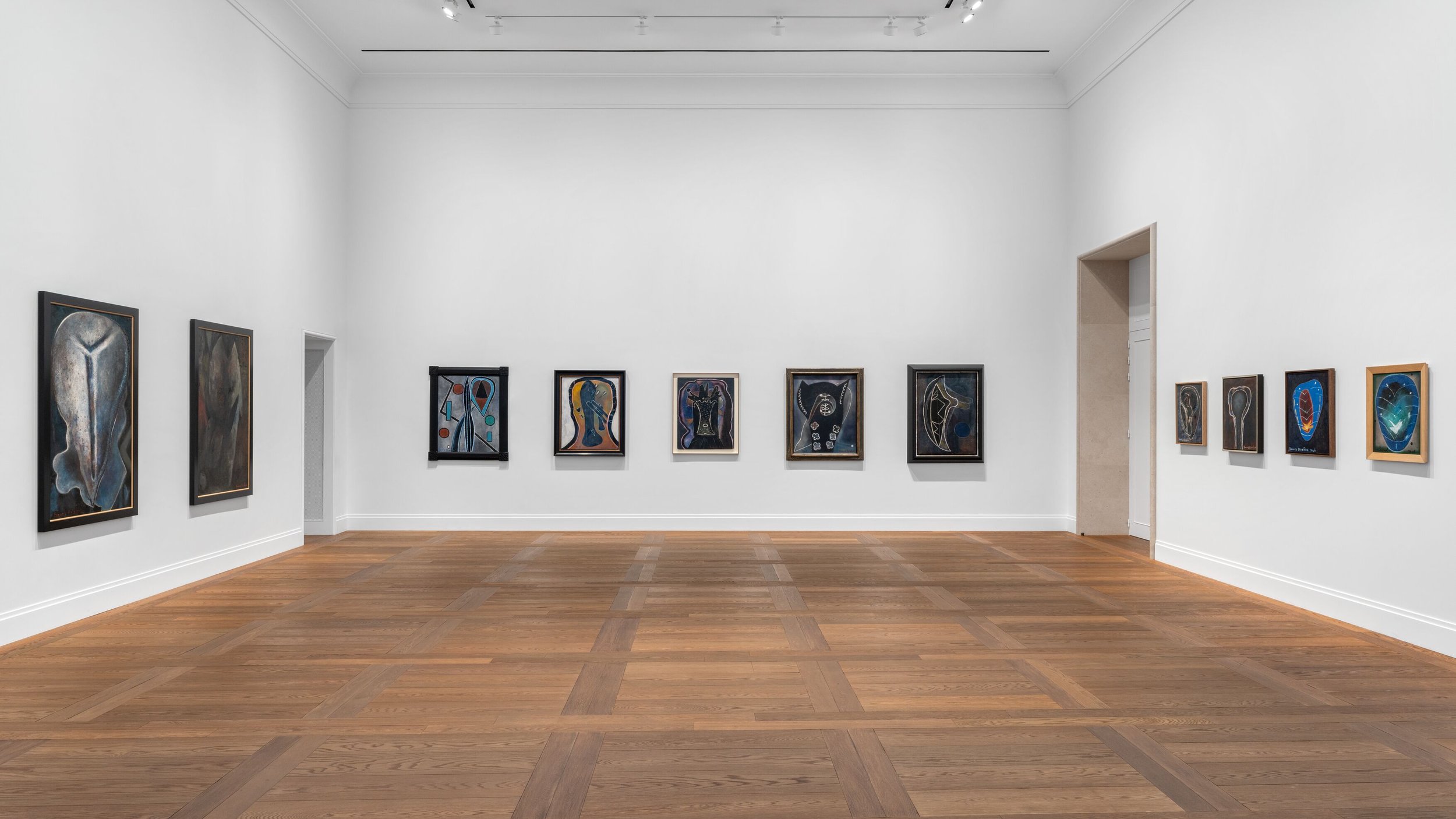
Installation view, ‘Francis Picabia. Éternel recommencement / Eternal Beginning,’ Hauser & Wirth Paris, 2025. Courtesy Hauser & Wirth. Photo: Nicolas Brasseur
An exhibition catalogue, released alongside the exhibition, illustrates Picabia’s visually imposing works and contextualizes his very personal position within the vibrant post-war Parisian art scene and the rise of art informel. This bilingual publication by Hauser & Wirth Publishers includes essays by Arnauld Pierre and Candace Clements, with an introductory preface from Beverley Calté, President of the Comité Picabia.
About the Artist
Francis Picabia (1879–1953) was born François Martinez Picabia in Paris, to a Spanish father and a French mother. After initially painting in an Impressionist manner, elements of Fauvism and Neo-Impressionism as well as Cubism and other forms of abstraction began to appear in his painting in 1908, and by 1912 he had evolved a personal amalgam of Cubism and Fauvism. In 1915—which marked the beginning of Picabia’s machinist or mechanomorphic period—he and Marcel Duchamp, among others, instigated and participated in Dada manifestations in New York. For the next few years, Picabia remained involved with the Dadaists in Zurich and Paris, but finally denounced Dada in 1921 for no longer being “new.” The following year, he returned to figurative art, but resumed painting in an abstract style by the end of World War II.
About Hauser & Wirth Publishers
In keeping with Hauser & Wirth’s artist-centric vision, Hauser & Wirth Publishers works to bring readers into the universe of artists and behind the scenes of their practices. From publishing artists’ writings and exceptional exhibition-related books to commissioning new scholarship and pursuing the highest levels of craft in design and bookmaking, Hauser & Wirth Publishers creates vital, lasting records of artists’ work and ideas, forging critical gateways to the cultural discourse they inspire. Through its Oral History Initiative, Hauser & Wirth Publishers is building an enduring record of artists’ voices for future generations. Additionally, the imprint publishes Ursula magazine, a bi-annual print and digital periodicathat features essays, profiles, interviews, original portfolios, films and photography by thought-provoking writers and artists from around the world.
The exhibition opened on 18 January – and will conclude on 12 Marchl 2025 at the Paris location, This exhibition will travel to Hauser & Wirth New York, 22nd Street from 1 May – 25 July 2025.. Please visit the Hauser & Wirth Gallery site for information about upcoming exhibitions. Also, follow the gallery on Instagram, Facebook, X, and YouTube.The magazine did a book highlight, which can be found here.

RENÉ WIRTHS : I CAN’T GET NO

Toutes les images / All images: © Courtesy of the artist and TEMPLON, Paris - Brussels - New York
Berlin artist René Wirths unveils his series “I CAN’T GET NO” at Templon in Brussels, a collection of fourteen new paintings created over the course of the past two years.
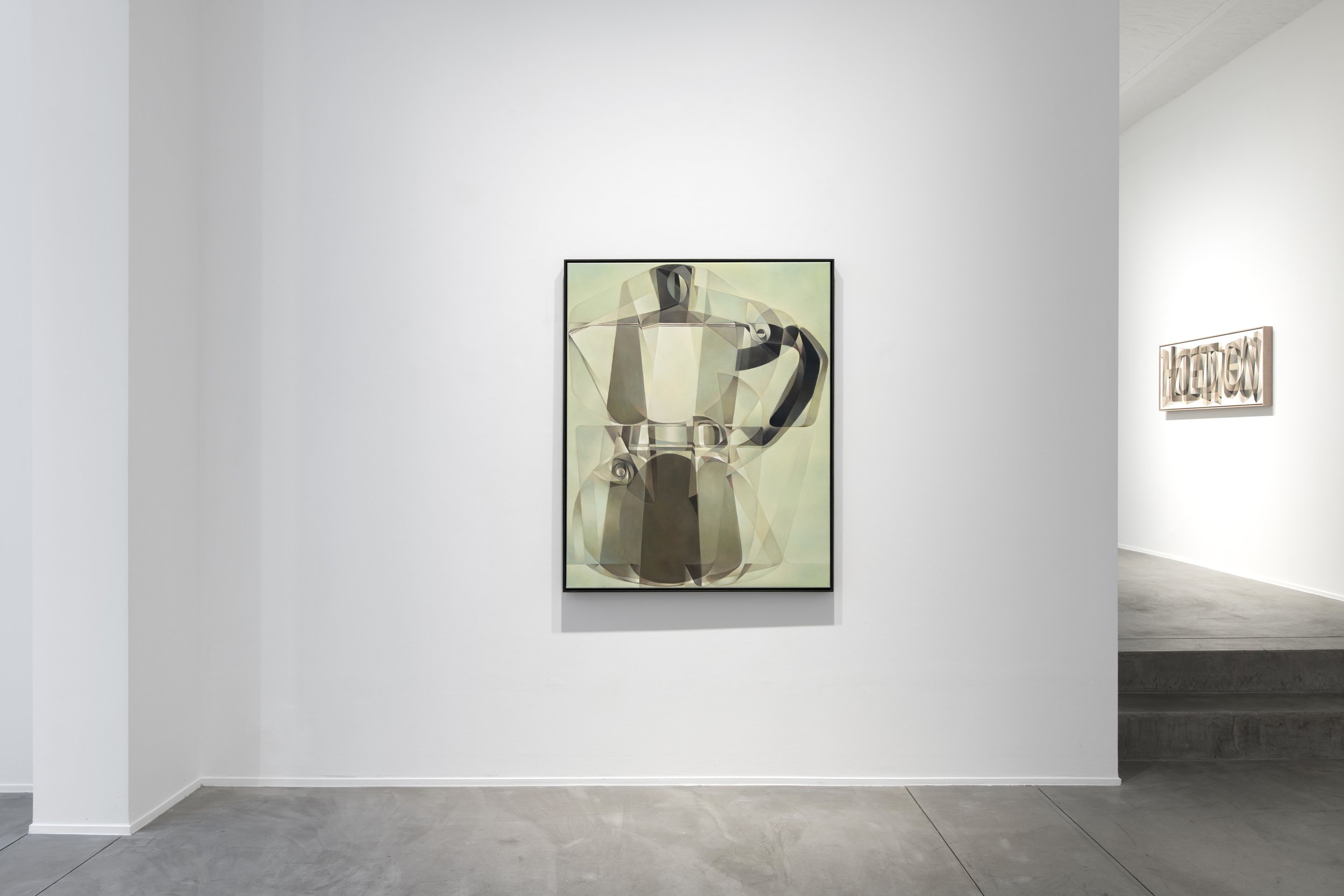
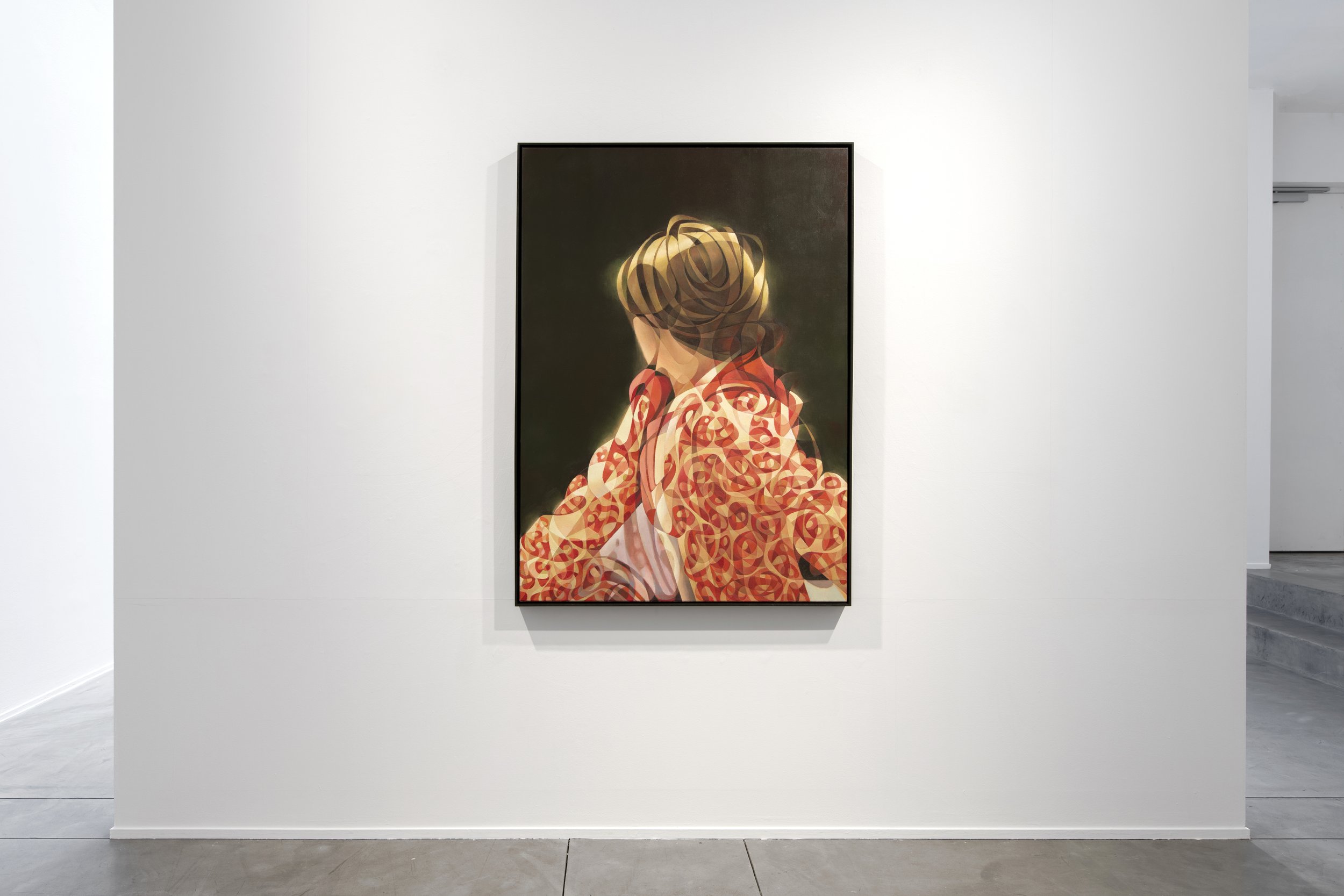
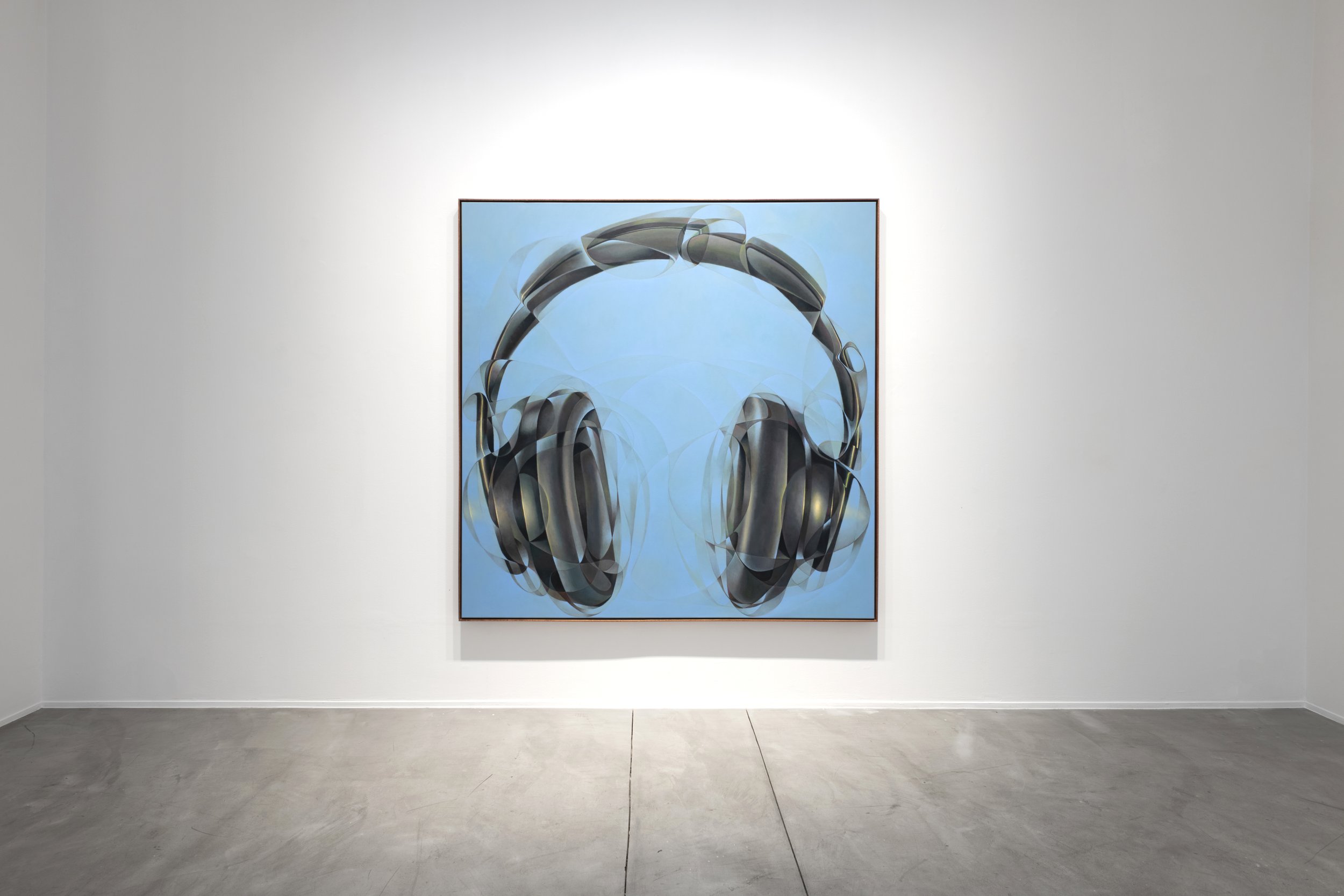
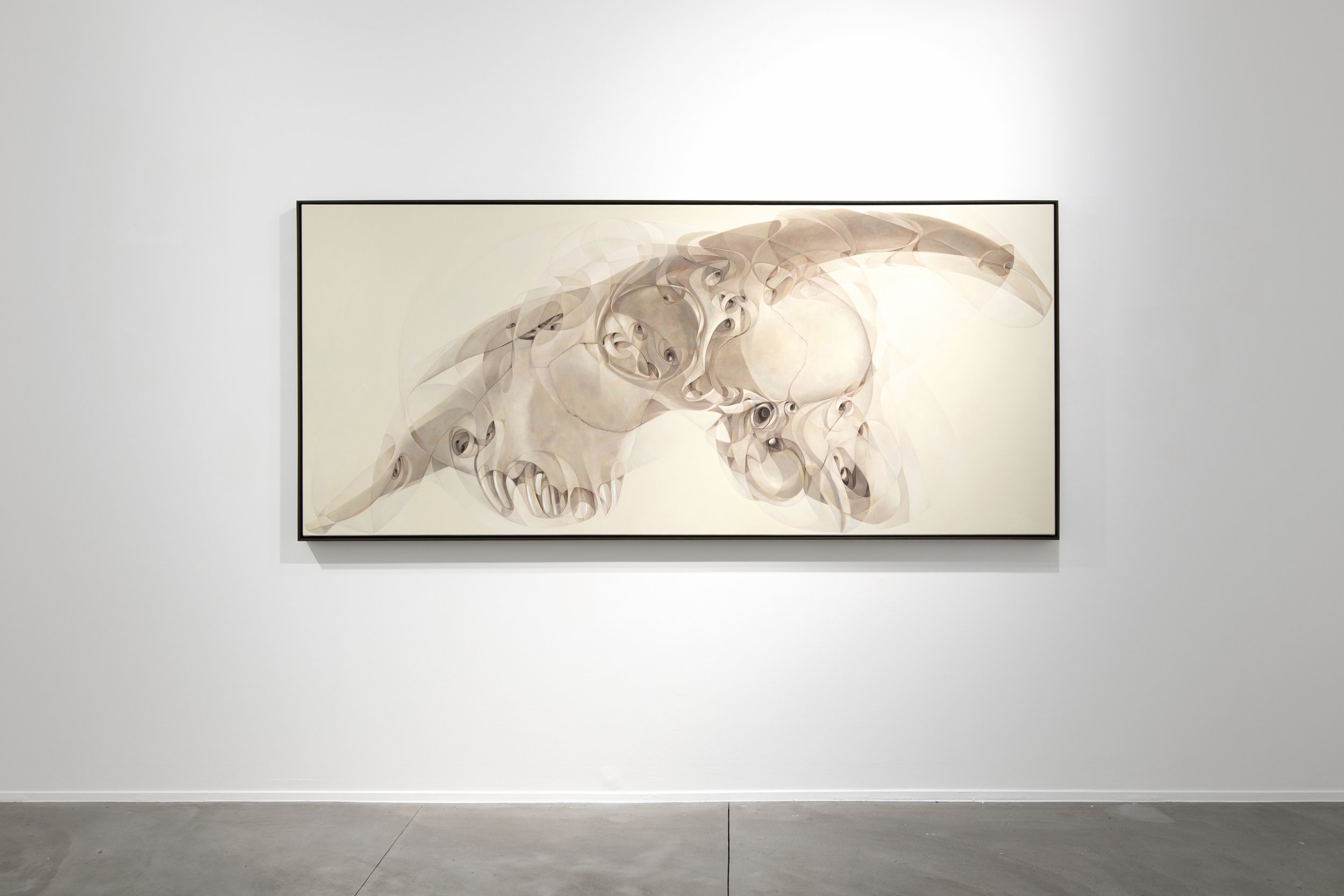
A virtuoso painter, René Wirths is renowned for his still lifes, which are both objective and meditative, and where each object represented — a sneaker, a coffee pot, a pair of headphones, a spray bottle — is treated in an hyper-realist manner that captures every detail and texture. Far beyond a mere imitation of reality, Wirths bestows upon everyday objects an almost sculptural presence, revealing their symbolic weight and silent essence. Representation gives way to reflection, resulting in a physical and metaphysical experience. With the new series, however, René Wirths, for the first time, places his subjects at the centre of a prism of light with divergent rays. His gaze oscillates between accessible reality and subjective vision, focusing on the role of the image in our experience of the world — a perspective fully dedicated to the art of painting.
Toutes les images / All images: © Courtesy of the artist and TEMPLON, Paris - Brussels - New York Video © José Huedo
René Wirths offers a highly personal homage to the great masters of art history, from Édouard Manet’s “Fifer” to “Wanderer above the Sea of Fog” by seminal German Romantic painter Caspar David Friedrich. “I am finally liberating myself from the process that forced me to reflect the outside world solely through the prism of my own observation,” the artist explains. “I have developed a new vocabulary, more inward-looking, inspired by my readings, music and discussions. My subject has shifted: I allow myself to stage my great masters of art history through a new perspective, freed from the material universe that surrounds me.”
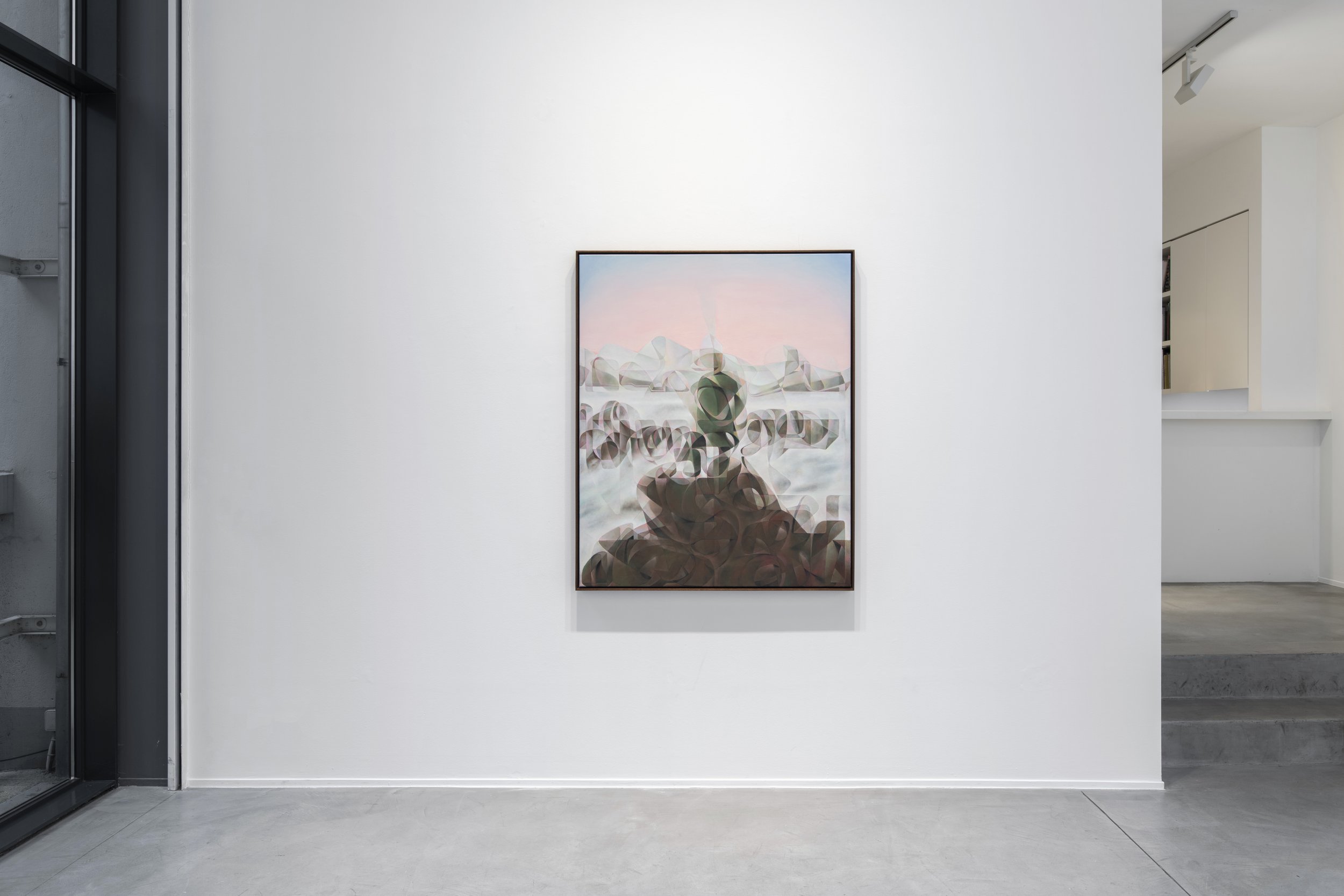
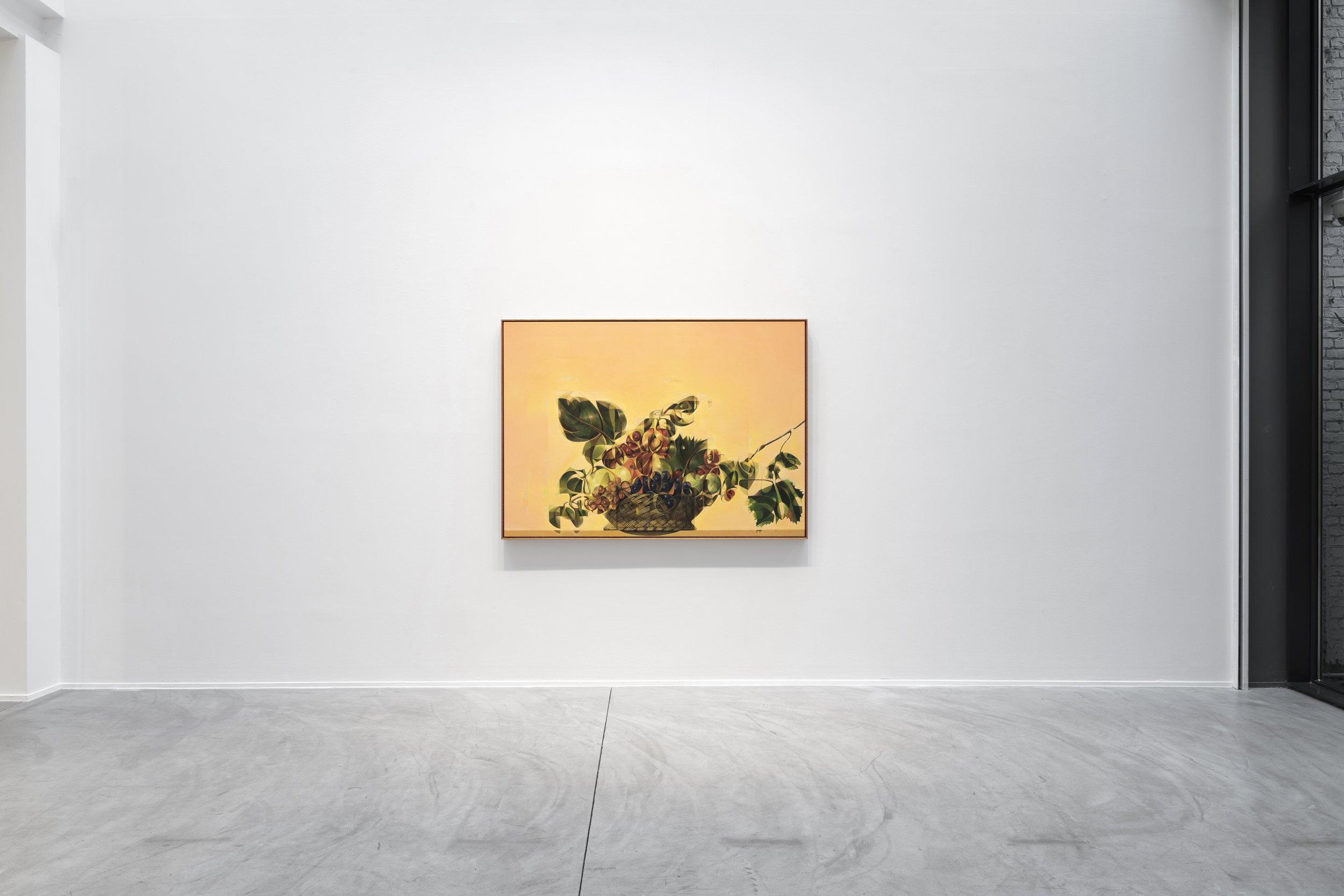
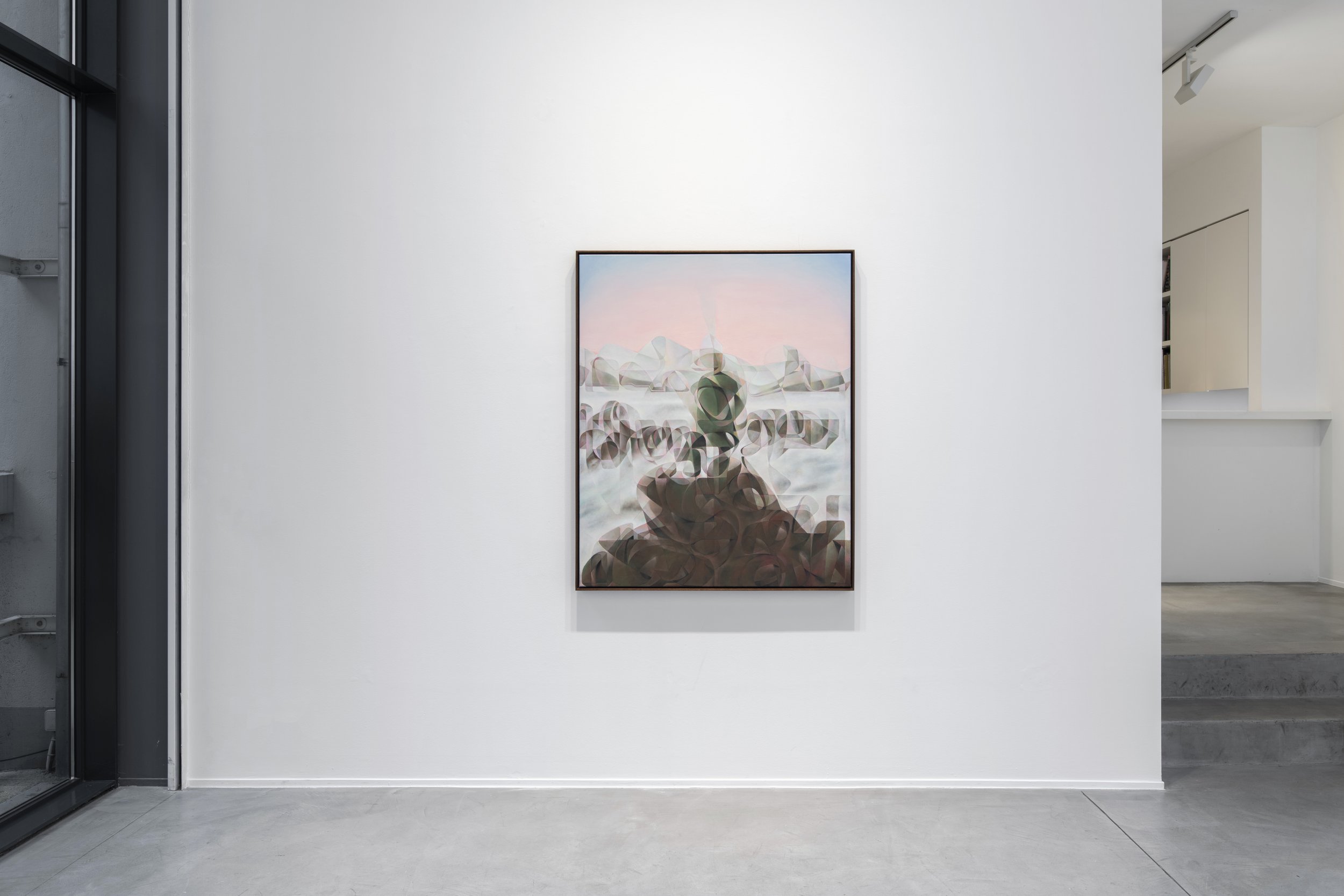

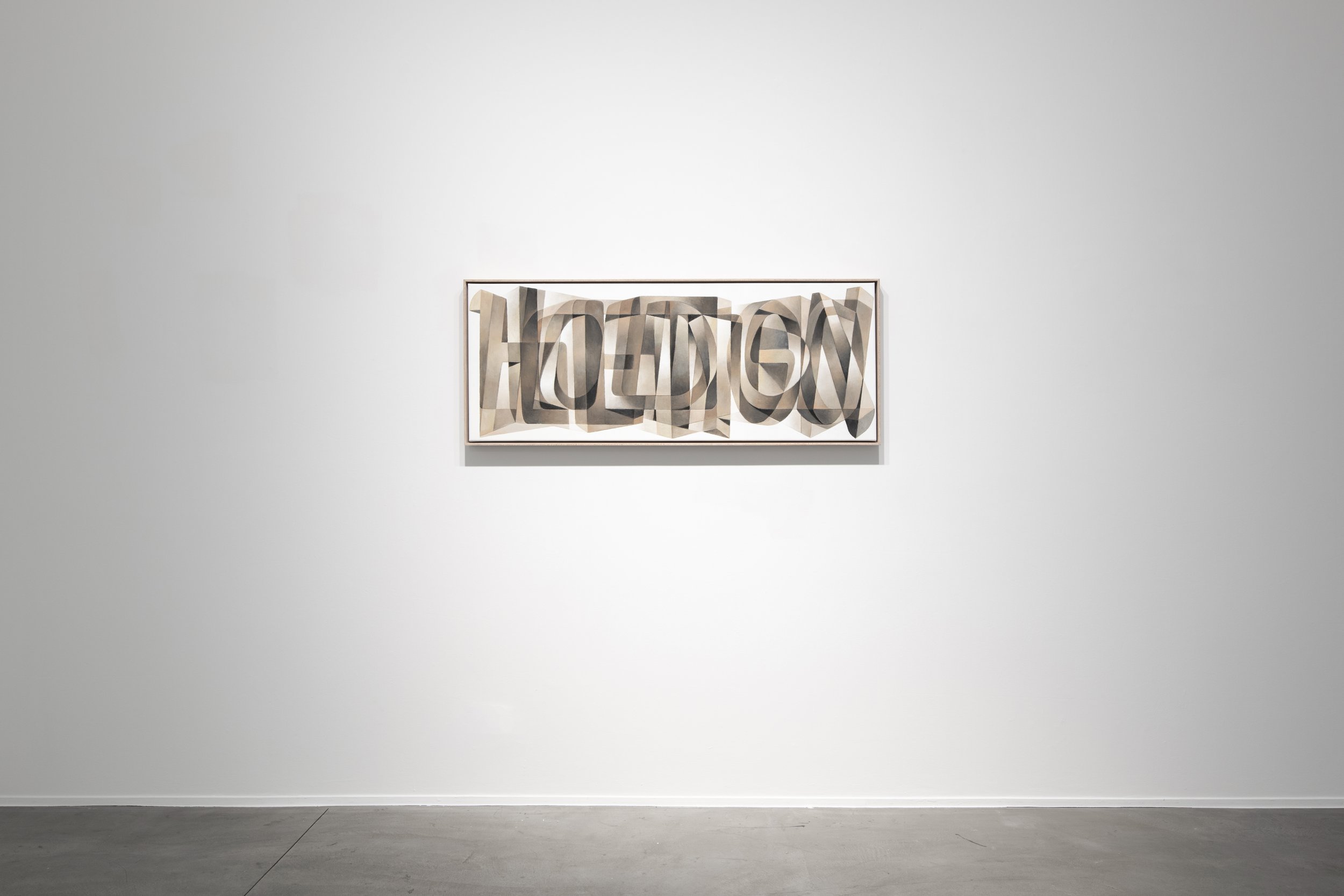
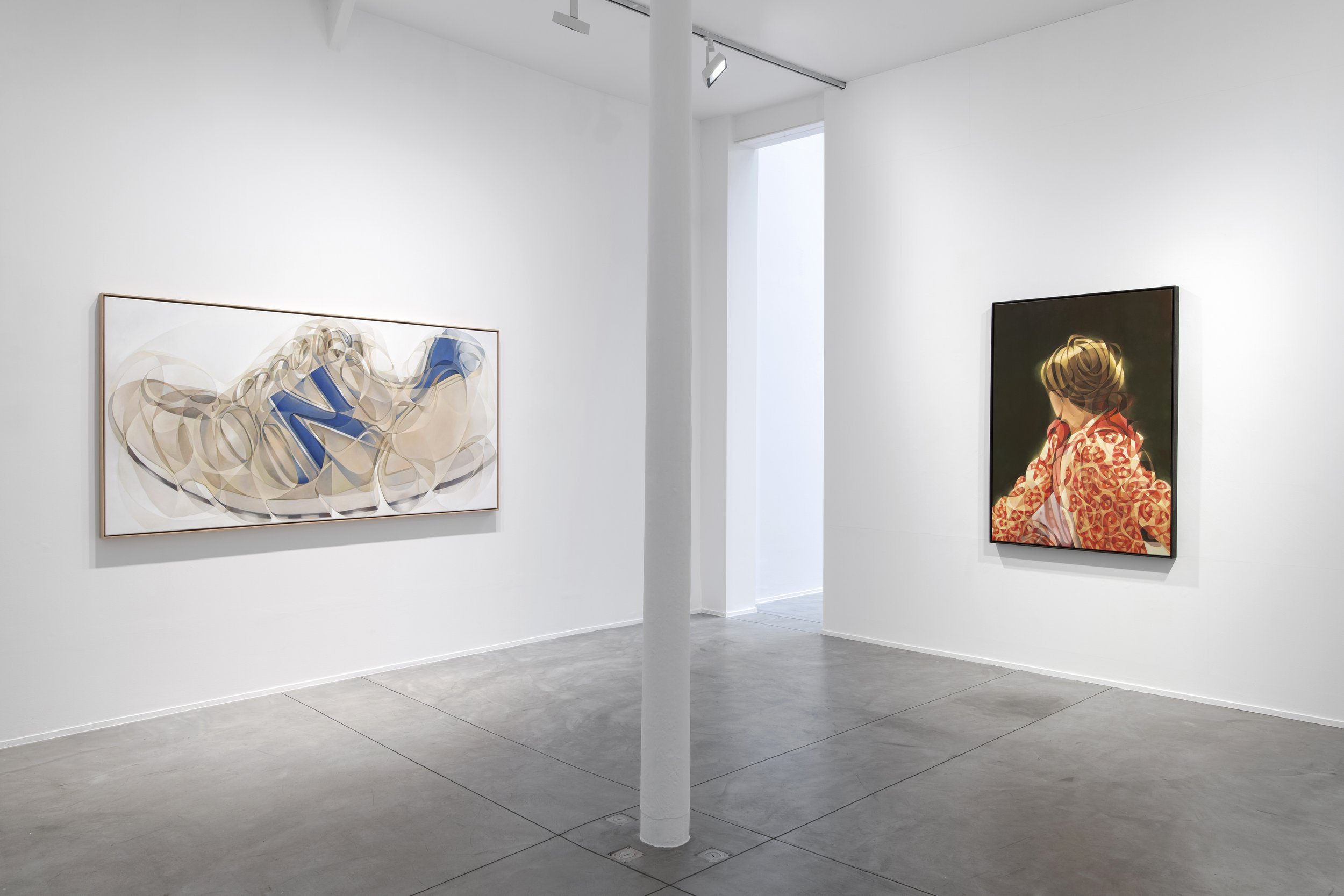
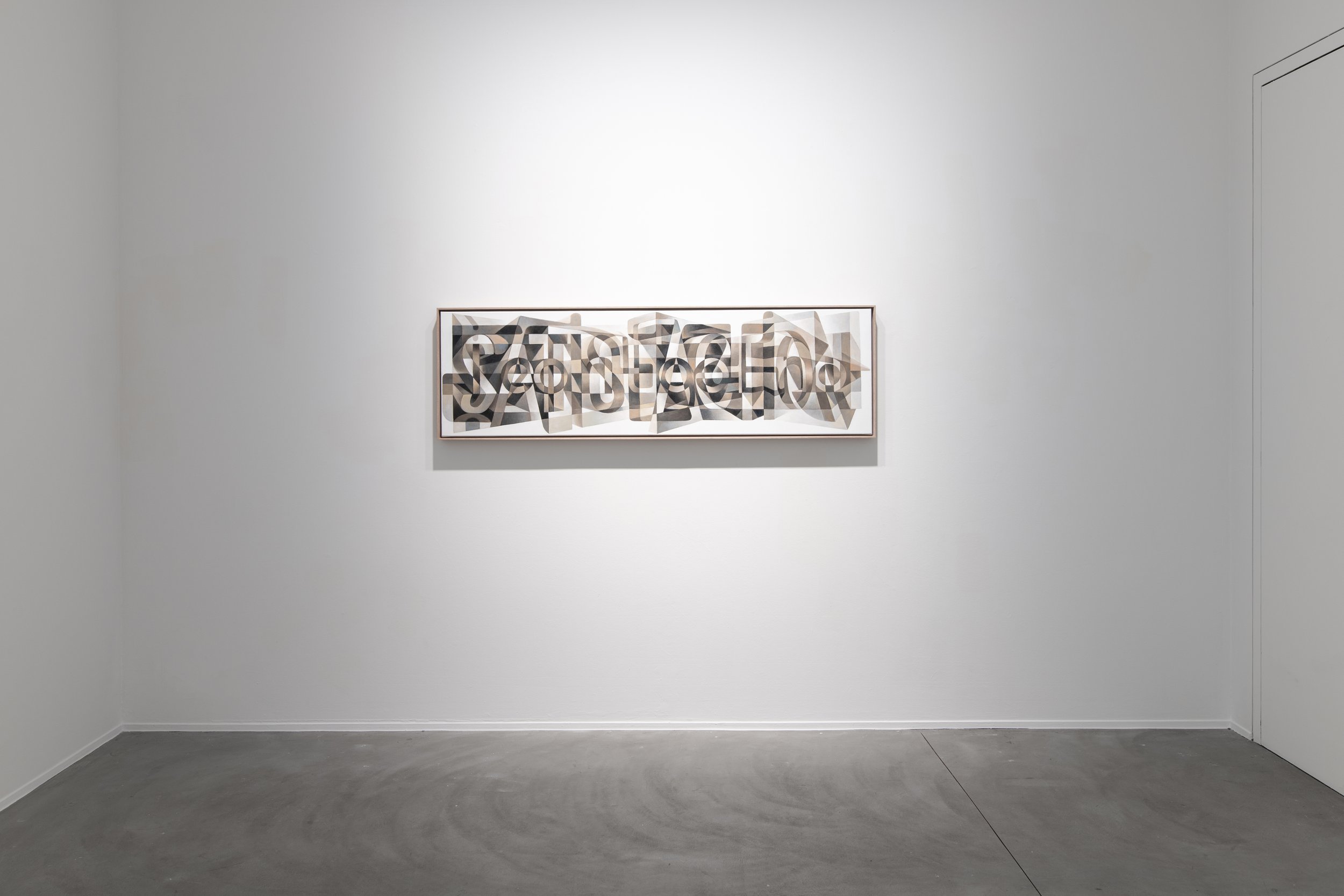
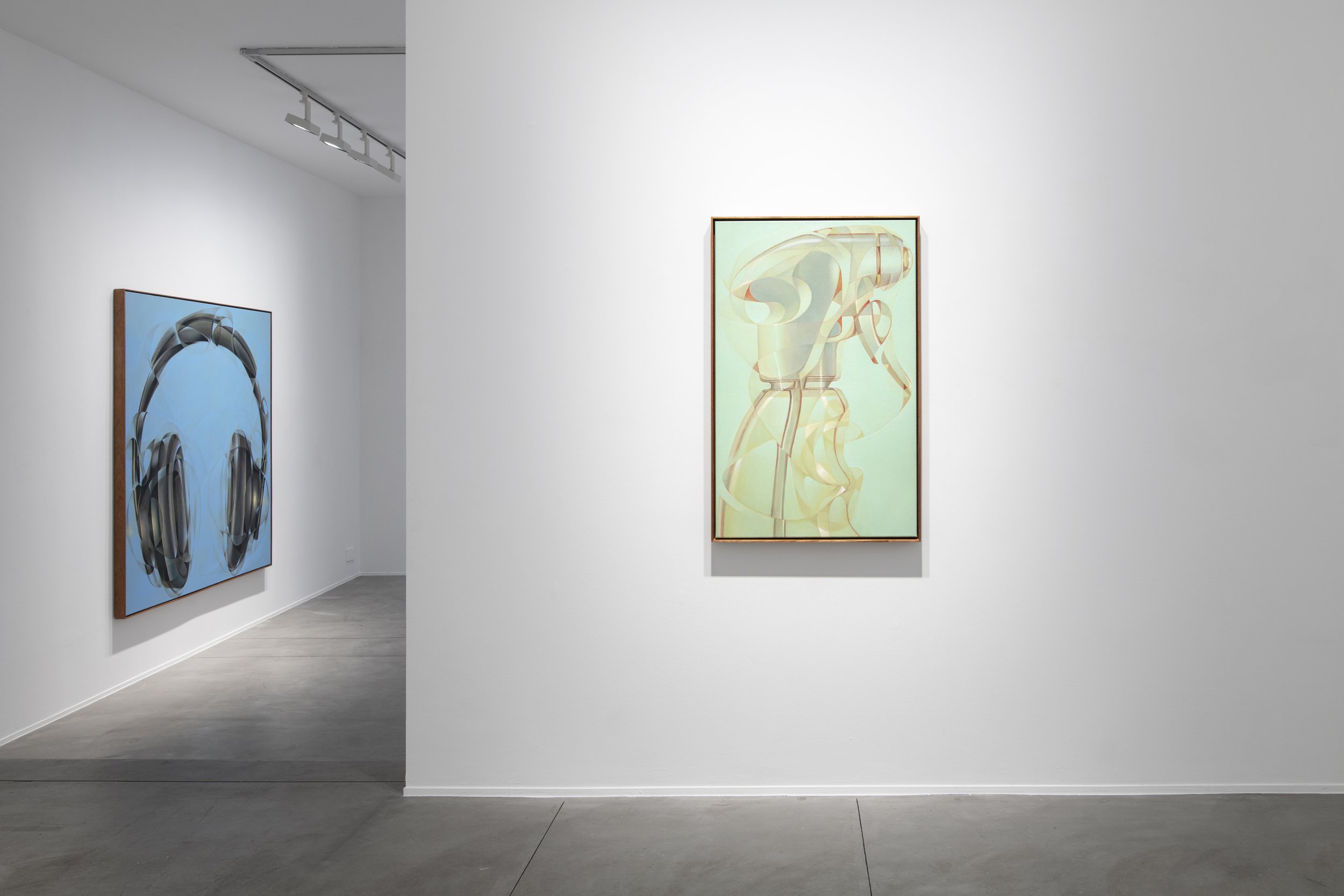
Toutes les images / All images: © Courtesy of the artist and TEMPLON, Paris - Brussels - New York
The “I Can’t Get No” exhibition — its title a discreet nod by this discerning music lover to the famous song by legendary group The Rolling Stones — underscores the importance of rhythm in René Wirths’ oeuvre and interrogates the mysterious, sometimes elusive, aura of a work of art. What knowledge, what memory or personal experience allows one to reveal the profound meaning of a work of art?

Portrait © Jungwook Hwang
Born in 1967, René Wirths grew up in West Berlin where he still resides. He has exhibited his work in several international galleries, including Galerie Michael Haas in Berlin. He also took part in the 2000 Geneva Biennale in 2000. His work has featured in several solo exhibitions including at the Rotterdam Kunsthal in 2011, Kunsthalle Bremerhaven in Germany in 2016 and Haus am Lützowplatz in Germany in 2016. It has also been included in numerous group exhibitions, such as at the Villa Manin di Passariano in Italy in 2002, Galerie im Parlament/Preussischer Landtag in Germany in 2003, Museum Gegenstandsfreier Kunst in Germany in 2008, Zoya Museum in Moldova in 2009, Olbricht Collection, La maison rouge - Fondation Antoine de Galbert in Paris in 2011, Museum Maulbronn in Germany in 2014, Centre of Contemporary Art in Poland in 2018, Museum für Aktuelle Kunst in Germany in 2018, Haus am Lützowplatz in Germany in 2019, Studio im Hochhaus in Germany in 2020 and Museum für neue Kunst in Germany in 2023. He is taking part in a group exhibition at the Arthena Foundation in Düsseldorf, Germany, in 2025.
The exhibition opened on January 11th and will conclude on March 1, 2025. For more information about René Wirths’ s artwork and his exhibition, please visit Templon’s site. The gallery can also be found on Instagram, artnet, Facebook, YouTube, and Artsy.

Caroline Coon & Francesca DiMattio: Snapdragons

Stephen Friedman Gallery presents Snapdragons, a two-person exhibition bringing together four decades of paintings by British artist Caroline Coon, alongside new ceramic sculptures by American artist Francesca DiMattio. The exhibition highlights the radical and rebellious ways in which both artists take on the histories and conventions of their mediums, using them as springboards to bend, modify, and challenge representations of women, femininity, and desire.
Caroline Coon’s career has been defined by unbridled creativity, experimentation, and an unwavering commitment to challenging societal norms. Her journey includes fighting for the rights of women, drug offenders, and sex workers; documenting the London punk scene of the 1970s through photographs and interviews (she also managed the seminal punk band The Clash); and authoring several books, including the autobiographical Laid Bare – Diary – 1983–1984, which inspired her Brothel series. Throughout it all, she has remained dedicated to her painting practice. Although artistic recognition came later in life, she is now celebrated for her figurative paintings, which blend feminist revisionist histories with a distinctly contemporary urban vision.
In her painting Sunday Afternoon - Backgammon Players (1985), Coon creates a homage of Manet’s Olympia (1863) and Jean Auguste Dominique Ingres’ Grande Odalisque (1814), subverting the traditional male-female power dynamic by positioning the unclothed Adonis figure as the object of the viewer's gaze. Set in contemporary London, the painting reveals two reclining nudes at leisure, reveling in their freedom and erotic play. In other works, such as Self-Portrait with Model (1993), Coon places herself at the center. She portrays herself as an artist, pencil in hand, ready to draw her lover, who lies in a state of heightened sexual arousal. “This is a bold statement of my identity as an artist,” wrote Coon, “who has, both socially and sexually, transgressed the sexist restrictions imposed on women by respectable society. Not only am I naked, but I am standing beside my canvas before my model who is as elegantly erect as I am. There is no polite illusion here—rather a factual, liberatory contradiction to those in the past who have denied the power and purpose of female sexuality.”

Installation: Caroline Coon and Francesca DiMattio, 'Snapdragons', Stephen Friedman Gallery, New York (2025). Courtesy Stephen Friedman Gallery, London and New York. Photos by Grace Dodds.
In her 2005 painting Self-Portrait: In My Cock Hat, Coon appears naked and statuesque, wearing a crown of penises. Set against a black background, her name is emblazoned across the canvas like a marquee. She meets the viewer’s gaze with a look that is direct and confrontational. In Cunt (1999), a precursor to her 2005 self-portrait, she creates a theatrical stage set inspired by British Pop artist, Pauline Boty’s last extant painting, BUM (1966). “I decided to make a front/cunt sister painting to Boty’s back/bum as a celebration of women’s ‘sex’—the part of women’s anatomy most commonly derided as disgusting, forbidden and used as the worst of insults,” Coon explained. “Following Boty’s theme, I ‘staged’ my Cunt in an archaic temple of sexual pleasure and fecundity. In the pediment are two goddesses of Liberty, beside the birth shell of Venus. Above them is a wild English Dog rose, for love and romance. The torso is framed by two strips—Corinthian columns representing Vitruvian architectural principles that could be read as symbolising patriarchal masculinity, and beside them is a crush of roses to represent female sensuality.”
Flowers take center stage in a series of still-life paintings created between 1988 and 2008. Paying homage to the floral works of Gluck (1895–1978), a pioneer of gender fluidity, Coon’s paintings similarly reject conventional femininity. Her compositions are animated, bold, theatrical, and unapologetically sensual.
New York-based artist Francesca DiMattio operates with a similarly insurgent spirit, dismantling traditional boundaries between high and low, art and craft, masculine and feminine, history and the present. Straddling the worlds of art, architecture, and design, DiMattio’s work is non-hierarchical, eclectic, and teeming with ideas. Her pedestal sculptures riff on 18th-century French Sèvres porcelain, German Meissen ware, English Staffordshire pottery, and Ming Dynasty vases, while her vertiginous Caryatid figures draw inspiration from the draped female columnar supports of the Acropolis. DiMattio’s work is a symphony of historical and cross-cultural references. “I examine difference in each piece by putting opposites in conversation with each other,” the artist explains. “Through the making of each piece, similarities begin to bridge the gap of difference, and it all becomes sewn into a new hybrid language. Cultural time and place, gender, beauty, and value become scrambled and presented on equal footing.”
DiMattio takes her exploration further by incorporating everyday utilitarian items—detergent bottles, Chiquita banana boxes, sneakers, high-heeled shoes, and an old teddy bear—into her work. In a somewhat absurd reversal of mass production, she hand-sculpts and glazes each of these objects, then sutures them onto her more traditional ceramic forms. In sculptures such as Meissen Tide (2025) and Meissen Pump (2025), highly ornate porcelain vessels adorned with flower petals, rosettes, and floral vignettes take on Frankenstein-like proportions as they collide with a large Reebok high-top sneaker, bottles of cleaning spray, and a container of Tide. Each sculpture is punctured by wound-like fissures that contrast sharply with the delicate floral patterns spreading across the surfaces like a virus, even extending to the pedestals below. The result is a playful tension: sneakers transform into vessels, laces become ornamental details, and high art meets streetwear.

Francesca DiMattio, Attica Pump, 2025. Glaze on terracotta, glaze on terracotta pedestal, Sculpture: 88.9 x 50.8 x 45.7cm (35 x 20 x 18in) Pedestal: 91.4 x 34.9 x 34.9cm (36 x 13 3/4 x 13 3/4in). Copyright Francesca DiMattio. Courtesy the artist and Stephen Friedman Gallery, London and New York and Pippy Houldsworth, London. Photo by Karen Pearson.
In another pair of terracotta pedestal sculptures, the artist juxtaposes ancient Greek amphoras with contemporary fashion accessories. In Attica Pump (2025), a vessel inspired by Athenian red-figure pottery from the 6th century BCE becomes host to four precariously tall high-heeled shoes that push through and pierce its clay surface. Similarly, in Attica Cowboy (2025), an oversized cowboy boot adorned with depictions of gods and goddesses is grafted onto an amphora standing on a matching tiled base. The vessel appears to sag under the boot’s weight, resembling a deflated belly. By playing with the morphology and nomenclature of ceramic forms—such as the lip, neck, shoulder, mouth, and foot—DiMattio’s sculptures take on a humanoid quality, simultaneously adorned and disfigured by gender-coded, mass-market symbols of beauty.

Francesca DiMattio, Chiquita Caryatid, 2025. Glaze on porcelain and stoneware, 218.4 x 77.5 x 77.5cm (86 x 30 1/2 x 30 1/2in). Copyright Francesca DiMattio. Courtesy the artist and Stephen Friedman Gallery, London and New York and Pippy Houldsworth, London. Photo by Karen Pearson.
DiMattio’s two monumental porcelain sculptures, Chiquita Caryatid (2025) and Teddy Bear Caryatid (2022–25), represent the culmination of the artist’s madcap experimentation. In the first, a massive female figure rises from her base like Botticelli’s The Birth of Venus (c. 1485). Her body morphs and bulges with the imprint of cardboard boxes and plastic bottles adorned with blue floral patterns, barcodes, and Chiquita banana logos. Her companion, named for the teddy bear she stands on, appears as a hyper-ornamented conqueror dressed in a porcelain-mosaic bikini. DiMattio’s figures evoke warrior queens, clad in the armor of contemporary domesticity and transcultural hybridity.

Francesca DiMattio (b. 1981) is known for her dynamic approach to sculpture and painting, where she collapses boundaries between historical and contemporary influences. Her work weaves together an eclectic mix of references—ranging from English Rococo and Islamic Fritware to mass-produced kitsch and domestic patterns—blurring distinctions between high and low culture. In her sculptural practice, she transforms porcelain into unpredictable, fluid constructions, subverting the tradition of ceramics with an explosive sense of movement. Similarly, her paintings layer diverse visual languages, creating compositions that feel both intricate and unruly. DiMattio’s work has been exhibited internationally, and her sculptures are included in prominent public and private collections.
DiMattio has exhibited at Wellin Museum of Art (2022) and Art Omi, Ghent in New York (2019).

Caroline Coon (b. 1945) is a British painter whose vibrant figurative works challenge societal norms and patriarchal values. Deeply influenced by feminism and the politics of sexual liberation, her paintings reject binary notions of gender while celebrating subjects ranging from sex workers and intersex individuals to cityscapes and still lives. A pioneering figure in London’s counterculture, Coon has been a vocal advocate for women’s rights since the 1960s, co-founding the legal-aid organization Release and managing The Clash during the punk movement. Her distinctive style characterized by crisp-edged lines and saturated color draws inspiration from artists like Paul Cadmus and Tamara de Lempicka. Coon’s work has recently gained widespread institutional recognition, with pieces entering Tateâ’s permanent collection and featuring in major exhibitions, including Women in Revolt! touring the UK from Tate Britain.
This is Coon’s first significant exhibition in New York and coincides with her inclusion in the group show ‘Women in Revolt!’, touring the UK from Tate Britain, London.
Stephen Friedman Gallery
Stephen Friedman Gallery is a contemporary art gallery that was founded in 1995 with a focus on representing exceptional artists from around the world. Since its inauguration, the gallery has been based in Mayfair, London. In October 2023, the gallery expanded and relocated to Cork Street. In November 2023, the gallery opened its first location outside the UK at 54 Franklin Street in Tribeca, New York.
For more information about Stephen Friedman Gallery, this exhibition, and others, please visit their site here. The gallery can also be found on Facebook and Instagram. The magazine did an interview with both artists which can be found here.

Catherine Goodman. Silent Music

Installation view, ‘Catherine Goodman. Silent Music,’ Hauser & Wirth New York, 22nd Street 30 January – 12 April 2025 © Catherine Goodman Courtesy the artist and Hauser & Wirth Photo: Sarah Muehlbauer
New York... The exhibition opened in January, ‘Catherine Goodman. Silent Music’ presents a series of new, large-scale paintings by the British artist, where her characteristically expressive brushwork yields animated surfaces that pulse with the dynamic energy of their making. For Goodman, the studio is a place of spiritual meditation. Each painting represents an act of intimate transmutation—a way for her to turn closely held memories and personal vulnerabilities into newfound stability. As the artist trustee at the National Gallery in London, Goodman has spent hours drawing from the collection and has developed a particular affinity for Old Master paintings, which she describes as her ‘only real teacher.’ Inspired by the intensity and drama of Renaissance masterworks by artists such as Titian and Veronese, and influenced by the poignantly psychological work of such groups as the London School, Goodman’s highly personal paintings transcend her individual experience, opening outward and inviting us in.

Catherine Goodman Lago 2024 Oil on linen 180 x 210 x 4 cm / 70 7/8 x 82 5/8 x 1 5/8 in © Catherine Goodman Courtesy the artist and Hauser & Wirth Photo: Eva Herzog
For decades Goodman has maintained a daily practice of drawing from observation. Through this she has\ constructed charged pathways between the physical world she observes and her own inner landscape. In these most recent abstractions, she often begins from landscapes and portraits that hold meaning for her. She then obscures these figurative grounds, building up evocative and densely layered compositions that invite sustained attention. ‘Lago’ (2024), a whirlwind of crimson, cobalt and lush green is one of many works named for a meaningful location or loved one whose spirit they embody. Other compositions, like the exuberant ‘Pahari Picnic’ (2024) or ‘Echo’ (2024)—monumental in scale and bursting with energy—give form to poignant memories. The substantial physical presence of these paintings, with their thick impasto and richly layered pigments, materialize intangible impressions of moments, places and people alike, as well as the psychological terrain encountered during the creative process itself. As the artist has confided to writer Jennifer Higgie, her artmaking ‘was never about problem solving. It’s about releasing something.’

Catherine Goodman Pahari Picnic 2024 Oil on linen 200 x 220 x 4 cm / 78 3/4 x 86 5/8 x 1 5/8 in © Catherine Goodman Courtesy the artist and Hauser & Wirth Photo: Eva Herzog
Though rooted in the personal, Goodman’s oeurve uses the intimate act of painting to address the expansive macrocosm of collective experience. Her paintings act as a form of silent communication, resonating beyond the written or spoken word. Persistently forward-looking, Goodman’s latest body of work continues her tireless pursuit of art’s unique capacity to nurture connection.
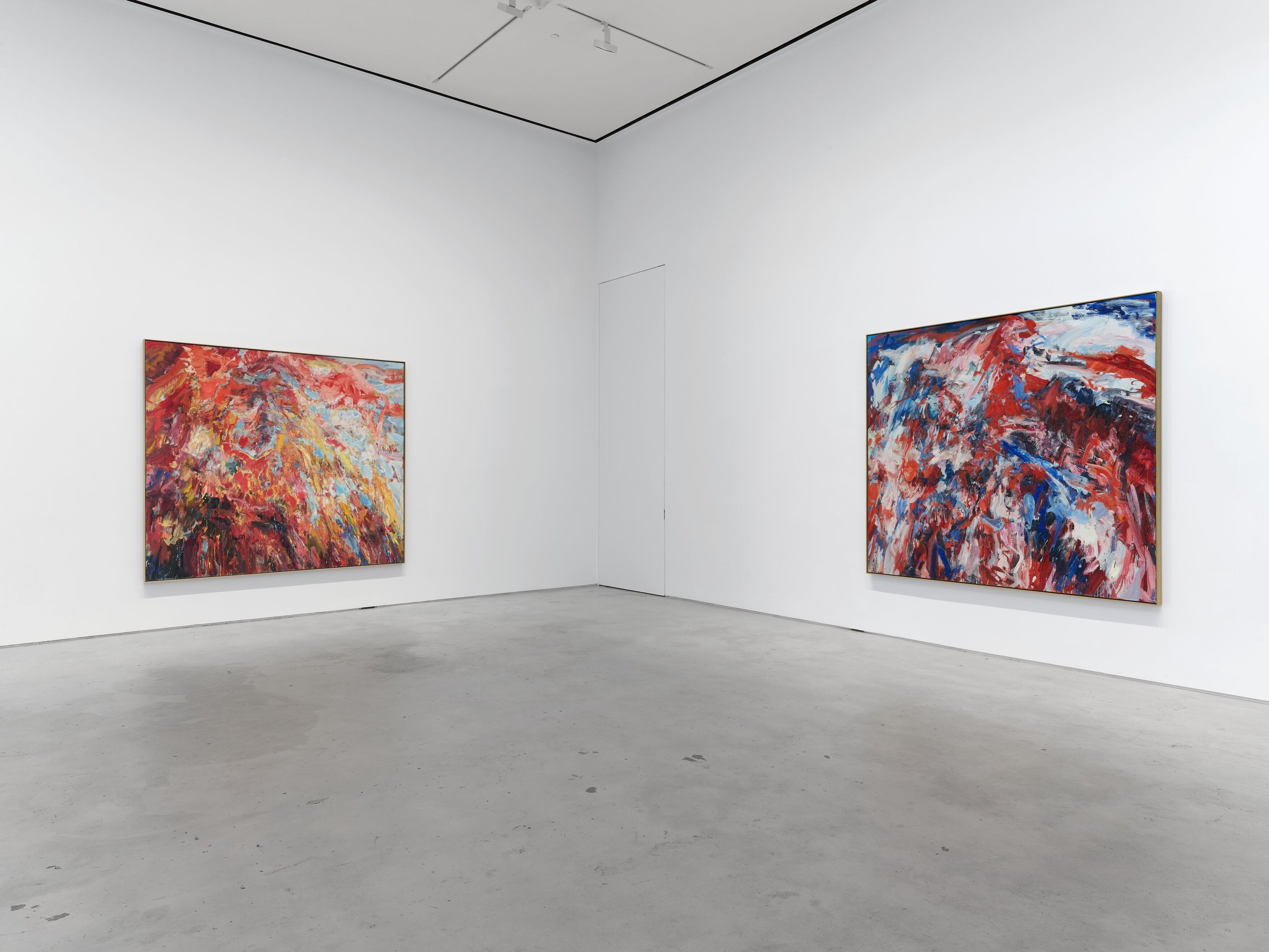
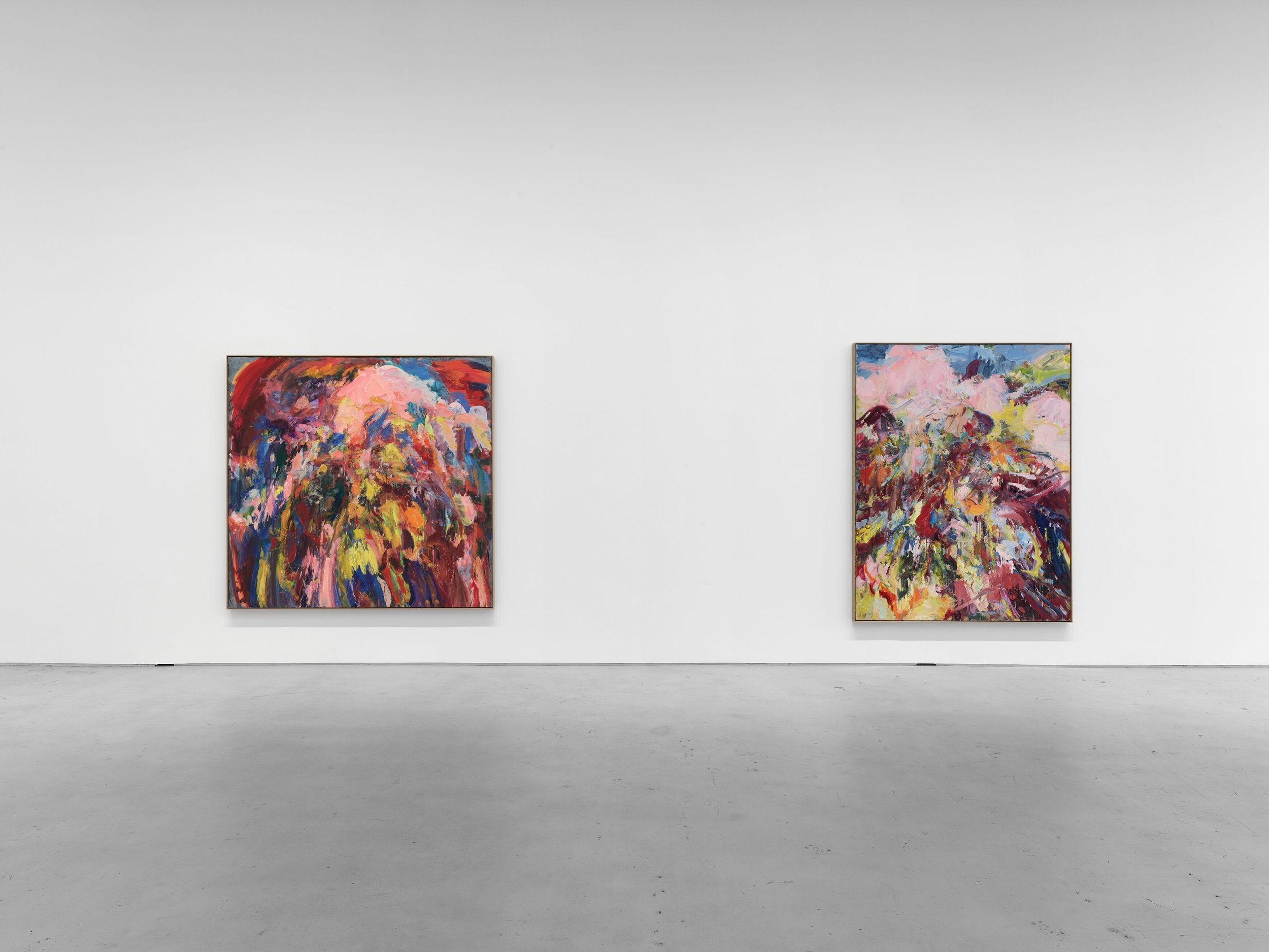
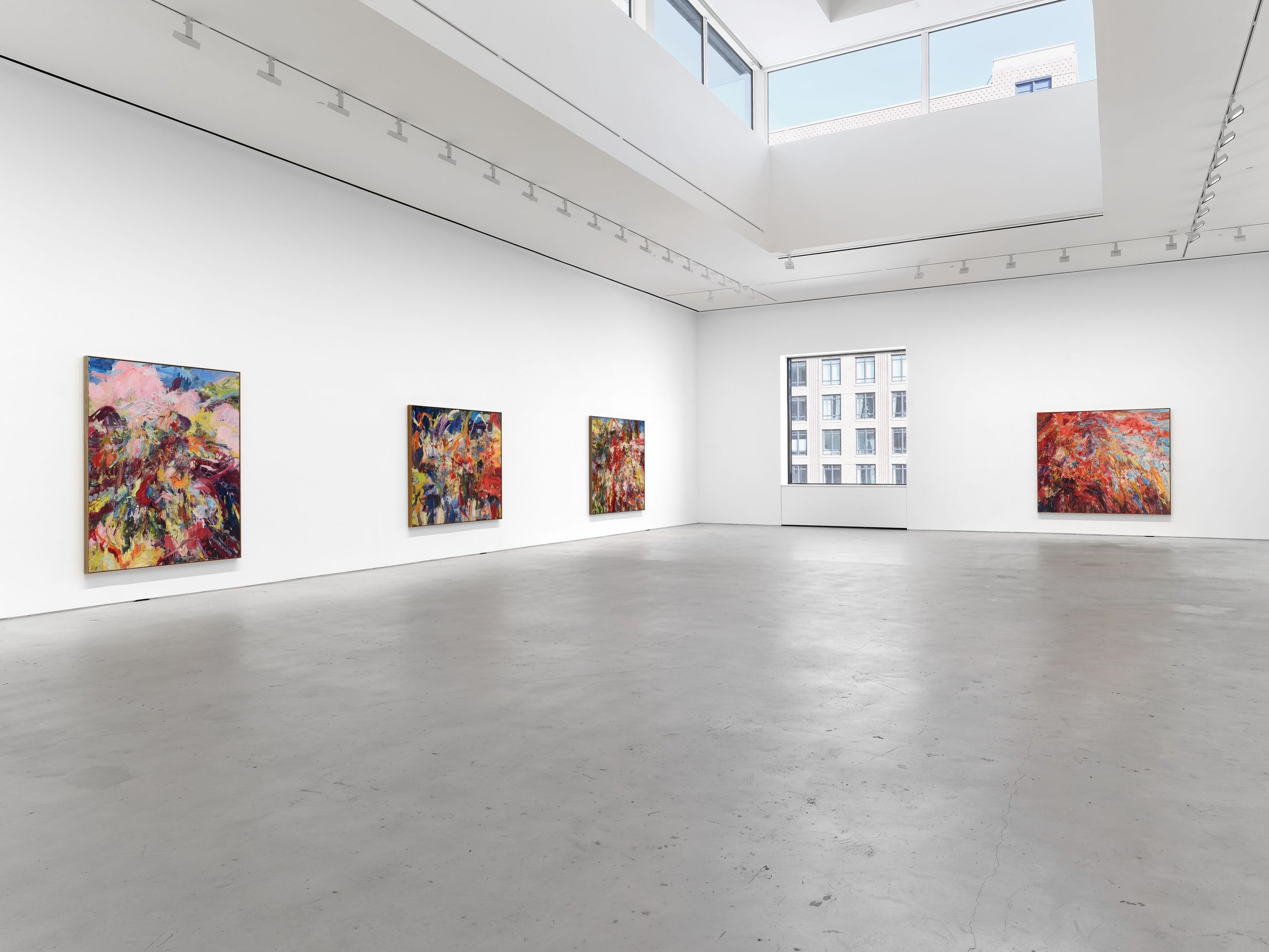
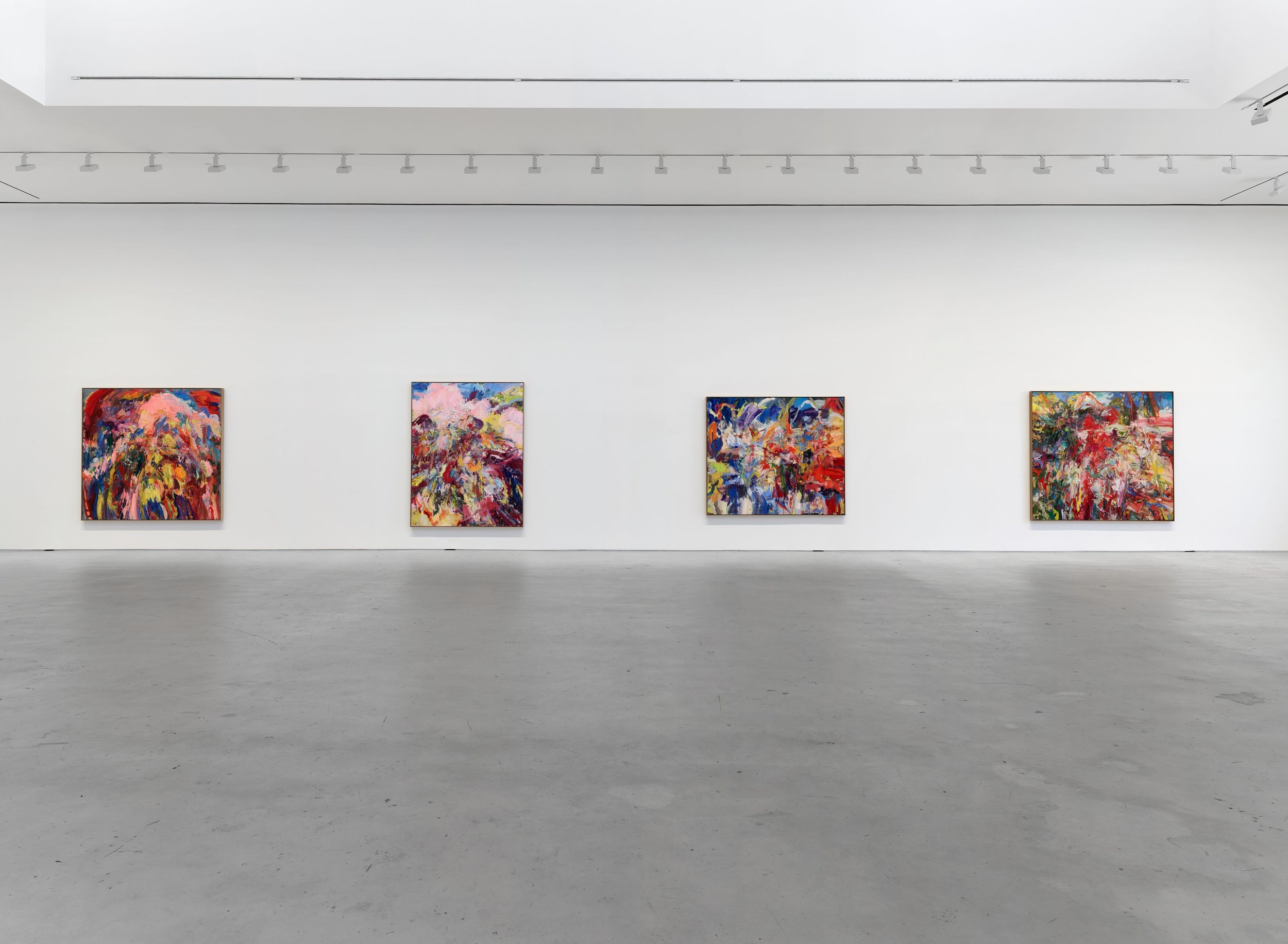
Installation view, ‘Catherine Goodman. Silent Music,’ Hauser & Wirth New York, 22nd Street 30 January – 12 April 2025 © Catherine Goodman Courtesy the artist and Hauser & Wirth Photo: Sarah Muehlbauer
In conjunction with the exhibition, Hauser & Wirth Publishers will release ‘Catherine Goodman,’ a richly illustrated monograph focused on Goodman’s new paintings. Featuring an illuminating essay by writer and curator Jennifer Higgie, alongside revealing reflections from Goodman herself, this volume sheds light on how drawing and painting are inextricably intertwined in her deeply intuitive practice. On 1 February, Hauser & Wirth Publishers will celebrate the release with a conversation between Catherine Goodman and Lynne Tillman.

Catherine Goodman Echo 2024 Oil on linen 196 x 214 x 4 cm / 77 1/8 x 84 1/4 x 1 5/8 in © Catherine Goodman Courtesy the artist and Hauser & Wirth Photo: Eva Herzog
About the Artist
Born in London in 1961, Catherine Goodman CBE lives and works in London. Goodman studied at Camberwell School of Arts & Crafts and the Royal Academy Schools, London, where she won the Royal Academy Gold Medal in 1987. Goodman’s lifelong commitment to social justice through education forms a critical aspect of her artistic identity and approach to making. In 2000, Goodman established The Royal Drawing School with HM King Charles III to deliver subsidized and free education to thousands of young and disadvantaged people in the UK. Today, she continues in her role as Founding Artistic Director and Academic Board Member. For many years, Goodman corganized drawing classes for individuals dealing with homelessness and disabilities, and she continues to offer refuge classes to young people with mental health issues on a weekly basis. She is also the primary caregiver of her sister, Sophie, who was born with multiple health conditions and has always been a subject of Goodman’s practice. In 2014, Goodman was awarded Lieutenant of the Royal Victorian Order (LVO) for services to The Royal Drawing School, and Commander of the Order of British Empire (CBE) in 2024 for her services to art in the UK. Goodman has served as the Artist Trustee at The National Gallery, London since 2019. Her paintings are held in significant private and public collections internationally.
Carbon savings: The artwork in this exhibition was shipped by sea from the UK. Transporting by sea versus air resulted in a carbon saving equivalent to 20 economy flights between London and New York.
The exhibition opened on 30 January – and will conclude on 12 April 2025, at the Hauser & Wirth New York, 22nd Street location. Please visit the Hauser & Wirth Gallery site for information about upcoming exhibitions. Also, follow the gallery on Instagram, Facebook, X, and YouTube. The magazine highlighted the accompanying book with the same title, which can be found here.

Geppy Pisanelli: Hidden Lights

Exhibition Views, Geppy Pisanelli "Hidden Lights", GR gallery, 2025 , Courtesy the artist and GR gallery.
New York, NY – GR gallery is proud to announce the opening on February 14th of Hidden Lights, a solo exhibition by Italian visual artist Geppy Pisanelli. Building on the success of his 2023 group exhibition Dreaming Awake at GR gallery, Pisanelli's latest series emerges from both a narrative and compositional need to explore the dynamic interplay between nature and artifice. Specifically, the artist's interest was the visual formalization of works that contrast natural elements (like water beds, trees, mountains, and waterfalls) and artificial elements (such as minimal structures, shelter and artificial lighting). This juxtaposition highlights the relationship between nature and human-made artifice, placing artificial objects in unexpected natural settings.

Luminous Dusk - oil on linen - 2023-24 measures 45 x 60 x 1.5 inches Courtesy the artist and GR Gallery
These compositions trigger a sense of alienation both visually and intellectually, which is also reflected in the exhibition's title Hidden Lights, immediately presenting itself as an oxymoron: light, typically associated with visibility and illumination, is described as hidden, creating a contrast right in the title itself. These pieces generate a layered effect of visibility and obscurity, achieved by the artist through a carefully balanced pictorial composition of shapes, subjects, and content in relation to each other.
Regarding the contents, the theme of interplay between light and darkness was explored by the artist, not just as a retinal perception but also as a reflection of the human inner condition. Indeed, despite the references to nature in these paintings, the works can be interpreted as depicting an intimate state. They portray an external space that simultaneously mirrors an internal one, a space of human existence that is both conceptual and theatrical.


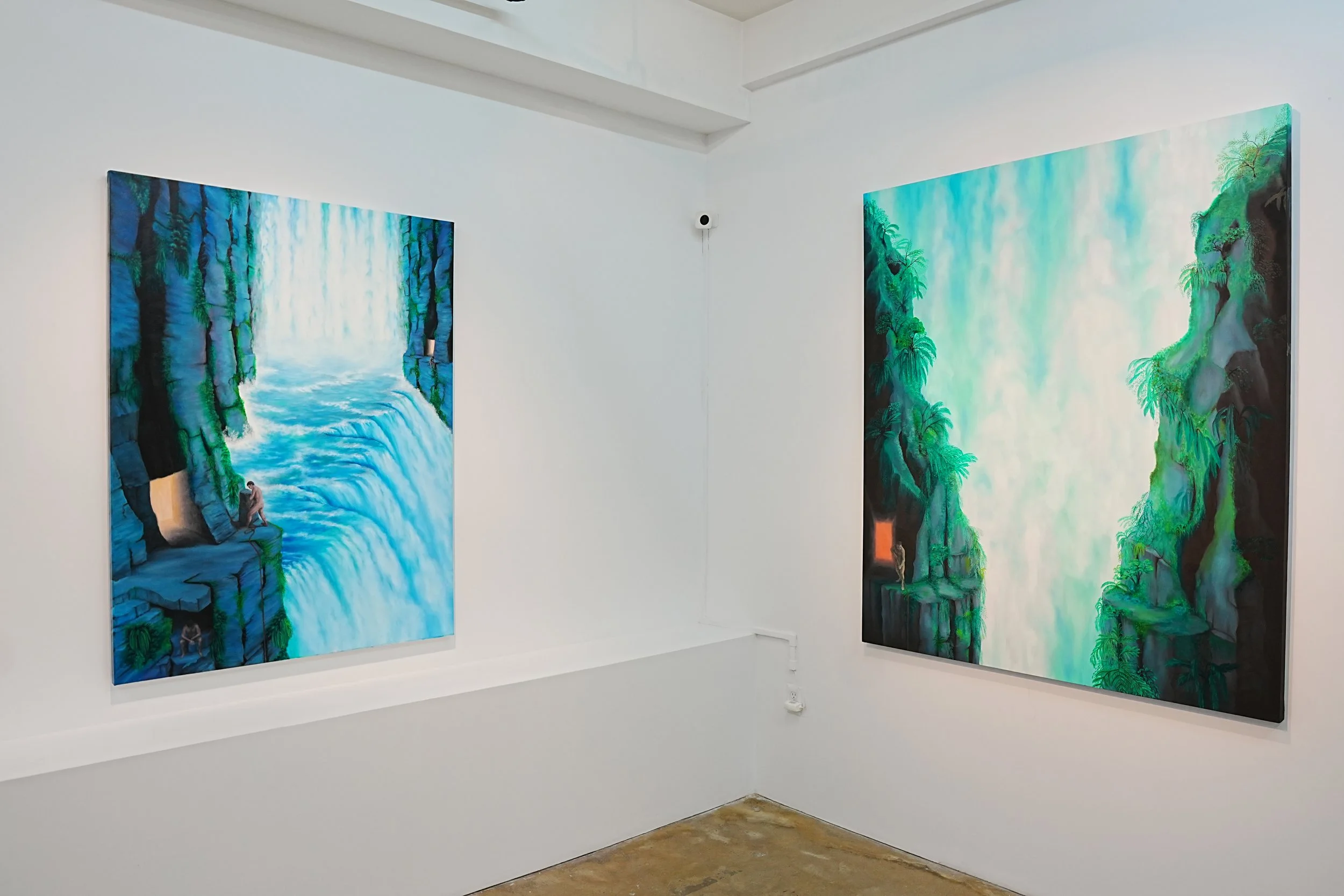


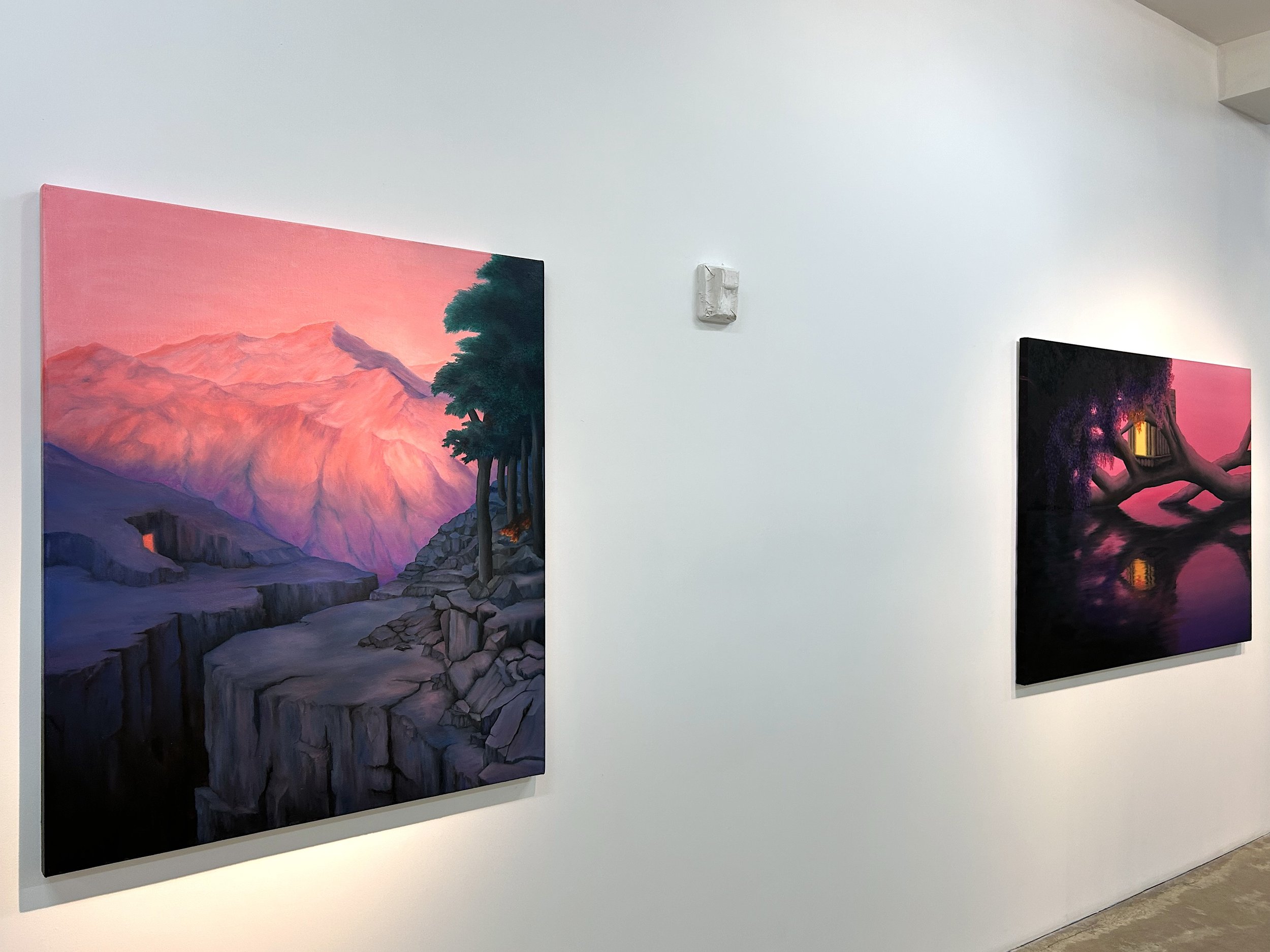

Exhibition Views, Geppy Pisanelli "Hidden Lights", GR gallery, 2025 Copyright James Welling Courtesy the artist and GR gallery.
These "threshold images" , like Pisanelli uses to call them, draw the viewers into a theatrical landscape, exploring human nature and societal conflicts. These narratives, oscillating between abandonment and hope, solitude and community, resonate deeply amid global challenges like pandemics, migrations, wars, and climate change.
"It is in fact emblematic that in my last series of works, the events that come to life depicted in the paintings visually quote the incipit that David H. Lawrence prophetically composed in 1928, " says Geppy Pisanelli. Reflecting on our tragic era, he adds, "Lawrence suggested resilience and new beginnings amidst devastation with his words: 'Ours is essentially a tragic age, so we refuse to take it tragically. The cataclysm has happened, we are among the ruins, we start to build up new little habitats, to have new little hopes. ' These words deeply resonate with me, encapsulating the spirit of renewal amidst tumults that I aim to capture in my work.
"
A hallmark of Pisanelli’s artistry lies in his creation of archetypal images. His paintings may initially appear as realistic depictions but gradually unveil layers of metaphorical and mental associations. These works act as conduits for contemplation, inviting viewers to delve into the expressive potential of painting as a medium for analyzing human existence and the multifaceted nature of reality.
Hidden Lights offers an immersive experience that challenges perceptions and inspires reflection. The exhibition will run through March 15, 2025.
Exhibition Details:
“Hidden Lights”
February 14 - March 15, 2025
Opening public reception: February 14
GR gallery
255 Bowery, NYC

Courtesy the artist and GR Gallery
About Geppy Pisanelli
Geppy Pisanelli (b. 1971) is an Italian visual artist who focuses on researching and exploring painting as a communication medium. Starting from his Italian Pictorial Cultural Identity, Pisanelli aims to constantly push and reformulate the boundaries of pictorial narration and formal composition. Through a dynamic interplay of tradition and innovation, he crafts a distinctive visual language that resonates with contemporary audiences. Solo exhibitions in the U.S. include: Chelsea West Gallery, New York, (2010), Kips Gallery, New York, (2011), (2013), Casa Italiana Zerrilli-Marimò at New York University (2015), Mizuma & Kips Gallery (2021). Solo exhibitions in Italy include: Royal Palace of Caserta, Caserta (2010), Galleria studio legale, Naples (2014) PAN Palazzo delle Arti Napoli (2016) Palazzo Ponte dei Pegni, Caserta, (2017). He lives and works between Naples and New York.
About GR gallery
Established in 2016 and located on the Bowery, downtown Manhattan, GR gallery contributes to the New York contemporary art scene as a partner to international artists and an artistic destination for visitors in New York City. The gallery is dedicated to showcasing multigenerational artists who explore various media with a dynamic approach to chromatic vibration and borderless figuration. With support from GR gallery, artworks across diverse media are featured in public events and collections. GR gallery began as a partner of Studio d’Arte GR, founded in Venice in 1979. Today, the gallery independently hosts an average of ten exhibitions annually and participates in several art fairs. By carving out its own path in New York, GR gallery invites artists to unfold their artistic expressions and supports them in expanding their work globally.
For more information about the exhibition, the GR gallery, and other exhibitions, please visit their site here. The gallery can also be found on Instagram and Artsy.

HENNING STRASSBURGER: KÖPFE

No pun intended, 2014
KÖNIG GALERIE is pleased to present KÖPFE (en: heads), the first solo exhibition for the gallery by Henning Strassburger, located in the Nave of St. Agnes. The exhibition includes new paintings and, for the first time, sculptures that powerfully embody Strassburger’s dynamic visual language. With bold colors and gestural compositions, the artist explores the multi-layered intersections of identity, media, and social narratives. His works offer lively commentary on today’s fluid existence.

Exhibition View: Henning Strassburger, Köpfe, 2025, Berlin, Nave, Photo by Roman März, Courtesy of the artist & KÖNIG GALERIE

Happy Happiness,2024.
A delight in the image is perhaps the most prominent feature of these new works: a playful exhilaration that turns away from pure abstraction and toward the flesh of painting, its figures, colors, and stories. Strassburger was initially praised as an abstract painter, but in recent years, his relationship to abstraction has become increasingly critical. As a result, Strassburger’s paintings engage with figuration, with specific formal allusions to German painters. He has a particular affinity for a genre popularized by Georg Baselitz, which the older painter calls “Heldenbilder” (hero paint- ings) – a cycle of works from the 1960s – which Strassburger refers to as the “Happy” series. With his “Happy” paintings, Strassburger reinvents himself as a figurative painter in the best German tradition and says “I” in an emphatic sens
Alphakenny, the artist’s doppelganger, appears in many of these works, a moniker that is designed to introduce a biographical anecdote in an ironic manner. When Strassburger ordered a coffee in a New York Starbucks, he – like everyone else – had to say his first name so that it could be written on his cup. However, the phonetic challenge of “Henning” proved too difficult for the Americans, and the employee wrote “Kenny” on the cup instead, which of course led to confusion on Strassburger’s part. “One Americano for Kenny! Kenny! Kenny!” Strassburger didn’t feel addressed, but then quickly realized: “Kenny, that’s me!” The extension to Alphakenny refers to the schoolyard-famous Alphakevin, a mocking name for the biggest loser in the class, or “a modern-day anti-hero”, according to Strassburger.


Exhibition View: Henning Strassburger, Köpfe, 2025, Berlin, Nave, Photo by Roman März, Courtesy of the artist & KÖNIG GALERIE
Strassburger accepts that there can no longer be any heroes in the modern age, because a hero is someone like Aeneas, who founded the Roman Empire; or someone like Prometheus, who brought fire to mankind (against the will of the gods); or Odysseus, who carved out the eye of the Cyclops Polyphemus. The hero is someone who says “I” in an emphatic sense. He creates a new reality by violating an existing law in order to establish a new one. Heroes can only be defeated by other heroes or by the gods, but not by just anyone. With bourgeois society, however, which distributes sovereignty among many and binds it to a dense network of business relationships, the possibility of saying “I” in the emphatic sense is increasingly restricted. So, whoever plays the hero today is no longer condemned to an odyssey and is no longer shackled on the Caucasus by the gods. They simply die, or the police take them away.
Nevertheless, we are still left with two smaller forms of heroism in the classical sense: saying “I” and making art. Both are structurally related to heroism – at least if we understand it philosophically rather than in purely practical terms. For heroism is a special form of negation. The hero does what they want. In doing so, they sometimes break the law. But their actions create a new order – just like a revolutionary who destroys an existing state only to found a new one. The hero transforms their arbitrariness into a law and thereby bestows their actions with exemplary significance. What the hero enacts is law, It is very similar with works of art. They establish a reality and grant themselves a form of law

Großer liegender Kopf (Happy Alphakenny), 2024
But with the performative act of establishing the law, the hero also demonstrates what it means to be a human being and to say “I”. The hero is the human being par excellence. For just as establishing the law is a negation that produces a right by doing wrong, saying “I” is also a negation in which I distinguish myself from myself and relate to myself. I divide myself and then form a new unity with myself. Strassburger’s Starbucks scene demonstrates this performative act once again. “Kenny, that’s me!”
The exhibition opened on January 17th and will conclude on February 23rd, 2025. For more information about this exhibition and others, please visit the gallery’s site here. KÖNIG GALERIE can also be found on YouTube, Instagram, and Facebook. The magazine did an interview with Henning which can be found here.

CY TWOMBLY
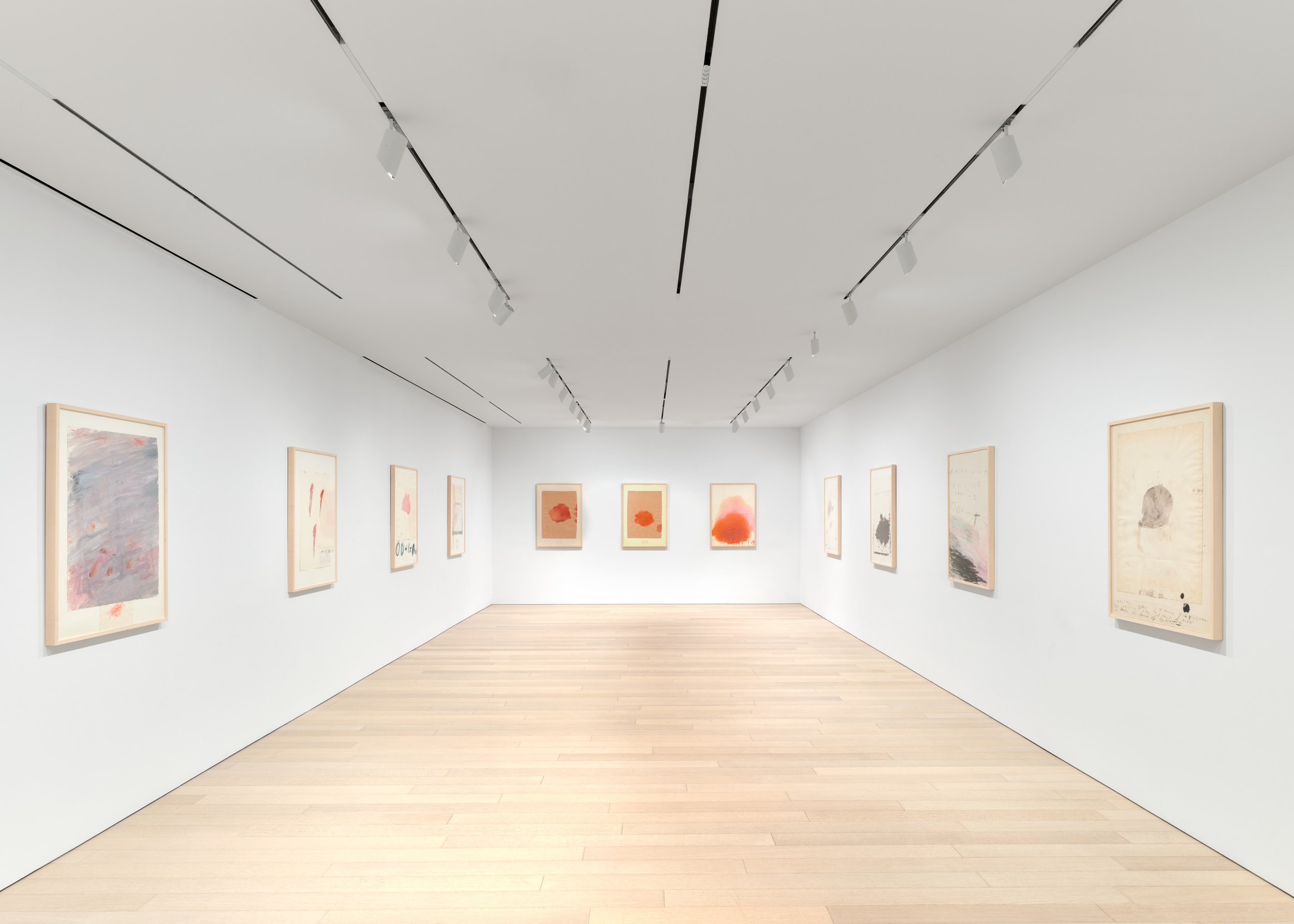
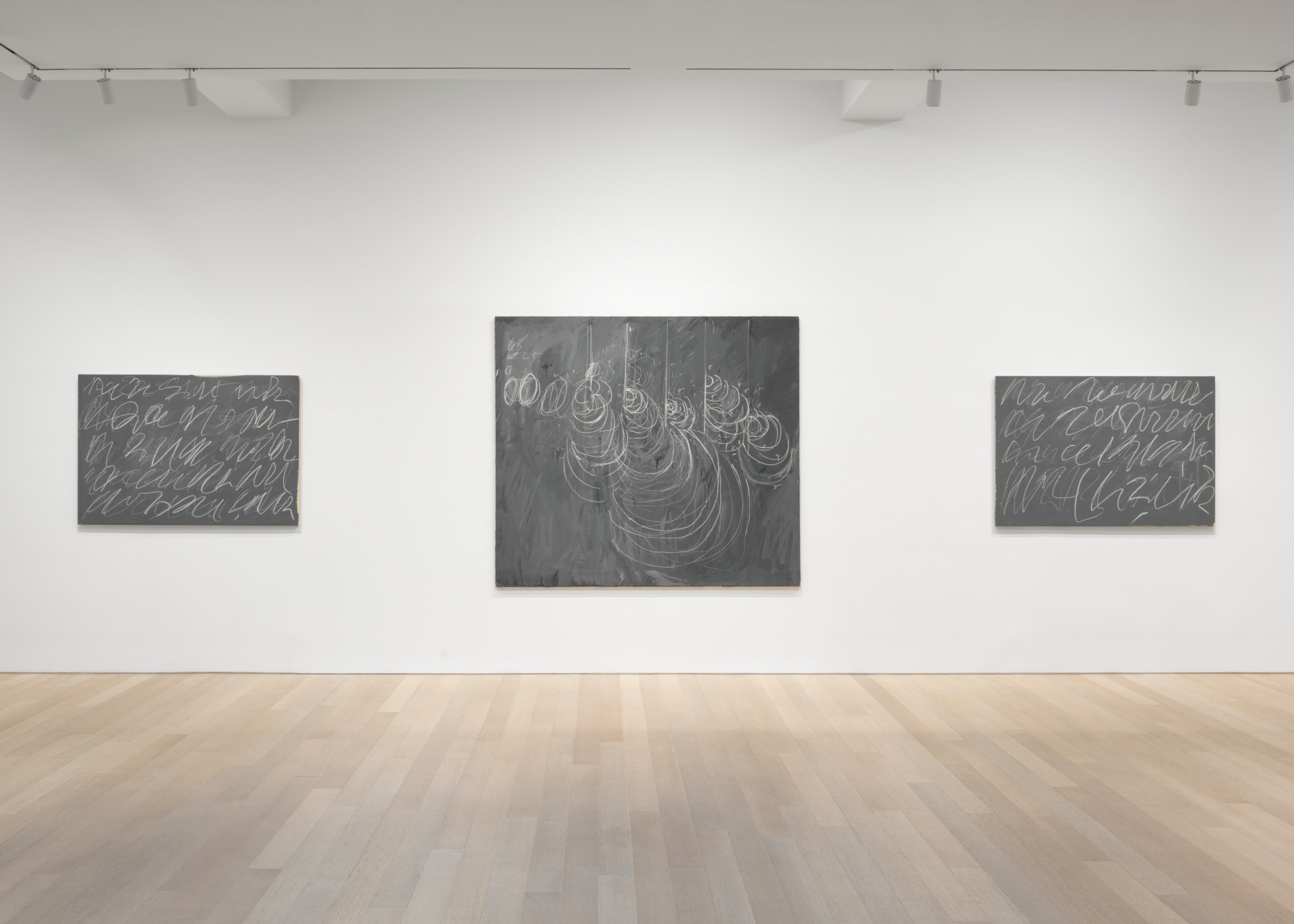
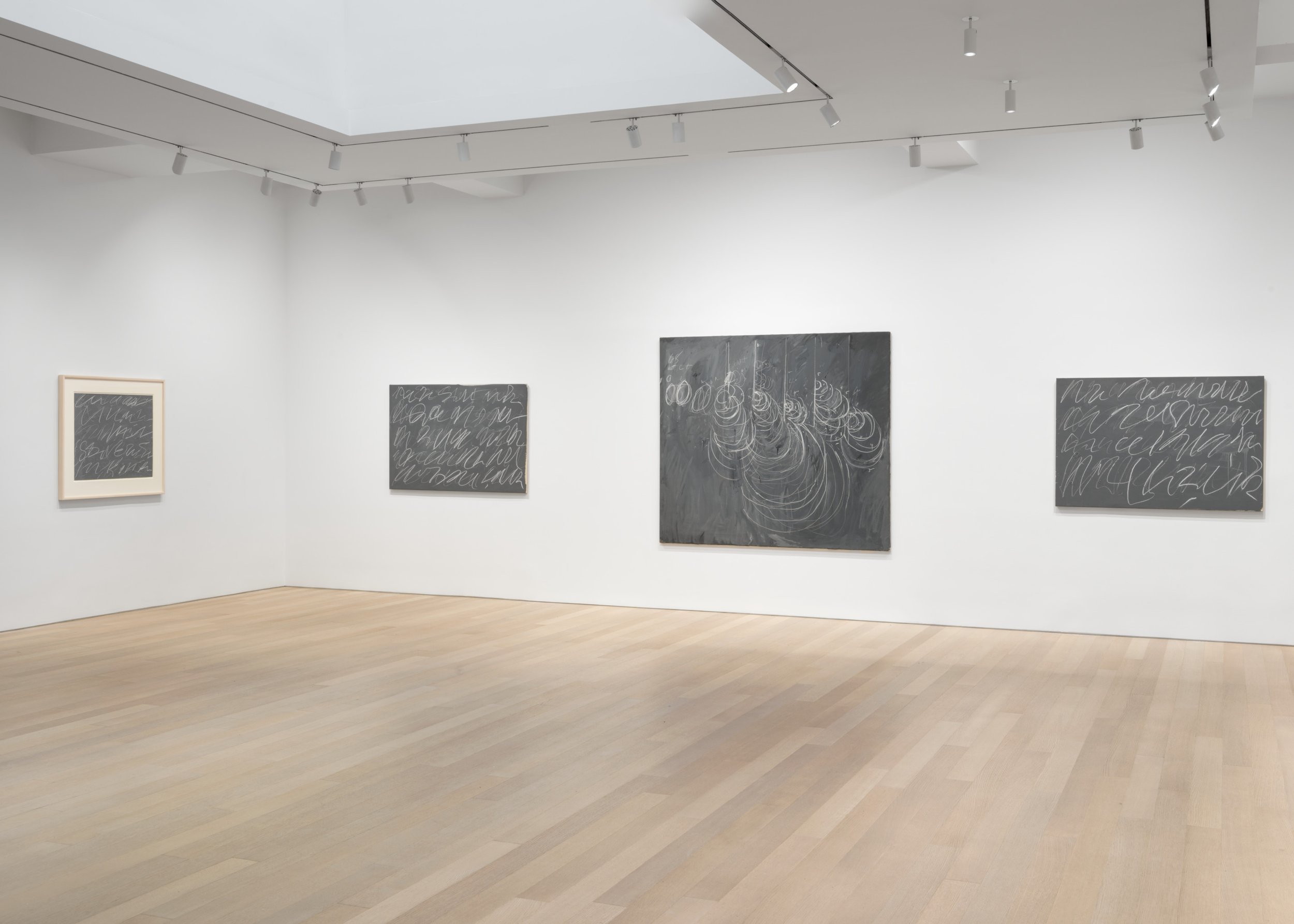
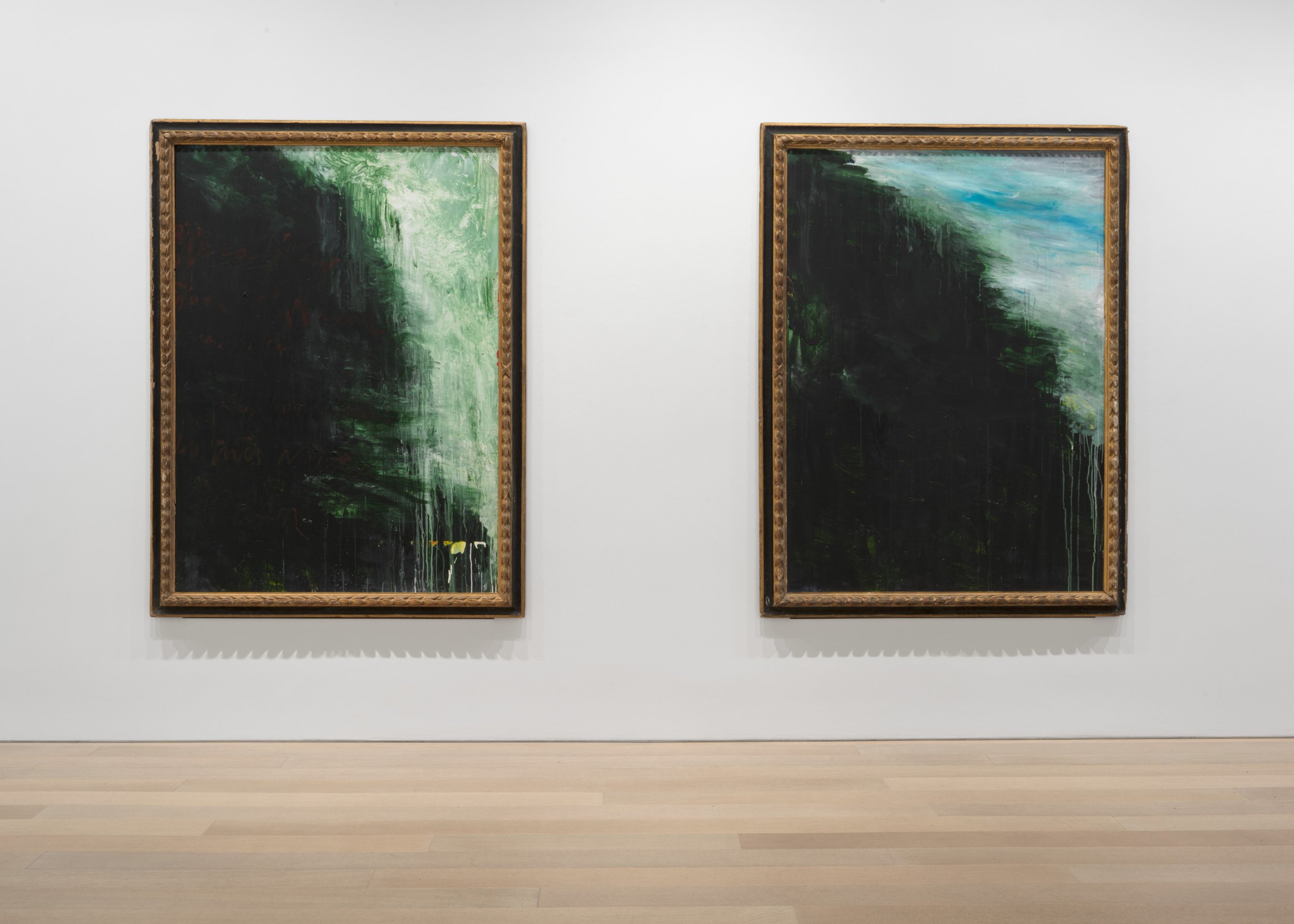
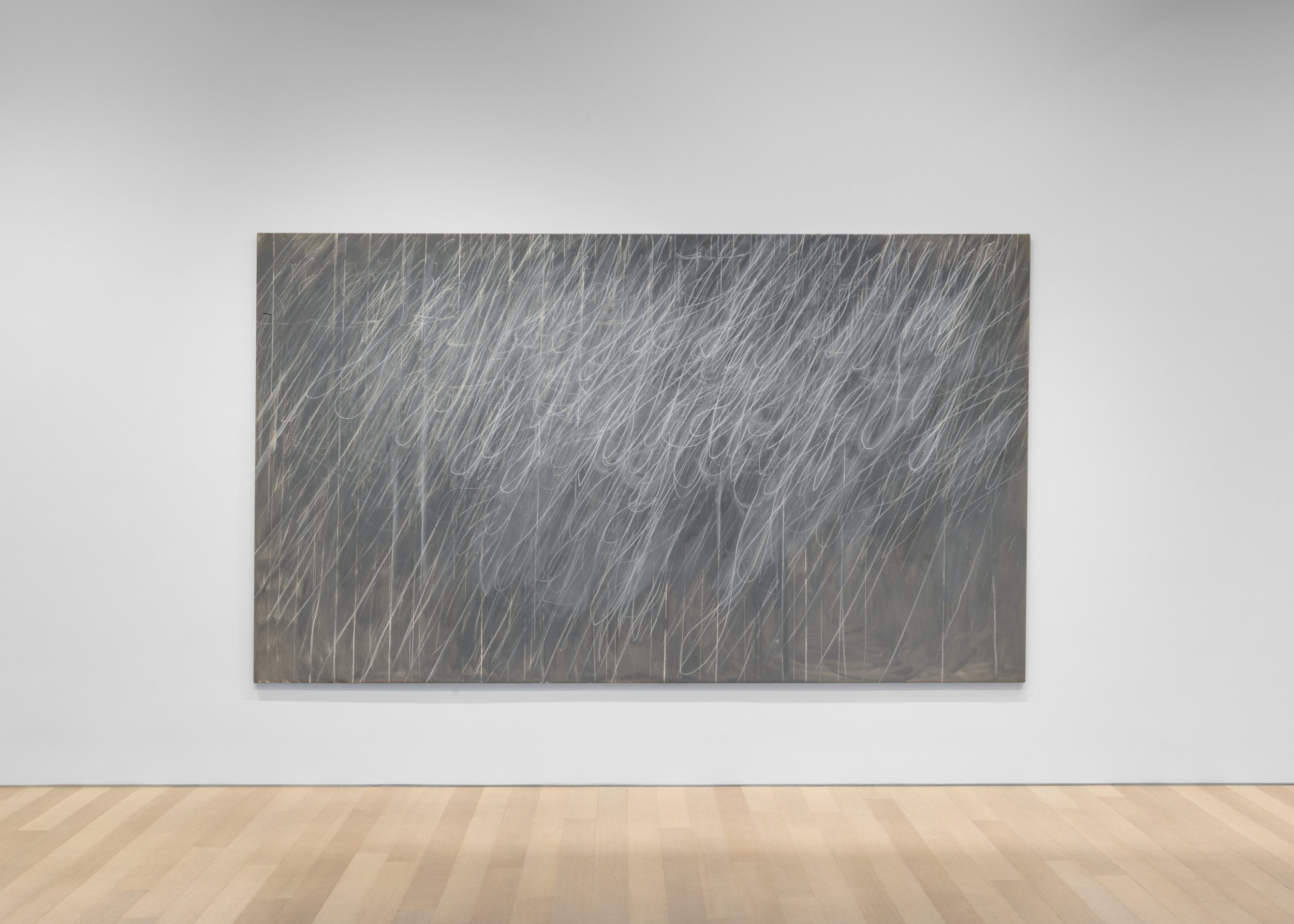
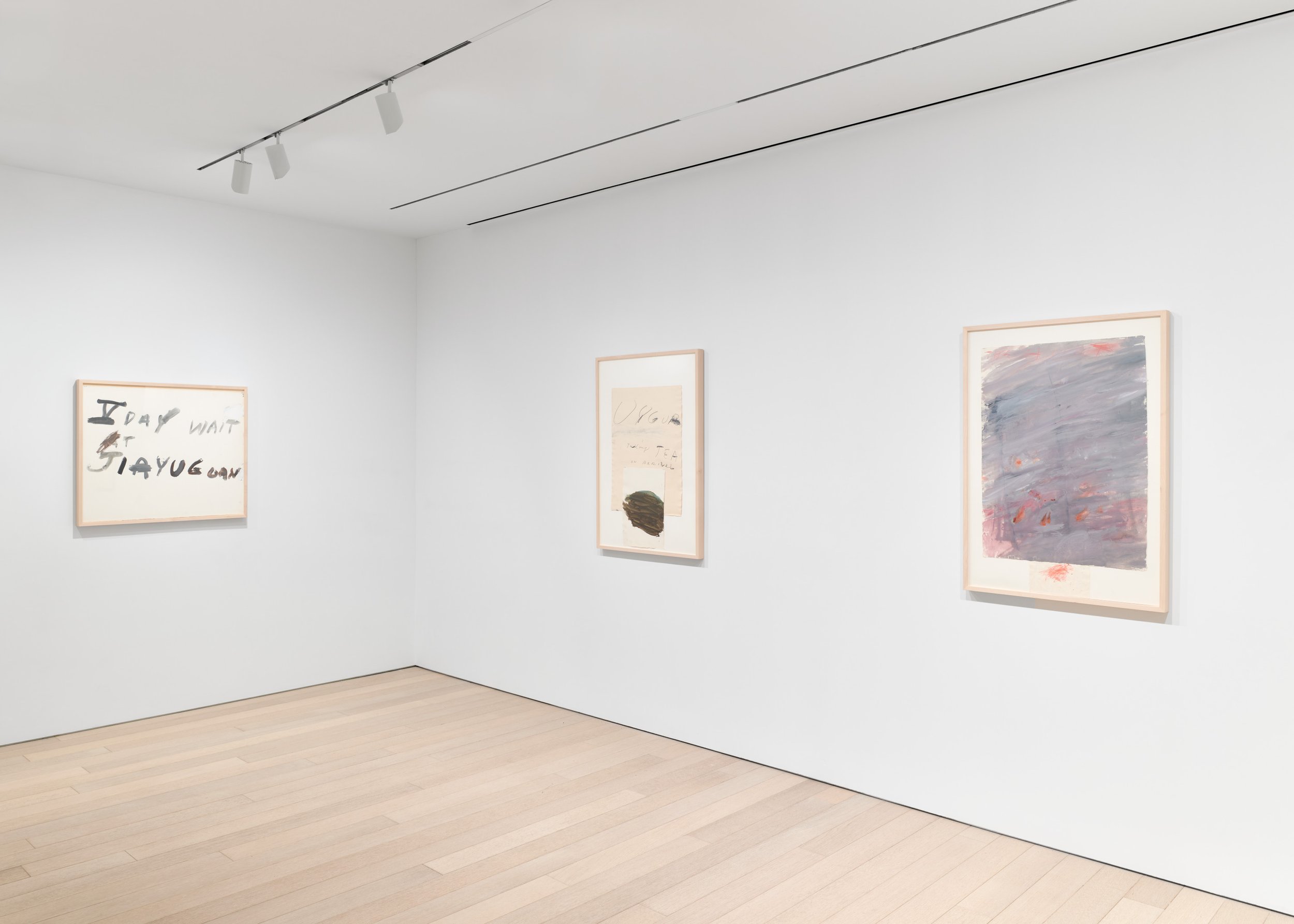
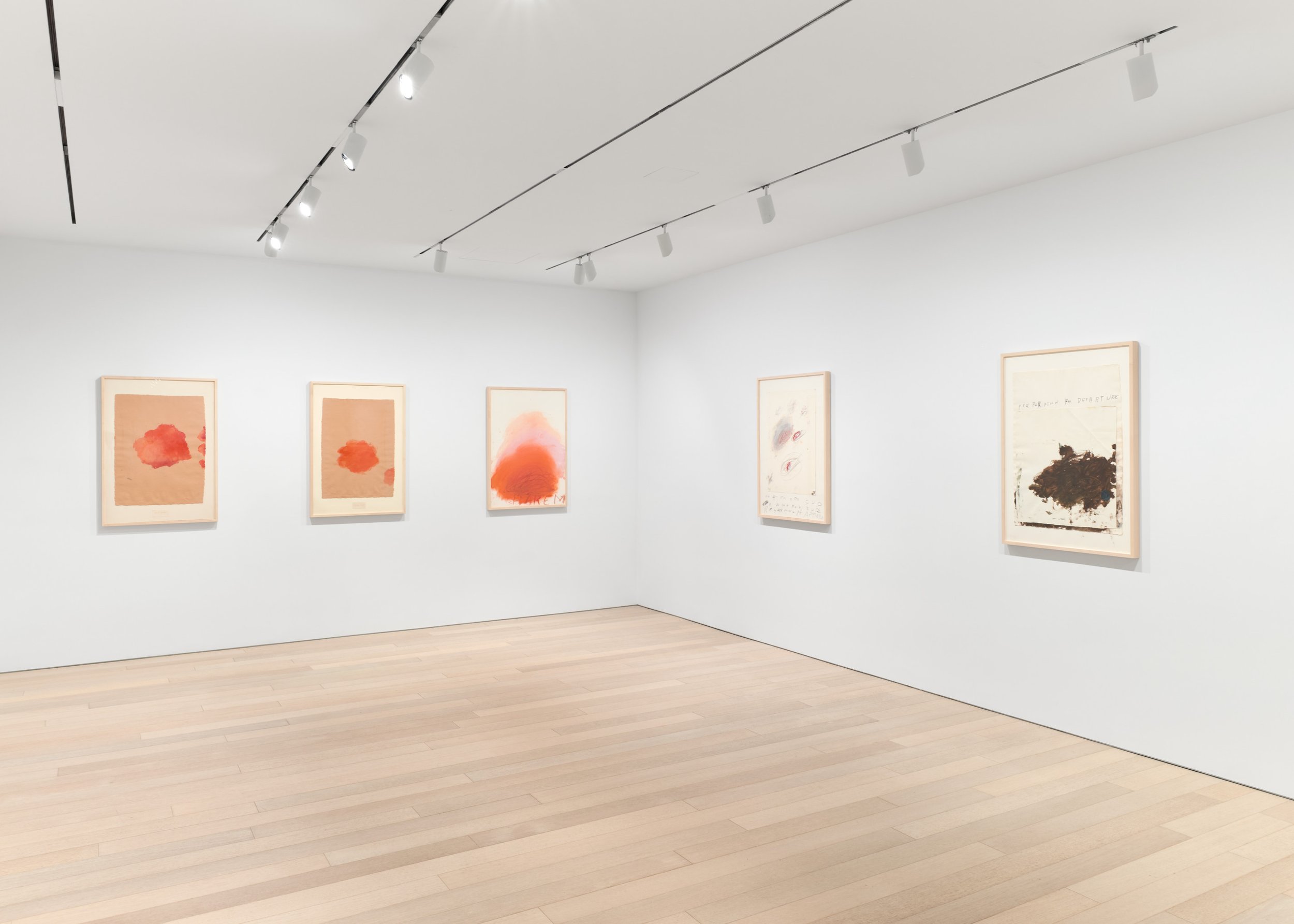
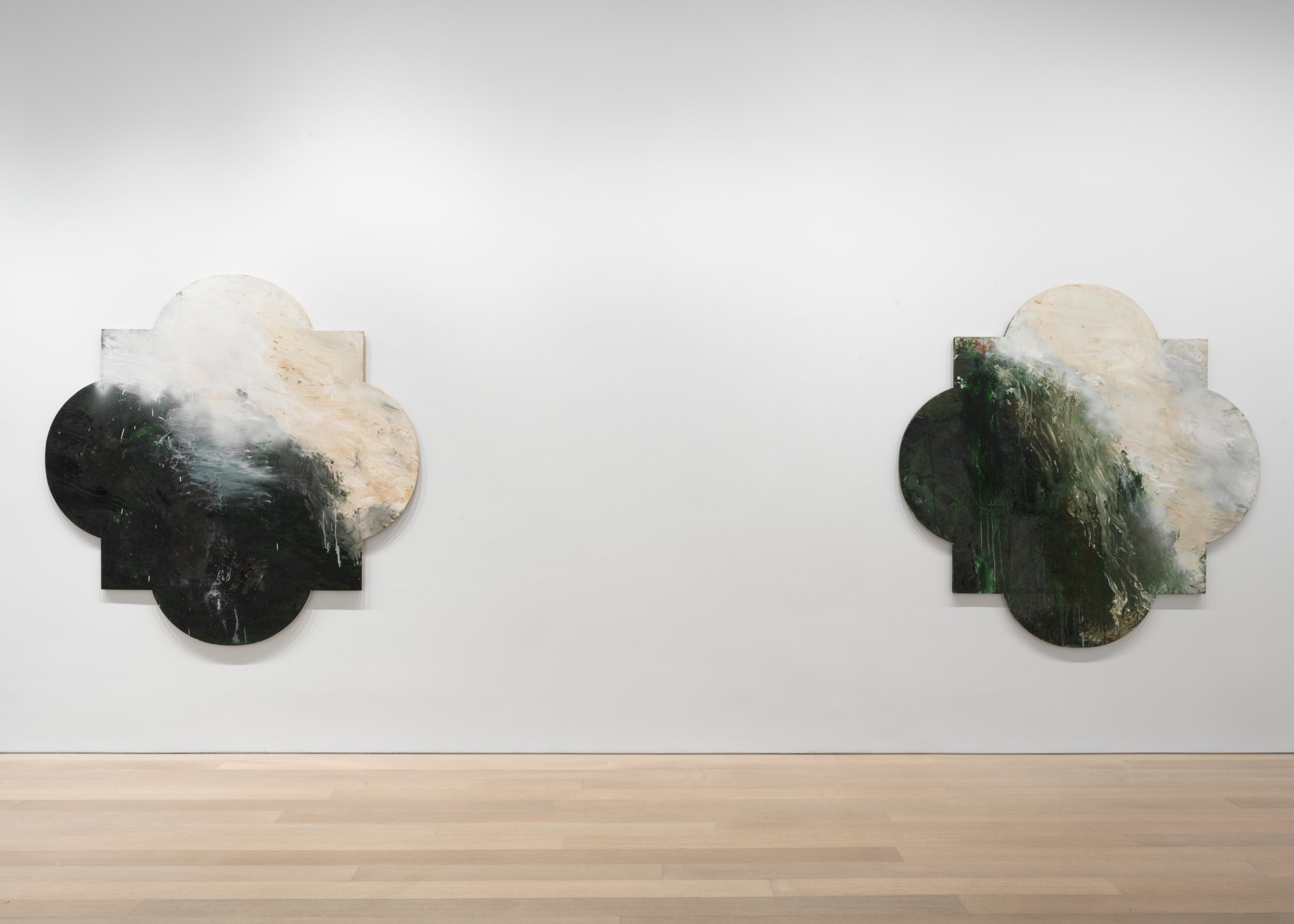
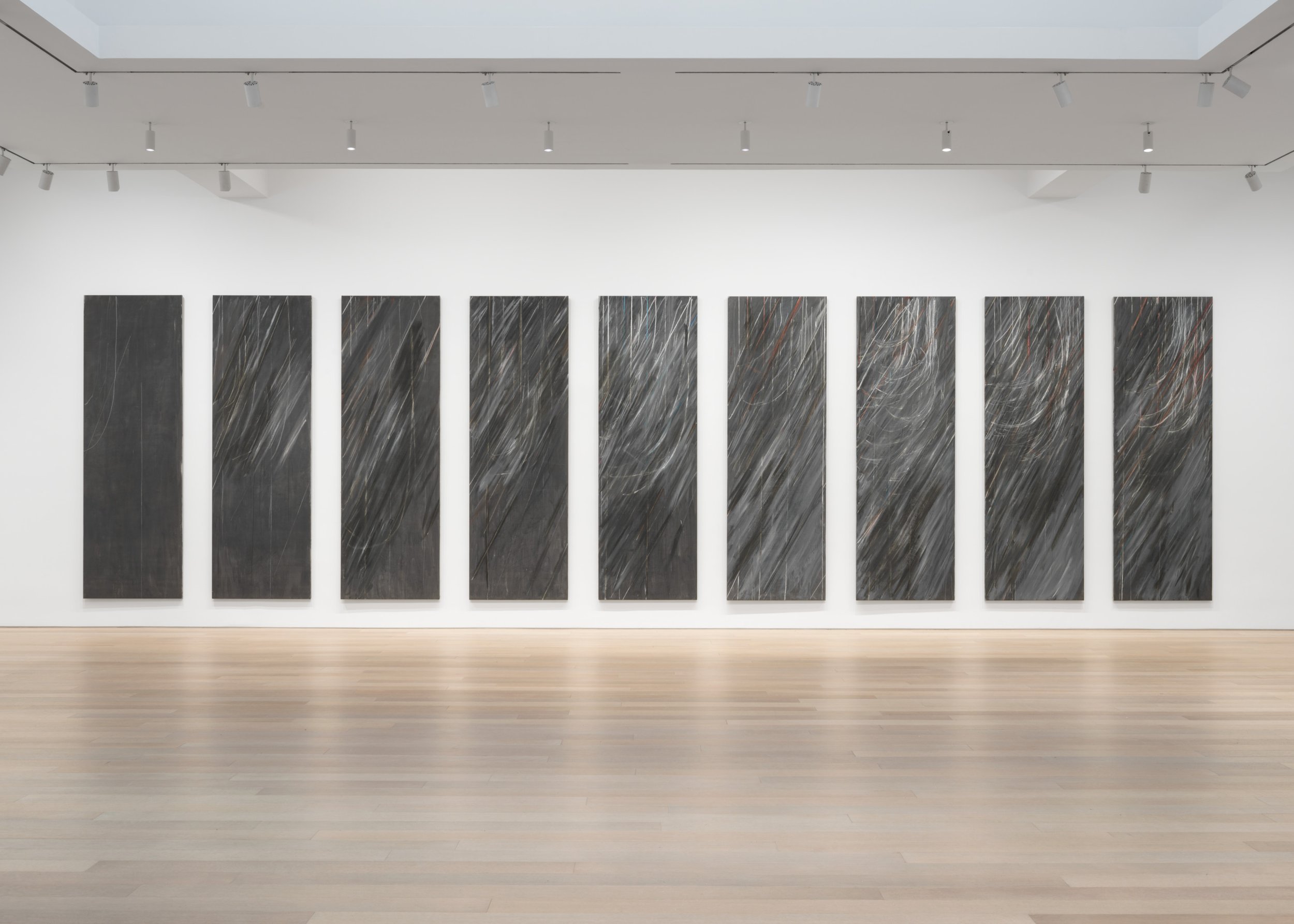
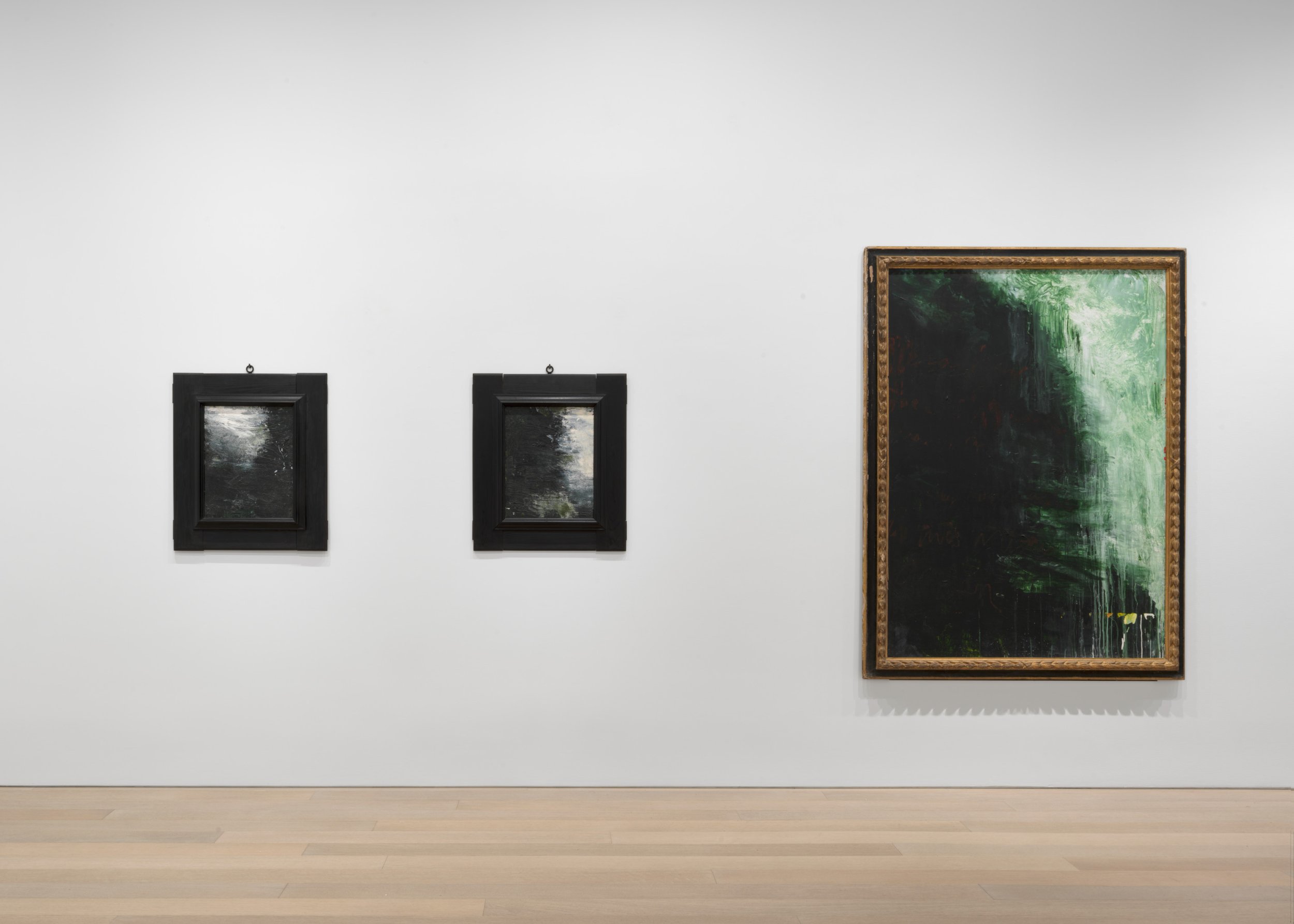
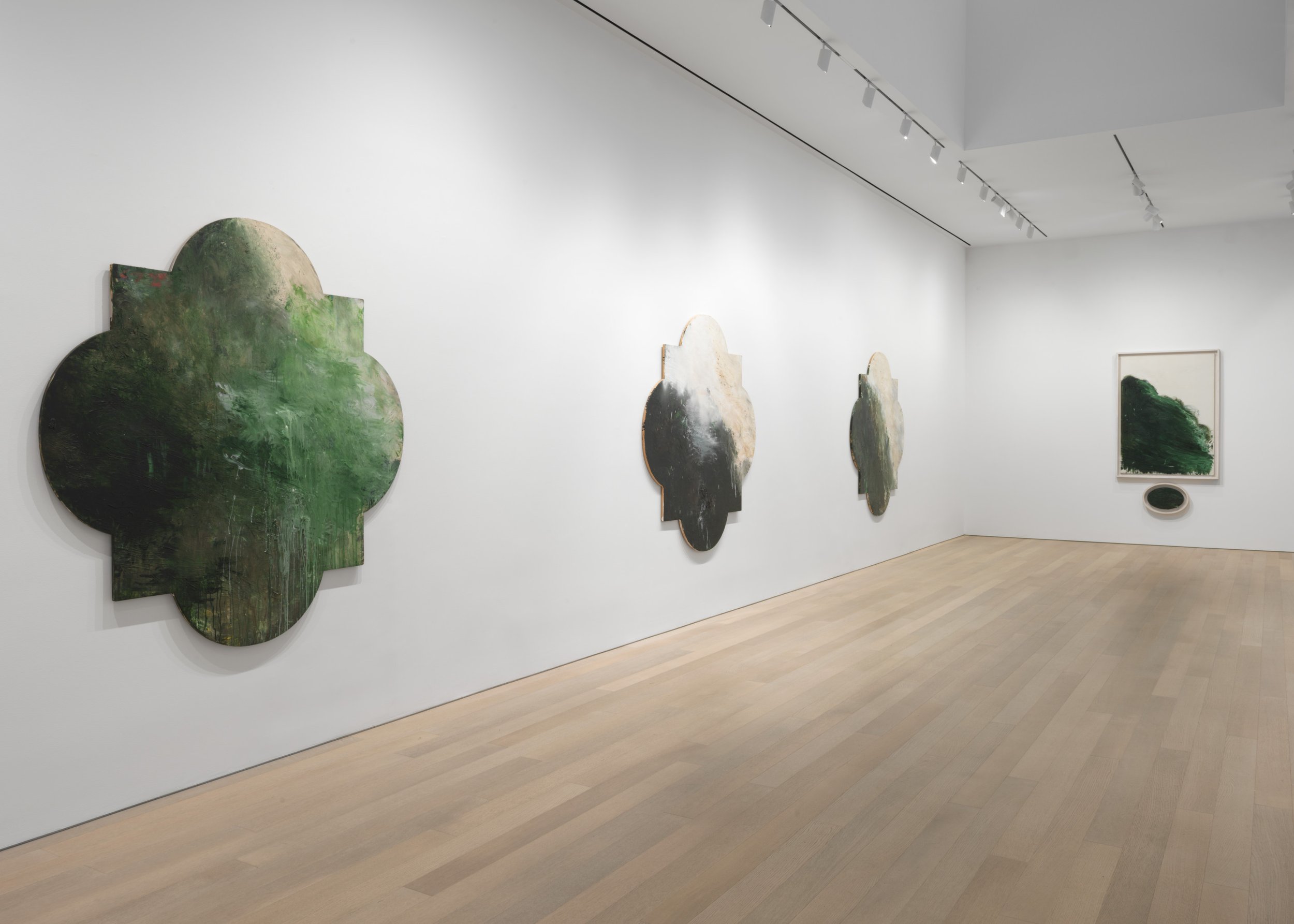
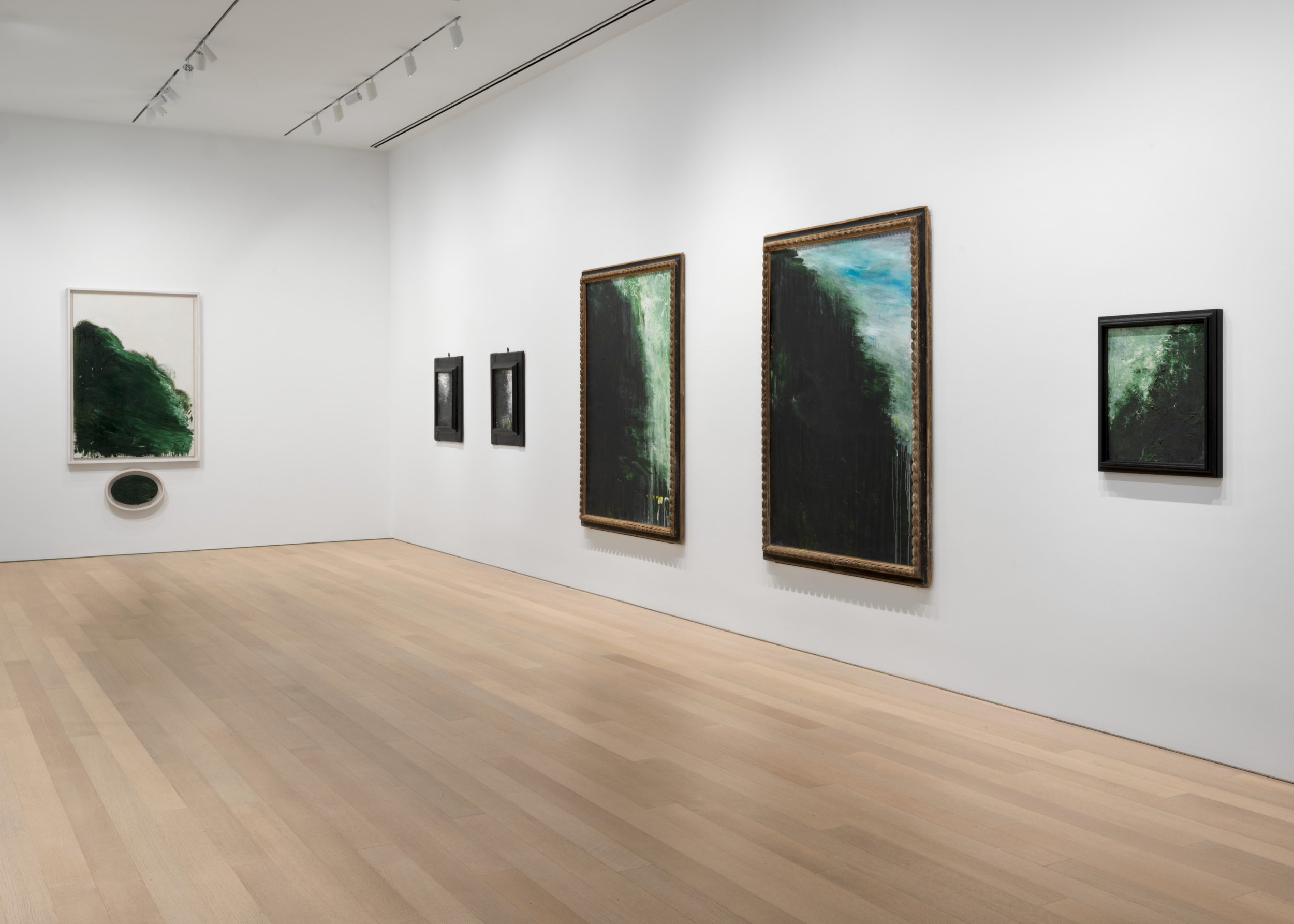
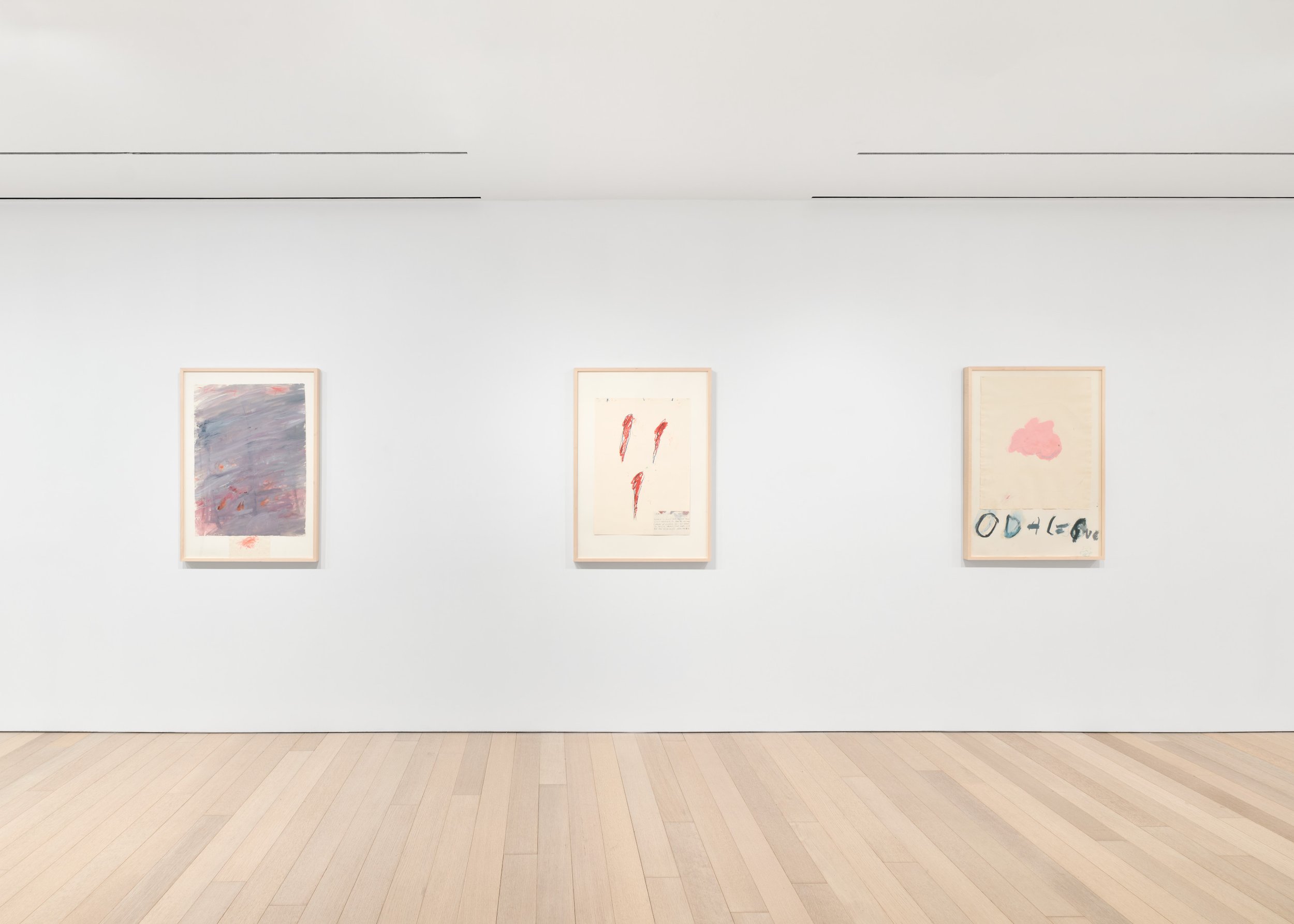
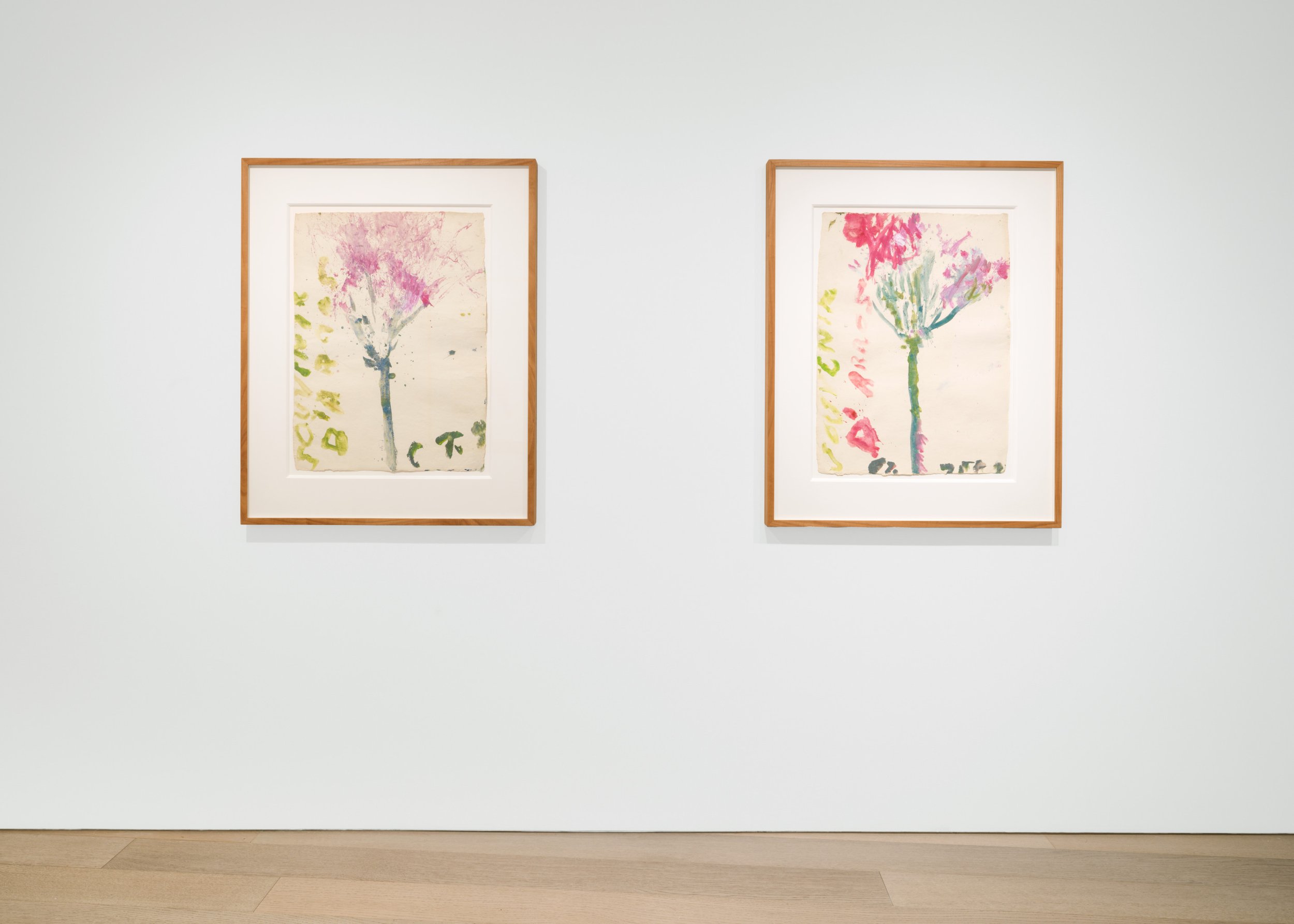
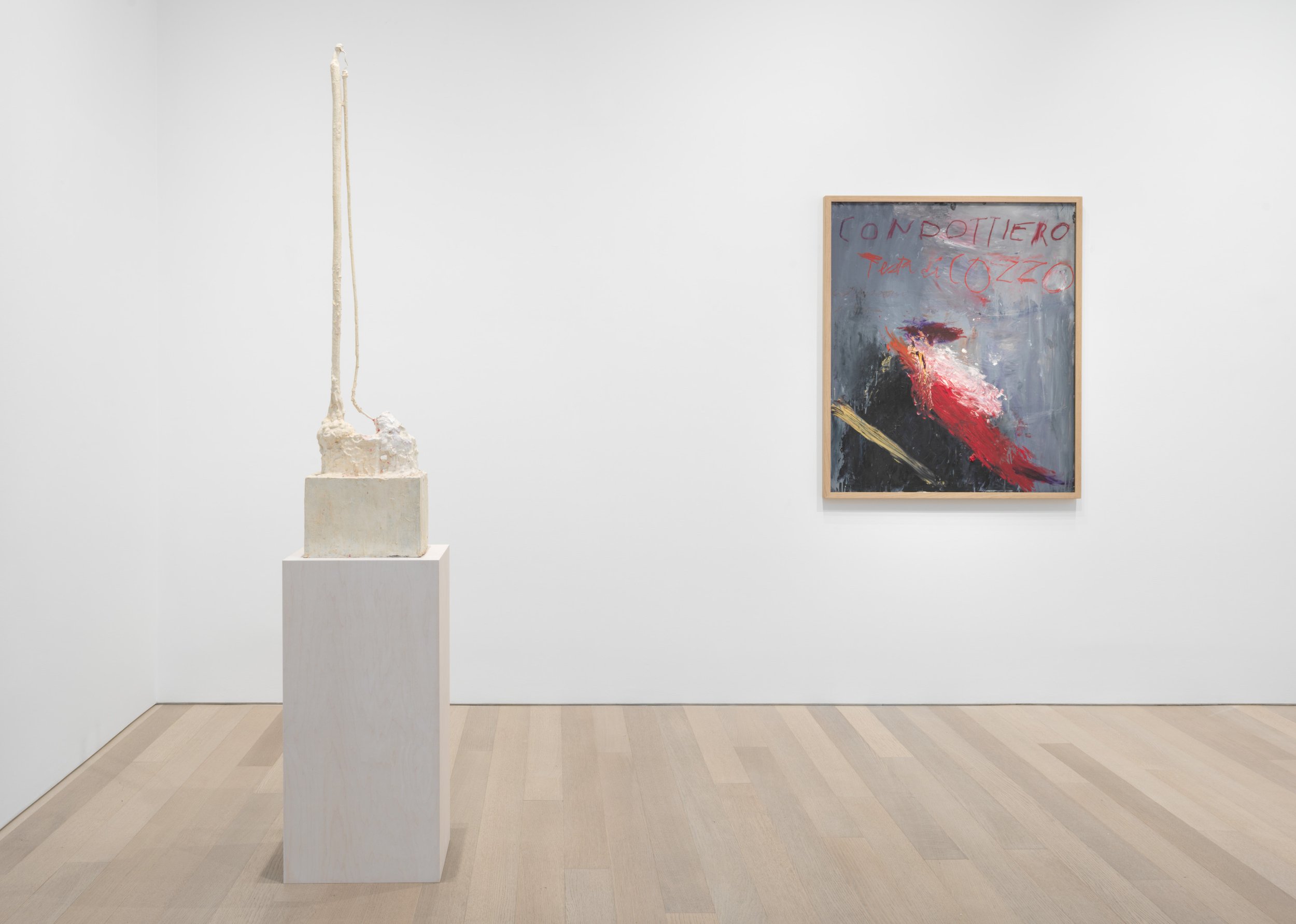
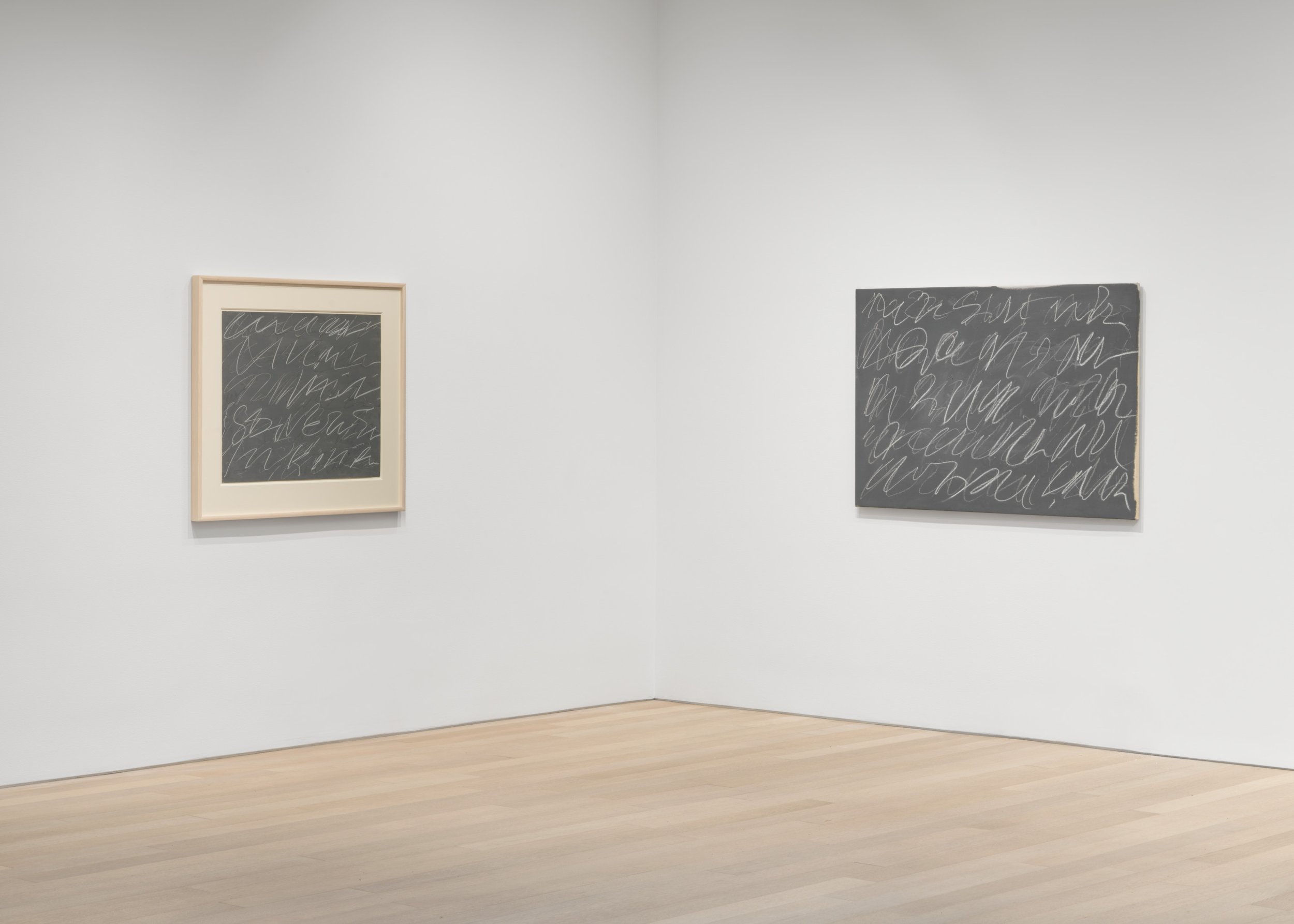
Cy Twombly, 2025, installation view Artwork © Cy Twombly Foundation Photo: Maris Hutchinson Courtesy Gagosian
NEW YORK, —Gagosian is pleased to announce an exhibition of paintings, a sculpture, and works on paper by Cy Twombly. The presentation opened on January 23, 2025, across two floors of the galleries at 980 Madison Avenue. Organized in association with the Cy Twombly Foundation, it includes key bodies of work from 1968 through 1990, including pieces that have never been shown before and loans from the Twombly family.
The installation on the sixth floor features a series of paintings that Twombly made from 1968 through 1971, representing a more austere approach than do the canvases of the prior decade. Produced during the era of Minimalism and Conceptual art, these canvases have often been interpreted as “blackboards”—their gestural flux breaking down distinctions between painting, drawing, and writing.

Cy Twombly, Paesaggio, 1986, oil and acrylic on wood panel, 69 1/4 × 50 1/2 inches (175.7 × 128.1 cm) © Cy Twombly Foundation. Photo: Peter Schälchli
One work from 1968 features nested loops that cascade down and across the canvas. Inscriptions and numbers give the work a diagrammatic quality, while its dynamic composition recalls Leonardo da Vinci’s Deluge drawings (c. 1517–18). An untitled painting of nine panels from 1971 forms a sequence linked by accumulated diagonals and curves.
The installation on the fifth floor includes a series of verdant green paintings that Twombly made in Bassano in Teverina, Italy, from 1981 through 1986. Marking the artist’s exploration of color and the liquidity of paint, these layered, atmospheric works abstract elemental meetings of water, earth, and air. A group of these paintings is rendered on barbed quatrefoil panels, their format, palette, and evocation of landscapes echoing Rococo art.

Cy Twombly Untitled, 1985 Oil and acrylic on wood panel 71 1/2 × 71 1/2 inches (181.7 × 181.7 cm) © Cy Twombly Foundation Photo: Maris Hutchinson Courtesy Gagosian
Condottiero Testa di Cozzo (1987) refers to Titian’s portrait of the Grand Duke of Alba (c. 1570) with vibrant passages that paraphrase the Renaissance commander’s red sash, ruffled collar, and black armor. Twombly’s emblematic treatment of natural forms is furthered in a series of vibrant floral abstractions from the Souvenir of D’Arros series (1990), while a sculpture from 1983 exemplifies his engagement with materiality and gesture in three dimensions.

Cy Twombly Untitled (Souvenir of D’Arros), 1990 Acrylic on handmade paper 30 1/4 × 22 1/8 inches (76.7 × 56.1 cm) © Cy Twombly Foundation Photo: Maris Hutchinson Courtesy Gagosian
Five Day Wait at Jiayuguan (1980) is a suite of works on paper first exhibited at the 39th Biennale di Venezia and publicly reunited here for the first time in over forty years. Made in Rome, it was inspired by Twombly’s travels the previous year through Russia, Afghanistan, and Central Asia, and is titled after the city in northwestern China, on the edge of the Gobi Desert. Through gestural forms and poetic inscriptions, these works evoke observations of life, history, and culture in the desert landscape. The exhibition is accompanied by two Gagosian publications: an illustrated two-volume catalogue with essays by Suzanne Hudson and Jenny Saville, and a facsimile of the artist’s book of Five Day Wait at Jiayuguan, originally published by Gabriele Stocchi in 1981 for the Biennale di Venezia presentation.

Cy Twombly Untitled, 1971 Oil-based house paint and wax crayon on canvas 80 x 134 5/8 inches (203 x 342 cm) © Cy Twombly Foundation Photo: Maris Hutchinson Courtesy Gagosian
Cy Twombly was born in 1928 in Lexington, Virginia, and died in 2011 in Rome. Collections include the Museum of Modern Art, New York; Menil Collection, Houston; Centre Pompidou, Paris; Museum Brandhorst, Munich; Tate, London; and Louvre Abu Dhabi. Exhibitions include Cycles and Seasons, Tate Modern, London (2008, traveled to Guggenheim Bilbao, Spain, 2008–09; and Galleria Nazionale d’Arte Moderna e Contemporanea, Rome, 2009); The Natural World, Art Institute of Chicago (2009); Sensations of the Moment, Museum Moderner Kunst Stiftung Ludwig Wien, Vienna (2009); Paradise, Museo Jumex, Mexico City (2014, traveled to Ca’ Pesaro, Venice, 2015); Treatise on the Veil, Morgan Library and Museum, New York (2014–15); Centre Pompidou, Paris (2016–17); Making Past Present, J. Paul Getty Museum, Los Angeles (2022, traveled to Museum of Fine Arts, Boston, 2023); and Morocco, 1952/1953, Musée Yves Saint Laurent Marrakech, Morocco. Twombly received numerous accolades during his lifetime, including the Praemium Imperiale, Tokyo (1996), and the Golden Lion award at the 49th Biennale di Venezia (2001). In 2010, Twombly’s permanent site-specific painting The Ceiling was unveiled in the Salle des Bronzes at the Musée du Louvre; on that occasion he was named Chevalier of the Légion d’honneur by the French government.
#CyTwombly
CY TWOMBLY exhibition opened on January 23 and will be on view until March 22, 2025 at the 980 Madison Avenue, New York location. There was an opening reception on Thursday, January 23, 6–8pm.
For more information about this exhibition and others presented by Gagosian please visit the gallery’s site here. The gallery can also be found on Pinterest, X, YouTube, Facebook, Instagram, and Artsy.

Jean-Michel Basquiat. Engadin

Bruno Bischofberger and Jean-Michel Basquiat ,Galerie BrunoBischofberger, Zurich, 1982© Galerie Bruno Bischofberger, Männedorf-Zurich, Switzerland.© Estate of Jean-Michel Basquiat. Licensed by Artestar, New York, Photo: Beth Phillips
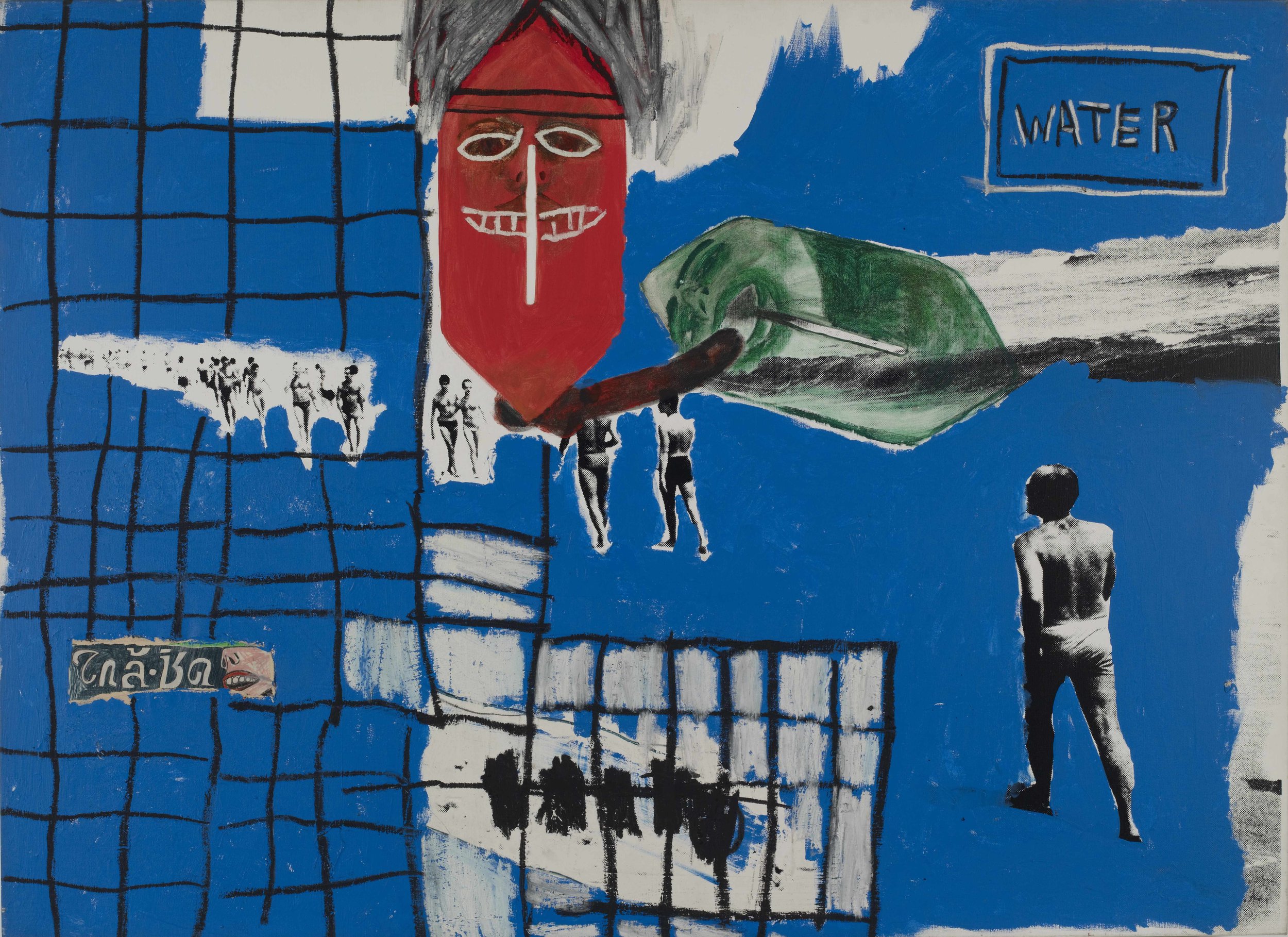
Jean-Michel Basquiat / Andy Warhol / Francesco Clemente, In Bianco 1984 Acrylic, silkscreen, and pastel on canvas 122 x 168 cm / 48 x 66 1/8 in © Estate of Jean-Michel Basquiat. Licensed by Artestar, New York © Fundación Almine y Bernard Ruiz Picasso -- FABA -- 2024
Exploring various artistic motifs that combine the natural and cultural landscape of the Engadin with the metropolis of New York, Jean-Michel Basquiat’s first solo exhibition dedicated to the paintings he created in and inspired by his visits to Switzerland opens on 14 December at Hauser & Wirth St. Moritz. ‘Jean-Michel Basquiat. Engadin’ traces the renowned artist’s connections to the country, which began in 1982 with his first show at Galerie Bruno Bischofberger in Zurich, returning over a dozen times to St. Moritz, Zurich and Appenzell, as well as other places in Switzerland. The Engadin region in particular continued to fascinate Basquiat long after his return to New York, resulting in a body of work that captures his impressions of the Swiss Alpine landscape and culture through the lens of his highly distinctive and personal artistic language.
‘Jean-Michel Basquiat. Engadin’ will be accompanied by a catalog from Hauser & Wirth Publishers, featuring a foreword by Bruno Bischofberger and a text by Dr. Dr. Dieter Buchhart to give visitors a unique insight into this specific chapter of one of the most important artists of the 20th Century. The exhibition is supported by Dr. Dr. Dieter Buchhart and Dr. Anna Karina Hofbauer, internationally renowned curators and Basquiat experts.


All images: ‘Jean-Michel Basquiat. Engadin’ at Hauser & Wirth St. Moritz, until 29 March 2025. © Estate of Jean-Michel Basquiat. Licensed by Artestar, New York. Courtesy Hauser & Wirth. Photo: Stefan Altenburger Photography Zürich.
About the exhibition
Born in Brooklyn, New York in 1960 and coming of age in the downtown, post-punk artistic scene of the late 1970s and early 1980s, Basquiat drew on the diversity and intensity of New York City within his multi-disciplinary practice. His expressive paintings combined bold text and imagery from his expansive references across art, film, history and music, as well as his experiences of everyday racism as a young Black man in the US.

Jean-Michel Basquiat The Dutch Settlers 1982 Acrylic and oil stick on canvas 183 x 549 cm / 72 x 216 1/8 in © Estate of Jean-Michel Basquiat. Licensed by Artestar, New York Nicola Erni Collection. Photo: Reto Pedrini Photography
After his first exhibition with Galerie Bruno Bischofberger in 1982, the same year Basquiat became one of the youngest ever artists to participate at Documenta in Kassel, the influences of the disparate cultural landscapes of New York City and Switzerland began to take shape in his work, incorporating the motifs of ski lifts, fir trees, mountains and German phrases into his expansive visual lexicon. ‘From then on, Jean-Michel Basquiat often visited me in Switzerland, where he particularly liked it. About half a dozen times in Zurich and exactly seven times in St. Moritz, four of them in the summer’, says Bischofberger. Basquiat was captivated by the Engadin’s vast natural landscape, cultural history and the hospitality of the Bischofberger family. Perhaps what drew Basquiat most to this part of Switzerland was, as Dr. Dieter Buchhart writes, ‘the contrast between the pulsating life, the clubs, the street noise, and the breakneck speed of the metropolis New York and the ‘discovery of slowness’ in the unique, overwhelming landscape of the Engadin.’

Jean-Michel Basquiat Big Snow 1984 Oil, acrylic, felt-tip pen and oilstick on canvas 168 x 151.5 cm / 66 1/8 x 59 5/8 in © Estate of Jean-Michel Basquiat. Licensed by Artestar, New York Private Collection
One of the earliest works on view in the exhibition is the monumental painting ‘The Dutch Settlers’ from 1982. Composed of nine canvases, the painting is a prime example of Basquiat’s innovative approach of marrying William S. Burroughs’ ‘cut-up’ technique with a method akin to sampling technology used in hip hop. The montage of nine canvas panels enabled Basquiat to assemble, combine and recombine different image fields – creating a multi-layered work that emanates a visual rhythm described as an ‘Eye Rap’ by art historian Robert Storr. The artist paints powerful motifs which reference the African Diaspora and slavery (evoked through words such NUBIA and TOBACCO) alongside images of the Engadin, depicting fir trees, a mountain road, as well as an ibex, the heraldic animal of the canton of Graubünden and native to the region. This mountain iconography can also be seen in the playful works ‘Skifahrer (Skier)’ and ‘See (Lake)’ on view in the exhibition. The former depicts a comic-like figure on a bright red background and the latter the local landscape at night, both painted in St. Moritz a year later. These works were part of a series that Basquiat made for a dinner with collectors in Bischofberger’s ‘hunting lodge’ as the artist called it, meaning the family’s home in St. Moritz. Beside photographs of the Engadin by Albert Steiner, there was no modern art hanging in the dining room that season.

Jean-Michel Basquiat, Brook Bartlett and Bruno Bischofbergerat the Cresta Klubhaus in St. Moritz on January 30, 1983 Photo: Christina Bischofberger© Galerie Bruno Bischofberger, Männedorf-Zurich, Switzerland
In the winter of 1983/1984, during one of Basquiat’s visits to the Engadin, Bischofberger and the artist began discussing the idea for a collaboration between Basquiat, Andy Warhol and Francesco Clemente. The three artists each created four paintings and a drawing, which were subsequently transported between them to complete. ‘In Bianco’ (1983) showcases the clearly distinguishable artistic contributions from all three, demonstrating how each artist reacted respectfully to the parameters of the others. As Buchhart notes, ‘the cornerstone for this important collaboration was laid in St. Moritz’, marking a turning point in Basquiat’s artistic practice and proving Switzerland to be of great historical significance for the artist in more ways than one.
Integrating the immediate world around him with his varied encyclopaedic knowledge, ‘Big Snow’ (1984) sees Basquiat once again processing his impressions of the Engadin in conjunction with themes relating to race and Black history, combining motifs of the Swiss mountains, snow and skiing with the Berlin Olympic Games of 1936 and Jesse Owens’ win of four gold medals. In 1985, Basquiat would go on to be part of a group show at the Segantini Museum in St. Moritz, showcasing his work ‘See (Lake)’ (1983) in an exhibition titled ‘The Engadine in Painting’. The latest body of work on view includes a group of monochrome paintings titled ‘To Repel Ghosts’ which Basquiat created in 1986 during his time in Zurich and St. Moritz, exploring themes of emptiness as well as spirituality in relation to the African Diaspora. Musing on what kept drawing the artist back to Switzerland, Buchhart writes, ‘For Basquiat, the Engadin meant work, inspiration, friendship, and rest and relaxation, all at the same time.’
The exhibition opened on December 14th of 2024 and will conclude on March 29, 2025, at the Hauser & Wirth St. Moritz Via Serlas 22 7500 St. Moritz Gallery location. The gallery’s hours: Tuesday – Sunday, 11 am – 7 pm. Please visit the Hauser & Wirth Gallery site for information about upcoming exhibitions. Also, follow the gallery on Instagram, Facebook, X, and YouTube. The magazine highlighted the accompanying book with the same title, which can be found here.

GERARD & KELLY: Bardo

GERARD & KELLY E for Eileen, 2023 (film still) 4K video, color, sound; 22 min. Edition of 3 plus 1 artist's proof Copyright Gerard & Kelly Courtesy the artists and Marian Goodman Gallery
Marian Goodman Gallery Paris is pleased to announce the first major exhibition in Paris devoted to the work of Gerard & Kelly. Entitled Bardo, the exhibition features new sets of works by the duo that collectively illustrate the hybridity and multidisciplinarity of their practice, which is rooted in an ongoing investigation of history, architecture and sexuality. The exhibition is imagined as a time-based and multi-sensory experience, and the title, inspired by Tibetan Buddhism, refers to the transitional state between death and rebirth, during which consciousness undergoes profound changes. Through the evocation of three saintly historical figures, openly or symbolically queer, Gerard & Kelly create a space for reflection and resonance between past and present, shadow and light, the profane and the sacred.
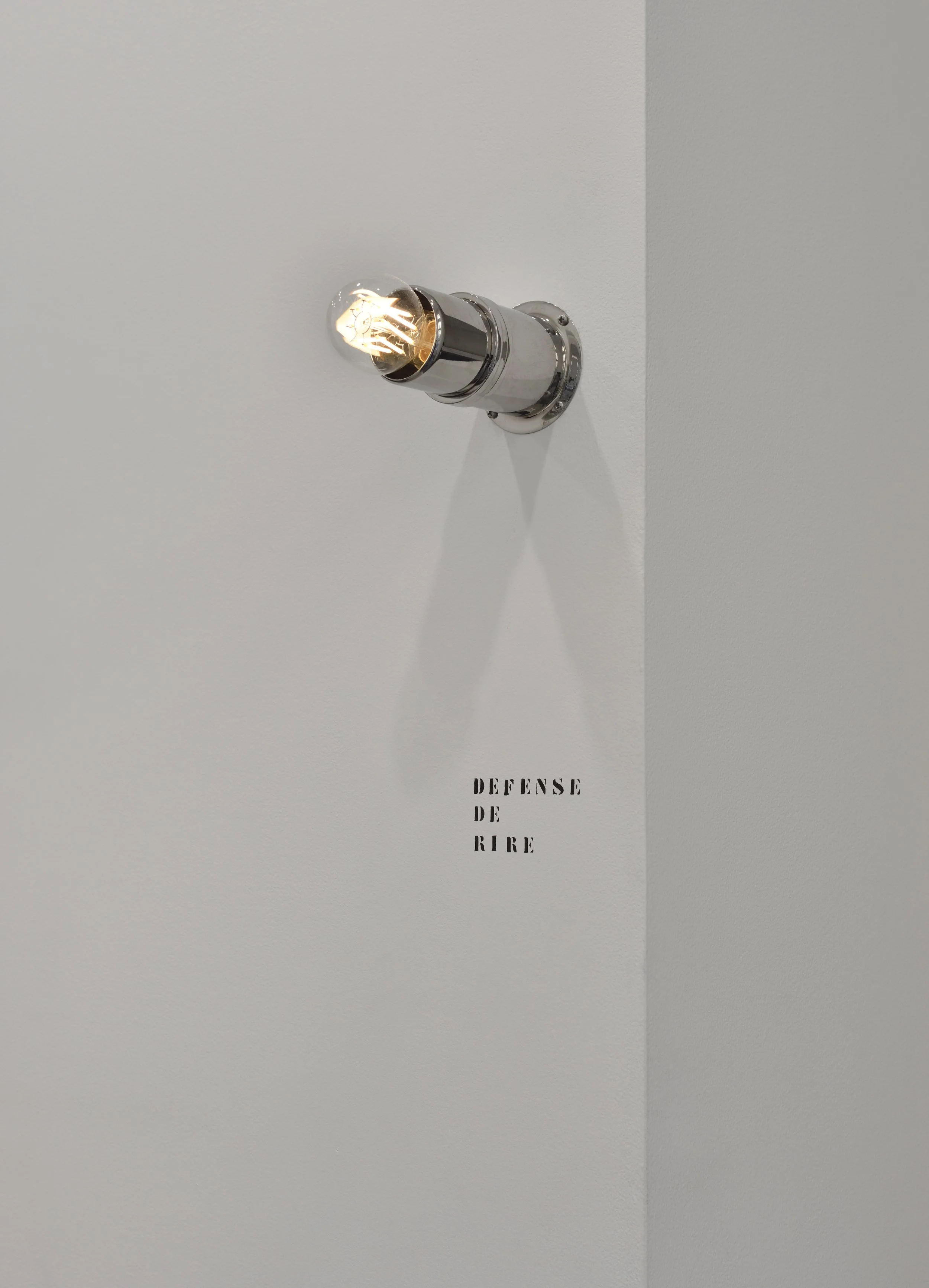
GERARD & KELLY Défense de rire, 2025 Lamp (Pailla Wall Lamp, design by Eileen Gray, 1927), bulb, stencil, acrylic, illumination program Dimensions variable Lamp: 4 3/4 x 3 3/8 in. (12 x 8.5 cm) Edition of 3 plus 1 artist's proofs Copyright Gerard & Kelly Courtesy the artists and Marian Goodman Gallery Photo credit: Rebecca Fanuele
Eileen Gray (1878-1976), a Paris-based Irish architect and designer, was the author of a fundamental work of architectural modernism: villa E-1027, built in the bay of Roquebrune-Cap-Martin. Completed in 1929, the villa is one of France's three national monuments of the modern era, and the only one built by a woman. Inspired by the layout and volumes of an ocean liner, the house's vast windows open onto the sky and the Mediterranean.

GERARD & KELLY Glyphs VII, 2024 Monotype silkscreen and gold leaf on metallic paper Image: 11 1/4 x 18 7/8 in. (28.5 x 48 cm)
Frame: 15 5/8 x 23 5/8 x 2 in. (39.6 x 60 x 5 cm) Copyright Gerard & Kelly Courtesy the artists and Marian Goodman Gallery Photo credit: Rebecca Fanuele
A self-taught architect, Gray meticulously designed every detail of E-1027, including the furniture within the villa, to create a functional living space. Upon entering the gallery, the flickering of Défense de rire, 2025, which combines the Pailla lamp with a stencil conceived by Gray for E-1027, guides visitors to the lower level for the start of the film. Downstairs the 22-minute film E for Eileen, 2023, shot entirely in situ, is shown every half- hour. A seating module renders the negative space of the solarium in the villa’s garden, and is covered in cork— a material frequently used by Gray. The Pailla lamp reappears in Solarium ensoleillé, 2025, to illuminate a wall- mounted scaled model of this sunbathing platform constructed from layers of mat board.
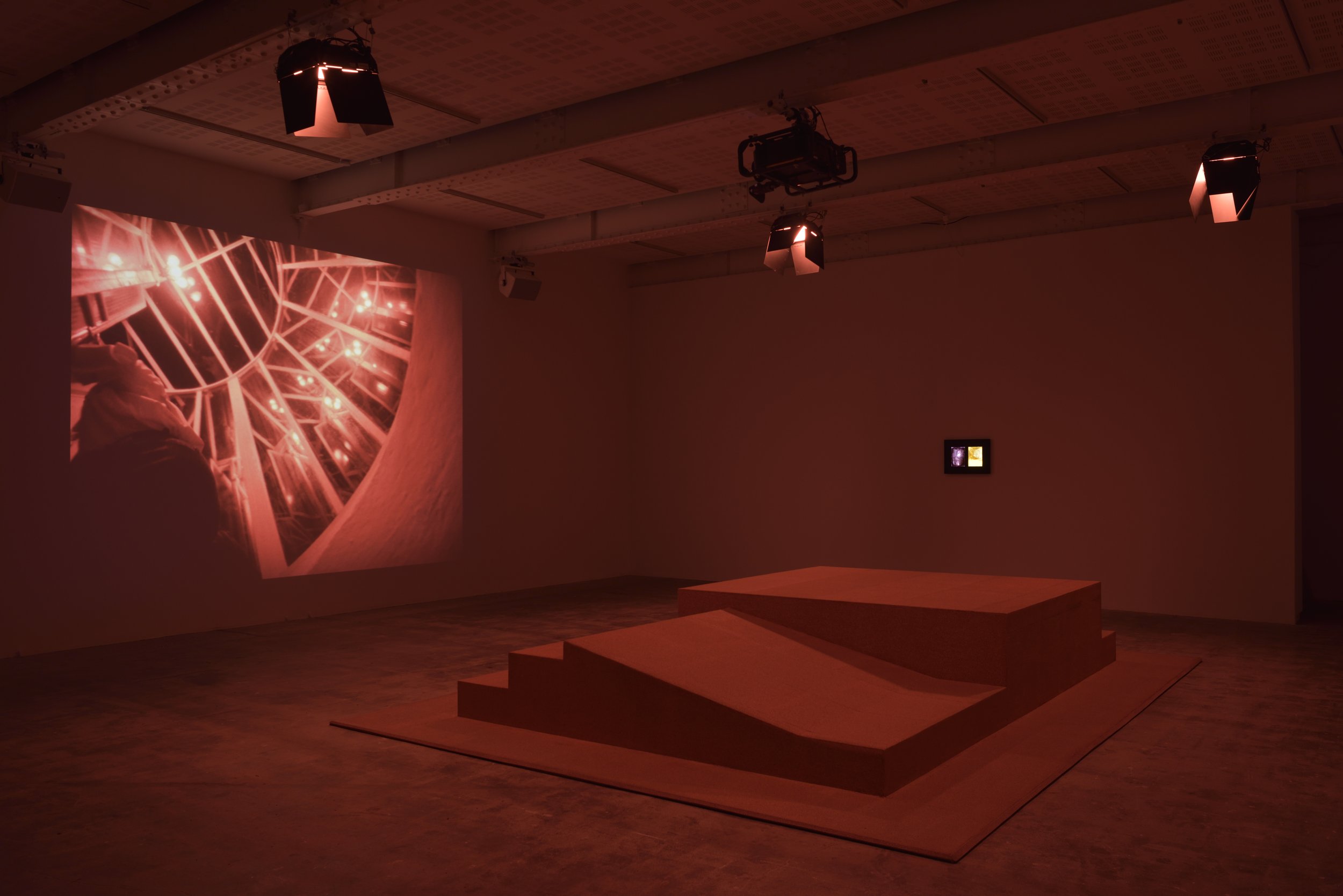
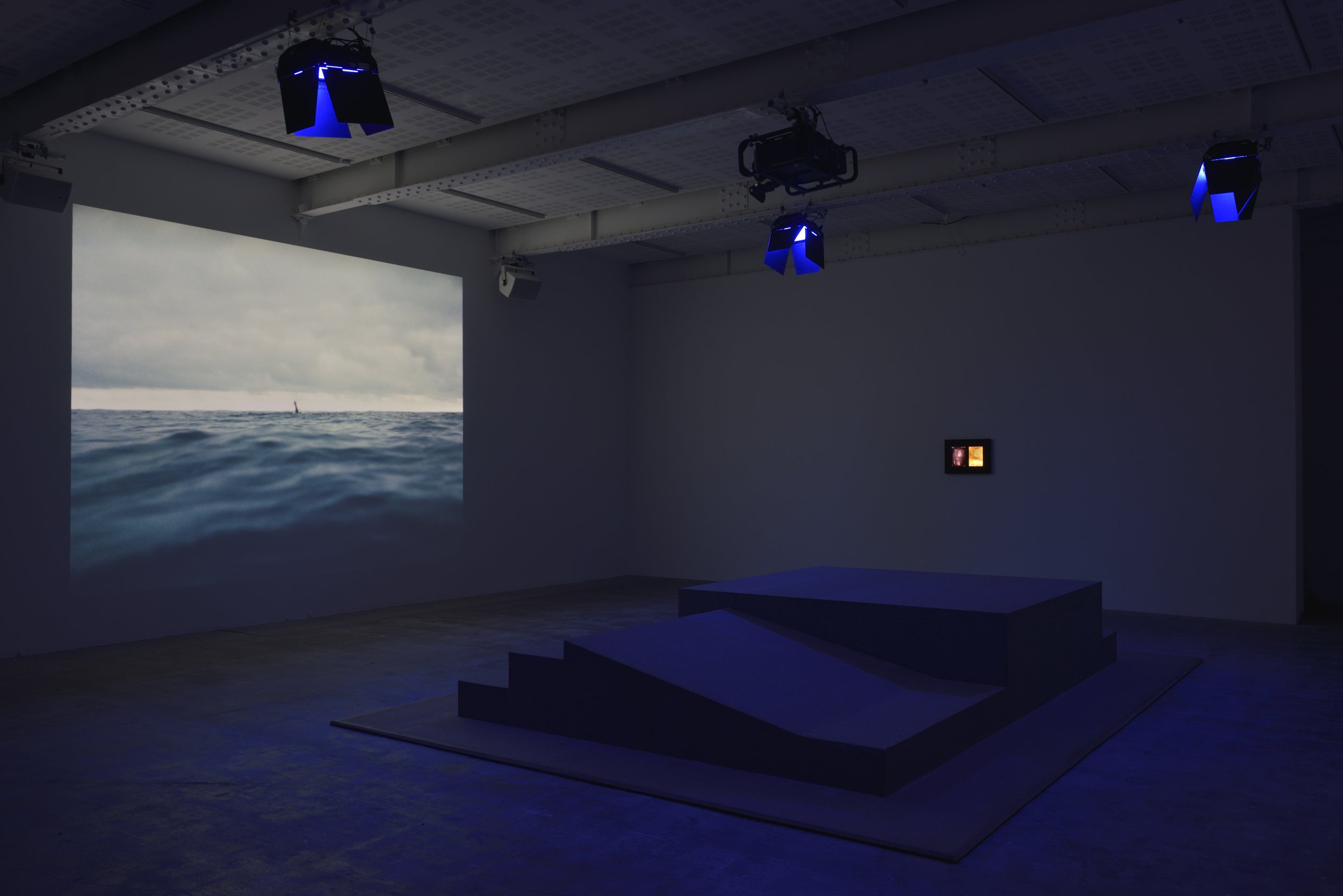
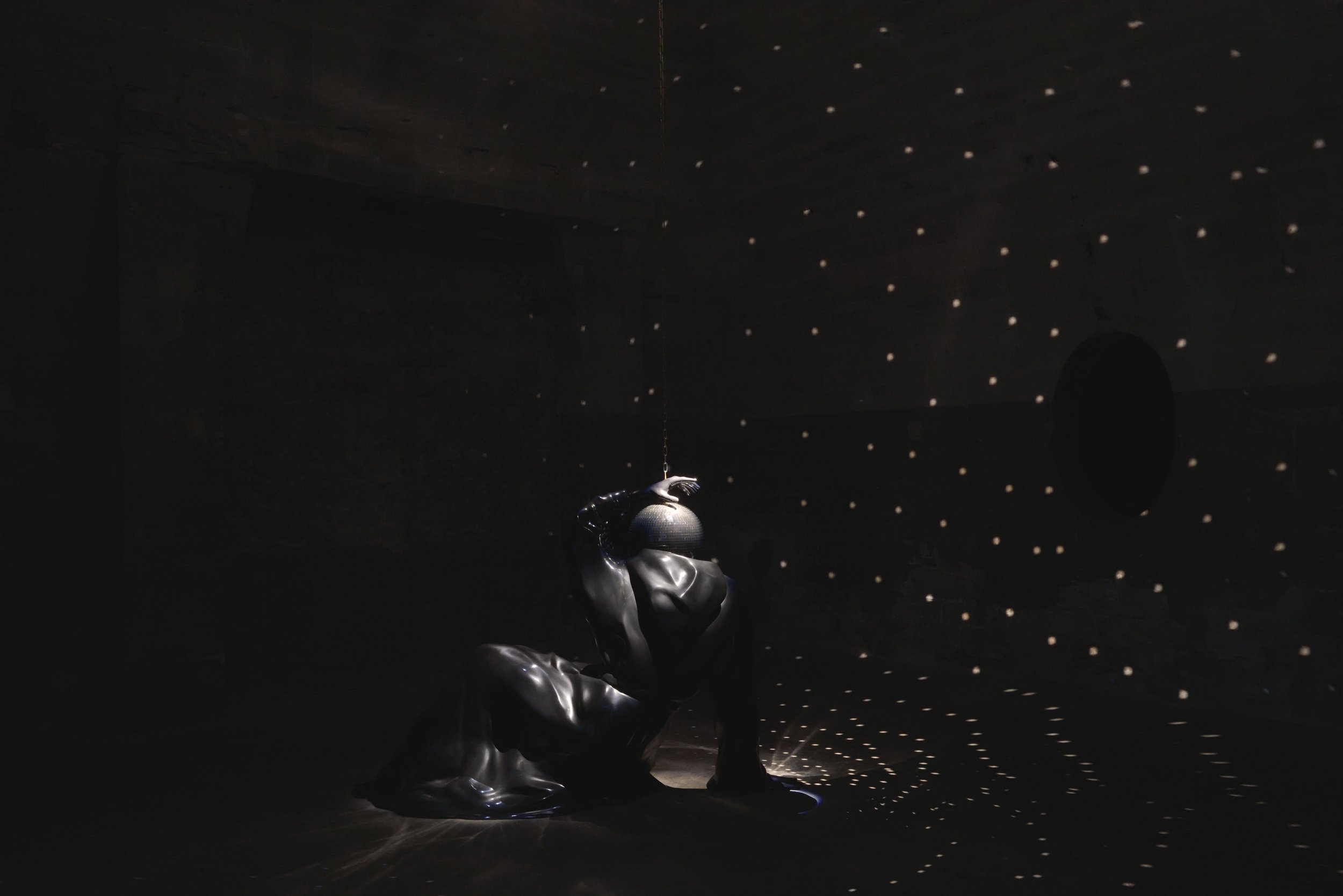
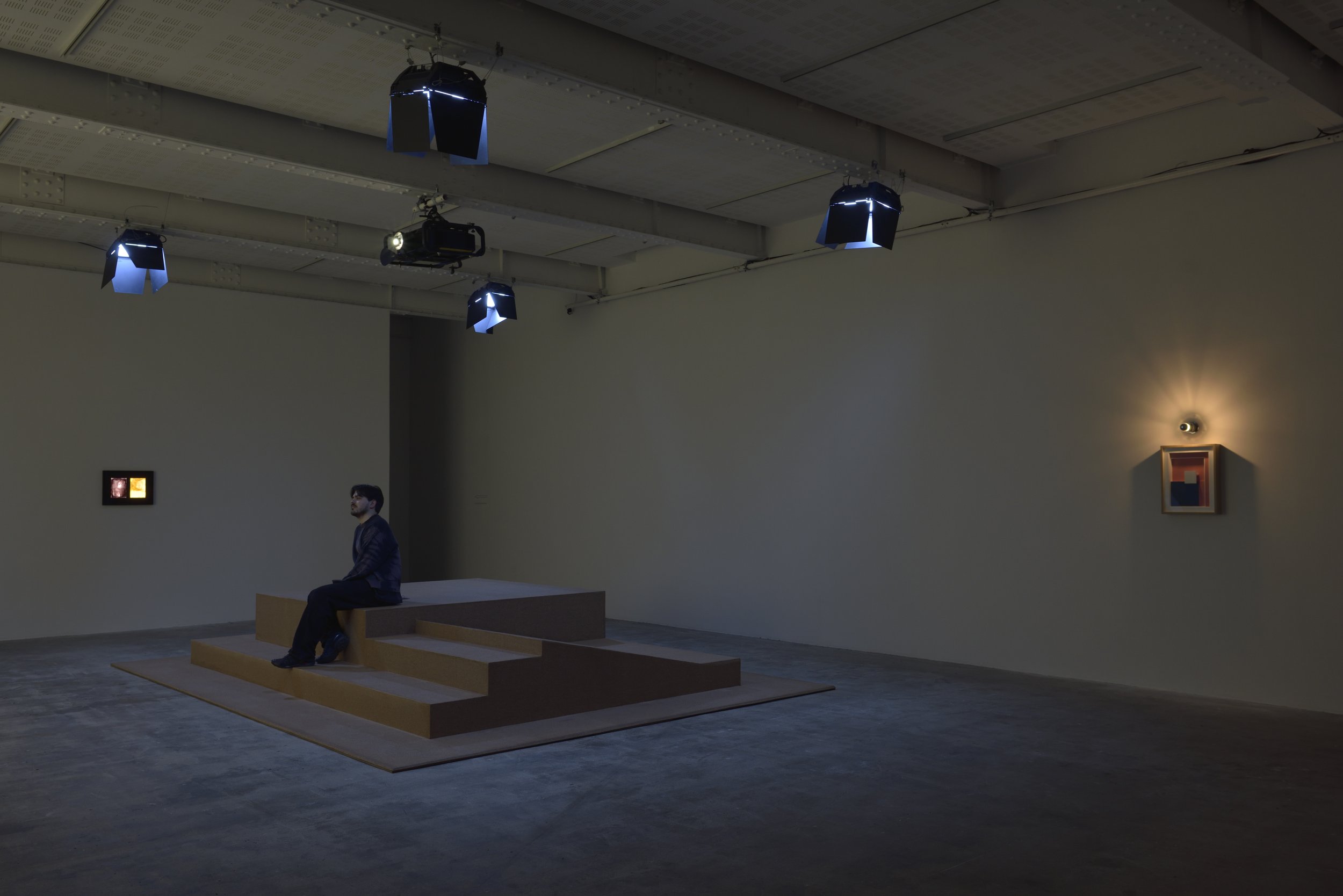
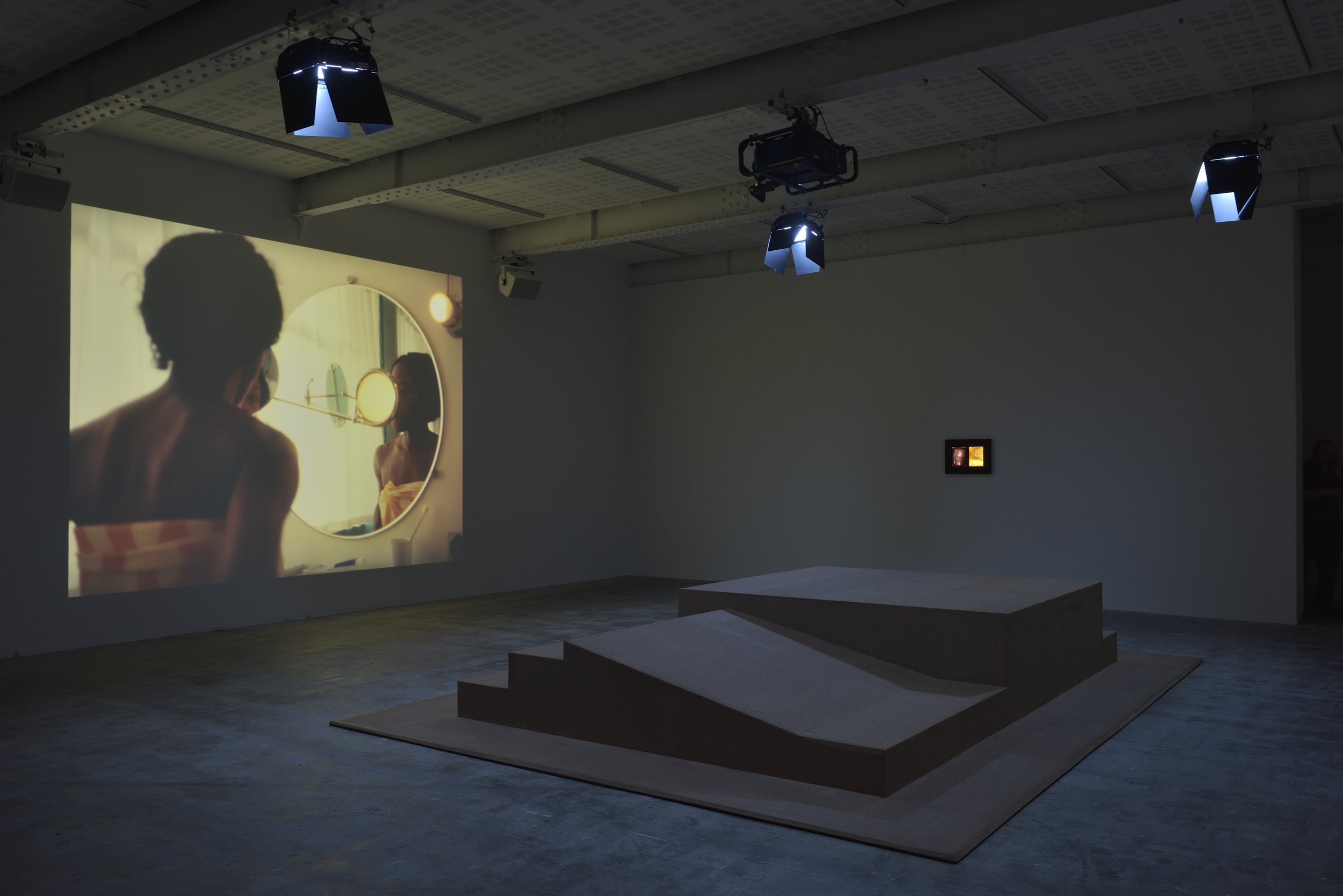
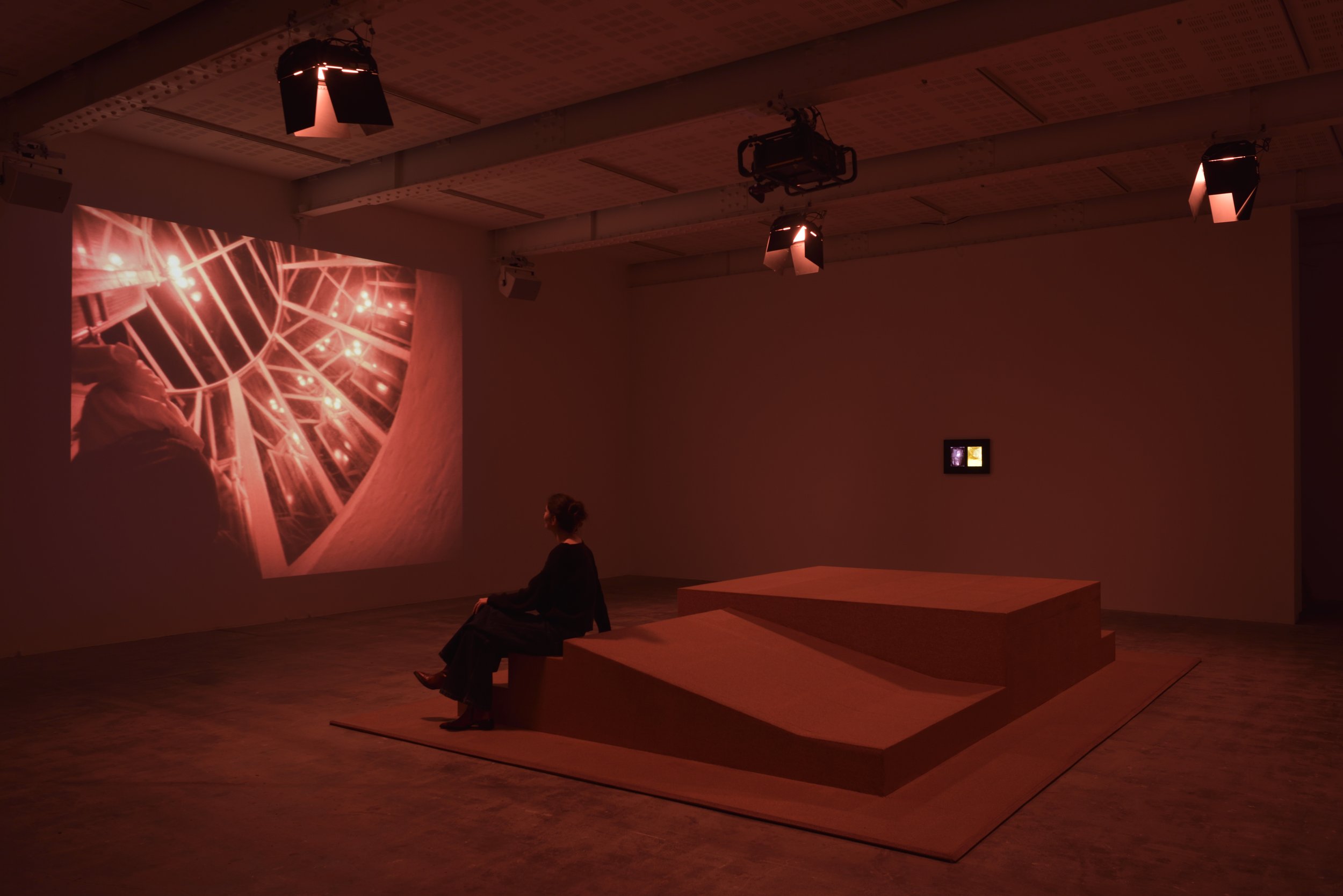
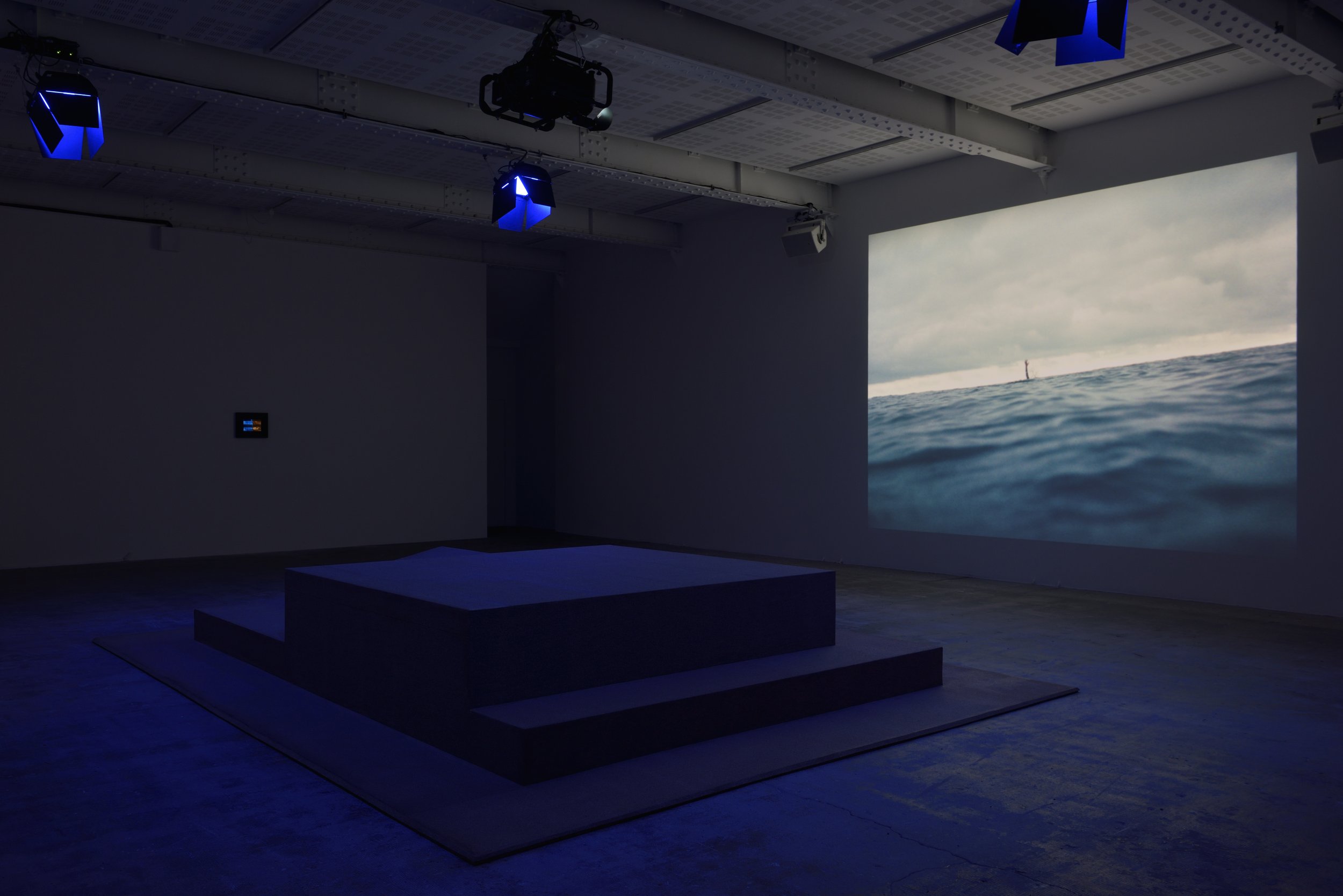
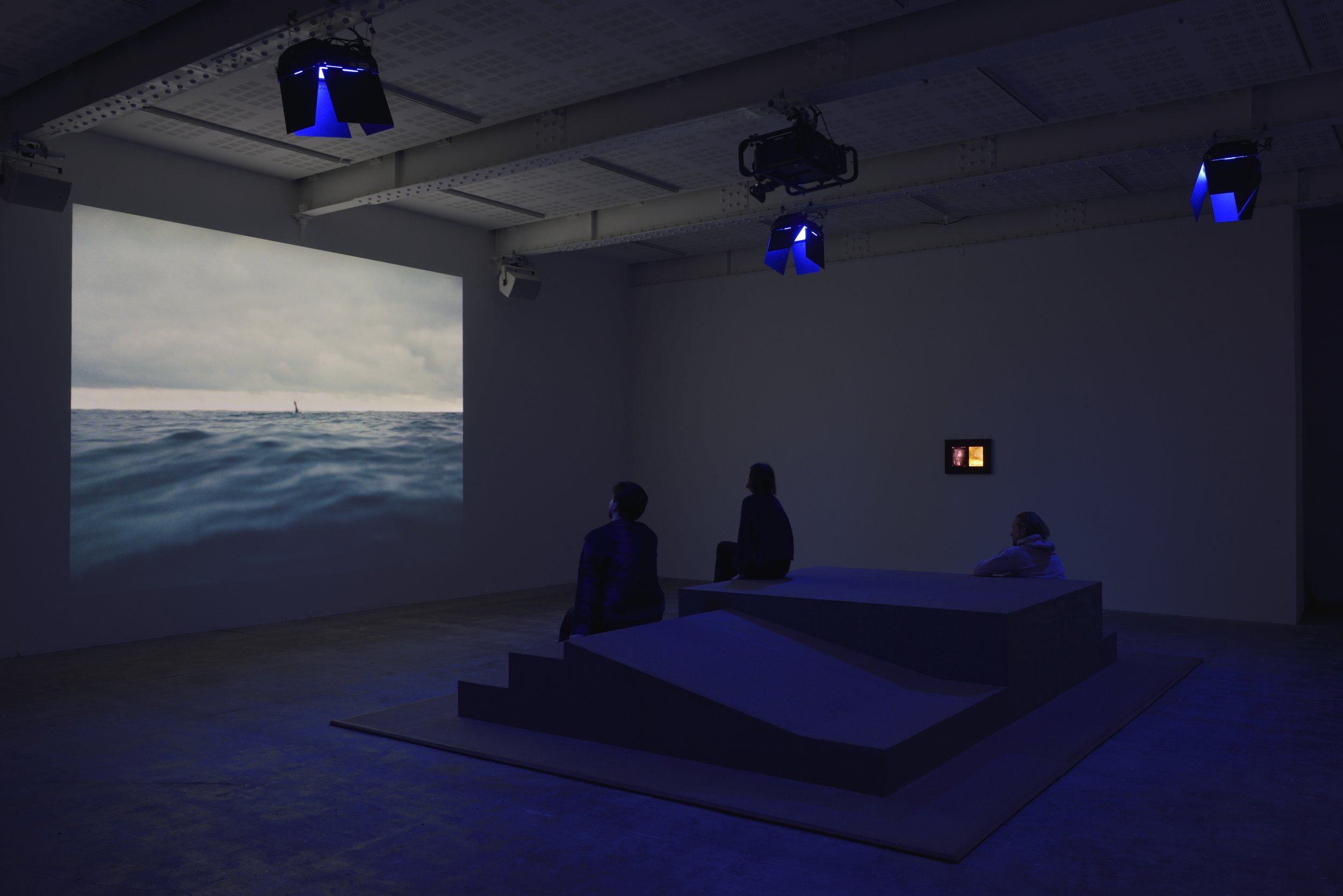
Exhibition Views, Gerard & Kelly: Bardo, Galerie Marian Goodman, Paris, 2025 Copyright Gerard & Kelly Courtesy the artists and Marian Goodman Gallery Photo credit: Rebecca Fanuele
The film—part visual essay, part speculative fiction—magnifies Gray's talent by emphasizing the living dimension of her architecture, which is designed to facilitate the circulation of bodies and natural light. As in Gerard & Kelly's previous films, E for Eileen questions the ways of living and moving in a given construction by featuring historical characters linked to the site: Eileen Gray (played by Nikki Amuka-Bird), and two of her lovers, architect and critic Jean Badovici (played by Colin Bates) and the famous music-hall singer Damia (Flora Fischbach). With this film, Gerard & Kelly subtly evoke the inner life and social world of Eileen Gray, an openly bisexual woman, who frequented the pre-war Parisian lesbian literary circle and launched her own design gallery in Paris in 1922 under a male pseudonym. From her limited personal archive, Gerard & Kelly have designed four light boxes; Portrait Recto/Verso, Monsieur Gray, Eclipse, and Souvenir (after a photograph by Eileen Gray), 2025 are fragments of memory and clues that lend new insight to Gray’s elusive personality.

GERARD & KELLY Solarium ensoleillé, 2025 Mat board (passe-partout), lamp (Pailla Wall Lamp, design by Eileen Gray, 1927), bulb, acrylic, illumination program 14 1/8 x 18 1/2 x 2 3/8 in. (36 x 47 x 6 cm) Copyright Gerard & Kelly Courtesy the artists and Marian Goodman Gallery Photo credit: Rebecca Fanuele
In the gallery's vaulted space, another forgotten artist, Francesco di Stefano, known as Pesellino (1422-1457), emerges from the shadows. Like Eileen Grey, Pesellino was prolific during his lifetime, receiving commissions from the Medici in Florence and collaborating with the leading painters of his time. He died prematurely of the plague at the age of 35. Gerard & Kelly’s sculpture Glory Hole, 2025, inspired by Pesellino's painting of St. Francis of Assisi receiving the stigmata now in the collection of the Louvre Museum, transforms the space into a postmodern sanctuary. The saint, wearing his cassock, half-reclines on the floor; a mirror ball has penetrated his flesh and replaced his head. An emblematic symbol of the disco era, this ball bridges the gap between the worlds of nightlife and the sacred, and its perpetual spinning evokes the wandering of the bardo.

GERARD & KELLY Souvenir (after a photograph by Eileen Gray), 2025 Transparency, gouache, light box Hand-painted print: 5 3/4 x 8 1/2 in. (14.5 x 21.5 cm) Frame: 12 x 14 3/4 x 1 3/8 in. (30.6 x 37.6 x 3.4 cm) Copyright Gerard & Kelly Courtesy the artists and Marian Goodman Gallery Photo credit: Rebecca Fanuele
The final chapter of the exhibition unfolds in the gallery's showroom, with new works that enter into a subtle dialogue with Julius Eastman (1940-1990), a queer, black American composer active in New York in the 1970s and 80s. In the Glyphs series, Gerard & Kelly applied fragments of musical notation onto silk screened images of dancers, captured in glyph-like gestures and shimmering like holograms. Reminiscent of medieval illuminated manuscripts, the artists’ process of pressing gold leaf is an act of devotion: a transcription of Eastman’s handwritten score for Gay Guerrilla (1979). Gerard & Kelly’s engagement with his oeuvre, which was largely lost at the time of his premature death, dates back several years. His music featured in their film Panorama , 2021, shot in the Bourse de Commerce in Paris, and in their performance Gay Guerrilla, 2023, created at the Centre Pompidou. In new large-format works rendered in silkscreen, stencil and neon, Pompidou Pulse, 2025 and Disco Saint, 2025, the artists integrate images of the emblematic architecture of the Centre Pompidou with disco dancers captured in ecstatic states. Gerard & Kelly transform the dancer into a saintly figure, evoking a bardo in which the sacred and the profane cohabitate and where buildings and bodies dissolve.

GERARD & KELLY Pompidou Pulse, 2025 Silkscreen, acrylic and neon on canvas 59 x 86 5/8 in. (150 x 220 cm) Copyright Gerard & Kelly Courtesy the artists and Marian Goodman Gallery Photo credit: Rebecca Fanuele
The cycle of three films made by Gerard & Kelly in emblematic architectural sites in France—Bright Hours at Le Corbusier's Cité Radieuse in Marseille, Panorama at the Bourse de Commerce in Paris and E For Eileen at villa E-1027—will be broadcast on February 9 on France 2 and available for streaming for a limited time on France.tv.

GERARD & KELLY Glory Hole, 2025 (DETAIL) Polyester resin cast, automobile paint, gold leaf; disco ball, chain, motor Dimensions variable
Sculpture: 69 3/4 x 48 3/8 x 30 1/4 in. (177 x 123 x 77 cm) Copyright Gerard & Kelly Courtesy the artists and Marian Goodman Gallery Photo credit: Rebecca Fanuele
American artists based in Paris since 2018, Gerard & Kelly have collaborated for two decades on performance, film/video, and installation, among other formats. Having collectively studied ballet, visual art, literature, and gender studies, Gerard & Kelly use conceptual strategies in art to examine broader themes of memory and history, sexuality and subjectivity. Their questions are often set against a particular architectural space, pushing the related sociocultural and political precedents of the site into an open engagement with their work. Brennan Gerard was born in Ohio in 1978, and Ryan Kelly was born in Pennsylvania in 1979. They were Van Lier Fellows of the Whitney Museum Independent Study Program and graduated with MFAs from the Interdisciplinary Studio at the University of California, Los Angeles (UCLA) in 2013. Ruins, their first solo show in a European\ institution, was presented at Carré d'Art - Musée d'art contemporain de Nîmes in 2022-2023. Solo exhibitions and performances of their work have been presented by Fondation Maeght, Saint-Paul de Vence (2024), Centre Pompidou, Paris (2023), MAMCO, Geneva (2020), MOCA, Los Angeles (2020), Festival d’Automne, Paris (2017 and 2019), The Getty Museum, Los Angeles (2019), Pioneer Works, New York (2018), Palais de Tokyo, Paris (2016), New Museum, New York (2014), and The Kitchen, New York (2014).

GERARD & KELLY Disco Saint, 2025 Silkscreen and neon on Dibond aluminum 39 3/8 x 78 3/4 in. (100 x 200 cm) Copyright Gerard & Kelly Courtesy the artists and Marian Goodman Gallery Photo credit: Rebecca Fanuele
They participated in the 2023 NGV Triennial at the National Gallery of Victoria, Melbourne, the 2017 and 2023 Chicago Architecture Biennial, and the 2014 Made in L.A. Biennial at the Hammer Museum, Los Angeles. Their work has been included in group exhibitions at Collection Lambert, Avignon (2024), FRAC Franche- Comté, Besançon (2022), High Line, New York (2023), and Solomon R. Guggenheim, New York (2015), among others. Gerard & Kelly have received numerous awards and grants, including the VIA Art Fund (2024), Mondes nouveaux program of the French Ministry of Culture (2023), Graham Foundation (2014), and Art Matters (2013). Their works are held in the permanent collections of Solomon R. Guggenheim Museum, New York; LACMA – Los Angeles County Museum of Art; Hammer Museum, Los Angeles; FRAC Franche- Comté, Besançon; Carré d'Art, Nîmes; and National Gallery of Victoria, Melbourne.
Marian Goodman Gallery champions the work of artists who stand among the most influential of our time and represents over five generations of diverse thought and practice. The Gallery’s exhibition program, characterized by its caliber and rigor, provides international platforms for its artists to showcase their work, foster vital dialogues with new audiences, and advance their practices within nonprofit and institutional realms. Established in New York City in 1977, Marian Goodman Gallery gained prominence early in its trajectory for introducing the work of seminal European artists to American audiences. Today, through its exhibition spaces in New York, Los Angeles, and Paris, the Gallery maintains its global focus, representing some 50 artists working in the U.S. and internationally.
The exhibition opened on 17 January and will be on view until 8 March 2025 at the Marian Goodman’s location in Paris at 79 & 66 rue du Temple, 75003. For more information about the exhibit, please visit the Marian Goodman Gallery’s site. The gallery can be found on Instagram and Artsy, too.

The Monster

Huma Bhabha Untitled, 2024 WORK ON PAPERink, pastel, acrylic, charcoal, and collage on paper53-1/2" × 52"(135.9 cm × 132.1 cm)Framed: 59 1/8 x 57 5/8 x 2 1/4inches (150.2 x 146.4 x 5.7 cm)© Huma Bhabha, courtesy the artist and David Kordansky Gallery
Los Angeles – Pace is pleased to present The Monster, an exhibition curated by artist Robert Nava, at its Los Angeles gallery. The exhibition opened on February 1 and will be on view until March 22, 2025, this presentation will bring together paintings, sculptures, and works on paper by an intergenerational group of artists—including several LA-based artists—within and beyond the gallery’s program and will coincide with this year’s edition of Frieze Los Angeles.


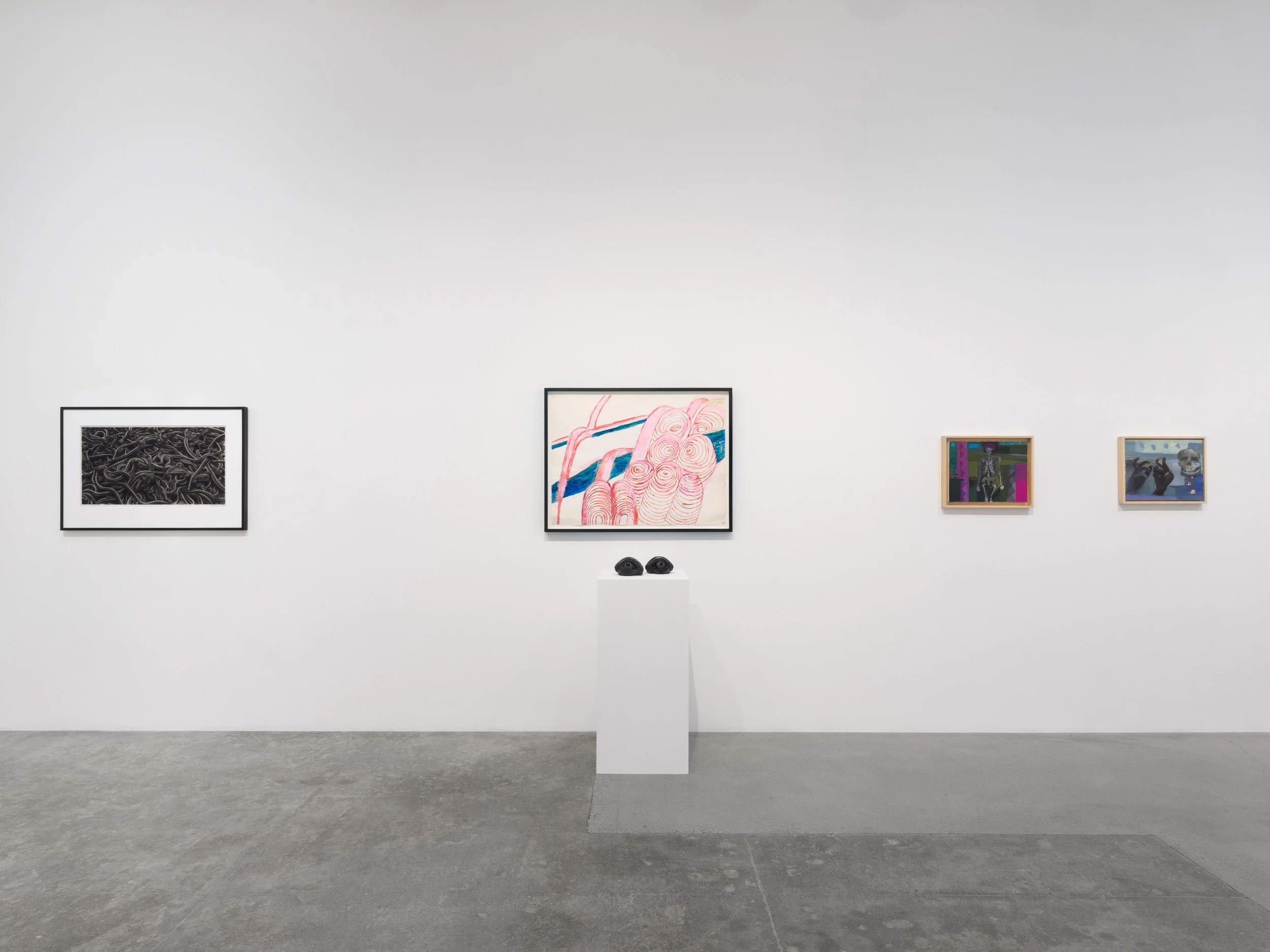


The Monster Curated by Robert Nava 1201 South La Brea Avenue, Los Angeles, CA 90019 February 1 – March 22, 2025 Photography courtesy Pace Gallery
Inspired in part by Mary Shelley’s Frankenstein, this exhibition, organized by Nava in collaboration with Pace’s Chief Curator Oliver Shultz, will celebrate monstrous bodies and fabulations of monstrosity in contemporary art—not the everyday monsters of waking life, but rather the fantasy monster, the monster of childhood, the mythical beast, the shapeless creature of the unconscious. This monster is a pre-image, an inchoate nightmare, a being neither human nor animal with the power to both terrify and enamor.
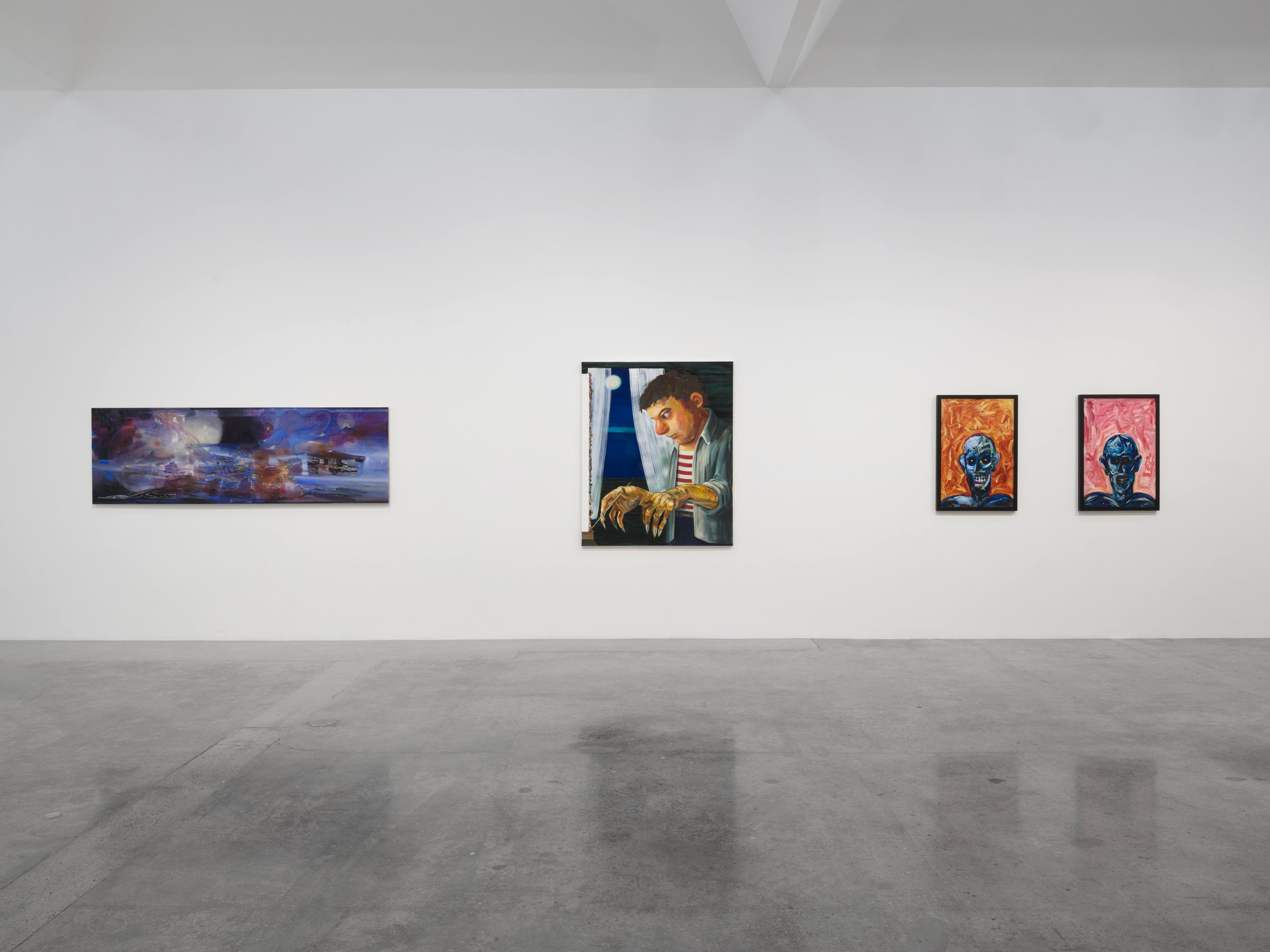
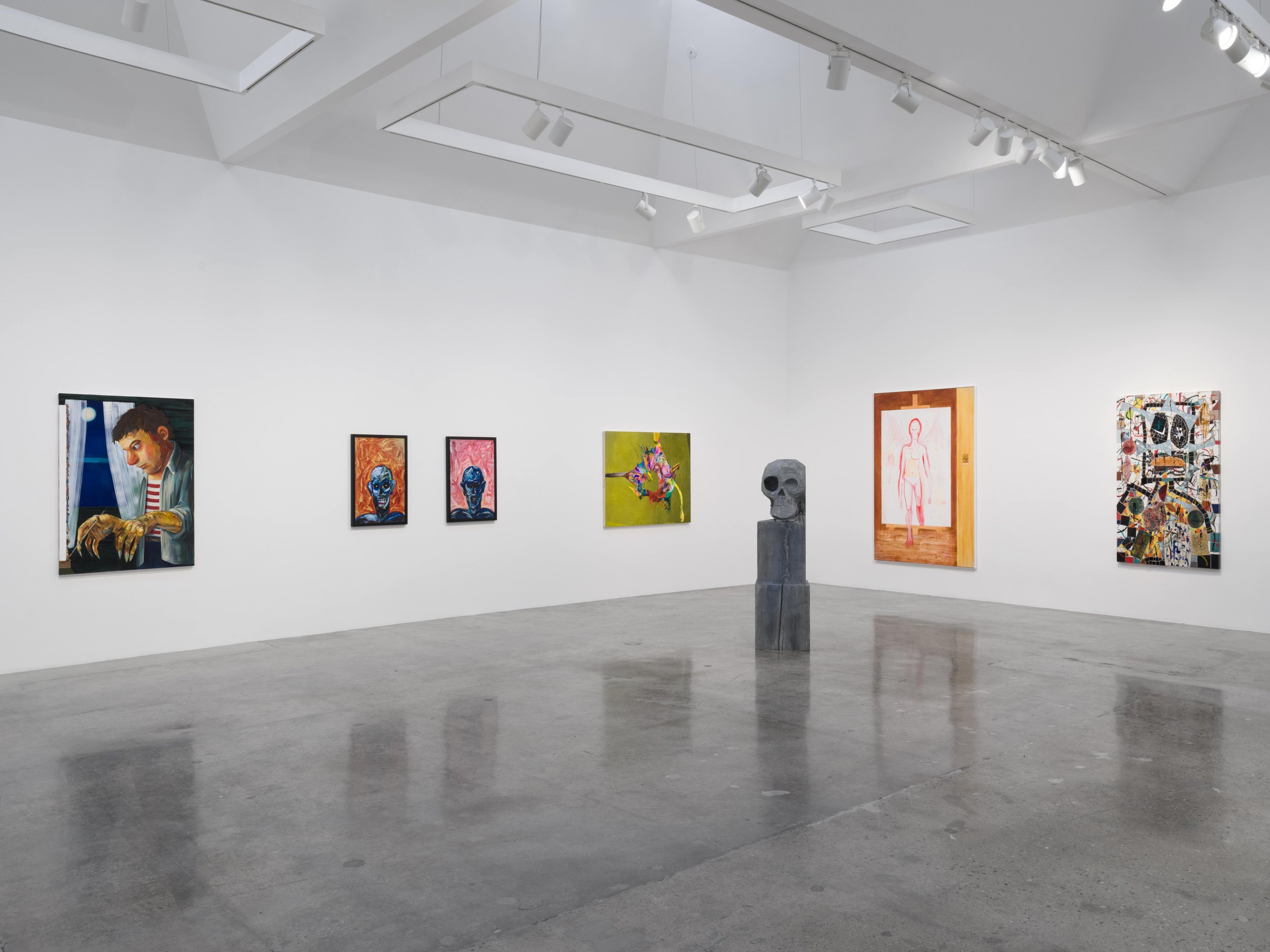
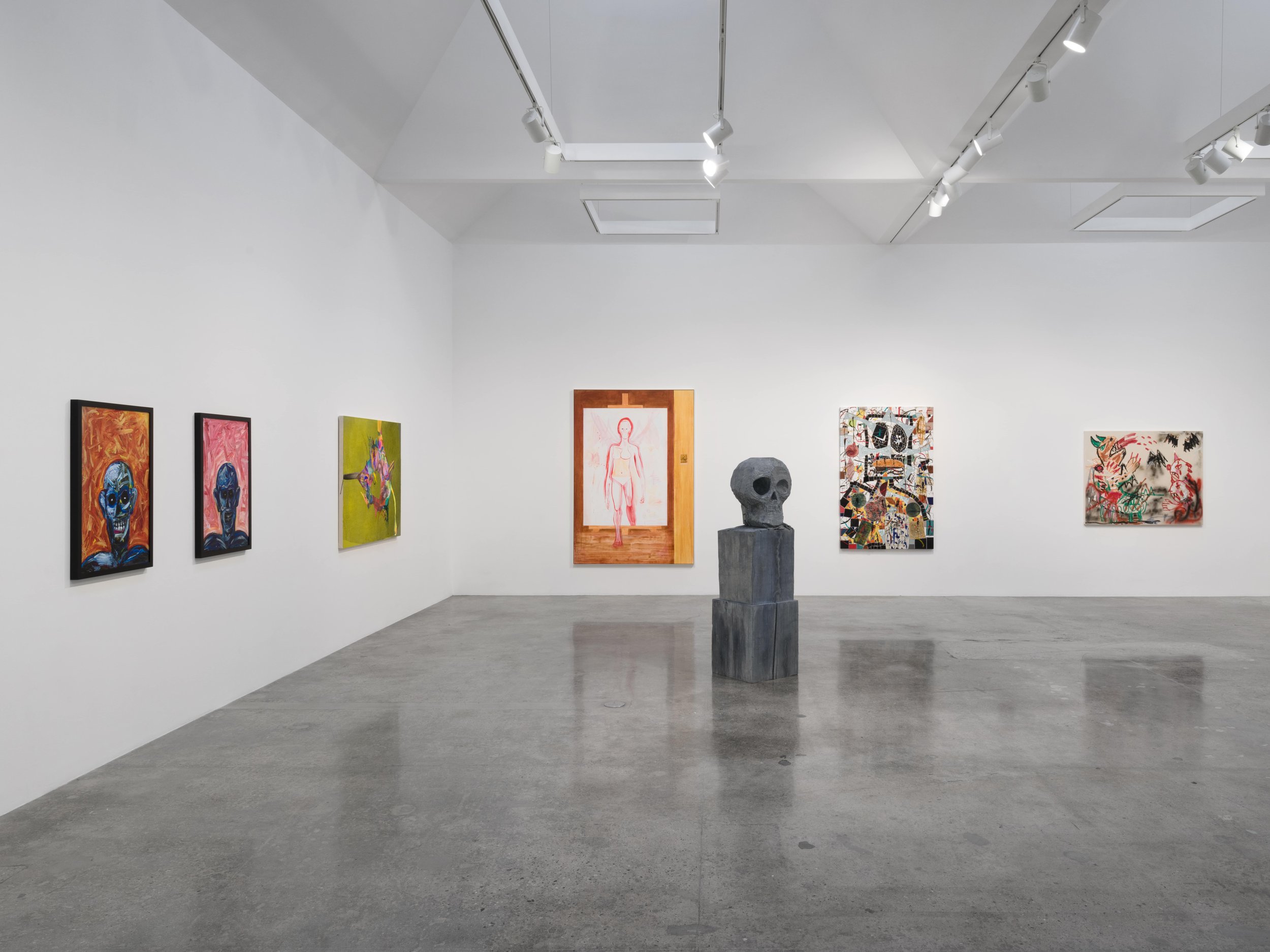
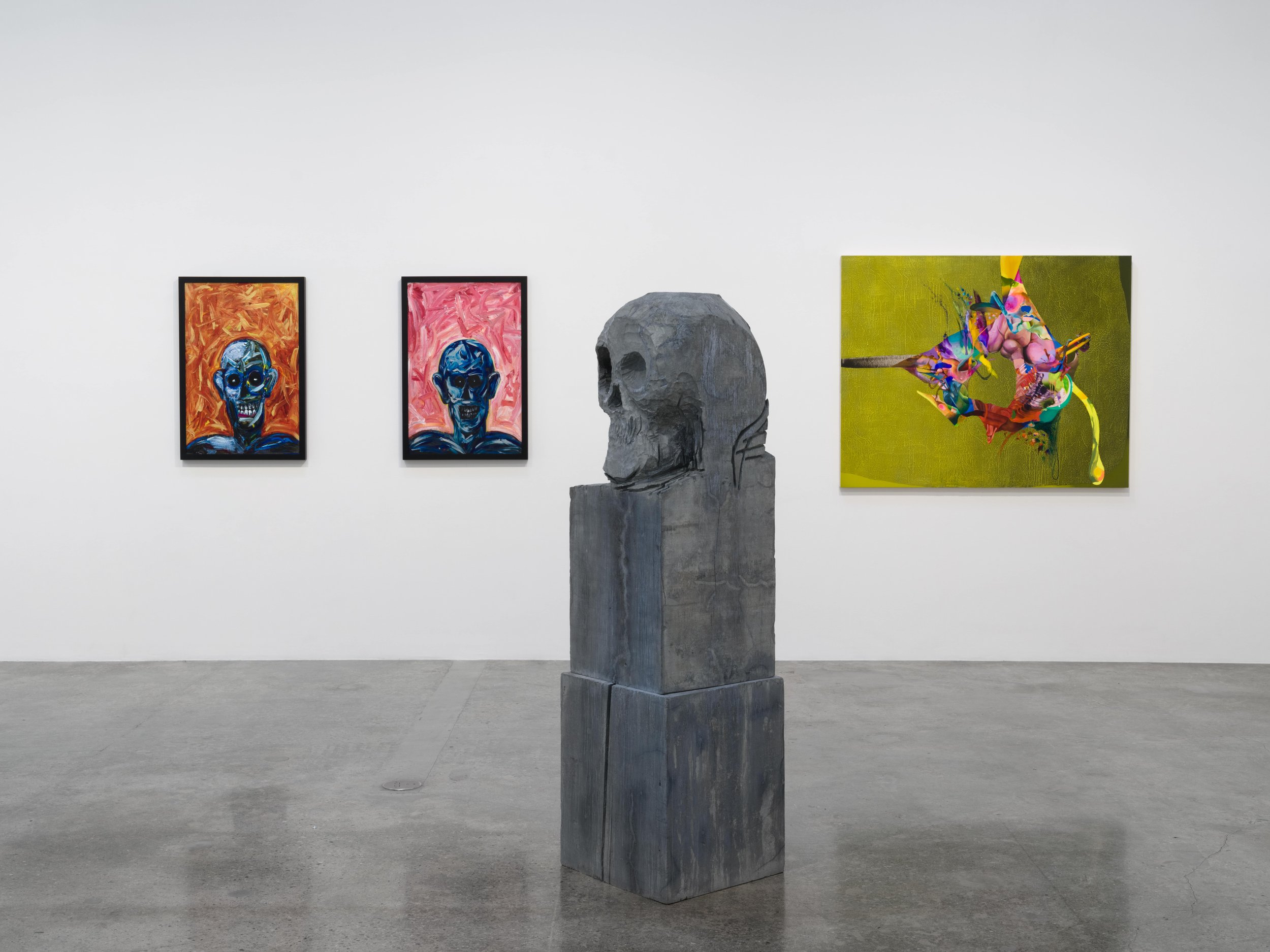
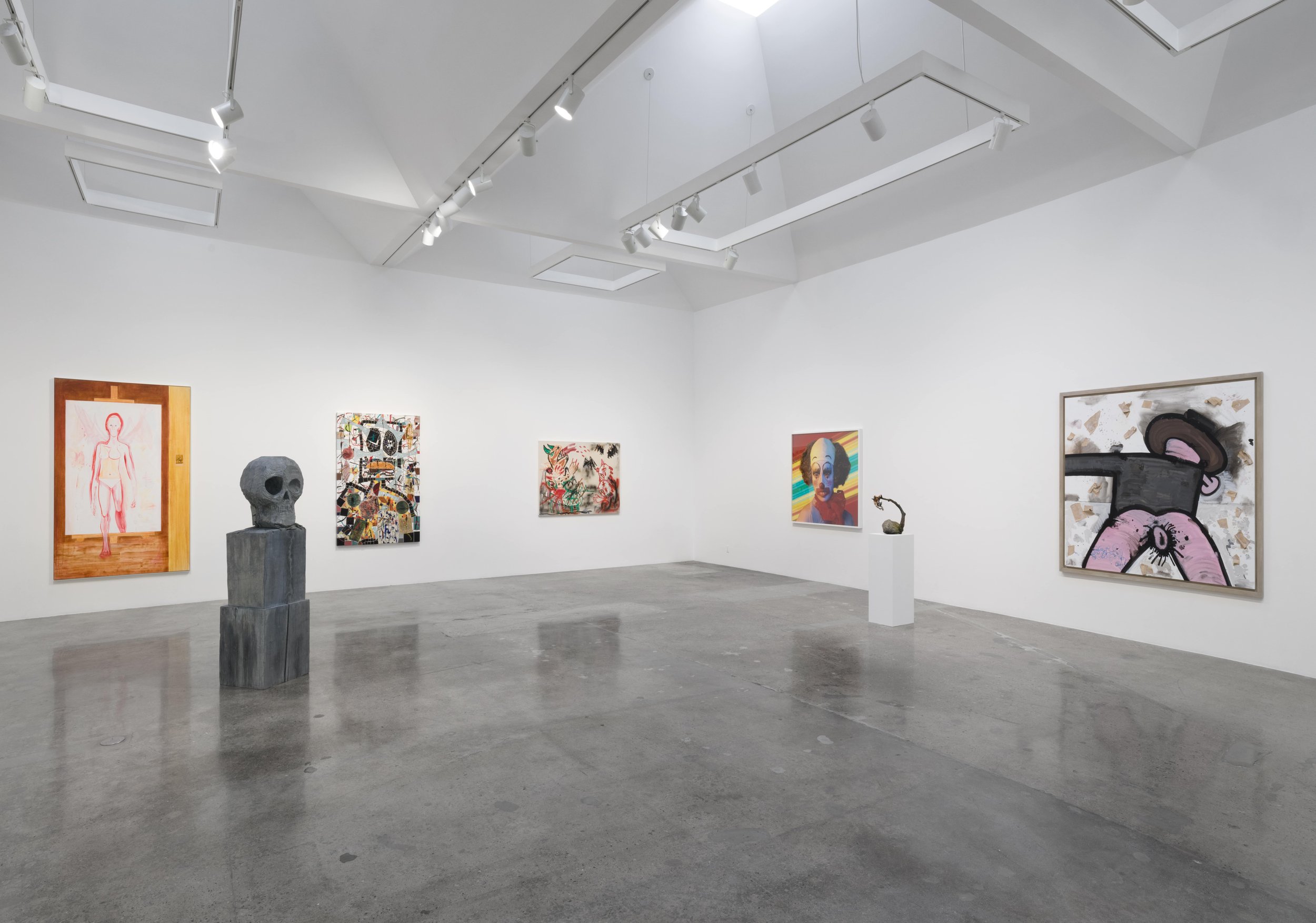
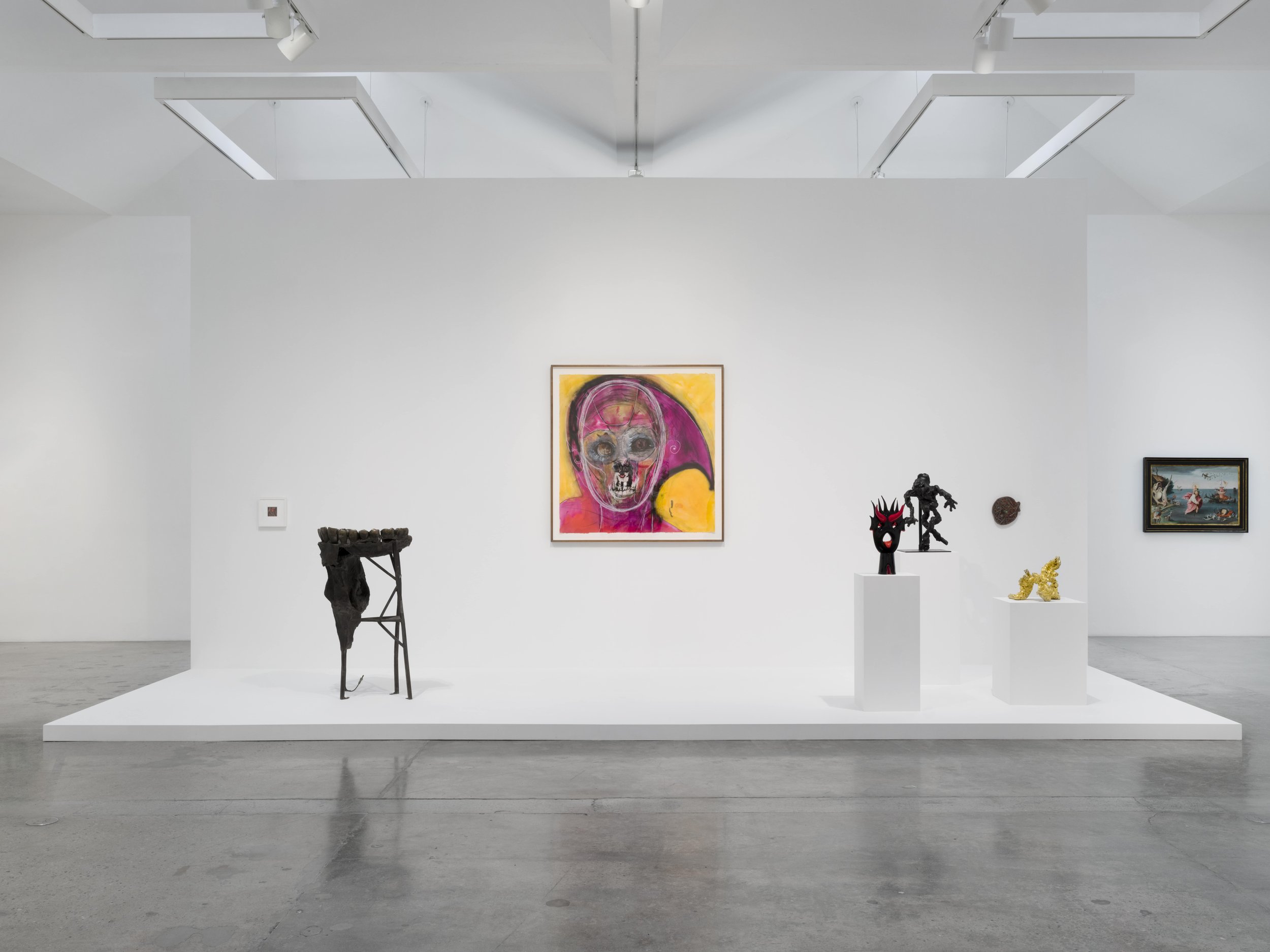
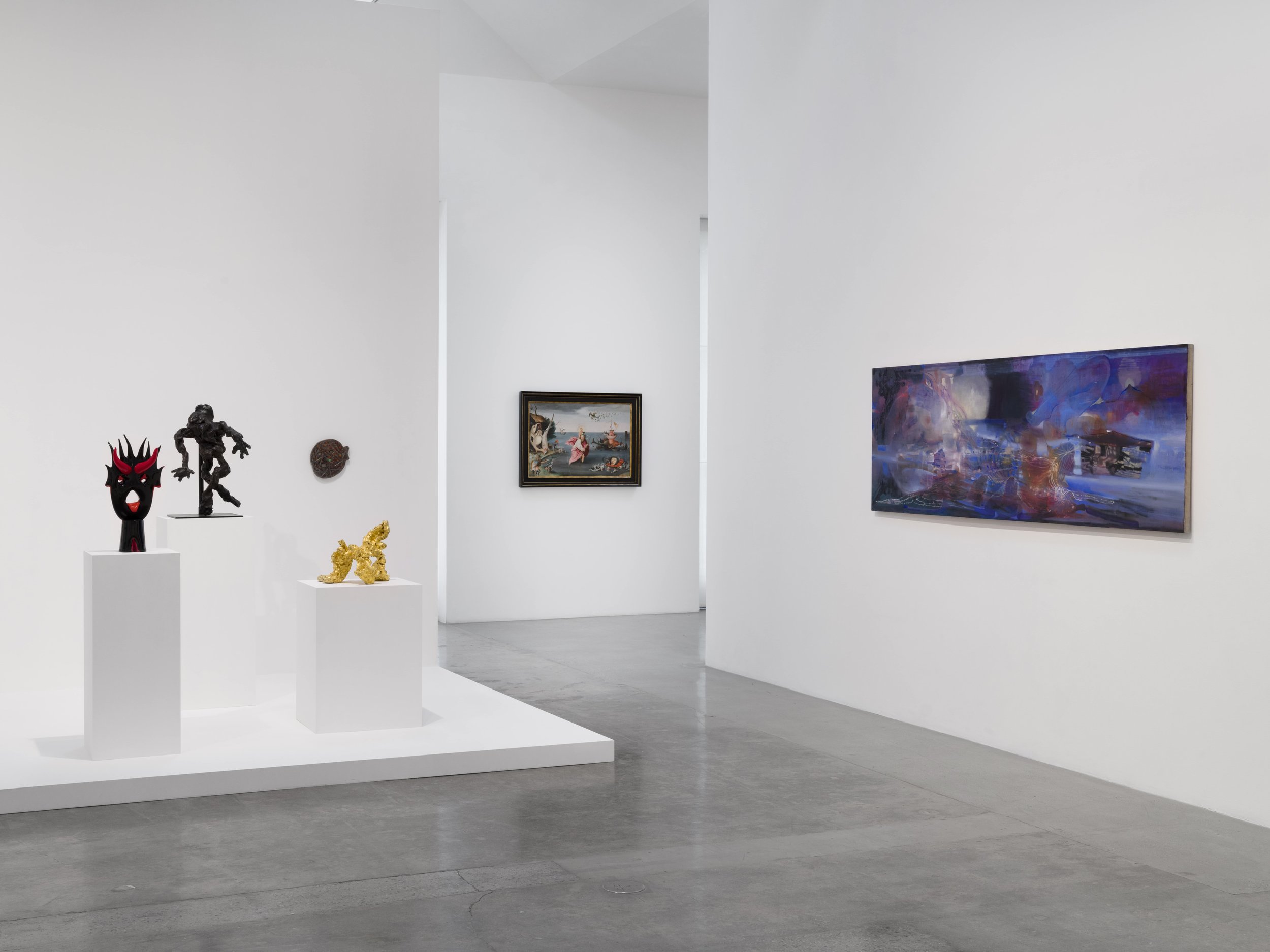
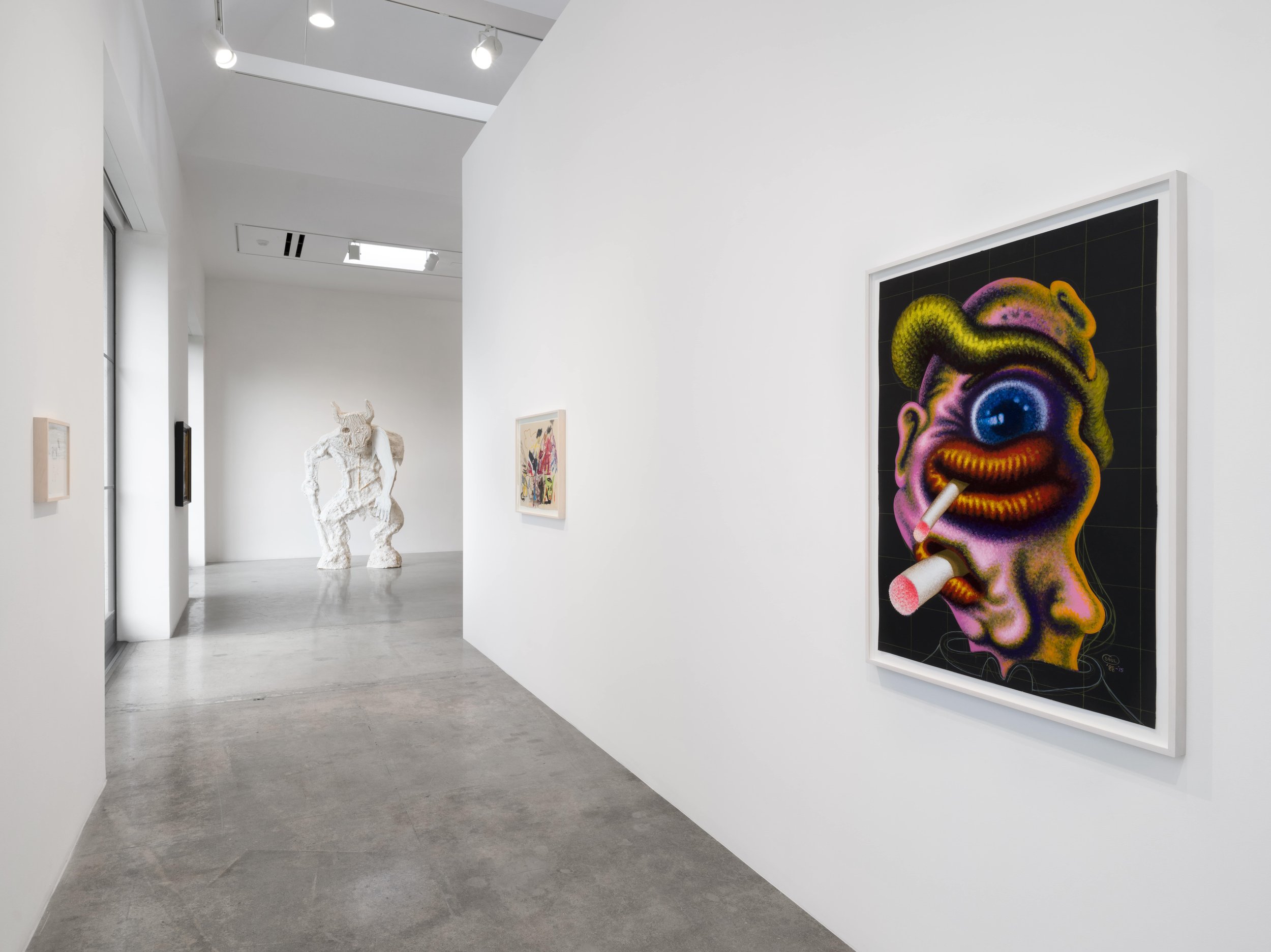

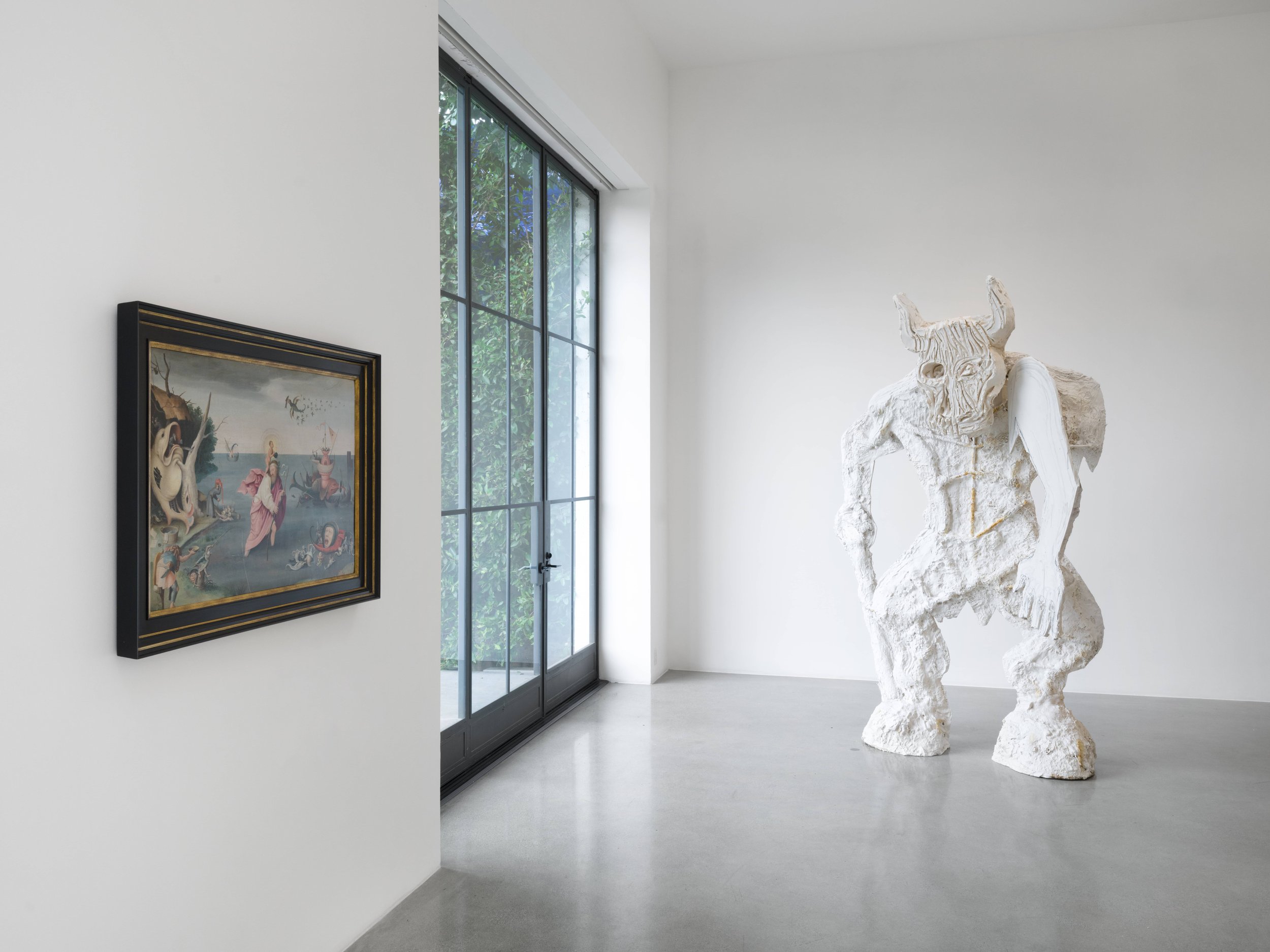
The Monster Curated by Robert Nava 1201 South La Brea Avenue, Los Angeles, CA 90019 February 1 – March 22, 2025 Photography courtesy Pace Gallery
The Monster will feature works by Huma Bhabha, Louise Bourgeois, Willem de Kooning, Jean Dubuffet, Nicole Eisenman, Ficre Ghebreyesus, Thomas Houseago, Rashid Johnson, Li Hei Di, Robert Longo, Tala Madani, Paul McCarthy, Ugo Rondinone, Lucas Samaras, Peter Saul, Cindy Sherman, Kiki Smith, and Paul Thek, alongside other significant figures of the 20th and 21st centuries. With a focus on modern and contemporary figuration, the show will reflect Nava’s sensibility and include work by Nava himself, as well as other contemporary and emerging painters. A special presentation of works by Thek will anchor the exhibition.

Lucas Samaras Untitled, January 6, 1985 PAINTING acrylic on canvas36" × 24" (91.4 cm × 61 cm) 38-1/8" ×26" × 1-5/8" (96.8 cm × 66 cm × 4.1cm), framed ©Lucas Samaras, courtesy Pace Gallery
Populated by a cast of hybrid and chimaeric bodies, at once mythic and everyday, Nava’s paintings and drawings navigate the space between the raw and the refined. Often imbued with a sense of philosophical and psychological charge, his figures suggest a dark, contemplative, and existential mood despite their vibrancy, liveliness, and humor. Nava takes inspiration for his distinctive lexicon of characters and forms from a diverse range of sources, from ancient art to mythology and religion to horror films, science fiction, video games, and cartoons.

The Monster Curated by Robert Nava 1201 South La Brea Avenue, Los Angeles, CA 90019 February 1 – March 22, 2025 Photography courtesy Pace Gallery
Many of the artists in The Monster have impacted Nava’s point of view. Trafficking in the language of the uncanny and the grotesque, the figures that proliferate in these works are formless monstrosities of the imagination. Horrifying as they may be, they help us understand that a monster might, in the end, be the most human being of all.
A full artist list and further programming details will be announced in due course.
Pace is a leading international art gallery representing some of the most influential contemporary artists and estates from the past century, holding decades-long relationships with Alexander Calder, Jean Dubuffet, Barbara Hepworth, Agnes Martin, Louise Nevelson, and Mark Rothko. Pace enjoys a unique U.S. heritage spanning East and West coasts through its early support of artists central to the Abstract Expressionist and Light and Space movements.
Since its founding by Arne Glimcher in 1960, Pace has developed a distinguished legacy as an artist-first gallery that mounts seminal historical and contemporary exhibitions. Under the current leadership of CEO Marc Glimcher, Pace continues to support its artists and share their visionary work with audiences worldwide by remaining at the forefront of innovation. Now in its seventh decade, the gallery advances its mission through a robust global program— comprising exhibitions, artist projects, public installations, institutional collaborations, performances, and interdisciplinary projects. Pace has a legacy in art bookmaking and has published over five hundred titles in close collaboration with artists, with a focus on original scholarship and on introducing new voices to the art historical canon.
Today, Pace has seven locations worldwide, including European footholds in London and Geneva as well as Berlin, where the gallery established an office in 2023. Pace maintains two galleries in New York—its headquarters at 540 West 25th Street, which welcomed almost 120,000 visitors and programmed 20 shows in its first six months, and an adjacent 8,000 sq. ft. exhibition space at 510 West 25th Street. Pace’s long and pioneering history in California includes a gallery in Palo Alto, which was open from 2016 to 2022. Pace’s engagement with Silicon Valley’s technology industry has had a lasting impact on the gallery at a global level, accelerating its initiatives connecting art and technology as well as its work with experiential artists. Pace consolidated its West Coast activity through its flagship in Los Angeles, which opened in 2022. Pace was one of the first international galleries to establish outposts in Asia, where it operates permanent gallery spaces in Hong Kong and Seoul, along with an office and viewing room in Beijing. In spring 2024, Pace will open its first gallery space in Japan in Tokyo’s new Azabudai Hills development.
For more information about this exhibition and others, please visit the Pace Gallery’s website here. Pace Gallery can be found on Instagram and Artsy, too.

WON JU LIM: An Artificial Place
Installation Views: An Artificial Place, Sidecar Gallery, December 14, 2024-February 8, 2025 Photo Credit: Ed Mumford
Sidecar is pleased to present An Artificial Place, a presentation of new and recent works by 2024 Guggenheim Fellow Won Ju Lim, organized in collaboration with Parapet/Real Humans, St. Louis.
The title of this exhibition sets the scene for the audience in a seemingly straightforward manner. Galleries, it reminds us, are unnatural places, reserved for artifice. But there is more to those words, which in fact derive from literature, specifically the writings of Marcel Proust. They are resumed inside via a series of “magic lanterns” that Won Ju Lim has produced over the past three years, and which form the bulk of this show. When their titles are read in sequence, the textual fragment is rounded out:

Installation Views: An Artificial Place, Sidecar Gallery, December 14, 2024-February 8, 2025 Photo Credit: Ed Mumford
That sense of the complexity of the Bois de Boulogne which made it an artificial place and, in the zoological or mythological sense of the word, a Garden, I captured again, this year, as I crossed it on my way to Trianon, on one of those mornings, early in November, when in Paris, if we stay indoors, being so near and yet prevented from witnessing the transformation scene of autumn, which is drawing so rapidly to a close without our assistance, we feel a regret for the fallen leaves that becomes a fever, and may even keep us awake at night.

Installation Views: An Artificial Place, Sidecar Gallery, December 14, 2024-February 8, 2025 Photo Credit: Ed Mumford
This meandering sentence comes from the novel Swann’s Way (1913), the first volume of Proust’s In Search of Lost Time. A monumental feat of remembrance, it looms large over the proceedings, plunging every work on view into the febrile uncertainty of the past tense. Arranged on gently rotating platforms are items of various sorts—handmade architectural models, hobby kit renditions of environmental details, and a wide assortment of domestic bric-a-brac gleaned from thrift-stores, swap meets, and estate sales—all pertaining to episodes from Proust’s grand adventure in introspection. Accordingly, one could say that these are things summoned from another time, infused with a mental atmosphere, perhaps mere figments of reverie. And yet, unlike the words that appear on the author’s pages and are so readily translatable into thought, these things constitute a phenomenal reality, available to our eyes here and now. Moreover, raked by the light of the small desk lamps at their side, they gain an uncanny sense of agency, projecting past their given form as shadows and reflections—images.
“In Casting II (2023), a 39-minute single-channel video also featured in the show, a voice-over narrator once again takes us to the novelistic scene of a garden. This work could be slotted into the “making of” category. In it, we observe Lim working on one of her shadow-play lightboxes, a genre she began exploring in 2003. An example hangs on the opposite wall, dominated by Man Ray’s famous portrait of Proust on his deathbed. One might wonder if he is still dreaming of his childhood; the video suggests as much. Throughout, the lights flicker on and off. At the extreme, a white screen suddenly turns black, but which is more full or empty from the perspective of memory? Hands move small objects across a tabletop stage where, caught up in a play of brightness and obscurity, they occasionally lock into virtual tableaux, only to again decompose into the stuff they actually are. In the drawn-out finale, which amounts to a kind of credit sequence, each “takes a bow.” These diverse things, already so steeped in memory and storytelling, double down on their illusionistic aspect, effectively representing “themselves” as imaginary entities, the flora and fauna of an artificial place.”
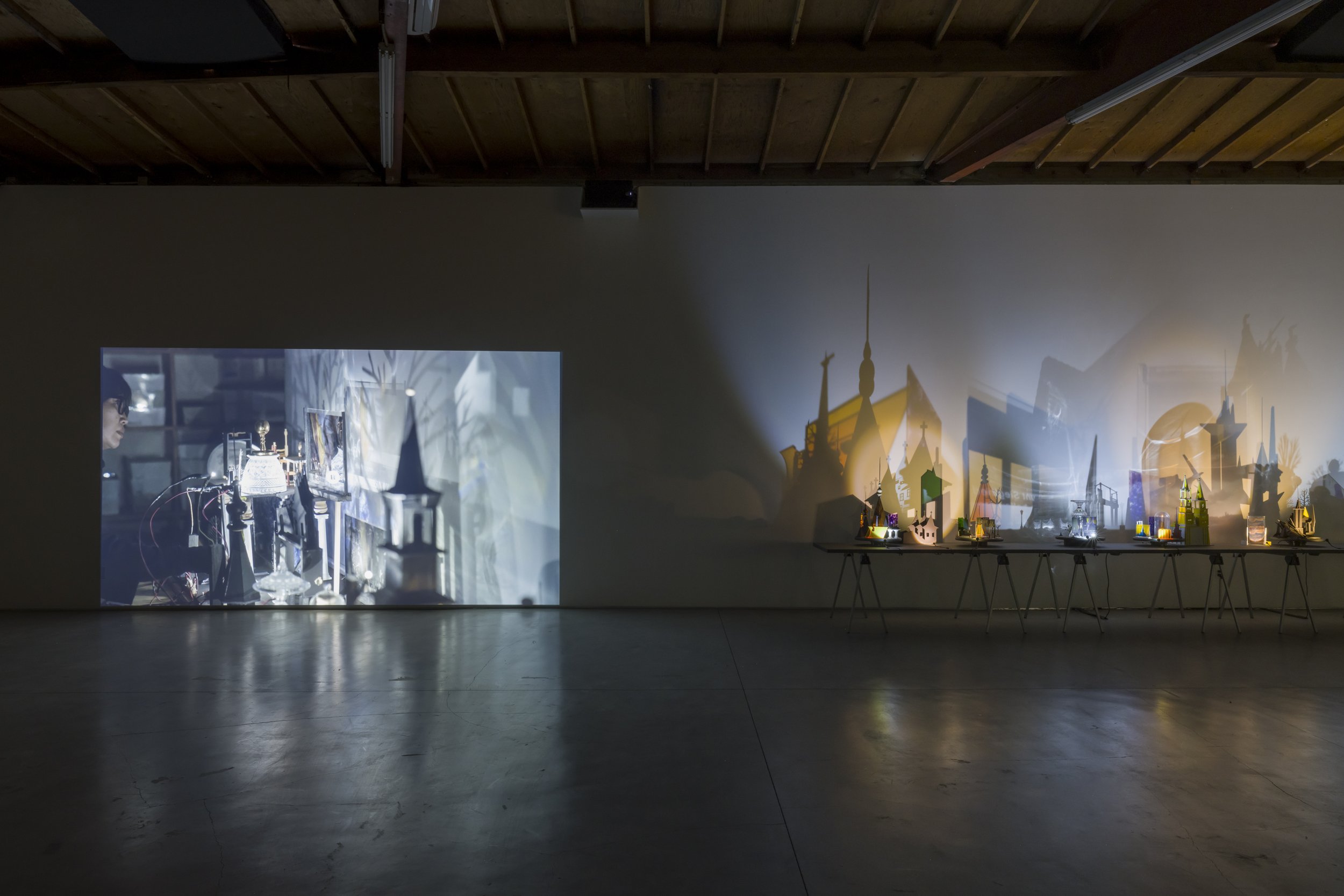
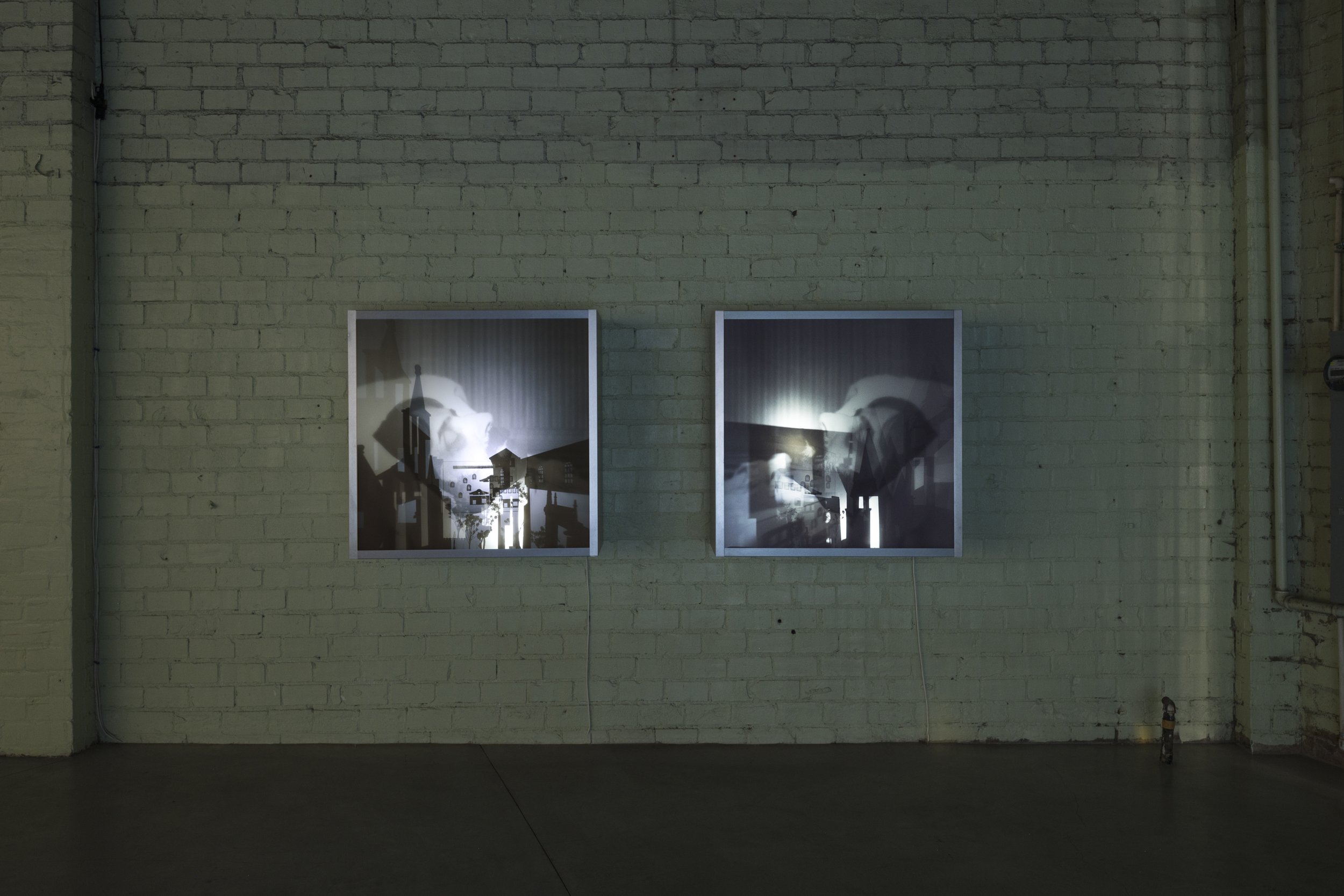
Installation Views: An Artificial Place, Sidecar Gallery, December 14, 2024-February 8, 2025 Photo Credit: Ed Mumford
Won Ju Lim is a recipient of the 2024 Guggenheim Fellowship. Lim’s work has been exhibited worldwide in 40+ solo and 70+ group exhibitions, including those at the Elzig Museum, Istanbul; University Galleries, California State University, Sacramento; Museum of Contemporary Art, Los Angeles; San Jose Museum of Art, San Jose; the High Museum of Art, Atlanta; Yerba Buena Art Center, San Francisco; the St. Louis Art Museum, St. Louis; the Hood Museum of Art, Hanover; the Museum of Contemporary Art, Los Angeles; Kunsthalle Detroit, Detroit; the Vancouver Art Gallery, Vancouver; the Hammer Museum, Los Angeles; the Museum of Art, Seoul; the Ullens Center for Contemporary Art, Beijing; Schirn Kunsthalle, Frankfurt; DA2 Domus Artium, Salamanca; Wexner Center for the Arts, Columbus; ZKM Museum fur Neue Kunst, Karlsruhe; Wilhelm-Hack-Museum, Ludwigshafen; Museum Haus Ester, Krefeld; Museum der Moderne, Salzurg; the Museum of Contemporary Art, North Miami; Casino Luxemboug – Forum d’Art Contemporain, Luxembourg; Museum für Gegenwartskunst, Siegen; and Kunstlerhaus Bethanien, Berlin. Her biennale exhibitions include the International Incheon Women Artists’ Biennale; Architecture, Art, and Landscape Biennial of the Canaries; the Gwangju Biennale; Snapshot: New Art from Los Angeles, the Hammer Museum; and the Müenster Sculpture Biennale. Her work is included in international public collections such as those of the Los Angeles County Museum of Art; Manetti Shrem Museum of Art, Davis; Elzig Collection, Istanbul; Museum of Contemporary Art, Los Angeles; San Jose Museum of Art; the Hammer Museum, Los Angeles; the High Museum of Art, Atlanta; M+, Hong Kong; Guy & Myriam Ullens Foundation, Orsières, Switzerland; La Colección Jumex, Mexico City; and the Vancouver Art Gallery among others. She is the recipient of numerous grants and fellowships including the 2016 C.O.L.A. Individual Artist Fellowship, the Henry L. and Natalie E. Freund Fellowship, the Creative Capacity Fund, the Tribeca Film Institute Media Arts Fellowship (funded by the Rockefeller Foundation), the Korea Arts Foundation for Visual Arts Grant, and the California Community Foundation Fellowship for Visual Artists.
This exhibition opened on December 14, 2024 and will be on view until February 8, 2025 There was an opening reception: Saturday, December 14, 6-8PM, featuring a DJ set by KCHUNG's Godspeed Radio (Jan Tumlir, Eric Wesley, Erica Redling)
For more information about this exhibition and more please visit Sidecar Gallery site here.

Richard Misrach: CARGO

Richard Misrach, Cargo Ships (February 26, 2024 6:13 am), 2024 PIGMENT pigment print mounted on Dibond 60" × 80" (152.4 cm × 203.2 cm), image, paper, and mount 62-1/2" × 83" × 3" (158.8 cm × 210.8 cm × 7.6 cm), frame (approx.) signed, titled, dated and numbered verso in ink on label affixed verso on mount © Richard Misrach, courtesy Pace Gallery
New York – Pace is pleased to present an exhibition of recent photographs by Richard Misrach at its 540 West 25th Street gallery in New York. On view from January 17 to March 1, 2025, this will be the first presentation devoted to CARGO, a body of work that Misrach began in 2021 during the COVID-19 pandemic. During the last week of the show, advance copies of CARGO (Aperture, May 2025) will be available to view at the gallery. Pace hosted a talk between the artist and Sarah Meister, Executive Director of Aperture.

Richard Misrach, Cargo Ships (January 18, 2024 10:18 am), 2024 PIGMENT pigment print mounted on Dibond 60" × 80" (152.4 cm × 203.2 cm), image, paper, and mount 62-1/2" × 83" × 3" (158.8 cm × 210.8 cm × 7.6 cm), frame (approx.) signed, titled, dated and numbered verso in ink on label affixed verso on mount© Richard Misrach, courtesy Pace Gallery
Misrach is known for his poignant, large-scale color images that lean into social, political, and environmental issues while also engaging with the history of photography. In his radiant, contemplative works, Misrach—who is based in California—often examines the destructive impact of human interaction with the natural world. His works have examined man-made fires and floods, nuclear test sites, and animal burial pits in the American West; the petrochemical corridor in Louisiana; the landscape of the US-Mexico border; as well as more lyrical subjects like San Francisco’s iconic Golden Gate Bridge and his recent hydrofoil surfer series in Hawaii.


Richard Misrach: CARGO 540 West 25th Street, New York, NY 10001 January 17 – March 1, 2025 Photography courtesy Pace Gallery
Harkening back to his Golden Gate Bridge series—which the artist produced from his front porch over the course of four years beginning in 1997—CARGO centers on the light, water, and weather of the San Francisco Bay. He began creating this body of work in 2021 amid the pandemic and its attendant lockdowns. Captured at different times of day from a single location in San Francisco, these photographs speak to his enduring interest in bearing witness to the world around him from a singular vantage point over the course of months or years.

Richard Misrach Cargo Ships (December 16, 2023 9:11 am), 2023 pigment print mounted to Dibond 60" × 80" (152.4 cm × 203.2 cm), image, paper, and mount 62-1/2" × 82" × 3" (158.8 cm × 208.3 cm × 7.6 cm), frame Edition 3 of 5, Edition of 5 + 1 AP © Richard Misrach, courtesy Pace Gallery
In a statement, Misrach describes this series as a meditation on and celebration of the setting of the San Francisco Bay. With these works, he also contemplates the design, function, and history of the ships in the bay, and all of the thousands of workers implied in the images.
“Behind these ships, there is a remarkable—if invisible—global workforce that builds them, and inhabits them, that packs and unloads them, that maneuvers them over oceans and canals, sometimes in dangerous situations, toward their eventual berths,” Misrach writes. “Along with the extraordinary achievement and value these cargo ships symbolize, they also represent the complex, challenging side of our critical, intertwined, international commerce. In this historical moment, they allude to the threat that is global warming.”

Richard Misrach, Cargo Ships (January 13, 2022 5:25 pm), 2022 PIGMENT pigment print mounted on Dibond 60" × 80" (152.4 cm × 203.2 cm), image, paper, and mount 62-1/2" × 83" × 3" (158.8 cm × 210.8 cm × 7.6 cm), frame (approx.) signed, titled, dated and numbered verso in ink on label affixed verso on mount. © Richard Misrach, courtesy Pace Gallery
Richard Misrach (b. 1949, Los Angeles, California) is considered one of the most influential photographers of his generation, instrumental in pioneering the use of color photography and large-scale format in the 1970s. He graduated from the University of California, Berkeley, in 1971 with a BA in Psychology. For over 50 years, Misrach has photographed the dynamic landscape of the American West through an environmentally aware and politically astute lens. His visually seductive, large-scale color vistas powerfully document the devastating ecological effects of human intervention, industrial development, nuclear testing and petrochemical pollution on the natural world. His best known and ongoing epic series, Desert Cantos, comprises 40 distinct but related groups of pictures that explore the complex conjunction between mankind and nature. Otherworldly images of desert seas, rock formations, and clouds are juxtaposed with unsettling scenes of desert fires, nuclear test sites, and animal burial pits. Recent chapters capture the highly charged political climate following the 2016 US presidential election through photographs of spray-painted graffiti messages scrawled on abandoned buildings and remote rocky outcroppings in desolate areas of the Desert Southwest.
Other bodies of work include Golden Gate, a careful study of times of day, weather, and light around San Francisco’s famed bridge; On the Beach, aerial views of individuals and groups against a backdrop of water and sand; Notations, ravishing landscapes and seascapes in a reversed color spectrum; Destroy This Memory, a haunting document shot with a 4-megapixel pocket camera of graffiti found in the aftermath of Hurricane Katrina; and Petrochemical America, an in-depth examination of petrochemical pollution along the Mississippi River produced in collaboration with landscape architect Kate Orff.
Pace is a leading international art gallery representing some of the most influential contemporary artists and estates from the past century, holding decades-long relationships with Alexander Calder, Jean Dubuffet, Barbara Hepworth, Agnes Martin, Louise Nevelson, and Mark Rothko. Pace enjoys a unique U.S. heritage spanning East and West coasts through its early support of artists central to the Abstract Expressionist and Light and Space movements.
Since its founding by Arne Glimcher in 1960, Pace has developed a distinguished legacy as an artist-first gallery that mounts seminal historical and contemporary exhibitions. Under the current leadership of CEO Marc Glimcher, Pace continues to support its artists and share their visionary work with audiences worldwide by remaining at the forefront of innovation. Now in its seventh decade, the gallery advances its mission through a robust global program— comprising exhibitions, artist projects, public installations, institutional collaborations, performances, and interdisciplinary projects. Pace has a legacy in art bookmaking and has published over five hundred titles in close collaboration with artists, with a focus on original scholarship and on introducing new voices to the art historical canon.
Today, Pace has seven locations worldwide, including European footholds in London and Geneva as well as Berlin, where the gallery established an office in 2023. Pace maintains two galleries in New York—its headquarters at 540 West 25th Street, which welcomed almost 120,000 visitors and programmed 20 shows in its first six months, and an adjacent 8,000 sq. ft. exhibition space at 510 West 25th Street. Pace’s long and pioneering history in California includes a gallery in Palo Alto, which was open from 2016 to 2022. Pace’s engagement with Silicon Valley’s technology industry has had a lasting impact on the gallery at a global level, accelerating its initiatives connecting art and technology as well as its work with experiential artists. Pace consolidated its West Coast activity through its flagship in Los Angeles, which opened in 2022. Pace was one of the first international galleries to establish outposts in Asia, where it operates permanent gallery spaces in Hong Kong and Seoul, along with an office and viewing room in Beijing. In spring 2024, Pace will open its first gallery space in Japan in Tokyo’s new Azabudai Hills development.
The exhibition opened on January 17th and will be on view until March 1, 2025, at Pace Gallery 510 West 25th Street in New York. For more information about this exhibition and others, please visit the Pace Gallery’s website here. Pace Gallery can be found on Instagram and Artsy, too.

Jorge Macchi: False Autumn


Jorge Macchi False Autumn 2024 exhibition view Galleria Continua San Gimignano Courtesy: the artist and GALLERIA CONTINUA Photographer: Ela Bialkowska, OKNO Studio
GALLERIA CONTINUA, with great pleasure, hosted a new solo exhibition by Jorge Macchi titled “False Autumn.” The work of the Argentine artist is positioned precisely at the turning point between two opposites, in that grey area between the real form and the fictitious form of reality. In a world where art serves as a bridge between the tangible and the intangible, Macchi’s work testifies to the power of visual expression, chance, and the enduring influence of personal experiences. His art captures the ephemeral and the transient, inviting us to reflect on the fragile boundaries that define our existence. The exhibition opened on September 14 .2024, and concluded on January 26th, 2025. There was an opening reception on September the 14th.

Jorge Macchi False Autumn 2024 exhibition view Galleria Continua San Gimignano Courtesy: the artist and GALLERIA CONTINUA Photographer: Ela Bialkowska, OKNO Studio
The sculptures of various sizes, watercolors, oil paintings, and installations in this exhibition recreate the conditions for a new paradoxical reality that, through the assertion of artifice, upends our certainties and infiltrates the folds of consciousness. “Paradox is the suspension of meaning. It is one form of humor. It is one of Borges’ favorite tools. It is the word that defines much of what I do. The archer and the arrow, Zeno of Elea’s aporia, the scene where an arrow aimed at a target never reaches it because the distance between them is infinitely divisible, it is a paradox that has been with me forever” says the artist.
“False Autumn” is the work that gives its name to the exhibition by Macchi in San Gimignano. In one corner of the gallery, over a thousand leaves are scattered across the floor. As the title (“False Autumn”) suggests, these are not real autumn leaves: they are not yellow or red but green. Each one has a unique shape resembling a puzzle piece. A closer look reveals that these puzzle pieces are made from real leaves, each carefully cut out. This process disrupts the usual harmony between the natural shape of a leaf and its veins, prompting the observer to wonder what possible image could emerge from assembling all the puzzle pieces. Furthermore, ‘false autumn’ is also a term that was coined this summer to describe a phenomenon affecting various parts of Great Britain and many European countries, including Italy: due to severe drought and intense heatwaves, nature has gone into survival mode, bringing forward the autumn foliage by several months. Reddened, dry leaves on the ground, branches already almost bare, and increasingly arid soil have characterized numerous forest landscapes, raising widespread concern.

Jorge Macchi A perfect dream 2024 cotton fabric 150 x 200 cm / 59.05 x 78.74 in 2024 tessuto di cotone 150 x 200 cm Courtesy: the artist and GALLERIA CONTINUA
Jorge Macchi’s work creates powerful visual fictions; his pieces are artifacts that explore the functioning of vision and perception. “Rorschach #1” and “Rorschach #2” are site- specific murals painted in the corners of a room in the gallery. They immediately evoke the symmetrical images of Hermann Rorschach’s famous psychodiagnostic test. However, the figures Macchi creates on the wall are not the result of a mere overlay; there is no actual transfer of form and color from one side to another. Instead, the artist makes these images using two symmetrical paper stencils. What remains is the suggestion of a sheet, walls that seem like folded papers, leaving us with the unsettling feeling that the stable and enduring walls of the building could suddenly bend and change their structure. The play between reality and artifice reappears in “Dos banderas” where one element of the diptych consists of four sheets from the same notepad, while the other is made of sheets from different pads. The ribbon, which seems to hold the sheets together, is painted with watercolor and tempera. In “Déjà vu” Macchi intervenes with a restoration and polishing operation on half of a table that has been exposed to the sun and elements for two years. The final assembly is two parts the one exposed outdoors and the one preserved in the studio creating a fictitious and artificial unity. “Confesión” is a cardboard box from a 50-inch Smart TV with all sides carved into a repeated cross pattern, resembling the perforated metal of confessionals. The box no longer contains any object; the perforation has transformed it into a visual tool that offers a fragmented view of its interior and what lies behind it.

Between 1864 and 1933, thousands of glass bottles were thrown into the sea, each containing a document that recorded the exact time and place where the bottle was released into the ocean. This was an experiment to study surface marine currents. In Jorge Macchi’s series “Drift Bottles” the bottles are made of plastic, similar to those widely used by major distributors for mineral water and various beverages. Instead of a message, the artist places a miniature sailing ship, specially crafted by an artisan in Buenos Aires. Macchi’s bottles stimulate our imagination, evoking striking images: the messages in bottles - romantic, scientific, or playful - that have traversed seas and history over time; the world enclosed in a plastic bubble; the hands of an artisan crafting precious objects; and the growing plastic islands in our planet’s oceans.
About the artist:
Jorge Macchi was born in Buenos Aires in 1963, where he lives and works. He won the John Simon Guggenheim Memorial Foundation Fellowship in 2001 and has exhibited at numerous international institutions. Notable solo exhibitions include: Diaspora, Galleria Continua, San Gimignano (2022); The Submerged Cathedral, Musée Cantonal des Beaux-Arts, Lausanne, Switzerland (2020); Portal, Galleria Continua Habana, Cuba (2019); Der Zauberberg, Quartz Studio, Turin (2018); Perspectiva, MALBA, Museo de Arte Latinoamericano Buenos Aires (2016) and CA2M, Centro de Arte 2 de Mayo, Madrid (2017); Lampo, NC ARTE, Bogotá (2015); Prestidigitador, Contemporary Art Universi-ty Museum (MUAC), Mexico (2014); Container, Kunstmuseum Lucerne, Switzerland (2013); Music Stand Still, SMAK, Ghent, Belgium (2011). In 2005, Macchi represented Argentina at the 51st Venice Biennale. His works are included in major international collections such as the Tate Modern (London), MoMA (New York), MUSAC, Museo de Arte Contemporáneo (León), CGAC, Centro Galego de Arte Contemporáneo (Santiago de Compostela), Fundación Arco (Spain), MUHKA (Antwerp), SMAK (Ghent), MAMAC Musée d’Art Moderne et d’Art Contemporain (Nice), and Fundación Banco de la Nación Argentina (Buenos Aires).
About the gallery :
Founded in 1990 in San Gimignano, Italy, GALLERIA CONTINUA has expanded its locations to Beijing, Les Moulins, Havana, São Paulo, Rome, Paris and Dubai.
GALLERIA CONTINUA represents a desire for continuity between times and a desire to write a current history. Thanks to its investment in forgotten and unconventional sites, the gallery has always chosen unexpected locations, developing a strong identity and an original positioning in over thirty years of activity. The home of Galleria Continua, an ex-cinema, it has hosted many prolific exhibitions and installations over the last 34 years. It is a unique and exciting space for artists and the gallery to have to consider when planning and executing exhibitions.
GALLERIA CONTINUA / San Gimignano
Via del Castello 11, 53037 San Gimignano (SI)
+39 0577 943134 | sangimignano@
From Monday to Sunday: 10 AM–1 PM | 2 PM–7 PM;
Starting from 03.11, from Monday to Sunday:
10 AM–1 PM | 2 PM–6 PM
For more information about this exhibition and others at Galleria Continua please visit their site here. Galleria Continua can also be found on Instagram, Facebook, TikTok, YouTube, and Artsy.

BORIS MIKHAILOV: Refracted Times

Installation view, “Refracted Time,” Marian Goodman Gallery, New York, 2025 Courtesy of the artist and Marian Goodman Gallery Photo credit: Alex Yudzon
Marian Goodman Gallery is very pleased to announce the exhibition of works by the acclaimed Ukrainian photographer Boris Mikhailov which opened on 10 January and will be on view through 22 February 2025.
Known for his groundbreaking photographic practice which combines his interest in cinema, documentary, per- performance, and writing, Mikhailov has been an inventive, tender but uncompromising witness to the changing fate of his native Ukraine and the consequent experiences of war and displacement. The exhibition explores his rethinking and reworking of the photographic image by including two video works – one from the late ‘60s-‘70s, Yesterday’s Sandwich, and the most recent, Our Time is Our Burden, 2024 – as well as showcasing three iconic photographic series from the ‘80s and ‘90s. One of the most acclaimed photographers of the former USSR, he represented Ukraine at the Venice Biennale in 2007, and debuted his work in the United States with a solo presentation at MoMA in 2011.


Our Time is Our Burden, 2024 (Video still) Video, color, silent; 8 min. 28 sec. Installation view, “Refracted Time,”Marian Goodman Gallery, 2025
Courtesy of the artist and Marian Goodman Gallery Photo credit: Alex Yudzon
Mikhailov was born in 1938 in Kharkhiv, Ukraine, and has spent his life living between Kharkhiv and Berlin. Educated as an engineer, he encountered photography as an art form quite by chance. Through his raw pictures which offer an unequivocal critique of everyday life, he has represented the collective unconscious of Ukraine for over five decades. His embrace of social truths often involves the incorporation of deliberate accidents in his image construction to allow the abject to surface. His work is known also for specific aesthetic innovations, such as hand coloration as part of his conceptual practice, and the superimposition of images as a metaphor for the duality of Soviet life, as first seen in Yesterday’s Sandwich (1960s-70s).
Alongside the videos, three seminal sets of photographs will be presented, taken between 1986-1993, which reflect on the changing conditions and inevitable contradictions of Ukrainian life. Operating in a society in which pre- scribed portrayals of idealized Soviet life were part of the era, these pictures represent the complex scrutiny, irony, and dissent that Mikhailov brought to his work. From the mid eighties, operating behind the ideological façade of the times, just as ‘glasnost’ was on the horizon, to the social upheavals that followed the downfall of the Soviet Union in 1991, he seeks to represent everyday humanity, questioning legacies of heroic identity.

Boris Mikhailov At Dusk, 1993 Chromogenic Print 19 3/4 x 43 1/4 in. (50 x 110 cm) Courtesy of the artist and Marian Goodman Gallery Photo credit: Alex Yudzon
The earliest of the series on view is a set of black & white works, Salt Lake, 1986, in which we see bathers around a body of water in Southern Ukraine, recalling as Mikhailov says, ‘times gone by post-revolution, where seemingly, like in the 1920’s and 1930’s people bathed naked, believing in the healing properties of waters.’ This everyday portrayal of a lakeside idyll, with people mingling and socializing in regenerative spirit, actually depict the ‘underside of a proselytized utopia’ taking place against an industrial landscape with a factory looming in the distance, that was known to pollute the waters with waste. “It seemed to be the quintessence of the life of an average person in the Soviet context; despite the atrocious, polluted, humane environment, the people were relaxed, calm and happy … families, old men, and women lying down like odalisques or Greek statues.”


Installation view, “Refracted Time,” Marian Goodman Gallery, New York, 2025 Courtesy of the artist and Marian Goodman Gallery Photo credit: Alex Yudzon
By the Ground, 1991, a series made five years later, was created the same year as the fall of the Soviet Union. Through a horizon camera that featured a panoramic point of view on his subjects in a novel sepia tone, a destitute reality emerged, reflecting life of the people at ‘ground level.’ Shot from hip height, solitary figures are captured against an urban landscape, leaving the easy idyll behind. Having depicted subjects in a purposefully nostalgic manner through sepia tones, Mikhailov writes of these images: “Things were beginning to fall apart, the country was breaking up. This was life beyond the collapse. This series begins with a photo of a man lying on the ground… Suddenly I thought of Maxim Gorky’s play “The Lower Depths,” and this inspired the title of the series.”

Boris Mikhailov Salt Lake, 1986 Photograph Frame: 30 1/4 x 41 1/4 x 1 1/4 in. (76.8 x 104.8 x 3.2 cm) Mat window: 21 1/2 x 32 1/2 in. (54.6 x 82.5 cm)
Courtesy of the artist and Marian Goodman Gallery Photo credit: Alex Yudzon
Two years later, Mikhailov continued his experiment with color, returning to the street with his series At Dusk, 1993. Evoking memory and war, At Dusk continues to document a worsening condition in Ukraine, following independence and collapse of the USSR. Using a horizon panoramic camera again, the images are hand-colored cobalt blue, recalling a complex beauty but also the foreboding of the night sky, which Mikhailov remembers having fled as a young boy from ‘sirens, searchlights, and bombs’ in 1941 Kharkhiv, during the advance of World War II. Mikhailov writes, “Blue for me is the color of the blockade, hunger and war.”
In his documentation of Soviet life, there’s an underlying tone of dark humor, which serves a means to subvert the status quo, and as commentary to denote the failure of the prevailing systems of communism and capitalism. The narrative that he captures is in stark contrast to the reality and expectation from society and its government, then and especially now, in light of current events.

Boris Mikhailov Salt Lake, 1986 Photograph Frame: 30 1/4 x 41 1/4 x 1 1/4 in. (76.8 x 104.8 x 3.2 cm) Mat window: 21 1/2 x 32 1/2 in. (54.6 x 82.5 cm)
Courtesy of the artist and Marian Goodman Gallery Photo credit: Alex Yudzon
In 1971, Mikhailov co-founded the Vremya group, an underground art collective exploring experimental forms of photographic techniques and methods, which later formed the basis of the Kharkiv School of Photography. He was the head of the photography department of Panorama, the Ukrainian Union of Experimental Photography, from 1987 until 1991. His work was included in the Carnegie International in 1991; and his series By the Ground was included in a show of New Photography that same year at MoMA in 1993. In 1993, he spent a year in Berlin, sponsored by the German Academic Exchange Organisation (DAAD). He was a visiting professor at Harvard University in 2000 and a professor at the Leipzig Academy in 2002-2003.
Mikhailov has received many prestigious awards, including the Coutts Contemporary Art Award (1996), the Al- bert Renger-Patzsch Prize (1997), the Goslarer Kaiserring Award (2015), the Hasselblad Foundation International Award in Photography (2000), the Deutsche Börse Photography Foundation Prize (2001). In 2000, his book “Case History” won the prize for best photography book at the Rencontres Internationales de la Photographie in Arles, France, and the Kraszna Krausz Book Award in London. In 2021, his slideshow installation Temptation of Death (2017-2019) was awarded the Shevchenko National Prize, the first official recognition of Mikhailov’s work in Ukraine.
Boris Mikhailov By the Ground, 1991 Gelatin silver print, photomontage, toned Mat: 8 1/4 x 26 in. (21 x 66 cm) Sheet: 7 3/4 x 11 3/4 in. (19.7 x 29.8 cm) [each] Courtesy of the artist and Marian Goodman Gallery Photo credit: Alex Yudzon
Mikhailov’s work has been shown in numerous solo exhibitions at such institutions as the Ukrainian Pavilion\ at Venice Biennale (2007 and 2017), Tate Modern, London (2010), MoMA, New York (2011), Berlinische Galerie (2012), Sprengel Museum, Hannover (2013), PinchukArtCentre, Kyiv (2019), Staatliche Kunsthalle, Baden- Baden (2020), Maison Européenne de la Photographie, Paris (2022), Palazzo Esposizioni, Rome (2023), and Fotomuseum Den Haag, The Hague (2024), and the Royal Danish Library, Copenhagen (2024).
Marian Goodman Gallery champions the work of artists who stand among the most influential of our time and represents over five generations of diverse thought and practice. The Gallery’s exhibition program, characterized by its caliber and rigor, provides international platforms for its artists to showcase their work, foster vital dialogues with new audiences, and advance their practices within nonprofit and institutional realms. Established in New York City in 1977, Marian Goodman Gallery gained prominence early in its trajectory for introducing the work of seminal European artists to American audiences. Today, through its exhibition spaces in New York, Los Angeles, and Paris, the Gallery maintains its global focus, representing some 50 artists working in the U.S. and internationally.
This exhibition had an opening reception on the tenth of January that was held from six to eight pm. The exhibition will end on the 22nd of February at the Marian Goodman’s location in Paris at 79 & 66 rue du Temple, 75003. For more information about the exhibit, please visit the Marian Goodman Gallery’s site. The gallery can be found on Instagram and Artsy, too.
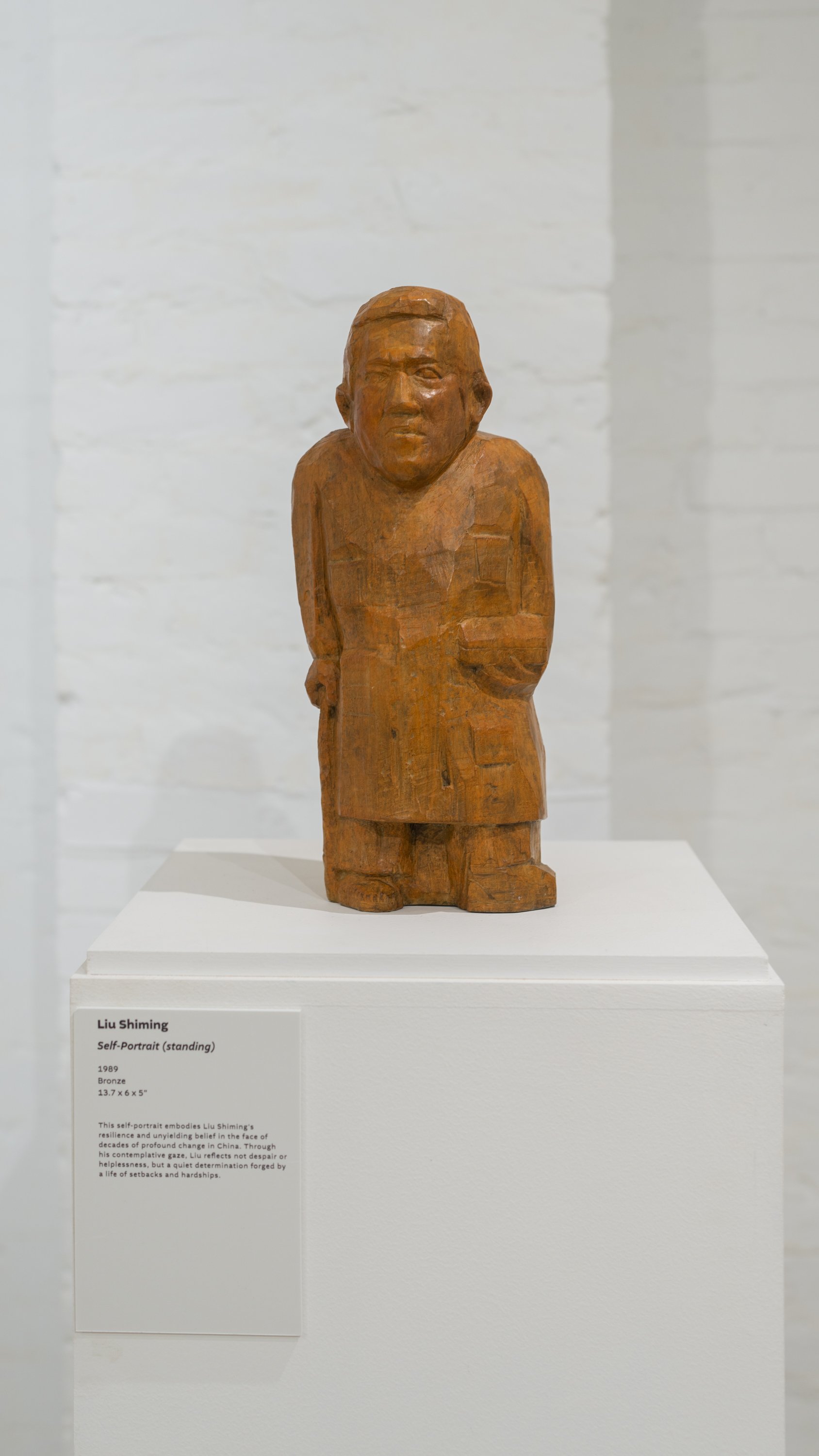
Beijing Stories: Sculptures by Liu Shiming and Photographs by Lois Conner

Exhibition Views, Beijing Stories: Sculptures by Liu Shiming and Photographs by Lois Conner Liu Shiming Art Gallery, New York, 2025 Copyright Lois Conner, Liu Shiming, Courtesy the artist and Liu Shiming Art Gallery
The Liu Shiming Art Gallery is pleased to announce Beijing Stories: Sculptures by Liu Shiming and Photographs by Lois Conner, the exhibition opened on January 16 and will be on view through March 21, 2025. This exhibition brings together two unique perspectives on Beijing, pairing of Liu Shiming’s evocative sculptures with of Lois Conner’s panoramic photographs. Together, their works offer a compelling narrative of a city in transition, reflecting its resilience, evolution, and the enduring spirit of its people.
Liu Shiming’s sculptures, created primarily from the 1980s until his passing in 2010, chronicle Beijing’s transformation from the early years of New China to the 2008 Olympics. His works capture the city's journey from post-revolution challenges to economic reform and rapid development, portraying the lives of ordinary people navigating these changes. Liu’s art highlights the resilience of rural communities adapting to urban life while striving to preserve their traditions as Beijing grew into China’s political and cultural center. His sculptures convey a sense of hope, particularly those depicting the younger generation, which he created after his family settled in Beijing.

Liu Shiming Cutting Through Mountains to Bring in Water, 1958 Bronze 34 x 37.5 x 18
Lois Conner, who has visited China almost annually since 1984, offers an external yet deeply personal perspective through her panoramic photographs. Using a large-format 7” x 17” banquet camera, she captures Beijing’s landscapes and intimate moments with extraordinary clarity and detail. This exhibition features her images of Beijing’s evolving cityscape from the 1980s to today, spanning iconic landmarks such as the 18th-century Summer Palace to contemporary millennial architecture. Conner’s work explores the delicate balance between modernity and tradition, offering a rich visual narrative of the city’s history and cultural transformation.
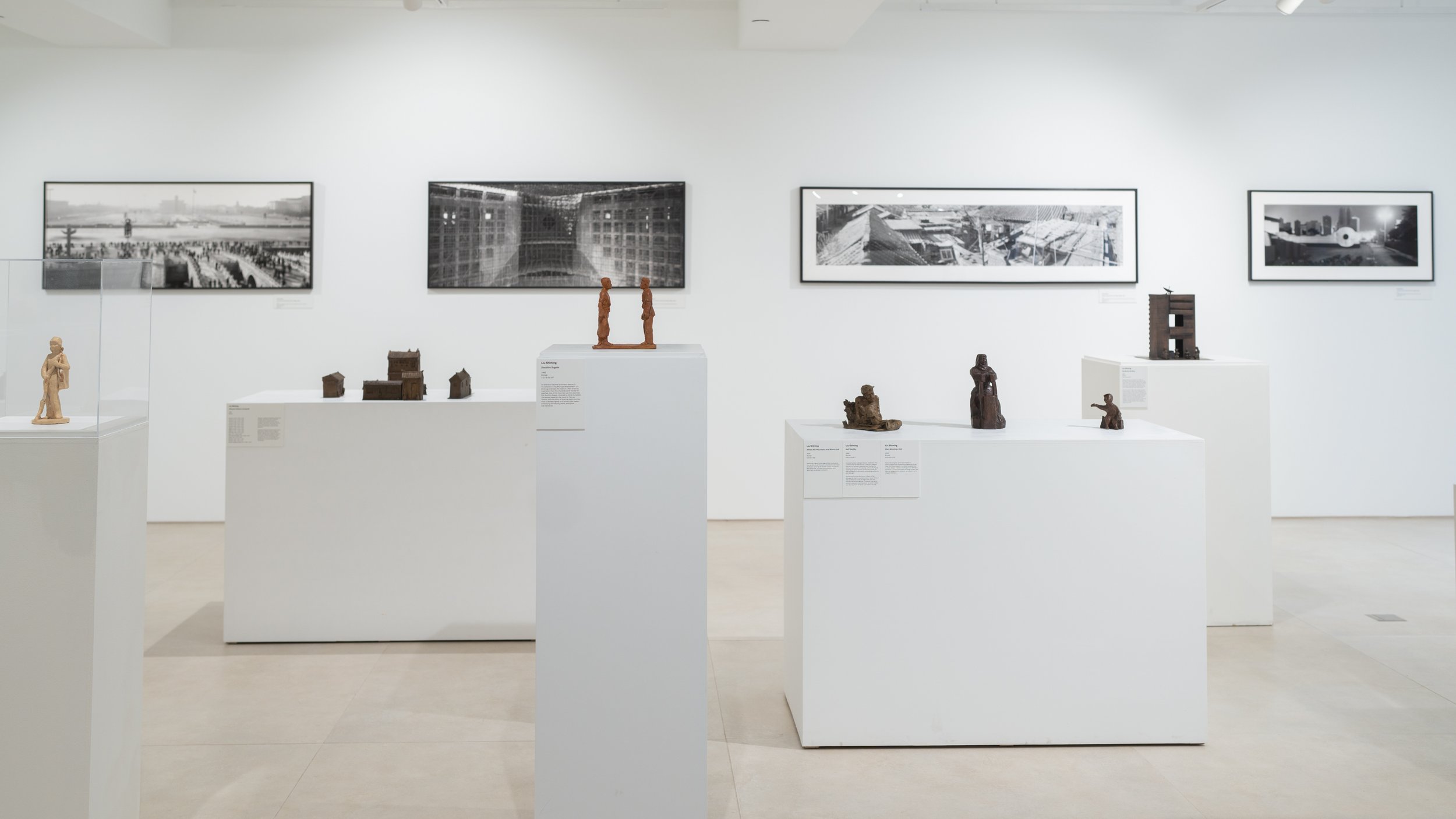
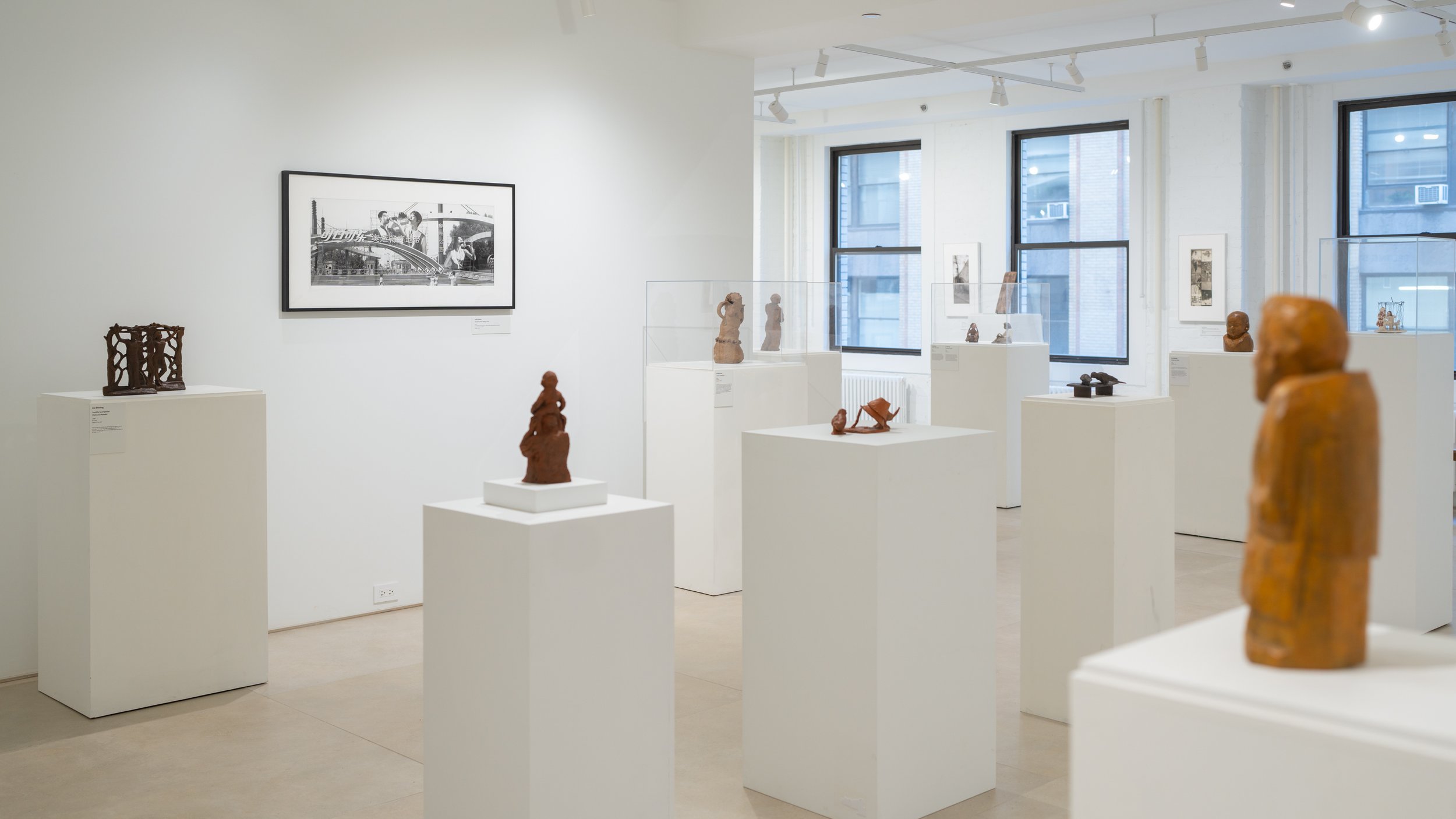
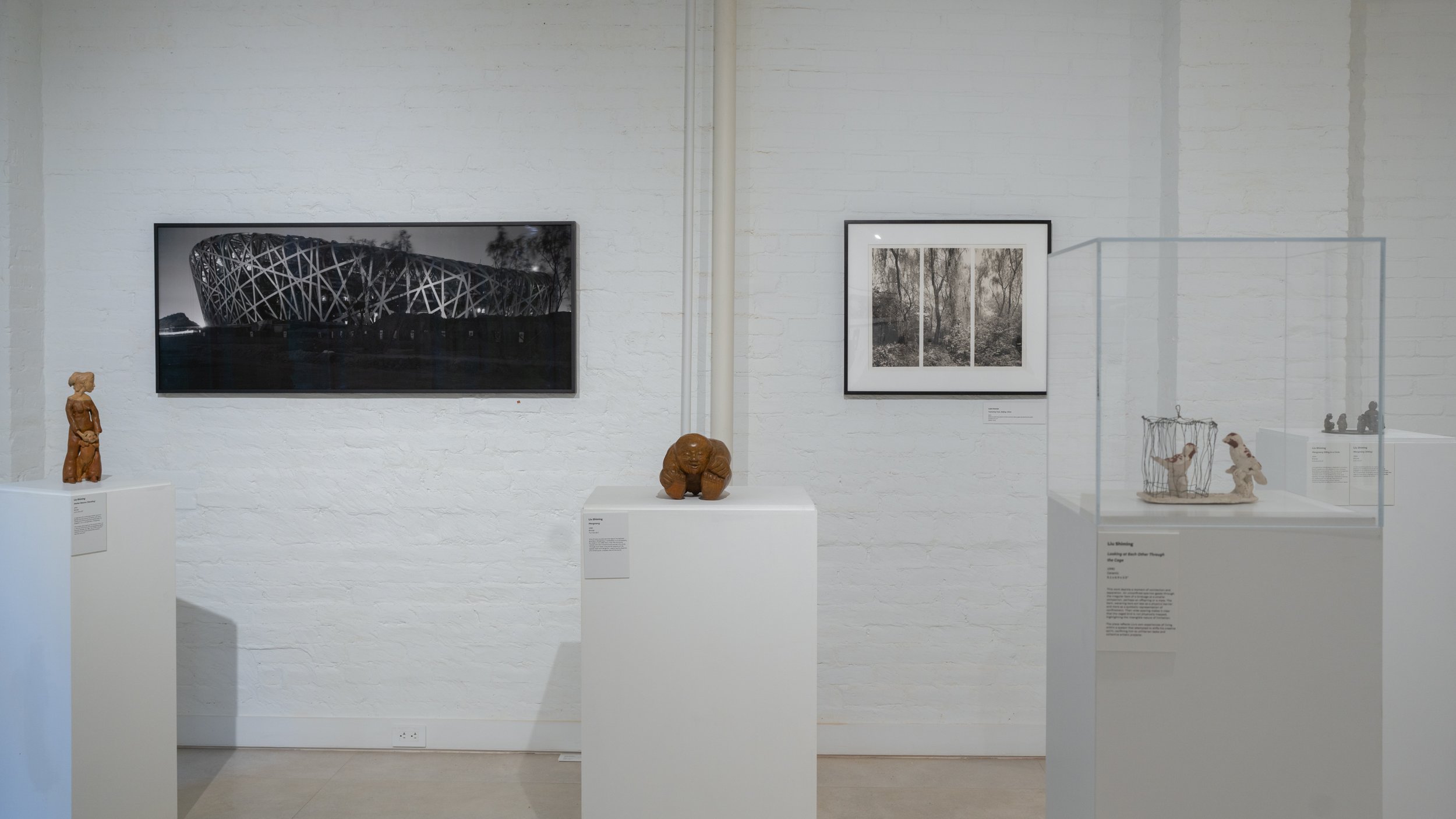
Exhibition Views, Beijing Stories: Sculptures by Liu Shiming and Photographs by Lois Conner Liu Shiming Art Gallery, New York, 2025 Copyright Lois Conner, Liu Shiming, Courtesy the artist and Liu Shiming Art Gallery
Together, Liu’s sculptures and Conner’s photographs present a multifaceted exploration of Beijing’s past and present, inviting audiences to experience the city’s dynamic spirit through their artistic lenses.
About Liu Shiming Art Gallery
Located in the center of Manhattan, just steps from the 42nd Street New York Public Library, the Liu Shiming Art Gallery is dedicated to showcasing the works of renowned sculptor Liu Shiming. Through solo exhibitions and curated group shows, the gallery highlights Liu’s sculptures and drawings alongside works by artists who share or draw inspiration from similar artistic traditions. Beyond exhibitions, the gallery serves as a space for cultural and artistic programs, hosting events that foster dialogue and engagement with diverse creative communities.
About Liu Shiming
Liu Shiming (1926–2010) was a pioneering Chinese sculptor whose work bridged traditional Chinese art and modernist influences. A graduate of the Central Academy of Fine Arts (CAFA) in Beijing, he was among the first generation of sculptors trained in the People’s Republic of China. Liu’s early works, including Measuring Land (1950), gained national and international recognition, but he later chose to live and work in rural China, drawing inspiration from local traditions and daily life to develop his signature humanist style.
Working primarily in ceramics, Liu Shiming created sculptures that reflect a deep connection to his cultural heritage and a sensitivity to human experience. His works have been exhibited internationally, including in United States, and Canada, and China. In 2018, CAFA established the Liu Shiming Sculpture Museum, and in 2024, the Liu Shiming Art Gallery opened in Manhattan to celebrate his legacy.
About Lois Conner
Lois Conner is a New York-based photographer renowned for her panoramic “portraits” of landscapes and urban environments, particularly her decades-long documentation of Beijing. Using a large-format 7” x 17” banquet camera, she captures sweeping vistas and intricate details, offering a nuanced perspective on the city’s transformation since her first visit in 1984 during a Guggenheim Fellowship. Conner’s work juxtaposes Beijing’s rapid modernization with its enduring cultural heritage, creating a dialogue between the past and present. Her photographs are featured in prominent collections, including the Metropolitan Museum of Art and the British Museum, showcasing her ability to reveal the profound beauty and complexity of her subjects.
For more information about this exhibition and the foundation, please visit the site here. The gallery and foundation can also be found on Instagram and Facebook.

JAMES WELLING: Thought objects, Italy and France

Exhibition Views, James Welling: Thought Objects, Italy and France, Galerie Marian Goodman, Paris, 2025 Copyright James Welling Courtesy the artist and Marian Goodman Gallery Photo credit: Rebecca Fanuele
Marian Goodman Gallery is pleased to present the third exhibition of work by James Welling in Paris. An artist widely acclaimed for his unclassifiable approach to photography, Welling has worked with the materiality of the medium since 1975. After using a wide array of analog photographic processes, Welling turned to digital technologies in 1998. His Thought Objects, 2023-24, whose title is borrowed from Barbara Ess and Glenn Branca’s anthology of photographs published in 1987, embodies his evolving quest for discovery. New Thought Objects photographs made recently in Italy are presented at 79 rue du Temple, and at 66 rue du Temple, three Thought Objects from 2023 are hung with his 2009 series devoted to the Maison de verre, an iconic glass and steel domestic building built by architect Pierre Chareau in Paris in the late 1920s.

JAMES WELLING Artichoke, Rome, 2024 UV – curable ink on Dibond alumin 28 x 42 x 1 5/8 in. (71.1 x 106.8 x 4.1 cm) Edition of 5 plus 2 artist’s proofs Copyright James Welling Courtesy the artist and Marian Goodman Gallery
On the ground floor of the gallery, Welling’s new photographs, made in the spring of 2024 during a month-long residency at the American Academy in Rome, encompass a myriad of themes. The images deliberately elude classification or typology and recall his Light Sources series (1992-2001) where Welling explored several subjects. Detailed or partial views of recognizable buildings, such as the MAXXI Museum, the Church of Sant’Agnese in Agone, Rome, or the arcades of the Pinacoteca di Brera, Milan, accentuate uncommon attributes within the architecture. The mathematical order of the tessellated paving stones in the Piazza Navona, or the Fibonacci spirals found in photographs of artichoke and zucchini flowers provide a visual analogue to the underlying mathematical basis of digital photography, or photo numérique, numerical photographs.
JAMES WELLING Arches, Milan, 2024 UV – curable ink on Dibond alumin 42 x 63 3/8 x 1 7/8 in. (106.6 x 161 x 4.8 cm) Edition of 5 plus 2 artist’s proofs Copyright James Welling Courtesy the artist and Marian Goodman Gallery
As Welling explains: “To my mind, Thought Objects are images whose meanings detach from the photograph’s nominal subject to suggest multiple readings.” The massive wooden door of Michelangelo's studio for example, can alternate from being either an ordinary entryway or a pulsating network of colorful afterimages hovering at the doors of perception. In Thought Objects Welling uses a digital variation of 70’s “equidensity processing” that had its origin in analog photography. Similar to solarization or posterization, this process consists of combining positive and negative images to change the visual texture and color of the image. Thought Objects are UV prints, an innovative digital printing process that affixes pigment permanently to thin aluminum panels. These panels are hung using an “frame” designed by the artist that creates the effect of the work floating off the wall.


Exhibition Views, James Welling: Thought Objects, Italy and France, Galerie Marian Goodman, Paris, 2025 Copyright James Welling Courtesy the artist and Marian Goodman Gallery Photo credit: Rebecca Fanuele
At 66 rue du Temple, three 2023 Thought Objects depict quintessential French architectural elements: the circular staircase in Le Corbusier's Villa Savoye, entrance columns of Claude-Nicolas Ledoux's Saline Royale d'Arc-et-Senans and a half-painted typical Parisian door. For Staircase, Villa Savoye, 2022, Welling photographed a sheet of paper coated with blue and orange ink, and digitally superimposed it over a view of the villa's spiral staircase. For Royal Salt-Works, Arc-et-Senans, 2023, Welling further extends the equidensity process to exaggerate the contours of the columns, thereby generating a bas-relief effect reminiscent of the outlines in a Herge’s Tintin cartoon.
A selection of Welling's earliest digital color transformations can also be found in 66 rue du Temple. The Maison de verre, an architectural landmark built between 1928 and 1931 in the 7th arrondissement of Paris for Doctor Jean Dalsace, is transformed in an interplay between artificial color, metal and glass, where all three elements form a creative dialogue. Welling over saturated certain areas of the fifteen photographs in the series and altered light and shadow in others. These interventions create a visual experience in which the architecture is both subject and material for transformation.

JAMES WELLING Paris Door, 2017/2023 UV-curable ink on Dibond aluminum 63 3/8 x 42 x 1 7/8 in. (161 x 106.6 x 4.8 cm) Edition of 5 plus 2 artist's proofs Copyright James Welling Courtesy the artist and Marian Goodman Gallery
The gallery held an artist’s talk by James Welling, Saturday January 18 at 5 pm at the gallery, 79 rue du Temple. His presentation was followed by a conversation with Simon Baker, director of the MEP, Maison Européenne de la Photographie in Paris. Admission is free upon reservation.
James Welling was born in Hartford (Connecticut), USA, in 1951. He lives and works in New York. He studied fine art at Carnegie-Mellon University and modern dance at the University of Pittsburgh before obtaining his MFA from the California Institute of the Arts (CalArts) in 1974. Welling was a professor in the Department of Art at the University of California at Los Angeles (UCLA) from 1994 to 2016 where he ran the Photography Area. Since 2012, he has been a lecturer with the status of Professor at Princeton University in New Jersey. In 2014, he received the Infinity Award from the International Center of Photography in New York and in 2016 the Award of Excellence from the Julius Shulman Institute at Woodbury University in California.

JAMES WELLING Bike, Rome, 2024 UV – curable ink on Dibond alumin 42 x 63 3/8 x 1 7/8 in. (106.6 x 161 X 4.8 cm) Edition of 5 plus 2 artist’s proofs Copyright James Welling Courtesy the artist and Marian Goodman Gallery
Welling's protean photographic work has been the subject of numerous solo exhibitions since the late 1970s. In 2017, Metamorphosis, a major retrospective of his work, was presented in Europe at the Stedelijk Museum voor Aktuele Kunst (S.M.A.K.) in Ghent, Belgium, and at the Kunstforum in Vienna, Austria. Recent exhibitions include Dark Matter, combining his work with that of Thomas Ruff, at the Kunsthalle Bielefeld, Germany (2022), Cento at the Musée des Arts Contemporains du Grand Hornu (MACS), Hornu, Belgium (2021), Choreograph at the George Eastman Museum, Rochester, New York (2020), Monograph, at the Cincinnati Art Museum and the Hammer Museum, Los Angeles (2013), Autograph at the Fotomuseum Winterthur, Switzerland and Mind on Fire at the MK Gallery, Milton Keynes, England, the Centro Galego de Arte Contemporánea, Santiago de Compostela, Spain and the Contemporary Art Gallery, Vancouver, Canada (2012). Recent group exhibitions include Reverberations at the Museum of Contemporary Art (MOCA), Los Angeles (2024); Medardo Rosso Inventing Modern Sculpture, at Mumok in Vienna, Austria (2024); Epreuves de la matière at the Bibliothèque nationale de France (BNF) in Paris (2023); True Pictures? Contemporary Photography from Canada & The USA at the Sprengel Museum Hannover in Germany (2021), In Focus: Platinum Photographs, at the Getty Center in Los Angeles (2020).
Marian Goodman Gallery champions the work of artists who stand among the most influential of our time and represents over five generations of diverse thought and practice. The Gallery’s exhibition program, characterized by its caliber and rigor, provides international platforms for its artists to showcase their work, foster vital dialogues with new audiences, and advance their practices within nonprofit and institutional realms. Established in New York City in 1977, Marian Goodman Gallery gained prominence early in its trajectory for introducing the work of seminal European artists to American audiences. Today, through its exhibition spaces in New York, Los Angeles, and Paris, the Gallery maintains its global focus, representing some 50 artists working in the U.S. and internationally.
The exhibition opened on 17 January and will be on view until 8 March 2025 at the Marian Goodman’s location in Paris at 79 & 66 rue du Temple, 75003. For more information about the exhibit, please visit the Marian Goodman Gallery’s site. The gallery can be found on Instagram and Artsy, too.

HERVÉ DI ROSAIDOLES ET TRESORS/IDOLS AND TREASURES

Toutes les images / All images: © Courtesy of the artist and TEMPLON, Paris - Brussels - New York
Galerie Templon is delighted to present its first show of the striking work of Hervé Di Rosa, one of the founding artists of the Figuration Libre movement.
Originally from Sète in southern France, Hervé Di Rosa has gradually forged an artistic path inspired by popular culture, animated film and comic books. His work, infused with curiosity and innovation, has found expression through fruitful collaborations with various artisans from around the world. It has manifested in a vast array of techniques, ranging from acrylic on canvas to sculpture, egg tempera and gold leaf on wood, alongside painting on azulejos.
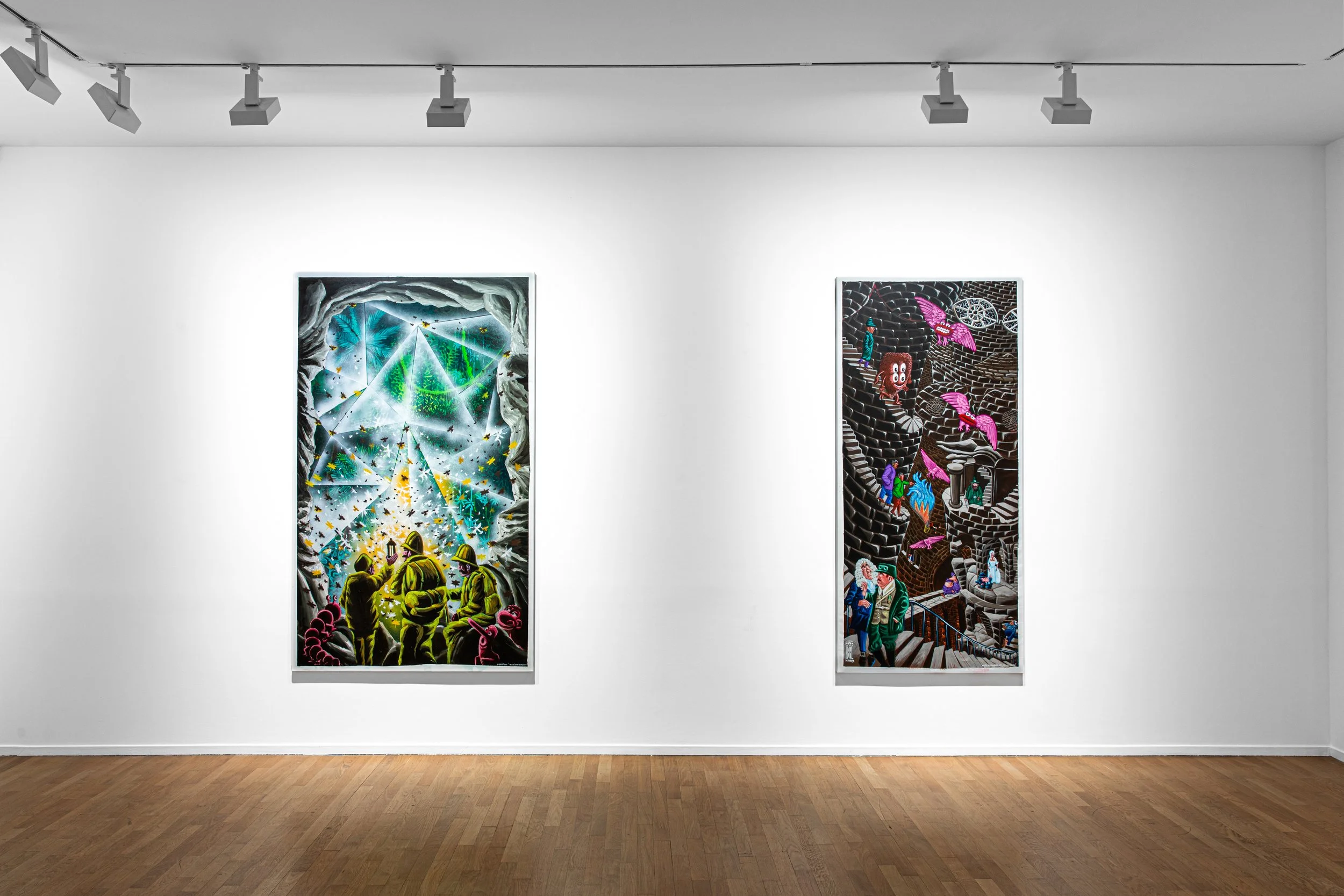

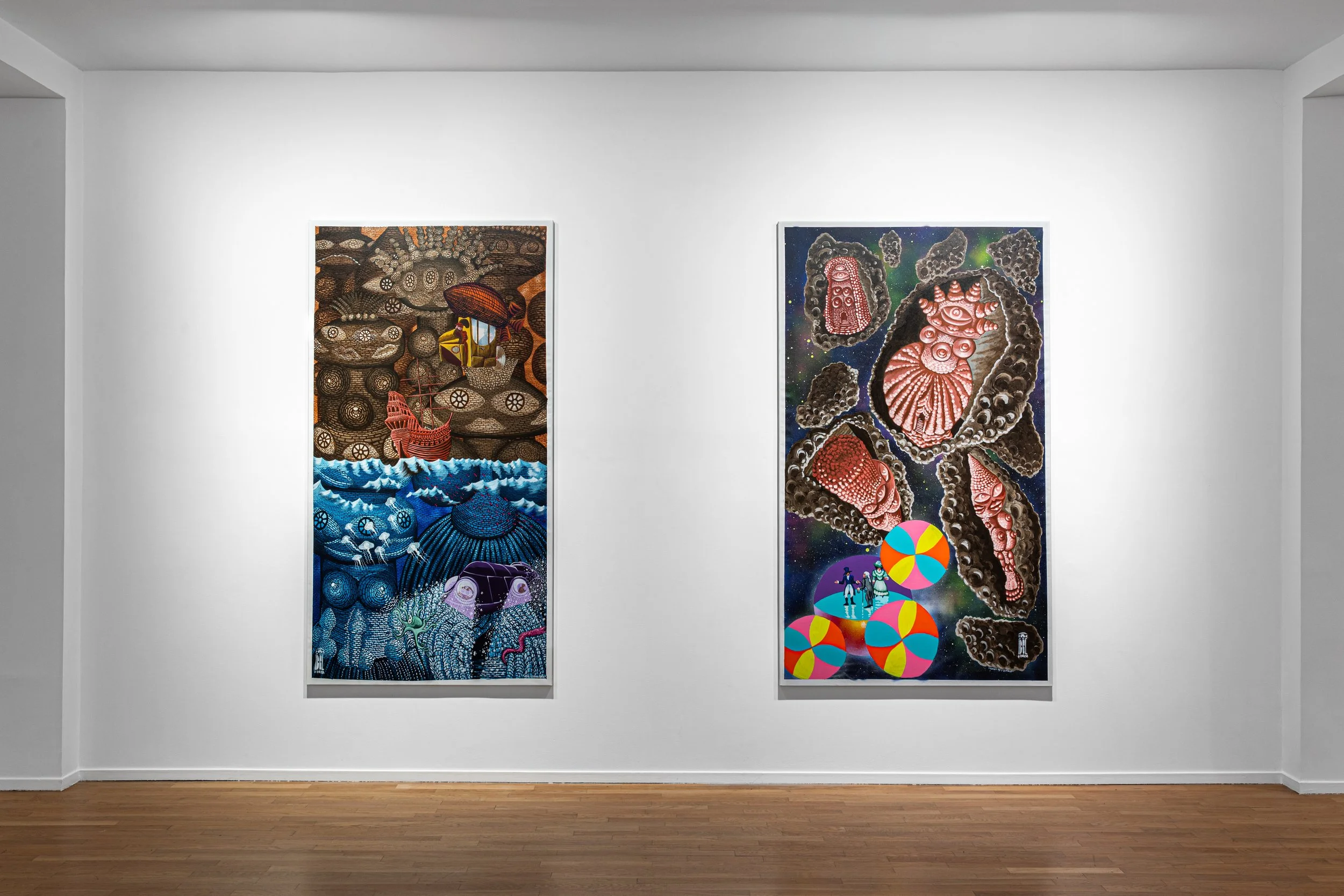

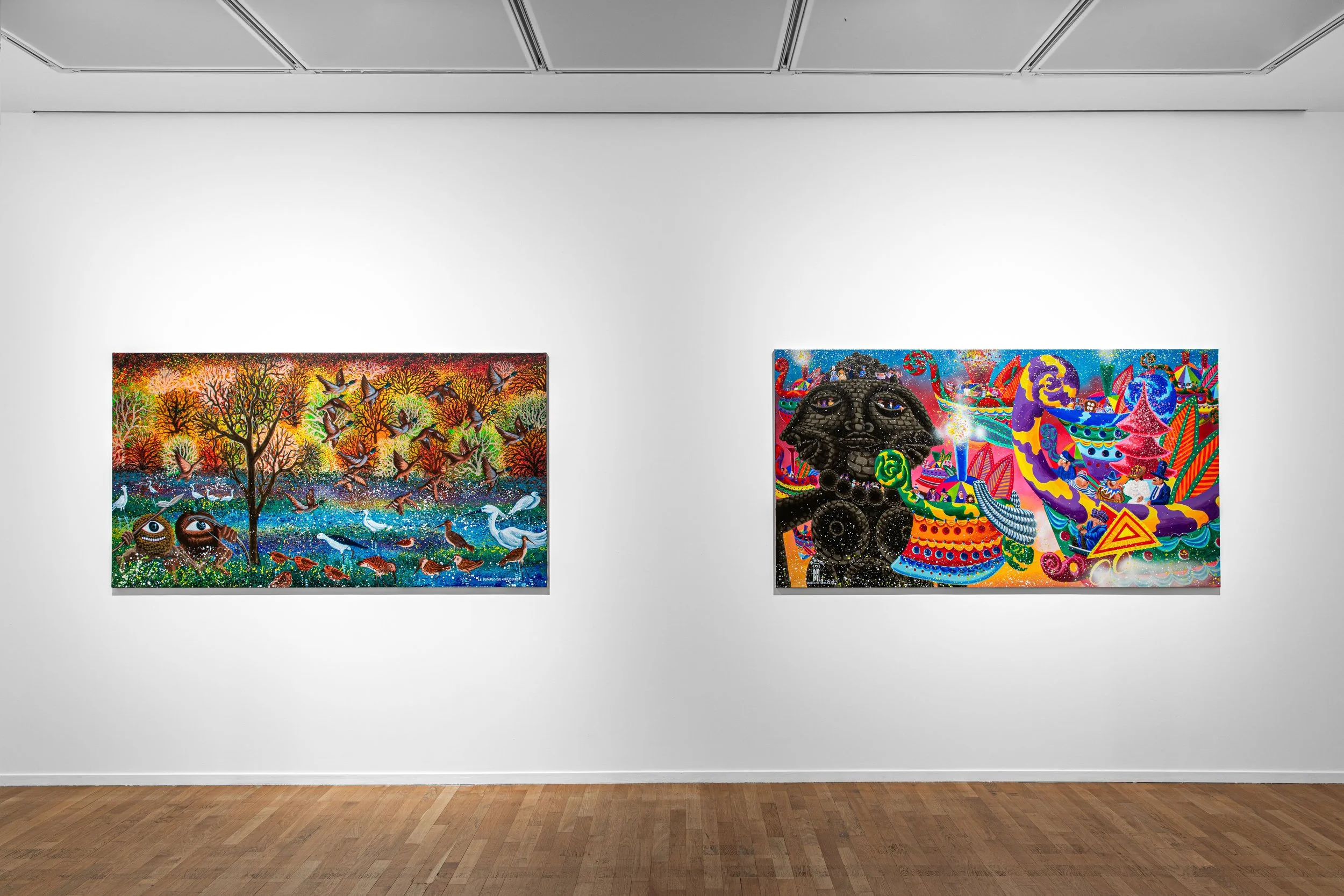
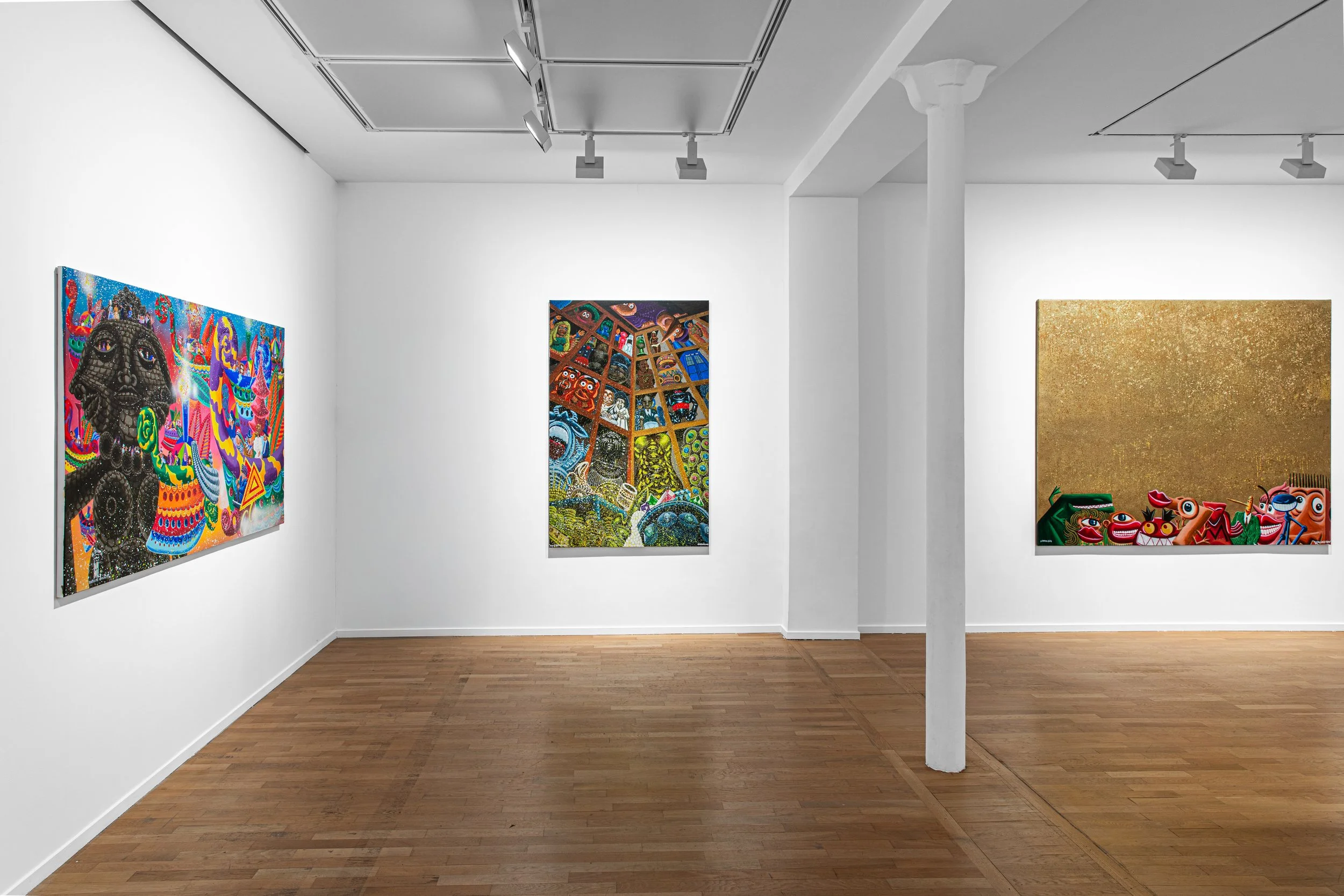


Toutes les images / All images: © Courtesy of the artist and TEMPLON, Paris - Brussels - New York
With “Idols and Treasures”, Hervé di Rosa showcases his journey as a painter over the past five years. The exhibition features a series of around a dozen of medium-sized and large-format paintings created between 2020 and 2024. The artist pays tribute to nearly four centuries of cultural explorations which have shaped history, drawing from the rich traditions of painting, sculpture, music and literature. Each canvas invites visitors to immerse themselves in Di Rosa’s lavish and deceptively naive world.
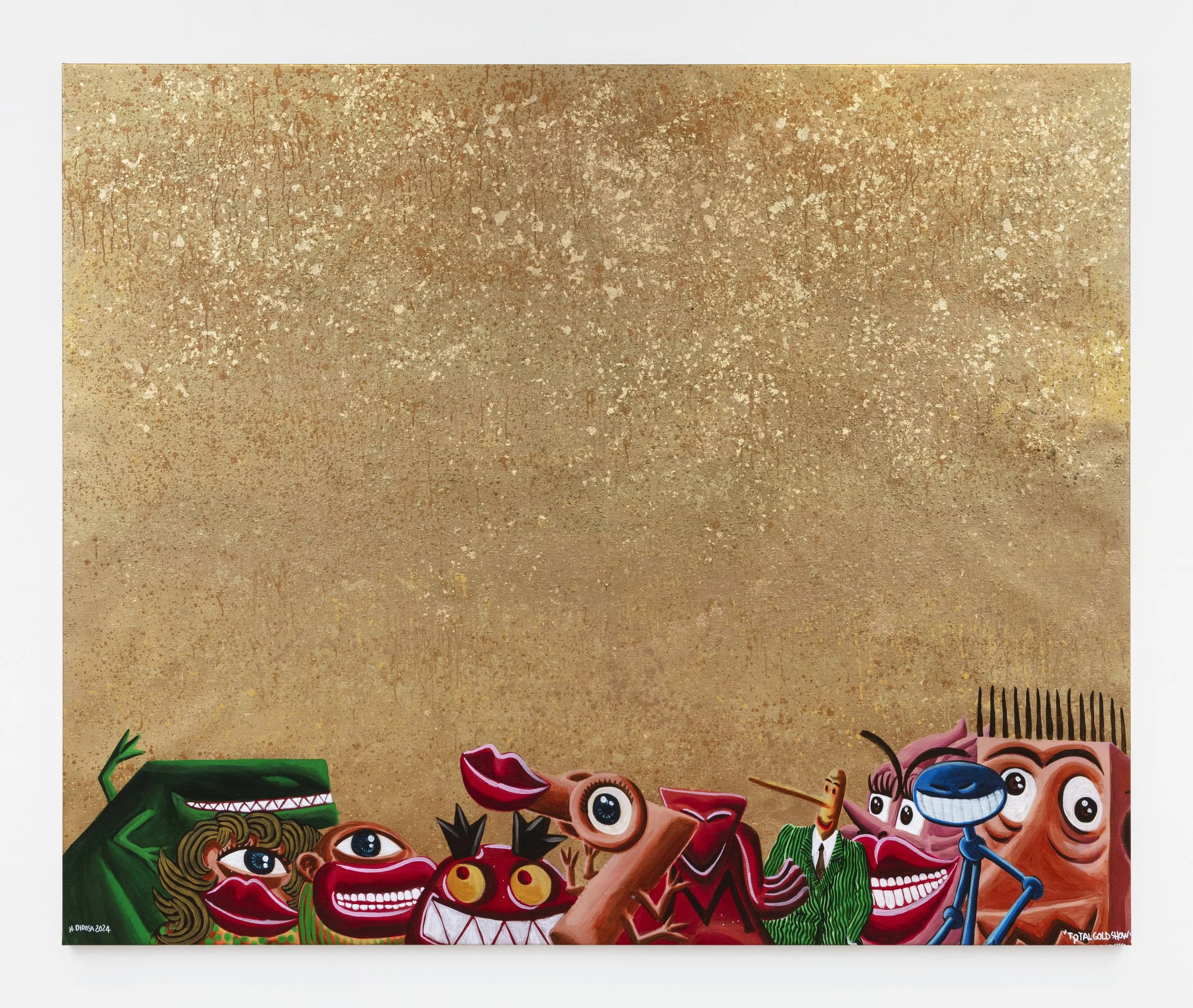
HERVÉ DI ROSA TOTAL GOLD SHOW, 2024 Acrylique sur toile | Acrylic on canvas 170 × 207 cm — 67 × 81 1/2 in Courtoisie de l'artiste et Templon, Paris – Bruxelles - New York | Courtesy of the artist and Templon, Paris – Brussels - New York Photo © Tanguy Beurdeley
Rejecting all sense of hierarchy, the artist's canvases evoke Christopher Colombus’ majestic caravels, Jules Verne's mysterious abysses, the imposing Mayan temples of Chichen Itza and the sumptuous sarcophagi of the most illustrious of Egyptian pharaohs. These complex compositions, situated at the edge of surrealism, unveil hybrid characters, ranging from historical figures to endearing four-eyed monsters and nurturing mother earth figures made of bricks. Di Rosa’s enchanting microcosms thus establish a playful and constructive dialogue between the fine arts, applied arts, outsider art and cultivated art, as well as between Western and non-Western art. With this work Di Rosa, a dazzlingly unique artist, reveals a vision of art without borders, transcending cultural genres and geographical origins, effectively abolishing any hierarchy that values high culture over low culture.
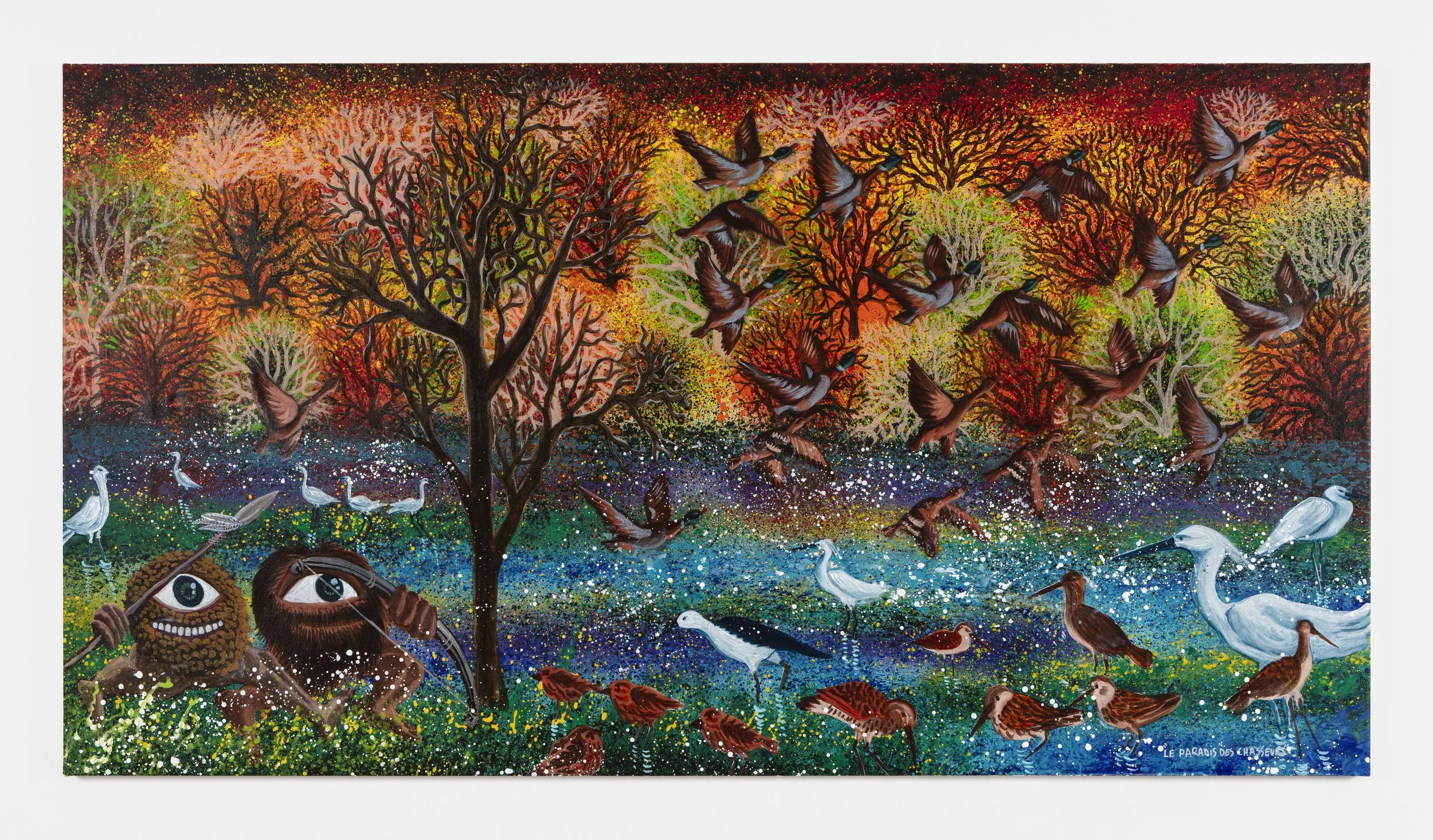
HERVÉ DI ROSA LE PARADIS DES CHASSEURS, 2024 Acrylique sur toile | Acrylic on canvas 108.5 × 201 cm — 42 3/4 × 79 1/4 in Courtoisie de l'artiste et Templon, Paris – Bruxelles - New York | Courtesy of the artist and Templon, Paris – Brussels - New York Photo © Tanguy Beurdeley
Born in 1959, Hervé Di Rosa lives and works between Lisbon, Paris and Sète. A student at the École Nationale Supérieure des Arts Décoratifs in Paris, Hervé Di Rosa began selling his paintings in 1979. At just 20 years old, he was already exhibiting in Paris, Amsterdam and New York. In 1981 he co-founded the art movement Figuration Libre, as named by the artist Ben. This group, which included Robert Combas, Rémi Blanchard and François Boisrond, echoed other marginalized forms of international expressions, from Neo-expressionism and New Fauves in Germany to the Transavantgarde in Italy and even Bad Painting in the United States.
Since 1981 his work has appeared in over 200 solo exhibitions and is included in major public and private collections in Europe, the USA and Asia. Recent solo and group exhibitions in France include shows at La Maison Rouge, Paris (2016), La Piscine - Musée d’Art et d’Industrie André-Diligent, Roubaix (2018), Musée de Valence (2022) and Musée National d’Art Moderne - Centre Pompidou, Paris (2024). The Musée des Civilisations de l'Europe et de la Méditerranée in Marseilles (MUCEM) will hold a solo exhibition in March 2025.
A pioneer and champion of the concept of “Modest Art”, Di Rosa founded the Musée International des Arts Modestes (MIAM) in 2000 in Sète. The museum exhibits a wide range of artists from all over the world and creates shows that question the boundaries of contemporary art. Hervé Di Rosa has been a member of the Académie des Beaux-Arts since 2022.
For more information about Hervé’s artwork and his exhibition, please visit Templon’s site. The gallery can also be found on Instagram, artnet, Facebook, YouTube, and Artsy. An interview with Hervé with the magazine can be found here.