Gustav Metzger: And Then Came the Environment

Installation view, ‘Gustav Metzger. And Then Came the Environment,’ Hauser & Wirth Downtown Los Angeles 13 September 2024 – 12 January 2025 © The Estate of Gustav Metzger and The Gustav Metzger Foundation. All Rights Reserved, DACS 2024. Courtesy The Estate of Gustav Metzger and Hauser & Wirth Photo: Keith Lubow
Los Angeles… Gustav Metzger. And Then Came the Environment,’ opened on the 13th of September in conjunction with the Getty’s PST ART initiative, ‘Art & Science Collide,’ Hauser & Wirth Downtown Los Angeles presents ‘the pathbreaking late artist’s first solo exhibition in LA and his second major presentation in the United States. ‘And Then Came the Environment’ presents a range of Metzger’s scientific works merging art and science from 1961 onward, highlighting his advocacy for environmental awareness and the possibilities for the transformation of society, as well as his latest experimental works, created in 2014. The exhibition title comes from Metzger’s groundbreaking 1992 essay ‘Nature Demised’ wherein he proclaims an urgent need to redefine our understanding of nature in relation to the environment. Metzger explains that the politicized term ‘environment’ creates a disconnect from the natural world, manipulating public perception to obscure pollution and exploitation caused by wars and industrialization, and that it should be renamed ‘Damaged Nature.’

Gustav Metzger Liquid Crystal Environment 1966/2021 7 Kodak SAV 2050 slide projectors, control units, rotating polarized filters, liquid crystals Dimension variable Installation view, ‘Gustav Metzger,’ Hauser & Wirth Somerset, Bruton, UK, 2021 © The Estate of Gustav Metzger and The Gustav Metzger Foundation Photo: Ken Adlard
An early proponent of the ecology movement and an ardent activist, Gustav Metzger (1926 – 2017) was born in Nuremberg to Polish-Jewish parents, and fled Nazi Germany to England when he was 12 with his brother via the Kindertransport. While working as a gardener, he began his art studies in 1945 in war-embroiled Cambridge, a nexus for scientific experimentation and debate as the Atomic Age was dawning. By the late 1950s, Metzger was deeply involved in anti-nuclear protests and developed his manifestos on ‘auto-destructive’ and ‘auto-creative’ art. These powerful statements were aimed at ‘the integration of art with the advances of science and technology,’ a synthesis that gained wide recognition in Europe in the 1960s through his exhibitions, lecture-demonstrations and writing.

Gustav Metzger Dancing Tubes 1968 Plastic tubing, compressed air Dimensions variable Photo: Jhoeko West Den Haag
Metzger’s quenchless curiosity about new materials and gadgets—from projectors and electronics to cholesteric liquid crystals and silicate minerals such as ‘mica’—led him to conduct experiments in and out of laboratories in collaboration with leading scientists in an effort to amplify the unpredictable beauty and uncertainty of materials in transformation: ‘the art of change, of movement, of growth.’ By the 1970s, increasingly concerned with ethical ramifications, Metzger became closely involved with the British Society for Social Responsibility in Science, raising awareness of ‘grotesque’ environmental degradation and social alienation and arguing for ‘old attitudes and new skills’ to bring science, technology, society and nature into harmony. He initiated itinerant projects to draw attention to the immense pollution caused by car emissions, a pursuit that gained momentum with his proposal for the first UN Conference on the Human Environment in Stockholm in 1972 and was later partially realized in 2007 at the Sharjah Biennial.


Installation view, ‘Gustav Metzger. And Then Came the Environment,’ Hauser & Wirth Downtown Los Angeles 13 September 2024 – 12 January 2025 © The Estate of Gustav Metzger and The Gustav Metzger Foundation. All Rights Reserved, DACS 2024. Courtesy The Estate of Gustav Metzger and Hauser & Wirth Photo: Keith Lubow
The artworks on view in ‘And Then Came the Environment’ reveal Metzger’s lifelong interest in drawing and gesture, presenting works on paper from the mid-1950s alongside models, installations and later, Light Drawings that underpin the artist’s desire for human interaction amidst the reliance on technology that continues to this day. Following his death, The Gustav Metzger Foundation was established to further Metzger’s work and carry on his legacy. Exhibited for the first time in Los Angeles, works here include the earliest film documentation of Metzger’s bold chemical experiments on the South Bank in London (‘Auto-Destructive Art: The Activities of G. Metzger,’ directed by H. Liversidge, 1963); his first mechanized sculpture with Liquid Crystals—’Earth from Space’ (1966)—and the stunning, large-scale projection, ‘Liquid Crystal Environment’ (1966), one of the earliest public demonstrations of the material that makes Liquid Crystal Displays (LCDs), now omnipresent in our computer, telephone and watch screens. ‘And Then Came the Environment’ also presents early kinetic projects Metzger developed in the Filtration Laboratory of the University College of Swansea in 1968 (‘Dancing Tubes’ and ‘Mica Cube’); various iterations of his projects against car pollution including the model ‘Earth Minus Environment’ (1992); and the Light Drawing series (2014), made using fiber-optic light directed by air or hand.
Gustav Metzger giving the Lecture/Demonstration ‘The Chemical Revolution in Art’ at the Society of Arts, Cambridge University, October 11, 1965, with projections of ink in glycerin Photo: Richard Gloucester
The exhibition will be complemented by a new short film created by artist Justin Richburg, who animated Childish Gambino’s 2018 hit ‘Feels like Summer,’ which references climate change. Richburg’s piece was inspired by and responds to Metzger’s 1992 essay ‘Nature Demised.’ The film represents the first time Metzger’s ideas have been directly expressed through a new medium, thus reflecting his interests in ongoing transformation and his conviction that younger generations were the most essential, urgent audiences for his work. In 2012, five years before his death at the age of 90, Metzger wrote:
“The future of the world is what we are after. We start with the young and then when the young are twelve, fifteen, and then twenty-one, they can enter politics, and if they have got this initiation/introduction to key issues … it will make an enormous difference to the future of the world.”

Gustav Metzger Light Drawing 2014 Photographic print on aluminum, 4 parts Each: 51 x 40.5 x 3 cm / 20 1/8 x 16 x 1 1/8 in Overall: 102 x 81 x 3 cm / 40 1/8 x 31 7/8 x 1 1/8 in Photo: Damian Griffiths
‘And Then Came the Environment’ coincides with two major European institutional exhibitions devoted to Metzger’s oeuvre and contributions: ‘Gustav Metzger. All of Us Together,’ curated by Hans Ulrich Obrist, Vassilis Oikonomopoulos and Arthur Fouray, at LUMA, Arles, France (30 June 2024 – onwards) and ‘Gustav Metzger,’ curated by Susanne Pfeffer and Julia Eichler, at Museum für Moderne Kunst (MMK), Frankfurt, Germany (27 July 2024 – 5 January 2025).

Gustav Metzger Earth Minus Environment (Model) (detail) 1992 Wood, perspex, model cars Unique 122 x 122 cm Plinth 130 x 130 x 45 cm
Publication
On the occasion of the exhibition, Hauser & Wirth Publishers will release ‘Gustav Metzger: Interviews with Hans Ulrich Obrist.’ Drawing from more than two decades of conversations with curator Hans Ulrich Obrist, artistic director of the Serpentine, this richly illustrated volume will offer a comprehensive overview of Metzger’s life, approach to art, and political activism. With a candor that comes from speaking to someone who knows him well, Metzger discusses his childhood in pre-Second World War Nuremberg, his participation in and co-organization of the 1966 Destruction in Art Symposium (DIAS) after his move to London, and his visionary thinking about environmental destruction, among many other topics. This panoramic book, which is complemented with a new, rigorously researched chronology, will be a vital resource for Metzger scholars and newcomers alike. The publication is edited by Karen Marta with the support of Alexander Scrimgeour, managing editor and Michaela Unterdörfer, executive director of Hauser & Wirth Publishers.
A book launch and talk with Hans Ulrich Obrist will be held at Hauser & Wirth Downtown Los Angeles was held on September 15th at 11 am. While a New York launch event took place at Hauser & Wirth, 18th Street on 21 September.

Gustav Metzger at his first lecture demonstration at the Temple Gallery, London, June 1960 © National Portrait Gallery, London Photo: possibly by John Cox, for Ida Kar
Learning
A comprehensive learning program, interactive events and additional resources will be developed in conjunction with the exhibition, inspired by the life and work of Gustav Metzger. Further details to be announced in September.
About PST ART
Hauser & Wirth is part of PST ART as a Gallery Program Participant. Returning in September 2024 with its latest edition, ‘PST ART: Art & Science Collide,’ this landmark regional event explores the intersections of art and science, both past and present. PST ART is presented by Getty.
Information can be found about ‘PST ART: Art & Science Collide,’ here. Please find information about Gustav’s latest exhibition here and his current book publication here. The magazine did a highlight of Gustav Metzger Interviews with Hans Ulrich Obrist, which can be found here. For more information about the exhibit, please visit the Hauser & Wirth site. Also, follow the gallery on Instagram, Facebook, X, and YouTube for more updates on this exhibit.
Mark Manders : Self-Portrait as a Building

Photo credit - Simon Bultynck, 2024.
Mark Manders expands his seminal ‘Self-Portrait as a Building’ project with multiple new rooms for his inaugural exhibition with the gallery. Installations referencing domestic spaces, including a bathroom, bedroom and studio, take their place alongside monumental and domestic-scale painted bronzes, mixed-media sculptures, objects, furniture and two-dimensional works. This large-scale exhibition draws together the multiple strands of practice to reveal the depth and breadth of his oeuvre.
Manders has been assembling his ‘Self-Portrait as a Building’ for almost forty years. The underlying concepts are constructed identity and the mind as a physical structure, analogous to a house or building. Every ‘room’ within the imaginary edifice translated into the physical gallery spaces represents a different aspect of Manders’ character or an autobiographical experience. Here, it is important to note that there are two Mark Manders: the person and the persona, the latter of whom is a fictional construct. The building is never finished; it expands ad infinitum. The rooms are furnished and filled with objects. Every element is a unique artwork, painstakingly crafted by the artist. Echoes of earlier pieces abound, while certain elements can be identified in more than one place. Such details link Manders’ works across time and space, and with each other, to form a vast network of interrelated references.

Figure with Thin White Rope, 2005-2023
The exhibition opens in the landscape: Bonewhite Clay Head with Vertical Cloud (2024) and Figure with Two Cloud Paintings (2010-2024) both allude to the sky. The wooden structure in the latter work is familiar but unplaceable: it evokes a hangman’s frame or crucifix, possibly the beams of an architectural structure. The kouros-like figure which references Mind Study (2010-11, Venice Biennale) is captured in a state of suspended movement, either saved by the cord while falling or resisting its razor-sharp hold. The tension is palpable and everything is in perfect balance. The two canvases are white, like clouds. Together with the neutral hues, they lend an indeterminate status to the sculpture: a frozen moment that is both timeless and placeless. Nothing is what it seems and Manders is a master of illusion: this is neither wood nor clay. The artist models his sculptures in these materials before using the lost-wax method to cast them in bronze. They are subsequently painted by hand until the inorganic (metal) becomes indistinguishable from the organic (wood, clay).

Installation View: Mark Manders Self-Portrait as a Building 25 October -21 December 2024courtesy of Xavier Hufkens and HV Studio
My Bed (1992-2024) occupies the garden-facing gallery. One side is filled with architectural maquettes and a collection of objects suggestive of an identity the other is empty. Absence is a familiar theme in the oeuvre, as Manders explains: “All the rooms seem as if they have been left behind by someone… as if the person who has created it has just left. You constantly see someone engaged in either thought processes or physical actions. It’s almost like stepping into a set that has just been vacated. Freezing time and making someone’s thought process visible. It all revolves around that single moment, but sometimes there can be twenty or thirty years in between. Yet it all appears as if it has just happened.” This work expands upon a similar installation that Manders showed at the Van Wassenhove house in 2023. Objects such as the clay figure, books and a pot with brushes make a reappearance, only the bedding has vanished. Stripped bare, so to speak, we can see that the bedframe is wood and the mattress is canvas. Combined, they suggest another plausible reading: the work as a metaphor for painting.
With its strip light and architectural composition, Perspective Study (2005-2024) features the newspapers that Manders devised for his Room With All Existing Words (2005-2022). For this latter project, the artist designed and printed ten newspapers that contain every word in the Oxford English Dictionary, each used once but in random order, to create columns of poetic nonsense. The papers recur throughout the exhibition in various guises, appearing in Figure with Thin White Rope (2005-2024) and compressed into Composition with All Existing Words / Perspective Study (2005- 2023), shown nearby, to name but two instances.


Installation View: Mark Manders Self-Portrait as a Building 25 October -21 December 2024courtesy of Xavier Hufkens and HV Studio
Shadow Study (2023-2024) presides over the garden. With its ancient-looking patina, it resembles a classical sculpture or archaeological relic. Manders often creates work in which wooden elements constrain or split the human figure. These allude to the nature of memory itself: how it can be legible yet fragmented, blocked and trapped, complete yet incomplete.
Isolated Bathroom / Composition with Four Colours (2005-2023) is situated on the first floor. The metal floor is a nod to minimalist sculpture, while the figure devoid of limbs is suggestive of both strength (wood) and vulnerability (clay). The juxtaposition is purely visual: this too is a painted bronze. The figure links back to the earlier Ramble Room Chair (2010), while the four colours new to the oeuvre were inspired by the nearby reenacted and staged photograph Colour Study (2001-2023). The hues recur in Table with Towels (1999-2023) while the original photo reappears in Studio Table (2024).
This latter work, on the third floor, expands on the theme of the desk as the crucible of creativity. The bureau is littered with tools of the artist’s trade drawings, photos and books as well as everyday items, such as dice and sugar cubes. These are not found objects or possessions in the conventional sense of the term: everything has been meticulously crafted by the artist to replicate the original items. Painted bronzes that resemble ancient artefacts can also be found in the studio, including Falling Earring (2024), a work that visualises a fleeting moment in time: a silver hoop tumbling from a notional ear.

Monument, 2024
Floor with Prime Movers (2005-2024), on the lower ground floor, is an installation of Manders’ furniture pieces on steel tiles that, as with the bathroom, allude to minimalism. Every item has been designed and constructed by the artist: an array of objects with which to furnish the rooms of his ever-expanding ‘self-portrait’.
Mark Manders’ work reflects his ongoing exploration of identity, materiality and illusion, language and structure, but also time. While many sculptures resemble archaeological finds, others reference modernism and twentieth-century design: a dissonance that transports us backwards and forwards through the centuries. His works can be seen as spatial materialisations of inner sometimes abstract thoughts, feelings and emotions. References to art history, recurring motifs and the reconfiguration of previous works, all add to the sense of continuity and perpetual transformation in his oeuvre.
About Artist
Mark Manders (b. 1968, Volkel, the Netherlands) currently lives and works in Ronse, Belgium. He will be the subject of two upcoming solo exhibitions: one at the Fondazione Sandretto Re Rebaudengo in Turin (October 31, 2024 March 2025), and another at Museum Voorlinden in 2025. Manders represented the Netherlands at the Venice Biennale in 2013. He was commissioned by the Public Art Fund to create a large public sculpture for the Doris C. Freedman Plaza in Central Park, New York in 2019. Other large-scale outdoor sculptural installations are on display at the Walker Art Center in Minneapolis and at the Rokin Square in Amsterdam. Public collections include The Art Institute of Chicago, IL; Carnegie Museum of Art, PA; Kunsthaus Zürich; Museum of Modern Art, NY; Museum of Contemporary Art, LA; Pinakothek der Moderne, Munich; San Francisco Museum of Modern Art, and the Walker Art Center, MN, among others.
For more information about this exhibition and others, please visit Xavier Hufkens’s site here. The gallery can also be found on Instagram, Facebook, and YouTube.
Life Dances On: Robert Frank in Dialogue

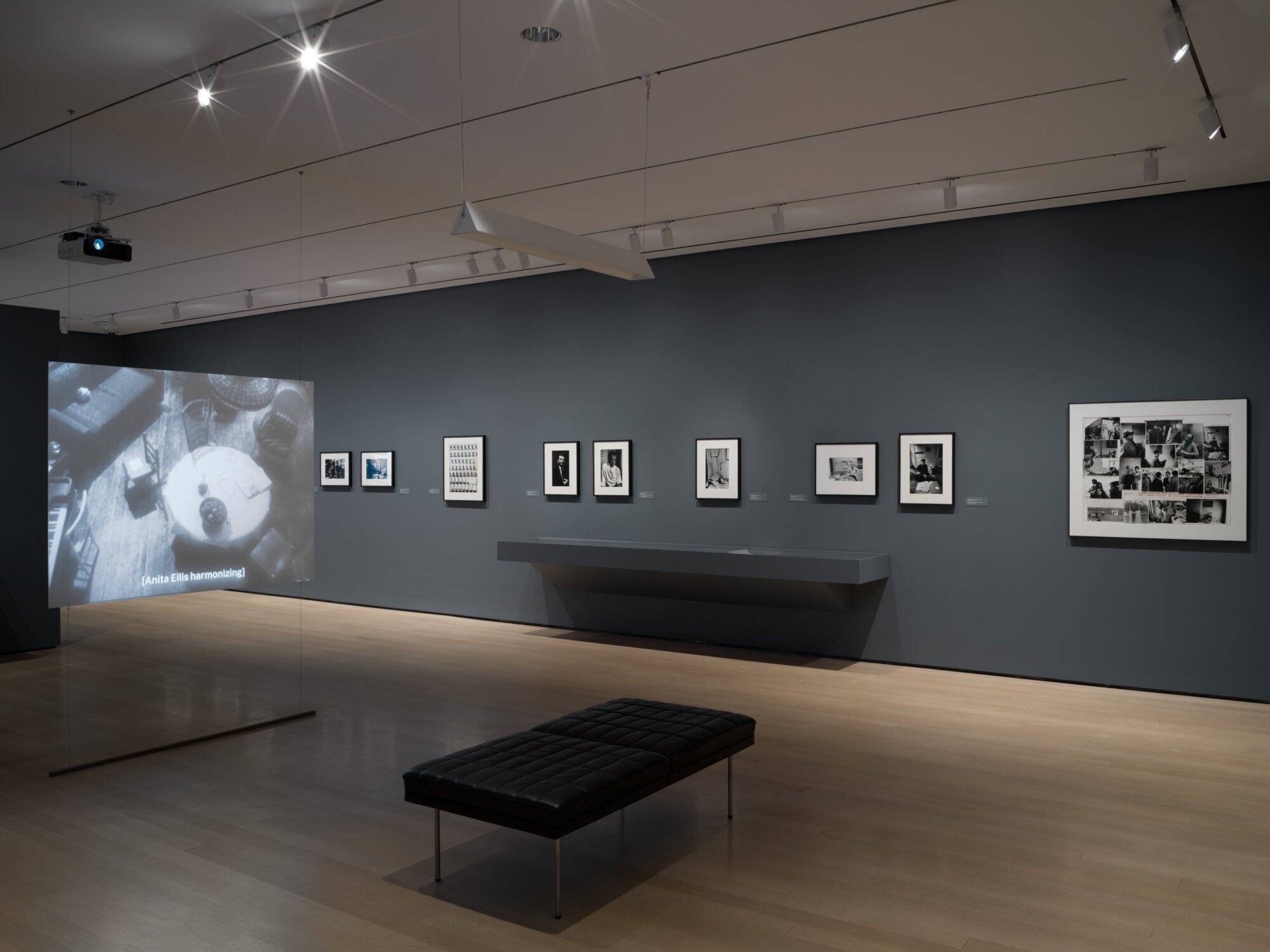
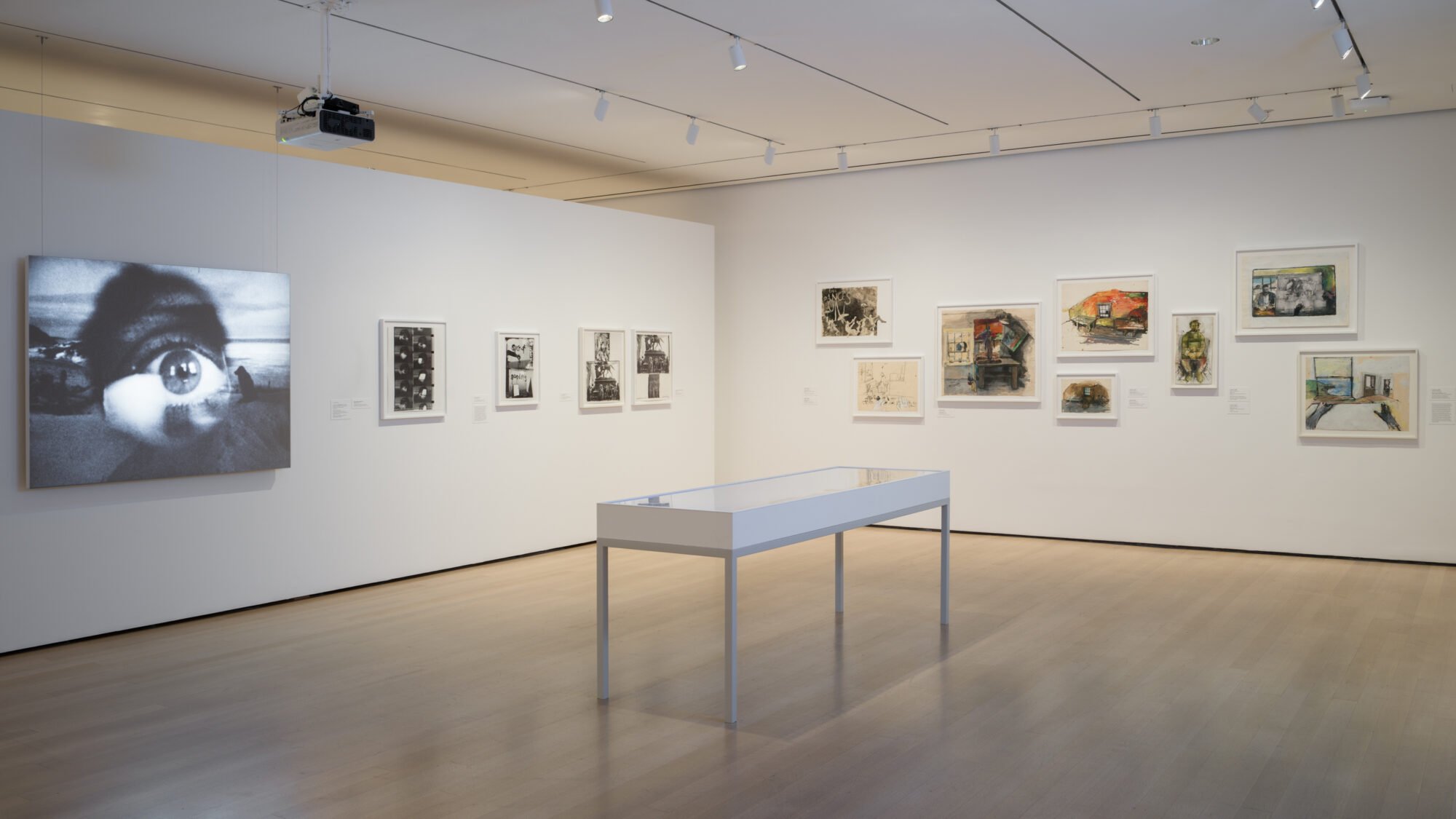
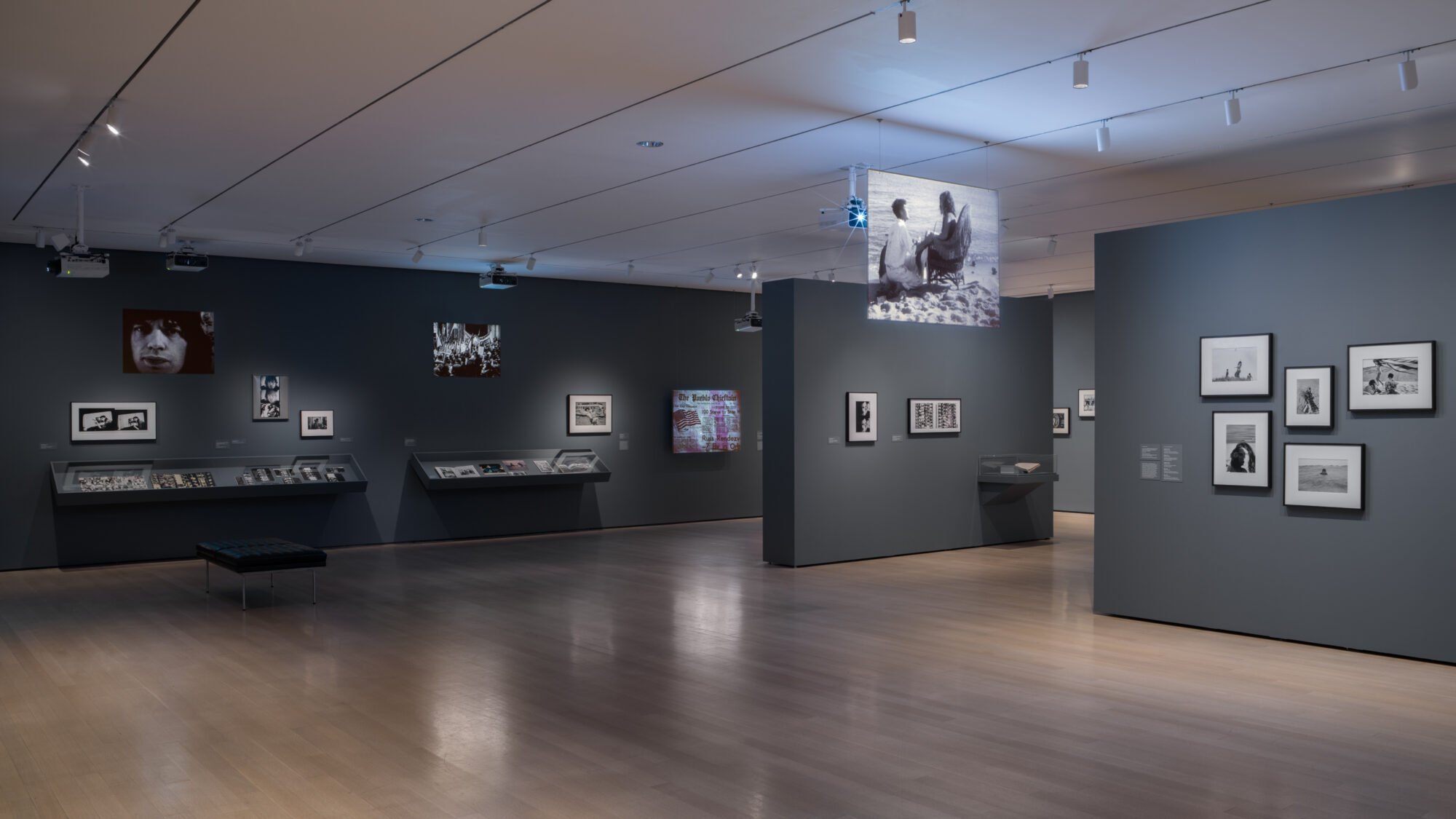
Installation view, Life Dances On: Robert Frank in Dialogue, on view at The Museum of Modern Art, New York, from September 15, 2024, through January 11, 2025. Photo by Jonathan Dorado © 2024 The Museum of Modern Art, New York
NEW YORK, The Museum of Modern Art presents Life Dances On: Robert Frank in Dialogue, an exhibition that provides new insights into the interdisciplinary and lesser-known aspects of photographer and filmmaker Robert Frank’s expansive career.On view from September 15, 2024, to January 11, 2025, the exhibition delves into the six decades that followed Frank’s landmark photobook The Americans (1958) until his death in 2019, highlighting his perpetual experimentation and collaborations across various mediums. Coinciding with the centennial of the artist’s birth, and taking its name from his 1980 film, Life Dances On explores Frank’s artistic and personal dialogues with other artists and with his communities. The exhibition features more than 250 objects, including photographs, films, books, and archival materials, drawn from MoMA’s extensive collection alongside significant loans. Life Dances On: Robert Frank in Dialogue is organized by Lucy Gallun, Curator, with Kaitlin Booher, Newhall Fellow, and Casey Li, 12 Month Intern, Department of Photography.

Robert Frank. Sick of Goodby’s. 1978. Gelatin silver print, 21 15/16 × 12 11/16″ (55.8 × 32.3 cm). The Museum of Modern Art, New York. Purchase. © 2024 The June Leaf and Robert Frank Foundation
“This exhibition offers visitors a fresh perspective on this beloved and influential artist,” said Gallun. “The enormous impact of Frank’s book The Americans meant that he is often remembered as a solo photographer on a road trip, a Swiss artist making pictures of an America that he traversed as an outsider. And yet, in the six decades that followed, Frank continually forged new paths in his work, often in direct artistic conversation with others, and these contributions warrant closer attention. The pictures, films, and books he made in these years are evidence of Frank’s ceaseless creative exploration and observation of life, at once searing and tender.”

Robert Frank. Cocksucker Blues. 1972. Gelatin silver print, 19 7/8 × 15 7/8″ (50.5 × 40.3 cm). The June Leaf and Robert Frank Foundation. © 2024 The June Leaf and Robert Frank Foundation
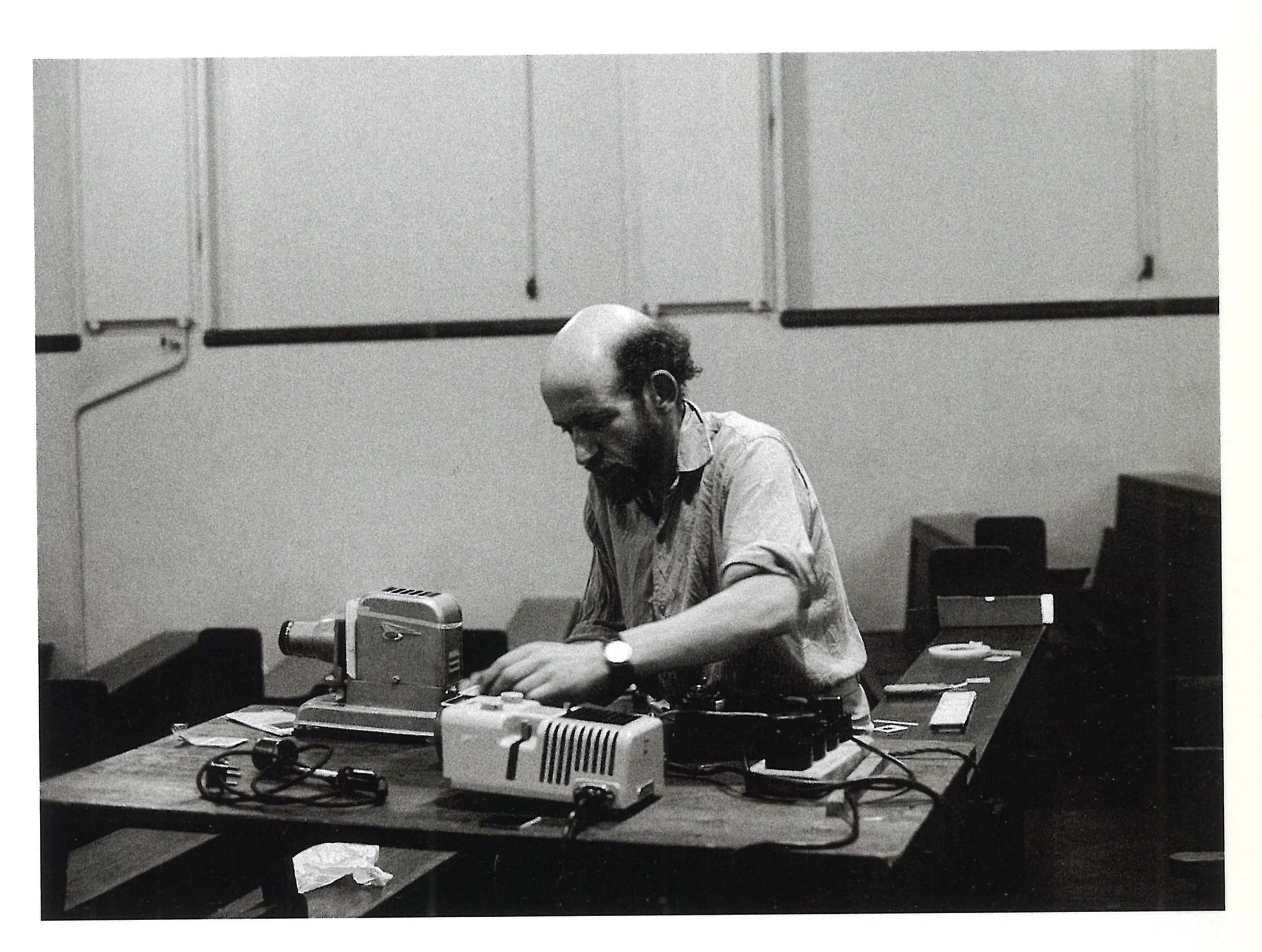
Organized loosely chronologically, Life Dances On focuses on the theme of dialogue in Frank’s work and reflects on the significance of individuals who shaped his outlook. Frank’s own words are present throughout the exhibition—in the texts he scrawled directly onto his photographic negatives, in the spoken narrative accompanying his films, and in quotes woven into the exhibition catalogue published by MoMA in conjunction with the exhibition. Also revealed throughout the exhibition is Frank’s innovation across multiple mediums, from his first forays into filmmaking alongside other Beat Generation artists, with films such as Pull My Daisy (1959), to the artist’s books he called “visual diaries,” which he produced almost yearly over the last decade of his life.

Robert Frank. Andrea. 1975. Five gelatin silver prints and ink on paper, 10 15/16 × 13 7/8″ (27.8 × 35.2 cm). The Museum of Modern Art, NY. Gift of the June Leaf and Robert Frank Foundation in honor of Clément Chéroux and Lucy Gallun. © 2024 The June Leaf and Robert Frank Foundation
By focusing on dialogue and experimentation, the exhibition explores such enduring subjects as artistic inspiration, family, partnership, loss, and memory through the lens of Frank’s own personal traumas and life experiences. Among the works presented in the exhibition is a selection of photographs drawn from Frank’s footage for his 1980 film Life Dances On. These works reflect on the significance of individuals who shaped Frank’s own outlook—in this case, his daughter Andrea and his friend and film collaborator Danny Seymour. Like much of his work, the film finds its setting in Frank’s own communities in New York City and in Cape Breton, Nova Scotia, where he and his wife, the artist June Leaf, moved in 1970. An abundance of material was loaned to the exhibition by the June Leaf and Robert Frank Foundation, including works from the artist’s archives that are shown publicly for the first time, as well as personal artifacts, correspondence, and book maquettes.

Robert Frank. Jack Kerouac. 1959. Gelatin silver print, 10 ⅞ x 8 5/16” (27.7 x 21.1 cm). National Gallery of Art, Washington, DC. Robert Frank Collection, Gift of Robert Frank. © 2024 The June Leaf and Robert Frank Foundation
In conjunction with the exhibition, MoMA presents Robert Frank’s Scrapbook Footage, an installation in the Morita and Titus galleries, featuring Frank’s previously unseen film and video footage, designed by Frank’s longtime film editor, Laura Israel, and art director Alex Bingham. With the support of the June Leaf and Robert Frank Foundation, Israel and Bingham have crafted a multichannel installation from newly digitized and restored materials unearthed after Frank’s death. On view for the first time, this installation reveals Frank’s restless experimentation and offers an opportunity to encounter the central figures of his life and work in New York, Nova Scotia, and beyond. On the occasion of the exhibition, MoMA will also present a complete retrospective of Robert Frank’s films and videos—many of them newly restored by the Museum. Robert Frank’s Scrapbook Footage is organized by Joshua Siegel, Curator, Department of Film, with Lucy Gallun, Curator, and Kaitlin Booher, Newhall Fellow, Department of Photography, and the accompanying retrospective of Robert Frank’s films and videos is organized by Siegel.
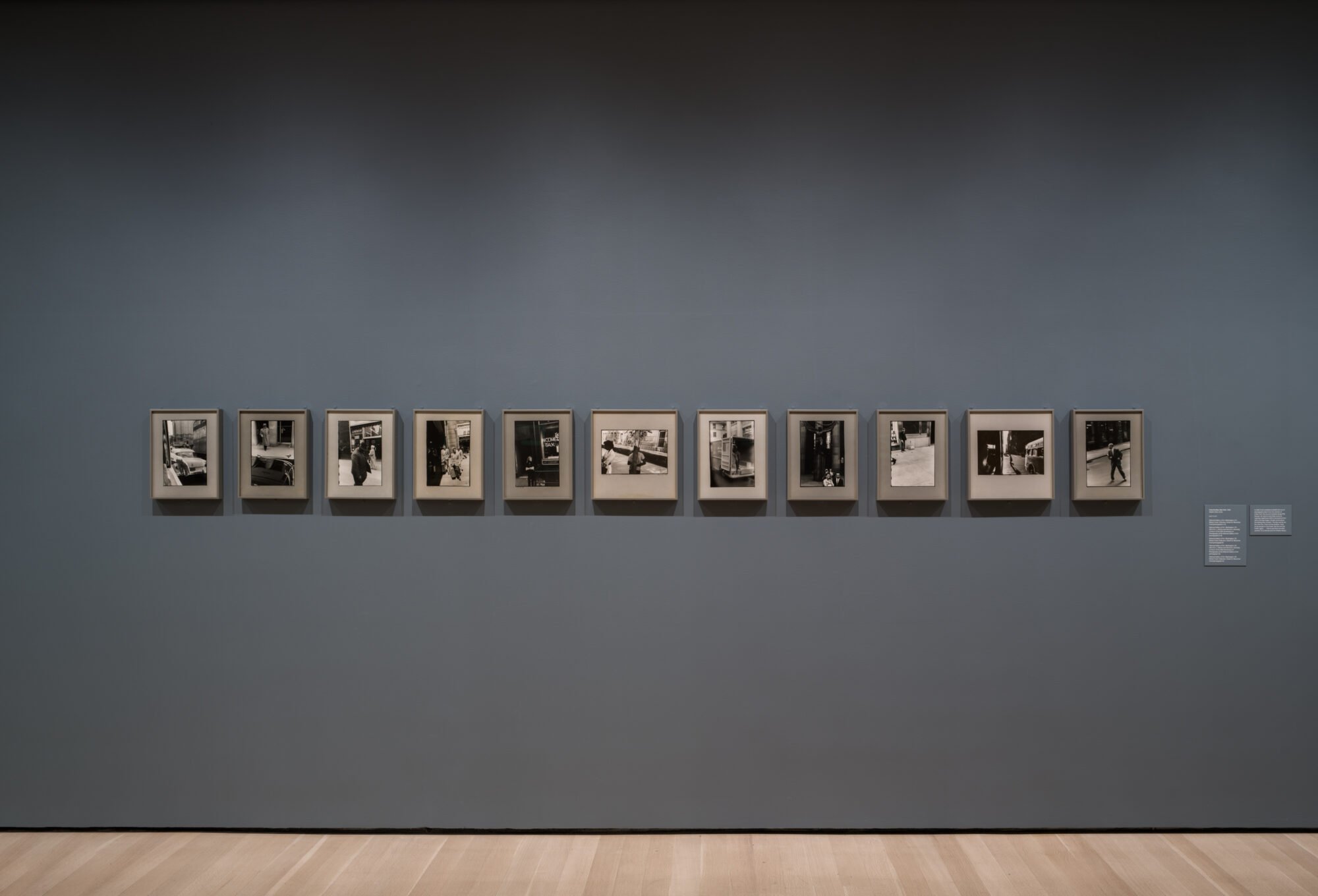
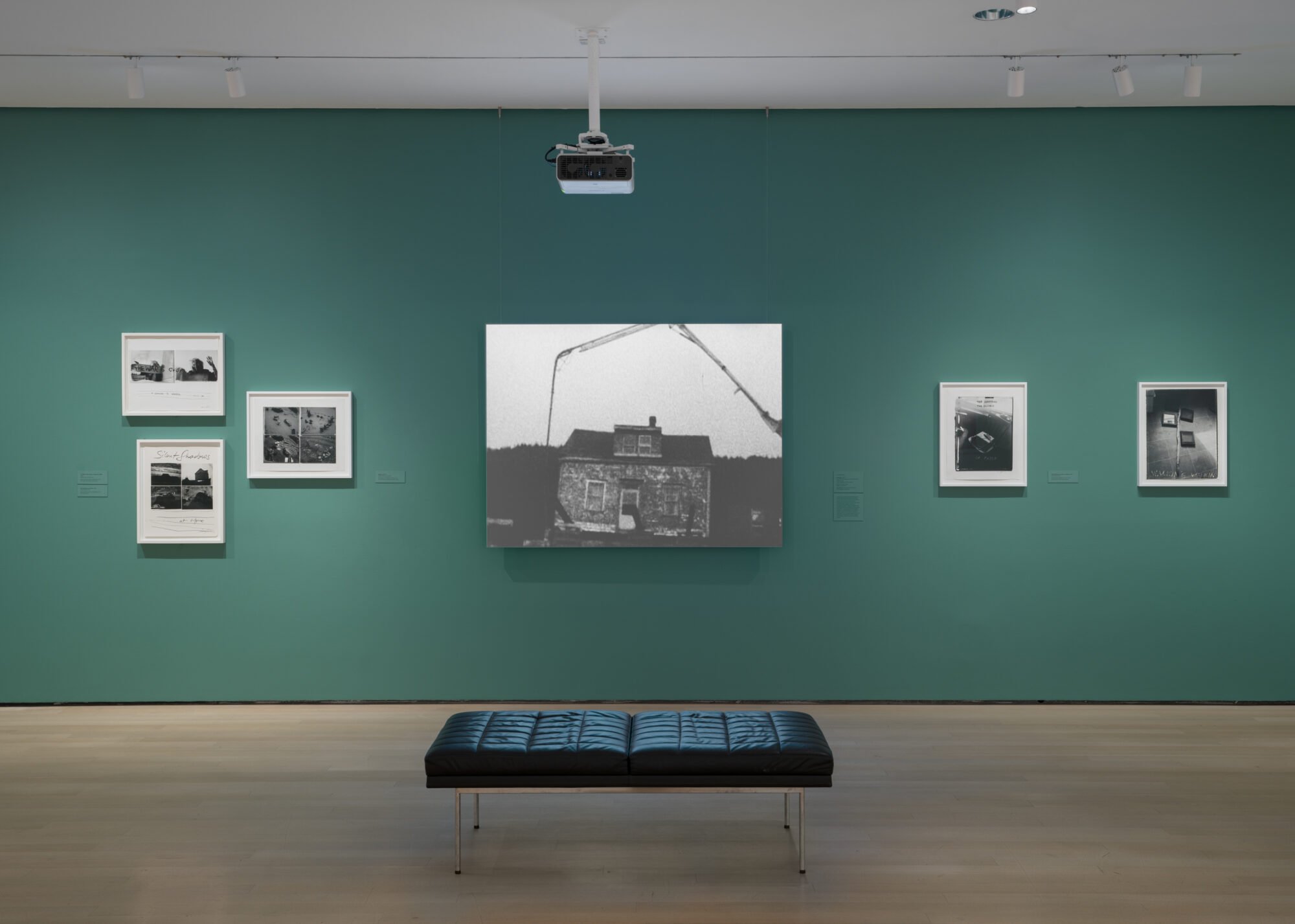
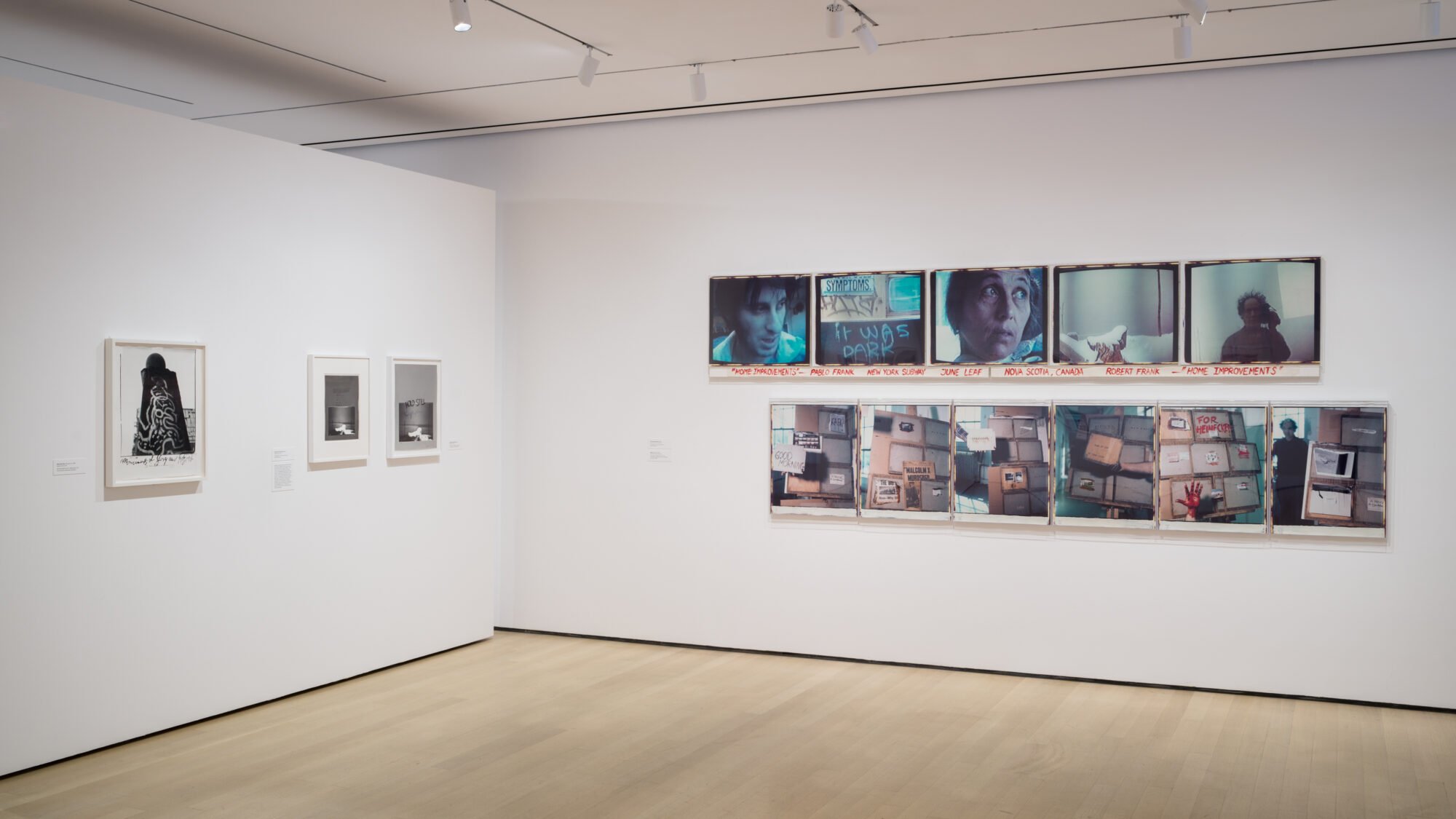
Installation view, Life Dances On: Robert Frank in Dialogue, on view at The Museum of Modern Art, New York, from September 15, 2024, through January 11, 2025. Photo by Jonathan Dorado © 2024 The Museum of Modern Art, New York
MoMA has been exhibiting Frank’s work since 1950, early in his career. In 1962, the Museum featured Frank’s work in a two-person exhibition alongside photographer Harry Callahan. Since then, the Museum has regularly collected and exhibited his work, and today the Museum’s collection includes over 200 of Frank’s photographs. That collection has been built through important gifts from Robert and Gayle Greenhill in 2013, and more recently, a promised gift to the Museum from Michael Jesselson, comprising a remarkable group of works, many of which are presented at MoMA for the first time in this exhibition. In 2015, the artist made an extraordinary gift of his complete film and video works, spanning the entirety of his career in filmmaking. MoMA’s Department of Film has since been engaged in a multiyear restoration project of these materials. Building upon this significant history with the Museum, Life Dances On: Robert Frank in Dialogue is the first solo exhibition of Robert Frank’s work at MoMA.

Robert Frank. James Baldwin. c. 1963. Gelatin silver print, 13 15/16 × 9 13/16″ (35.4 × 24.9 cm). The Museum of Modern Art, New York. Gift of the artist. © 2024 The June Leaf and Robert Frank Foundation
PUBLICATION:
The accompanying publication, edited by Gallun, features photographs, films, books, and archival materials, layered with quotes from Frank on his influences and process. Three scholarly essays, excerpts from previously unpublished video footage, and a rich visual chronology together explore Frank’s ceaseless creative exploration and observation of life. 192 pages, 150 illustrations. Hardcover, $60. ISBN: 978-1-63345-164-3. Published by The Museum of Modern Art, New York, and available at MoMA stores and online at store.moma.org. Distributed to the trade through ARTBOOK|D.A.P. in the United States and Canada, and through Thames & Hudson in the rest of the world.
SPONSORSHIP:
Endowment.
Leadership support for the exhibition is provided by the Noel and Harriette Levine
Generous funding is provided by the Alice L. Walton Foundation.
Additional support is provided by the Consulate General of Switzerland in New York. Major support for the publication is provided by Jo Carole and Ronald S. Lauder through The International Council of The Museum of Modern Art. Generous funding is provided by the John Szarkowski Publications Fund.FILM SERIES: The Complete Robert Frank: Films and Videos, 1959–2017 November 20–December 11, 2024 The Roy and Niuta Titus Theaters
In conjunction with the gallery exhibition Life Dances On: Robert Frank in Dialogue and the installation Robert Frank’s Scrapbook Footage, MoMA presents a complete retrospective of Robert Frank’s films and videos, many of them in new digital preservations and remasters, together with a modest selection of films relating to the artist and his circle of family, friends, and collaborators. Recognizing his uniquely important relationship with MoMA, Frank donated all of his unique film and video materials to its collection in 2015. These works span the entirety of Frank’s moving-image career, from his 1959 Beat psychodrama Pull My Daisy (co-directed by Alfred Leslie and starring the poets Allen Ginsberg, Peter Orlovsky, and Gregory Corso; the artists Larry Rivers and Alice Neel; and the actress Delphine Seyrig; with narration by Jack Kerouac) to his 2008 video Fernando, a touching portrait of a Swiss artist friend, and Harry Smith at the Breslin Hotel, 1984 (2017).
Organized by Joshua Siegel, Curator, Department of Film. Thanks to The June Leaf and Robert Frank Foundation, Peter Williamson, Laura Israel, and Nicholas Dawidoff.
Film at MoMA is made possible by CHANEL.
Additional support is provided by the Annual Film Fund. Leadership support for the Annual Film Fund is provided by Debra and Leon D. Black, with major funding from The Contemporary Arts Council of The Museum of Modern Art, The International Council of The Museum of Modern Art, Jo Carole and Ronald S. Lauder, the Association of Independent Commercial Producers (AICP), and The Young Patrons Council of The Museum of Modern Art.
This exhibition opened September 15, 2024 and will be on view until January 11, 2025 at The Museum of Modern Art in conjunction with Life Dances On, MoMA also presents Robert Frank’s Scrapbook Footage from September 15, 2024, through March 2025, and The Complete Robert Frank: Films and Videos, 1959–2017 from November 20 through December 11, 2024.
For more information about this exhibition and others at MoMA please visit their site here. The museum can be found on Instagram, Facebook, X, Threads, TikTok, Spotify, and YouTube.
KAWS + Warhol

Andy Warhol, Train, 1983, © The Andy Warhol Foundation for the Visual Arts, Inc.
The Andy Warhol Museum announces KAWS + Warhol. In celebration of its 30th anniversary, The Warhol presents KAWS + Warhol, the first exhibition to examine the dark themes present in the work of both artists. From skulls to car crashes, both artists deploy their signature bright colors and pop culture references while also presenting the lurid spectacle of death. The dark undercurrents in the work of KAWS and Warhol are magnified and brought into plain sight by presenting the two artists together for the first time.

KAWS and General Mills, Franken Berry Limited Edition Cereal Box, 2022, © KAWS, Photo Brad Bridgers
KAWS will also respond to Warhol’s embrace of commercialism by presenting a new series of paintings, sculptures and installations related to his recent commission with General Mills which inserted his signature characters into the packaging for some of America’s most loved cereal boxes including Frankenberry, Frute Brute, Count Chocula and Boo-Berry. The cereal works will be juxtaposed with Warhol’s iconic Brillo Boxes and his lesser-known series of paintings for children.

.
Andy Warhol, Little Electric Chair, 1964-65, © The Andy Warhol Foundation for the Visual Arts, Inc.
“KAWS and Warhol share many qualities, from their joyful embrace of commercial ventures to a relentless mining of American culture for inspiration,” said Patrick Moore, director of The Warhol and curator of the exhibition. “However, what most fascinates me with both artists is their ability to delight viewers, especially young people, while exploring dark and serious themes. By pairing these two artists, the museum continues its work to keep Warhol’s legacy relevant and fresh.”

KAWS, TIDE, 2020, © KAWS, Photo Farzad Owrang
“Warhol’s bold and unapologetic approach to art continues to inspire generations, and his ability to challenge conventional norms through his work is a testament to his visionary genius. As an artist, I am humbled to be part of an exhibition alongside Warhol at his eponymous museum and to contribute to the ever-evolving legacy of one of the greatest artistic minds of our time,” said KAWS.

KAWS, COMPANION 2020, 2020, © KAWS
In response to The Warhol’s new initiative, The Pop District, KAWS will also present a monumental wooden sculpture in Pop Park, directly across from the museum and visible from its entrance space.

Andy Warhol, Moon Explorer Robot, 1983, © The Andy Warhol Foundation for the Visual Arts, Inc.
KAWS + Warhol is curated by Patrick Moore, director of The Warhol. The exhibition is expected to travel to at least two international venues to be announced.

KAWS, UNTITLED (KIMPSONS), PACKAGE PAINTING SERIES, 2001, © KAWS, Photo Brad Bridgers
A press preview of the exhibition that included a tour with Patrick Moore, director of The Warhol, will took place on Friday, May 17, 2024 at 2 p.m. at The Warhol.
The Warhol receives state arts funding support through a grant from the Pennsylvania Council on the Arts, a state agency funded by the Commonwealth of Pennsylvania; the National Endowment for the Arts, a federal agency; and The Heinz Endowments. Further support is provided by the Allegheny Regional Asset District.

Andy Warhol, Skull, 1976, © The Andy Warhol Foundation for the Visual Arts, Inc.
The Andy Warhol Museum
Located in Pittsburgh, Pennsylvania, the place of Andy Warhol’s birth, The Andy Warhol Museum holds the largest collection of Warhol’s artworks and archival materials and is one of the most comprehensive single-artist museums in the world. The Warhol is one of the four Carnegie Museums of Pittsburgh.
The Andy Warhol Museum can be found on X, Facebook, Instagram, YouTube, and TikTok.
Carnegie Museums of Pittsburgh
Established in 1895 by Andrew Carnegie, Carnegie Museums of Pittsburgh is a collection of four distinctive museums: Carnegie Museum of Art, Carnegie Museum of Natural History, Carnegie Science Center, and The Andy Warhol Museum. The museums reach more than 1.4 million people a year through exhibitions, educational programs, outreach activities, and special events.
The Carnegie Museums of Pittsburgh can be found on Facebook.
The exhibition has been on view since May 18, 2024, and will conclude on January 20, 2025.
Kaifan Wang: One Piece

Kaifan Wang: One Piece Installation views, 2024 BLUM Los Angeles © 2024 Kaifan Wang; Courtesy of the artist and BLUM Los Angeles, Tokyo, New York Photo: Evan Walsh
BLUM is pleased to present One Piece, Berlin-based artist Kaifan Wang’s first solo exhibition with the gallery. There is a nomadic underpinning to the way that Wang thinks—this mindset sentimentally unifies the artist’s practice as well as this exhibition. Born in Hohhot, China, an area with a long cultural history that has been buried by rapid urban development, and living in Berlin, Wang is a masterful and worldly storyteller with the unique ability to find overlap between the histories of the Chinese diaspora and the preexisting narratives embedded within the places where he lives or works. For Wang, migration is a means of traversing cultural references across time and space to find meaning in the now.

Kaifan Wang Silver Lining, 2024 Oil, oil stick, acrylic on canvas 74 3/4 x 94 1/2 x 1 3/4 inches (189.9 x 240 x 4.4 cm) 77 1/4 x 97 x 2 3/4 inches framed (196.2 x 246.4 x 7 cm) Photo: Hannah Mjølsnes © 2024 Kaifan Wang; Courtesy of the artist and BLUM Los Angeles, Tokyo, New York
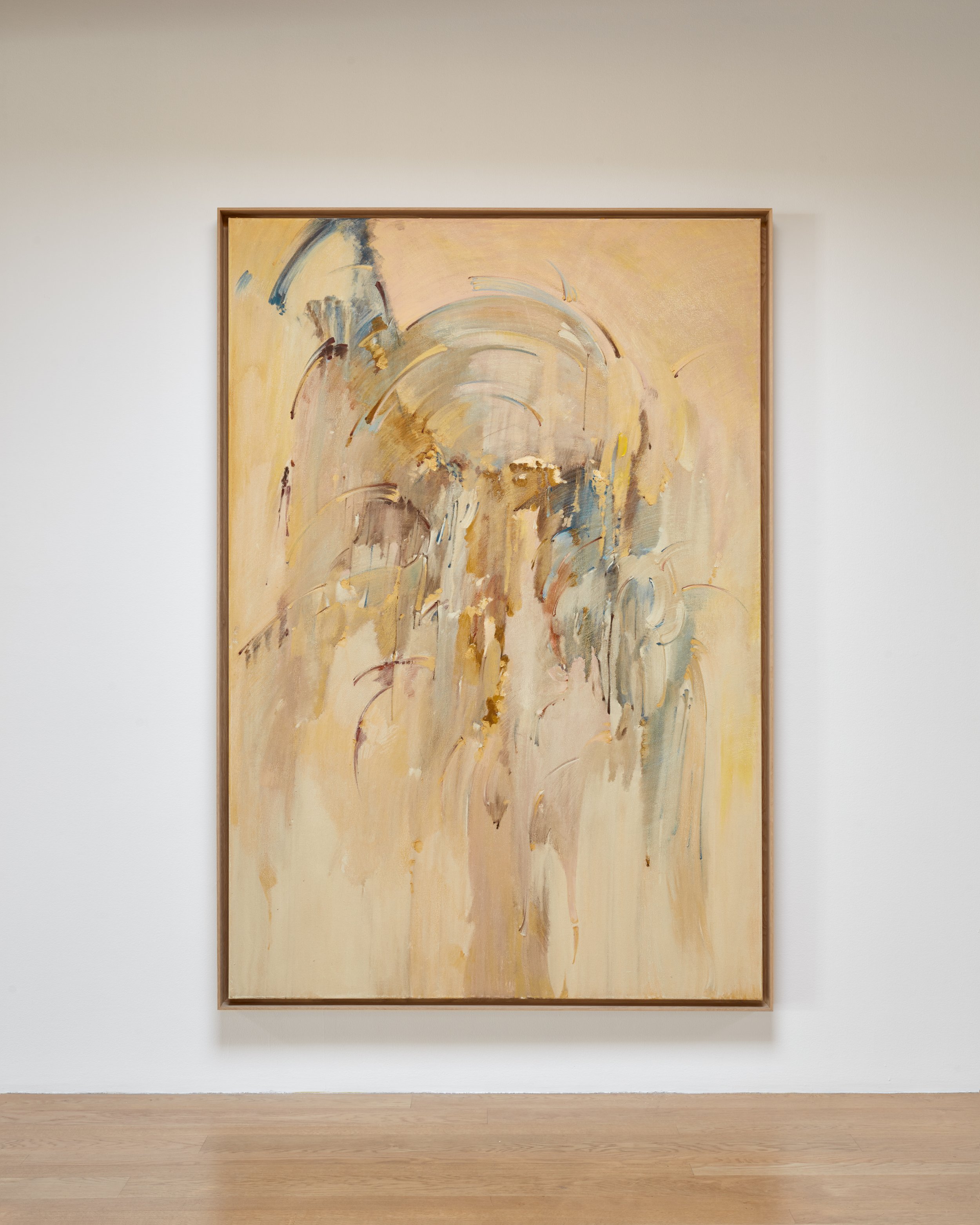
The artist draws out disparate references and discursively relates them to one another in surprising ways. Wang nods, for instance, to emigrants from Inner Mongolia through the movement and gestures in his paintings—some strokes moving along the pull of gravity or the natural flow of the composition and others moving against. Bearing in mind the stark contrast between the history of Chinese and Western abstract painting, Wang’s style ruminates on fractured cultural identities and the fluidity of human migration through flowing gestures and plumes of oil, oil stick, and acrylic on canvas—offering conclusions at once intellectual and emotive on a topic that is otherwise quite slippery. While doing research for One Piece, Wang visited Gustav Klimt’s Beethoven Frieze (1901–1902), a mural commissioned for the Secession Building in Vienna, Austria in which Klimt depicted Wagner’s literary interpretation of the swelling crescendos and opulence of Beethoven’s 9th Symphony as an expression of desire. As though with a gold thread, Wang draws unlikely parallels between the gold of Klimt’s goldleaf, the sandstorms of the artist’s childhood, and the gold rush that drew in the first generation of Chinese migrants to the United States. Here, gold becomes the intersection of desire and personal memories.



Kaifan Wang: One Piece Installation views, 2024 BLUM Los Angeles © 2024 Kaifan Wang; Courtesy of the artist and BLUM Los Angeles, Tokyo, New York Photo: Evan Walsh
Wang’s painting Gum Shan (2024), for instance, takes its title from a Cantonese name given to San Francisco that translates to “gold mountain.” Gum Shan captures Wang’s vivid visions of the glimmer of hope that might motivate nineteenth century Chinese prospectors arriving in California to mine gold— encouraged to marry and have children, sometimes just months away from their departure dates, they were meant to work hard and send their profits back home. As Wang puts it, “The inherent contradiction in the relationship between searching and desire is bondage.” The yearning for happiness can be a yoke along the path to autonomy.
One Piece, a Japanese manga and animation, is a story of risk-taking, adventurous seafarers, each representing different civilizations and spirits. All characters in this tale are driven to find the ultimate treasure of a fabled prize known as the one piece—although its nature is shrouded in mystery, this treasure unifies the characters in a common trajectory. This idea pervades Wang’s practice, apparent in the fusion of his vast array of references as well as each individual story. Reverse Mountain (2024) is a surrealist landscape. Its water flows upward along a golden mountain range toward the important gateway to the New World. Calm Belt (2024) is the impediment posed toward those who want to enter this same world. In this peaceful vignette, there is neither wind nor currents that could propel a ship toward successful passage to the coveted destination.

Kaifan Wang Reverse Mountain, 2024 Oil, oil stick, acrylic on canvas 86 5/8 x 59 x 1 3/4 inches (220 x 149.9 x 4.4 cm) 89 x 61 1/2 x 2 3/4 inches framed (226.1 x 156.2 x 7 cm) Photo: Hannah Mjølsnes © 2024 Kaifan Wang; Courtesy of the artist and BLUM Los Angeles, Tokyo, New York
One Piece coincides with the release of Kaifan Wang’s first monograph. Eponymously titled, this in- depth exploration of the artist’s practice features essays by Xiaoyu Weng, Martin Herbert, and Marta Gnyp.
About the Artist
Kaifan Wang (b. 1996, Hohhot, China) lives and works in Berlin, Germany. He studied in Shanghai and Florence before completing his Fine Arts education at the Universität der Künste, Berlin, Germany in 2022. Wang has exhibited his work in prominent group exhibitions, including Out of Silence: A Yuz Foundation Collection, Yuz Museum, Shanghai, China (2024); Supercrowds/Super community, TANK Shanghai, China (2024); Border crossing: Possibilities and Interactions, Yuz Museum, Shanghai, China (2023); Briefly Gorgeous, Songwon Art Center, Seoul, South Korea (2023); Temporary Chapter, Wilhelm Hallen, Berlin, Germany (2022); Caused BY Hair, Shanghai Himalayas Museum, Shanghai, China (2019); and FLUXUS+Studis, FLUXUS+ Museum, Potsdam, Germany (2019). Wang was featured in Influential 2023: Forbes China Contemporary Young Artists and won the Ivan Juritz Prize 2022, funded by King’s College London and Mahler & LeWitt Studios in Spoleto, Italy. He also received the HypoVereinsbank KunstCUBEs One-Year Artist Grant. The first monograph of his work will be released in October 2024
About BLUM
BLUM represents more than sixty artists and estates from seventeen countries worldwide, nurturing a diverse roster of artists at all stages of their practices with a range of global perspectives. Originally opened as Blum & Poe in Santa Monica in 1994, the gallery has been a pioneer in its early commitment to Los Angeles as an international arts capital.
The gallery has been acclaimed for its groundbreaking work in championing international artists of postwar and contemporary movements, such as CoBrA, Dansaekhwa, Mono-ha, and Superflat, and for organizing museum-caliber solo presentations and historical survey exhibitions across its spaces in Los Angeles, Tokyo, and New York. Often partnering with celebrated curators and scholars such as Cecilia Alemani, Alison M. Gingeras, Sofia Gotti, Joan Kee, and Mika Yoshitake, the gallery has produced large- scale exhibitions focusing on the Japanese Mono-ha school (2012); the Korean Dansaekhwa monochrome painters (2014); the European postwar movement CoBrA (2015); Japanese art of the 1980s and 1990s (2019); a rereading of Brazilian Modernism (2019); a revisionist take on the 1959 MoMA exhibition, New Images of Man (2020); and a survey of portraiture through a democratic and humanist lens (2023); among others.
BLUM’s wide-reaching program includes exhibitions, lectures, performance series, screenings, video series, and an annual art book fair at its base in Los Angeles. BLUM Books, the gallery’s publishing division, democratically circulates its program through original scholarship and accessible media ranging from academic monographs, audio series, magazines, to artists’ books.
Across the three global locations, BLUM prioritizes environmental and community stewardship in all operations. In 2015, it was certified as an Arts:Earth Partnership (AEP) green art gallery in Los Angeles and consequently became one of the first green certified galleries in the United States. The gallery is also a member of the Gallery Climate Coalition, which works to facilitate a more sustainable commercial art world and reduce the industry’s collective carbon footprint. BLUM is committed to fostering inclusive and equitable communities both in its physical and online spaces and believes that everybody should have equal access to creating and engaging with contemporary art.
At the BLUM Los Angeles location, the exhibition opened on November 2 and will be on view until December 21, 2024. There was an opening reception on Saturday, November 2, from 5–7pm.
For more information about this exhibition and others please visit Blum’s website here. The gallery can also be found on Instagram.
Yu Hong: Islands of the Mind
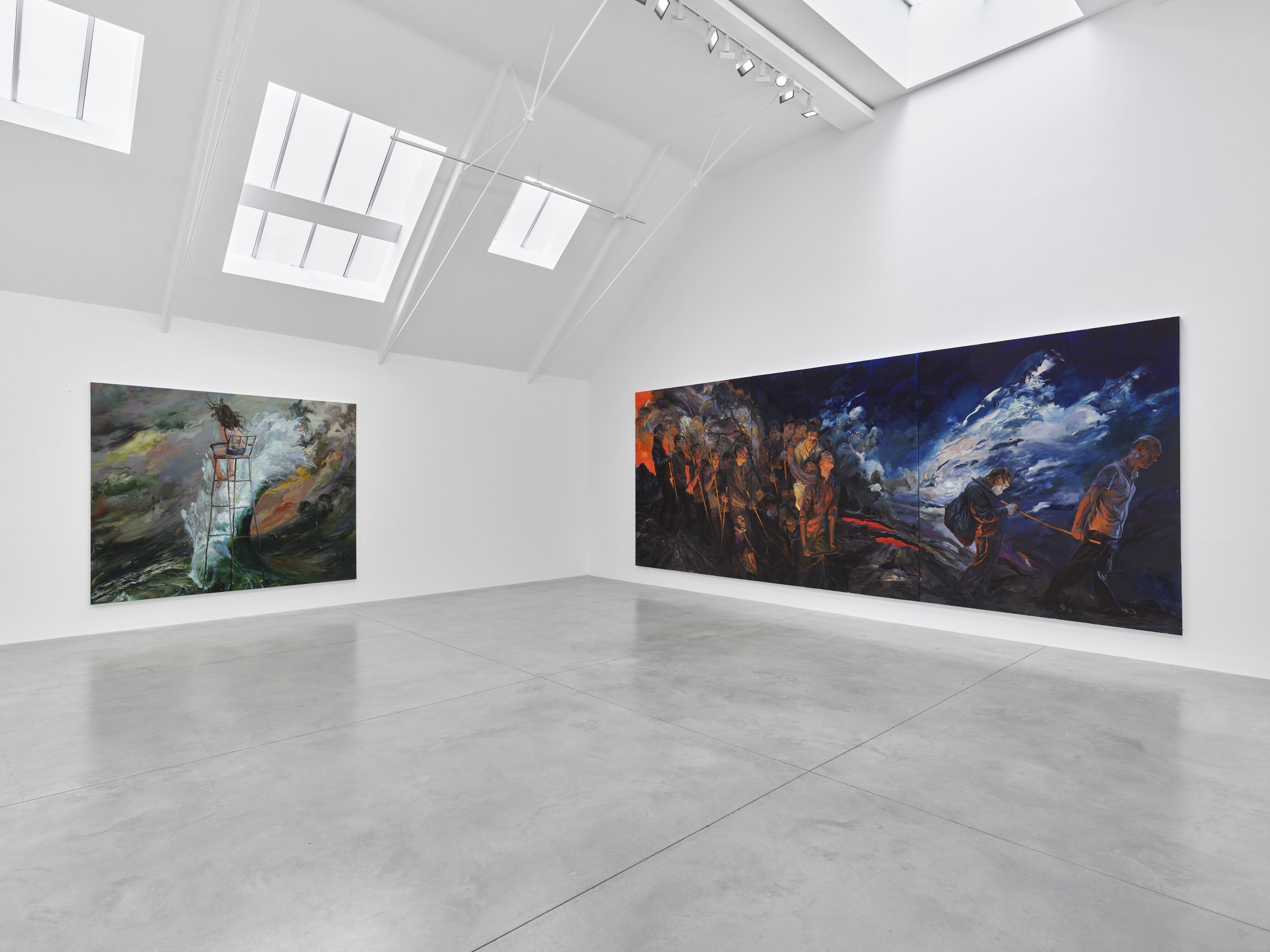
Installation view: Yu Hong, Islands of the Mind, Lisson Gallery London (27 September – 9 November 2024) © Yu Hong, Courtesy Lisson Gallery.
For her first solo exhibition in London, Yu Hong presents a series of large-scale new acrylic-on-canvas paintings. Based between Beijing and New York, the artist, who has been described as one of the most important voices of her generation, unveils a selection of poignant and poetic paintings that each explore a distinctive state of mind or consciousness.
Inspired by Arnold Böcklin Island of the Dead (1880-1901), this suite of paintings expands on the body of work unveiled in Yu Hong’s solo exhibition at the SCAD Museum of Art, Savannah in 2023, and follows her first major exhibition in Europe, where she transformed the Chiesetta della Misericordia in Venice through a series of new works organized by The Asian Art Initiative of the Guggenheim Museum, New York.
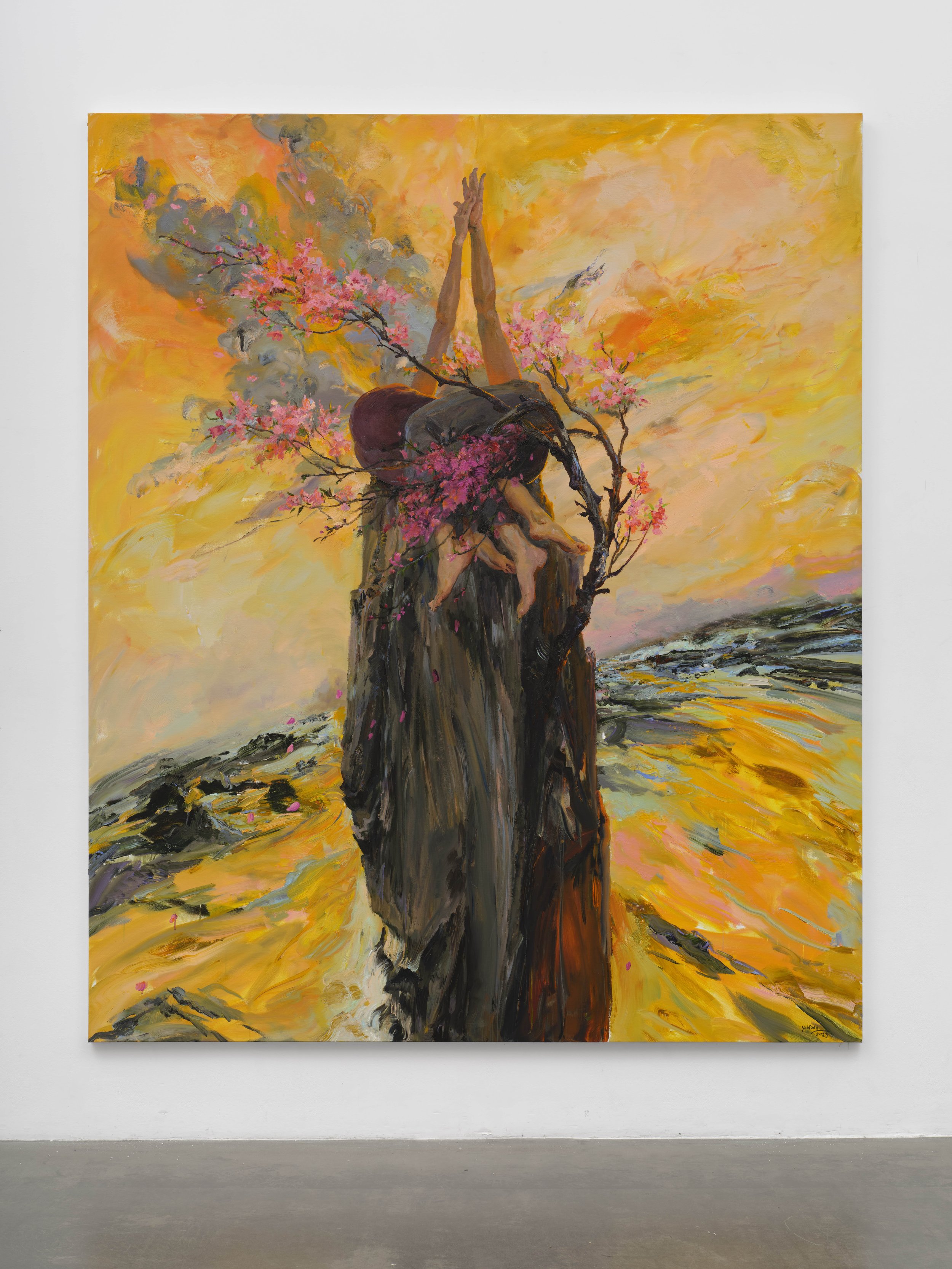
Yu Hong Island of Love, 2023 Acrylic on canvas 300 x 250 x 4.5 cm 118 1/8 x 98 3/8 x 1 3/4 in © Yu Hong, Courtesy Lisson Gallery
For this presentation, Yu Hong focuses on the concept of psychological landscapes, with each painting embodying an emotion or experience that unites us all: be it love, expectation, survival, oblivion or repose. In each of these works we witness the complexity of these experiences; the light with the dark. In Island of Love (2023), we discover a tender, seemingly blissful scene with two entwined figures intimately cocooned within a pink blossom tree, the lovers’ outstretched arms uniting above them in a symbol of hope. Yet on a towering flowering foundation they are alone in a vast expanse of water. The foreboding sea, with its waves pounding against the rock, becomes one with the sky, painted in what could be perceived as a heavenly, golden glow or a tempestuous volatility. In Island of Life (2024) there is a similar evocative glow, with two reclining figures perhaps Adam and Eve, with the lush apple tree and exotic birds beside them only visible by their legs. The painting, depicting equally solitary figures with just the sea beneath them, can be seen as a metaphor for paradise and the contradictions of life: the balance between joy and suffering, strength and weakness, temptation and control, love and loss.
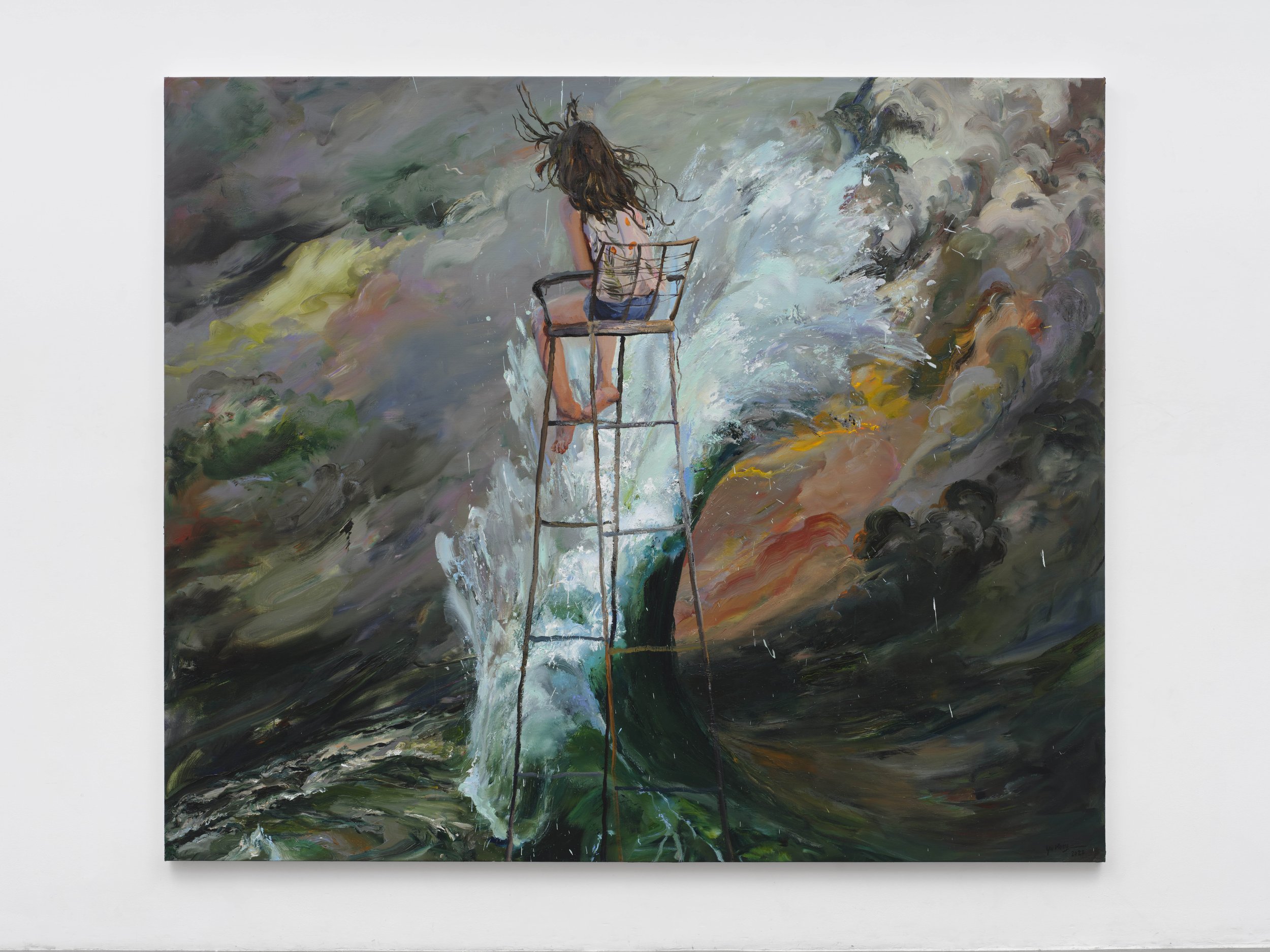
Yu Hong Island of Expectation, 2024 Acrylic on canvas 250 x 300 x 4.5 cm 98 3/8 x 118 1/8 x 1 3/4 in © Yu Hong, courtesy Lisson Gallery
Like many artists, Yu Hong gravitates toward the ocean as a recurring motif, symbolising depth, beauty, constant change, and the undercurrent layers of emotion. In Island of Expectation (2024) we see a young female figure, with her back to the viewer, sitting atop a high, laddered chair gazing out at a dramatic, turbulent sea, captured at the moment of the eruption of a powerful wave. In many of there is a sense that the character is on the edge, suspended in time, and often confronted with an extreme weather pattern, from rising sea levels to blazing tornados. In Island of Repose (2024) a lone female figure shelters her face with her arms as the sea prepares to wash over her; in Metropolis Island (2024), three adolescent girls converse on spiral staircases which surround a broken chimney while the world combusts beneath them; and in Island of Oblivion (2024) a group of contorted figures find refuge behind a rock, their bodies merging with their form of protection.
The exhibition also features Night Walk (2023), a monumental three-panel work referencing Pieter Bruegel the Elder’s The Blind Leading the Blind (1568). In this biblical, otherworldly painting, a line of adults bearing sticks with closed eyes cross a burning volcanic landscape, one of them riding a tricycle holding a group of wide-eyed children, with a screaming, chained monkey trailing behind. The procession, following two other (also blind) figures leading the way, impels the viewer to understand the individuals also as an entity as a group endeavour with a shared destiny.
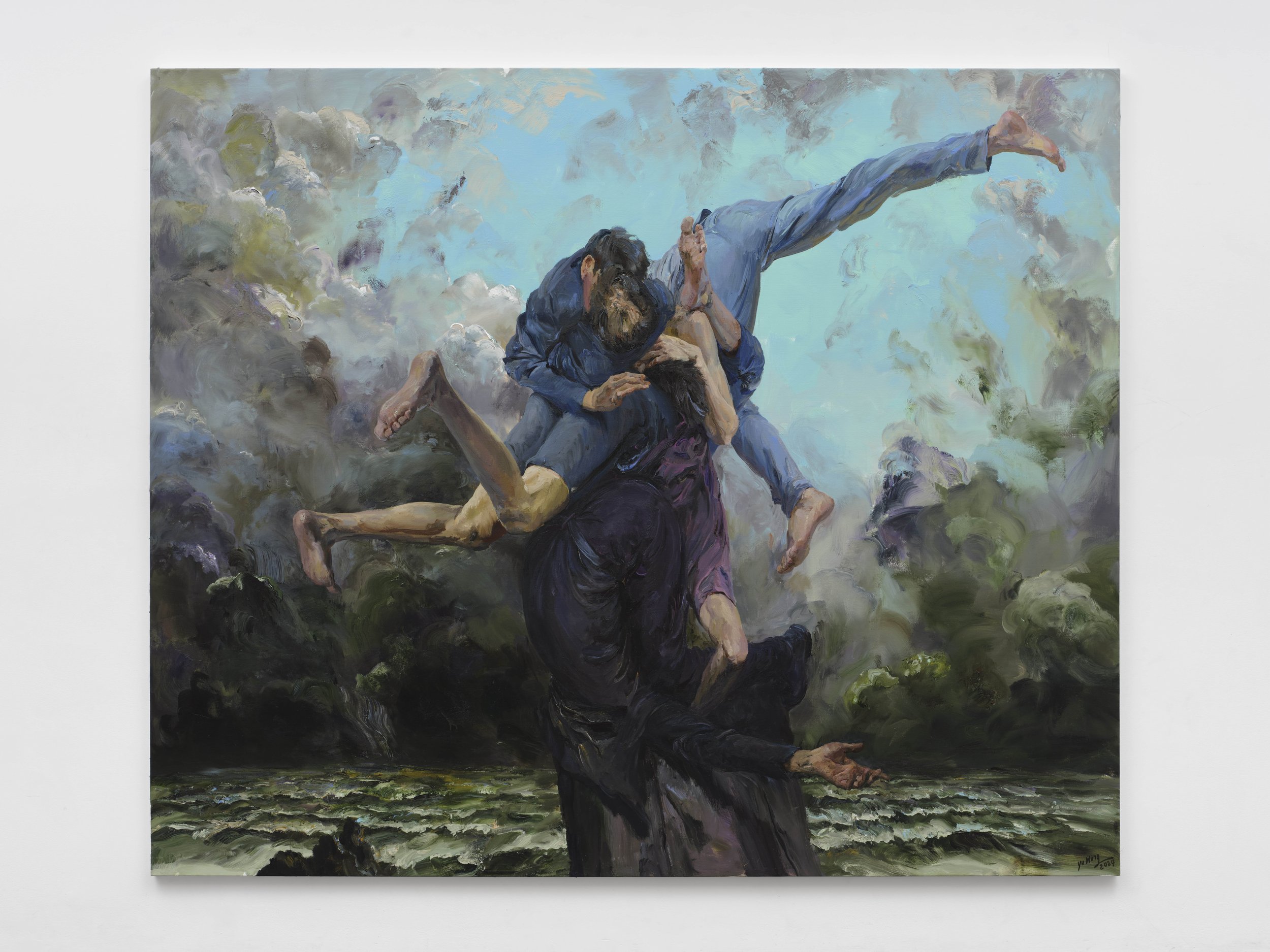
Yu Hong Island of Survival, 2024 Acrylic on canvas 250 x 300 x 4.5 cm 98 3/8 x 118 1/8 x 1 3/4 in © Yu Hong, Courtesy Lisson Gallery
One of the final and most dramatic works in the exhibition is Island of Survival (2024), depicting a frenzy of figures wrestling, twisted and writhing atop a platform set against a rendering of The Sea (c.1865). There is a sense of instability and unpredictability, heightened by the dark, tumultuous sea, but a brief break in the sky serves as a nod to the possibility of personal experiences living between East and West, witnessing the considerable changes that have taken place in contemporary life during this time, this new body of work reflects on our shifting, precarious state and provides a cathartic opportunity to both immerse ourselves in the deepest, darkest waters, and return to witness an opening in the clouds.
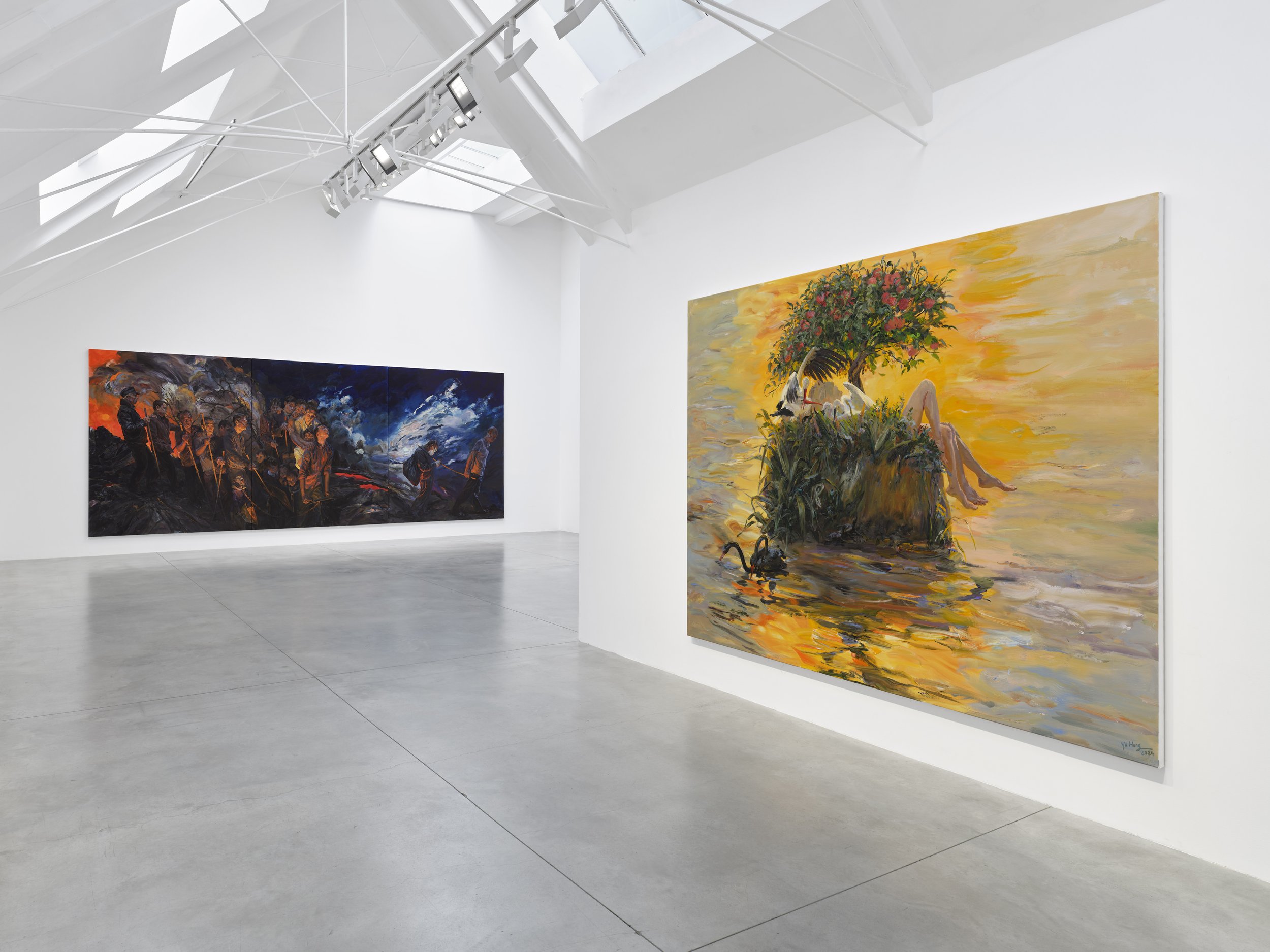
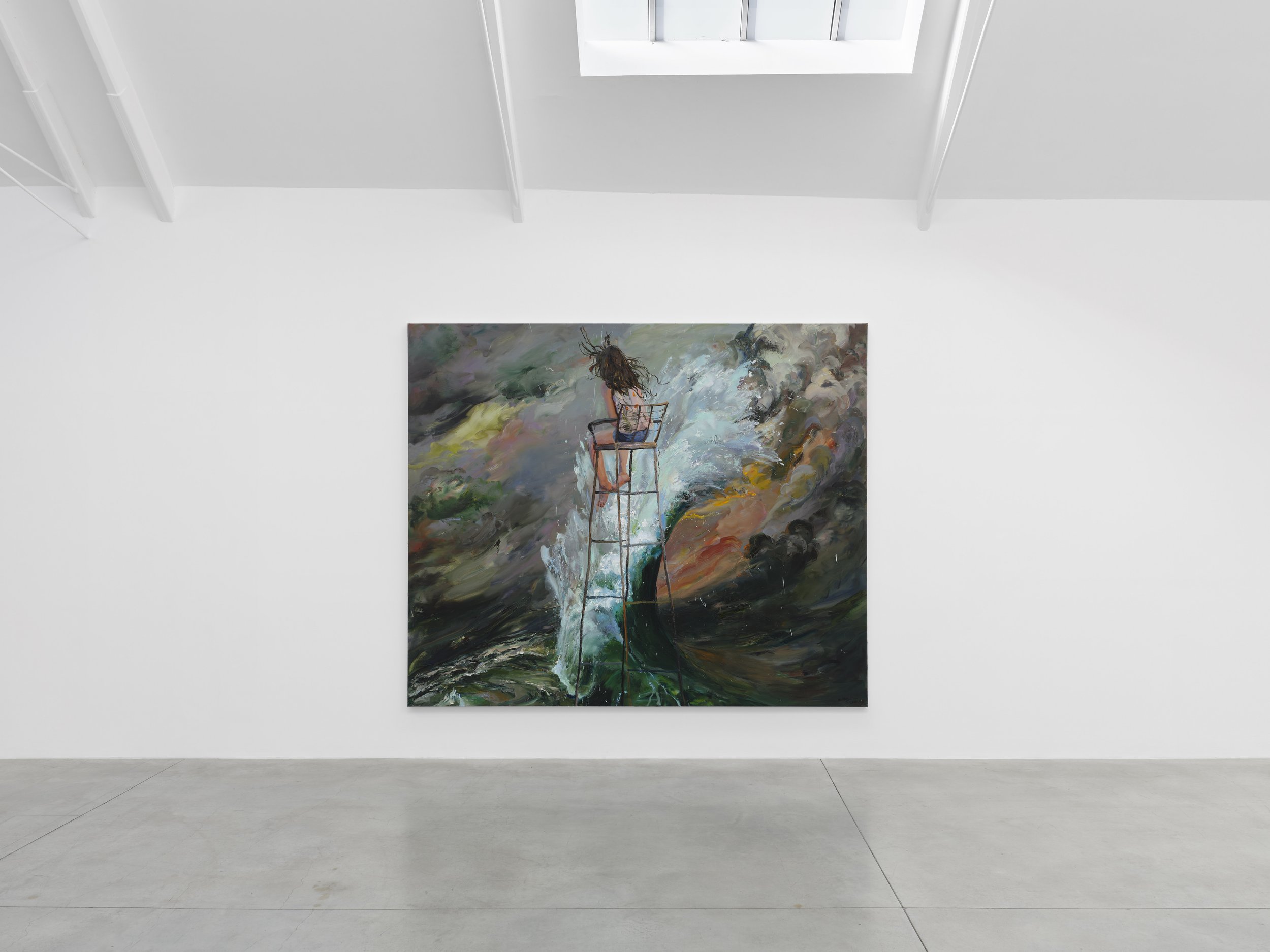
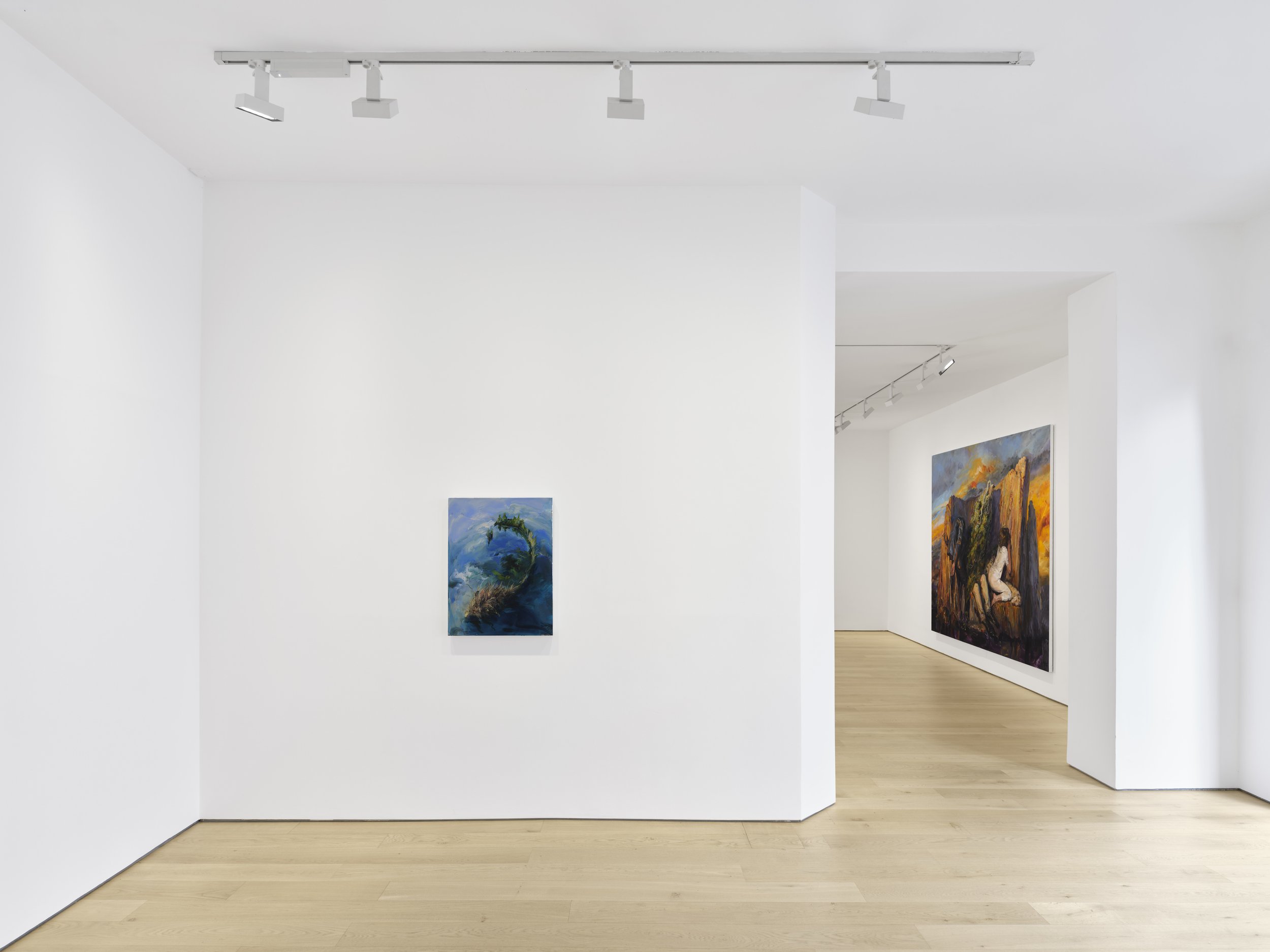
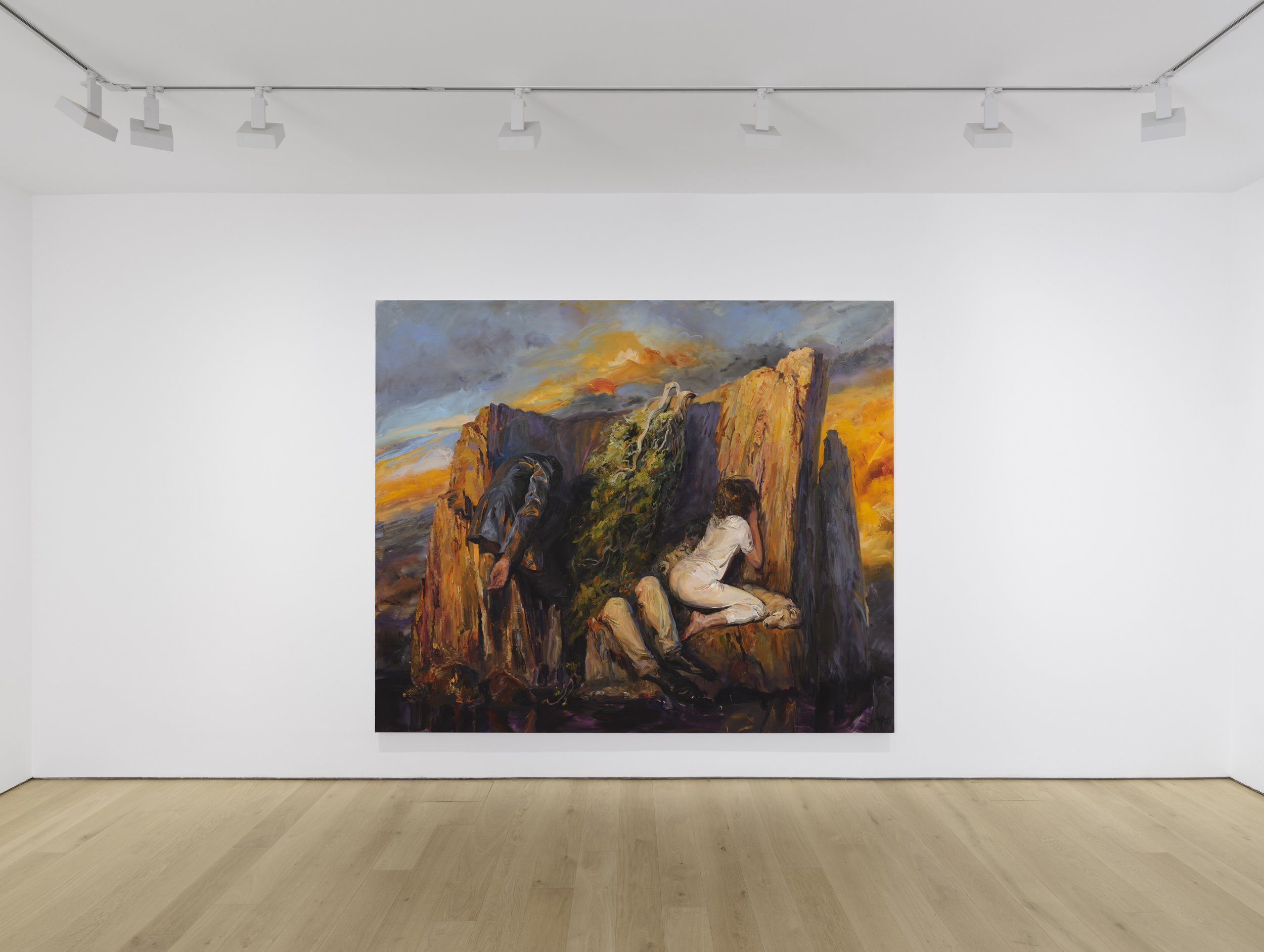
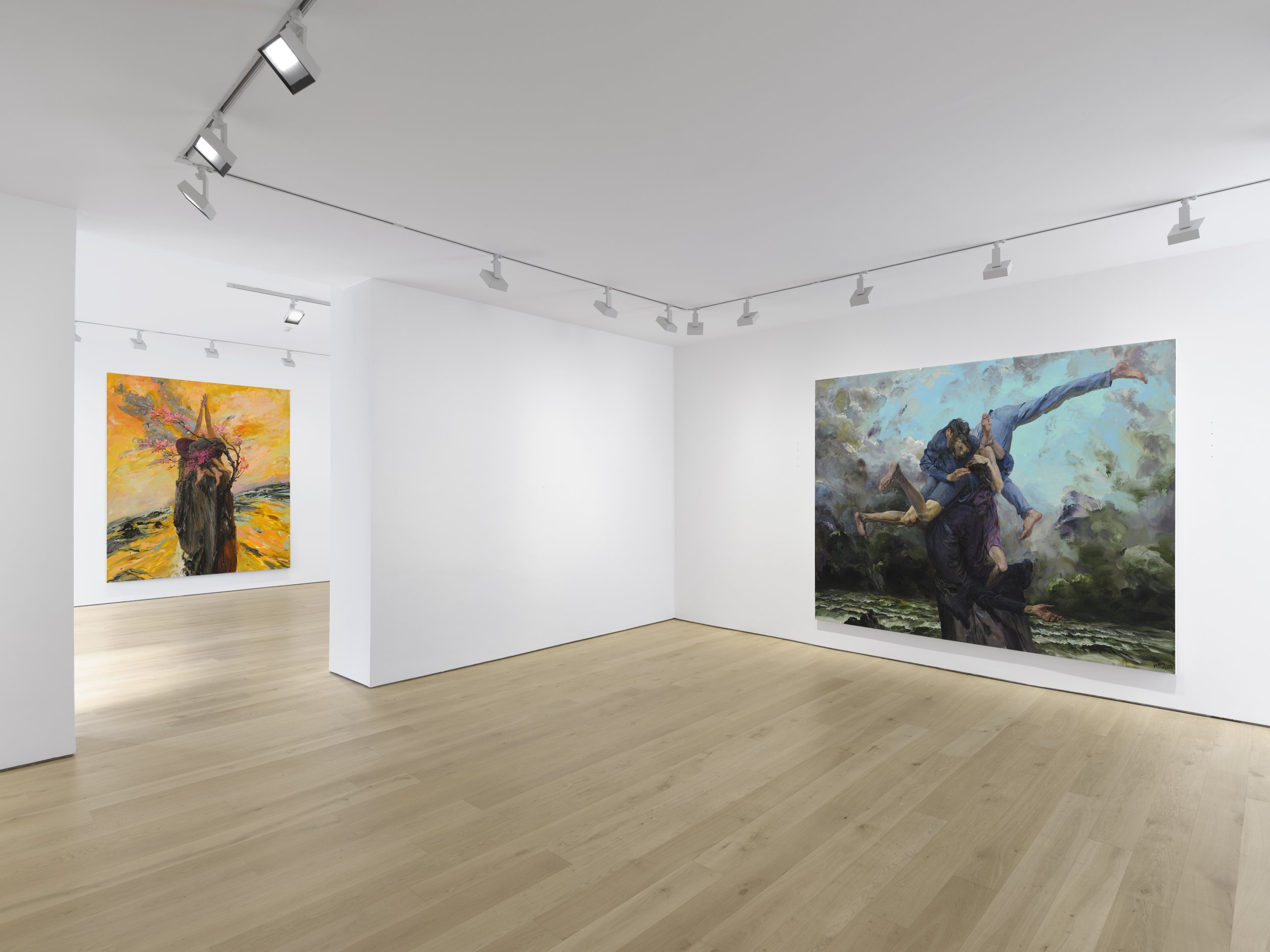
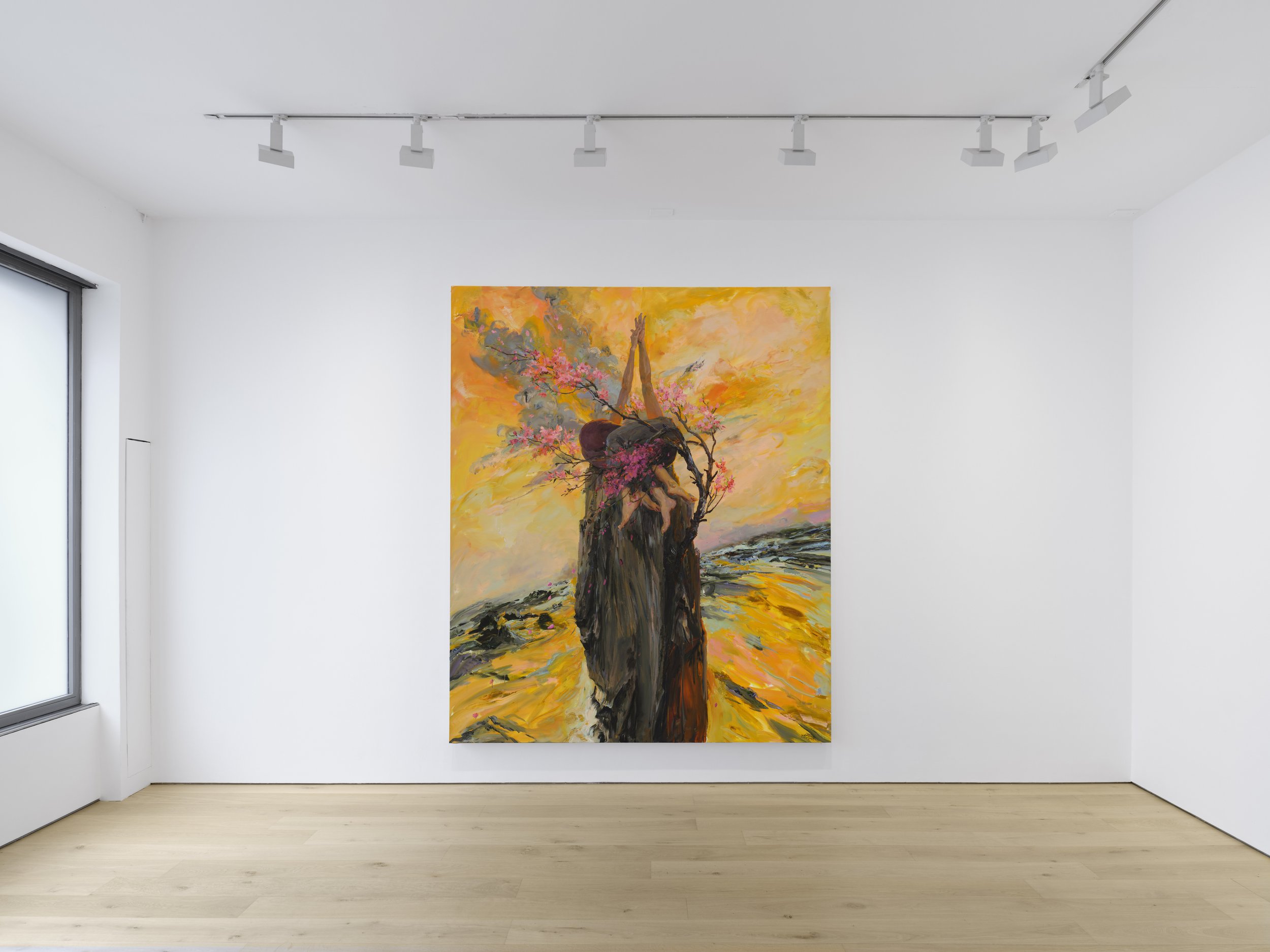
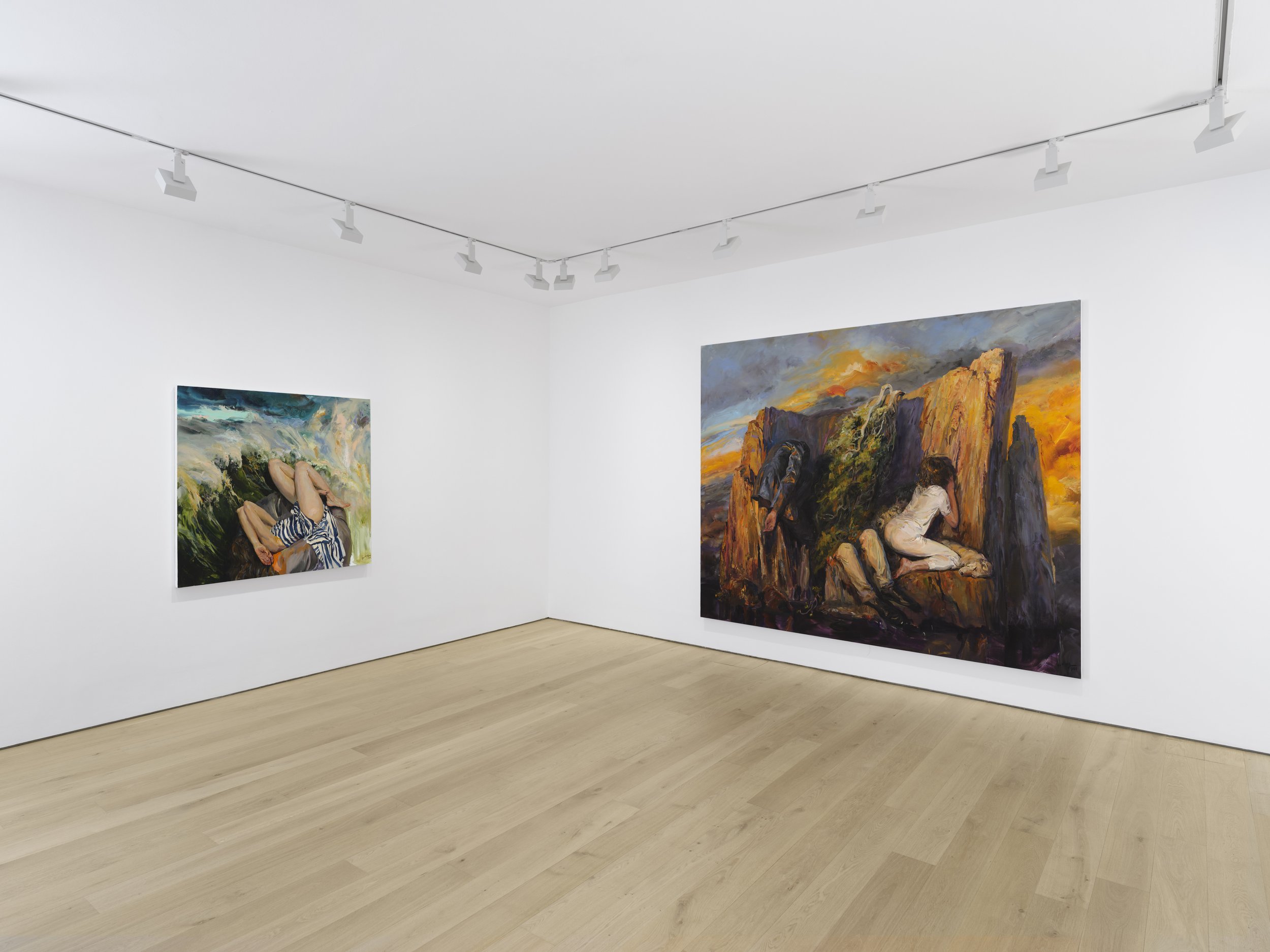
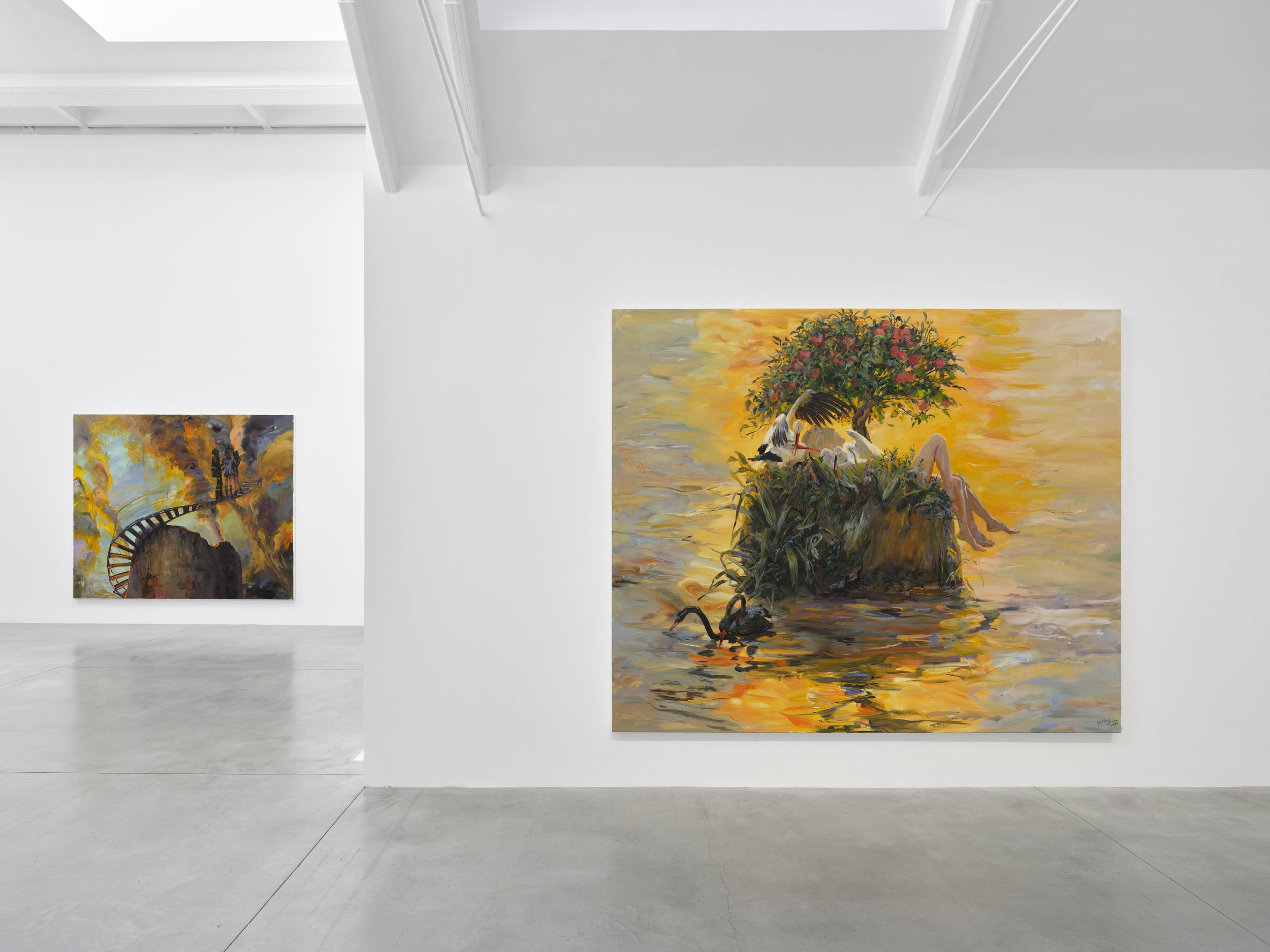
Installation view: Yu Hong, Islands of the Mind, Lisson Gallery London (27 September – 9 November 2024) © Yu Hong, Courtesy Lisson Gallery.
About Yu Hong

Portrait of Yu Hong, from 'Women in Motion' by Kering 喻红, 2021. Photographer ©️ gregmei. Courtesy Lisson Gallery
A painter of epic scenes and intimate moments, Yu Hong constructs modern-day fables and complex, allegorical compositions by channelling historical, narrative- caught in extremis: floating on clouds, climbing vertiginous mountains or walking through flames as if to hell all variously suffering the ecstasies and tribulations of existence. Yet her fantastical worlds are inhabited by real people, featuring portrayals of friends, acquaintances and family members, revealing a personal and touching dimension to the sweeping cycles of paintings that she produces over long periods of time. Her lifelong autobiographical project, Witness to Growth, begun in the 1990s as a series of diptychs, charts her own life juxtaposed with news clippings from each era, now with the addition of her daughter’s milestones running alongside her own. As well as elevating people and their bodies to otherworldly, uncompromising and often female celestia intense lows of depression, urban deprivation and social alienation, as in her apocalyptic Earth and Heaven (2014), or when tumbling from her Ladder to the Sky (2008). The latter image not only borrows from a medieval precedent (The Ladder to Paradise in the Egyptian Monastery of St Catherine), but utilises a gold background, which she has employed since 2010, in order to iconise and foreground her cast of modern- ake in the styles, ideologies and ambitions of both Eastern and Western Old Masters, from cave paintings to Renaissance altarpieces recently echoing Géricault’s Raft of the Medusa, for the piled-up mound of humans and animals in Pyramid Blind Leading the Blind, across three panels of her blazing Night Walk handling can also scale down to the depiction of an individual lost in thought, or to a pair of hands locked in a gesture of tender internalisation.
Yu Hong was born in 1966 in Xi’an, China. In 1984, she studied oil painting at the Central Academy of Fine Arts (CAFA) in Beijing and graduated from the oil painting department in 1988. Since 1988 she has been a teacher at CAFA. Yu Hong’s first major exhibition in Europe, ‘Yu Hong: Another One Bites the Dust’ opened at the Chiesetta della Misericordia in Venice as a special off-site exhibition of the Asian Art Initiative of the Guggenheim Museum, New York in April 2024. Her first major American museum show was held at SCAD Museum of Art, Savannah, GA, in 2023 and her work was featured in ‘Art and China after 1989: Theater of the World’ (2017) at the Solomon R. Guggenheim Museum, New York. Recent solo exhibitions in China include: ‘The World of Saha’ (2019) at Long Museum, Shanghai; ‘Garden of Dreams’ (2016) at the CAFA Art Museum, Beijing; ‘Concurrent Realms’ (2015) at the Suzhou Museum; ‘Golden Horizon’ (2011) at the Shanghai Art Museum, Shanghai and ‘Golden Sky’ (2010) at the Ullens Center for Contemporary Art, Beijing.
About Lisson Gallery
Lisson Gallery is one of the most influential and longest-running international contemporary art galleries in the world. Today the gallery supports and promotes the work of more than 60 international artists across two spaces in London, two in New York, one in Shanghai and Beijing, as well as a forthcoming gallery in Los Angeles, opening 15 April. Established in 1967 by Nicholas Logsdail, Lisson Gallery pioneered the early careers of important Minimal and Conceptual artists, such as Art & Language, Carl Andre, Daniel Buren, Donald Judd, John Latham, Sol LeWitt, Richard Long and Robert Ryman among many others. It still works with many of these artists as well as others of that generation from Carmen Herrera to the renowned estate of Leon Polk Smith. In its second decade the gallery introduced significant British sculptors to the public for the first time, including Tony Cragg, Richard Deacon, Anish Kapoor, Shirazeh Houshiary and Julian Opie. Since 2000, the gallery has gone on to represent many more leading international artists such as Marina Abramović, Ai Weiwei, John Akomfrah, Susan Hiller, Tatsuo Miyajima and Sean Scully. It is also responsible for raising the international profile of a younger generation of artists led by Cory Arcangel, Ryan Gander, Van Hanos, Hugh Hayden, Haroon Mirza, Laure Prouvost, Pedro Reyes, Wael Shawky and Cheyney Thompson.
Yu Hong - Islands of the Mind opened on September 27th and will close on December 14th at 67 Bell Street, London. There was an opening on the 26th of September from 6 – 8pm.
For more information about this exhibition and others, please visit the Lisson Gallery here. The gallery can also be found on Facebook, YouTube, and Instagram.
Dexter Dalwood: English Painting
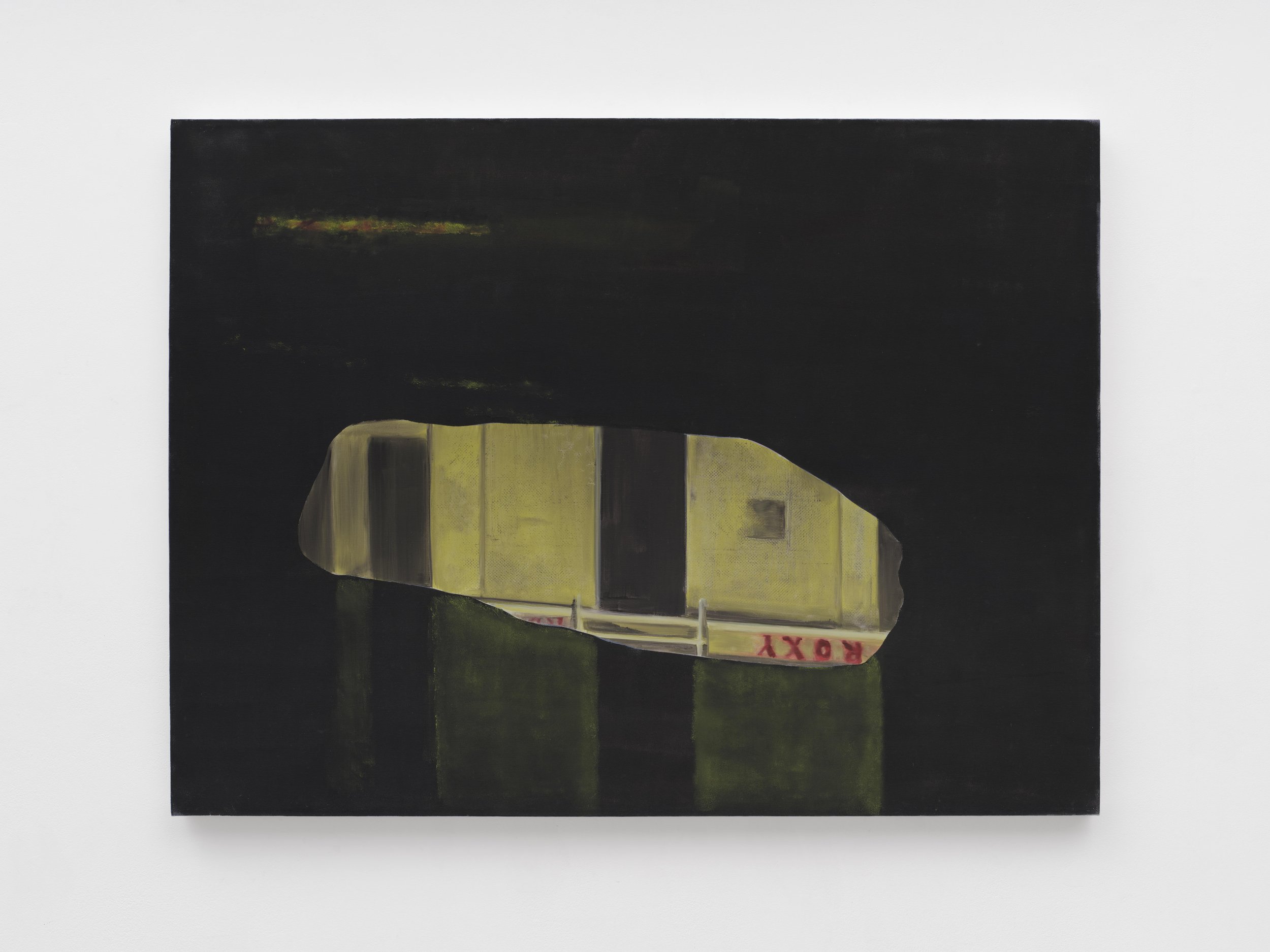
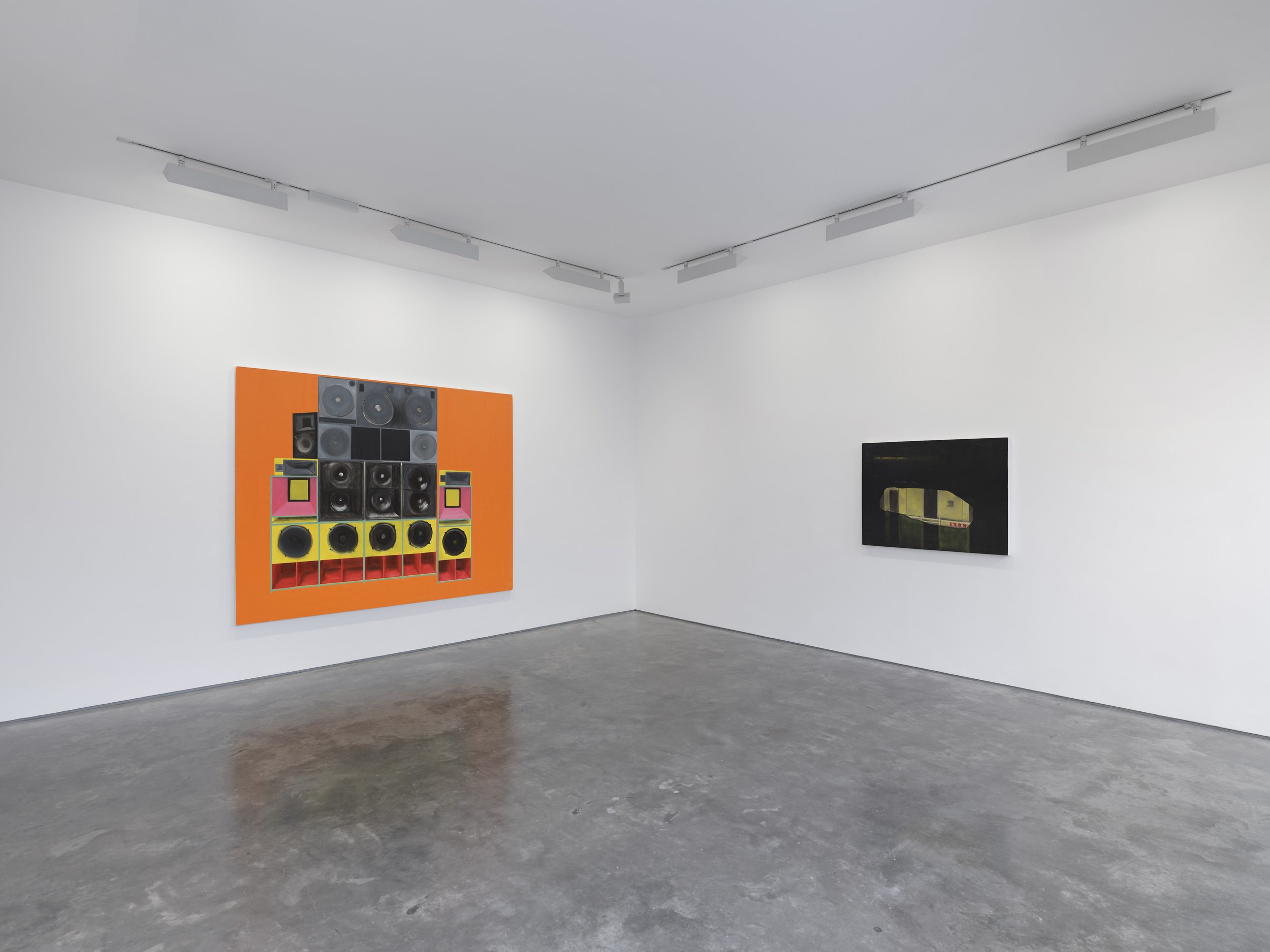
P u n k I s D e a d 2023 Oil on canvas 90 x 120 cm 35 3/8 x 47 1/4 in DAL W230004 GBP 60,000
Comprising an imagined portrait of the infamous London punk venue, the Roxy Club, ‘Punk Is Dead’ is a reference to the history of the British music scene and Dalwood’s own history. Dalwood played bass guitar in punk band, The Cortinas, who played at the Roxy alongside The Jam, The Stranglers and Sex Pistols.
Dalwood returns to the pictorial device of a puddle or ellipsis to reflect the façade of the now defunct venue. Speaking on his experience of the 1970s London punk scene the artist describes being “totally caught up in how it broke like a wave over the over-indulgent, and to me addled, British music scene”
.
‘Punk is Dead’ is the melancholic aftermath of this deluge exploring how the Artist’s lived experience has become a fixed moment in history that has been contained to the specific moment in time.
Dexter Dalwood’s inaugural exhibition with Lisson Gallery represents a return to the artist’s homeland and to the subject of what it might mean to be an ‘English’ painter. After an initial period at a residency in Mexico in 2017, Dalwood moved there to live and work fulltime, since 2022. Now, from this relative distance, he has begun to re- consider his attachments with English art history and the culture of his youth, growing up in 1970s and ’80s Britain. The question of whether national identity can be determined or distilled through art is explored in this new group of paintings that consider the legacies of traditional genres, such as landscape or the lowlier practice of horse portraiture, all the way up to twentieth-century movements including the Bloomsbury Group and Pop Art.
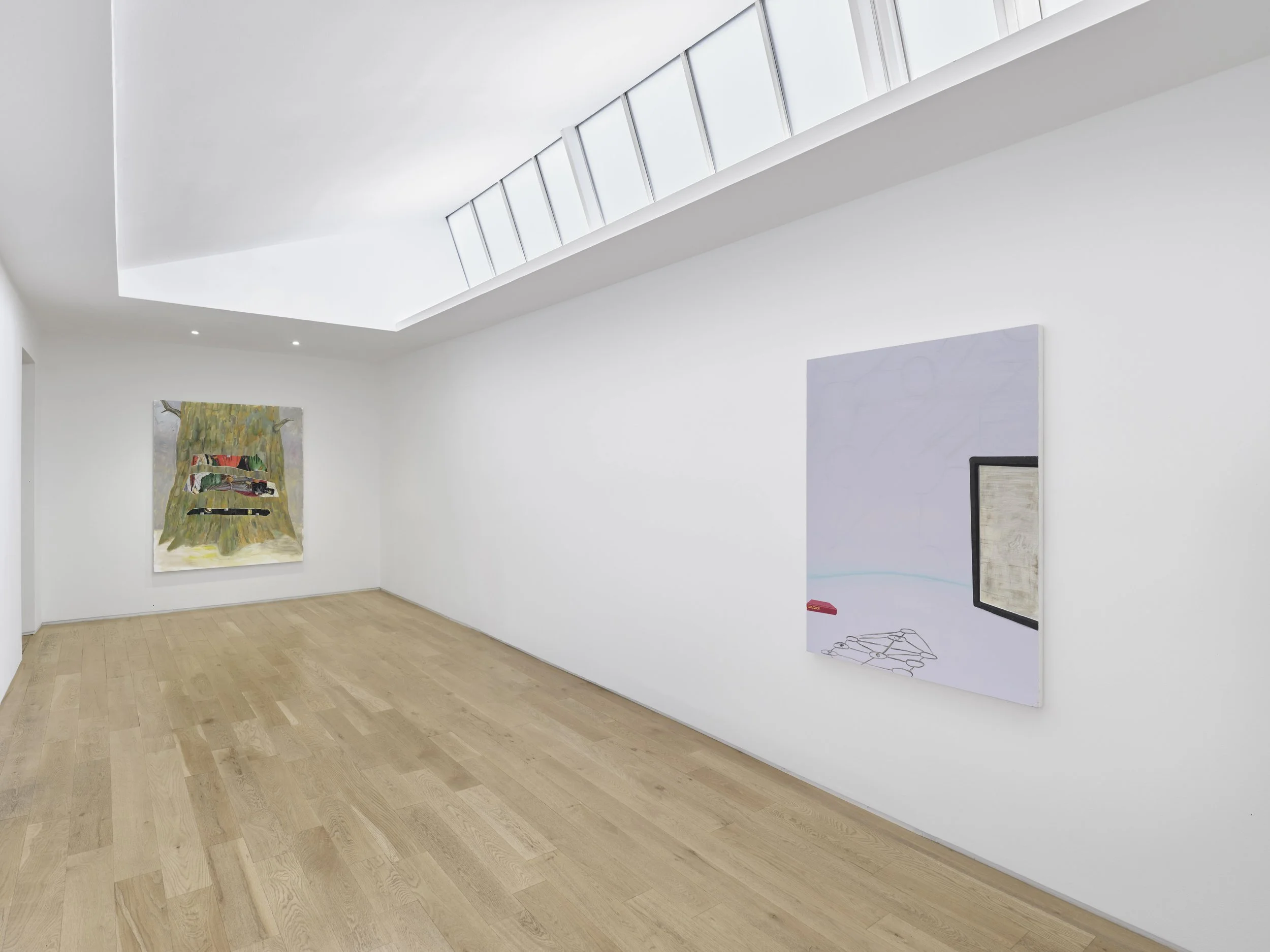
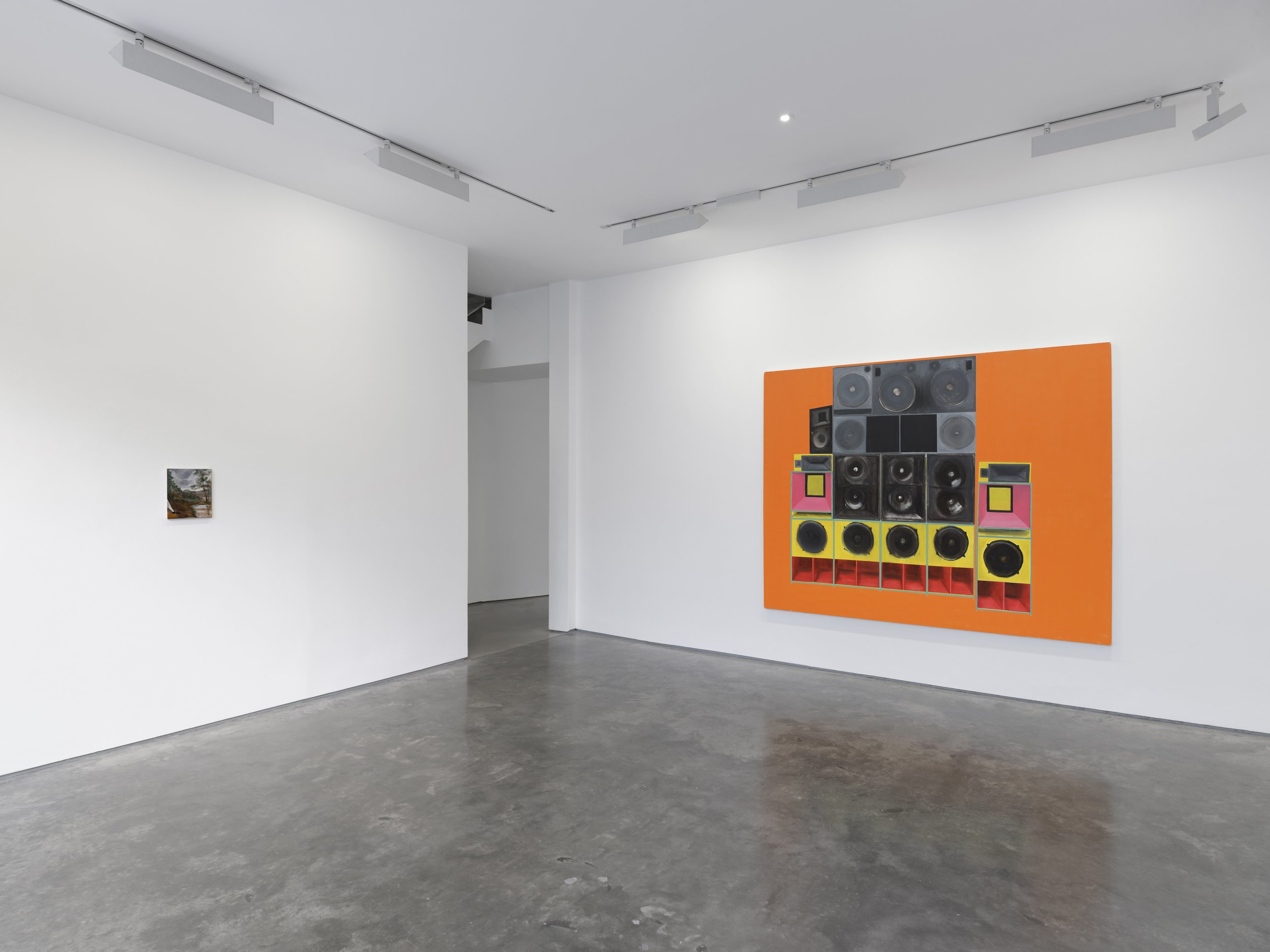
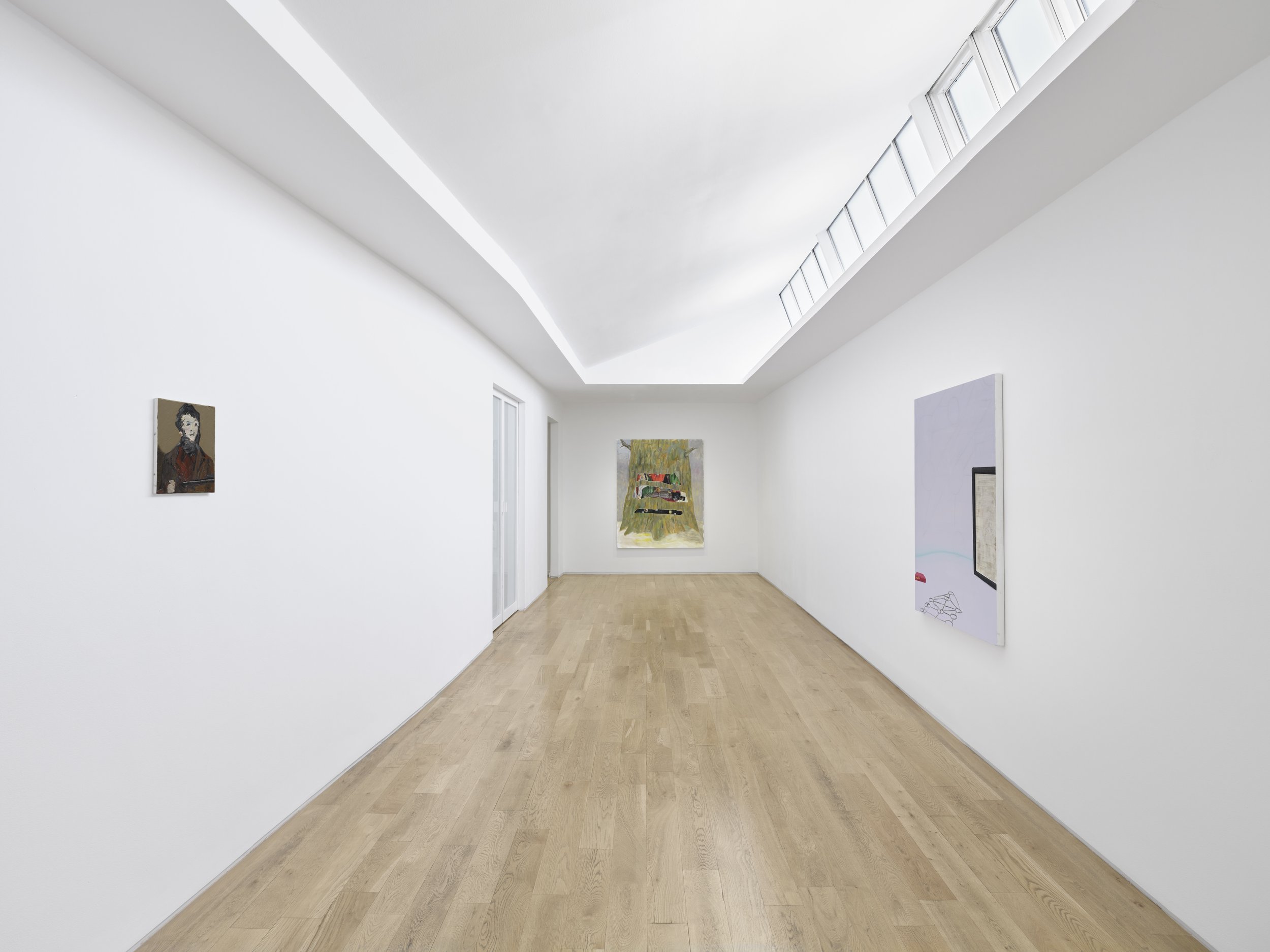
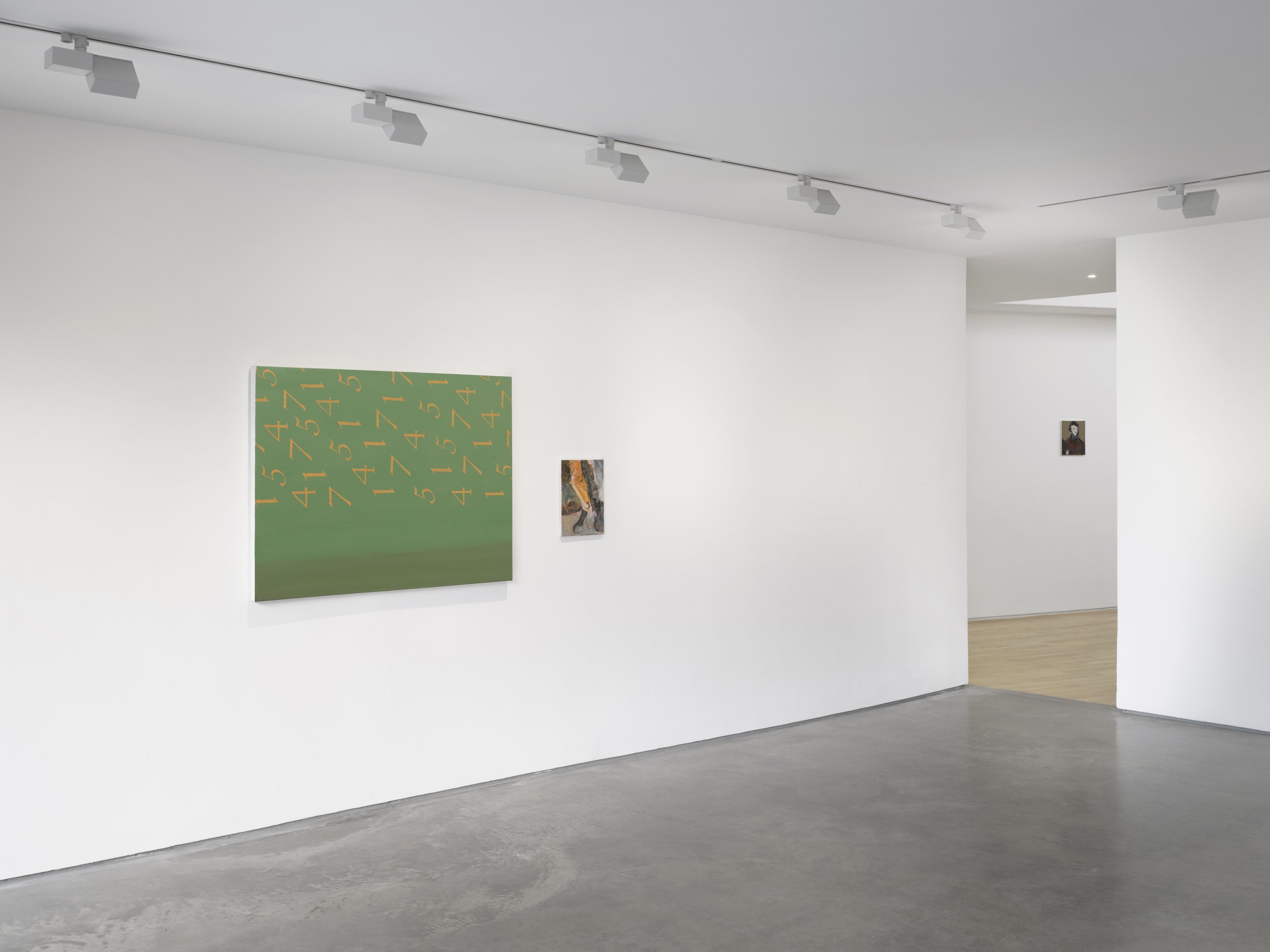
Installation View of Dexter Dalwood’s English Painting Centering’ at Lisson, Gallery 67 Lisson Street, London, 27th September – December 14th, 2024 © Dexter Dalwood, Courtesy Lisson Gallery
Dalwood’s complex painterly surfaces blend styles and moments from different eras. His diptych Track and Turf 1754 (all works 2023 or 2024) repeats the date 1754 – when Stubbs began dissecting and painting horses in Lincolnshire – in gold across a coloured ground similar to British racing green, next to a detail of a horse painted by Reynolds (considered the more famous and successful artist). Another date painting, Boleskine House 1973, refers to a property next to Loch Ness in Scotland bought by the lead guitarist of Led Zeppelin, Jimmy Page, who was briefly obsessed by the nefarious activities of its previous owner, the occultist and black magician, Aleister Crowley, although the ghostly visage reflected at the foot of the painting is from a Black Sabbath record, with lead singer Ozzy Osbourne releasing the song ‘Mr Crowley’. Another glimpsed view occurs within a giant tree trunk, titled Avalon, which splits to partially reveal a scene from Arthurian legend painted by Pre-Raphaelite Edward Burne-Jones, also a surprising source of inspiration for rock guitarist Page.
Another absent but important figure in the exhibition is David Bowie, whose presence is merely suggested by the title Languid Ziggy. A red, minimalist backdrop is disturbed by a pair of languorous legs, perhaps hinting to the way in which Bowie has embodied ‘style’, from 19th century dandyism all the way to 20th century fashion as high art. A further moment of modernism interrupted here – in Dalwood’s painting Northern Pop – is the work of Jasper Johns, one of whose famous hatched grey paintings has been usurped by English county names – Yorkshire, Lancashire, Derbyshire – suggesting a humorous swipe at the greyness of the weather, although not everything Johns labelled was quite as it seemed.
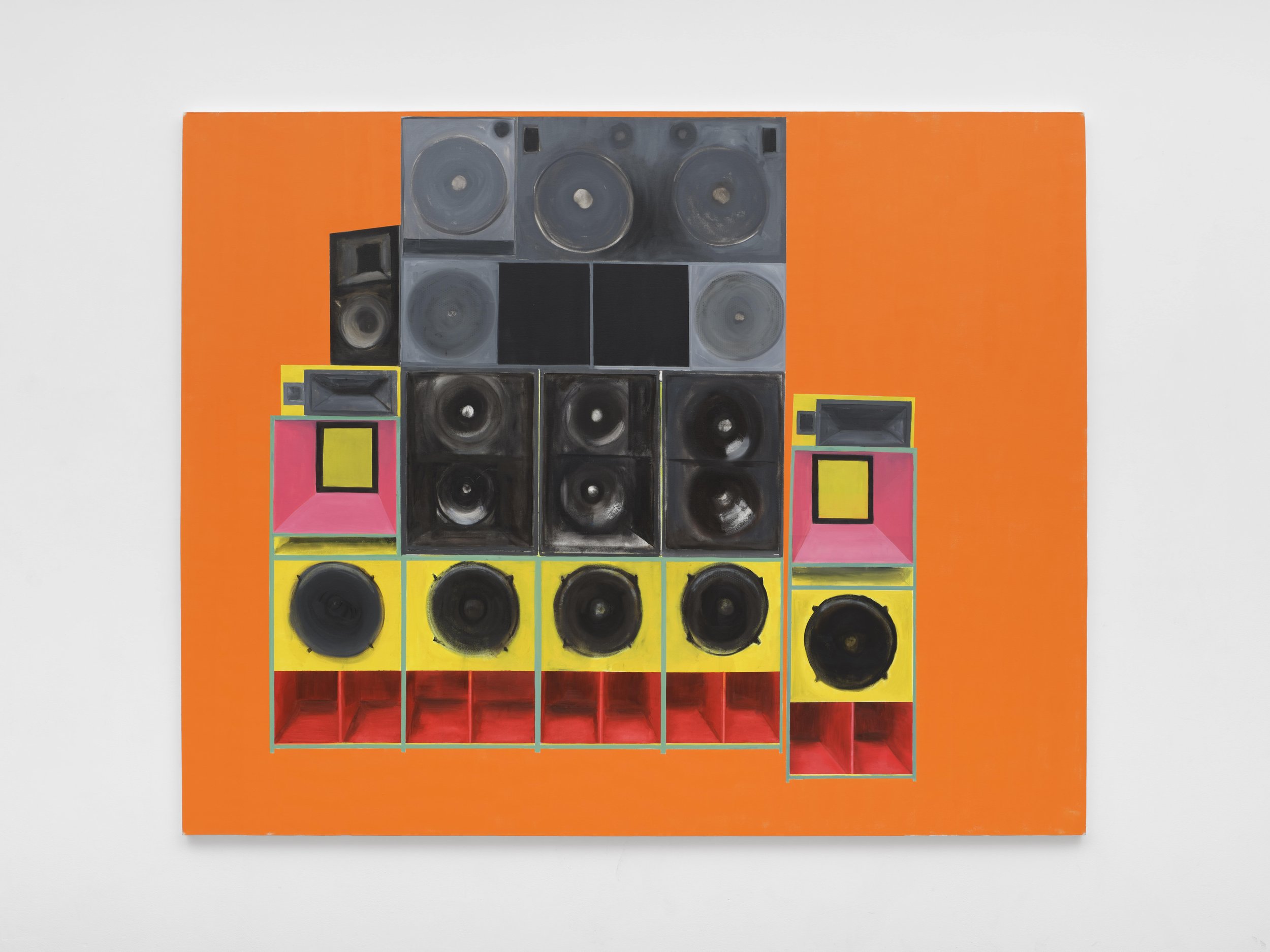
R i s e U p 2024 Oil on canvas 201 x 251.5 cm 79 1/8 x 99 in DAL W240001 GBP 120,000
'Rise Up responds to the music culture in both London and Bristol and Dalwood’s personal connection with each location. He was born in the latter but moved to London as a teenager . Dalwood’s painting of a life-size sound system calls to mind the eclectic atmosphere of Notting Hill Carnival, London and St Paul’s Carnival, Bristol. During these events the streets are flooded with people dancing to music from homemade, painted up sound systems much like the one depicted here and celebrating Caribbean culture and diaspora. Formally this composition references the Modernist grid and Peter Halley’s colour palette.
While the links between these paintings are not often immediately evident, among them are hints and clues to wider topics and traits – such as music, mysticism and melancholy – that could all arguably be associated with that intangible term, ‘Englishness’. There are autobiographical nods to the artist’s own musical heritage in images such as Rise Up, a riotously colourful carnival sound system and a clear example of the sample-heavy undertones running through every one of these paintings, as well as in Punk is Dead, recalling the now defunct Roxy Club and Dalwood’s time with Bristol-based punk band The Cortinas.
In addition to upending traditions of painting and reflecting on the status and meaning of cultural moments past, Dalwood also tackles seismic historic monuments and events associated with the heritage of this Sceptred Isle. Bloody Sunday is a numerical panorama that abstracts and honours the 13 civilians killed by British soldiers stationed in Northern Ireland in 1972, while The Blitz makes oblique reference to the removal of paintings from the walls of the National Gallery in expectation of German bombing raids over London in the 1940s.About the artist
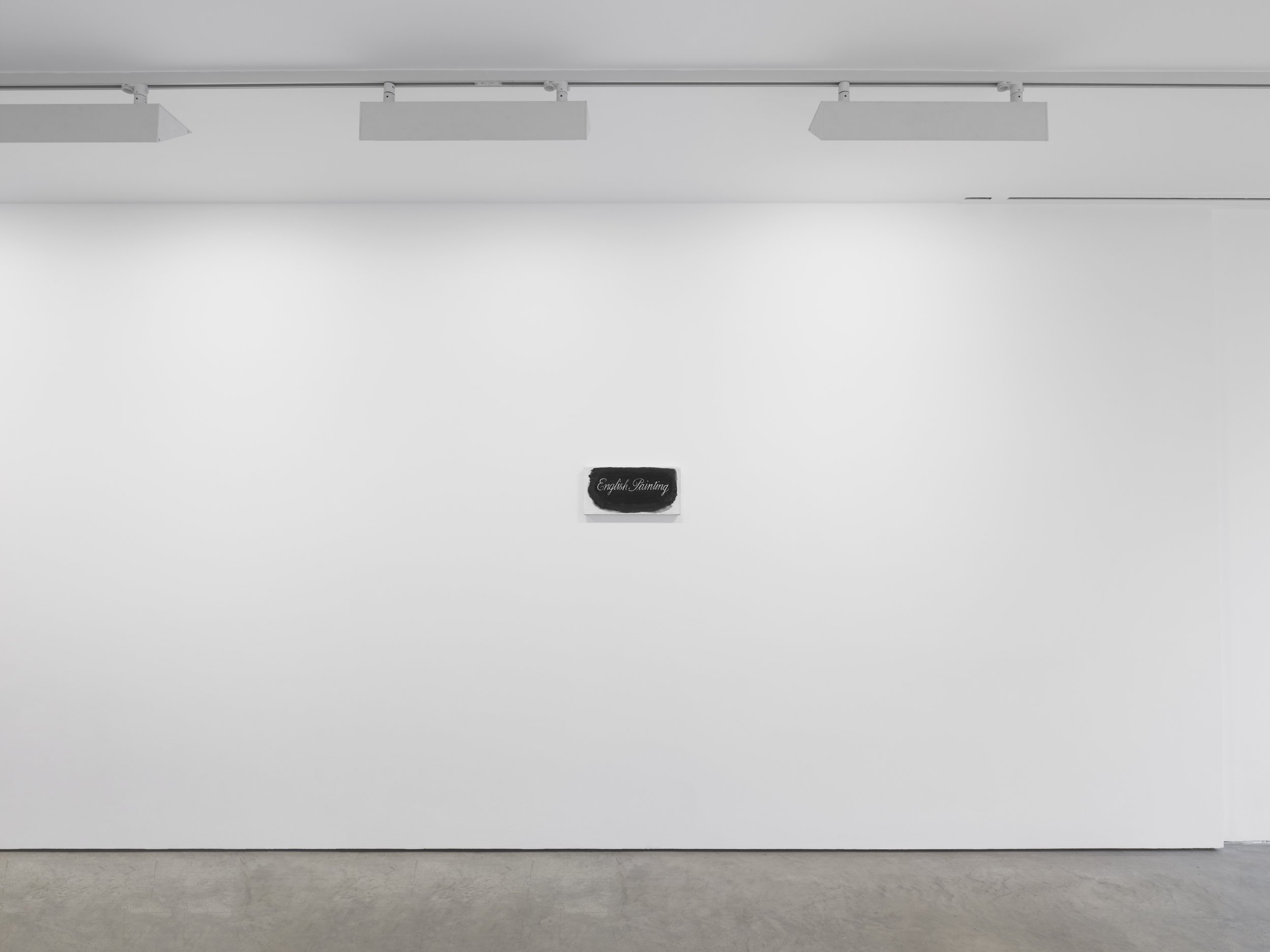
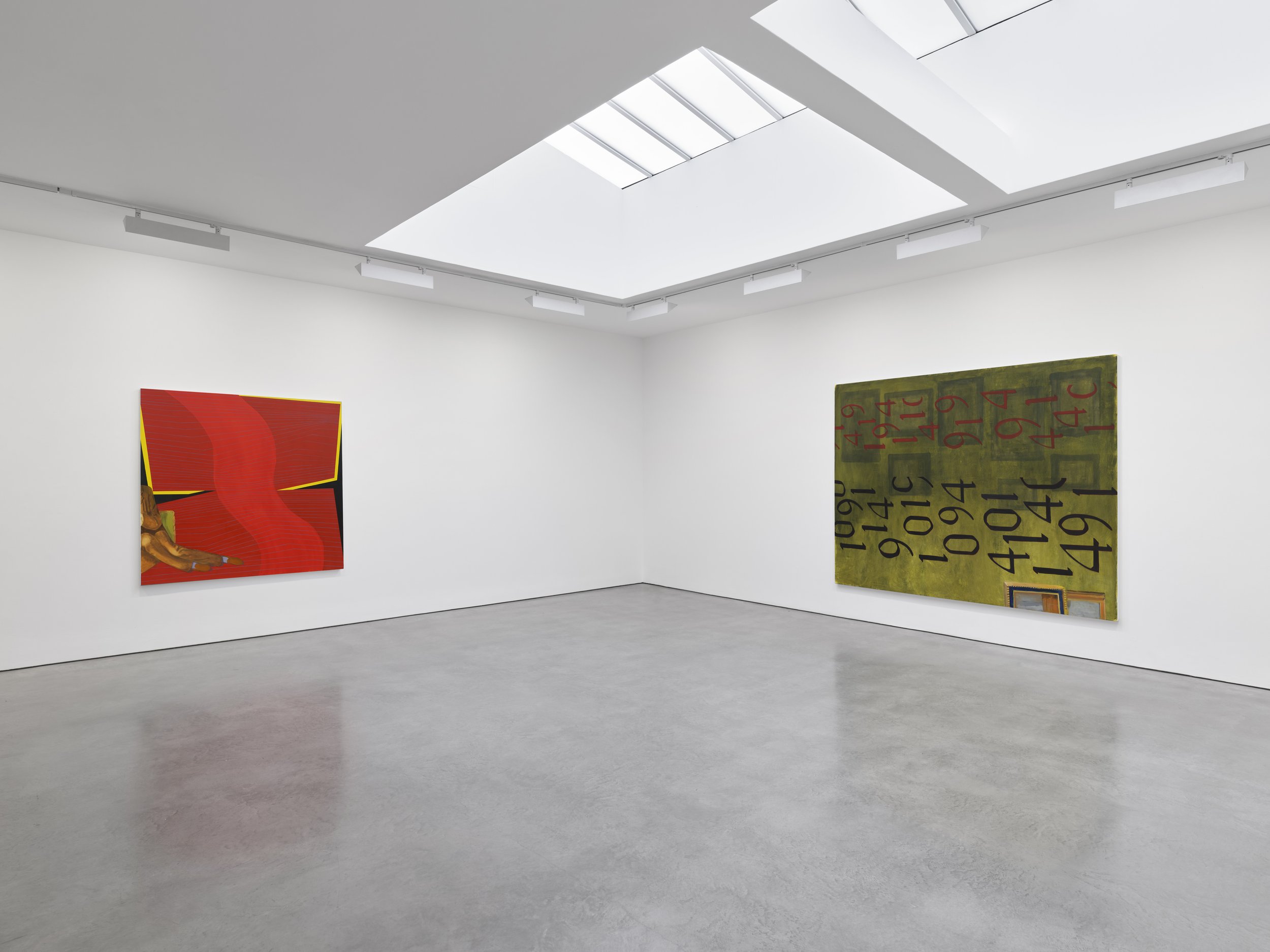
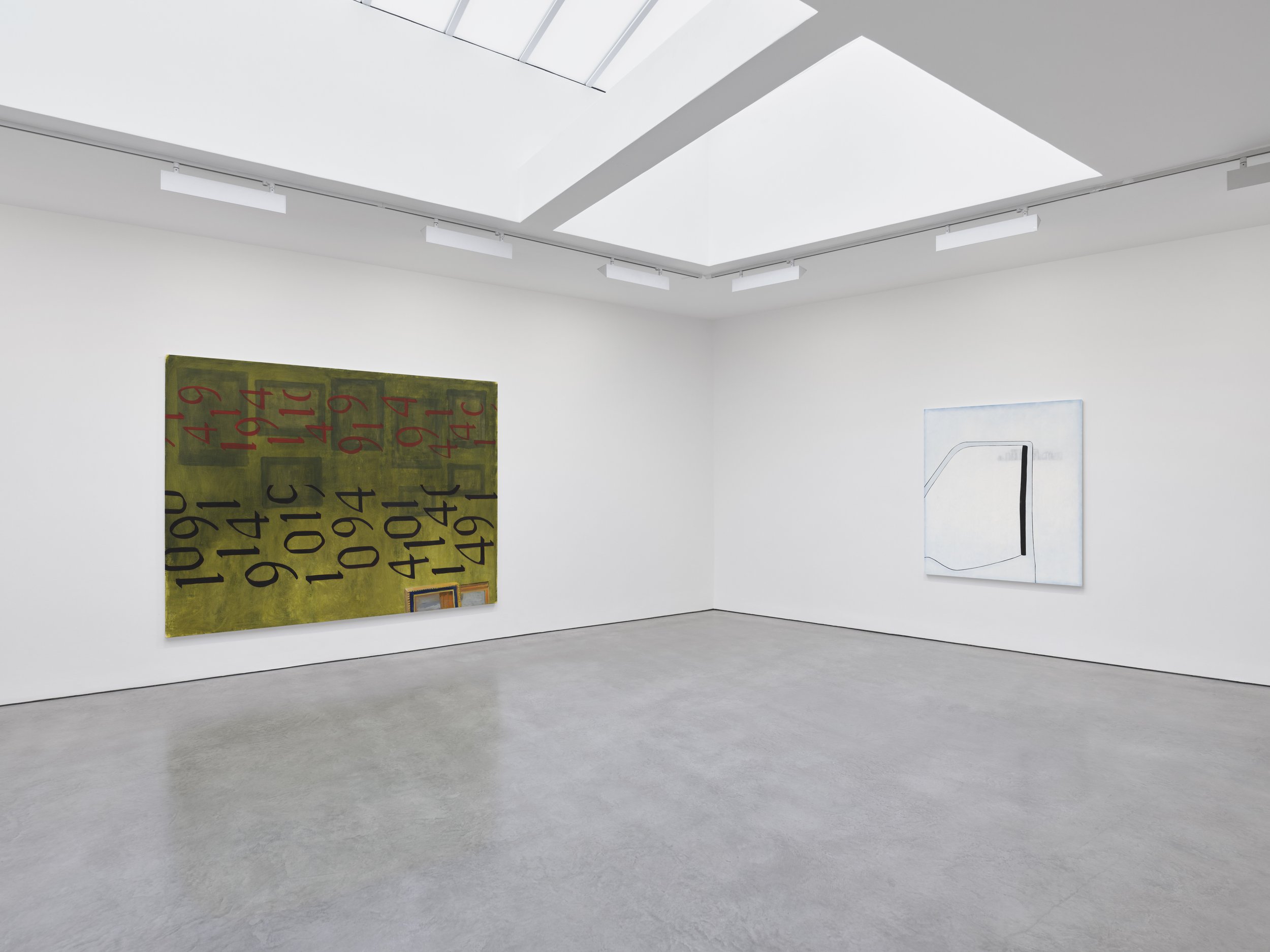
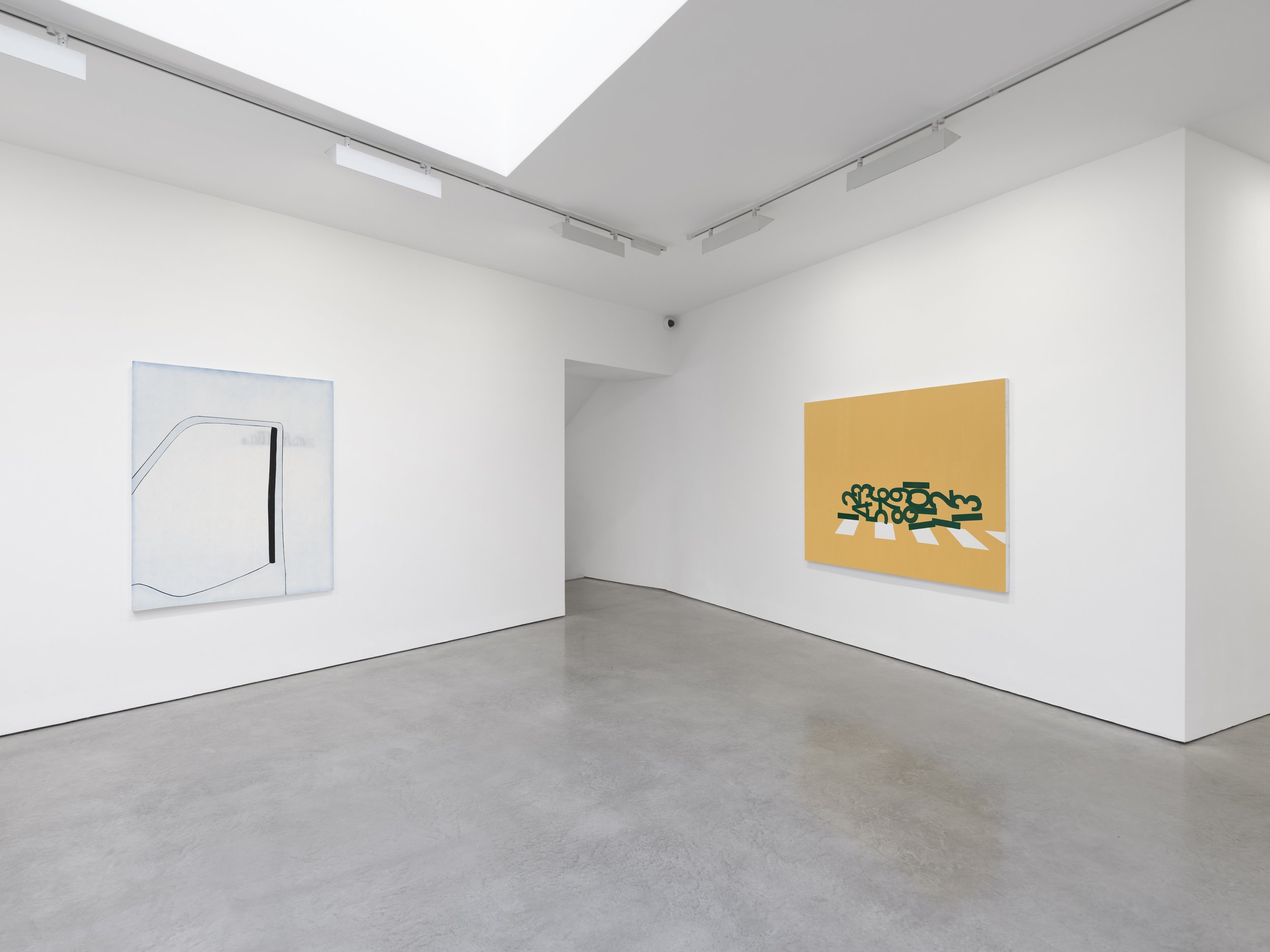
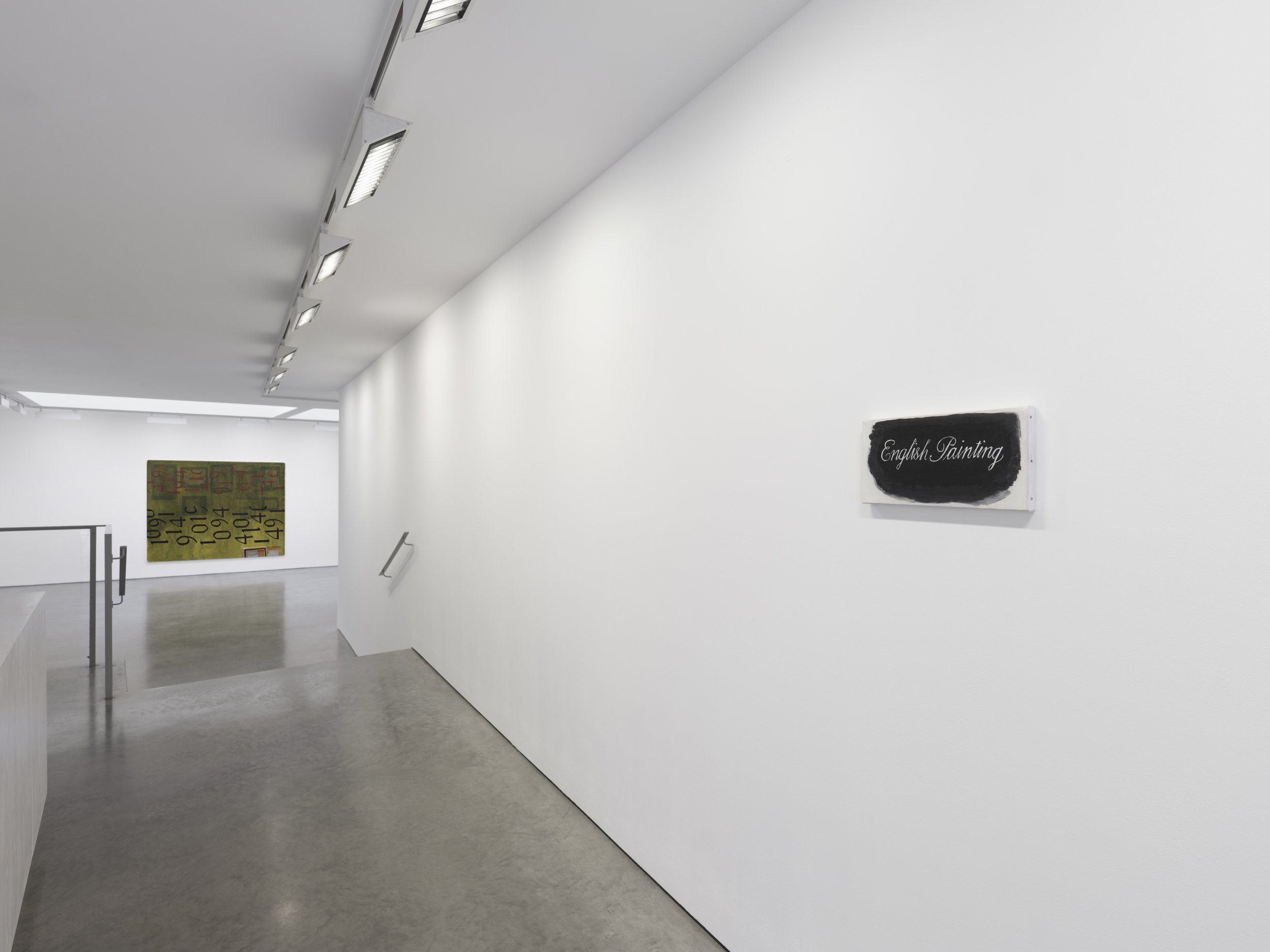
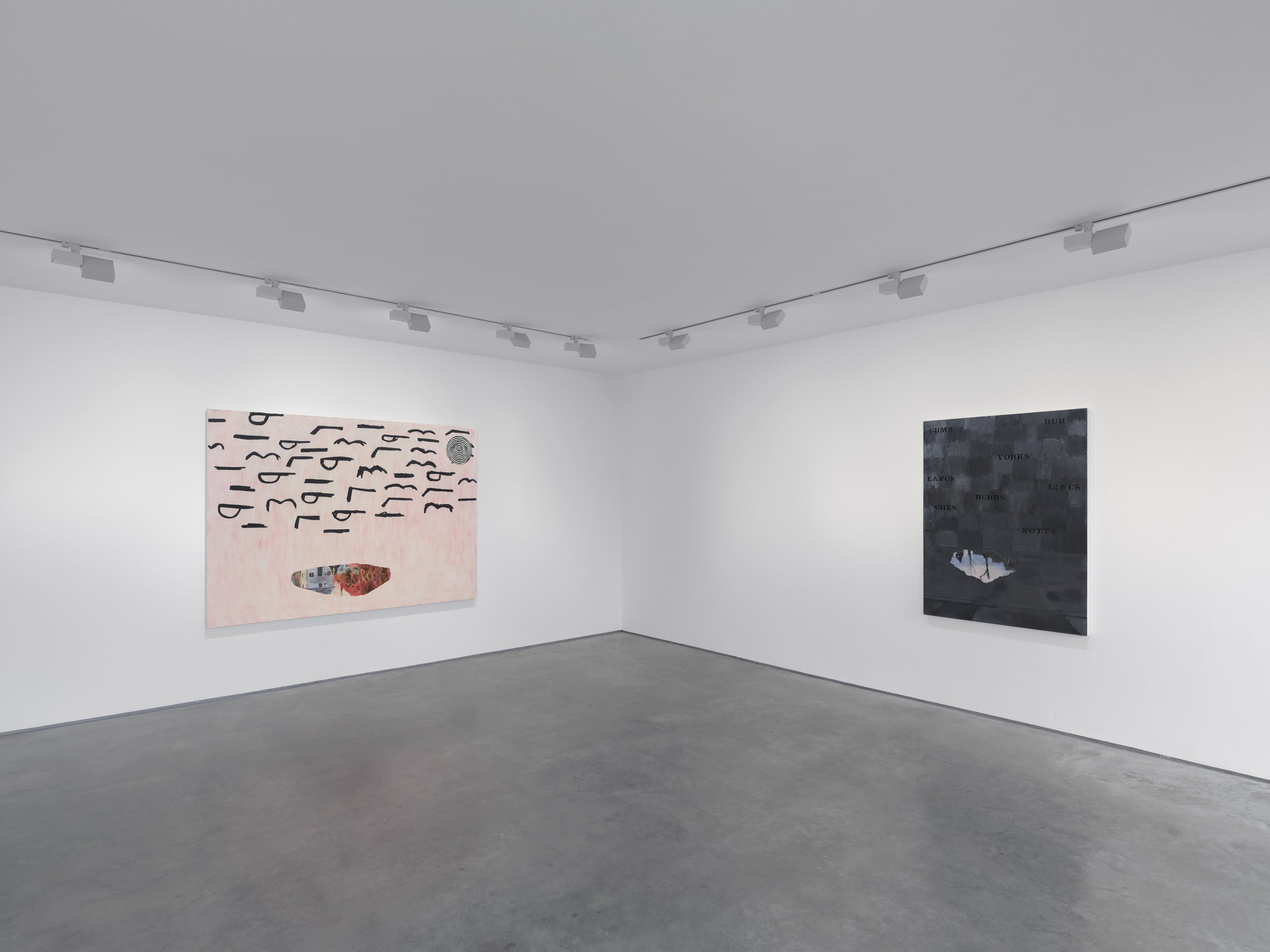
Installation View of Dexter Dalwood’s English Painting Centering’ at Lisson, Gallery 67 Lisson Street, London, 27th September – December 14th, 2024 © Dexter Dalwood, Courtesy Lisson Gallery
An avowed master of contemporary history painting for over three decades, Dexter Dalwood translates real-world events into imagined and composite landscapes, furthering the language and narratives of his chosen medium, while acknowledging the weight of all that has come before. An acute understanding and referencing of past artistic genres has recently given way to a style all his own: one that evades figurative tropes, in favour of uninhabited and uncertain spatial concerns, shifting scales and compressed picture planes. The artist’s famed, fictional interiors of Kurt Cobain’s Greenhouse (2000) or Wittgenstein’s Bathroom (2001), executed with knowing painterly flourishes and references – ranging from Willem de Kooning and Clyfford Still to Manet, Munch and Bellini – have since been concentrated down into constricted views from inside an airplane or else expanded through windows into Dalwoodesque spaces that are at one further remove from any original source material. The increasing presence of textual or numerical impositions on the canvases, in addition to abstract passages of gestural and frontal mark making, likewise signifies a distillation and honing of this practice.
Sites of trauma depicted in earlier works such as Brian Jones' Swimming Pool (2000) and the imagined view out of W.G. Sebald’s wrecked car in The Crash (2008), for example, have been replaced with an unnamed sense of foreboding, perhaps evoked by a still from a 24-hour newsfeed, or by the myriad potentialities of a mirrored puddle or a glimpsed ceiling rose. Dalwood’s fragmentary, sample-heavy aesthetic, which often begins with pencil or cut paper studies, goes far beyond a locus for postmodern quotation and displacement. Instead, his paintings enact a dizzying layering of the thought processes behind painting, on top of the vast back catalogue of art history, added to various ongoing bodies of research, as well as an appreciation of the importance of time and memory as touchstones for creating newly epochal images.
About Artist
Dexter Dalwood (born Bristol, UK, 1960) is based in Mexico City. In 2017 he undertook a residency in Oaxaca and made a series titled An Inadequate Painted History of Mexico on his return to London, which has since featured in the touring show, 'Esto No Me Pertenece' at Centro de las Artes San Agustín, Oaxaca, Mexico and Museo Nacional de Arte (MUNAL), Mexico City, Mexico (2021-22). Dalwood’s other major solo museum shows include: Kunsthaus Centre PasquArt, Biel, Switzerland (2013); CAC Málaga, Spain (2010); FRAC Champagne-Ardennes, Reims, France (2010) and Tate, St. Ives, UK (2010). His work has featured in recent group exhibitions including: ‘The Paradoxes of Internationalism. Part I’, at Museo Tamayo, Mexico City, Mexico (until 1 October, 2023); 'You to Me, Me to You', A4 Arts Foundation, Cape Town, South Africa (until 18 Nov 2023); ‘Modern Media Networks: Painting and Mass Media’, Tate Modern, London, UK (2020); ‘Hello World. Revising a Collection’, Hamburger Bahnhof, Berlin, Germany (2018); ‘Michael Jackson: On the Wall’, National Portrait Gallery, London, UK touring to Grand Palais, Paris, France, Bundeskunsthalle, Bonn, Germany and Espoo Museum of Modern Art, Finland (all 2018-19).
About Lisson Gallery
Lisson Gallery is one of the most influential and longest-running international contemporary art galleries in the world. Today the gallery supports and promotes the work of more than 60 international artists across two spaces in London, two in New York, one in Shanghai and Beijing, as well as a forthcoming gallery in Los Angeles, opening 15 April. Established in 1967 by Nicholas Logsdail, Lisson Gallery pioneered the early careers of important Minimal and Conceptual artists, such as Art & Language, Carl Andre, Daniel Buren, Donald Judd, John Latham, Sol LeWitt, Richard Long and Robert Ryman among many others. It still works with many of these artists as well as others of that generation from Carmen Herrera to the renowned estate of Leon Polk Smith. In its second decade the gallery introduced significant British sculptors to the public for the first time, including Tony Cragg, Richard Deacon, Anish Kapoor, Shirazeh Houshiary and Julian Opie. Since 2000, the gallery has gone on to represent many more leading international artists such as Marina Abramović, Ai Weiwei, John Akomfrah, Susan Hiller, Tatsuo Miyajima and Sean Scully. It is also responsible for raising the international profile of a younger generation of artists led by Cory Arcangel, Ryan Gander, Van Hanos, Hugh Hayden, Haroon Mirza, Laure Prouvost, Pedro Reyes, Wael Shawky and Cheyney Thompson.
Dexter Dalwood’s English Painting Opened on September 27th and will close on December 14th at 67 Lisson Street, London. There was an opening on the 26th of September from 6 – 8pm.
For more information about this exhibition and others, please visit the Lisson Gallery here. The gallery can also be found on Facebook, YouTube, and Instagram.
ANTOINE ROEGIERS : THE GREAT PARADE

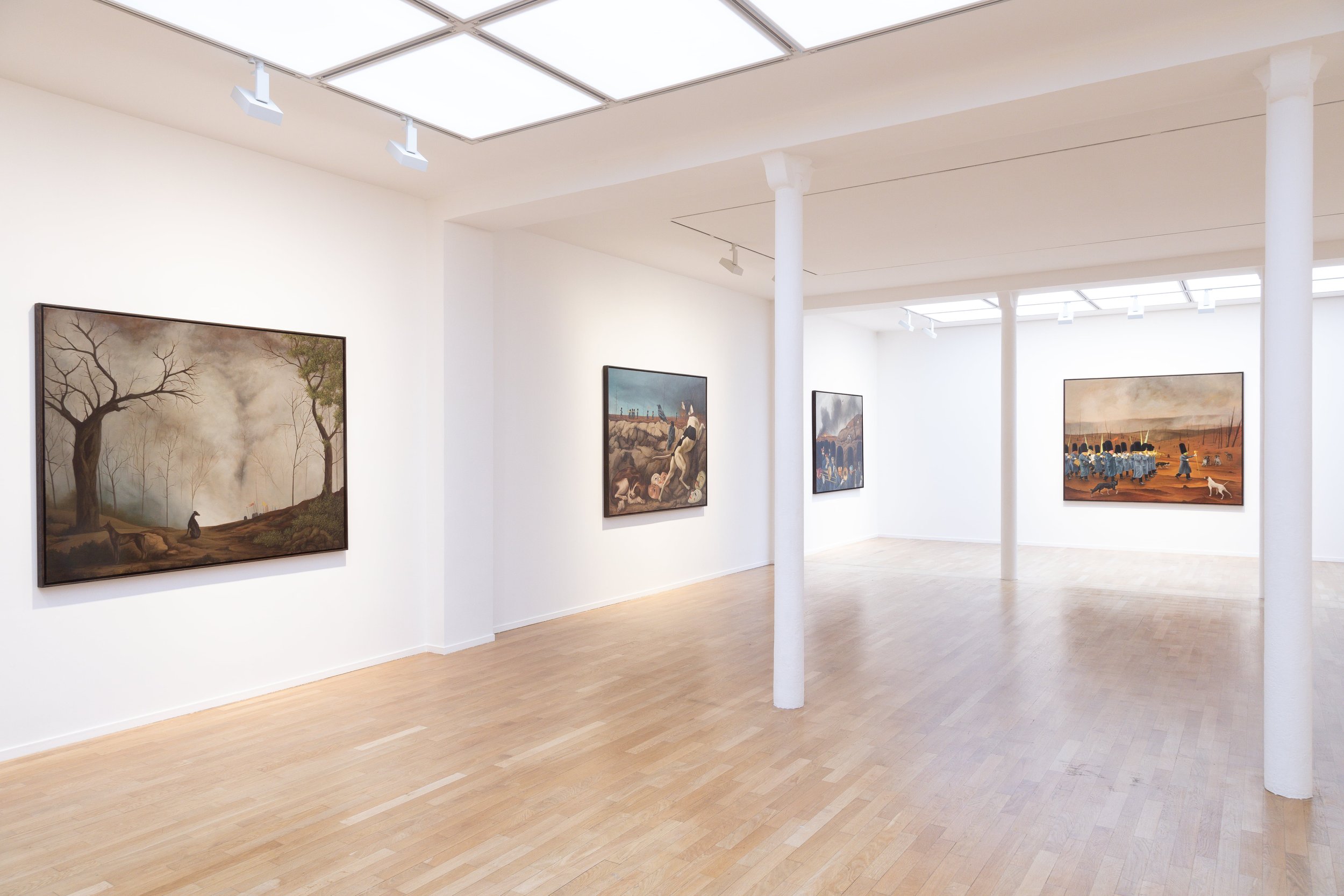


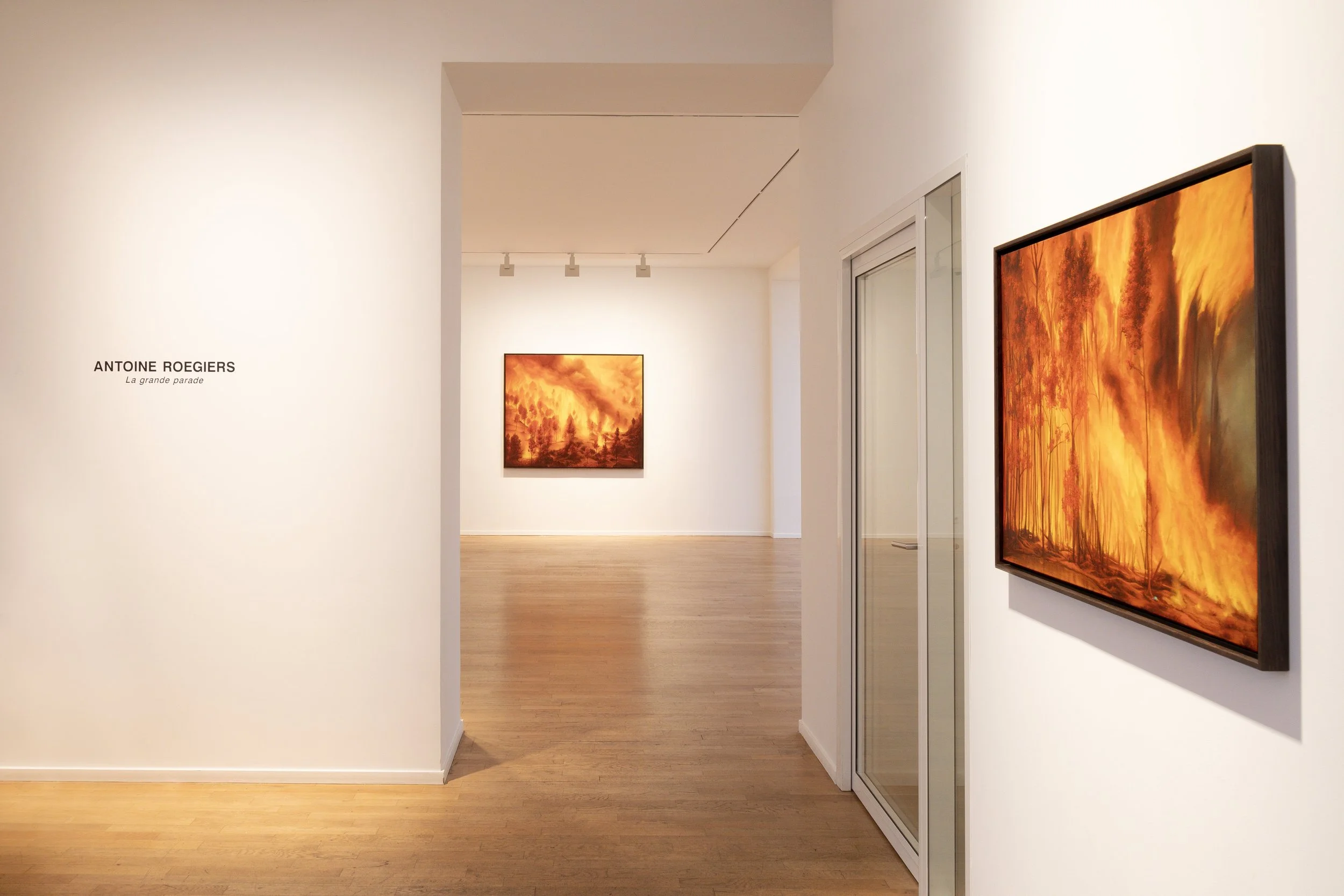


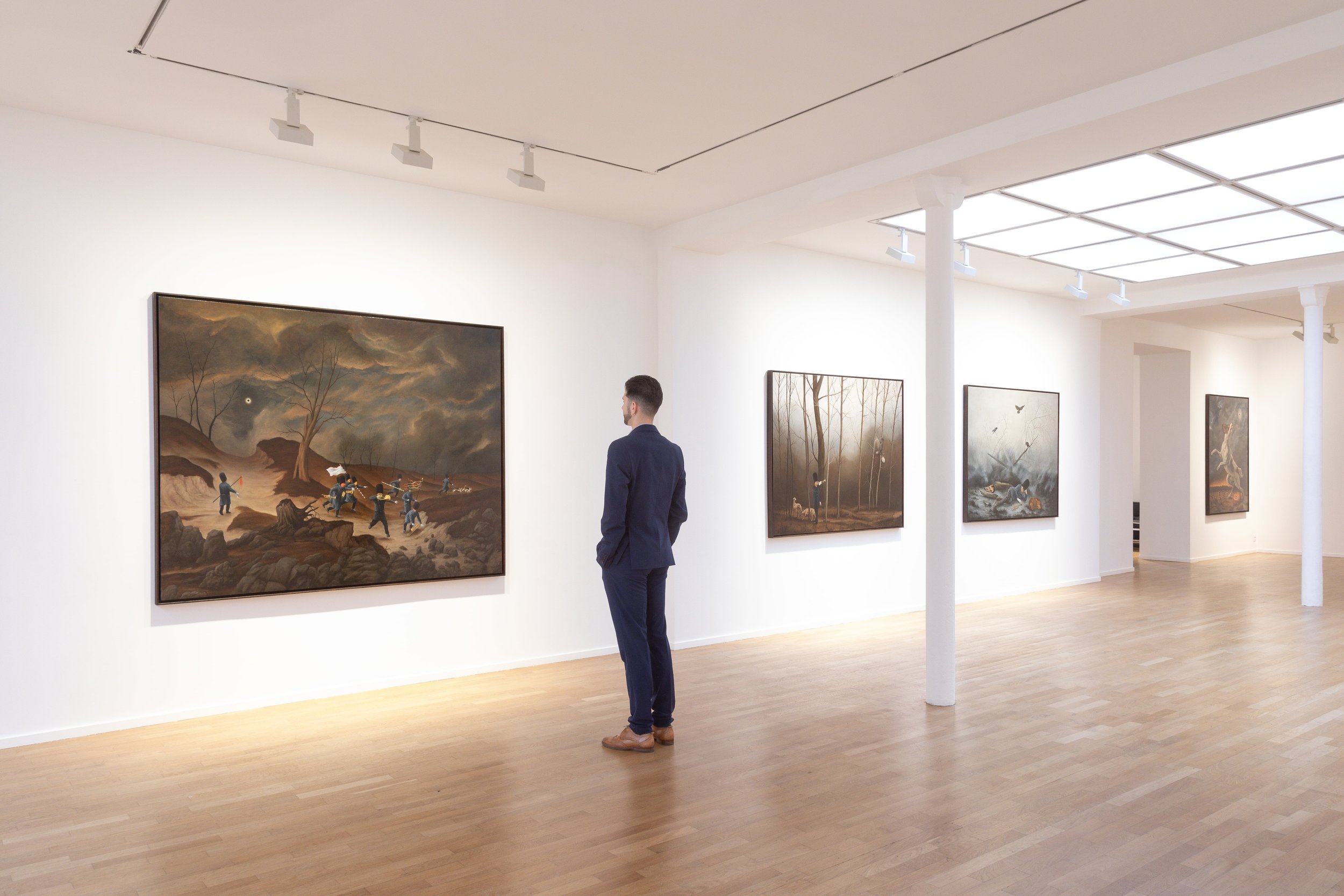

Installation view: The Great Parade, Templon Gallery, Paris, October 30th to December 21, 2024. Photo Credit: Laurent Edeline
Belgian artist Antoine Roegiers is presenting his work for the first time at Galerie Templon’s Paris location this autumn. Since 2018, Antoine Roegiers has been deeply immersed in his ongoing visual narrative project, a series of paintings that collectively tell a single, evolving story. This narrative unfolds in a fluid, non-linear manner, devoid of a defined conclusion, blending humor, solemnity, and poetry to provoke reflection on the contemporary world while inviting us to laugh at our own absurdities. His inaugural exhibition at Galerie Templon in Brussels in 2023 left the story at a pivotal moment, as nature reclaimed its domain following a massive fire.
In this new chapter, titled The Great Parade, Roegiers presents thirteen oil paintings that draw heavily from the Romantic tradition. The motifs of fires, stray dogs, masks, crows, and forests — elements from the previous show — reappear, but are now joined by fresh symbols that further enrich the narrative. Among these new elements are a relentless grand duke, a mysterious eclipse, and the grotesque return of humanity: a slow-moving, mechanical procession of masked figures reminiscent of James Ensor’s musicians, blind to the world’s deteriorating state.
Roegiers’ mischievous wit is on full display, offering a sharply satirical portrayal of the disconnect between the flamboyant, raucous parade and the ruined world it marches through, all under the bewildered gaze of a pack of emaciated dogs.
Installation view: The Great Parade, Templon Gallery, Paris, October 30th to December 21, 2024. Photo Credit: Laurent Edeline
“I wanted to reintroduce people into my story to express my own despair at the madness of society, the helplessness that often engulfs us,” Roegiers explains. “In “La mélancolie du déserteur” — a self-portrait — I depict a disoriented figure, unsure of how to handle the boldness of his departure from the collective. The eclipse serves as a reminder of our insignificance, mere specks of confetti in the vast expanse of the universe.”
Born in 1980 in Belgium, Antoine Roegiers lives and works in Paris. He fuses his knowledge of classic painting with contemporary animation techniques. Putting technology and his talent for drawing to good use, he breathes life into the fantastical characters typical of the Flemish masters, taking liberties with them and inventing stories that never stay still. His work has been shown in a range of solo exhibitions, including at the Noordbrabant Museum in Hertogenbosch, Netherlands, Palais des Beaux-Arts in Lille, France, in 2012 and Botanique in Brussels in 2013. His art has also featured in numerous group exhibitions, including at the Frissiras Museum in Athens (2003), Fondation d’Entreprise Ricard in Paris (2009), Kulturhuset Museum in Stockholm (2012), Petit Palais in Paris (2013), Palais Pisztory in Slovakia (2013), Paço das Artes in Sao Paulo (2013), Albertina Museum in Vienna (2013), Contemporary Art Collection of the City of Geneva (2013), Bruce Museum in Greenwich, USA (2015), Palacio Bellas Artes and National Museum of Anthropology in Mexico City (2018), Palais des Beaux-Arts in Brussels (2019), Cité de la Musique Philharmonie in Paris (2021), MO.CO in Montpellier (2023), Château du Rivau in Lémeré, France (2024) and Wasserman Projects in Detroit, USA (2024). It is also included in the Contemporary Art Collection of the City of Geneva and the Ministry of the French Community of Belgium's collections. Antoine Roegiers has won several prizes, including the Molière de la Création Visuelle (2020) and Roger Bataille Prize (2007).
His work will be included in Painters’ Day, a group exhibition at Paris' Musée d’Orsay, in September 2024 and currently features in the Hybrids exhibition at the De Warande cultural centre in Turnhout, Belgium, running until 13 October 2024. He has also been asked to take part in the ENNOVA International Art Biennale in Langfang City, China, from 24 October 2024 to 30 April 2025.
Roegiers’ mischievous wit is on full display, offering a sharply satirical portrayal of the disconnect between the flamboyant, raucous parade and the ruined world it marches through, all under the bewildered gaze of a pack of emaciated dogs.

ANTOINE ROEGIERS Le grand incendie, 2024 Huile sur toile | Oil on canvas 130 × 162 cm — 51 1/4 × 63 3/4 in Courtoisie de l'artiste et Templon, Paris – Bruxelles - New York | Courtesy of the artist and Templon, Paris – Brussels - New York Photo © Laurent Edeline
I Was Carefree, Green, and Golden


Installation View: I Was Carefree, Green, and Golden 2024 Photo Credit: Isabel Sullivan Gallery and Artist 39 Lispenard Street New York, NY 10013
On view thru Dec. 31 at the newly opened Isabel Sullivan Gallery (39 Lispenard Street), I Was Carefree, Green, and Golden brings together the work of 3 female representational painters whose beautiful works encompass figurative & landscape paintings: Antonia Caicedo Holguín (b. 1997, Colombia), Joana Galego (b. 1994, Portugal), and Stephanie Monteith (b. 1973, Australia). Marking the first time Holguín and Monteith’s work will be shown in the US, these 3 exceptional artists are linked by a joint interest in and unique approach to the use of bold colors in painting, each culling ideas and images from personal experience, along with the verdant landscapes of their diverse home countries. Overlapping themes include imagination, place and memory, love and connection, everyday life, and the natural world. The title of the show is drawn from the Dylan Thomas poem “Fern Hill,” a temporal and evocative piece of writing that depicts the pastoral and idyllic scenes of the Welsh countryside, where the writer spent his youth. Collectively, this exhibition invites the viewer to explore their own history and identity, and the spaces we create and inhabit – both past and present, interior and exterior, empirical and mystical.
Isabel Sullivan who loves working with international artists; it always fascinates, inspires, and enlightens her to see the ways in which different cultures influence them. With her new gallery which opened earlier this year, she is excited to share those unique and diverse experiences and perspectives, with a particular interest in showcasing women artists and using her platform to expose emerging and mid-career artists from around the world to the U.S. market.

Antonia Caicedo Holguin Her Heart Sets the Beat, 2024 Acrylic, oil, and pastels on canvas 68 x 63 in
Antonia Caicedo Holguín is deeply influenced by her hometown of Cali, Colombia, from the people who inhabit the city to the vibrant salsa music and dance culture of the region. Caicedo Holguín’s exuberant paintings are charged with a kinetic and soulful energy that pulls us into compelling scenes of song, dance and kinship. “A key component of my practice is the playfulness of writing narratives. The characters I build hold the charm, depth, and presence of literary protagonists.” She works with a variety of materials, including oil paint and unconventional materials like coffee grounds, coffee dyes, natural Latin American pigments, and found objects. Her work focuses on common settings and everyday actions, with a recurring emphasis on human figures.

Joana Galego If Now Then At Least Now, 2023 Acrylic, charcoal, soft pastel on canvas 72 x 50 in
Central themes in the romantic paintings of Joana Galego are memory, moments of gathering, and expressions of connection. Galego combines observational drawing, imagination and drawing from reference photos, often starting from a tender personal experience. “Surprise and mystery are important to me. I look for images that deeply engage the senses, mind, and, for lack of a better word, the spirit. I’m particularly interested in making work that asks questions rather than making statements.” Galego grew up in Cascais, Portugal, between the Sintra mountains and the Atlantic Ocean, a coastal town whose biodiversity profoundly influenced her imagery and imagination. Galego created a monumental work for this exhibition spanning 10 feet in length, titled Our Mother’s Cloak, a loose reference to Piero della Francesca’s Madonna of Mercy. Our Mother’s Cloak depicts three childlike figures hiding under a cloak, a powerful symbol of protection, concealment, or escape. She probes viewers to question the nature of innocence, purity, and care, in compositions that combine the spiritual and physical realms.

Stephanie Monteith End of Day, 2024 Oil on linen 36 x 48 in
Stephanie Monteith observes objects, interior spaces, landscapes, people, and animals, and their interactions with one another. She is interested in the wonder and interconnectedness of all life. The paintings in the exhibition are from her Suburban Garden Series, a series depicting her lush garden on the outskirts of Sydney, Australia. She completes her radiant canvases en plein air. “In the mornings the sun comes into the garden and creates color spaces which I observe. I see differences in tone, light and atmosphere changing all of the time and I respond with paint.” The artist originally set about making a garden that would be interesting to paint. She selected and arranged native Australian plants chosen for their color and texture, amongst some already established vegetation. Having explored this subject from 2018-2022, Monteith created four new garden paintings in 2024 for this exhibition that capture natural transformation and the mood of a place over time.
For more information about this exhibition and others, please visit Isabel Sullivan Gallery's website here.
Brandon Deener : Resonance

View of the exhibition Resonance à la Galerie 75 Faubourg, Paris, France. Photo : Grégory Copitet. © Brandon Deener. Courtesy the artist and Gallery Without Walls
In the course of their 30-plus years of friendship, Tony Shafrazi and Enrico Navarra have often thought of organizing a joint exhibition, but being both bubbling with activity, they never found the time. It is therefore with great emotion that Doriano Navarra welcomed at Galerie 75 Faubourg this exhibition curated by Tony Shafrazi /Gallery Without Walls and Galerie Enrico Navarra Tony Shafrazi / Gallery Without Walls and Doriano Navarra / Galerie Enrico Navarra are pleased to present “Resonance” at Galerie 75 Faubourg, Los Angeles-based artist Brandon Deener’s first solo exhibition in Paris, featuring 15 large-scale oil paintings. The title highlights the striking result of combining more than one element— within music, painting, and among people, with a particular emphasis on the splendor and pleasure of jazz, as seen in the focused expression of Miles Davis playing trumpet (Sketches of Miles [all works 2024]), the vibrant depiction of John Coltrane with two saxophones (Soprano and Tenor), and the tightly packed crowd of Tennessee teenagers blowing various brass instruments (The Aristocrat of Bands).

View of the exhibition Resonance à la Galerie 75 Faubourg, Paris, France. Photo : Grégory Copitet. © Brandon Deener. Courtesy the artist and Gallery Without Walls
One of the largest canvases in the exhibition, Players of the Horn, gives homage to Jean-Michel Basquiat’s Horn Players, 1983. Both paintings feature jazz legends Charlie Parker playing sax and Dizzy Gillespie playing trumpet. In Deener’s work, the musicians are loosely rendered wearing pastel suits, while the abstract background of dark washes conjures the more dreamlike, emotive world of music. For Deener, the oft-repeated motif of horn blowing in the exhibition represents a resonant wake up call to social, political, and spiritual consciousness.

View of the exhibition Resonance à la Galerie 75 Faubourg, Paris, France. Photo : Grégory Copitet. © Brandon Deener. Courtesy the artist and Gallery Without Walls
Other art works in the show relate more explicitly to the artist’s interest in Afrofuturism, including Statuesque , a majestic painting featuring the head and elongated neck of a model in front of
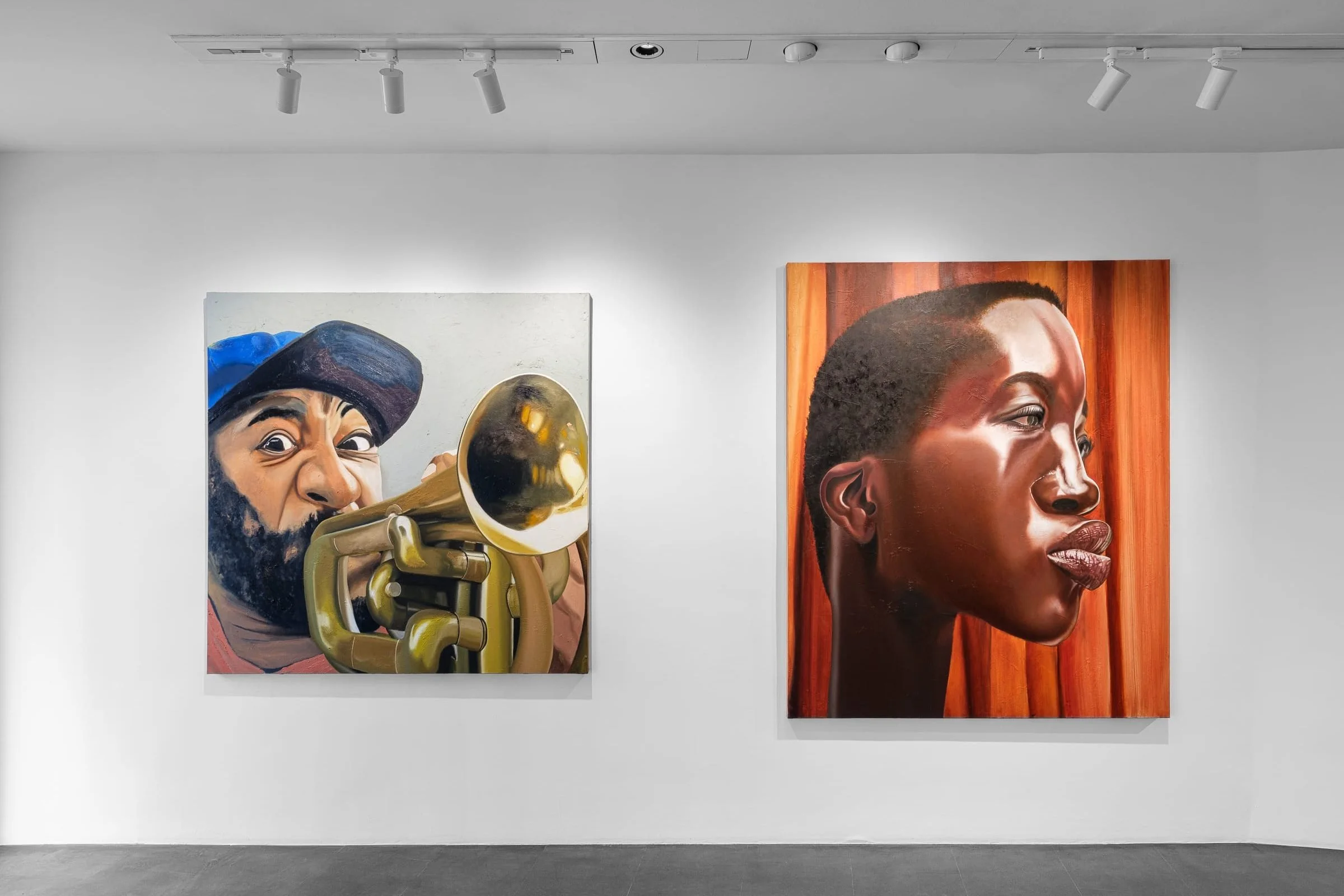
View of the exhibition Resonance à la Galerie 75 Faubourg, Paris, France. Photo : Grégory Copitet. © Brandon Deener. Courtesy the artist and Gallery Without Walls
luscious cadmium red curtains. Sonic Salute similarly renders the long neck of a model wearing sunglasses and long teal gloves, whose angular figure calls to mind Amedeo Modigliani. In both cases, the artist altered source images using Photoshop to create his preferred compositions. The shine of the models’ skin and the length of their necks evoke the dignity and pride of heads “held high.” As with other works in this show, Statuesque and Sonic Salute embody an optimistic and confident look to the future— a visualization of the world Deener desires so that it may become manifest.
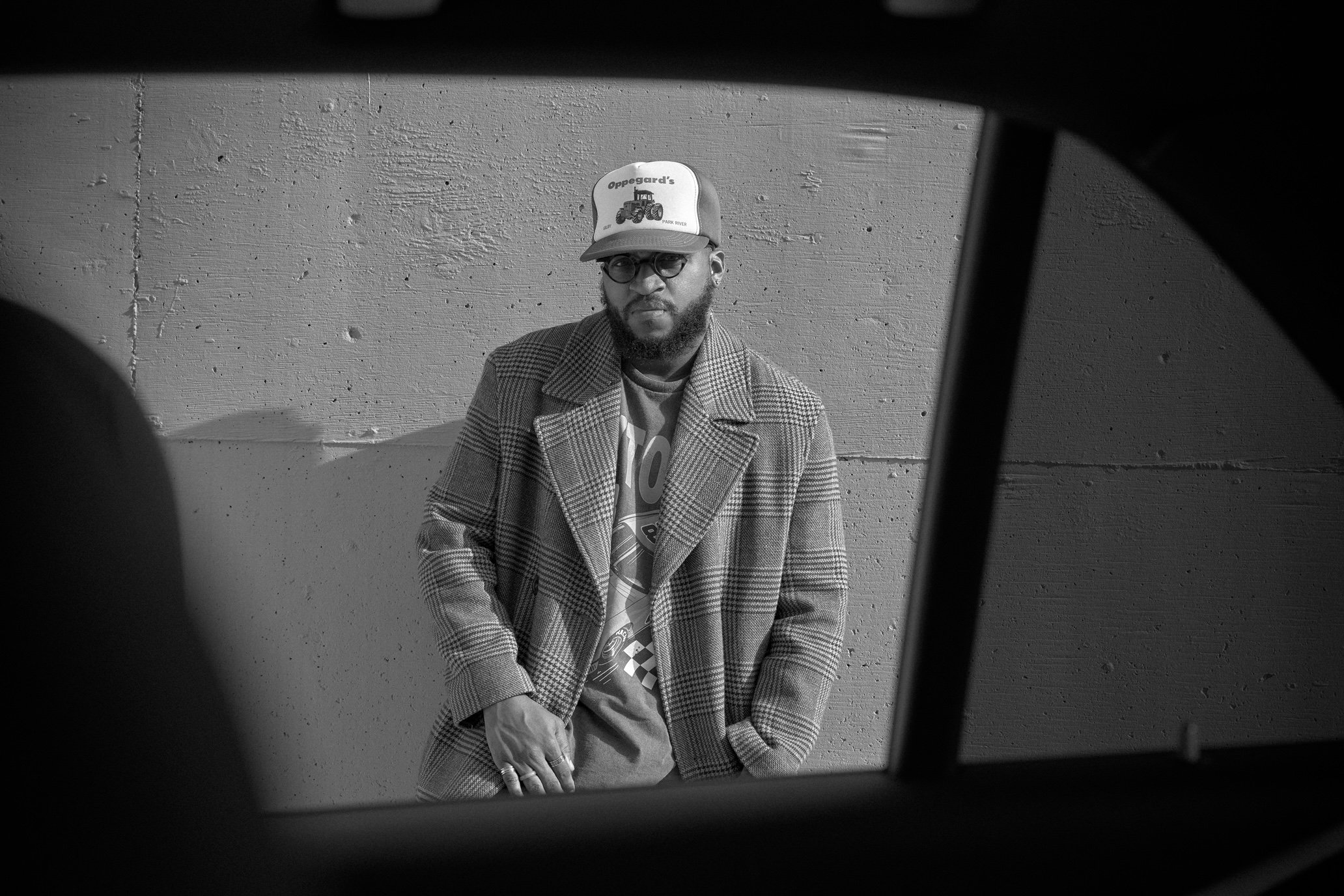
Courtesy the artist and Gallery Without Walls
Brandon Deener (born in Memphis, Tennessee, 1982) has had solo exhibitions at Simchowitz Gallery, LA; Jac Forbes Gallery, LA; A Hug from the Artworld, NY; and Gallery One, Fort Lauderdale, among other venues. His paintings have been written about in publications including The Guardian, Artlyst, Culture Is Free, Sugarcane, and Art of Choice. Deener’s art works are included in museums and institutions such as Amorepacific Corporation, The Hall Foundation, The Crocker Art Museum, The Fairfield University Art Museum, and in the personal collections of Carmelo Anthony, Ingrid Best, Hebru Brantley, Jaha Johnson, Bruno Mars, Ayesha Selden, and Usher.
The exhibition is accompanied by a fully illustrated 120-page monograph designed by Sebastien Moreu. For more information about this exhibition, please visit the Galerie Enrico Navarra site here. Brandon’s interview with the magazine can be found here.
BILAL HAMDAD: Reflets
Toutes les images / All images: © Courtesy of the artist and TEMPLON, Paris - Brussels - New York
Galerie Templon’s Brussels space is inaugurating the new art season with an exhibition of work by young figurative painter Bilal Hamdad.

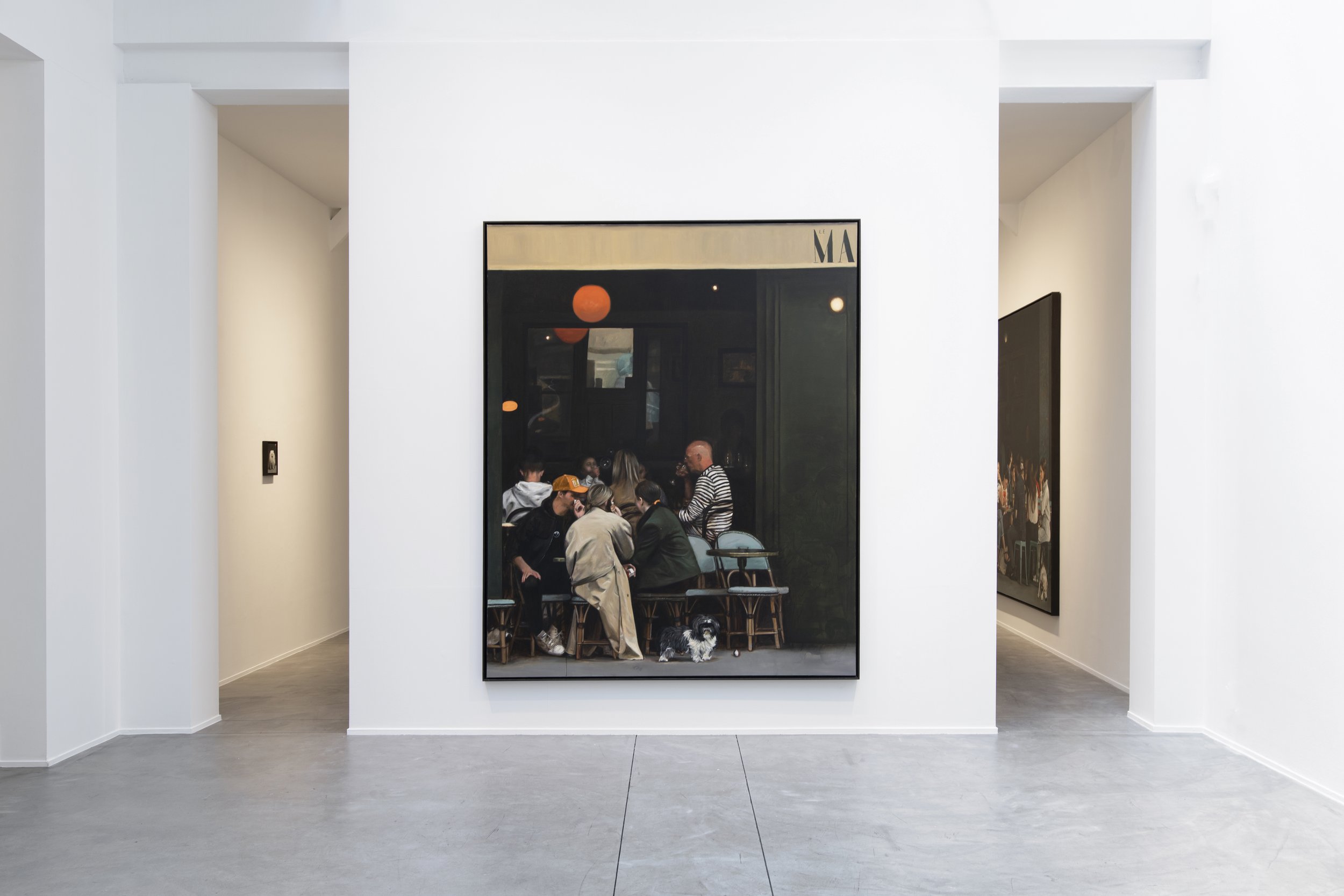


Toutes les images / All images: © Courtesy of the artist and TEMPLON, Paris - Brussels - New York
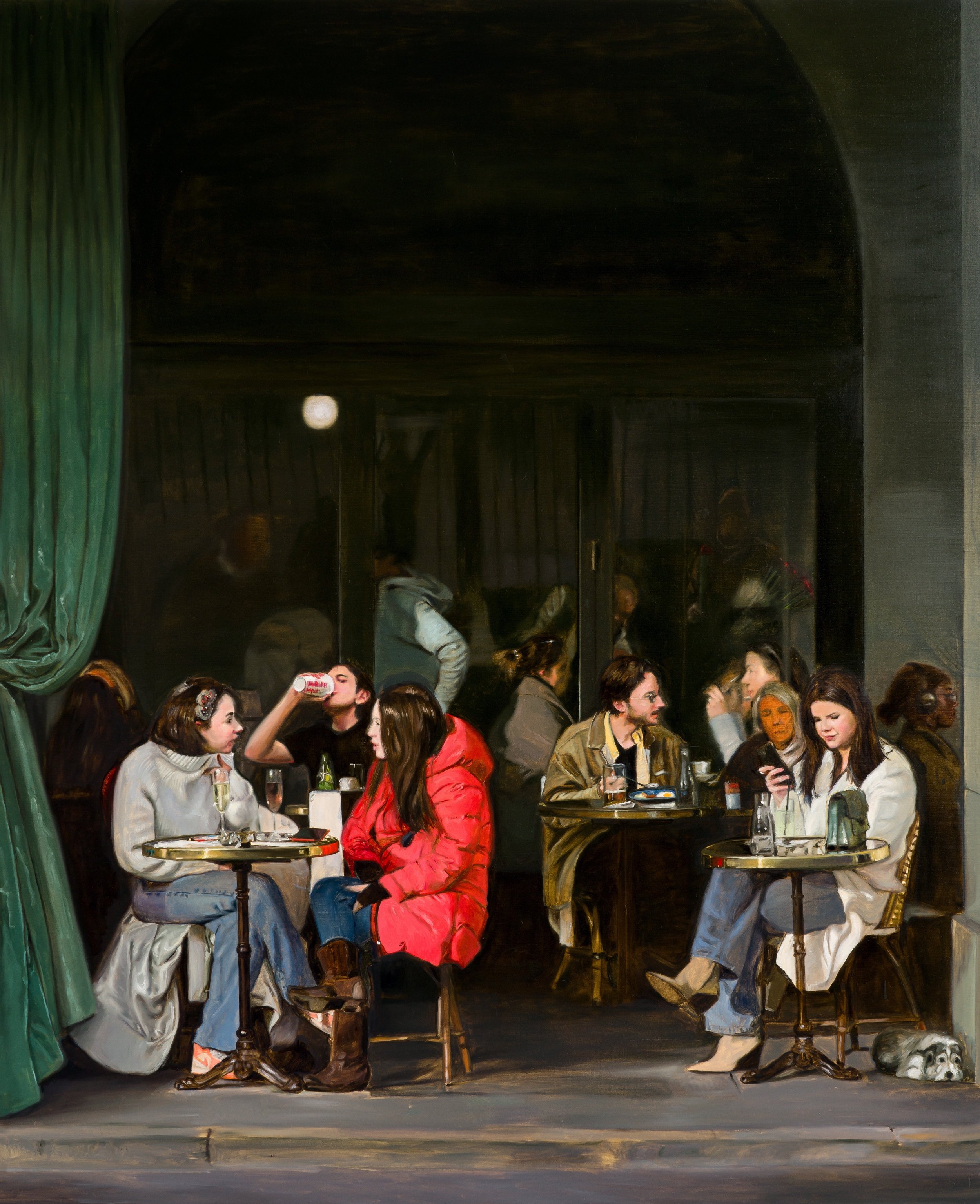
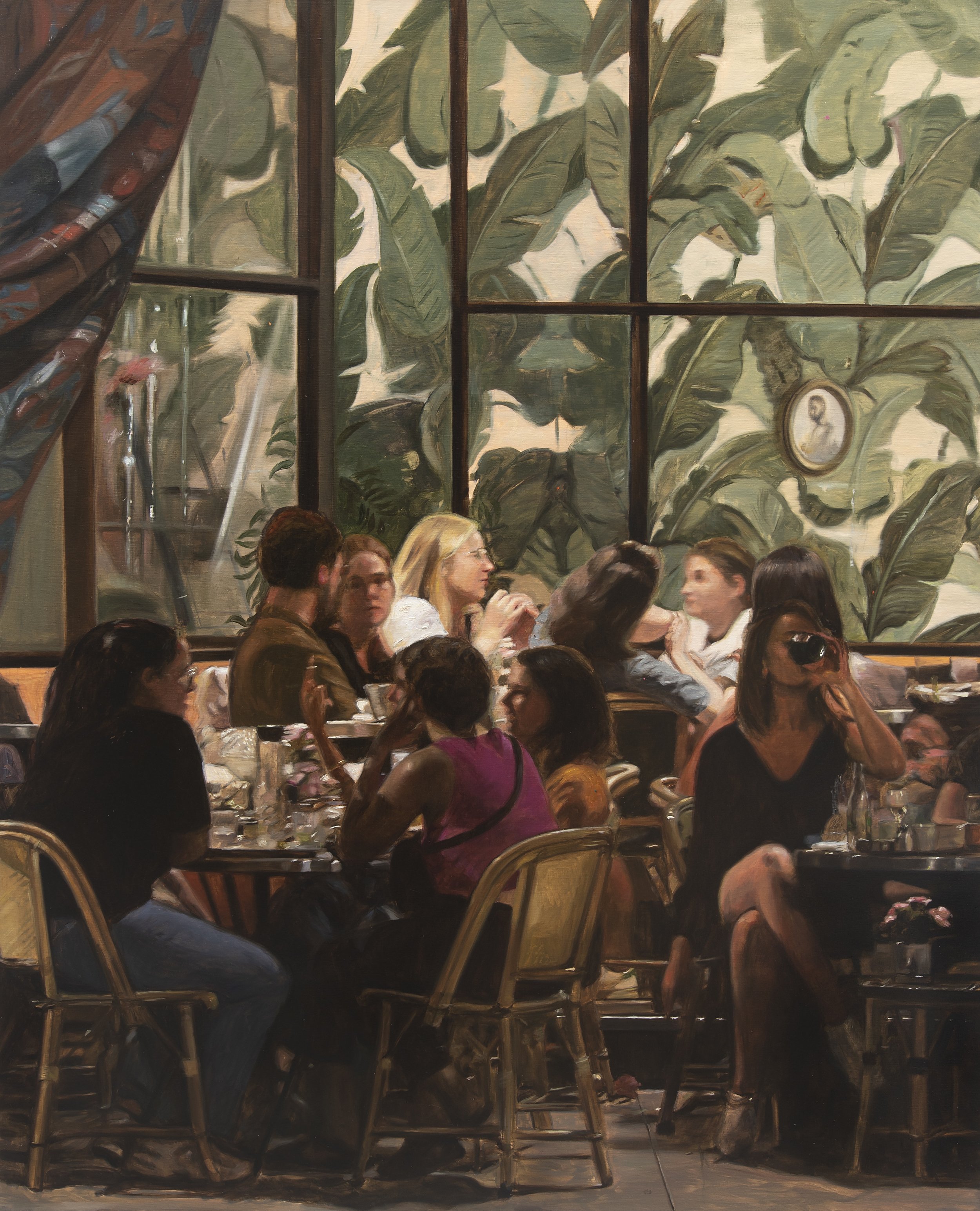
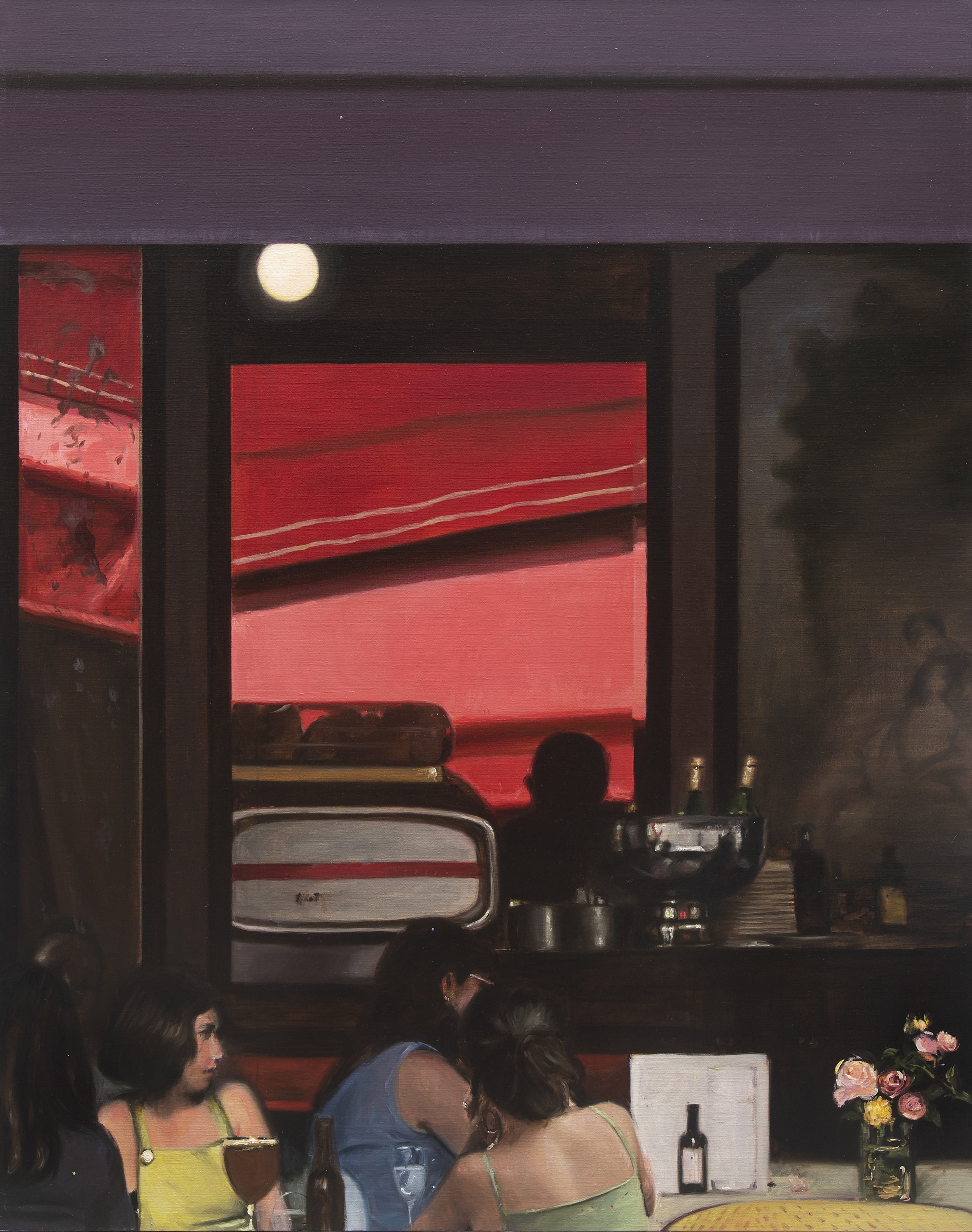
Born in 1987, Bilal Hamdad trained as a painter in Sidi Bel Abbes before moving to France to study. He graduated from the Beaux-Arts in Paris in 2018, and quickly made a name for himself with his strikingly naturalistic canvases exploring contemporary solitude. He borrowed to socialist realism to develop a body of work marked by a long process of observation and exploration of society. Often haunted by the question of isolation in the public space, his paintings tackle crowd phenomena as well as themes of intimacy, sharing and mixing.
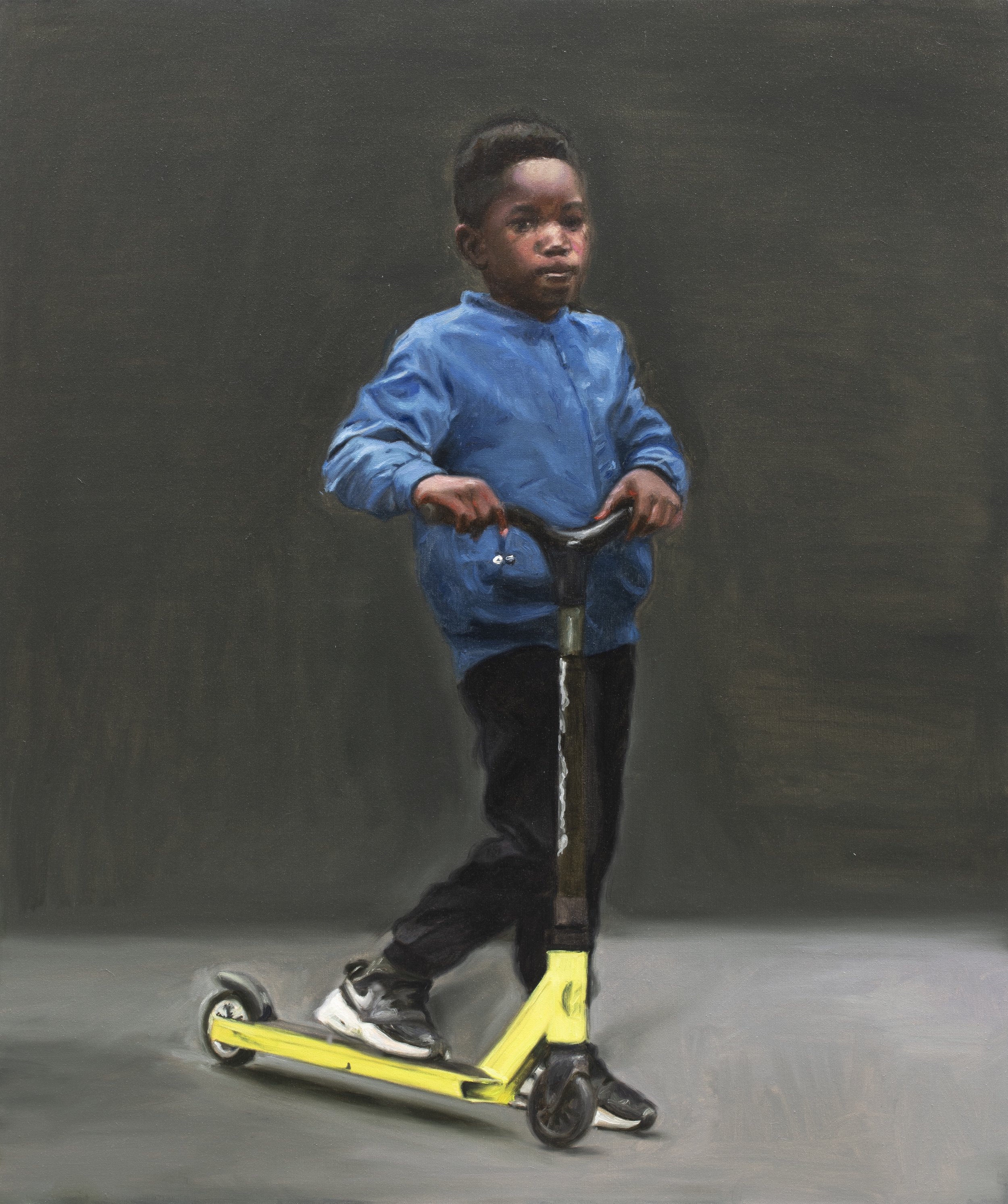
Toutes les images / All images: © Courtesy of the artist and TEMPLON, Paris - Brussels - New York
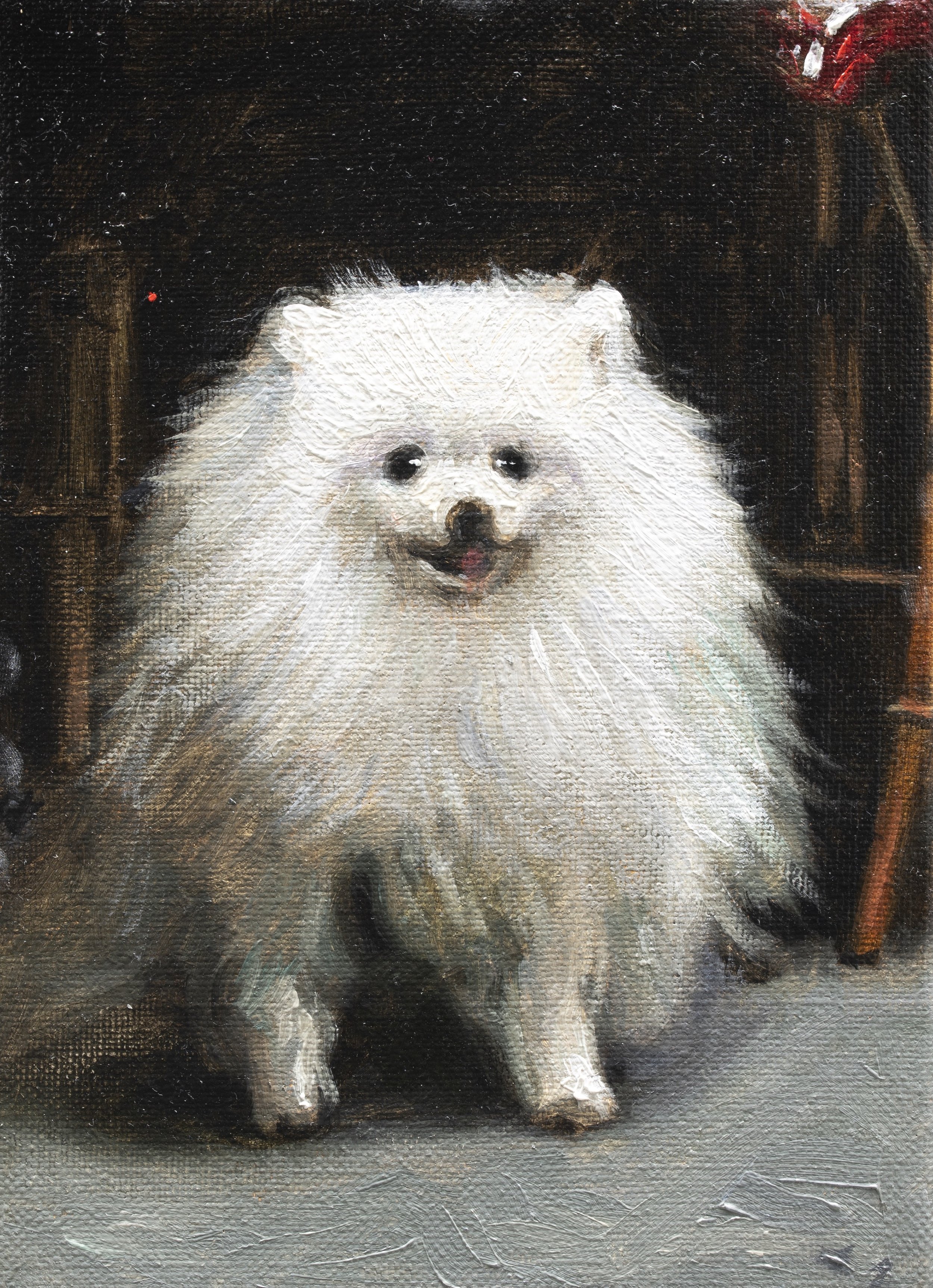
The artist unveils a dozen brand-new canvases, including four large format and a handful of medium format pieces. Created during his residency at Casa de Velázquez in Madrid, Hamdad found inspiration in the Spanish masters - Velázquez to Goya - as well as artists influenced by Hispanic culture, such as Rubens and Manet. Reminiscences of their works - café scenes, opulent draperies, ghostly figures - appear in disturbing chiaroscuro effects. By combining scenes of urban gatherings with the issues of the great masters, Bilal Hamdad builds bridges between past and present, and opens up his painting to a multitude of interpretations. Beyond the homage, his canvases evoke visual palimpsests of a new kind that question both the ambiguity of our times and the relevance of painting today.
Bilal Hamdad’s work has featured in a wide range of solo and group exhibitions, including at the Louvre Lens (2024), Mo.Co Panacée, Montpellier (2023), La Biennale de Paname, Paris (2023), Le Suquet des Artistes, Cannes (2022) and École Nationale Supérieure des Beaux-Arts de Paris (2018). His art has been awarded numerous prizes, including the Prix Fondation François Schneider (2023) and Prix Fondation Colas (2020), and features in several collections, including at the Fondation François Schneider, Wattwiller, northeast France (2023), Musée National de l’Histoire de l’Immigration, Paris (2022), Fondation Colas, Paris (2020) and The Sarr Collection (2019).
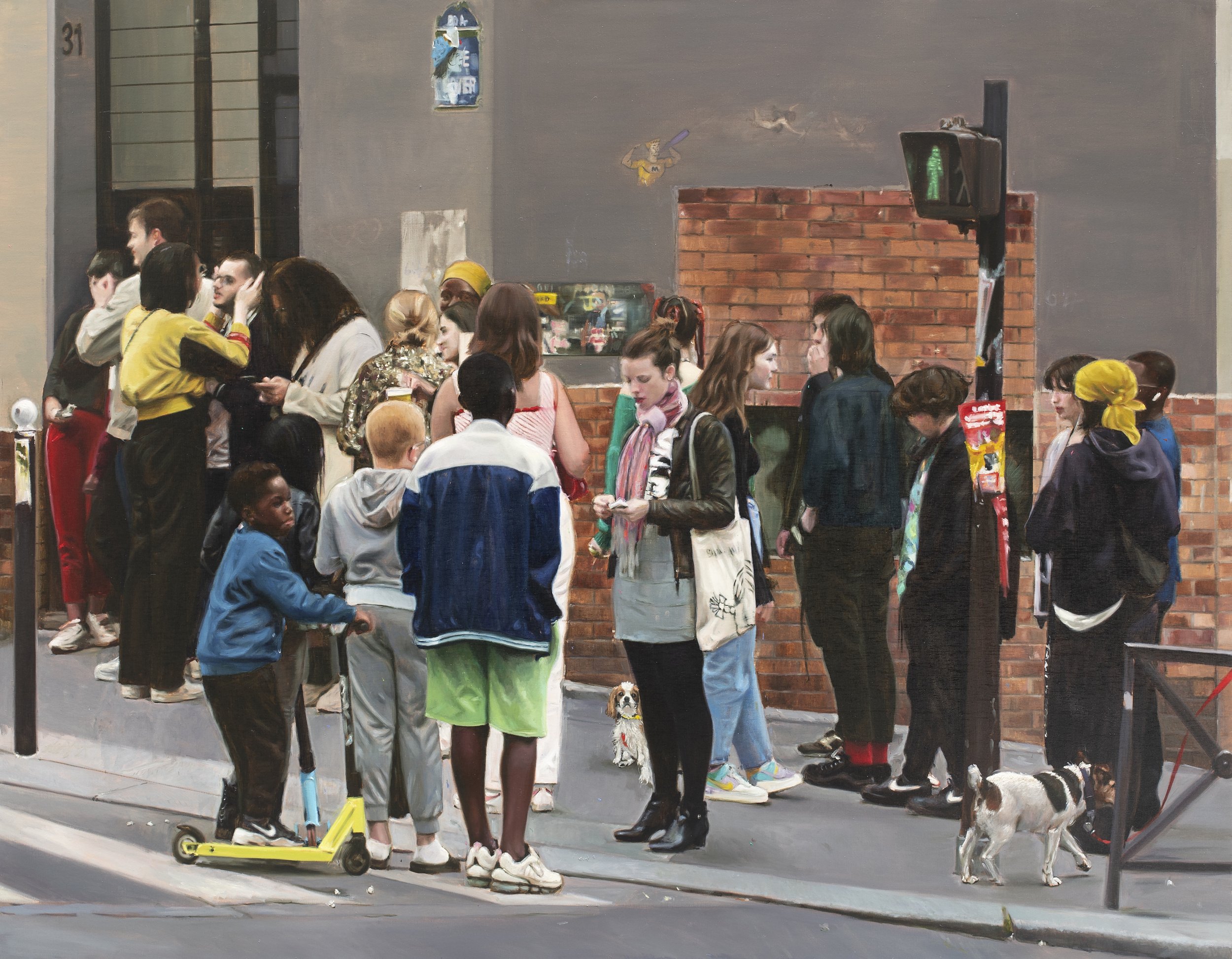
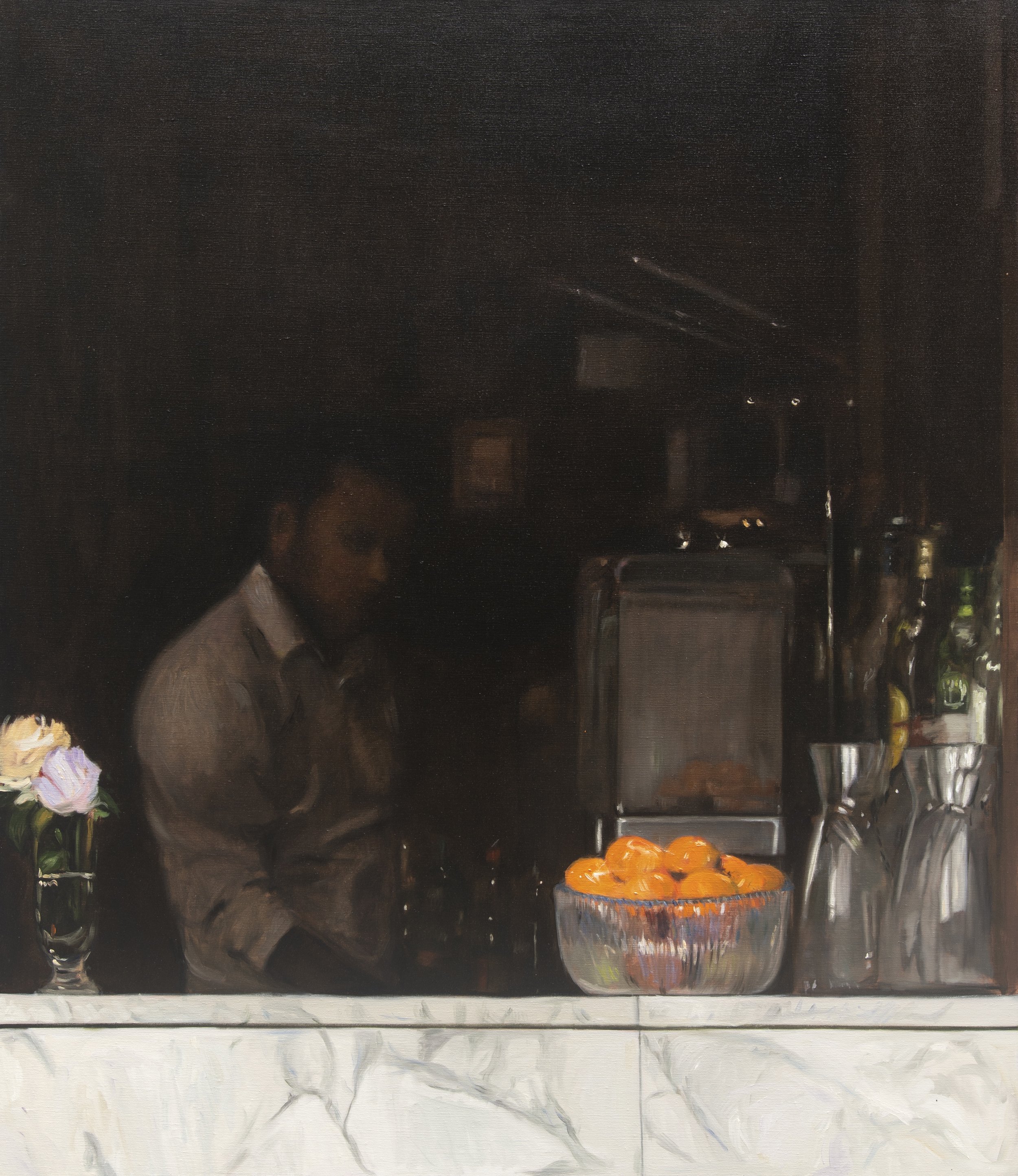
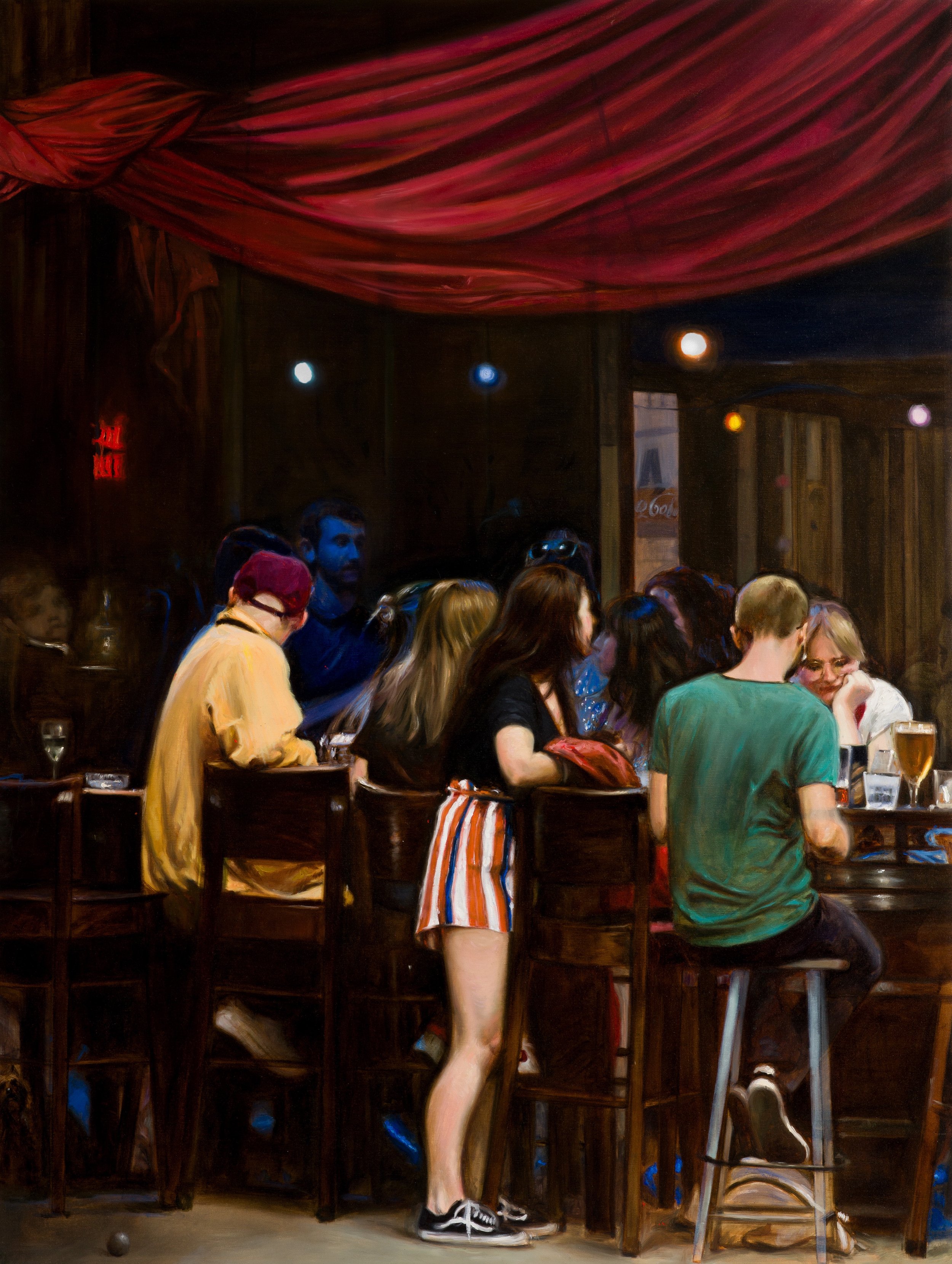
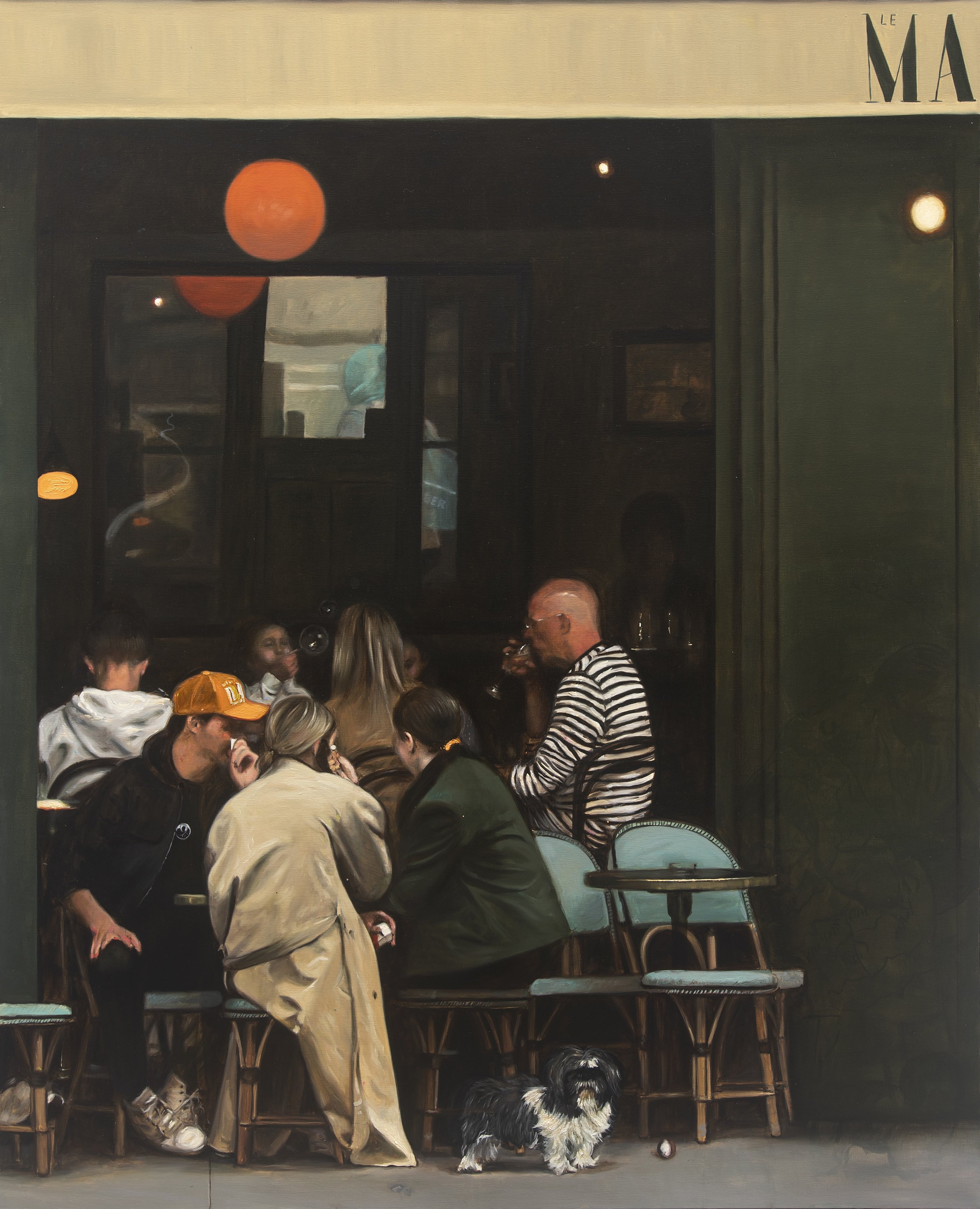
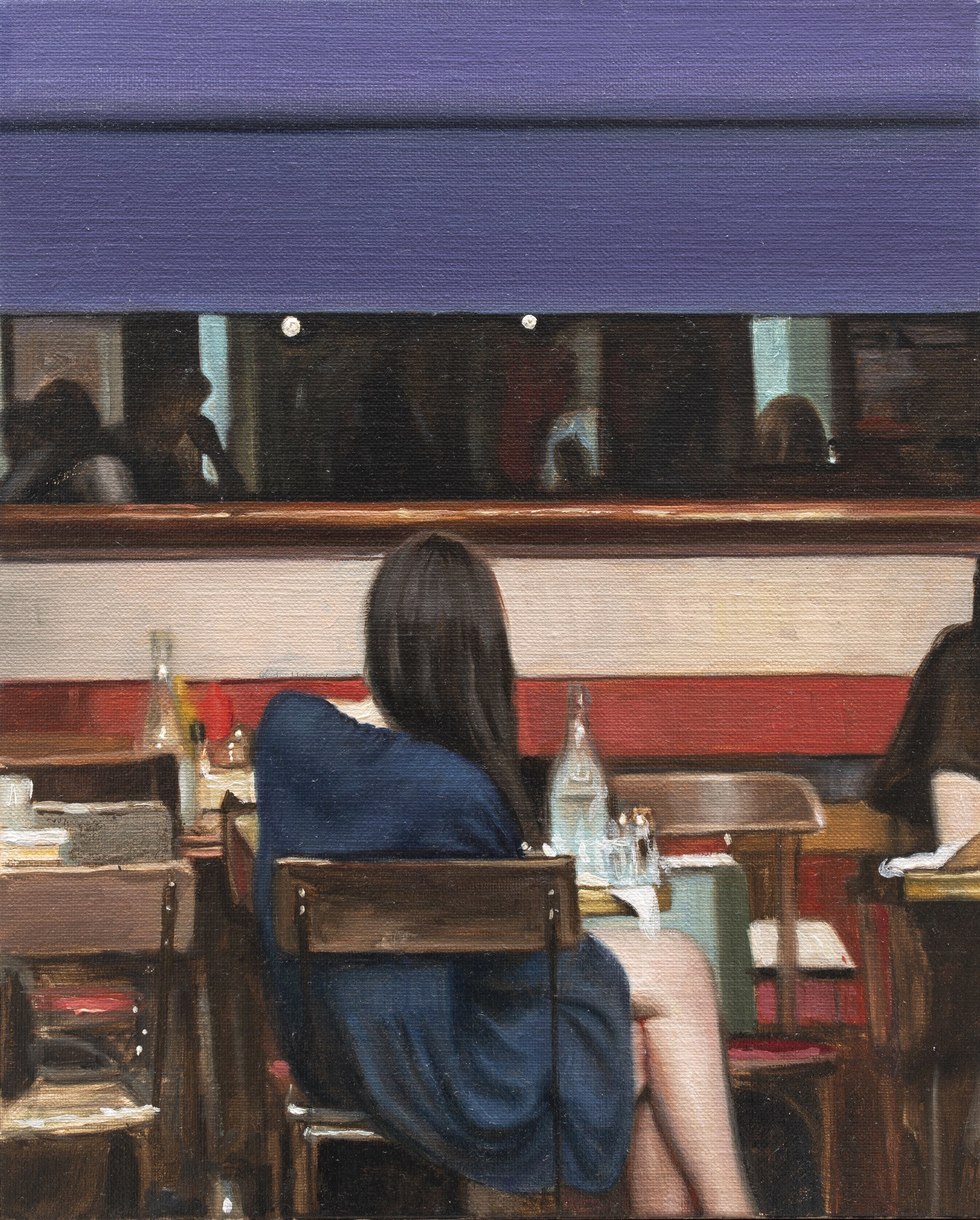
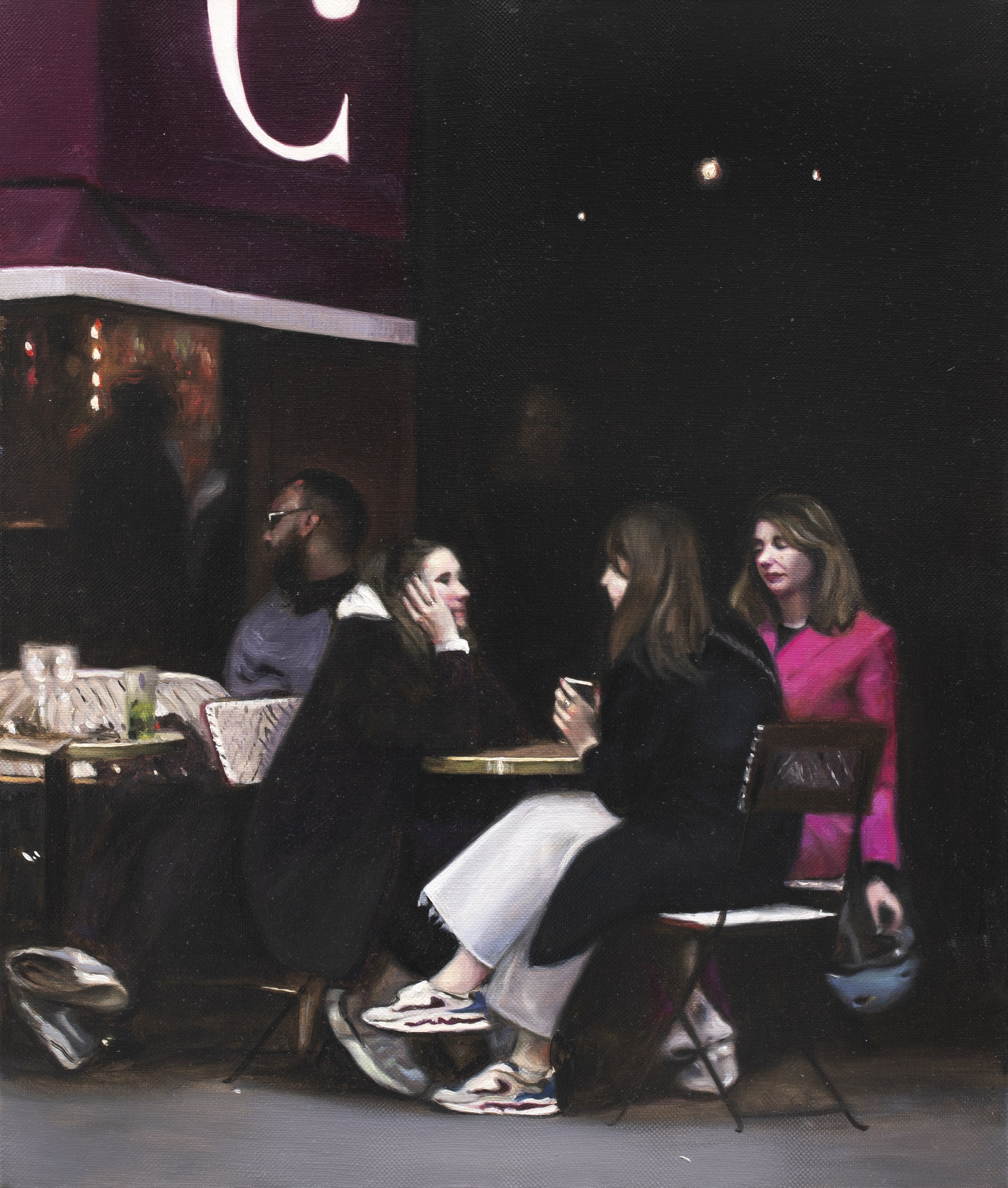

Toutes les images / All images: © Courtesy of the artist and TEMPLON, Paris - Brussels - New York
Refets opened at the Templon Gallery on September 12th and will be on view until October 31st. An exhibition of his work at the Fondation François Schneider will open on 25 October 2024, and in November 2025 his piece Rive droite will be shown as part of an exhibition celebrating the twentieth anniversary of the Musée de l’Immigration collection.
For more information about Bilal Hamdad’s artwork and his exhibition, please visit Templon’s site. The gallery can also be found on Instagram, artnet, Facebook, YouTube, and Artsy.
Carrie Mae Weems : Remember to Dream

Installation View: Carrie Mae Weems: Remember to Dream Hessel Museum of Art Bard College Annandale-on-Hudson NY 12504-5000 June 22 – December 1, 2024 Photography courtesy the Hessel Museum of Art
ANNANDALE-ON-HUDSON, NY Remember to Dream opened on June 22 at the Center for Curatorial Studies at Bard College’s (CCS Bard) Hessel Museum of Art, Remember to Dream revisits the range and breadth of Carrie Mae Weems’ prolific career through seldom displayed and lesser-known works that demonstrate the evolution of her pioneering, politically engaged practice. Moving beyond iconic projects, Remember to Dream seeks to rebalance understanding of Weems’ artistic development over the past 30 years while locating her work in the context of her own lived experiences and commitment to activism. Ranging from large-scale installations to serial bodies of photography, the works in the exhibition provide a through-line from the Civil Rights Movement to Black Lives Matter, tracing significant moments of racial reckoning through Weems’ own lens. Carrie Mae Weems: Remember to Dream is on view through December 1, 2024.
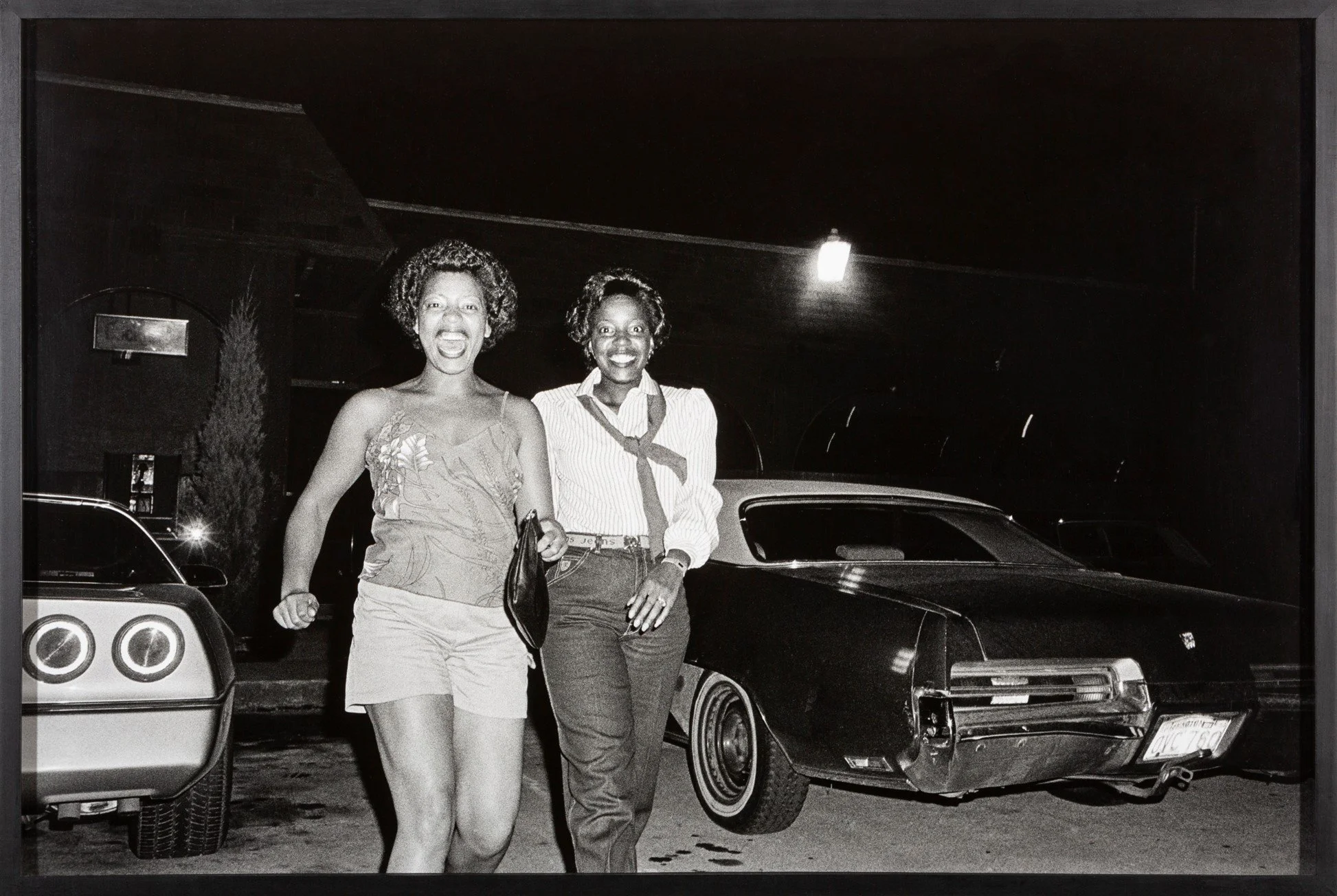
Family Pictures and Stories: Welcome Home, 1978-1984 © Carrie Mae Weems. Courtesy of the artist and Barbara Gladstone, New York
“Throughout her career, Carrie Mae Weems has created work that serves as both a witness to and a catalyst for change,” said Tom Eccles, Executive Director of CCS Bard. “CCS Bard has long provided a platform for artists whose practice brings defining issues of our time into greater focus. It is in this tradition that we present Remember to Dream, which showcases the powerful, emotional resonance of Carrie’s artmaking across photography, film, and installation from the late 1970s through today.”
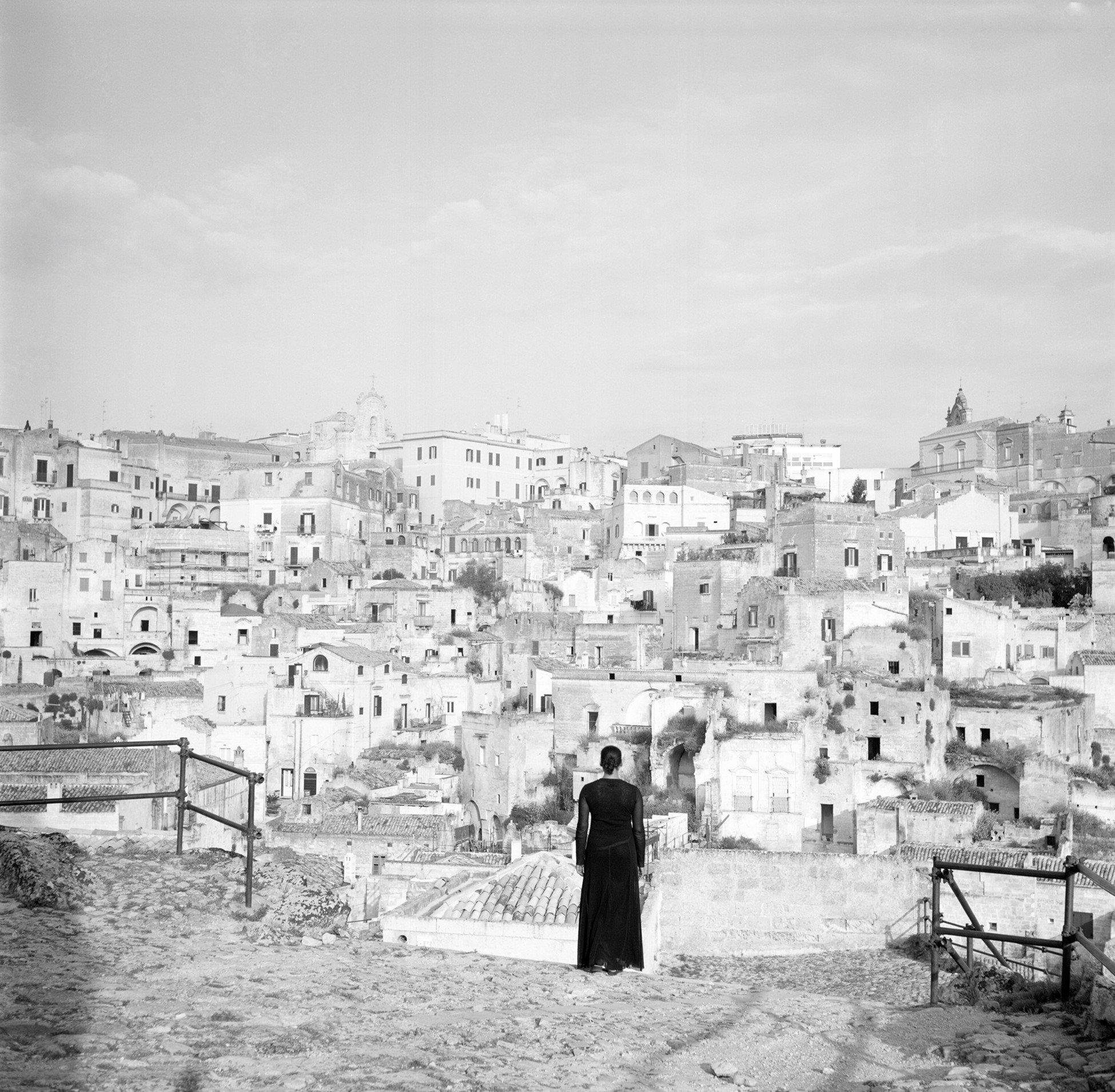
CARRIE MAE WEEMS The Edge of Time - Ancient Rome Digital C-print Unframed: 73 x 61 in. (185.4 x 154.9 cm) Marieluise Hessel Collection, Hessel Museum of Art, Center for Curatorial Studies, Bard College, Annandale-on-Hudson, New York Location: Hessel Museum, Gallery 09
Throughout the exhibition, Weems’ practice and personal history, which intersects with the political history of the U.S., sheds light on what Black American poet and scholar Amiri Baraka has called “the changing same,” referencing the continuity of racism and sexism—the ways in which certain patterns of violence and oppression are perpetuated from one generation to the next, even as the specific conditions of everyday life continue to change.
The exhibition is sequenced over nine rooms, each representing a body or bodies of work. Beginning with Painting the Town (2021), Weems addresses the protests that erupted in May 2020 in over 2,000 cities and towns across the United States in response to the murder of George Floyd by Minneapolis Police. In Weems’ hometown of Portland, Oregon, the protests continued through September 2020, escalating to points of violent confrontation between police, protestors, and counter-protestors. Weems returned to Portland to photograph many of the businesses that boarded their storefront windows to protect against potential looting and vandalism. In an adjacent room, Weems displays an array of intimate portraits entitled Family Pictures and Stories (1978-1984), an earlier series from Portland of black-and-white photographs recording the joys and agonies of family life.
Remember to Dream contextualizes the present within a centuries-long struggle. An especially poignant and compelling representation of the brutal legacy of racism is Leave, Leave Now! (2022), a recent video installation resembling an old theater in which the artist and her sister tell the story of their grandfather Frank, a sharecropper who was a member of the Southern Tenant Farmers' Union and worked on land in Arkansas. After being beaten and left for dead in Earle, Arkansas, in 1936, Frank escapes North to Chicago on foot out of the Jim Crow South, losing his land and for a time, his family. In the video, Weems powerfully calls for reparations for all he and his family lost over generations.

CARRIE MAE WEEMS Blues and Pinks 5, 2020 Three archival inkjet prints Edition: 2 of 3 + 2AP 2 Prints: 36 1/4 x 18 1/4 x 1 3/8 in. (92.1 x 46.4 x 3.5 cm) framed, each 1 Print: 36 1/4 x 36 1/4 x 1 3/8 in. (92.1 x 92.1 x 3.5 cm) framed © Carrie Mae Weems. Courtesy of the artist and Gladstone Gallery. Location: Hessel Museum, Gallery 12/13
The exhibition continues with Blues and Pinks (1992-93), in which Weems draws upon images from the “Children’s Crusade” that began on May 2, 1963, when over one thousand children left school in Birmingham, Alabama to march downtown and speak to the mayor about segregation in their city. The children were stopped by police and hundreds were arrested. They reconvened the next day to march again, and the head of police directed law enforcement to use force on the children.

CARRIE MAE WEEMS Down Here Below, 2019 Five framed prints with convex glass glazing Edition: 2 of 5 + 2AP 116 1/2 x 37 x 2 1/2 in. (295.9 x 94 x 6.4 cm) overall © Carrie Mae Weems. Courtesy of the artist and Gladstone Gallery. Location: Hessel Museum, Gallery 11
Weems appropriates the photography of white Southern journalist Charles Moore, tinting the images with blue and pink tones, and juxtaposing scenes that resurrect the terror of the day. In a further work entitled Land of Broken Dreams: A Case Study (2021) Weems recalls the Black Panthers as a force for self-defense.

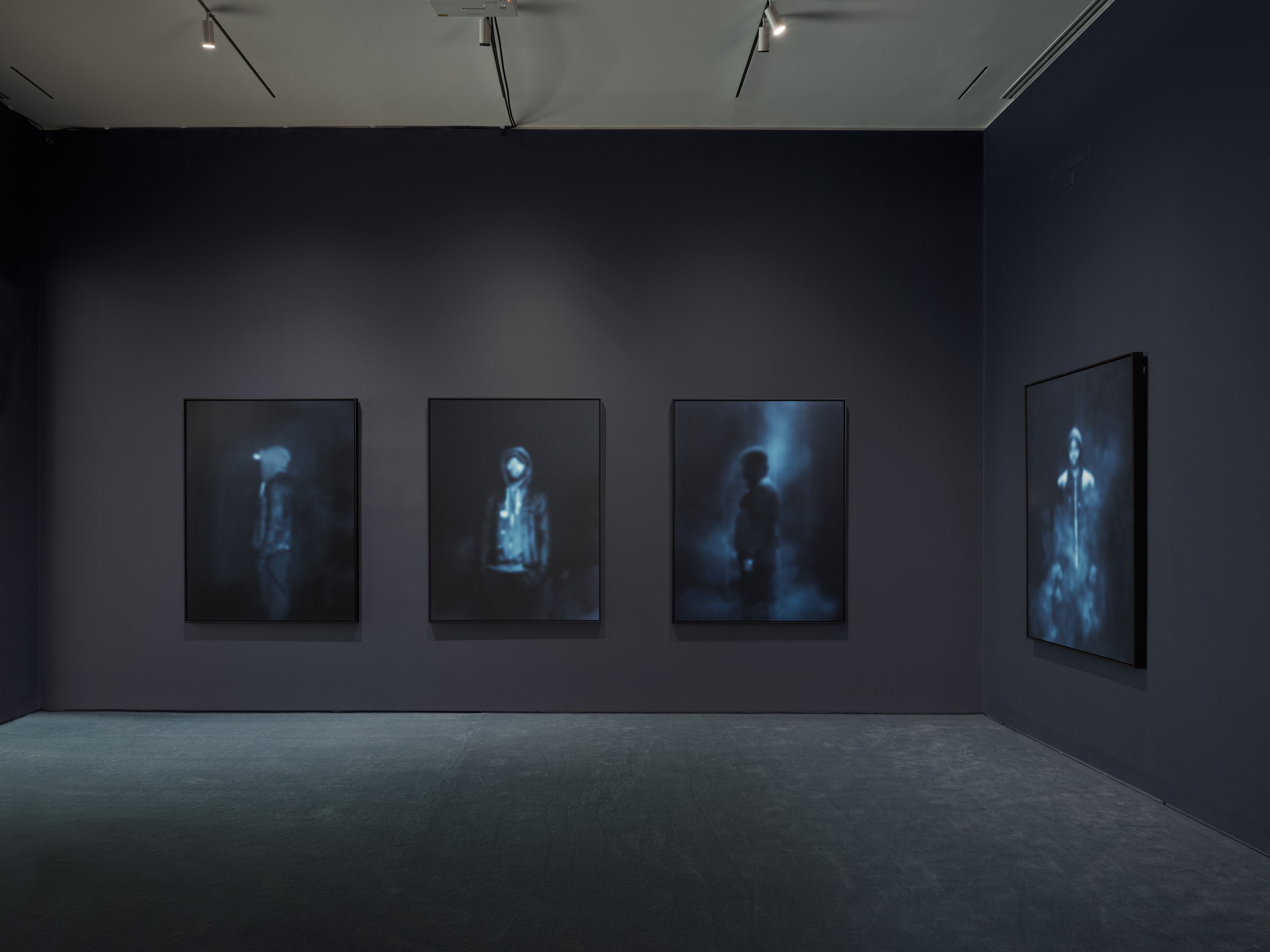


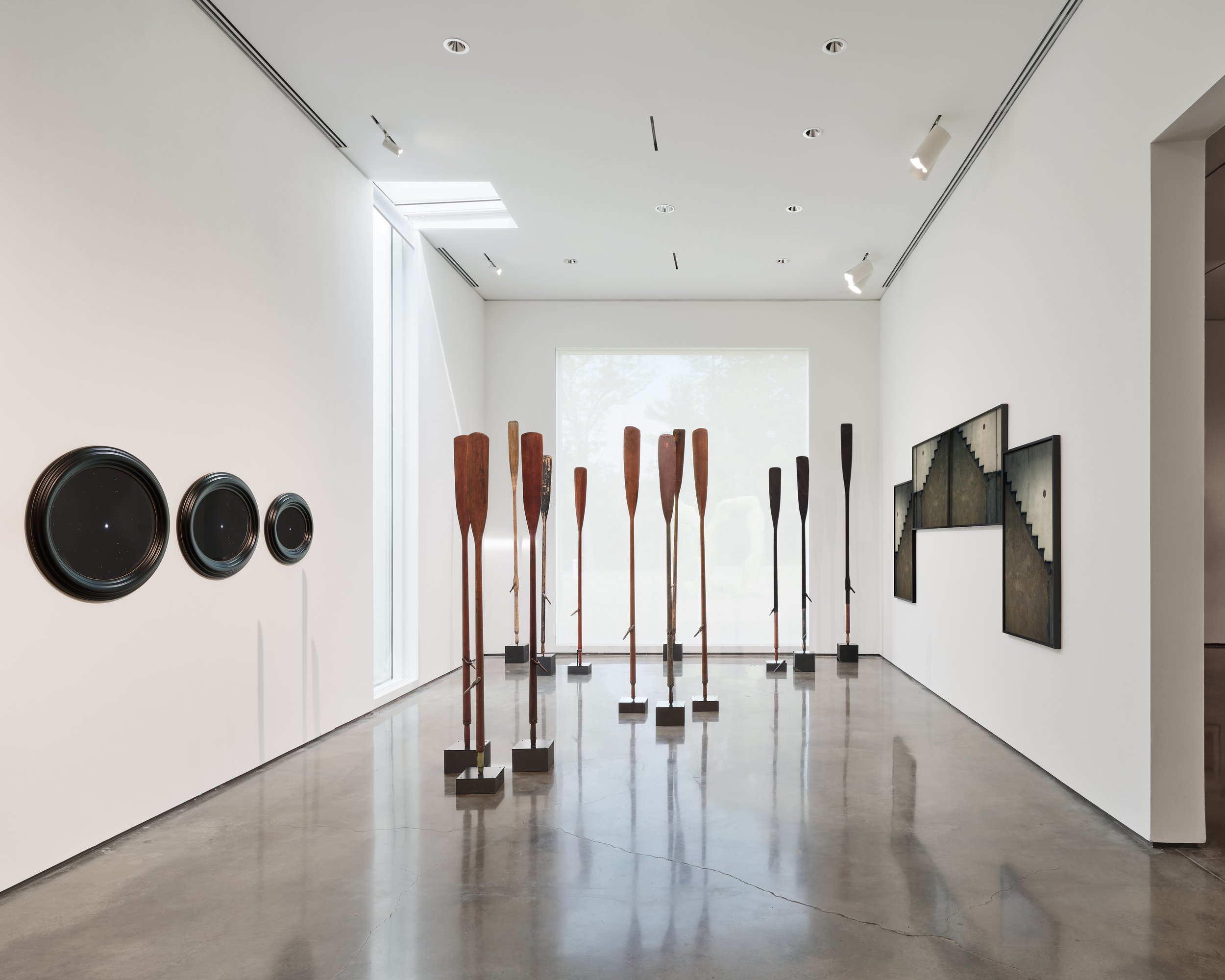

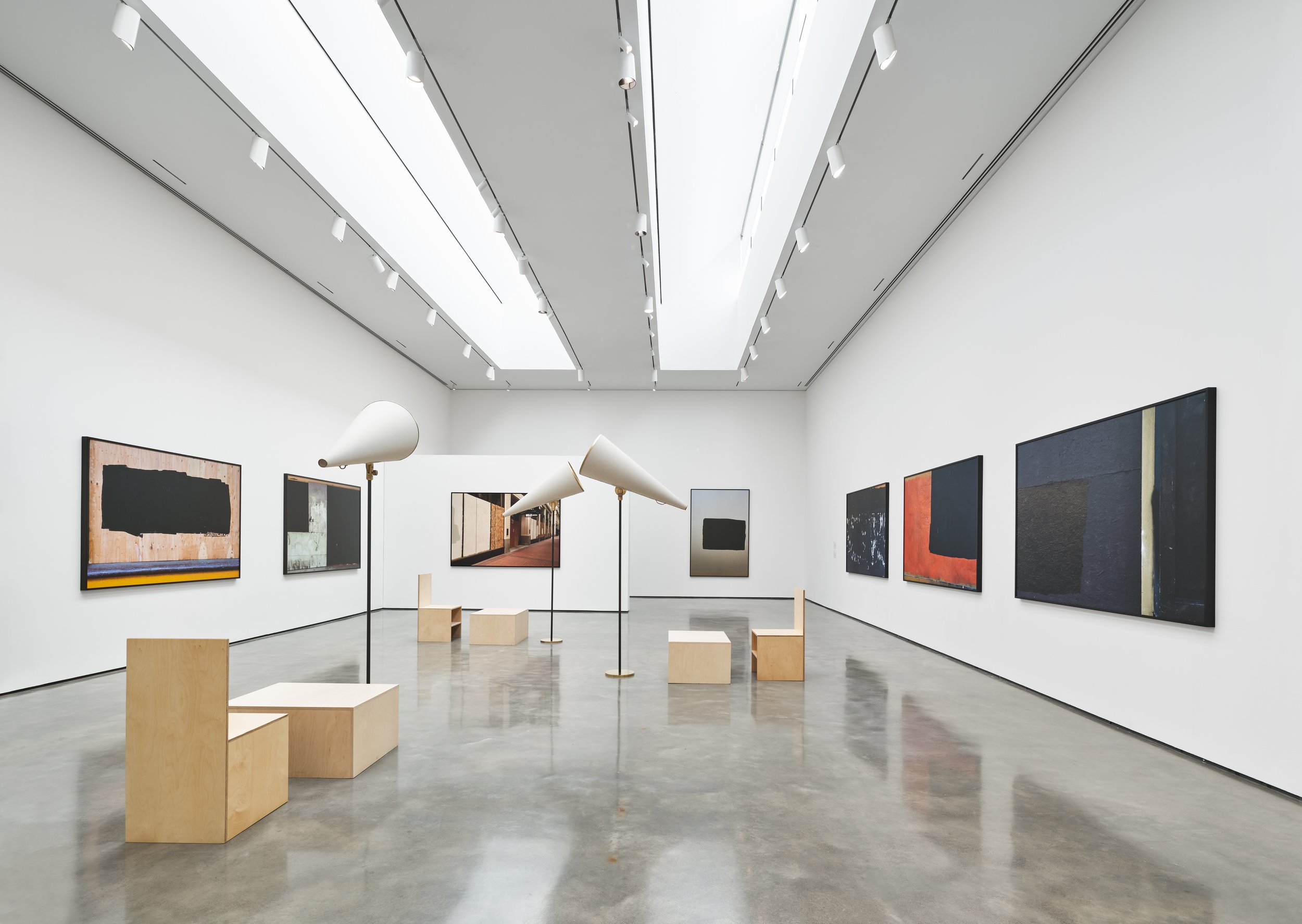
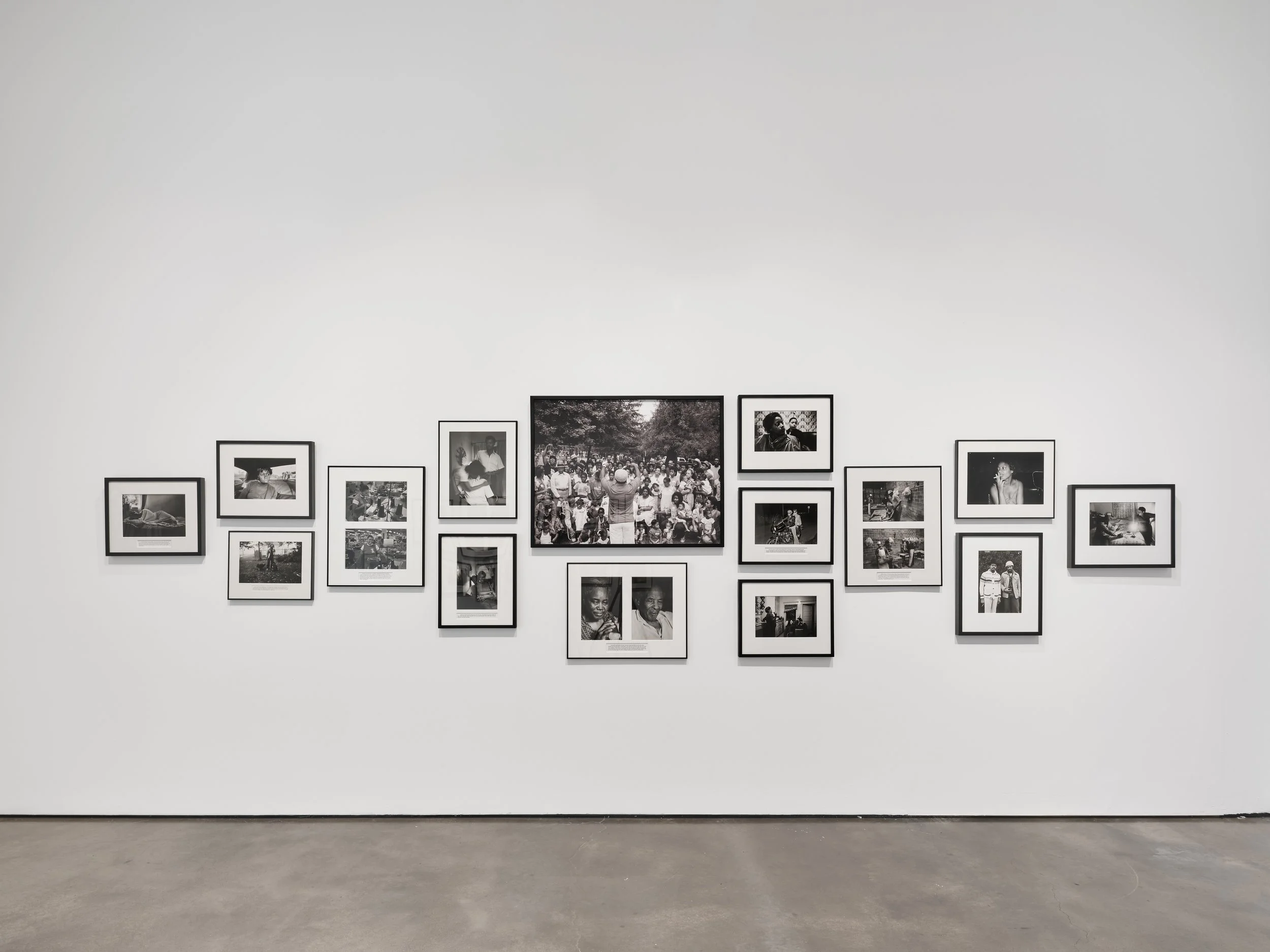


Installation View: Carrie Mae Weems: Remember to Dream Hessel Museum of Art Bard College Annandale-on-Hudson NY 12504-5000 June 22 – December 1, 2024 Photography courtesy the Hessel Museum of Art
Remember to Dream continues an ongoing dialogue between Weems and CCS Bard Executive Director Tom Eccles, following their collaboration on The Shape of Things at the Park Avenue Armory in New York City (2021) and Luma Arles in Arles, France (2023), with support from CCS Bard alumnus, Marina Caron (Class of 2023).
About Carrie Mae Weems
Carrie Mae Weems (b. 1953, Portland, Oregon) is an American artist whose work gives voice to people whose stories have been silenced or ignored. Investigating history, identity, and power, Weems finds connections between personal experience and the larger structures and institutions that shape our lives. Over the course of 40 years, she has built an acclaimed body of work using photographs, text, fabric, audio, digital images, installation, performance, and video.
Recent exhibitions include Reflections for Now at Barbican Art Gallery in London, and The Evidence of Things Not Seen, organized by Württembergischer Kunstverein Stuttgart (WKV) and on view at Kunstmuseum Basel through July 4, 2024. Other recent highlights include Dawoud Bey & Carrie Mae Weems: In Dialogue, organized by the Grand Rapids Art Museum in Michigan. In the spring of 2023, Weems served as the inaugural Agnes Gund Professor of the Practice of Arts and Social Justice at Brown University, a residency that culminated in the campus-wide activation collectively titled Varying Shades of Brown.
Weems has received numerous awards, grants, and fellowships, including a Hasselblad Award, a Bernd and Hilla Becher Prize, a MacArthur “Genius” grant, the U.S. State Department’s Medal ofArts, the Joseph Hazen Rome Prize Fellowship from the American Academy in Rome, NEA grants, the Louis Comfort Tiffany Award, and the Congressional Black Caucus Foundation’s Lifetime Achievement Award, among others. Her work is in the collections of the Metropolitan Museum of Art, New York; Museum of Fine Arts, Houston; Museum of Modern Art, New York; Museum of Contemporary Art, Los Angeles; and The Tate Modern, London, among others.
Exhibition Organization and Credits
Exhibitions at CCS Bard and the Hessel Museum of Art are made possible with generous support from Lonti Ebers, the Marieluise Hessel Foundation, the Robert Mapplethorpe Foundation, the Board of Governors of the Center for Curatorial Studies, and the Center’s Patrons, Supporters, and Friends.
About the Hessel Museum of Art
CCS Bard’s Hessel Museum of Art advances experimentation and innovation in contemporary art through its dynamic exhibitions and programs. Located on the campus of Bard College in Annandale-on-Hudson, the Hessel organizes and presents group exhibitions and thematic surveys, monographic presentations, traveling exhibitions, as well as student-curated shows that are free and open to the public. The museum’s program draws inspiration from its unparalleled collection of contemporary art, which features the Marieluise Hessel Collection at its core and comprises more than 3,000 objects collected contemporaneously from the 1960s through the present day.
The Center for Curatorial Studies, Bard College
The Center for Curatorial Studies, Bard College (CCS Bard) is the leading institution dedicated to curatorial studies, a field exploring the conditions that inform contemporary exhibition-making and artistic practice. Through its Graduate Program, Library and Archives, and the Hessel Museum of Art, CCS Bard serves as an incubator for interdisciplinary practices, advances new and underrepresented perspectives in contemporary art, and cultivates a student body from diverse backgrounds in a broad effort to transform the curatorial field. CCS Bard’s dynamic and multifaceted program includes exhibitions, symposia, publications, and public events, which explore the critical potential of the practice of exhibition-making.
For more information about this exhibition and others at the Hessel Museum of Art, please visit their site here; the museum can also be found on Facebook and Instagram. For more information about Bard, please visit their site here.
YUSSEF AGBO-OLA : 7 RIVERS IN BONE ASH

Installation View : 7 RIVERS IN BONE ASH, 2024, KÖNIG TELEGRAPHENAMT, Photo Roman März, Courtesy of the artist & KÖNIG GALERIE
KÖNIG TELEGRAPHENAMT is pleased to present the solo exhibition 7 RIVERS IN BONE ASH by Yussef Agbo-Ola. The artist creates an immersive environment featuring sculpture, installation, artifacts, and sound. Yussef Agbo-Ola, an artist and architect, splits his time between London, Ibadan in Nigeria, and the Amazon Forest. Born in rural Virginia to a family with Nigerian, African-American, and Cherokee heritage, his work explores hybrid identities and relationships with diverse landscapes, ecologies, and cultural rituals.
7 RIVERS IN BONE ASH showcases objects that reference ancestral artifacts traditionally used to honor connections to the non-human world. In Yoruba culture, every form of matter possesses a living spirit, and this exhibition serves as a sacred space, holding vessels for unseen environmental entities and inviting viewers to reflect on the invisible aspects of the natural world. With this in mind each work acts as a poetic expression in making the small, fragile and forgotten, large, crystalised, and remembered.
The focal point of the exhibition is a womblike wooden structure, draped with knitted red fabric. SAKO: 12 SEED ALTAR serves as a space for introspection, allowing reflection on the unseen nutrient exchanges between seeds and soil. The design draws inspiration from the internal forms of various medicinal seeds from the Amazon Forest, while symbolically representing the fertilization process that occurs underground. The altar features an open middle layer where knitted fabrics interconnect in a web resembling the ribosome networks found beneath the forest floor. From a side view, the altar illustrates the three layers of earth, forming a womb-like structure where a seed undergoes transformation before resurfacing. The work honors the farming rituals of the Yoruba culture and reflects on harvest ceremonies.

Installation View : 7 RIVERS IN BONE ASH, 2024, KÖNIG TELEGRAPHENAMT, Photo Roman März, Courtesy of the artist & KÖNIG GALERIE
Agbo-Ola aims to reopen our eyes to the natural surroundings, sharpening our senses to what is invisible yet constantly evolving, transforming, dying, or growing. Many of his works are inspired by organisms on the brink of extinction, with the exhibition holding space for the living, the dead, the seen, and the unseen ancestors that connect us to the natural world.
The series MEDICINAL SKIN SPECIES merges the symbolic textile traditions of the Yoruba and Cherokee with inspiration drawn from biology, phytology, and ritual practices of environmental consecration. Each piece is hand-knitted, evoking the form of animal skins. The patterns and motifs are inspired by diverse cultural cosmologies, microscopic organisms, animals, and insect skins – some of which are endangered or already extinct. Through reflection on the unseen within various ecosystems, these skins commemorate different species by symbolically extending their lives and presence. A group of works on paper is similarly inspired, representing reimagined, fossilized plant organs encased in Arctic ice. These pieces are painted with watercolors and Indian ink mixed with raw pigments.

Installation View: 7 RIVERS IN BONE ASH, 2024, KÖNIG TELEGRAPHENAMT, Photo Roman März, Courtesy of the artist & KÖNIG GALERIE
Belief systems and religions across the world often assign significant roles to environmental elements. Agbo-Ola questions the origins of these beliefs, practices, and values, and the degree to which they influence our relationships and interactions with our surroundings. In one culture, a river might be viewed as an economic resource, while in another it is seen as a living entity. What is at stake when environmental elements are valued only for their physical properties, and not for their interconnected, unseen roles in larger systems, such as a tree converting CO2 into oxygen for most species to breathe? For Agbo-Ola, the BONE TOTEMS SERIES seeks to reveal the unseen relationships between environmental elements and cultural cosmologies. Each piece is carved from Amazonian Angelique wood that has been washed in river water. The smaller wooden works represent cosmological spirits of the land, inhabiting various environmental elements such as stones, trees, and flowers.


Installation View: 7 RIVERS IN BONE ASH, 2024, KÖNIG TELEGRAPHENAMT, Photo Roman März, Courtesy of the artist & KÖNIG GALERIE
Artist
Yussef Agbo-Ola (b. 1990 in Newport News, Virginia, United States ) is an artist and architect living between London, Lagos, and the Amazon Forest. Born in rural Virginia in a multi-heritage Nigerian, African-American, and Cherokee household, his work reflects hybrid identities and relationships to different landscapes, ecologies, and cultural rituals. Agbo-Ola’s multidisciplinary artistic practice is concerned with interpreting natural energy systems, through interactive experiments that explore the connections between an array of sensory environments, from the biological and anthropological to the perceptual and microscopic. His practice questions how art, architecture, and anthropological research can create experimental environments that challenge the way we experience geological conditions and living ecosystems. His works manifest as architectural temples, photographic journalism, material alchemy, interactive performance, experimental sound design, and conceptual writing.
Yussef holds a Masters in Fine Art from the University of the Arts London and a Masters in Architecture from the Royal College of Art. He has led art and architectural commissions for the United Nations, Institute of Contemporary Art (London), Serpentine Gallery London, Van Abbe Museum, TEDx East End, BBC Arts, Museum Folkwang, Venice Architectural Biennials, Palais de Tokyo, Tai Kwun Arts Center, Sharjah Architecture Triennial, and Lexus Automotive Innovation Centre Japan, among others. Agbo-Ola is an Adjunct Assistant Professor of Architecture at Columbia GSAPP where he directs an experimental design studio called the The Art of Poetic Environmental Architecture.
The exhibition opened on September 11th and will be on view until November 16th, 2024. An opening was held On September the 11th from 6 to 8 pm.
For more information about this exhibition and others, please visit the gallery’s site here. KÖNIG GALERIE can also be found on YouTube, Instagram, and Facebook. Yussef’s interview with the magazine can be found here.
ARJEN : IDENTITIES

Installation View: IDENTITIES, 2024, Berlin, Photo by Roman März, Courtesy of the artist & KÖNIG GALERIE
KÖNIG GALERIE is pleased to present a solo exhibition by Dutch artist Arjen, his first with the gallery. The show is comprised of 8 paintings, drawings on paper, smaller format paintings, and bronze sculptures, which are completely new for the artist.
As a child, Arjen started making copies of the work of the Dutch Masters, such as Rembrandt and Jacob van Ruysdael. Later he discovered the work of earlier modern painters like Pablo Picasso and Salvador Dalí, as well as ethnographic art, which became great inspirations to him. Arjen is fascinated by the fundamental principles of art. Through pictorial analysis, he tries to isolate these principles to then use them in his own works. Though he has an urge to visualize a wide range of figures and feelings, he simultaneously wants his works to be simple and as minimalistic as possible. This desire for simplicity is inspired by the artistic development of Piet Mondrian.

Arjen, The Kiss, 2024, Courtesy of the arist & KÖNIG GALERIE
The process usually starts with a sketch, inspired by everyday life or a sudden idea, in which he lets his intuition run freely. Arjen tries to go beyond the concept of deformation. With familiar elements of the human body, geometrically reshaped and sometimes combined with cheerful or sensual elements, he tries to create new entities with their own intrinsic logical structure. In his approach, he leaves behind the normal anatomical structures in order to find new figures without limitations of any kind. Arjen is drawn to modes of pictorial figuration in which an internal, compositional balance is achieved. This spatial equilibrium of forms is an important contrast to the surrealistic figures portrayed, which are anything but immediately recognizable. Arjen reconnects distinguishable parts into unfamiliar combinations, taking what is immediately known or recognizable and making it less so. For example, in NEW PERSPECTIVES, 2024, single eyes protrude like telescopes from the mouths of what looks to be a father and son portrait.
Working closely with the Noack Foundry in Berlin, Arjen brought his ingenuity of combinatory form into three dimensions, creating a series of kneeling, headless figures, whose smooth surfaces and rich patina carry the internal contrasts presented elsewhere in the paintings. Finally, Arjen has included drawings on paper and, for the first time, smaller format paintings. These works are standalone but are also preparatory steps for bigger paintings and give the viewers a glimpse into the wide range of his creative process.


Installation View: IDENTITIES, 2024, Berlin, Photo by Roman März, Courtesy of the artist & KÖNIG GALERIE
The exhibition opened on September 11th and will be on view until October 27, 2024. There was an opening held on September the 11th from 6 to 8 pm.
For more information about this exhibition and others, please visit the gallery’s site here. KÖNIG GALERIE can also be found on YouTube, Instagram, and Facebook.
Pérez Art Museum Miami Presents Xican-A.O.X. Body

Xican-a.o.x. Body. Installation view: Pérez Art Museum Miami, 2024. Photo: Lazaro Llanes
Survey Of Contemporary American Latino Art Features Over 150 Works by 7 Multigenerational Artists and Collectives
(MIAMI, FL – TK, 2024) — Pérez Art Museum Miami (PAMM) is pleased to present Xican-A.O.X. Body. The exhibition opened on June 13, 2024. Organized by the American Federation of Art and co-curated by Cecilia Fajardo-Hill with Marissa Del T oro and PAMM Chief Curator Gilbert Vicario, the exhibition includes over 150 works by 70 artists and collectives. Ranging in diverse media from painting, photography, works on paper, sculpture, and moving images, Xican-A.O.X. Body foregrounds the body as a site to explore political agency and imagination, artistic investigation, decolonization, and alternative forms of affectivity and community as linked to Chicano experiences. The exhibition serves as the first group exhibition to celebrate Xicanx artists working conceptually, experimentally, and or with a performative focus. The term, Xicanx, is inclusive of the Indigenous and colonized people of Mexican descent as well as the people who may originate from Central and South American nations.

Xican-a.o.x. Body. Installation view: Pérez Art Museum Miami, 2024. Photo: Lazaro Llanes
“Xican-A.O.X. Body contextualizes and celebrates an intergenerational community of artists whose lived experiences go as far back as the Civil Rights Movement. While Xicanx artists have long suffered from underrepresentation within the cultural and social fabric of contemporary American art, exhibitions such as Xican-A.O.X. Body fundamentally contribute to larger national conversations about US Latino culture at this moment.”

Xican-a.o.x. Body. Installation view: Pérez Art Museum Miami, 2024. Photo: Lazaro Llanes
Xican-A.O.X. Body features multidisciplinary works from the late 1960s to the present, convoluting the common understanding of Xicanx art and culture and highlighting the complex nature of varying visual practices. The exhibition emerges at the intersection of experimental artistic practices and the notion of the Brown body as articulated in the context of Xicanisma: —a vital and inclusive concept developed in the 1990s that calls for self-determination of ethnic, political, and cultural identities through greater acknowledgment of Indigenous roots, intersectional identities, and feminism. While the multiplicity inherent in this term is central to the project’s organizing concept, the exhibition proudly includes the work of artists who identify in myriad ways—including Mexican American, Chicana/o, Xicanx, Indigenous, Latinx, Black, and Brown.
“Xican-A.O.X. Body fits with the mission and vision of PAMM as the premiere venue for presenting the work of Latin American and American Latino artists in the country. We are excited and proud to present this important show by three experts of Latin American and Latino art, including our own Chief Curator, Gilbert Vicario.”
The exhibition is organized into eight sections; Political Pop, Brown Commons, Networks, Nepantla, Radical Violence, Resilience, Disrupting Social Space, and Disidentify & Reimagine.

Xican-a.o.x. Body. Installation view: Pérez Art Museum Miami, 2024. Photo: Lazaro Llanes
At the nucleus of the exhibition is Brown Commons, which highlights artists who raise questions of belonging and feelings of invisibility; interrogating the stereotypes and role of race in relation to the Xicanx body and identity, while also highlighting the intrinsic beauty and soulful presence of Xicanx existence.
Dis-identify and Re-imagine embraces queer theorist José Esteban Muñoz’s notion of “disidentification” —a process for which those outside the racial and sexual mainstream transform majority identity frameworks for their own purposes. This section includes artists offering points of cultural contradiction by displaying Brown, queer bodies as active agents in countering essentialist narratives, and as sites of social and political residence that challenge preconceived assumptions rooted in phobic logic of race, gender, and sexuality from within and outside Latinx communities.

Xican-a.o.x. Body. Installation view: Pérez Art Museum Miami, 2024. Photo: Lazaro Llanes
Nepantla: Growth and Creativity, explores Nepantla; a concept articulated by the feminist writer Gloria Anzaldúa as the symbolic space of in-betweenness, liminality, and transformation created in response to multiple forms of oppression and exclusion. Disrupting Social Space features work inspired by the protests and marches of the Civil Rights era in the United States, and the spiritual and conceptual relationship inspired by civil unrest and its visual inscription into cultural and societal imagination by individuals fighting for justice and equality. Generating Pop / Sharing Vernacular highlights the post-war period, assemblage art, and Pop Art, with an eye towards Native American, African American, Asian American, and Latinx American artists, who were often omitted from the mainstream retellings of the history of these art forms. Nexus and Networks features a range of work that speaks on affectivity, affection, solidarity, and shared feelings of belonging within decolonized communities. In Radical Violence, artists counter the glorification and banalization of violence into a form of spectacle with an exploration of how people of color have been targeted in the United States since colonial times. The Resilience/Resistance section focuses on symbolic and often less explicit—though not less harmful than—forms of violence, such as racism, classism, marginalization, exploitation of labor, and structural inequality.


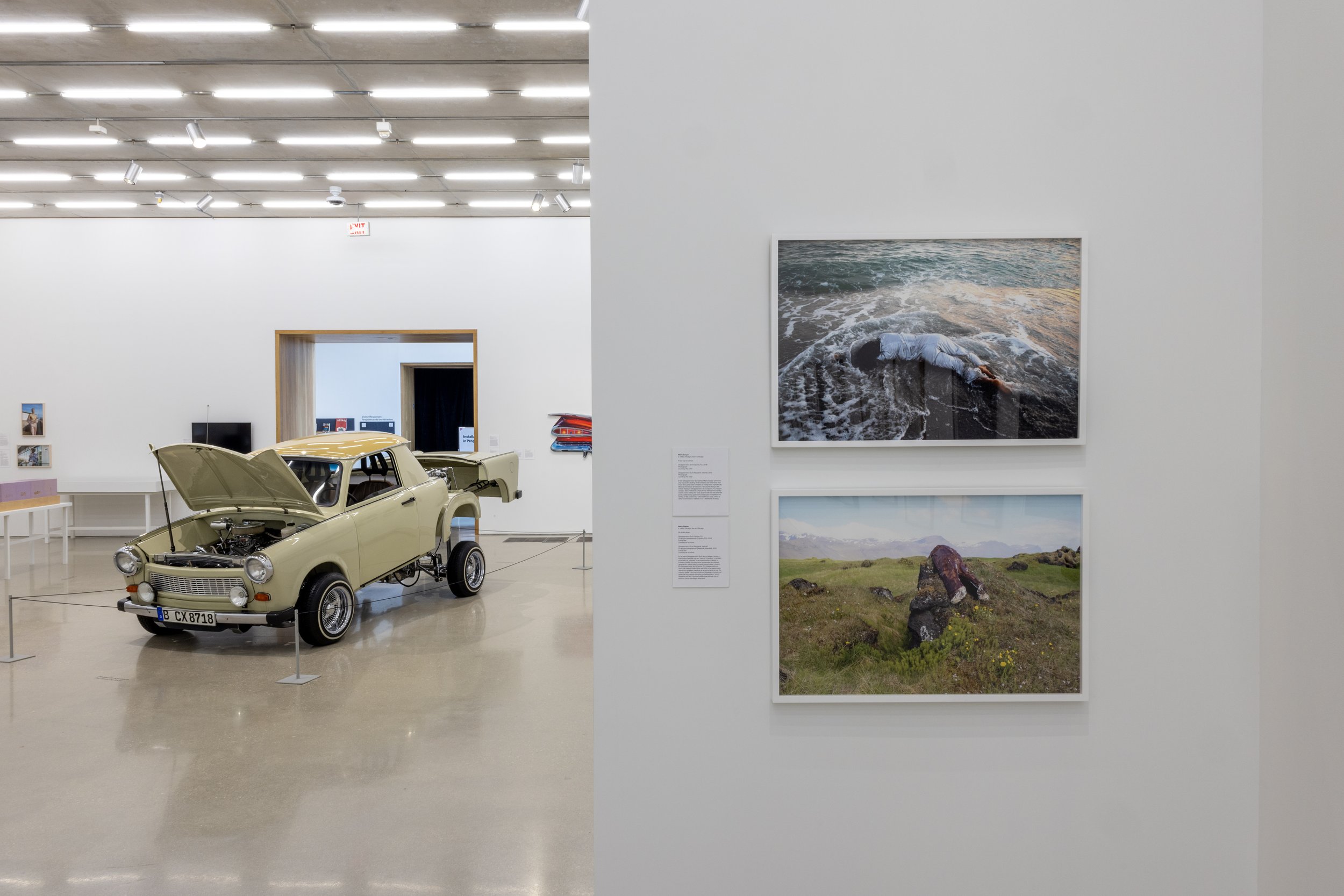


Xican-a.o.x. Body. Installation view: Pérez Art Museum Miami, 2024. Photo: Lazaro Llanes
Xican-a.o.x. Body is organized by the American Federation of Arts. Major support for the exhibition and catalog is provided by the Andy Warhol Foundation for the Visual Arts and the Terra Foundation for American Art. Generous support for the exhibition at PAMM is provided by Patricia and William Kleh.
PARTICIPATING ARTISTS
Laura Aguilar, Celia Alvarez Muñoz, Asco (Harry Gamboa Jr., Glugio Gronk Nicandro, Willie Herrón III, and Patssi Valdez), Mario Ayala, Judith F . Baca, Julia Barbosa Landois, Ariana Brown, Nao Bustamante, William Camargo, Barbara Carrasco, Charlie Cartwright (Good Time Charlie), Mel Casas, Isabel Castro, Reina D. Cervántez, Enrique Chagoya, Artemisa Clark, Liz Cohen, Adriana Corral, Camilo Cruz, Cyclona, Ms. Vaginal Davis, Natalie Diaz with Mohammed Hammad, Alex Donis, Frances Salomé España, Rafa Esparza, Justin Favela, Christina Fernandez, Diane Gamboa, Maria Gaspar, Jay Lynn Gomez, Ken Gonzales-Day, Alfonso Gonzalez Jr., Fabian Guerrero, Eser Hernandez, Sebastian Hernandez, Celia Herrera Rodríguez, Salomón Huerta, Luis Jiménez, Alma López, Yolanda López, Richard A. Lou, Jamse Luna, Narsiso Martinez, Patrick Martinez, Delilah Montoya, Malaquias Montoya, Chuço Moreno, Gabriela Muñoz, Marcos Raya, Sandy Prodiguez, Gabriela Ruiz, Sylvia Salazar Simpson, Shizu Saldamando, Teddy Sandoval, T amara Santibañez, The Q-Sides (Vero Majano, Amy Martinez, and Kari Orvik), Walter Thompson-Hernández, John Valadez, Patssi Valdez, Linda Vallejo, Ricardo Valverde, Kathy Vargas, José Villalobos
ABOUT AMERICAN FEDERATION FOR THE ARTS
The American Federation of Arts is the leader in traveling exhibitions internationally. A nonprofit organization founded in 1909, the AFA is dedicated to enriching the public’s experience and understanding of the visual arts through organizing and touring art exhibitions for presentation in museums around the world, publishing exhibition catalogs featuring important scholarly research, and developing educational programs.
ABOUT THE ANDY WARHOL FOUNDATION FOR THE VISUAL ARTS
In accordance with Andy Warhol’s will, the mission of The Andy Warhol Foundation for the Visual Arts is the advancement of the visual arts. The Foundation manages an innovative and flexible grants program while also preserving Warhol’s legacy through creative and responsible licensing policies and extensive scholarly research for ongoing catalogue raisonné projects. T o date, the Foundation has given nearly $300 million in cash grants to more than 1,000 arts organizations in 49 states and abroad and has donated 52,786 works of art to 322 institutions worldwide.
ABOUT THE TERRA FOUNDATION FOR AMERICAN ART
The Terra Foundation supports visual arts projects with a focus on art of the United States and Indigenous art of North America that question and broaden understandings of American art and transform how its stories are told. The foundation encourage projects that generate knowledge and interpretive frameworks that reflect the range and complexity of American art and its histories through the diversity of artists represented, voices included, and stories told; that center artists, scholars, and communities who have been systematically excluded from narratives, practices, and presentations of American art; and that commit to inclusive and equitable practices across project development and implementation in order to lead to structural change.
ABOUT PAMM
Pérez Art Museum Miami (PAMM), led by Director Franklin Sirmans, promotes artistic expression and the exchange of ideas, advancing public knowledge and appreciation of art, architecture, and design, and reflecting the diverse community of its pivotal geographic location at the crossroads of the Americas. The 40-year-old South Florida institution, formerly known as Miami Art Museum (MAM), opened a new building, designed by world-renowned architects Herzog & de Meuron, on December 4, 2013 in Downtown Miami’s Maurice A. Ferré Park. The facility is a state-of-the-art model for sustainable museum design and progressive programming and features 200,000 square feet of indoor and outdoor program space with flexible galleries; shaded outdoor verandas; a waterfront restaurant and bar; a museum shop; and an education center with a library, media lab, and classroom spaces.
Accredited by the American Alliance of Museums, Pérez Art Museum Miami (PAMM) is Sponsored in part by the State of Florida, Department of State, Division of Arts and Culture and the Florida Council on Arts and Culture. Support is provided by the Miami-Dade County Department of Cultural Affairs and the Cultural Affairs Council, the Miami Dade County Mayor and Board of County Commissioners. Additional support is provided by the City of Miami and the Miami OMNI Community Redevelopment Agency (OMNI CRA). Pérez Art Museum Miami is an accessible facility. All contents ©Pérez Art Museum Miami. All rights reserved.
For more information about this exhibit and other exhibits currently on view and upcoming, please visit the Pérez Art Museum website here. PAMM can also be found on Instagram, YouTube, TikTok, and Facebook.
Every Sound is a Shape of Time

Installation view: Every Sound is a Shape of Time: Selections from PAMM's Collection, Pérez Art Museum Miami, 2024–25. Photo: Oriol Tarridas
(MIAMI, FL)— Pérez Art Museum Miami (PAMM) is pleased to present Every Sound Is a Shape of Time, a multidisciplinary exhibition featuring over 20 works by 17 artists including painting, sculpture, and lightwork. Curated by PAMM Director Franklin Sirmans, the exhibition showcases works from the museum’s collection made between 1958 and 2020—half of which will be presented for the first time

Installation view: Every Sound is a Shape of Time: Selections from PAMM's Collection, Pérez Art Museum Miami, 2024–25. Photo: Oriol Tarridas
The title of the exhibition, Every Sound Is a Shape of Time, alludes to Cuban artist Glenda León’s work, inspired by “the space where sound and the visual merge. ” The exhibition speaks to the interconnectedness between universal elements through the various multimedia artworks on view, centered around the core elements of beauty and humanism, and grounded in the strength of a plurality of voices.
“With Every Sound Is a Shape of Time, we’re excited to bring together works that reflect on the common threads that emerge from our collection.”

Morris Louis. Delta Eta, 1960. Acrylic resin on canvas. 105 1/4 x 231 inches. Collection Pérez Art Museum Miami, gift of the Estate of Morris Louis. © Pérez Art Museum Miami
Core to Every Sound Is a Shape of Time is Chilean artist Alfredo Jaar’s neon lightwork, I Can't Go On. I'll Go On. (2016). Two other works by Jaar further ground the show, including Europa (1994), his monumental installation responding to the Bosnian War and the indifference in response to this crisis in the early 1990s. Also of note in the exhibition is an entire gallery space showcasing several of the first acquisitions made by the museum, which include works by leading figures in Post-Painterly Abstraction of the 1950s and 1960s such as Helen Frankenthaler and Morris Louis. This group of artists strived to create something new in a moment of tumult and friction between abstraction and representation, as well as the parallel divide between inner and outer worlds in contemporary art’s subject matter.


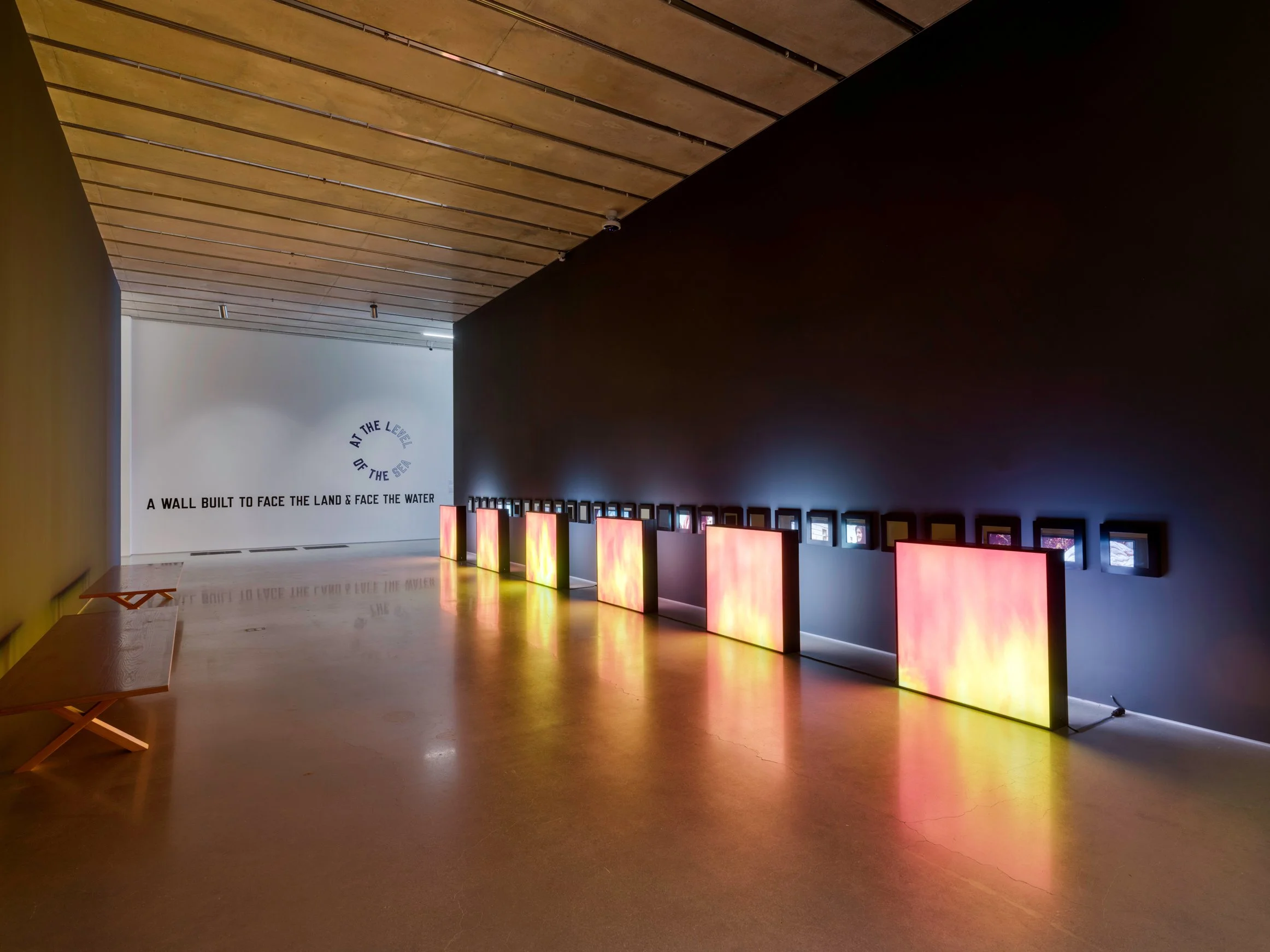


Installation view: Every Sound is a Shape of Time: Selections from PAMM's Collection, Pérez Art Museum Miami, 2024–25. Photo: Oriol Tarridas
Participating artists include Abraham Cruzvillegas, Alfredo Jaar, Ellsworth Kelly, Glenda León, Helen Frankenthaler, Jennie C. Jones, Jules Olitski, Julie Mehretu, Lawrence Weiner, Luis Camnitzer, Lydia Okumura, Mark Bradford, Morris Louis, Nicole Cherubini, Richard Serra, Richard Dupont, and Robert Morris. Every Sound Is a Shape of Time: Selections from PAMM's Collection is organized by PAMM Director Franklin Sirmans with PAMM Curatorial Assistant Fabiana A. Sotillo.

Jennie C. Jones. Constant Structure, 2020. Acrylic on canvas. 12 x 90 inches, overall. Collection Pérez Art Museum Miami, museum purchase with funds provided by PAMM’s Collectors Council, with additional funds provided by Alexander Guest and Camille and Patrick McDowell. ©Jennie C. Jones. Courtesy the artist and PATRON Gallery, Chicago. Photo: Pierre Le Hors
ABOUT PAMM
Pérez Art Museum Miami (PAMM), led by Director Franklin Sirmans, promotes artistic expression and the exchange of ideas, advancing public knowledge and appreciation of art, architecture, and design, and reflecting the diverse community of its pivotal geographic location at the crossroads of the Americas. The nearly 40-year-old South Florida institution, formerly known as Miami Art Museum (MAM), opened a new building, designed by world-renowned architects Herzog & de Meuron, on December 4, 2013 in Downtown Miami’s Maurice A. Ferré Park. The facility is a state-of-the-art model for sustainable museum design and progressive programming and features 200,000 square feet of indoor and outdoor program space with flexible galleries; shaded outdoor verandas; a waterfront restaurant and bar; a museum shop; and an education center with a library, media lab, and classroom spaces.
Accredited by the American Alliance of Museums, Pérez Art Museum Miami (PAMM) is Sponsored in part by the State of Florida, Department of State, Division of Arts and Culture and the Florida Council on Arts and Culture. Support is provided by the Miami-Dade County Department of Cultural Affairs and the Cultural Affairs Council, the Miami-Dade County Mayor and Board of County Commissioners. Additional support is provided by the City of Miami and the Miami OMNI Community Redevelopment Agency (OMNI CRA). Pérez Art Museum Miami is an accessible facility. All contents ©Pérez Art Museum Miami. All rights reserved.
. The exhibition opened on August 8, 2024, and will be on view through March 16, 2025.
For more information about this exhibit and other exhibits currently on view and upcoming, please visit the Pérez Art Museum website here. PAMM can also be found on Instagram, YouTube, TikTok, and Facebook.
Joel Shapiro: Out of the Blue

Joel Shapiro: Out of the Blue 510 West 25th Street, New York, NY 10016 September 13–October 26, 2024 Photography courtesy Pace Gallery
New York – Pace is pleased to present Joel Shapiro: Out of the Blue at its 508 and 510 West 25th Street galleries in New York. The artist’s first solo show with Pace in New York since 2014, this exhibition, which will be accompanied by a new catalogue from Pace Publishing with an essay by poet and scholar Vincent Katz, opened on September 13 and will run until October 26, featuring three new large-scale painted wood sculptures and a selection of studies and small bronzes that provide a vibrant glimpse into the artist’s practice.
One of America's most renowned artists, Shapiro has pushed the boundaries of sculptural form over the course of his 55-year career with a body of work distinguished by its dynamism, complexity, and formal elegance. Since the early 1970s, Shapiro has sought to transcend the constraints of Minimalism to introduce a more referential, intimate, and psychologically profound mode of art. Though he is best known for helping to reshape the language of contemporary sculpture with cast bronze forms that blur the line between abstraction and figuration, he has employed various methods and materials throughout his practice and continues to explore sculpture’s ability to alter one’s sense of space and scale with works that attest to human resilience in the face of catastrophe and collapse.

Joel Shapiro untitled, 2002 wood, wire and casein 27" × 31" × 31" (68.6 cm × 78.7 cm × 78.7 cm)
Over the past two decades, the kinetic, often cantilevered compositions that defined Shapiro’s sculpture throughout the 1980s and 1990s have been torn apart and reassembled into rapturous, chromatic combinations. Prompted in part by the events of September 11, 2001, the artist began to break apart models and figures in his studio, often recombining the wooden elements using hot glue and industrial pin guns. Sometimes reworking and suspending these constructions in space with wire, Shapiro strove to create forms free from the dictates of the tabletop and floor in a process that has evolved to this day.
In Out of the Blue, Shapiro relinquishes the suspended forms of his acclaimed 2010 Pace installation—described in The New Yorker as “like a Malevich canvas bursting to life in 3-D”—and returns with renewed vigor to vibrant, precariously joined, free-standing sculptures that, although floor-bound, retain intimations of flight, expansion, and buoyancy. Splay, a spry, brightly-painted sculpture, seems to rise and reach—or perhaps bounce back—from the floor. Another work, Wave, crashes forward in a cascade of blue, green, and black triangular, shard-like elements.


Joel Shapiro: Out of the Blue 510 West 25th Street, New York, NY 10016 September 13–October 26, 2024 Photography courtesy Pace Gallery
The centerpiece of the exhibition is a multipart sculpture, titled ARK, which careens across the gallery as it verges on taking off, its welter of brightly colored limbs and planks projecting outward as if from a maelstrom. ARK reveals a multitude of associations as one moves around and engages with its forms. Two lean, elongated volumes—one ultramarine, another pale yellow—tilt like masts or extended limbs in the air. Another blue-green element thrusts outward in conjunction with a purplish-red oblong that kisses the ground at its furthest point. From another angle, an element that suggests an elongated coffin juts forward and echoes another slightly-larger-than-human-scale form tilting upright, as it conceals yet another compressed, crimson volume below. On one side of the sculpture, a large ultramarine quadrangular plank—in conjunction with two other rectilinear planes—keels toward the viewer, obscuring the flurry of elements on the other side and creating a sense of relative calm and awe.
Complementing the larger works on view at Pace’s 510 West 25th Street gallery are small bronzes and painted wood studies in the adjacent 508 space, which offer a window into the highly intuitive and haptic mode of assemblage that constitutes the core of Shapiro’s recent practice. Although most works date from 2002 to 2022, one study—a small wood figure seemingly blown to pieces and projecting with wire from a bright green ground—dates from the early 1980s. Another—what appears to be a disjointed figure held together with thin steel rods and accentuated with acidic-orange daubs of spray paint—is from the late 1990s. Both studies anticipate the artist’s post-9/11 investigations of fracture, dislocation, and precarious connection, imbuing the array of bronzes and studies in the 508 West 25th Street gallery with a sense of vitality, tenderness, and freighted joy.
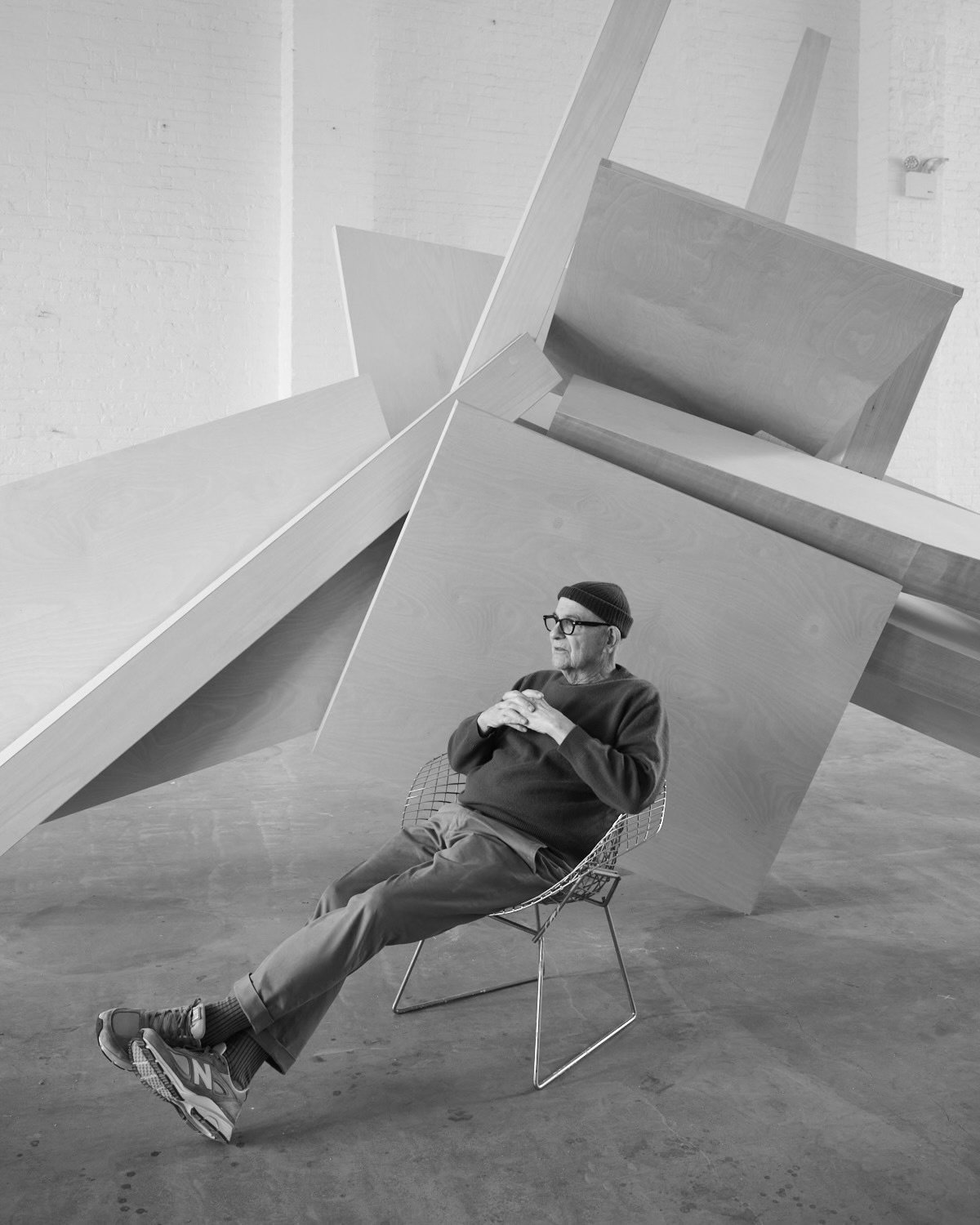
Portrait of Joel Shapiro, 2024 Photo Credit : Kyle Knodell

Joel Shapiro untitled, 1998 wood, steel rod, spray paint and hot glue 20-1/4" × 14" × 13-3/8" (51.4 cm × 35.6 cm × 34 cm)
Since his participation in the landmark Anti-Illusion: Procedures/Materials exhibition at the Whitney Museum of American Art in New York in 1969, Joel Shapiro (b.1941) has been the subject of numerous solo and retrospective exhibitions worldwide, at institutions including the Whitechapel Gallery, London (1980); the Whitney Museum of American Art, New York (1982); the Stedelijk Museum, Amsterdam (1985); the Louisiana Museum for Moderne Kunst, Humlebæk, Denmark and IVAM Centre Julio González, Valencia, Spain (1990–91); the Walker Art Center, Minneapolis and the Nelson-Atkins Museum of Art, Kansas City (1995–96); the Haus der Kunst, Munich (1997–98); the Yorkshire Sculpture Park, United Kingdom (1999–2000); the Iris and B. Gerald Cantor Roof Garden at The Metropolitan Museum of Art, New York (2001); the Musée d’Orsay, Paris (2005); the Museum Ludwig, Cologne (2011); the Nasher Sculpture Center, Dallas (2016); the Kunstmuseum Winterthur, Switzerland (2017); the Yale University Art Gallery (2018); and the Madison Museum of Contemporary Art, Wisconsin (2018).
Shapiro’s work can be found in numerous public collections in the United States and abroad, including The Museum of Modern Art, Whitney Museum of American Art, and The Metropolitan Museum of Art in New York; the Museum of Fine Arts, Boston; the Hirshhorn Museum and Sculpture Garden and the National Gallery of Art in Washington, D.C.; the Philadelphia Museum of Art; The Art Institute of Chicago; The Menil Collection and the Museum of Fine Arts, Houston; the Nasher Sculpture Center, Dallas; the Los Angeles County Museum of Art, the J. Paul Getty Museum, and the Museum of Contemporary Art in Los Angeles; Tate, London; IVAM Centre Julio González, Valencia; the Serralves Foundation Museum of Contemporary Art, Portugal; the Stedelijk Museum, Amsterdam; Moderna Museet, Stockholm; the Musée National d’Art Moderne, Centre Georges Pompidou, Paris; the Leeum-Hoam Art Museum, Seoul, South Korea; and the Hakone Open-Air Museum, Kanagawa, Japan.

Joel Shapiro untitled (structural study for 20 Elements), 2004-05 wood and casein 16-1/4" × 17-3/4" × 11-1/2" (41.3 cm × 45.1 cm × 29.2 cm)
In 1993, Shapiro installed Loss and Regeneration at the United States Holocaust Memorial Museum in Washington, D.C. Other prominent commissions and publicly sited works include Conjunction for the United States Embassy in Ottawa, Canada, on behalf of the Foundation for Art and Preservation in Embassies (FAPE); Verge for 23 Savile Row, London; For Jennifer, commissioned by the Denver Art Museum; Now, commissioned by FAPE and installed in 2013 at the new U.S. Consulate in Guangzhou, China; 20 Elements, which is on permanent display as part of the Nancy A. Nasher and David J. Haemisegger Collection at NorthPark Center, Dallas; and Blue, which was installed in 2019 on the grounds of The Reach at the John F. Kennedy Center for the Performing Arts in Washington, D.C. Shapiro was elected to the Swedish Royal Academy of Art in 1994 and the American Academy of Arts and Letters in 1998. The French Minister of Culture named Shapiro Chevalier in the Order of Arts and Letters in 2005.
Pace is a leading international art gallery representing some of the most influential artists and estates of the 20th and 21st centuries, founded by Arne Glimcher in 1960. Holding decades-long relationships with Alexander Calder, Jean Dubuffet, Agnes Martin, Louise Nevelson, and Mark Rothko, Pace has a unique history that can be traced to its early support of artists central to the Abstract Expressionist and Light and Space movements. Now in its seventh decade, the gallery continues to nurture its longstanding relationships with its legacy artists and estates while also making an investment in the careers of contemporary artists, including Torkwase Dyson, Loie Hollowell, Robert Nava, Adam Pendleton, and Marina Perez Simão.
Under the current leadership of CEO Marc Glimcher and President Samanthe Rubell, Pace has established itself as a collaborative force in the art world, partnering with other galleries and nonprofit organizations around the world in recent years. The gallery advances its mission to support its artists and share their visionary work with audiences and collectors around the world through a robust global program anchored by its exhibitions of both 20th century
and contemporary art and scholarly projects from its imprint Pace Publishing, which produces books introducing new voices to the art historical canon. This artist-first ethos also extends to public installations, philanthropic events, performances, and other interdisciplinary programming presented by Pace.
Today, Pace has eight locations worldwide, including two galleries in New York—its eight-story headquarters at 540 West 25th Street and an adjacent 8,000-square-foot exhibition space at 510 West 25th Street. The gallery’s history in the New York art world dates to 1963, when it opened its first space in the city on East 57th Street. A champion of Light and Space artists, Pace has also been active in California for some 60 years, opening its West Coast flagship in Los Angeles in 2022. The gallery maintains European footholds in London and Geneva as well as Berlin, where it established an office in 2023. Pace was one of the first international galleries to have a major presence in Asia, where it has been active since 2008, the year it first opened in Beijing’s vibrant 798 Art District. It now operates galleries in Hong Kong and Seoul and opens its first gallery in Japan in Tokyo’s Azabudai Hills development in 2024.
The exhibition opened on September 13 and will be on view until October 26 at Pace’s New York location at 510 West 25th Street, New York, NY 10016.. Please visit the Pace Gallery's website here for more information about this exhibition and others. Pace Gallery can be found on Instagram and Artsy, too.
Shirazeh Houshiary: The Sound of One Hand
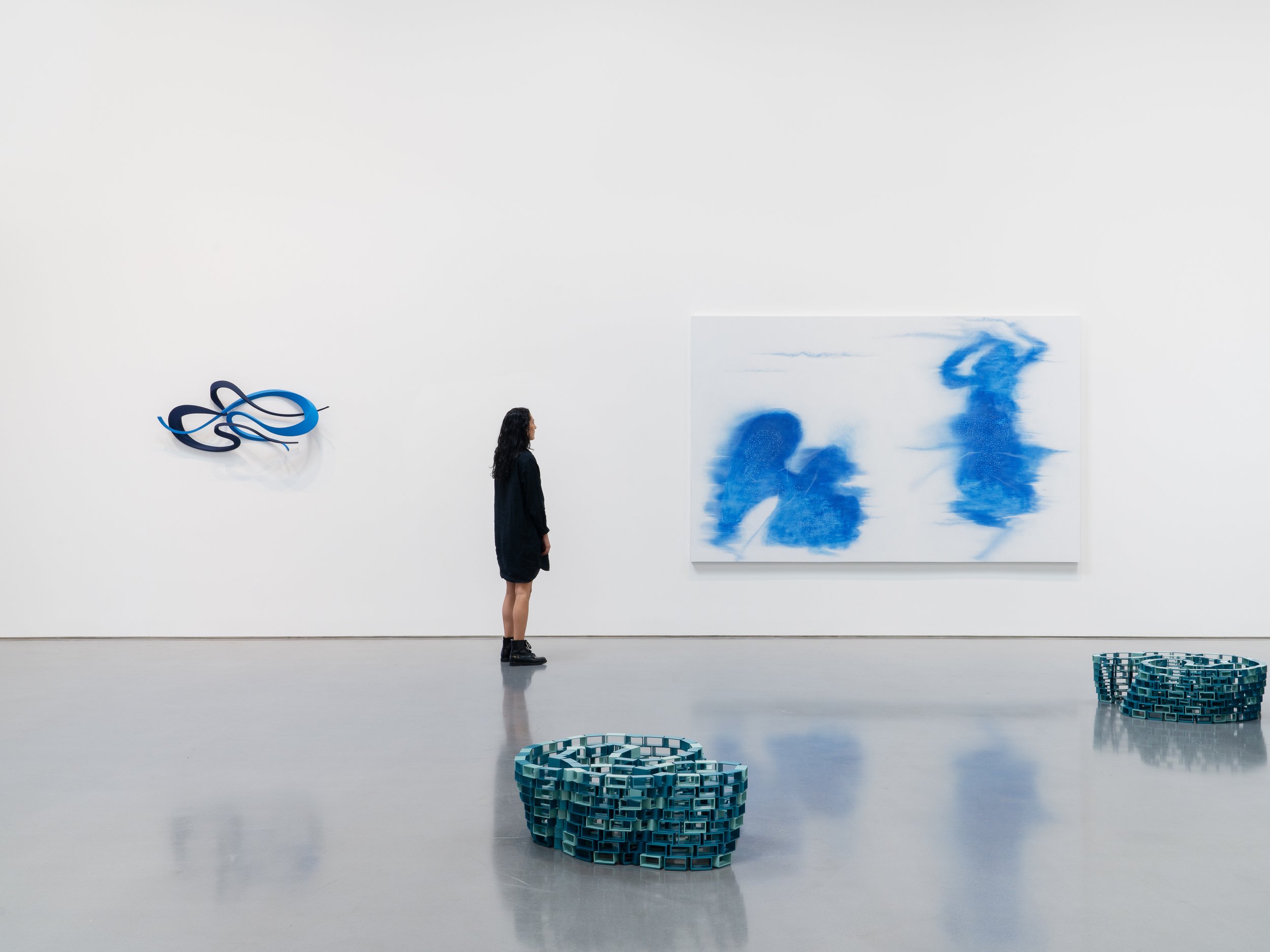
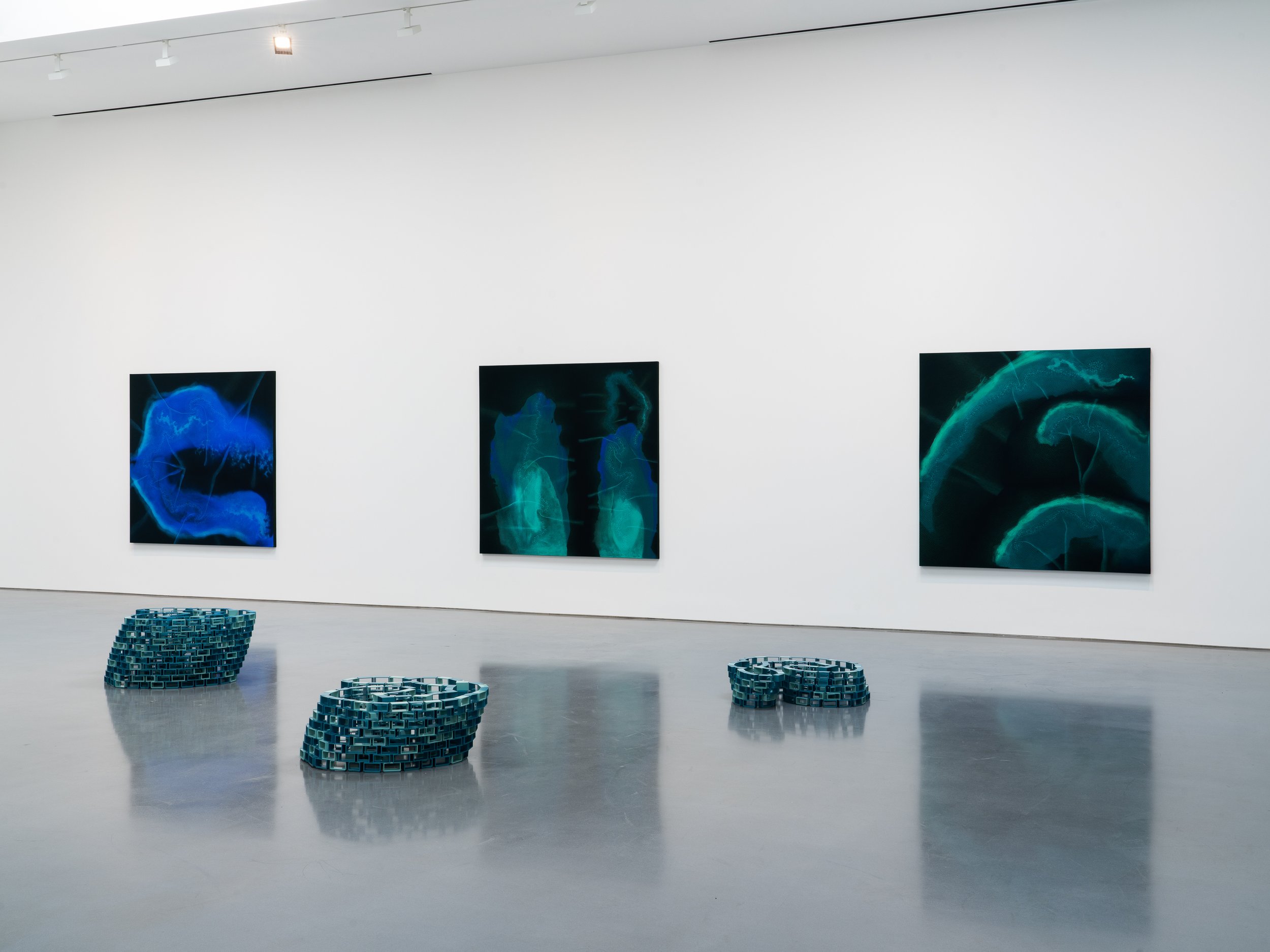
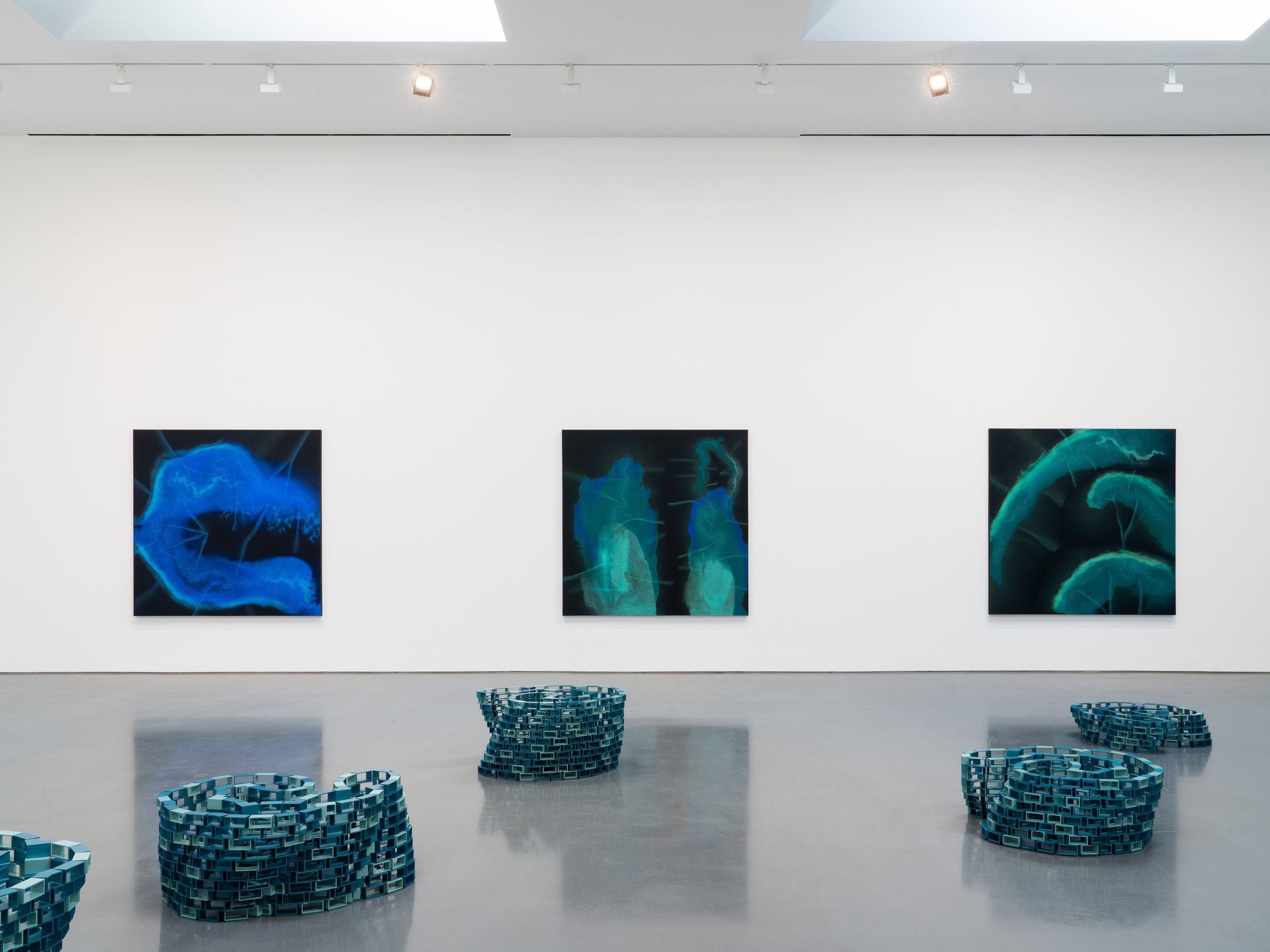
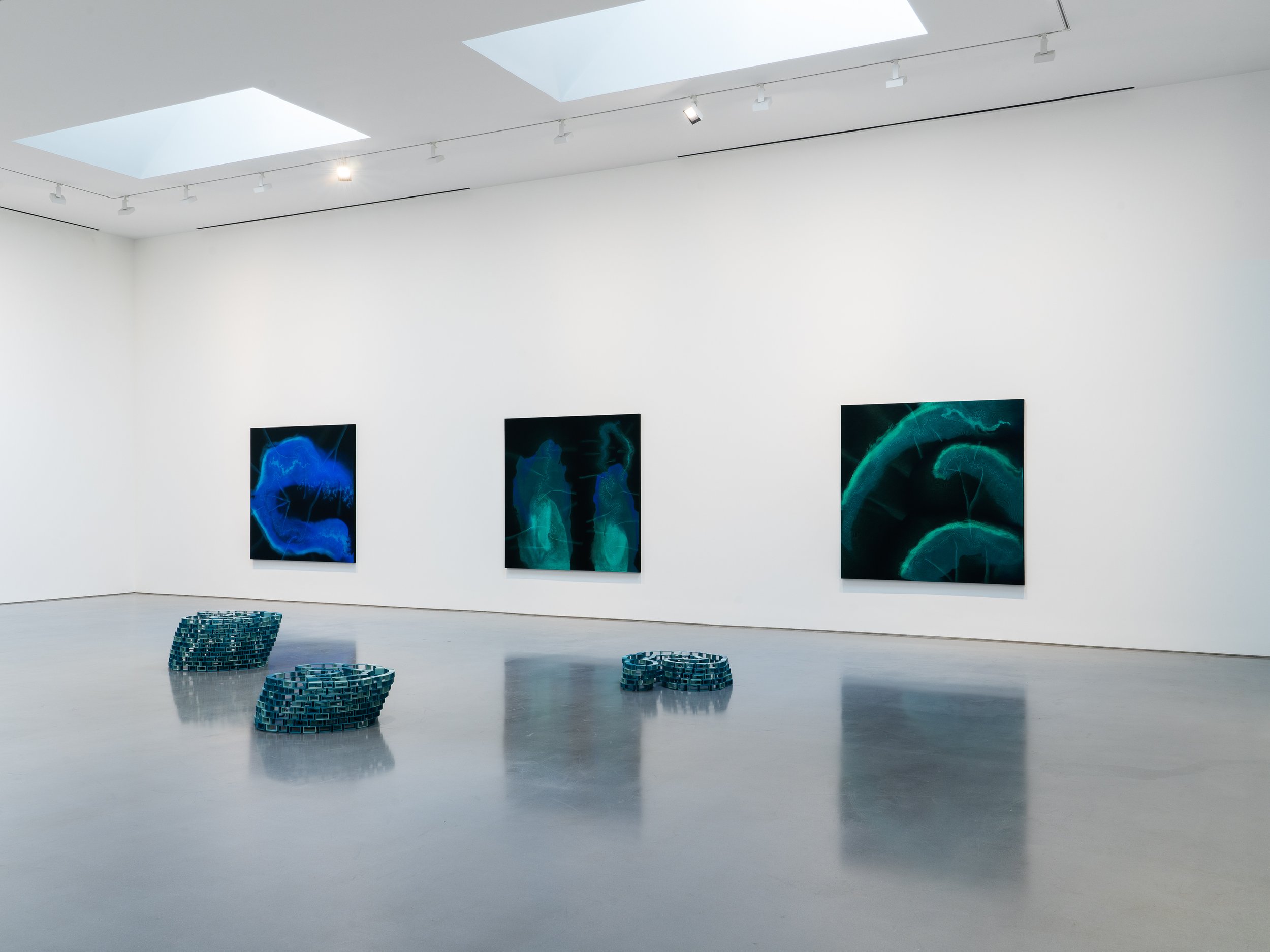
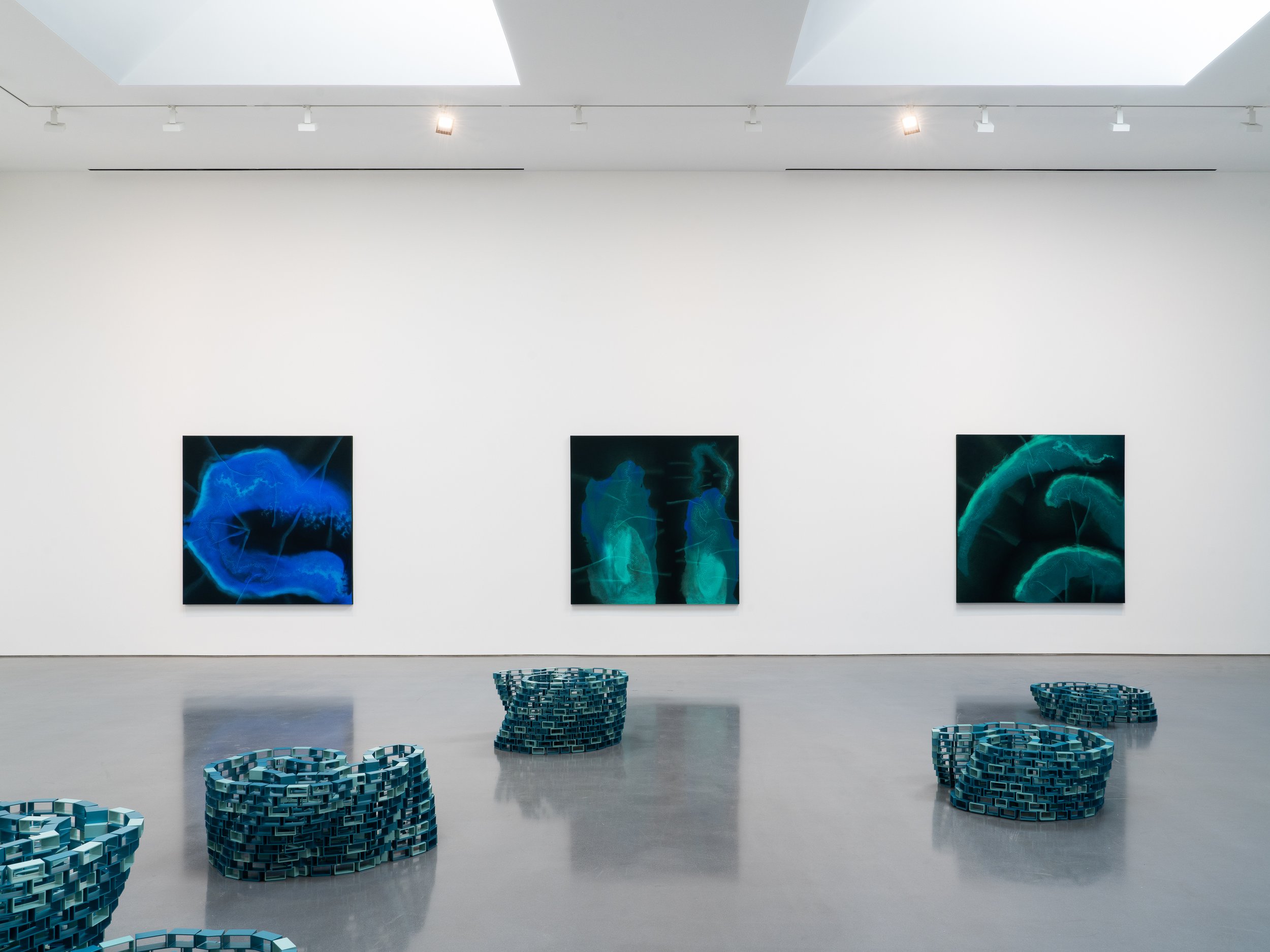
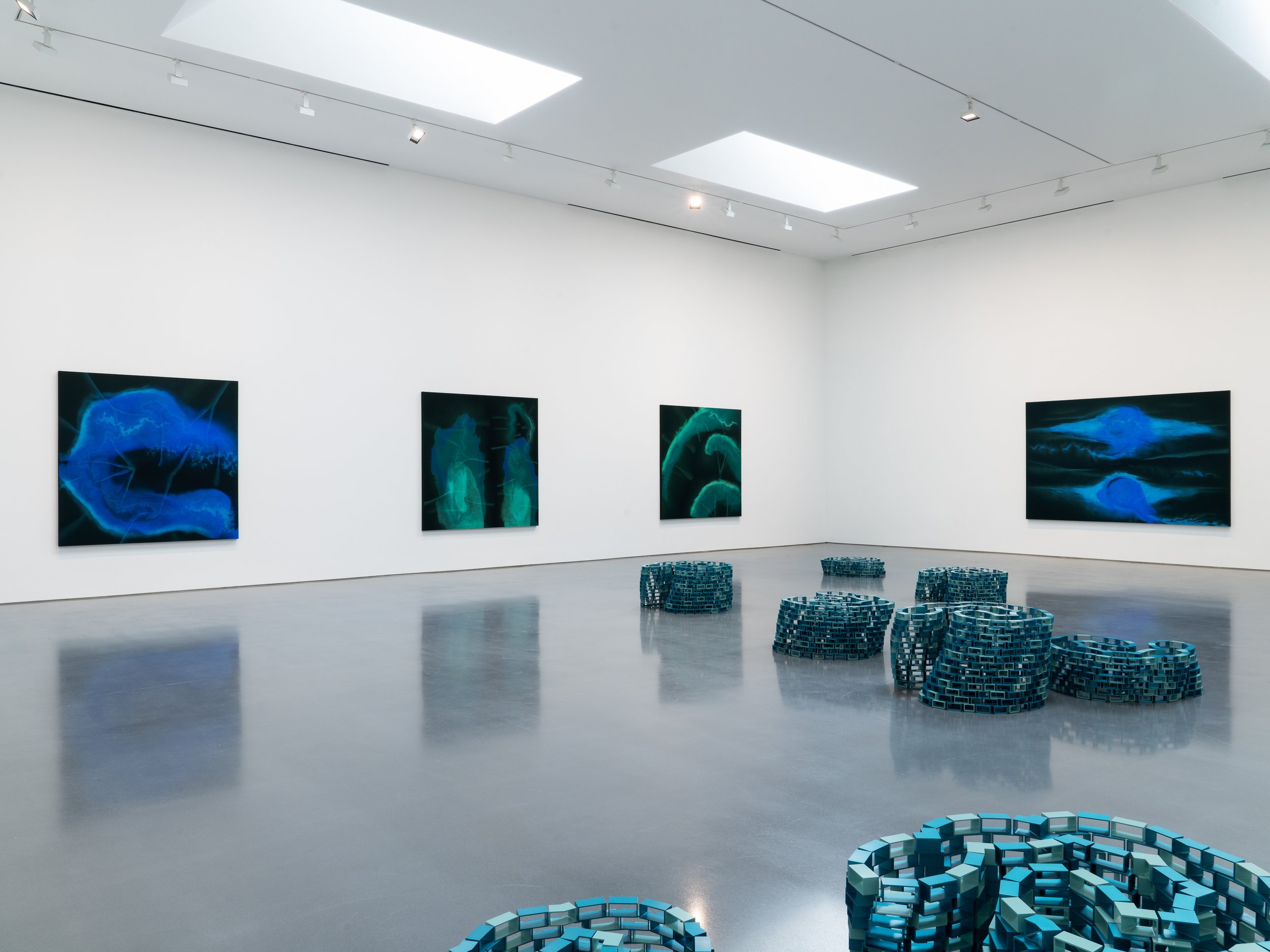
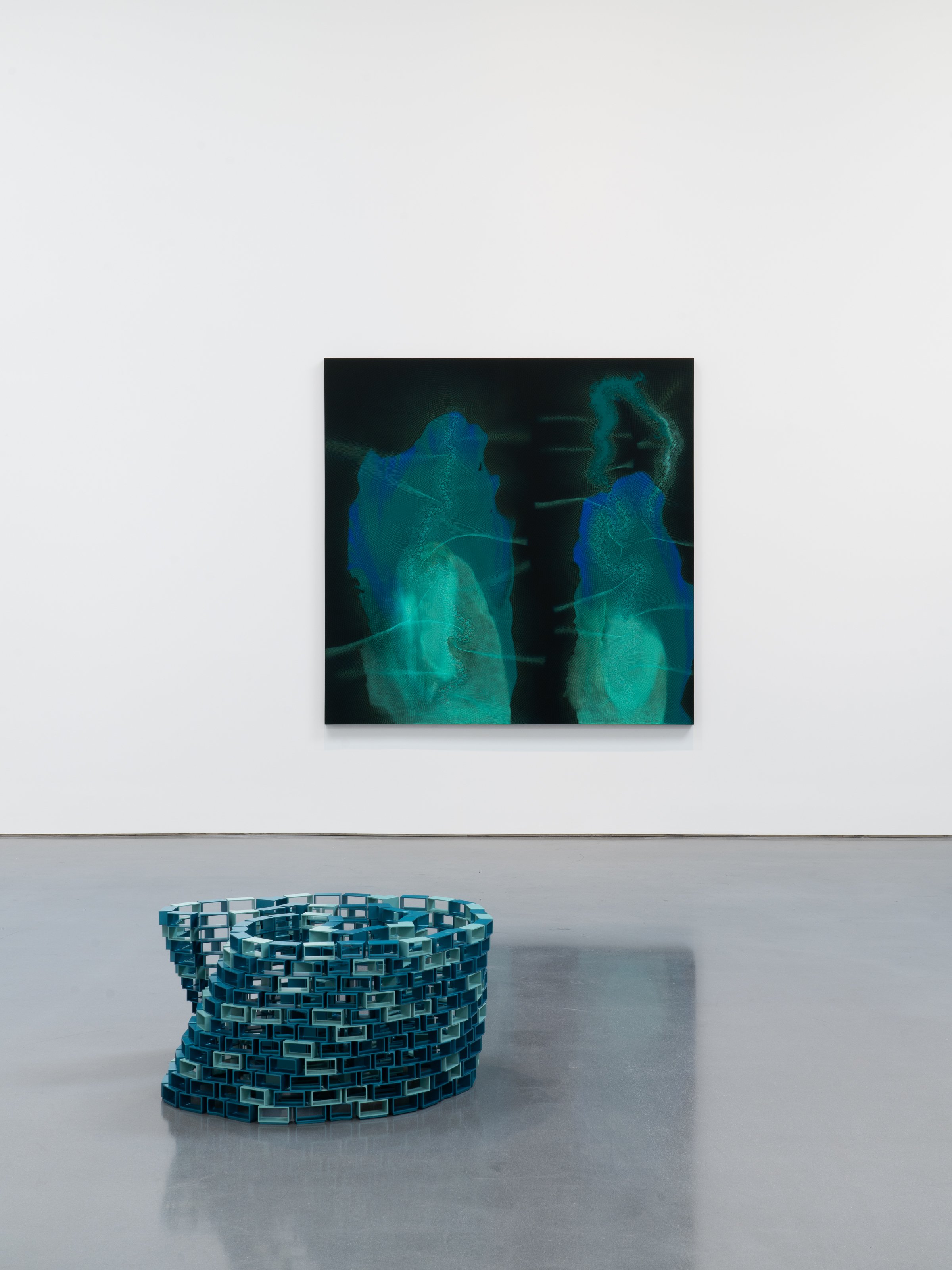
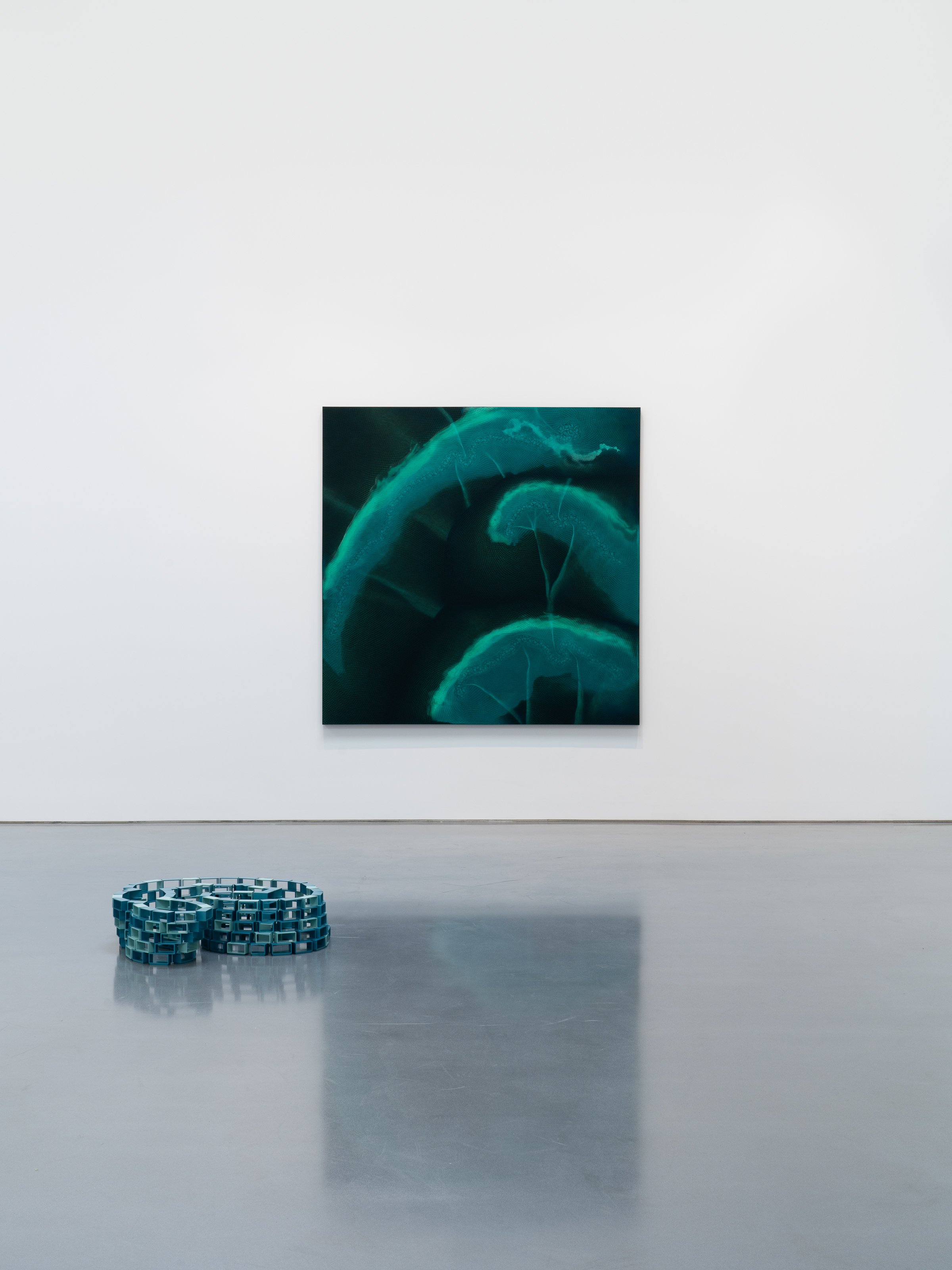
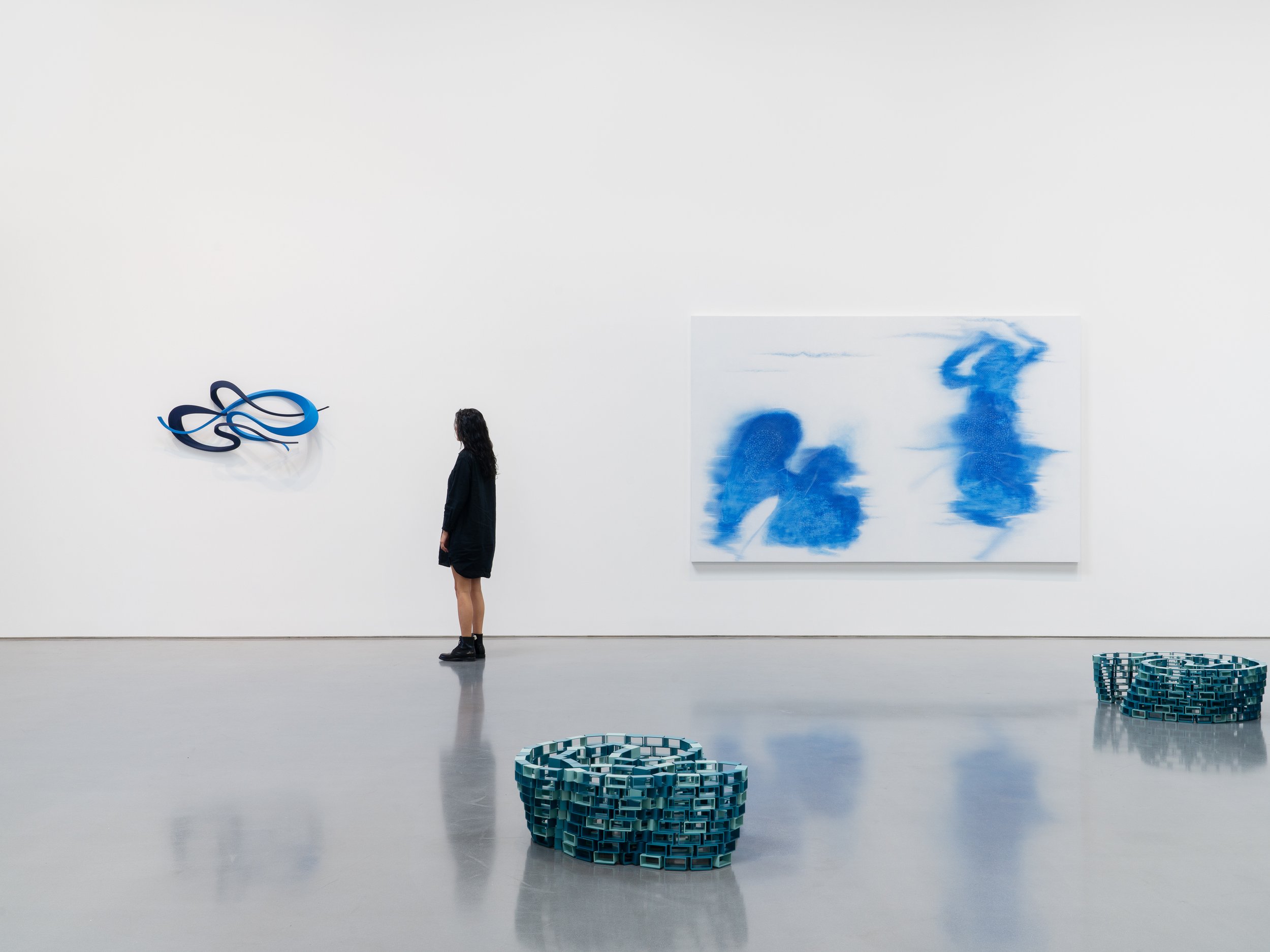
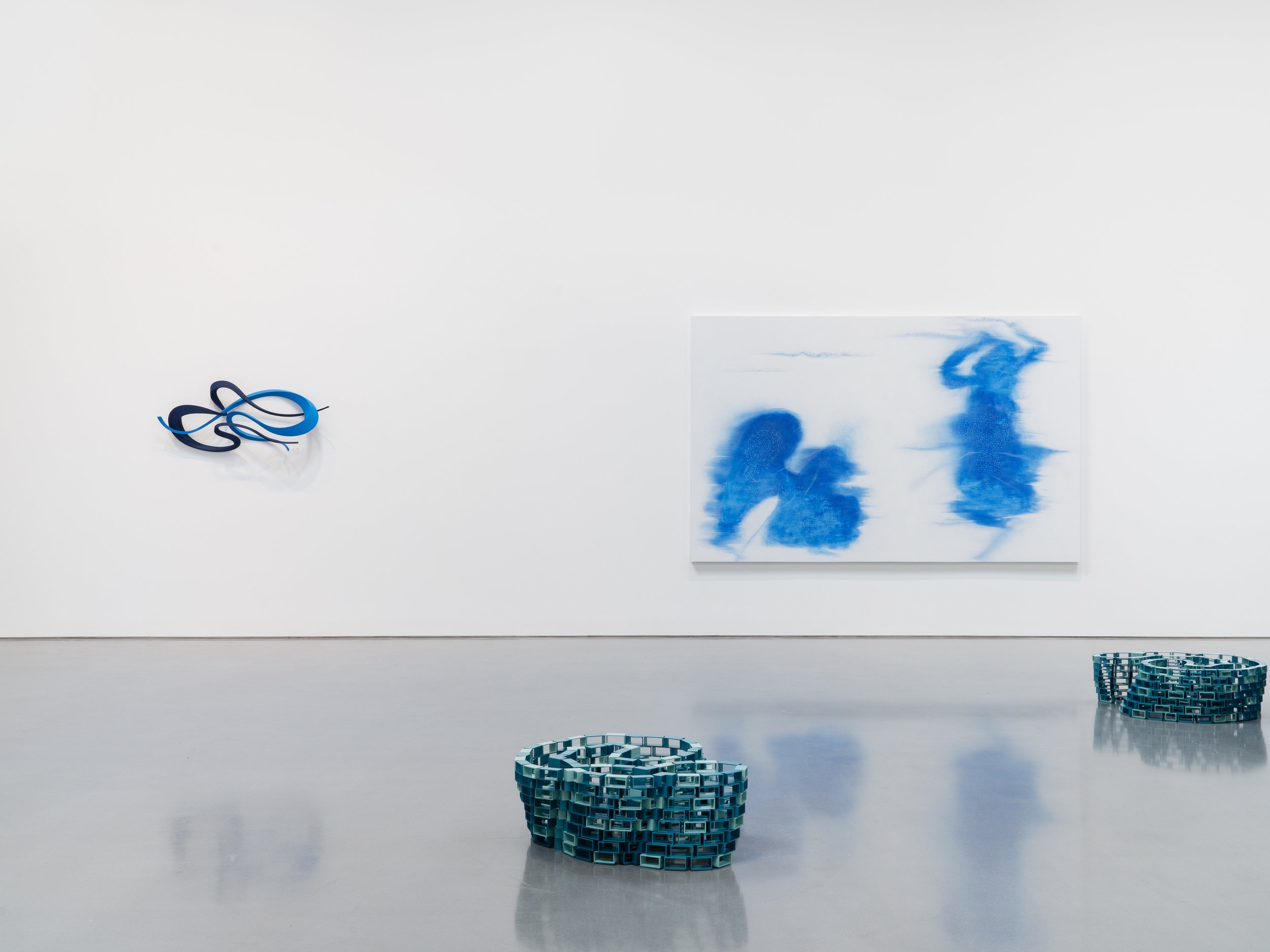
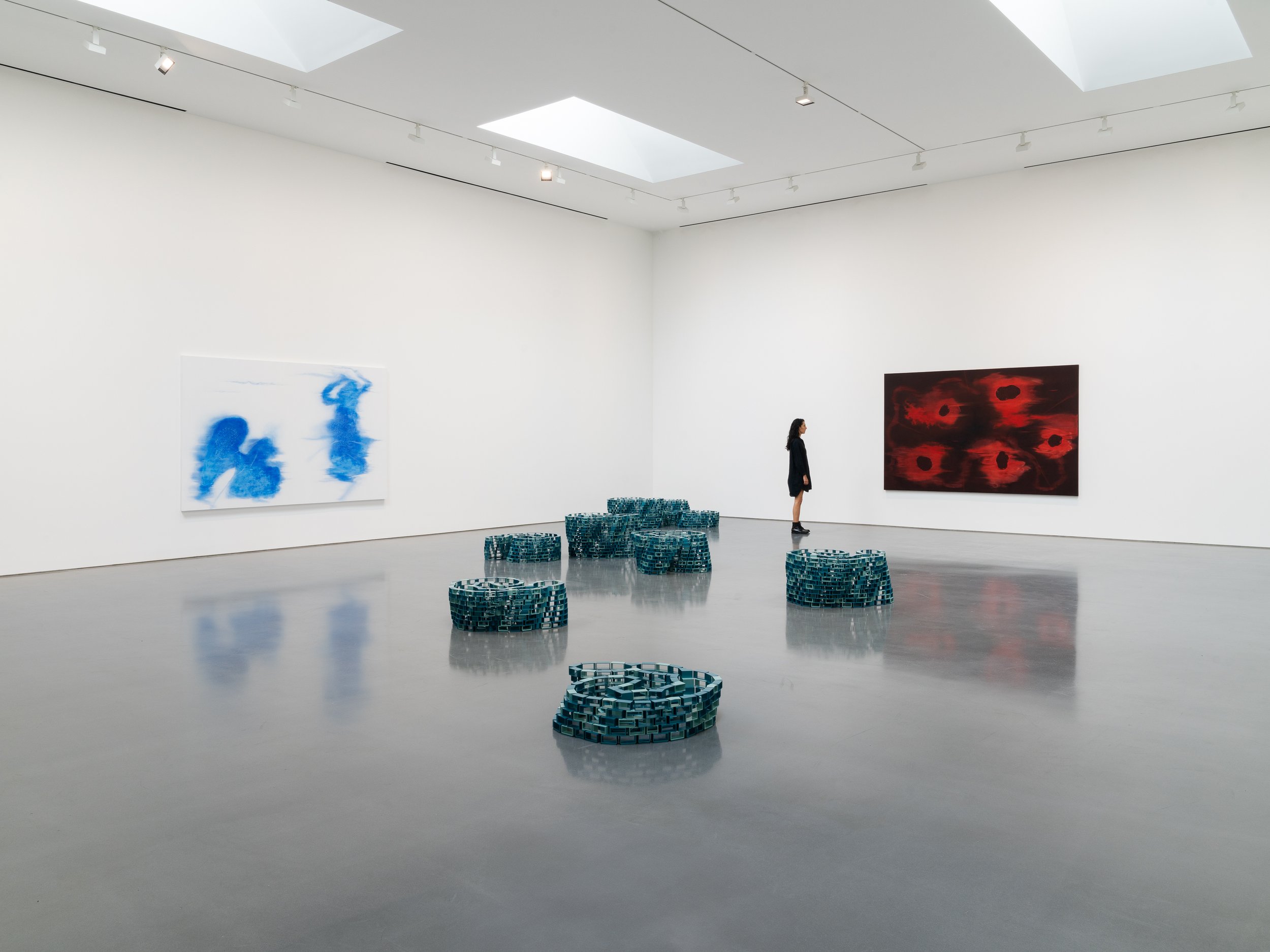
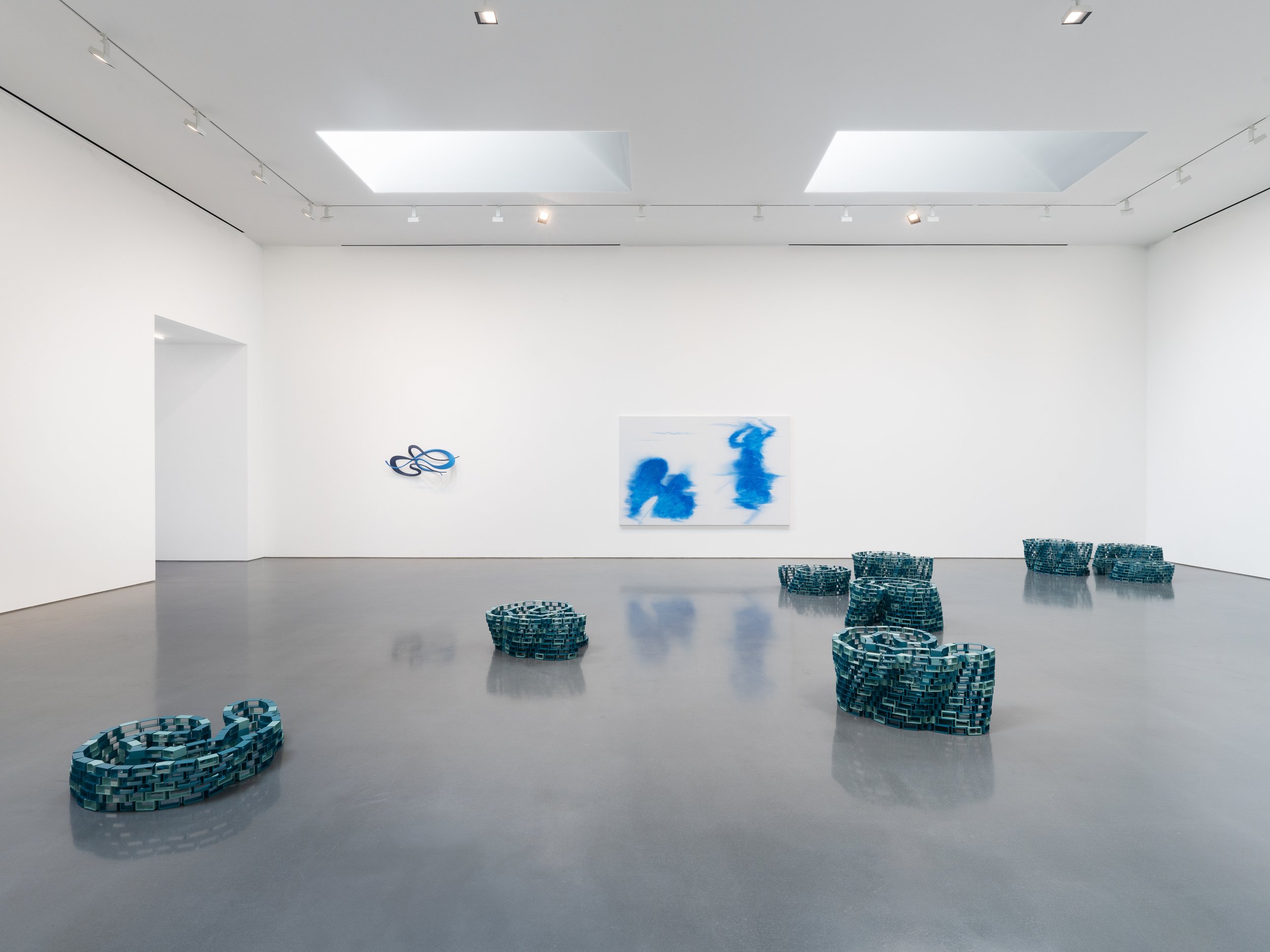
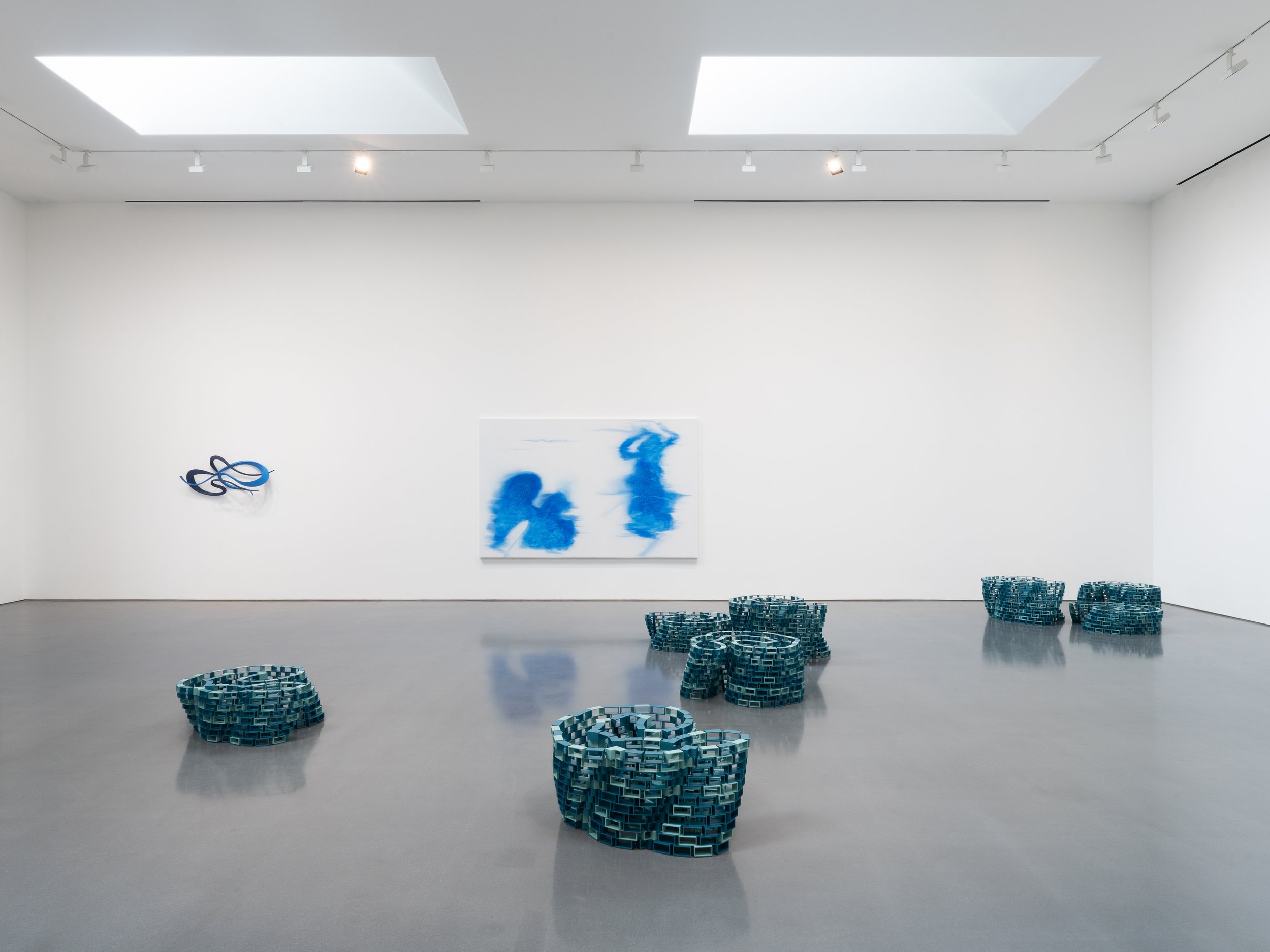
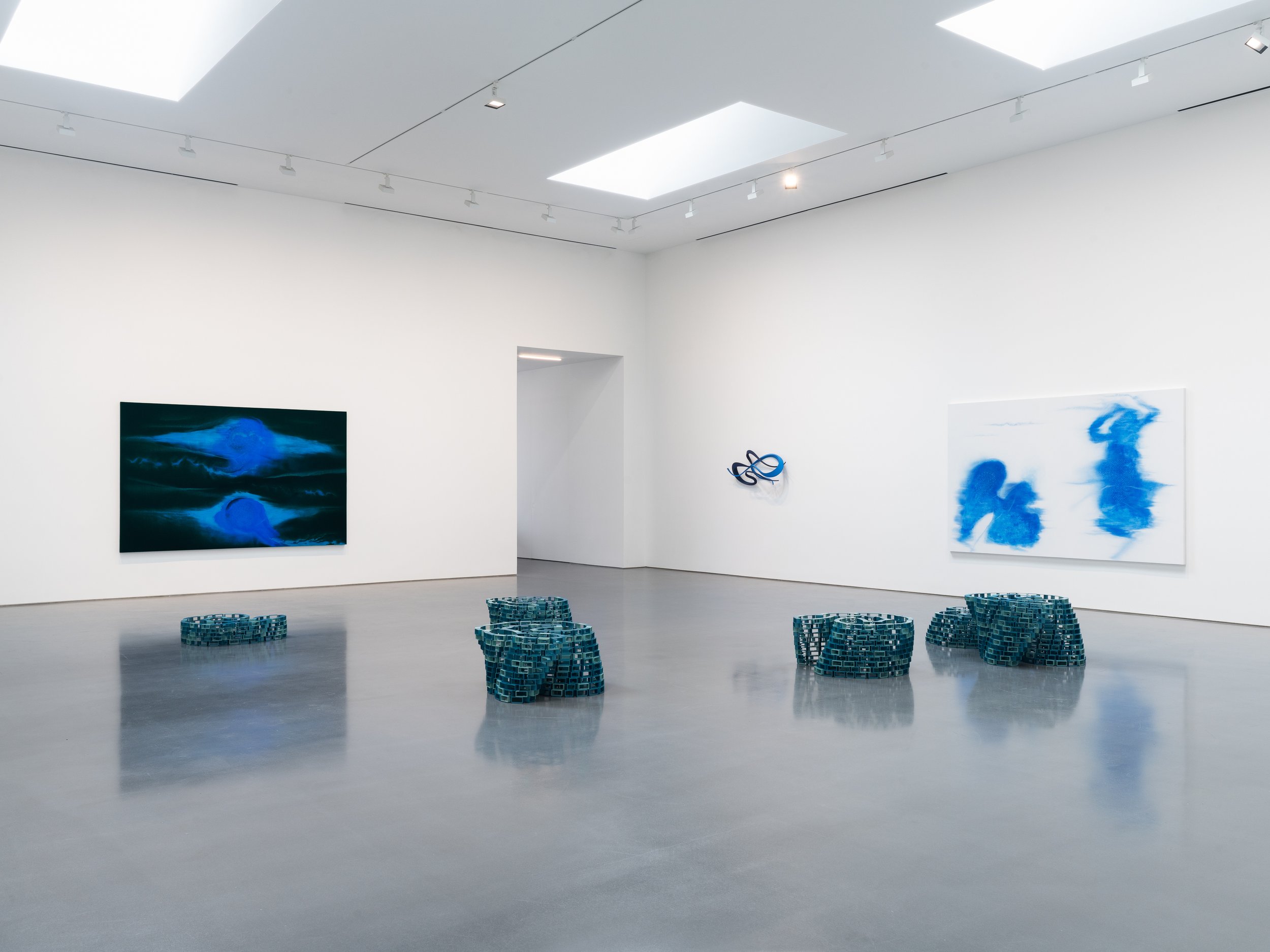
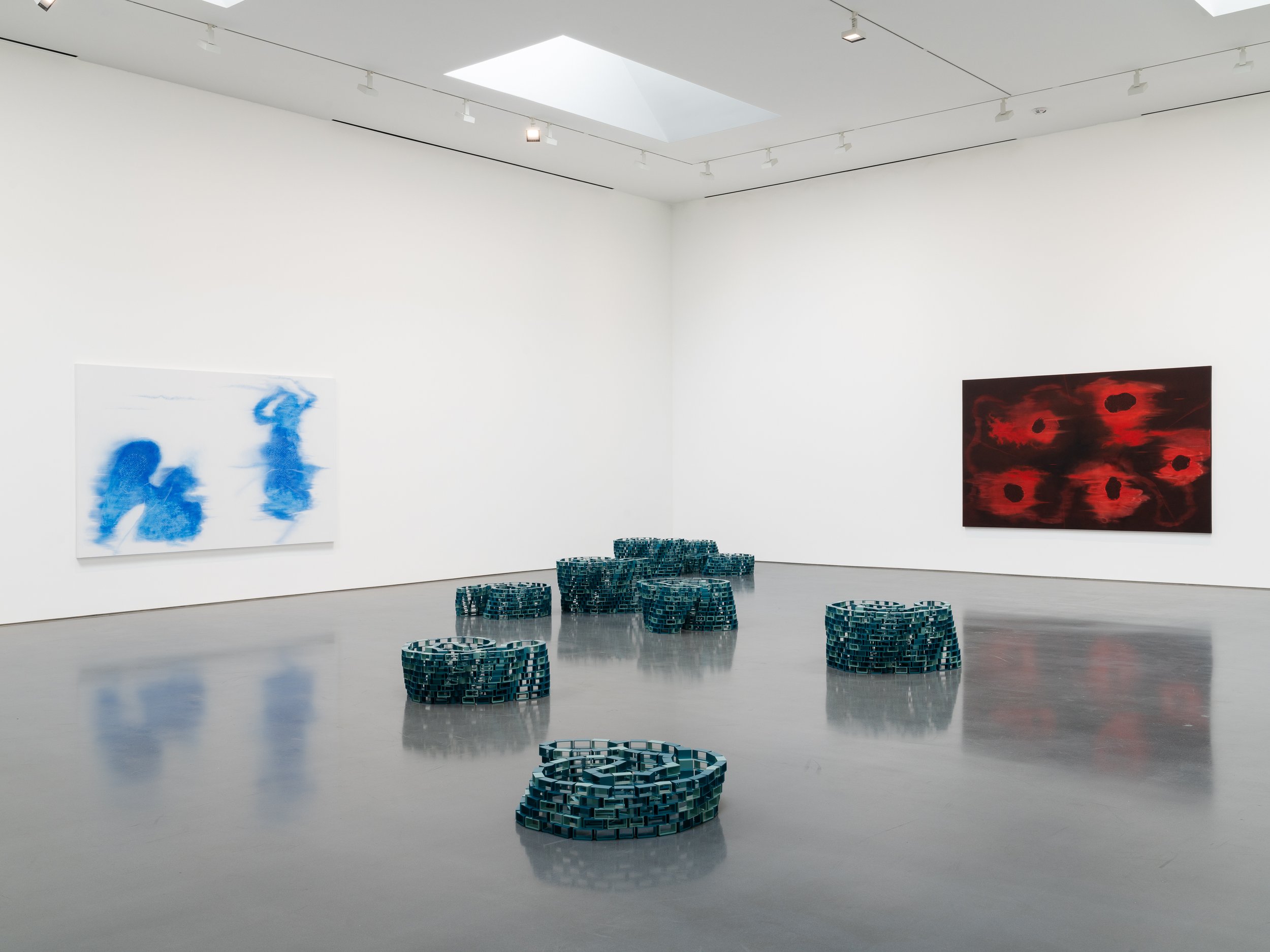
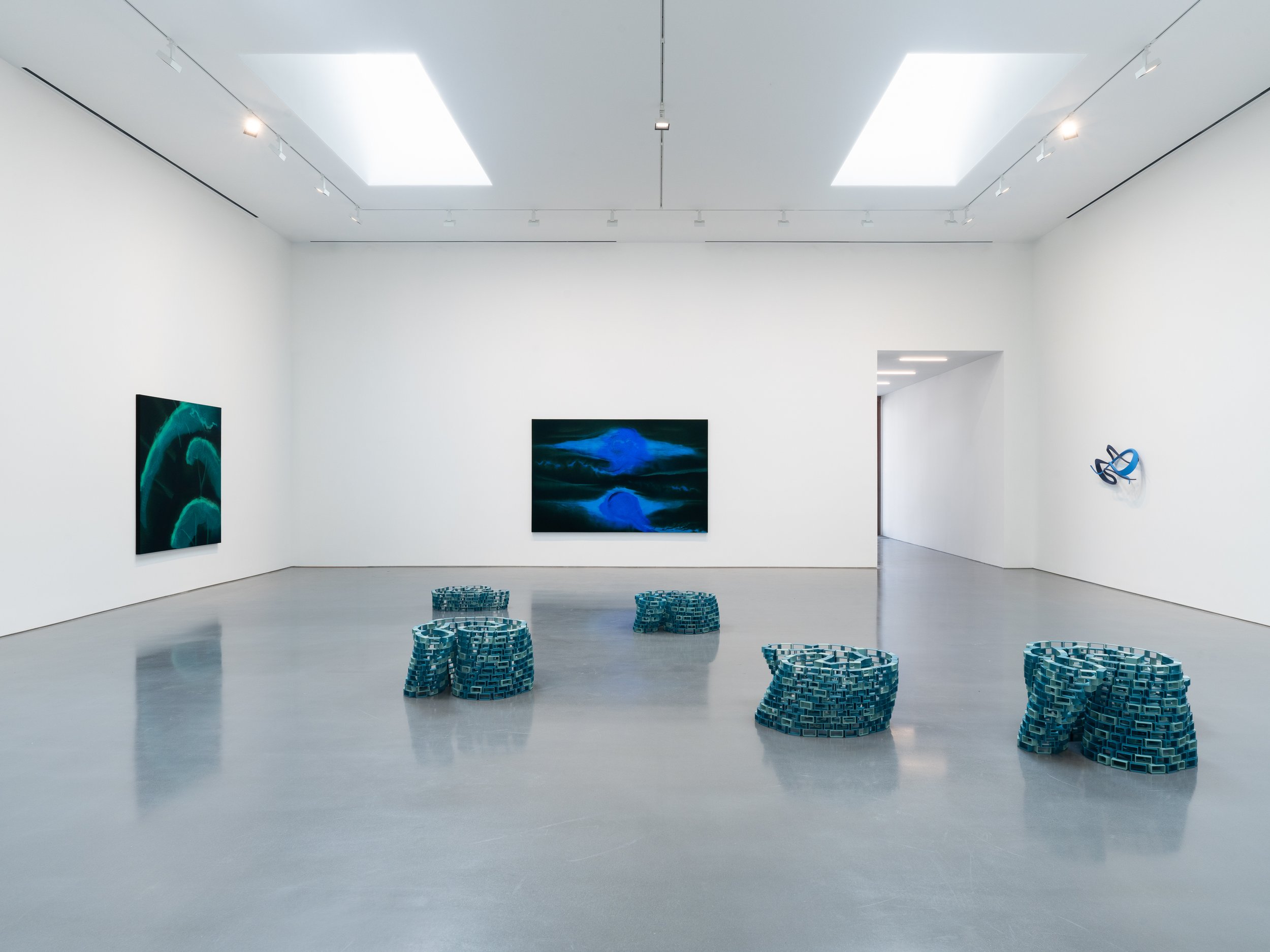
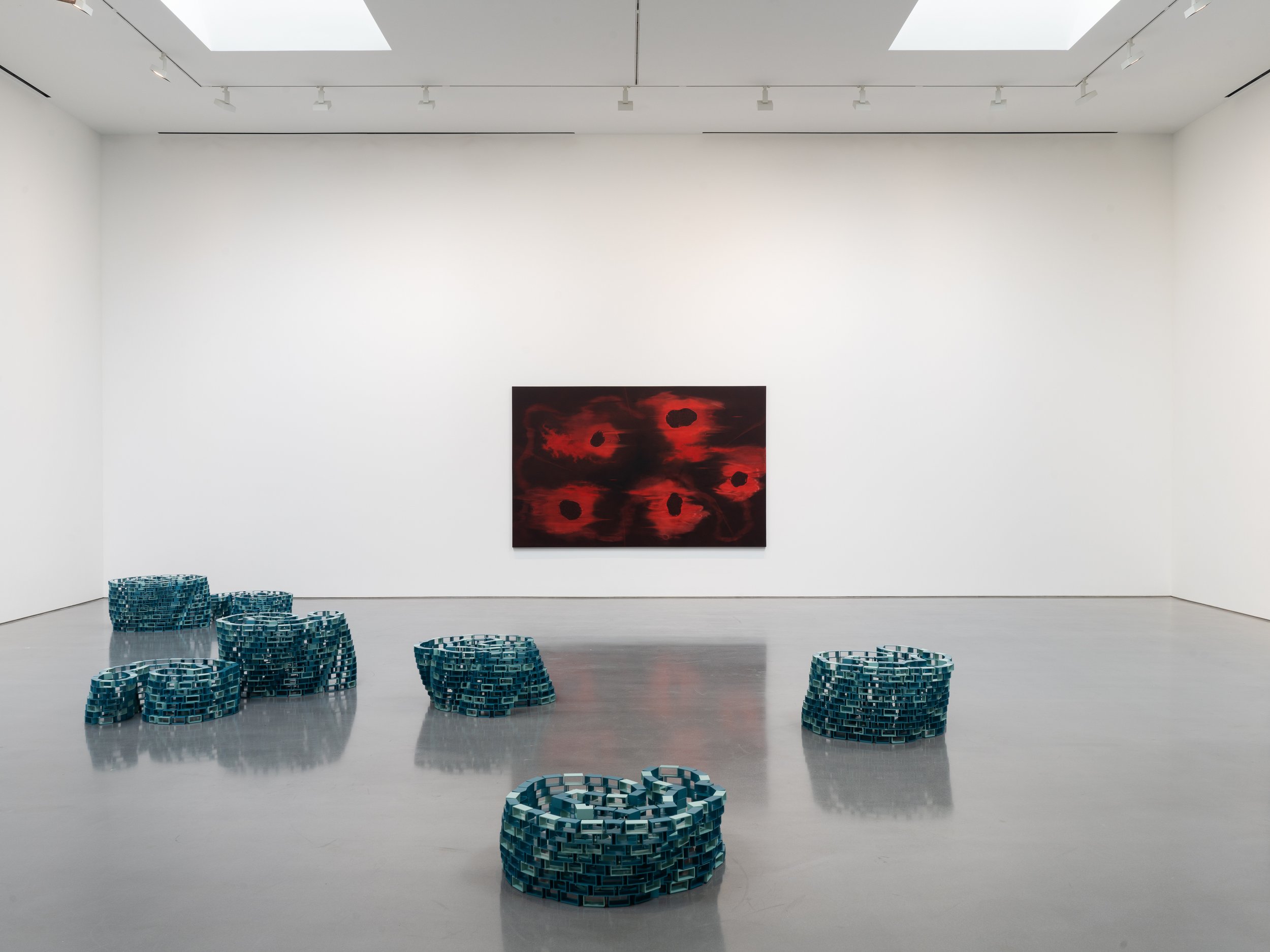
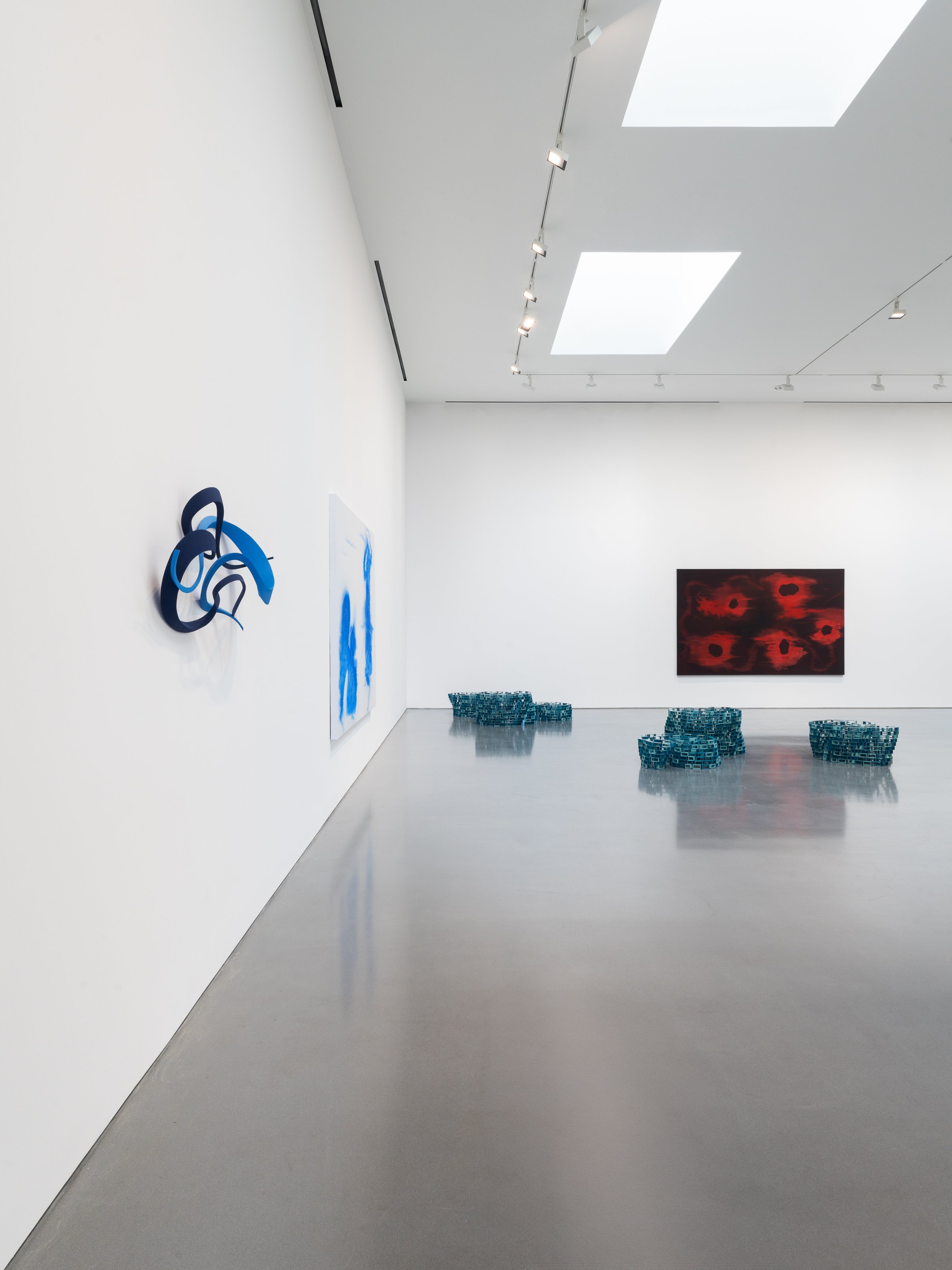
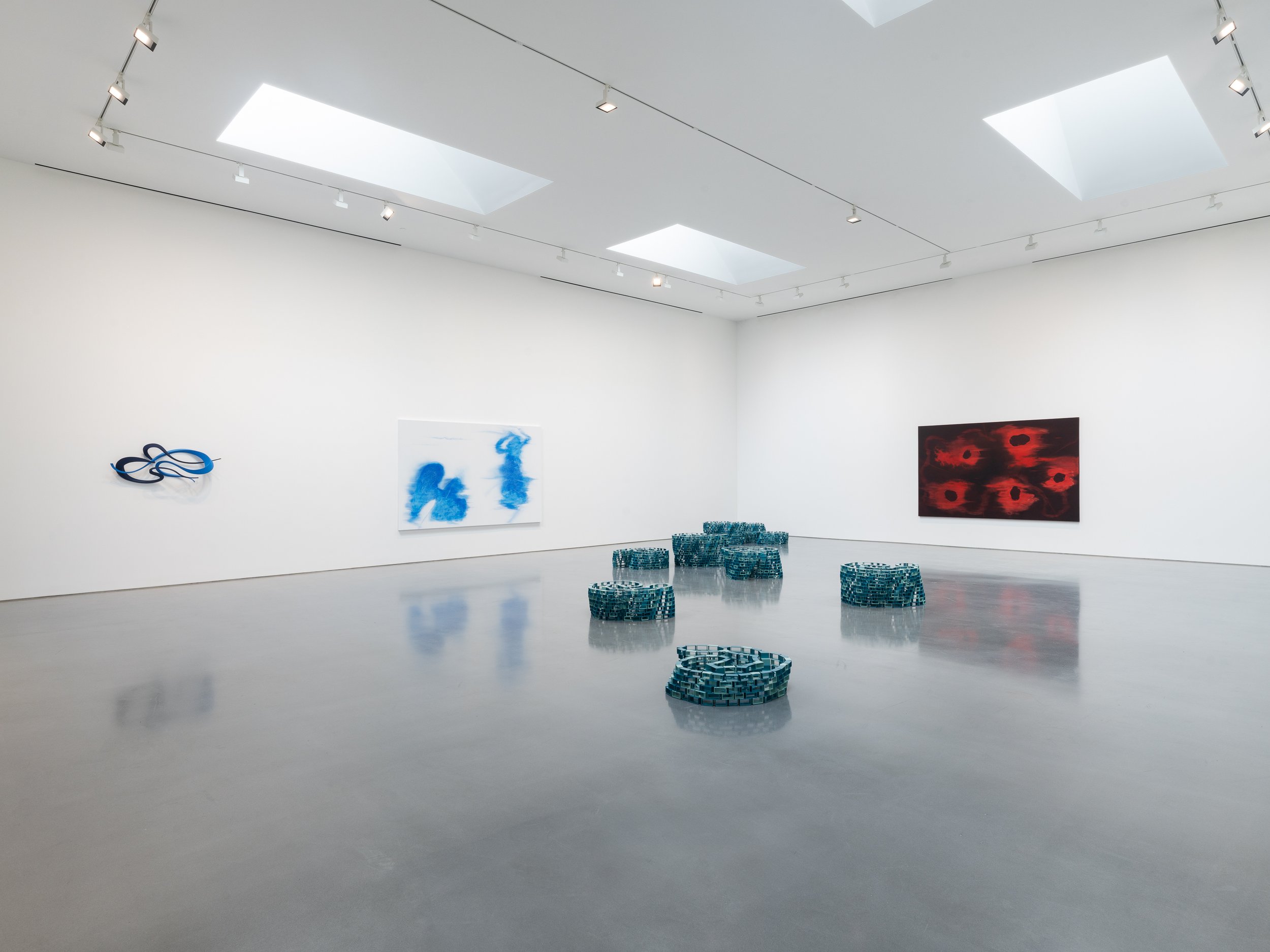
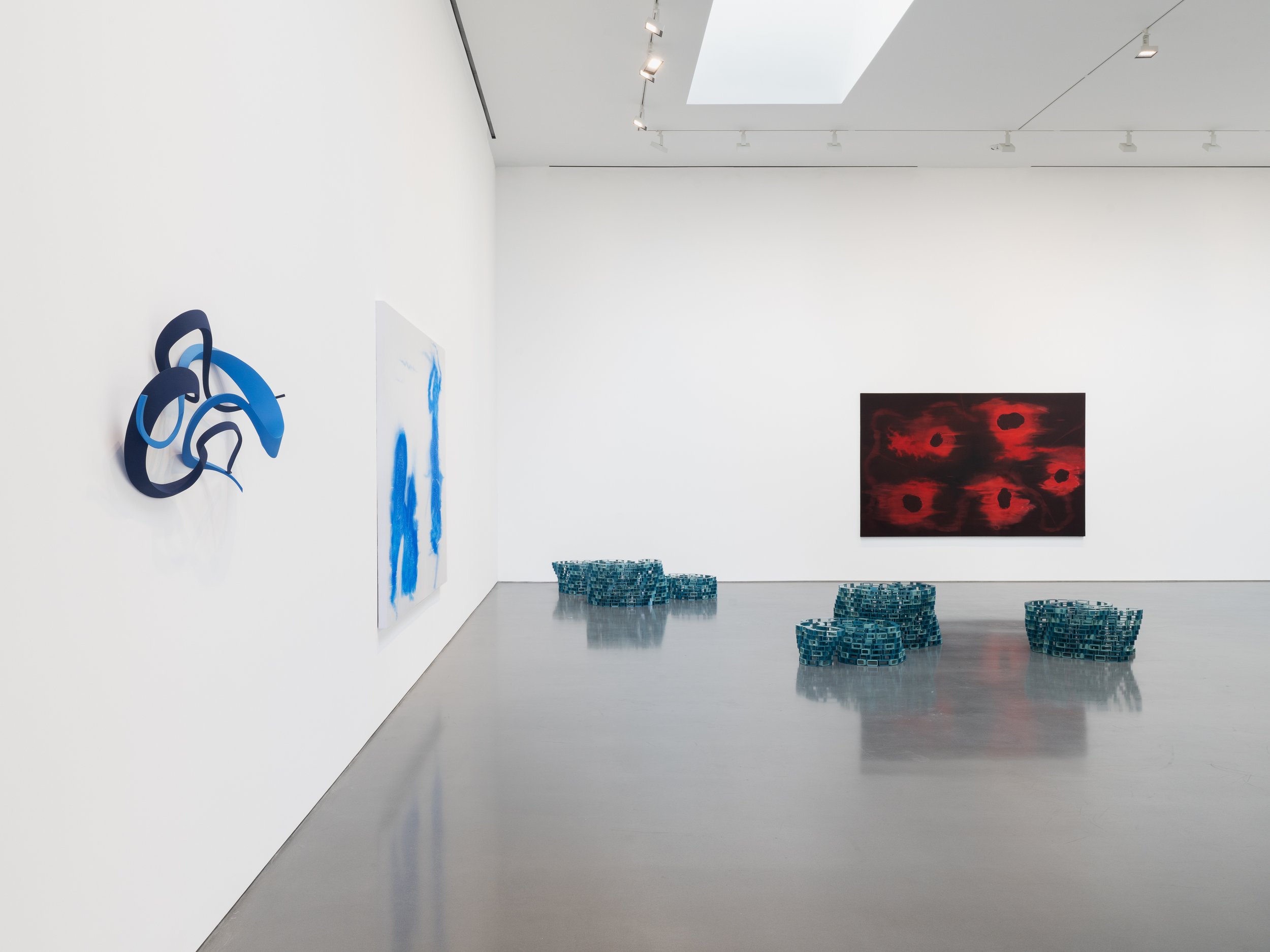
Installation view: Shirazeh Houshiary, The Sound of One Hand, Lisson Gallery Los Angeles (14 September – 2 November 2024) © Shirazeh Houshiary, Courtesy Lisson Gallery.
For her first solo show in Los Angeles for over a decade, the British artist Shirazeh Houshiary presents new and recent works, exploring the origins of life and the mysteries of the cosmos, from a microscopic cellular level, to the stratospheric phenomenon of the aurora borealis. The show’s title relates to a Zen Buddhist teaching that instructs the student to listen to the sound of one hand clapping, in order to open their mind to such a possibility and transcend the constraints of the physical body. Despite not being a Zen practitioner, Houshiary realised that her work revolves around the insistent sound made by one of her hands, making tiny, looping, scratched marks in pencil onto large aluminum surfaces, building up worlds through the silence of her inscribed words.
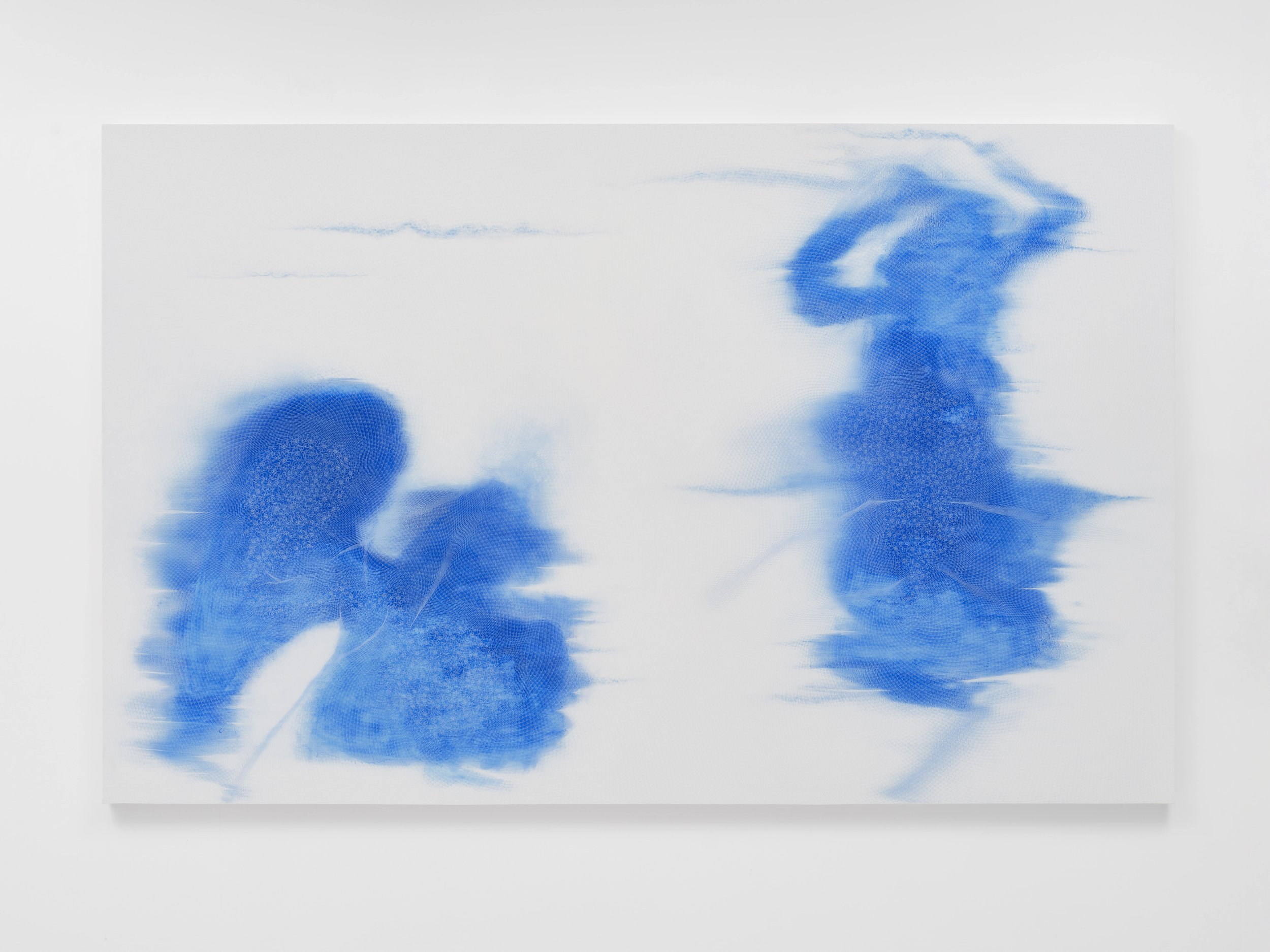
Shirazeh Houshiary Earth Lament, 2023 Pigment and pencil on Aquacryl on canvas and aluminium 190 x 300 cm 74 3/4 x 118 1/8 in © Shirazeh Houshiary, Courtesy Lisson Gallery
Houshiary’s abstract paintings emerge from an initial pour of liquid color that floods the surface in irregular pools, before she then covers these areas with her own calligraphic gestures in graphite, which are in fact tiny repetitions of the Arabic phrases: “I am” and “I am not”, which she also likens to the natural act of inhaling and exhaling. For one of the two largest works in the show, entitled Enchanter (2024), Houshiary applies red pigment and pencil to a black ground in five ring shapes, recalling structures of carbon particles linked in a chain. Matching this in scale but cooler in tone, is the painting Earth Lament (2023), with two silhouetted blue figures that somehow materialized from the sedimented pigment, one appearing to soar and the other seemingly being dragged down.
This accidental figuration also occurs in the work Cicada (2023), which could just as easily be a depiction of the wings of this insect as it could be a representation of its rhythmic song. At the other end of the scale are the galactic indigo swirls of So Far So Near (2024) and the bands of ethereal light crisscrossing the work titled Aurora (2023), recalling those seen occasionally streaking across a night sky.
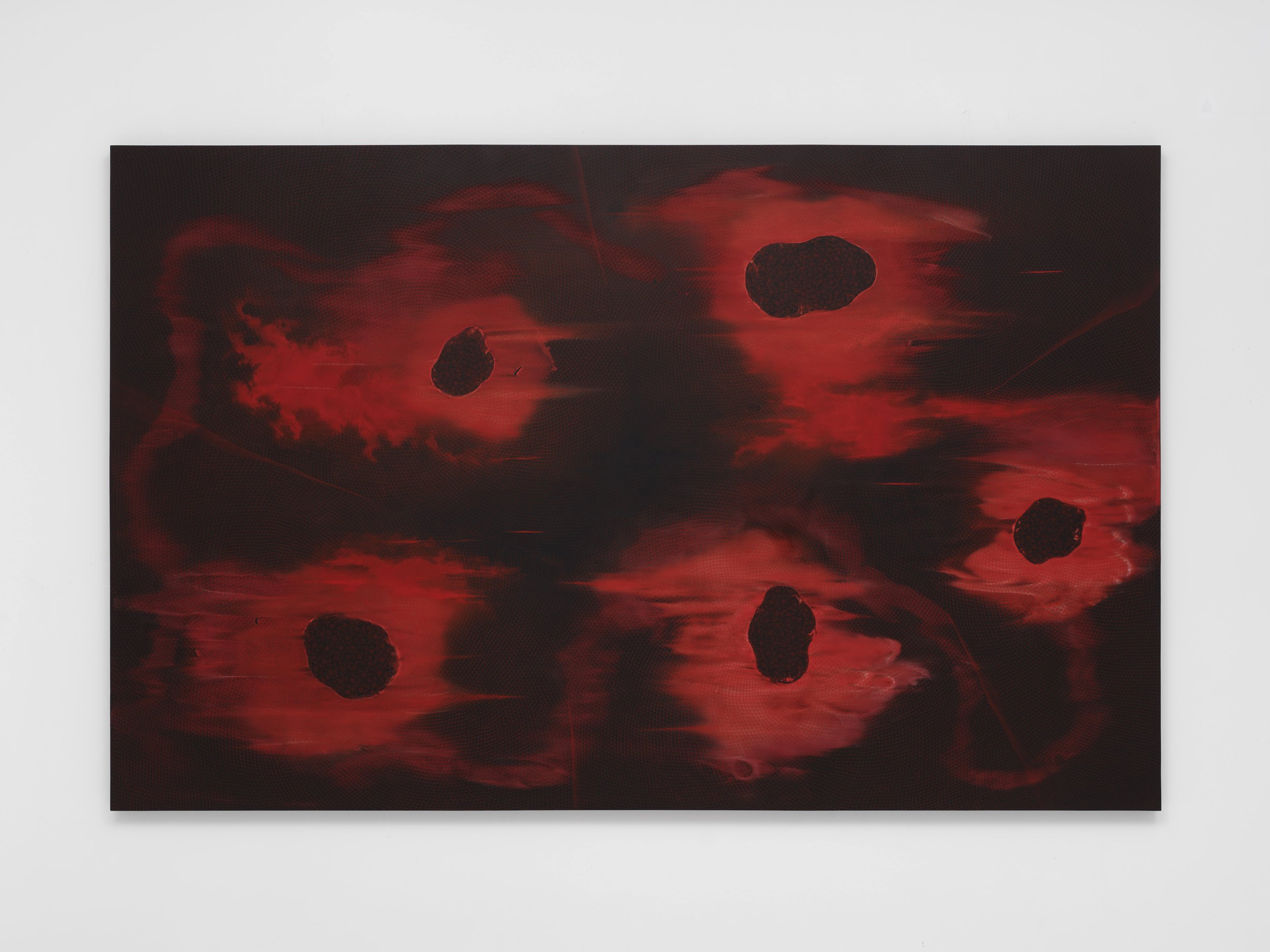
Shirazeh Houshiary Enchanter, 2024 Pigment and pencil on Aquacryl on canvas and aluminium 190 x 300 cm 74 3/4 x 118 1/8 in © Shirazeh Houshiary, Courtesy Lisson Gallery
Occupying the floor is a sculptural installation in nine parts, made from an open latticework of aluminum bricks in blue and green hues, each with the same footprint, but all at different heights, growing at increments of one layer at a time (the shortest has five layers, the highest thirteen). Entitled Maelstrom (2022), these curved forms, both hard and supple at the same time, recall not only the molecular structures of the red painting Enchanter, or “that primeval storm within the spiral of creation where something grows,” as the artist puts it, but also the shape of the ouroboros snake eating its own tail.
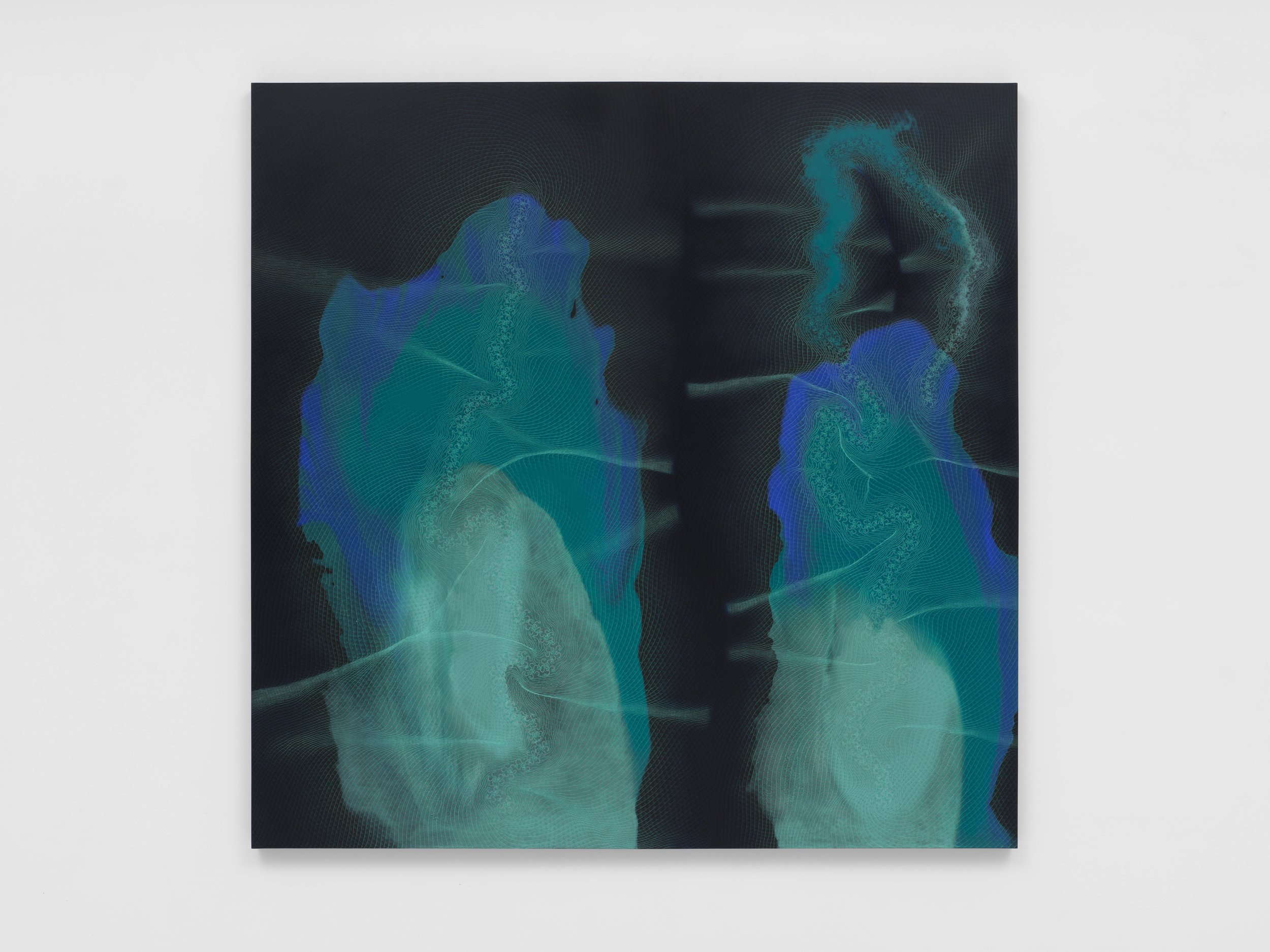

From Left to Right
Cicada, 2023 Pigment and pencil on Aquacryl on canvas and aluminium, 190 x 190 x 5 cm, 74 3/4 x 74 3/4 x 2 in © Shirazeh Houshiary, Courtesy Lisson Gallery, Aurora, 2023, Pigment and pencil on Aquacryl on canvas and aluminium,190 x 190 x 5 cm, 74 3/4 x 74 3/4 x 2 in, © Shirazeh Houshiary, Courtesy Lisson Gallery, So Far So Near, 2024,Pigment and pencil on Aquacryl on canvas and aluminium 190 x 300 cm, 74 3/4 x 118 1/8 in,© Shirazeh Houshiary, Courtesy Lisson Gallery
A second sculpture, seemingly another form defying logic and gravity, bursts from the wall. Its two sinuous, entangled lines are the artist’s approximation of the movement of a solitary wave – lending it the name Soliton (2024) – which is a type of swelling or surging motion that is not dependent on previous pulses, or followed by other waves. From such unfathomable objects, to minute molecules and gigantic expanses of space, Houshiary’s art works represent a journey through everything from the chaos and messiness of the Big Bang to the silent contemplation of the resulting energies that surround every one of us.
About the artist
Since rising to prominence as a sculptor in the 1980s, Shirazeh Houshiary’s practice has swelled to encompass painting, installation, architectural projects and film. “I set out to capture my breath,” she said in 2000, to “find the essence of my own existence, transcending name, nationality, cultures.” Veils, membranes and mists are leitmotifs in work that tries to visualise modes of perception, spanning the scientific and the cosmic while drawing on sources as wide-ranging as Sufism, Renaissance painting, contemporary physics and poetry. Houshiary finds succour in the transformation of material: Arabic words, one an affirmation the other a denial, are pencil-stroked onto canvas so lightly, and clouded over by finely wrought skeins of pigment, that they morph in front of the naked eye and defy reproduction. So too, aluminum armatures and elliptical brick towers, charged with dynamic tension, appear different from every angle, as if negating their own presence; her commission for the East window of St Martin in the Fields, London, presents a cross, warped and spanning from a circular motif, as if reflected in water. “The universe is in a process of disintegration,” she says, “everything is in a state of erosion, and yet we try to stabilise it. This tension fascinates me and it’s at the core of my work” (2013).
Shirazeh Houshiary was born in Shiraz, Iran in 1955, where she attended university before moving to London, UK in 1974. She has a BA from Chelsea School of Art (1979) and lives and works in London, UK. She has had solo exhibitions at Lisson Gallery, London (2021), Shanghai (2020), and New York (2017); Singapore Tyler Print Institute, Singapore (2016); The Douglas Hyde Gallery, Dublin, Ireland (2007); Tate Liverpool, UK (2003); Islamic Gallery, British Museum, London, UK (1997); Magasin-Centre national d’art contemporain, Grenoble, France (1995); University of Massachusetts, Amherst, MA, USA (1994); Camden Arts Centre, London, UK (1993); Musée Rath, Geneva, Switzerland (1988); and in 2013, her exhibition ‘Breath’ was a celebrated Collateral Event of the 55th Venice Biennale in Italy.
Recent group exhibitions include: ‘Artists and the Rothko Chapel: 50 Years of Inspiration’, Moody Center for the Arts, Rice University, Houston, Texas, USA (2021); ‘Abstraction and Calligraphy − Towards a Universal Language’, Louvre Abu Dhabi in collaboration with Centre Pompidou, Abu Dhabi, UAE (2021); ‘Spirit and Endeavour’, Salisbury Cathedral, Salisbury, UK (2020); Jesus College, Cambridge, UK (2017); Fondazione Palazzo Albizzini, Collezione Burri, Citta di Castello, Perugia, Italy (2016); University of Michigan Museum of Art, Ann Arbor, MI, USA (2014). Her work has been included in major group exhibitions since the 1980s including: Dayton Art Institute, Dayton, OH, USA (2011); Museum of Modern Art, New York, NY, USA (2007); Peggy Guggenheim Collection, Venice, Italy (2002); Rijksmuseum Kröller-Müller, Otterlo, Netherlands (1990); Centre Pompidou, Paris, France (1989); Louisiana Museum, Humlebaek, Denmark (1986). She has also participated in numerous biennials including Cartagena deIndias, Colombia (2014); Kiev Biennale, Ukraine (2012); the 17th Biennale of Sydney, Aus
About Lisson Gallery
Lisson Gallery is one of the most influential and longest-running international contemporary art galleries in the world. Today the gallery supports and promotes the work of more than 70 international artists across spaces in London, New York, Los Angeles, Shanghai and Beijing. Established in 1967 by Nicholas Logsdail, Lisson Gallery pioneered the early careers of important Minimal and Conceptual artists such as Art & Language, Carl Andre, Daniel Buren, Donald Judd, John Latham, Sol LeWitt, Richard Long and Robert Ryman among many others. It still works with many of these artists and others of that generation, from Carmen Herrera and Olga de Amaral to Hélio Oiticica and Lee Ufan. In its second decade the gallery introduced significant British sculptors to the public for the first time, including Tony Cragg, Richard Deacon, Anish Kapoor, Shirazeh Houshiary and Julian Opie. Since 2000, the gallery has gone on to represent many more leading international artists such as Marina Abramović, Ai Weiwei, John Akomfrah, Liu Xiaodong, Otobong Nkanga, Pedro Reyes, Sean Scully, Hiroshi Sugimoto and Wael Shawky. It is also responsible for raising the international profile of a younger generation of artists including Dana Awartani, Cory Arcangel, Garrett Bradley, Ryan Gander, Hugh Hayden, Haroon Mirza, Laure Prouvost and Cheyney Thompson.
The exhibition opened on September 13 and will run through till October 26, 2024. The exhibition is being held at 1037 N. Sycamore Avenue, at the Los Angeles location
For more information about this exhibition and others, please visit the Lisson Gallery here. The gallery can also be found on Facebook, YouTube, and Instagram.
Srijon Chowdhury : Tapestry

Installation view : Srijon Chowdhury Tapestry September 6 – October 19, 2024 Courtesy the artist and P•P•O•W, New York

P·P·O·W is pleased to present Tapestry, Srijon Chowdhury’s first solo exhibition with the gallery. Oscillating between a highly stylized technique and uncanny realism, the Portland-based artist’s prismatic compositions mine elements from daily life to find the universal in the quotidian. Combining interests in philosophy, religion, ecology, and art history, Chowdhury’s intensely detailed, saturated, and hypnotic narrative compositions transform the artist’s immediate environment into immersive dreamscapes where the boundaries between our physical reality and the metaphysical, mythological and the supernatural dissolve.
Speaking to subjective perceptual experience, Tapestry aims to transport the viewer on a visceral and emotional level. At the center of the gallery stands a welded steel circular fence. Developed over a decade, the structure mimics the architecture of a circular mosque built by the artist’s ancestors in the coastal farmlands of Bangladesh. In Chowdhury’s construction, Islamic geometric patterning is replaced with the language of archaic sigils. The two halves of the sigil fence represent two poems by William Blake; “A Divine Image” and

Installation view : Srijon Chowdhury Tapestry September 6 – October 19, 2024 Courtesy the artist and P•P•O•W, New York
“The Divine Image.” Counterparts, the poems contemplate the dark and light aspects of humanity. Affixed to the fence is a series of intimately scaled twists on traditional genre painting. Potently charged and framed by the fence’s mysterious latticing, the paintings become the windows of an encloser which is both isolated from and inseparably connected to its exterior world. Referencing other structures such as Giulio Camillo’s 16th century Theatre of Memory and Buddhist prayer wheels, Chowdhury’s fence is meant to be walked through, and activated by the viewers sensory experience of image, symbol, and architecture.
Surrounding the fence are several immersive large-scale paintings, which act as both backdrop and landscape for the circular structure. First exhibited in Same Old Song, Chowdhury’s 2022 solo exhibition at the Frye Museum in Seattle, Mouth (Divine Dance) , 2022, is a monumentally scaled painting comprising of five panels which depict a fiery inferno framed by parted lips. Shadow-like figures clasp hands and dance amidst the flames, as if the whole of humanity has joined together in their shared fate. Chowdhury also faintly renders more than a hundred motifs and figures from his prior works along the wide mouth’s lip creases, operating as a survey of the artists’ rich symbolic lexicon.

Installation view : Srijon Chowdhury Tapestry September 6 – October 19, 2024 Courtesy the artist and P•P•O•W, New York
In many of Chowdhury’s paintings, portraits of his family and natural surroundings can be viewed as both direct representations and greater universal archetypes. His engulfing floral patterns recall medieval allegories such as the unicorn tapestries which contemplate the dualistic nature of desire and love. In Tapestry, Chowdhury includes multiple depictions of a cherry tree that blooms once a year for one week in his backyard. Works such as Andreas with Wildflowers , 2024, depict the artist’s friend leaning against the blossoming tree. However, instead of a domestic landscape, a riotous sea of wildflowers and sprawling tree limbs create a sublime architecture, punctuated by an abstract “rose window” at top of the canvas. For Chowdhury flowers represent a microcosm of the universe, of both spring and fall, life and death, and the fleetingness and unattainability of the mystical experience.


Installation view : Srijon Chowdhury Tapestry September 6 – October 19, 2024 Courtesy the artist and P•P•O•W, New York
Together, the works in Tapestry capture the mysterious and eternal drama of the internal plane and aim to reflect upon the way art can be used to locate beauty and magic during periods marked by climate collapse and political turmoil. In Chowdhury’s references to mythologies of the past, the present moment is located within a larger history of mysticism and devotion. As writer SJ Cowan states, through Chowdhury’s works “the crises of the world can be viewed as the miracle of existence made manifest.”
About the Artist
Srijon Chowdhury (b. 1987) was born in Dhaka, Bangladesh, and lives and works in Portland, OR, where he and his wife Anna Margaret run the exhibition space Chicken Coop Contemporary. He holds a BFA from the University of Minnesota Twin Cities, Minneapolis and Saint Paul, MN, and an MFA from the Otis College of Art and Design, Los Angeles, CA. He has been awarded grants from the Oregon Arts Commission, 2018; Regional Arts and Culture Council, 2018; Andy Warhol Foundation, Portland Institute for Contemporary Art, and Calligram Foundation, 2017; and the Otis Governors Grant, 2012. In 2017, he was awarded the Oregon Arts Commission Individual Artists Fellowship. Chowdhury has presented solo exhibitions at Frye Art Museum, Seattle, WA; Foxy Production, New York, NY; Anat Ebgi, Los Angeles, CA; SE Cooper Contemporary, Portland, OR; CFA Live, Milan, Italy; Antoine Levi, Paris, France; and Ciaccia Levi, Paris, France; among others.
His work has been included in group shows at the FLAG Art Foundation, New York, NY; François Ghebaly, Los Angeles, CA; Foxy Production, New York, NY; Et al., San Francisco, CA; Franz Kaka, Toronto, Canada; Chapter NY, New York, NY; Deli Gallery, New York, NY; White Columns, New York, NY; Nir Altman, Munich, Germany; the Santa Monica Museum of Art, Santa Monica, CA; Torrance Art Museum, Torrance, CA; among others. Chowdhury’s work was recently showcased in the 2024 Artists’ Biennial in Portland, OR. Concurrent with his co-curation of the Frye Art Museum’s group exhibition Door to the Atmosphere , the institution held Chowdhury’s first solo museum exhibition Same Old Song in 2022, coinciding with a publication of the same name.
For more information about this exhibition and others please visit the P·P·O·W gallery’s website. Also, the gallery can be found on Instagram, and Artsy. Srijon’s interview with the magazine can be found here. The exhibition opened on September 6th and will conclude on October 19, 2024.
Margarita Cabrera : Secuelas : cuerpo , tierra , y mar

Installation view. Courtesy of the artist and Jane Lombard Gallery. Photo credit: Arturo Sanchez.
Jane Lombard Gallery is pleased to present Secuelas : cuerpo , tierra , y mar ( Repercussions : body , land , and water ) , a solo exhibition by gallery artist Margarita Cabrera. Secuelas marks the artist’ s first solo presentation with the gallery.
Utilizing textile, gouache, dye, copper, and sound, the works delve into Cabrera's unyielding exploration of global policies surrounding migration, displacement, and capitalism. The exhibition opened on September 6th , there was an opening reception on Friday, September 6th, 6 - 8 PM. The exhibition will conclude on October 26th.

Margarita Cabrera El Flujo de Extracciones (Corriente 44), 2023 Cochineal gouache on paper, U.S. Border Patrol uniform fabric, wood box frame 18 x 4 x 3 in.
“This series reflects my ongoing exploration of memory and identity, blending personal experiences with universal themes. Each piece is a conversation between the past and present, revealing layers that speak to both personal growth and collective history.”
Secuelas : cuerpo , tierra , y mar weaves together narratives of immigration, identity, and heritage, addressing both historical and present-day perspectives of colonization. Emphasizing currency as a marker of power dynamics behind contemporary border relations, Craft of Resistance, a kaleidoscope of copper butterflies, swarms across the gallery walls. The copper sculptures, fabricated in a maquiladora-type setting, are imprinted with the wing pattern of the monarch butterfly on one side and the impression of the American penny on the other. The work speaks to the transformation of transborder experiences as well as the invisible labor behind Mexican and US economies.


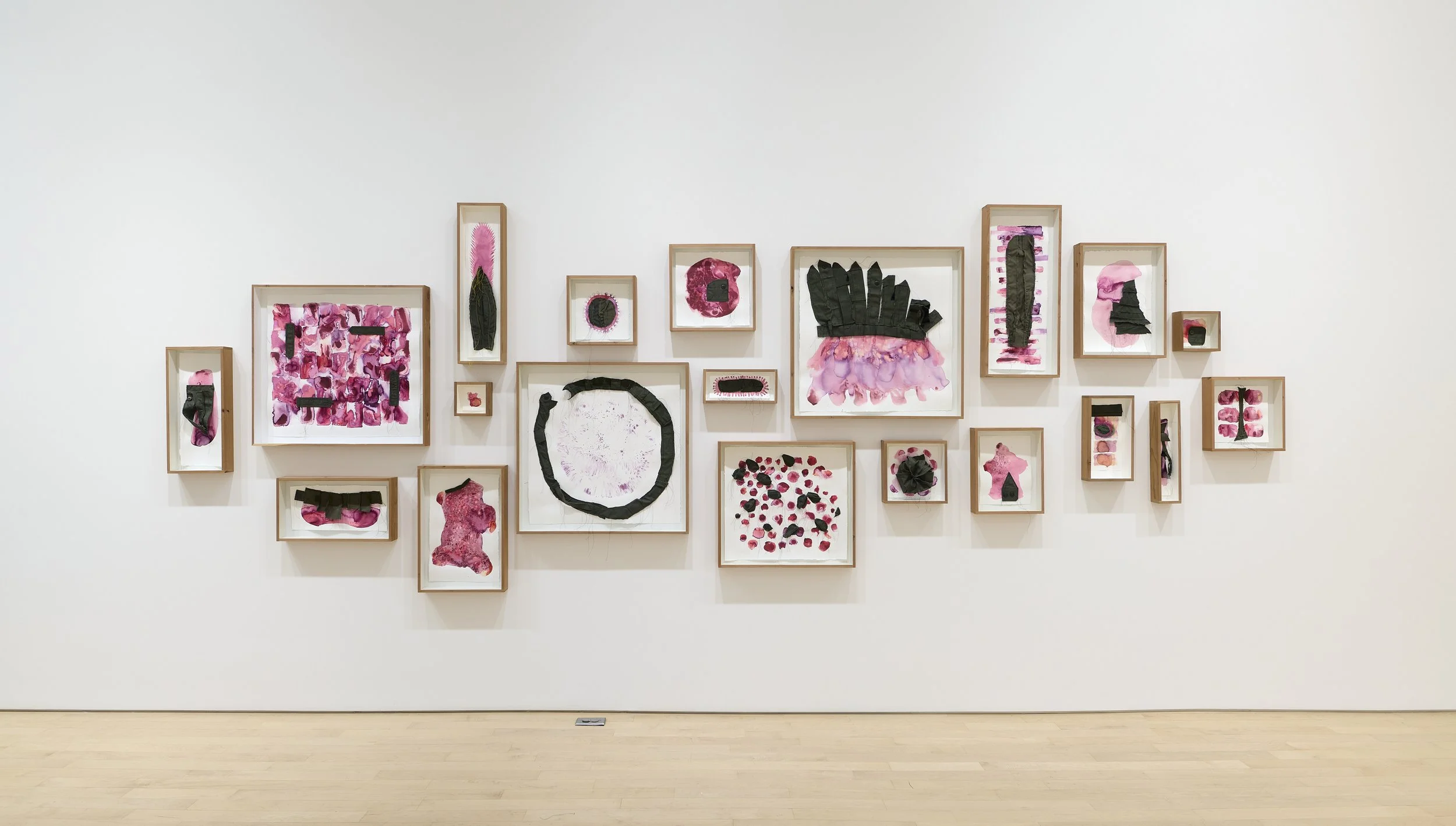


Installation view. Courtesy of the artist and Jane Lombard Gallery. Photo credit: Arturo Sanchez.
El Vaivénd el Mar, the central installation of the exhibition, features a soft sculpture ship sailing upon a vibrant sea of intertwined flamenco dresses. Taking the shape of the undulating waves, the dresses layered upon one another, ruffle and fall, suggesting the violence associated with navigating turbulent waters and subjecting unwilling communities. The ship references Spanish fleets that once transported the enslaved between the African coast and colonies of the New World while also pointing to the pervasive influence and control America extorts over current global affairs. Fabricated from US border officer uniforms and constructed into the form of an Iberian trading vessel, the ship becomes a symbol and a vehicle of justification for exploitation. El Vaivénd el Mar brings contemporary immigration policies into question, illustrating the enduring legacy of conquest through the movement, fluctuation, and reshaping of collective colonial histories.

Margarita Cabrera Space in Between -- Agave, in collaboration with L.G. (Mexico/USA), 2016 U.S. Border Patrol uniform fabric, copper wire, PVC pipe, foam, thread, and terra coBa pot 39 x 20 x 23 in.
Utilizing culturally charged materials and community participation, Cabrera's ongoing collaborative series Space in Between investigates migratory crossroads, focusing on the experience of the borderlands and the people who cross them. Transforming US Border Patrol uniforms into indigenous plants, Cabrera works with recent migrant communities to embroider their personal stories onto the work. New iterations to this series expand beyond the Mexico & US border to include perspectives of cross-continental relocation from that of Argentina, Chile, El Salvador, and Pakistan to Spain, in particular, Barcelona. Accordingly, the soft sculptures take on the shape of the native flora and fauna of the region of their embroiderer. This expansion reinforces the symbolic landscape of ‘spaces in between, ’ where relationships across divides are renegotiated.
Similarly, Cabrera’ s ongoing series El Flujode Extracciones , continues to explore the extraction of natural resources, the exploitation of indigenous knowledge and culture through fabric collage with gouache and cochineal dye.
Pepita Para El Lo o Para Que Hable o Calle , Cabrera’ s life-size sculptures of endangered red-crowned Amazon parrots engage viewers in an immediate dialogue about border politics and surveillance. These robotic birds, equipped with voice-activated mimicry devices, create a cacophonous chatter that mirrors the contentious public discourse around border crossings and immigrant detention. The new iterations of these parrots will feature pre-recorded messages by Cabrera describing the use of surveillance equipment in areas of war and political unrest as prototypes for similar technologies used at the US border, underscoring the global consequences of control tactics. Secuelas : cuerpo , tierra , y mar offers a profound exploration of the intersections between art, history, and social justice, inviting viewers to engage with multilateral experiences of displacement, subjugation, and supremacy.
About Margarita Cabrera
Margarita Cabrera (b. 1973, Monterrey, Mexico) received an MFA from Hunter College in 2007. She is an associate professor at the School of Art at Arizona State University. Recent solo exhibitions have been held at the Longmont Museum of Art, CO; McNay Art Museum, San Antonio, TX; Dallas Contemporary, TX; and the Wellin Museum of Art, Clinton, NY . Her work has also been shown at the Barbican Centre, London, UK; Denver Museum of Art, CO; Phoenix Art Museum, AZ; Carnegie Museum of Art, Pittsburgh, PA; LACMA, CA; the Smithsonian Museum of American Art, Washington, DC; MFA Houston, TX; the Contemporary Arts Museum Houston, TX; the Ford Foundation, New York, NY; Seattle Art Museum, WA; the Sweeney Art Center for Contemporary Art at the University of California, Riverside, CA; El Museo del Barrio, New York, NY; and El Museo Rufino T Tamayo, Mexico City, Mexico. Cabrera was a Knight Artist in Residence at the McColl Center for Visual Art in Charlotte, NC. She was a recipient of the Joan Mitchell Foundation Grant, presenting a community public art sculpture commissioned by Lego at Discovery Green in Houston, Puentes Culturales. In 2019, Cabrera unveiled the public sculpture Árbol de la Vida : Memorias y Voces de la Tierra in San Antonio, Texas, and was named Texas Artist of the Year. Cabrera was awarded a 2023 Latinx Artist Fellowship.
For more information about this exhibition and more at Jane Lombard Gallery, please visit the gallery’s site here. The gallery can also be found on Instagram and Facebook.