Nam June Paik: Rewind / Repeat
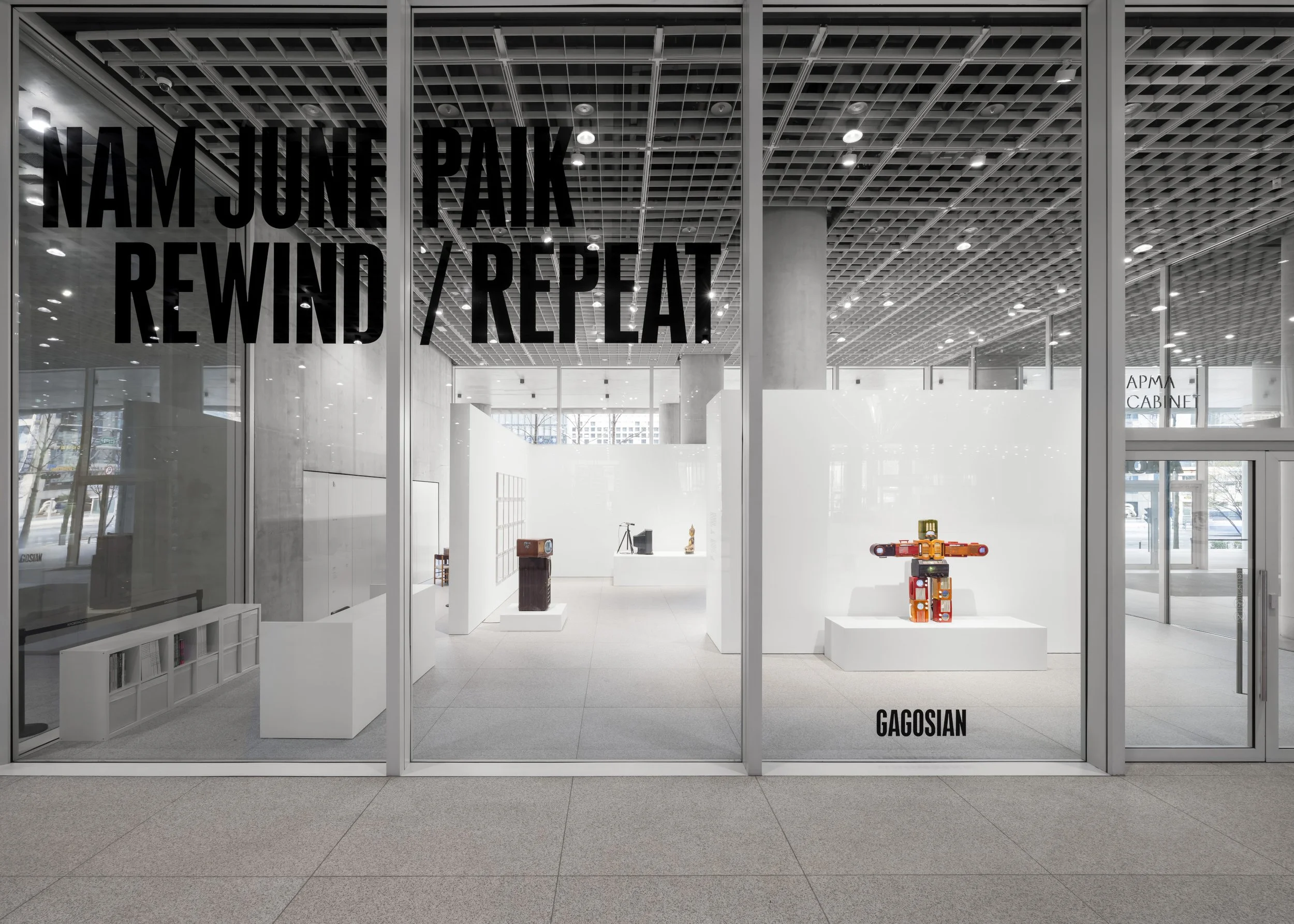
Nam June Paik Rewind / Repeat, 2026 Installation view © Nam June Paik Estate Photo: Jeon Byung Cheol Courtesy Gagosian
SEOUL—Gagosian is pleased to announce Nam June Paik: Rewind / Repeat, the first exhibition in twenty-five years to be presented by the Estate of Nam June Paik in Seoul, his place of birth. The exhibition, which opened on April 1, 2026, surveys the groundbreaking artist’s career and includes significant historical works such as For London and Abroad (Mailbox) (1982) and TV Bra for Living Sculpture (1969), as well as others that have not been previously exhibited. Nam June
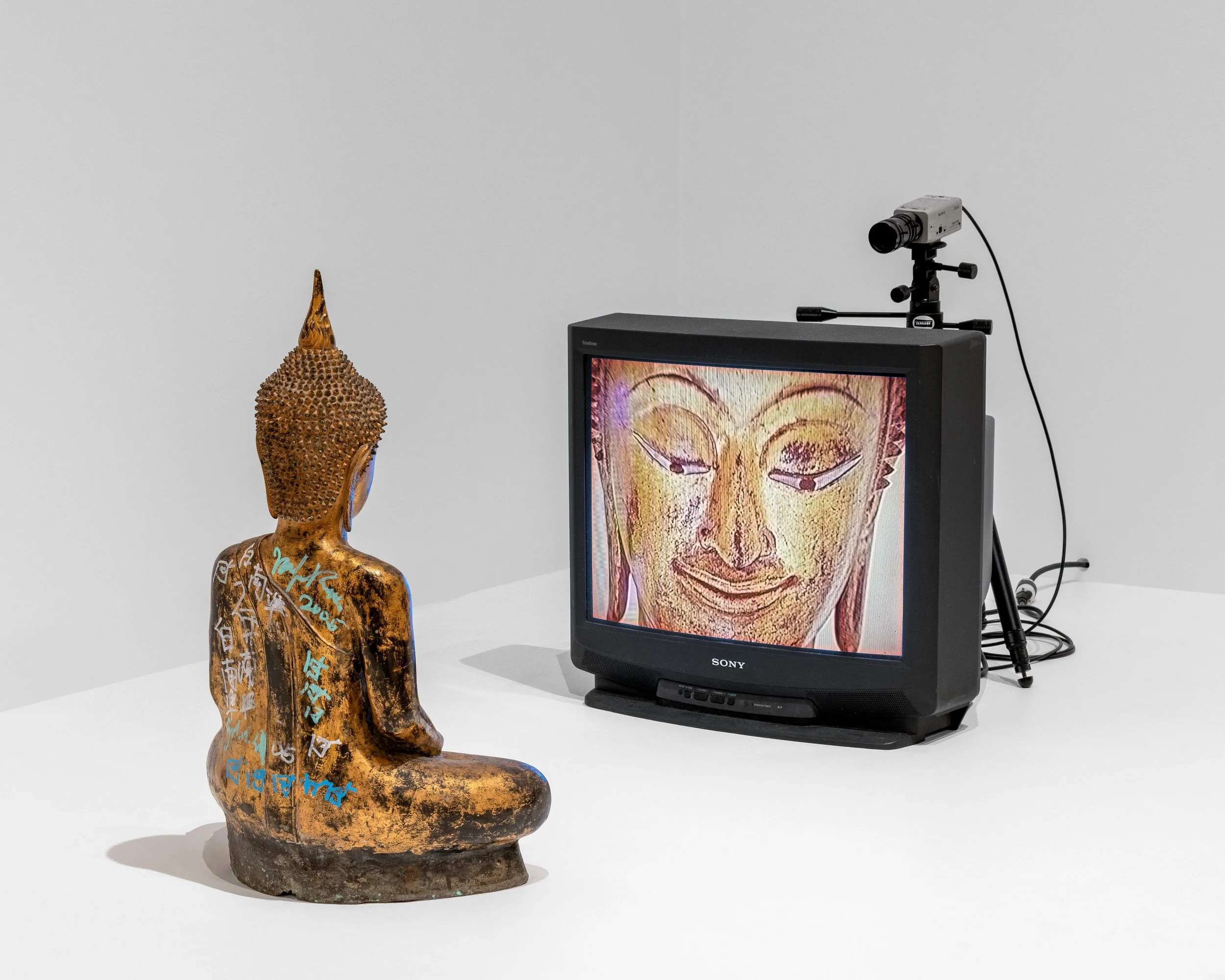
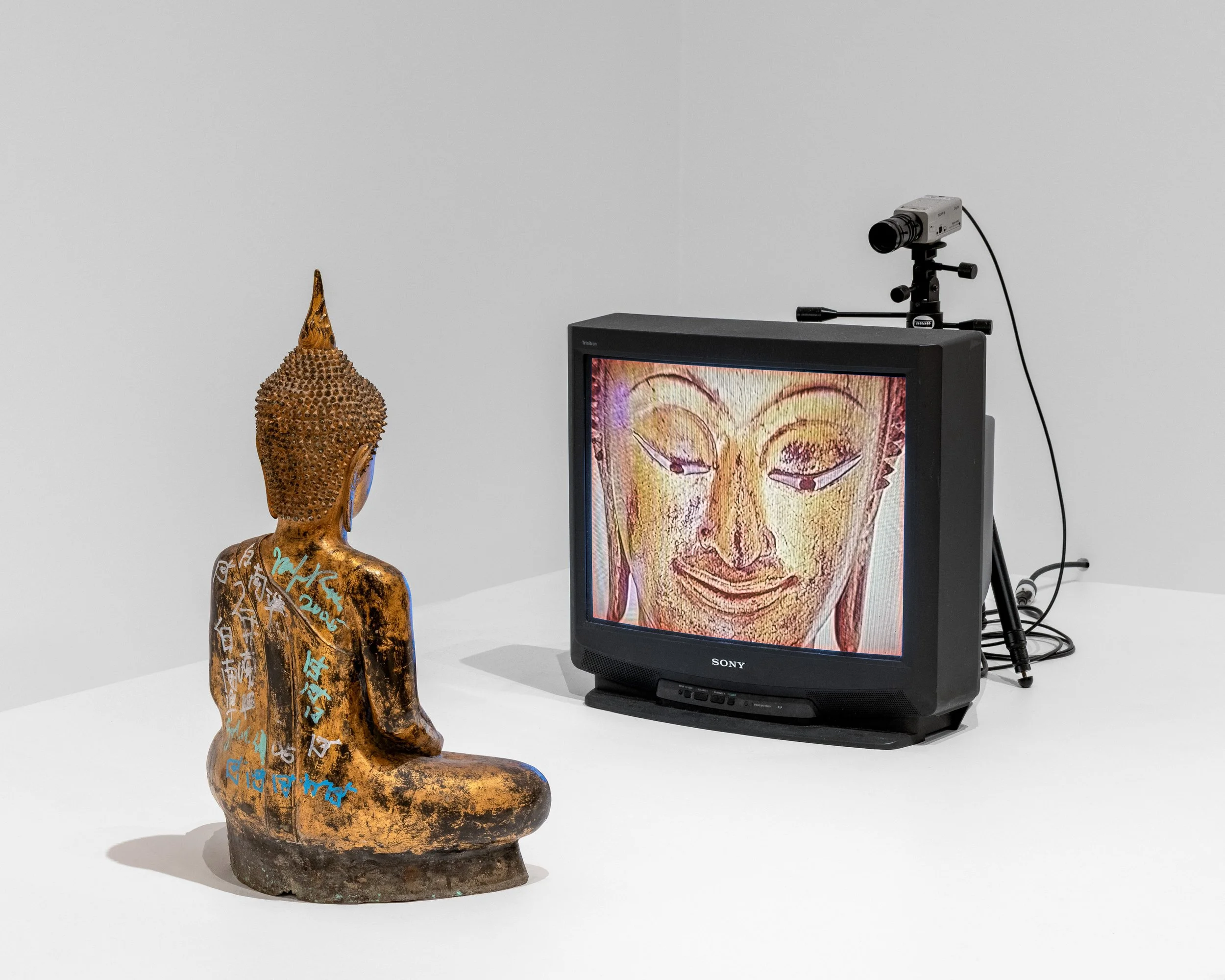
Nam June Paik Gold TV Buddha, 2005 Closed-circuit video (color, silent), 27-inch monitor, video camera, tripod, cables, and permanent oil marker on gilded bronze Buddha 31 1/2 x 26 x 85 inches (80 x 66 x 215.9 cm) © Nam June Paik Estate Photo: Paula Abreu Pita Courtesy the Brooklyn Museum and Gagosian
Paik: Rewind / Repeat is on view at the headquarters of Amorepacific, the world-renowned Korean beauty company, in the center of Seoul, and takes place in the APMA Cabinet, a project space on the ground floor of the David Chipperfield–designed building.
Paik studied classical music and art at the University of Tokyo and combined this training with a radical aesthetic approach, introducing the technology of television into the realm of fine art as early as the 1950s. Paik moved to West Germany in 1956, where he joined the Fluxus group, and eight years later relocated to New York. There, he drew on his international background and extensive network to develop a practice that incorporated painting, sculpture, performance, music, and electronic media. Although frequently referred to as the father of video art, Paik anticipated a variety of subsequent developments in media and communications, a prescience that continues to unfold as culture is shaped by emergent technologies.
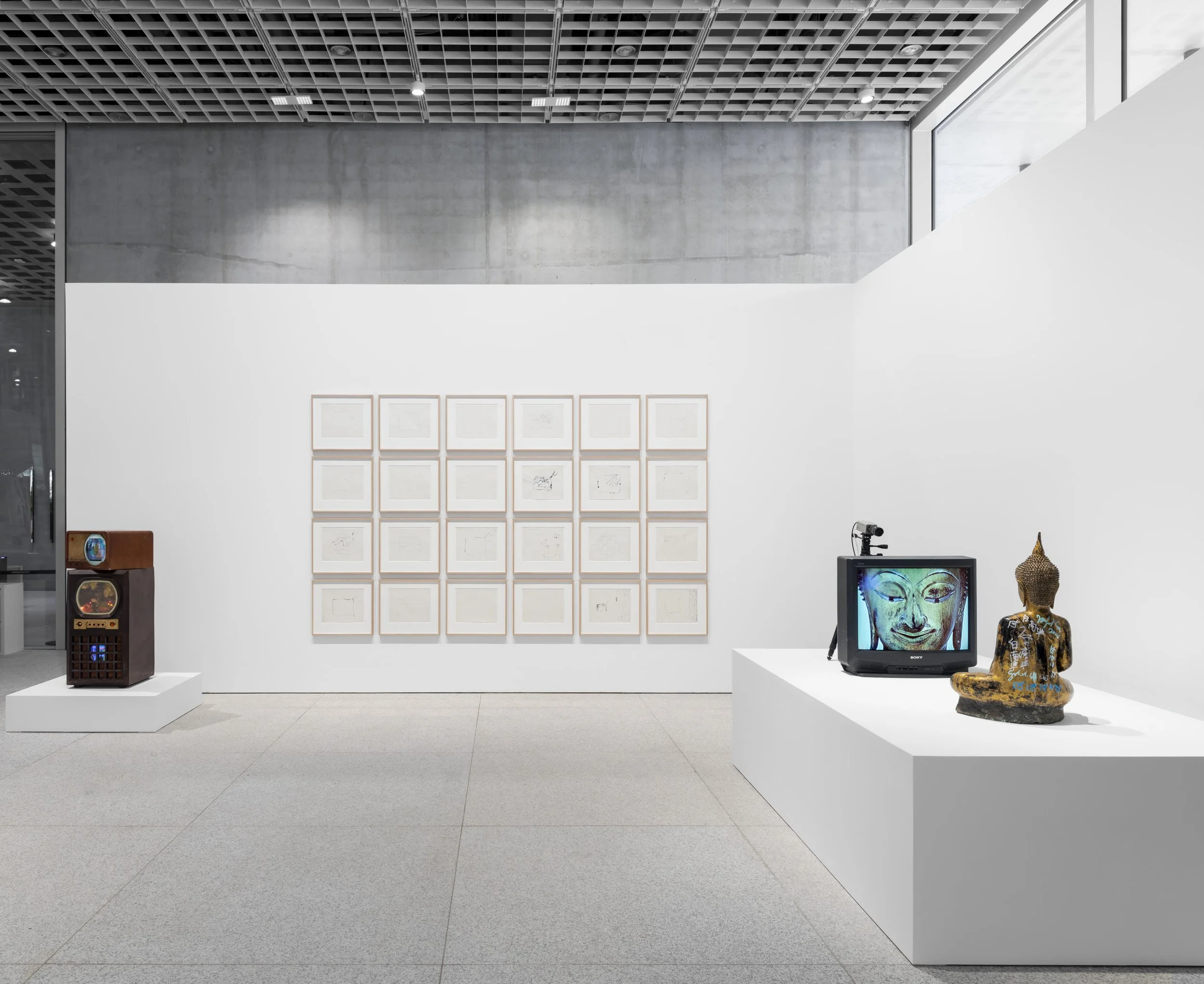
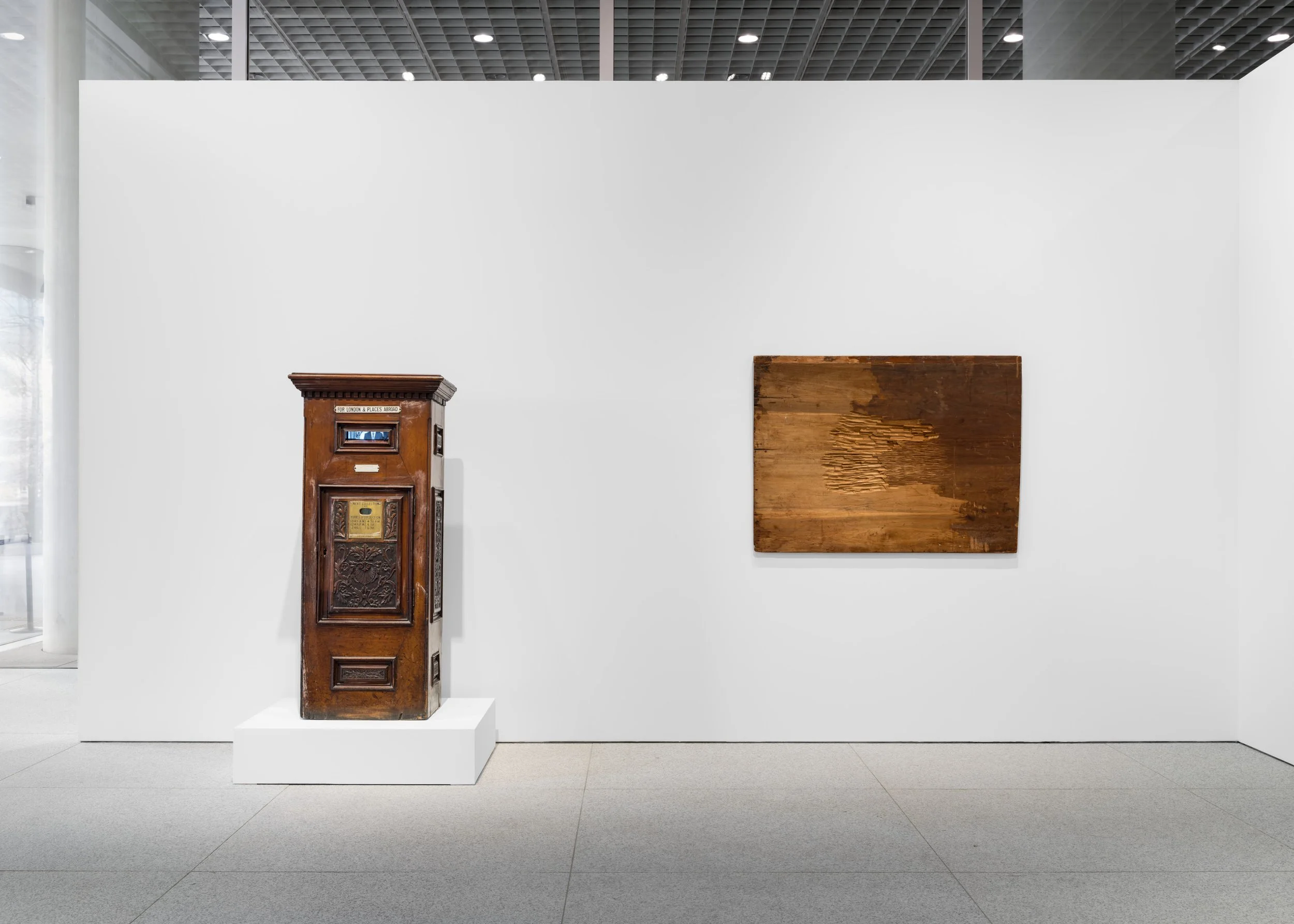
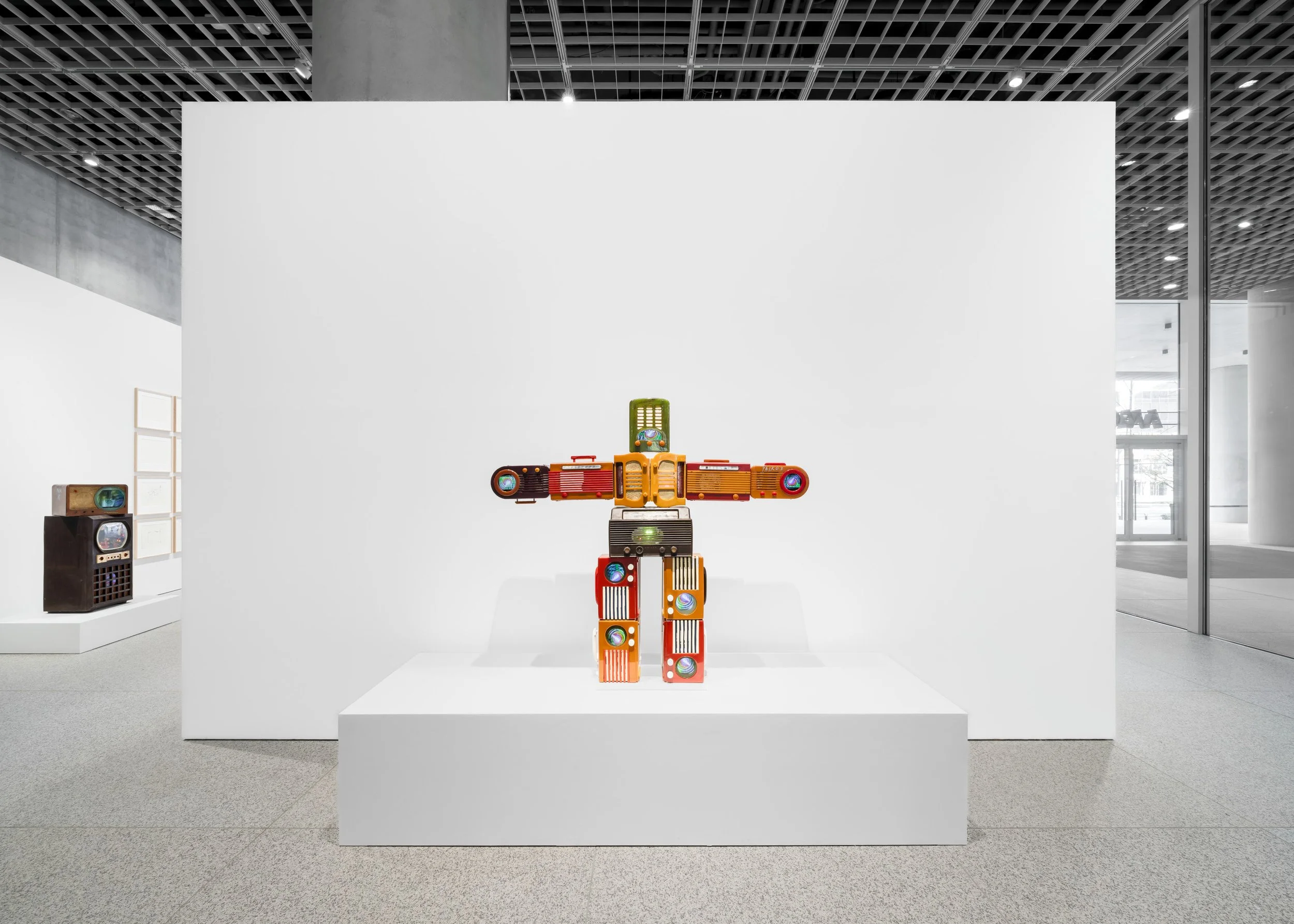
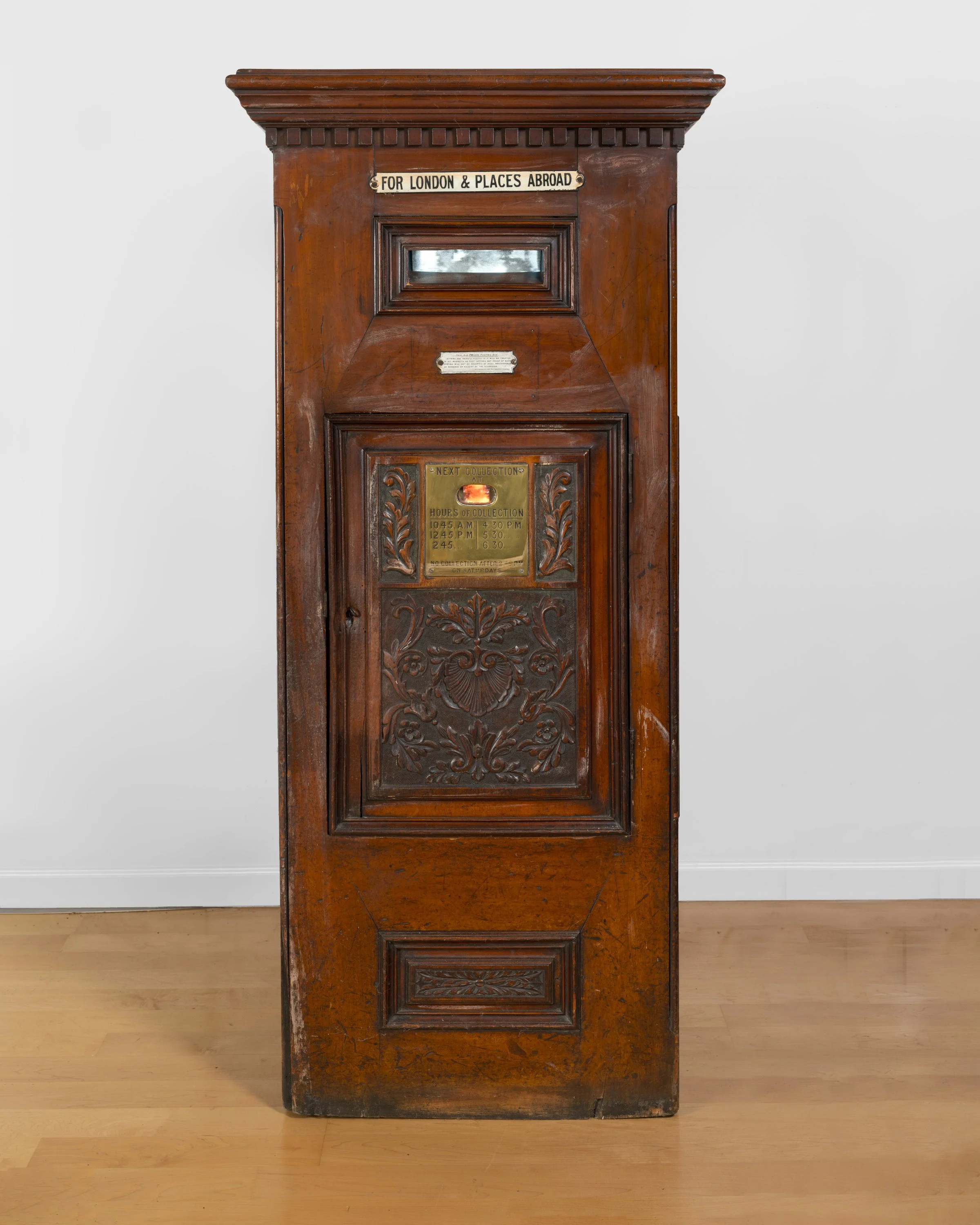
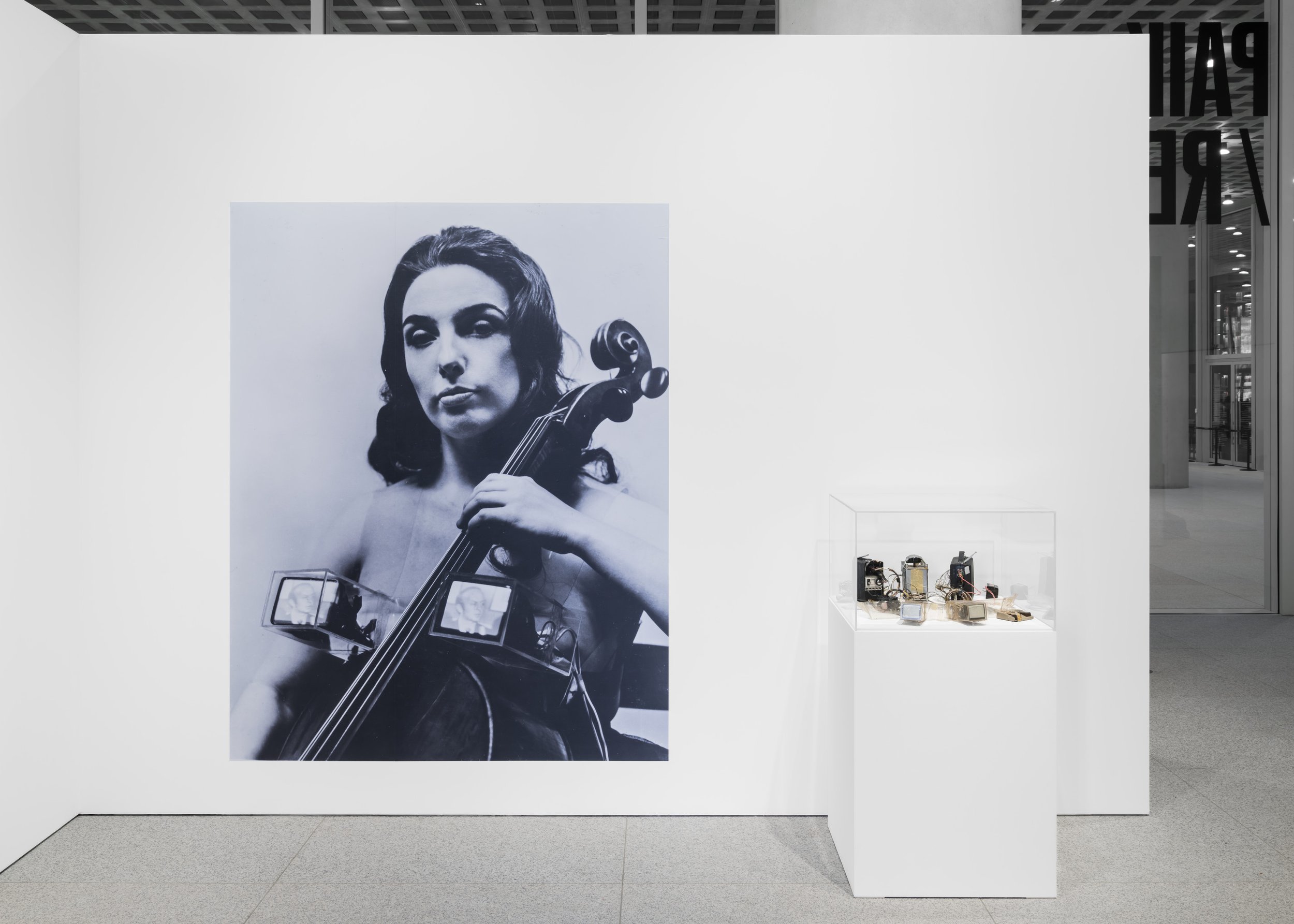
Nam June Paik Rewind / Repeat, 2026 Installation view © Nam June Paik Estate Photo: Jeon Byung Cheol Courtesy Gagosian
In 1963 Paik began visiting Tokyo to study television and robotics. It was there that he met engineer Shuya Abe and began to explore connections between technology and the human body. TV Bra for Living Sculpture, on view at APMA Cabinet, is a clear vinyl undergarment incorporating two small black-and-white television sets housed in plexiglass boxes. The singular garment was designed for musician and performance artist Charlotte Moorman, who first wore it during a performance at the opening of the exhibition TV as a Creative Medium at Howard Wise Gallery, New York, in 1969. On that occasion, Moorman played sounds on her cello that altered the televisions’ images in various ways, helping to realize Paik’s aim of humanizing this ubiquitous device.
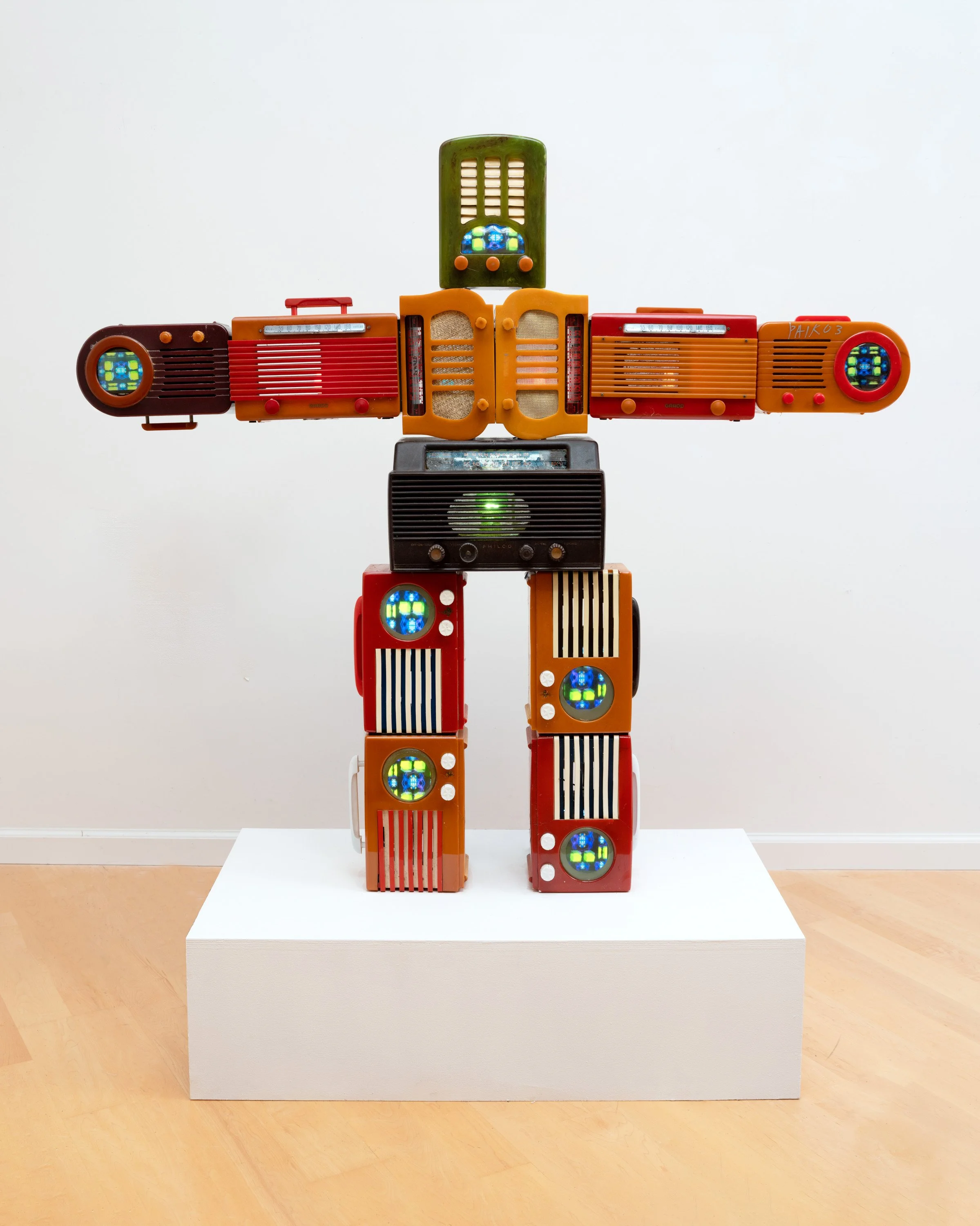
Nam June Paik Bakelite Robot, 2003 Single-channel video (color, silent), LCD monitors, Bakelite radios, electric lights, media player, and permanent oil marker 50 1/2 x 56 3/8 x 9 inches (128.3 x 143.2 x 22.9 cm) © Nam June Paik Estate Photo: Ben Blackwell Courtesy Gagosian
Another work, Bakelite Robot (2003), is composed of vintage radios acquired from thrift stores and markets, which Paik adapted to screen video footage. The dials of six of the radios have been replaced with TV monitors showing specially produced videos composed of material from science- fiction films, recordings of vintage robot toys, and excerpts from earlier video edits. In the iconic Gold TV Buddha (2005), a late entry in the TV Buddha series (1974–2005), a gilded, painted bronze statue of Buddha meditates before a closed-circuit video camera and monitor, embodying the intersection of ancient spirituality and modern media, Eastern and Western thought.
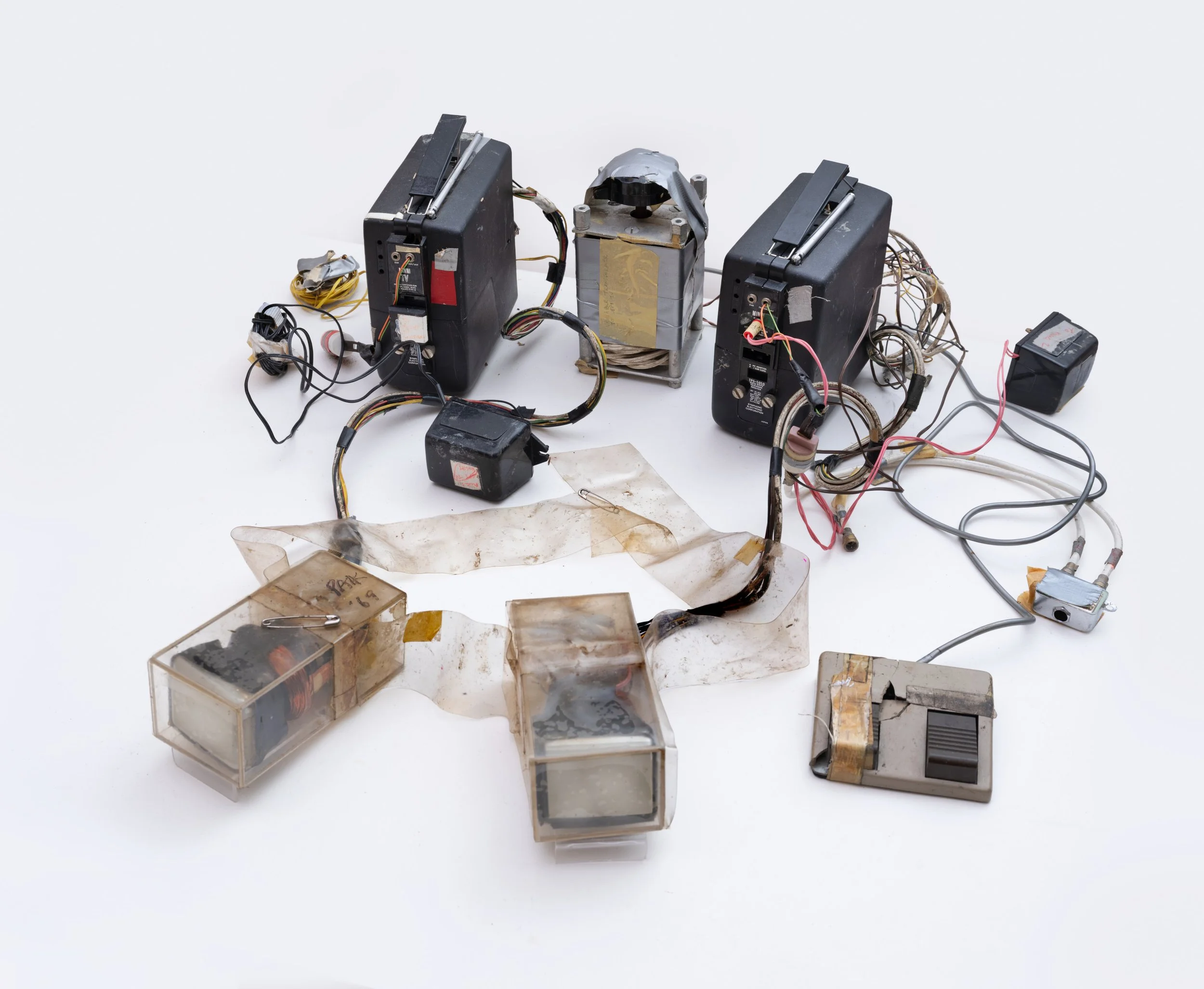
Nam June Paik TV Bra for Living Sculpture, 1969 Cathode ray tubes, television casing, acrylic, vinyl, safety pins, footswitch, tape, cables, and transformer Variable dimensions © Nam June Paik Estate Photo: Ben Blackwell Courtesy Gagosian
Also on view are other projects including a carved wood “painting,” Orchestra (1991); Untitled [Cage Composite] (2005), a tribute to John Cage and Merce Cunningham (both of whom collaborated with Paik and had a significant influence on Fluxus); and Media Sandwich (1961–64). This early work, one of Paik’s first installations, marks the artist’s decision to move away from musical composition and make use of electronics. It incorporates eight German electronics magazines, eight ten-inch Japanese phonograph records, and an antique rotogravure print of a man offering a message to a boy. Paik has inscribed the image with the year of its production, 1832, and the year of his own birth, a hundred years later.
NAM JUNE PAIK’s’ Rewind / Repeat had a press conference on Wednesday, April 1, from 2–3 pm. There was also an opening reception on Wednesday, April 1, from 5–7 pm. The exhibition opened on April 1 and will be on view until May 16, 2026, at the APMA Cabinet Amorepacific Headquarters 100 Hangang-daero, 1/F, Yongsan-gu, Seoul. For Nam June Paik’s biographical information and exhibition history, please visit here. For more information about the artists represented by Gagosian and other exhibitions at the gallery, please visit the gallery’s site here. The gallery can also be found on Pinterest, X, YouTube,Facebook, Instagram, and Artsy.