Friedrich Kunath: The Nearest Faraway Place
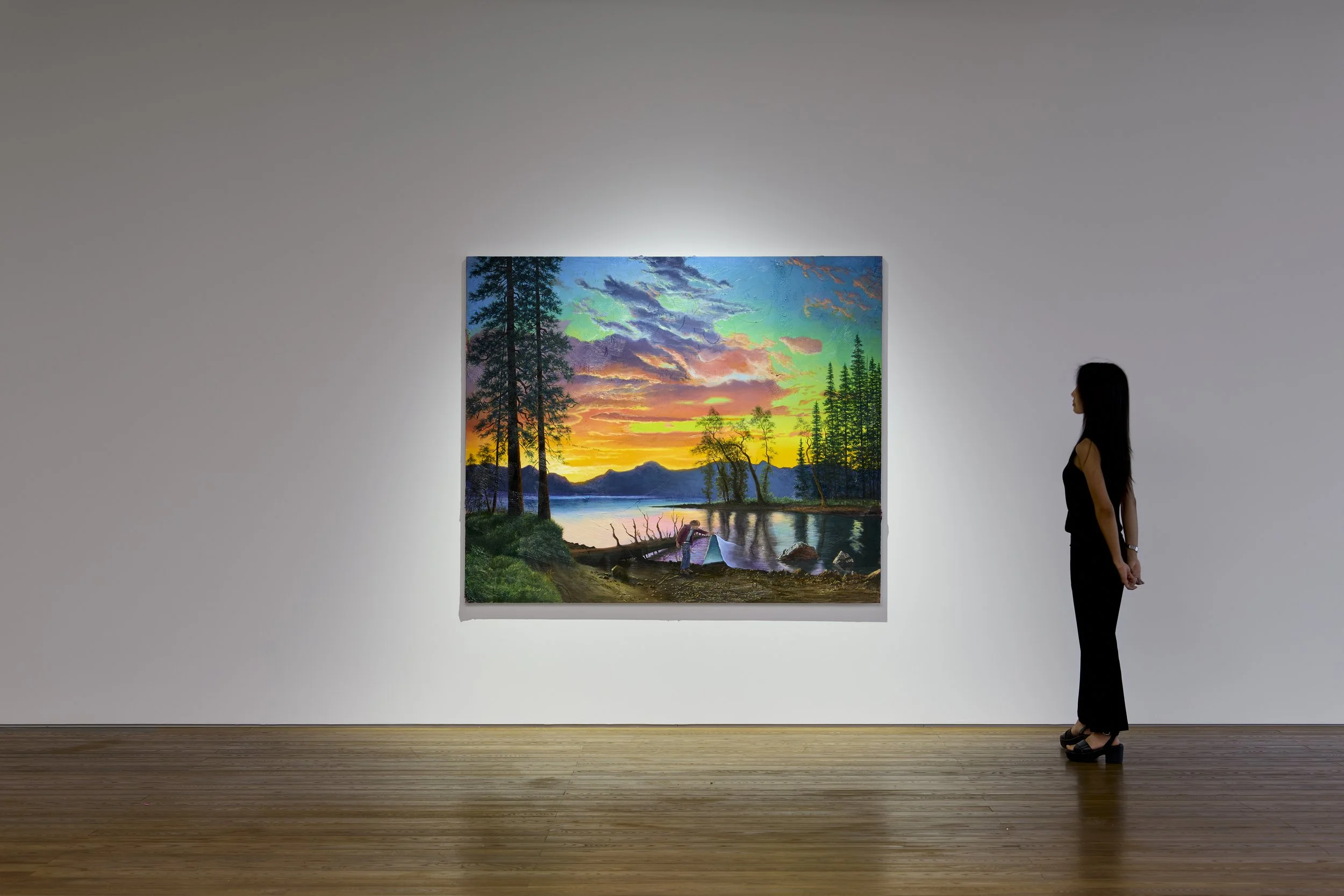
Installation View, Friedrich Kunath: The Nearest Faraway Place September 1 – October 24, 2026, Pace Gallery, Seoul Photo: Sangtae Kim, Courtesy Pace Gallery
Seoul – Pace presents The Nearest Faraway Place, a solo exhibition of new paintings and drawings by Friedrich Kunath. This marks the artist’s first solo exhibition with Pace in Seoul and his second exhibition since joining the gallery’s program in 2025.
Across the exhibited works, Kunath explores themes of distance and (re)location, where a longing emerges between the place you're in and the place you're destined to be. Roads disappear around corners, over hills, and beyond horizons; figures are silhouetted by the sunsets they gaze upon, luring the spectator inward, toward themselves. As we look out onto the world, the world looks back at us, revealing our weaknesses and uncertainties.
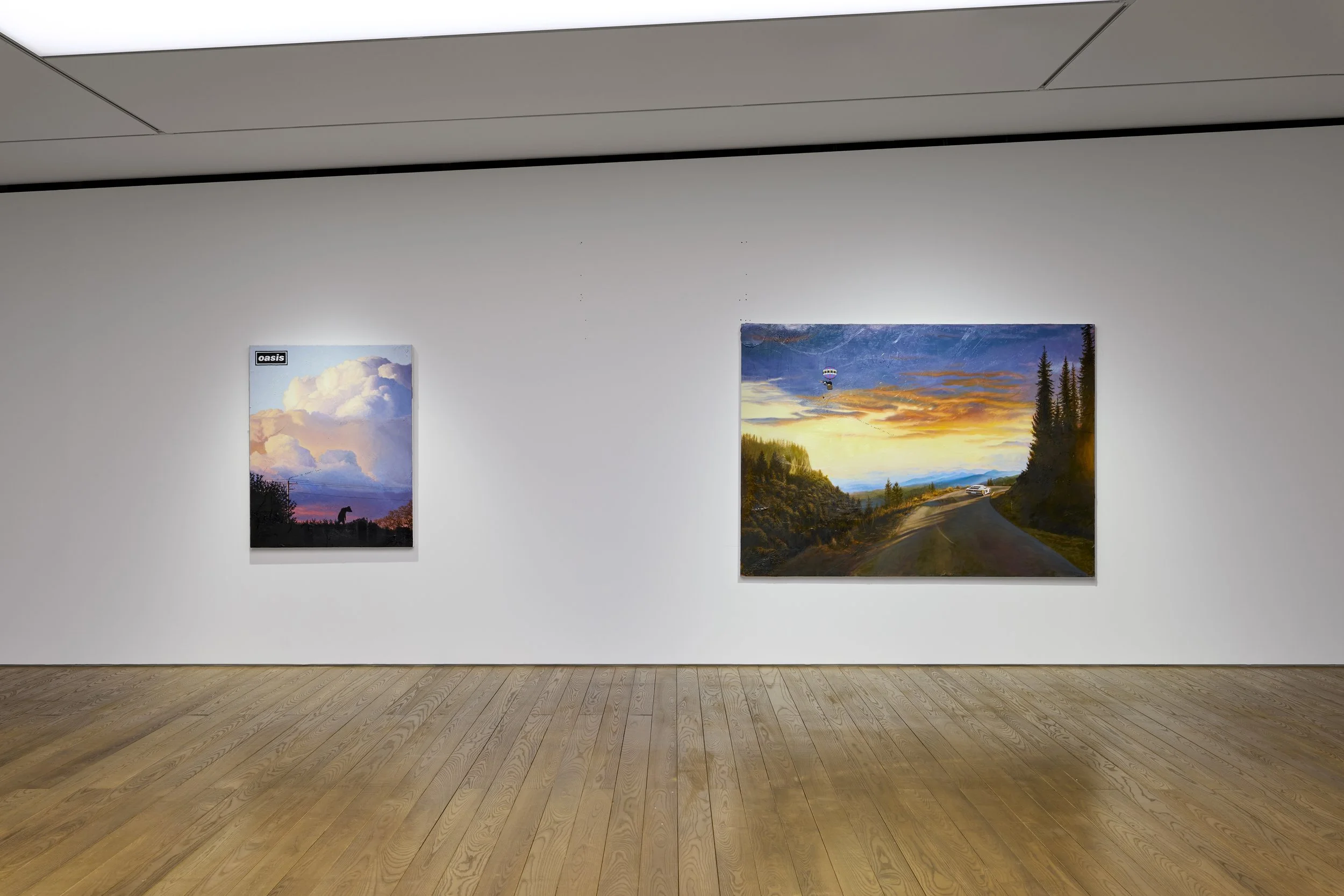
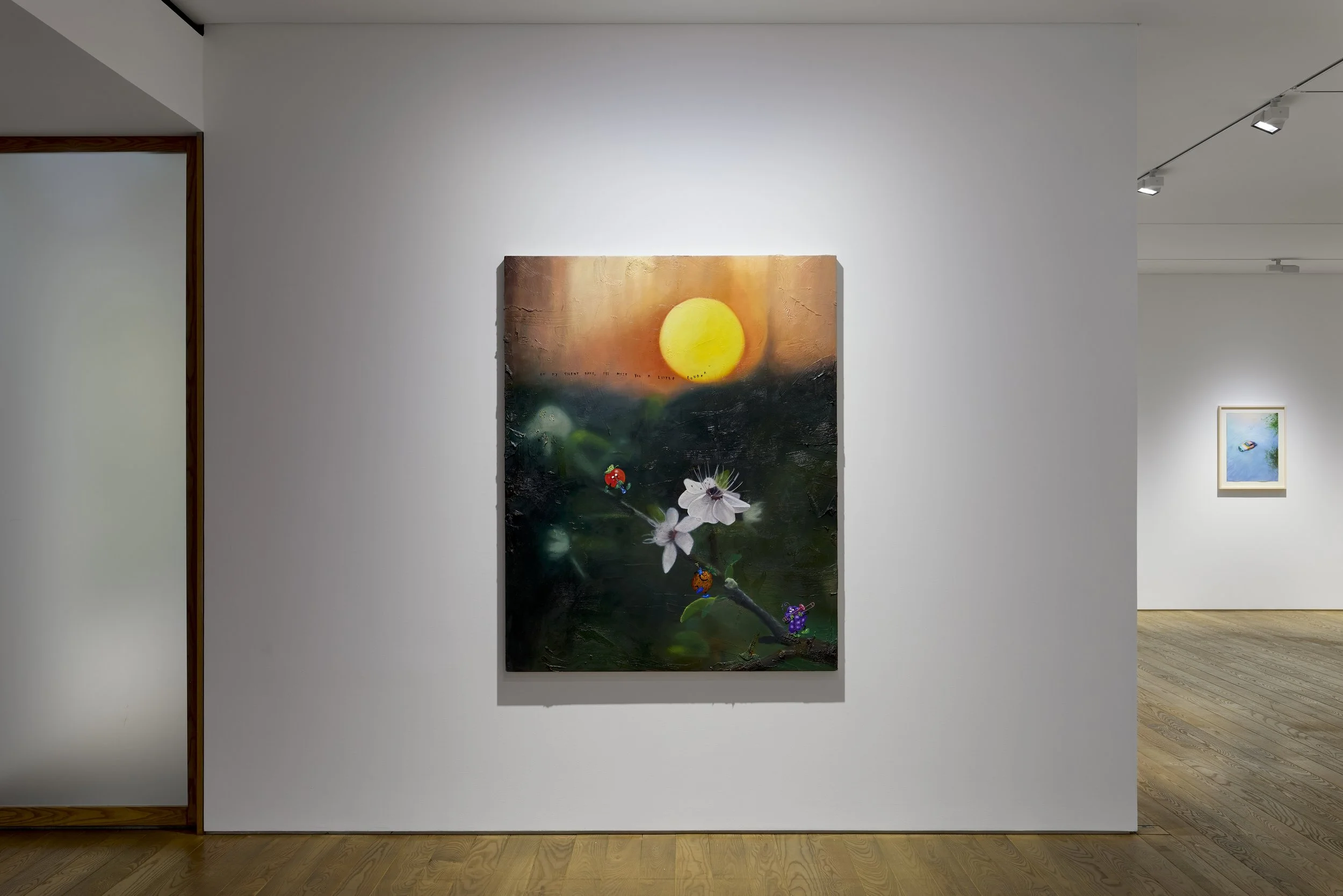
Installation View, Friedrich Kunath: The Nearest Faraway Place September 1 – October 24, 2026, Pace Gallery, Seoul Photo: Sangtae Kim, Courtesy Pace Gallery
The German-born painter, based between Los Angeles and Europe, divides his time across continents, inhabiting the space between time and place. In his latest works, he reflects on the distance separating himself from the outside world, with each painting considering feelings of longing and melancholy.
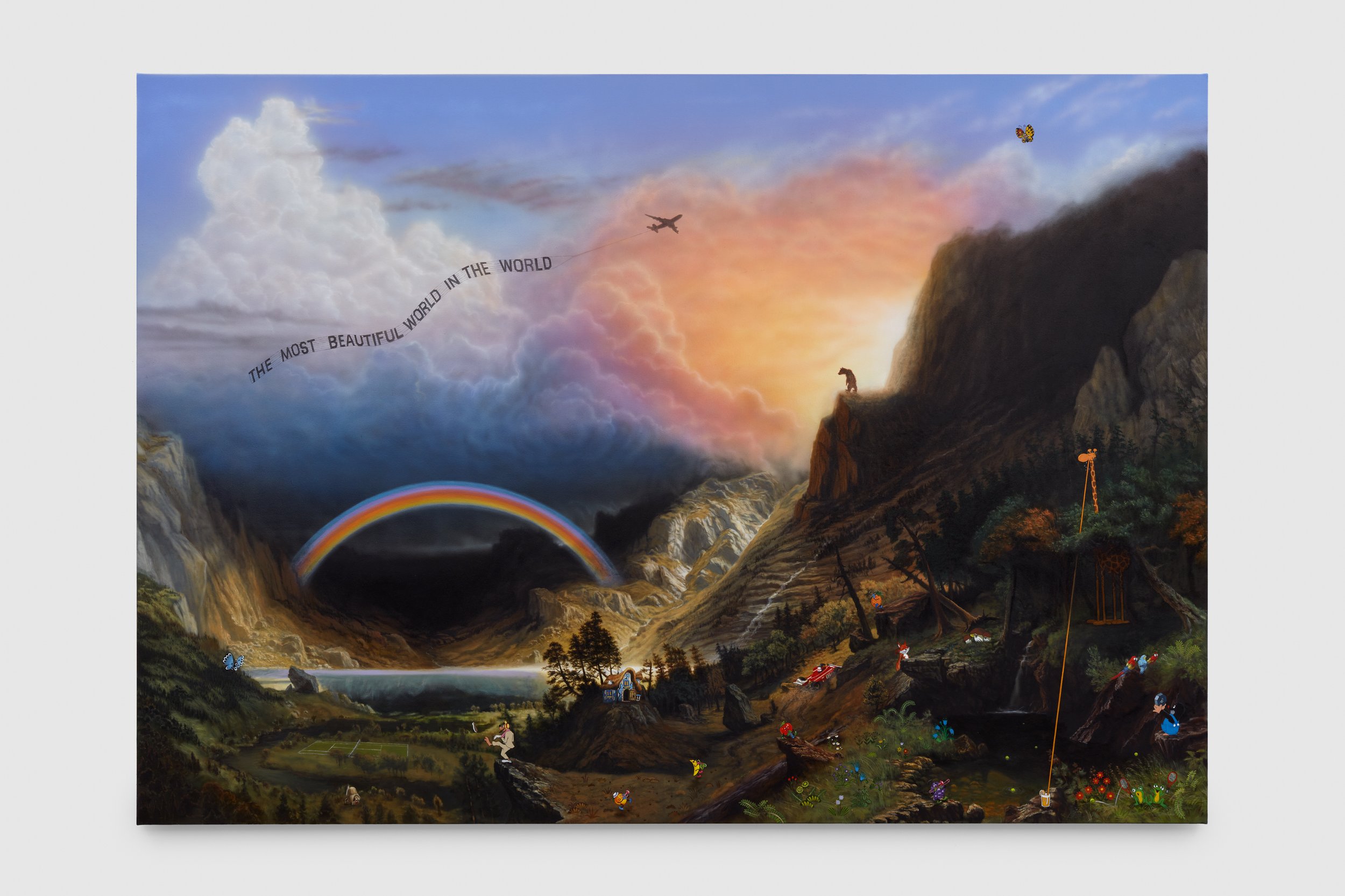
Friedrich Kunath, The most beautiful world in the world, 2020 © Friedrich Kunath, courtesy Pace Gallery
Kunath has described his work by saying he wants his paintings to "feel like songs." His paintings are emotional and raw, drawing equally from popular culture and art history. By bringing together aesthetic contexts and familiar tropes, he materializes his subconscious. Feelings arise before we know where they come from. This is the sensation one experiences standing before Kunath's emergent imagery.
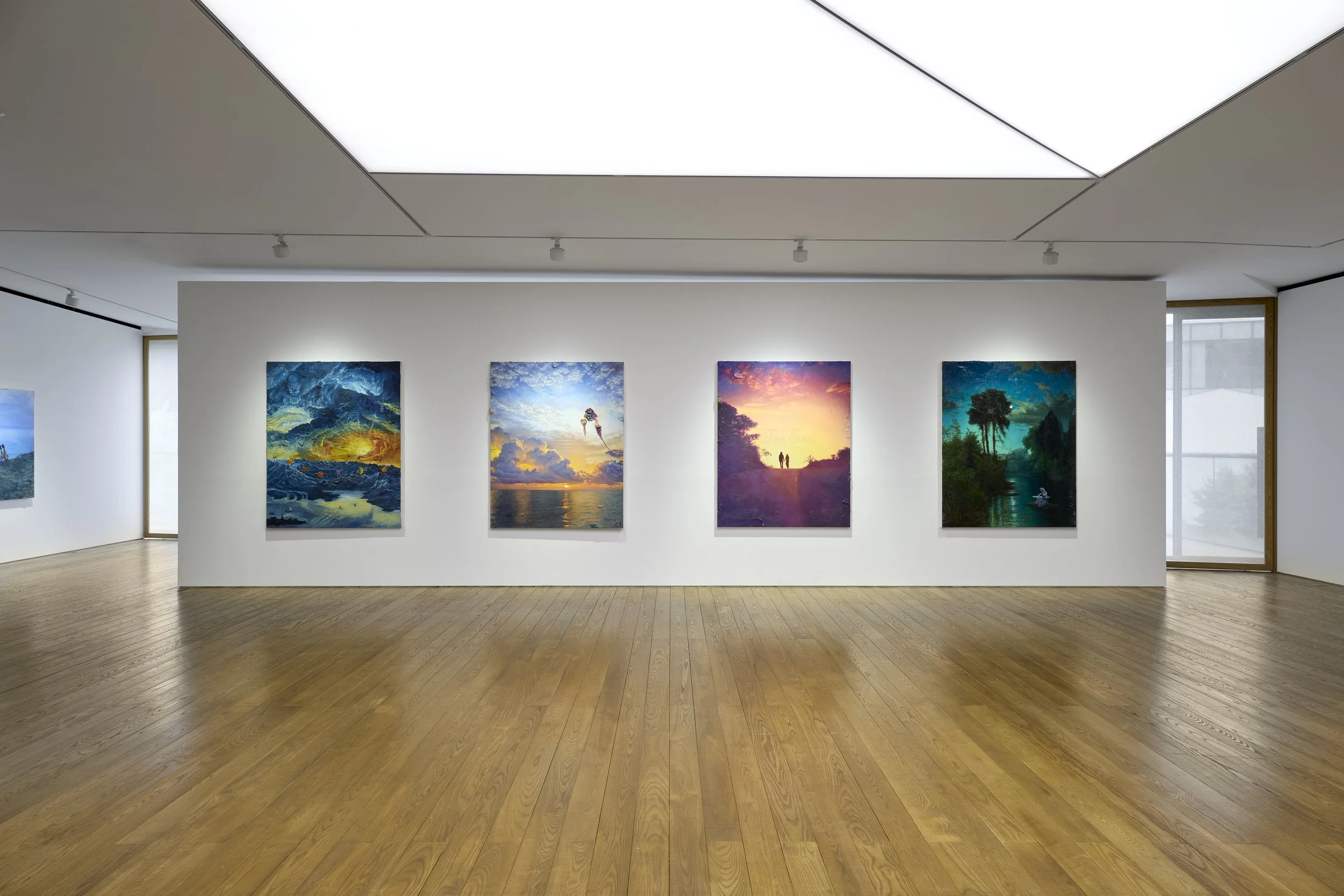
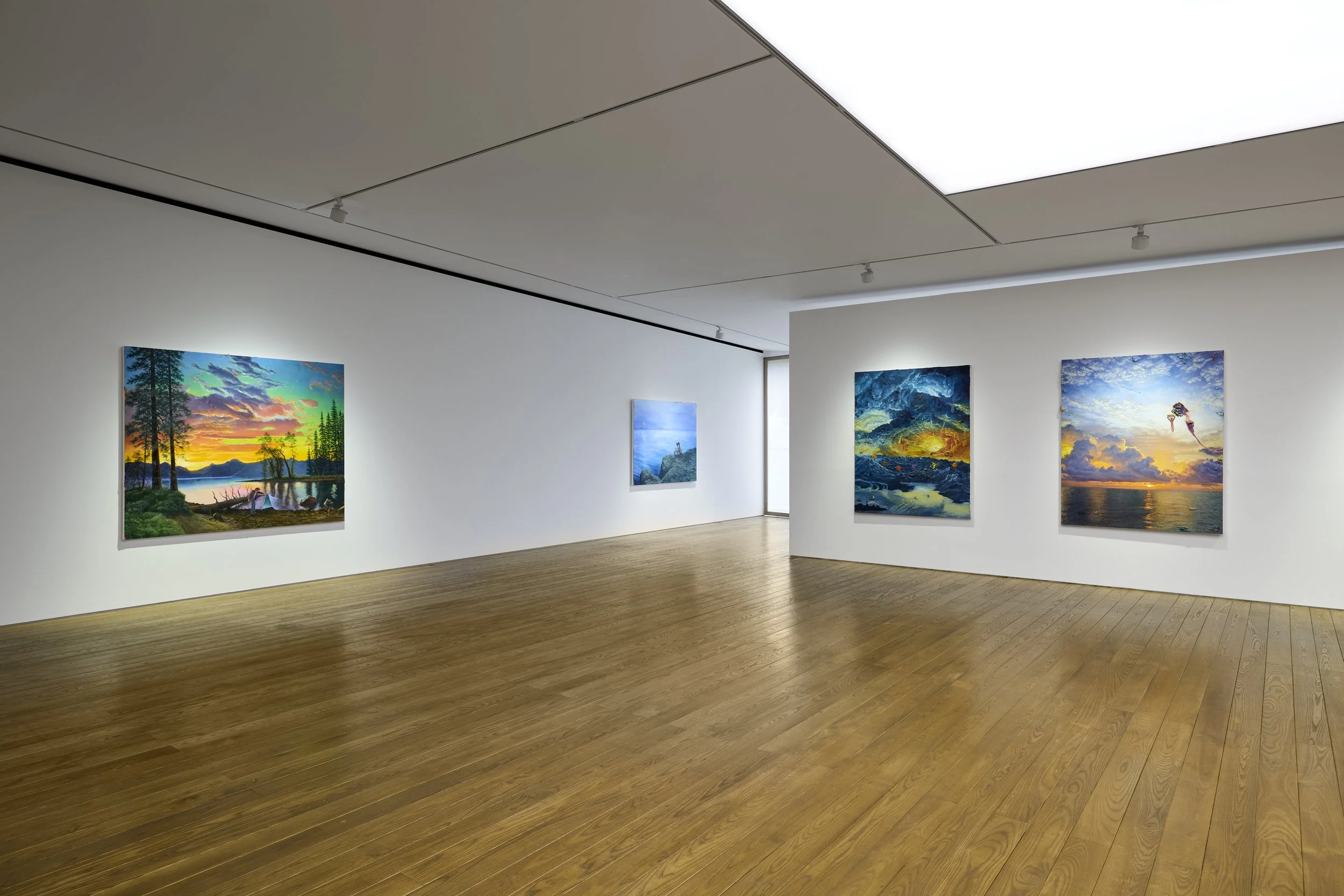
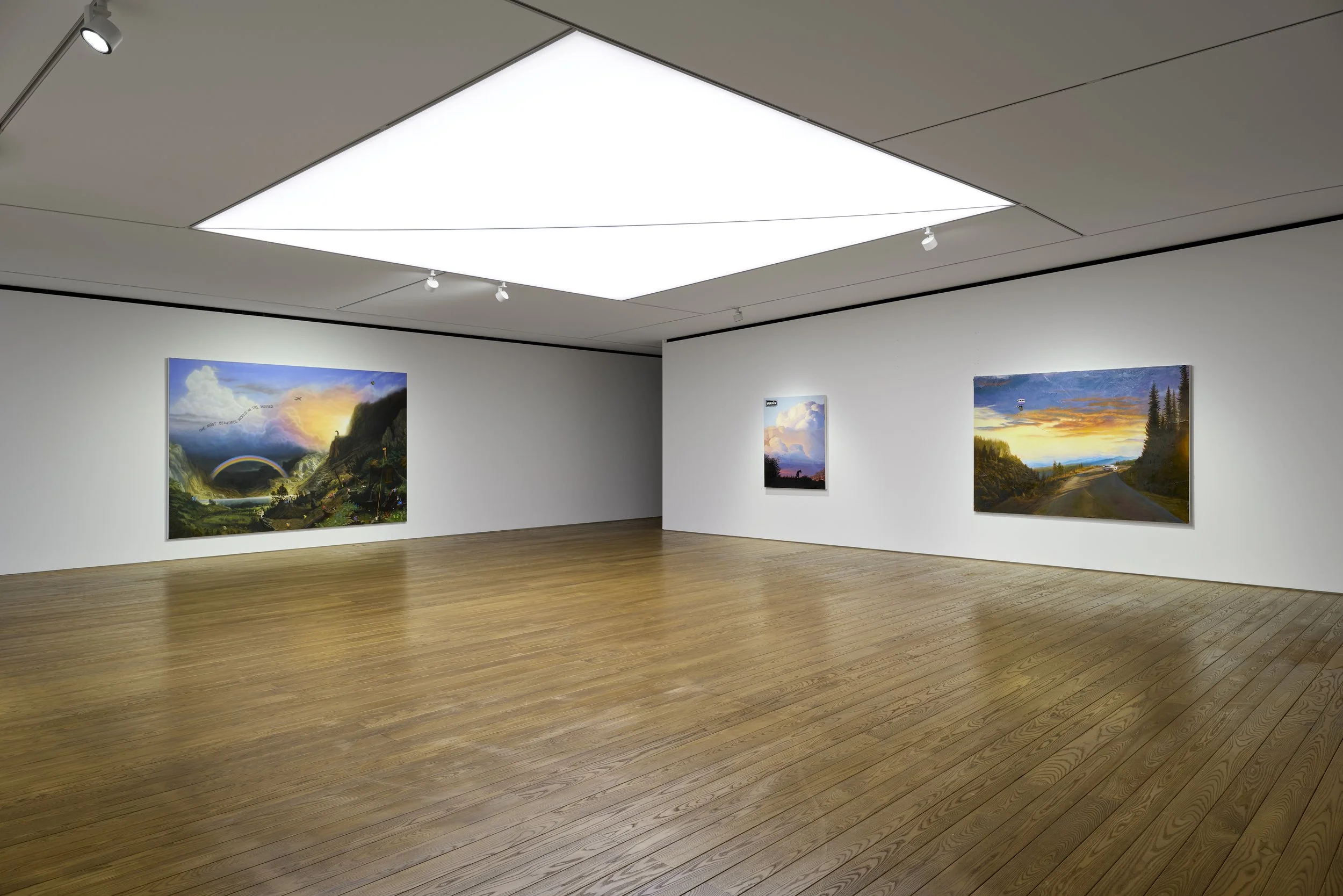
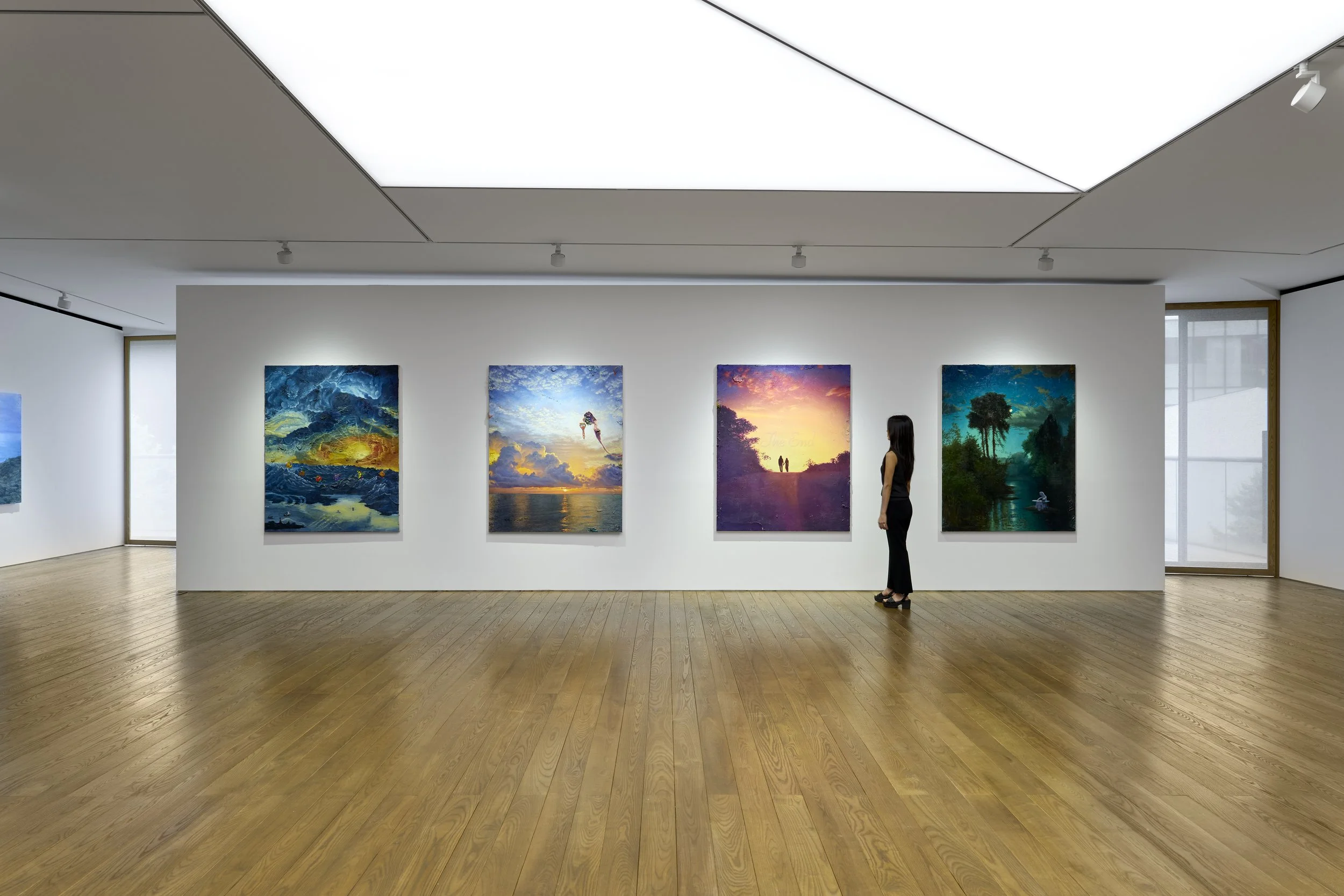
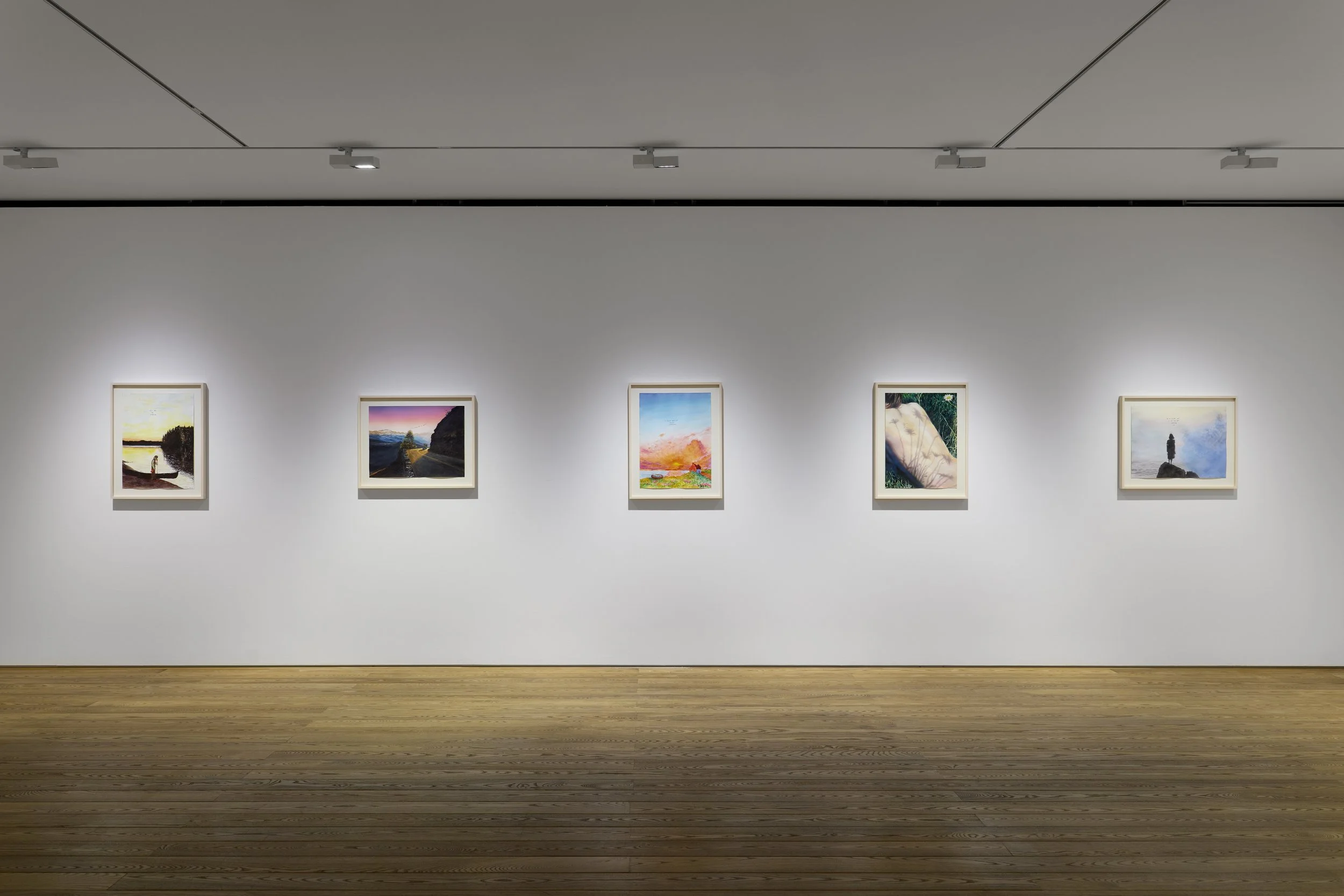
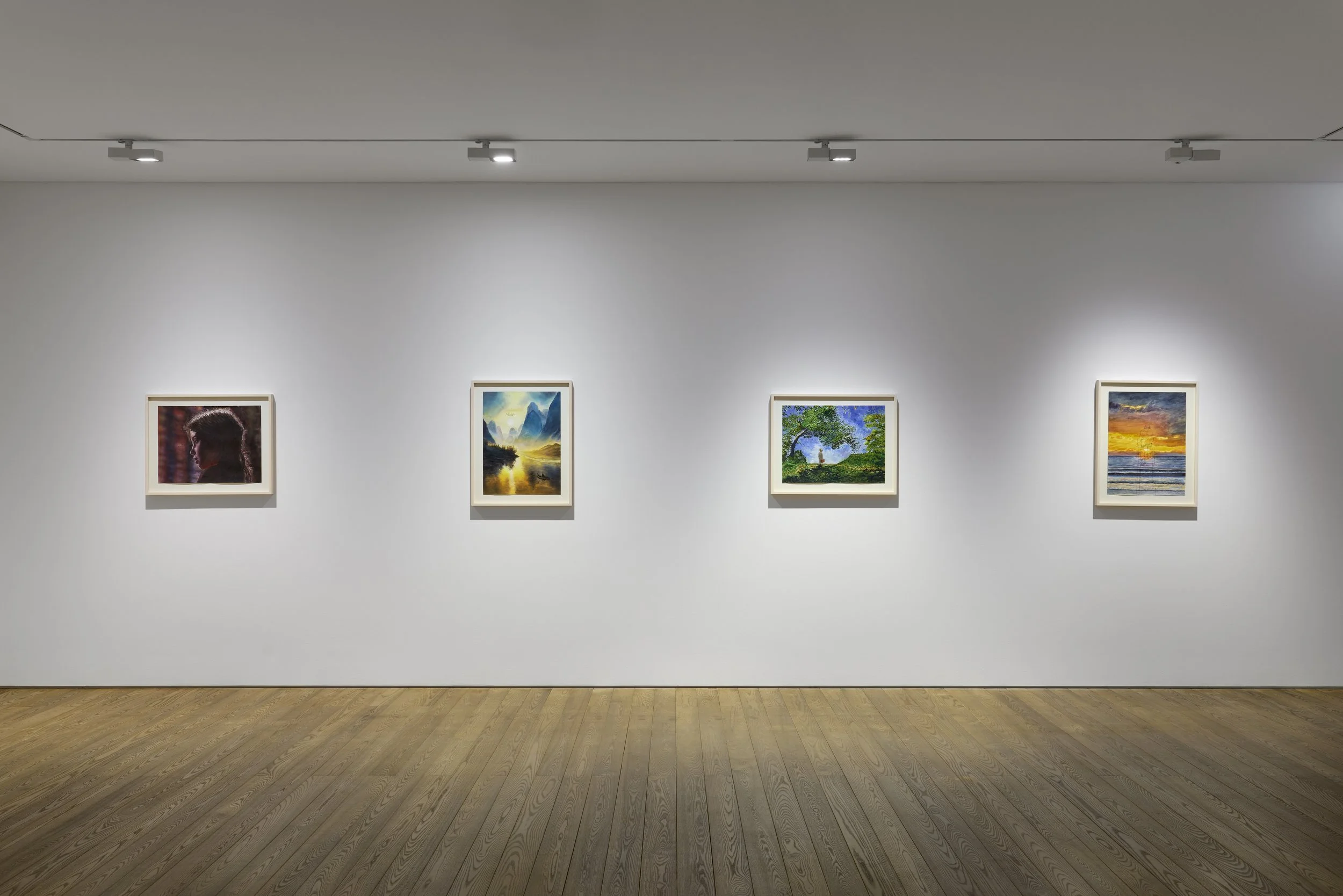
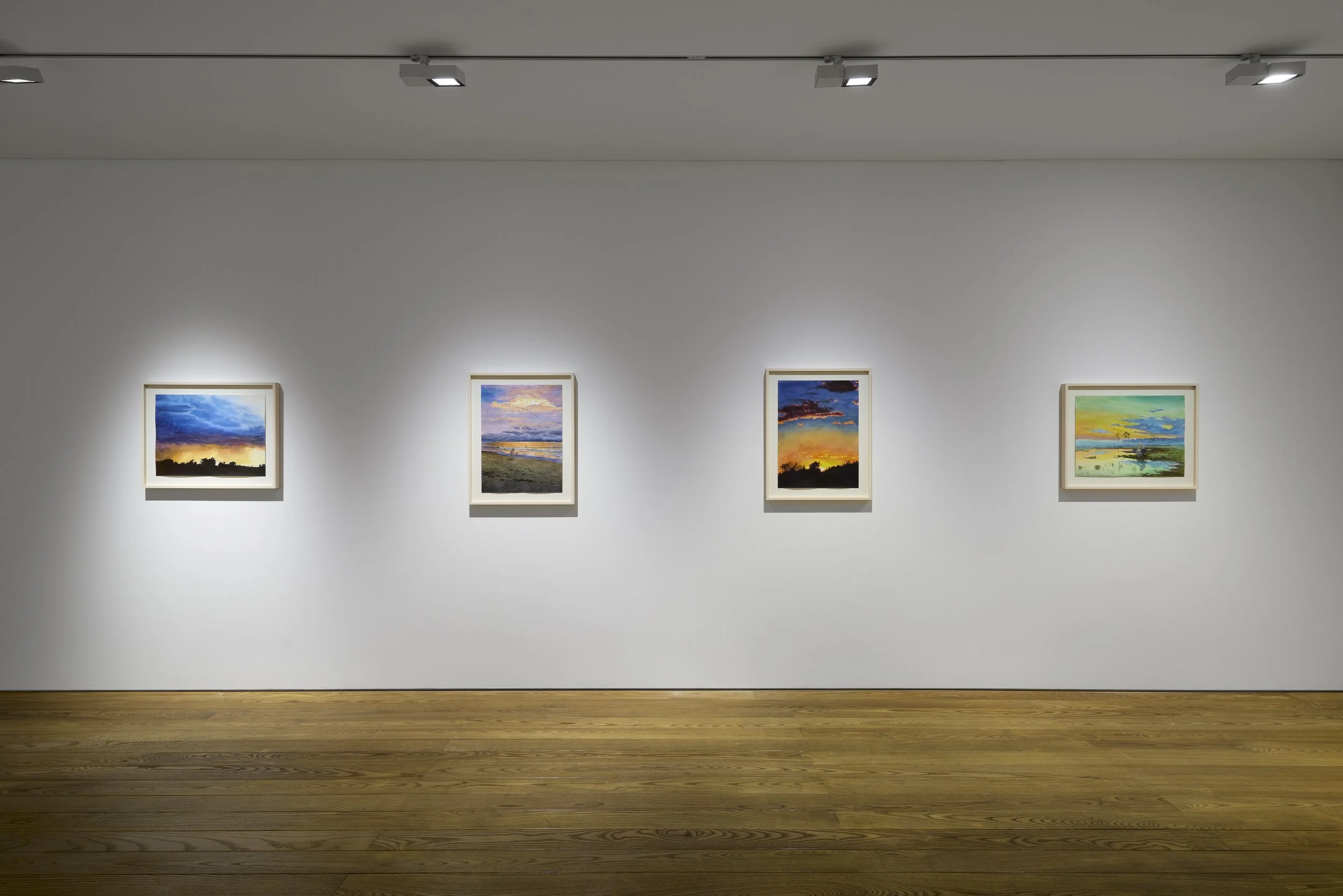
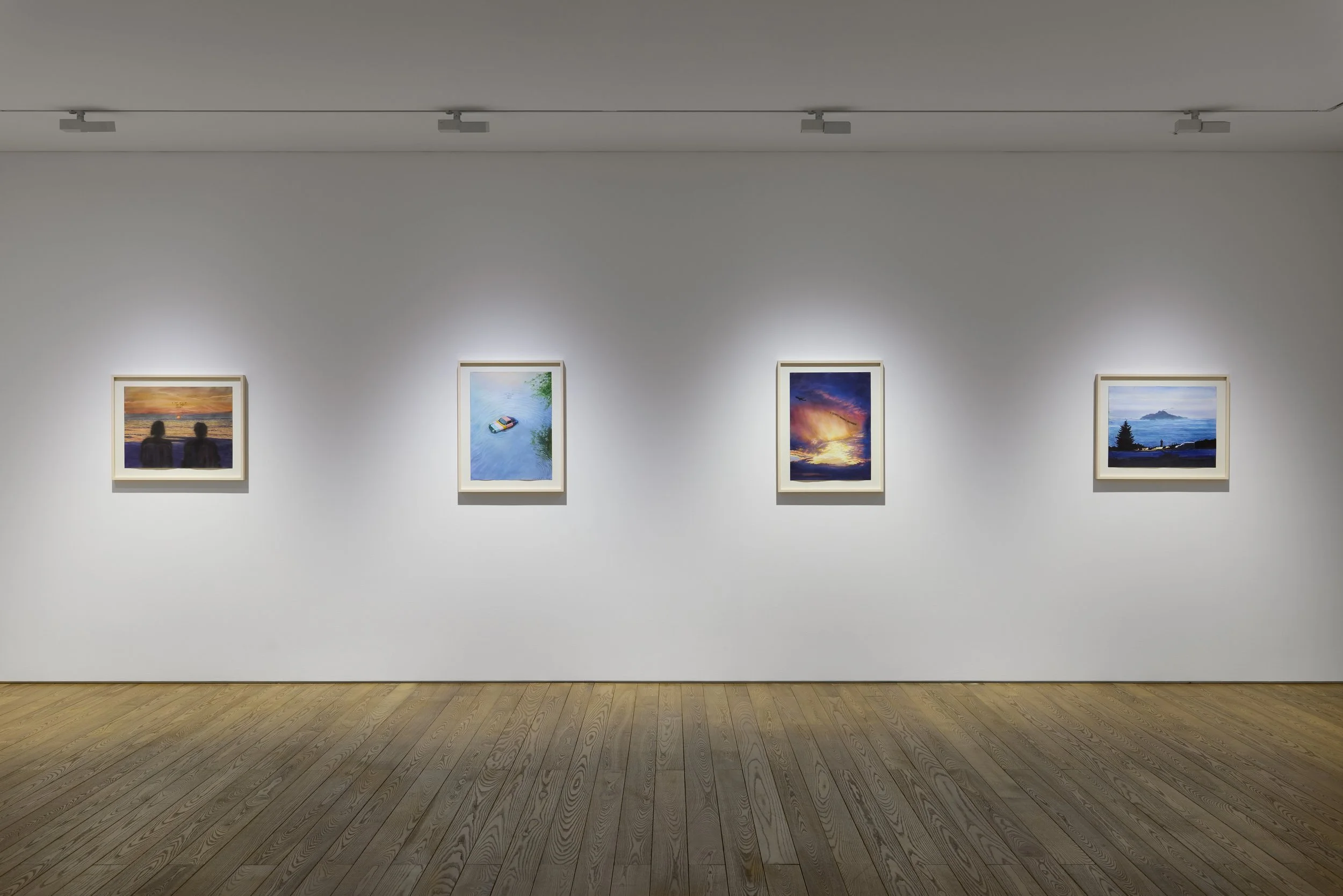
Installation View, Friedrich Kunath: The Nearest Faraway Place September 1 – October 24, 2026, Pace Gallery, Seoul Photo: Sangtae Kim, Courtesy Pace Gallery
Spread across two floors, the exhibition opens with a collection of framed watercolor drawings where feelings become ideas, and ideas become expressions. Each work contains a sense of fleeting urgency, as if the images had bloomed from the paper itself. In works such as It's me I'm worried about (964)(2026), Kunath places a colorful Porsche halfsubmerged in a pond, the surrounding water quiet and still, a subtle depiction of tension between arrival and departure, further emphasized by the frame within which the drawing itself is contained.
On the floor above, Kunath's oil paintings, illuminated by natural light from the terrace windows and the large soffited skylight overhead, come to life, seemingly born from the light of day. Upon entering the gallery, Kunath's vision broadens as the urgency of the drawings coalesces into expansive landscapes. His characters all find a place to play within the epic scenery of The Most Beautiful World In The World. From beginning to end, Kunath's emotional vignettes and landscapes seem to ask: Where is home, other than within yourself?
Friedrich Kunath (b. 1974, Chemnitz, Germany) works across painting, drawing, sculpture, installation, and video to create resonant, evocative, and often melancholy compositions. Recent solo exhibitions of his work include Friedrich Kunath: Coming Home Was as Beautiful as Going Away, KINDL-Centre for Contemporary Art, Berlin (2023); Friedrich Kunath: I Remain Exhausted, Tim Van Laere Gallery, Antwerp, Belgium (2024); Friedrich Kunath: I Need Solitude, But I Also Need You, Nassima Landau, Tel Aviv, Israel (2024); Friedrich Kunath: AT THIS POINT IN MY LIFE (I'LL HAVE THE CALAMARI), G2 Kunsthalle, Leipzig, Germany (2024); Friedrich Kunath: One Day I’ll Follow the Byrds (Tutto Pasta), Galerie Max Hetzler, Berlin (2024); and Friedrich Kunath: Aimless Love, Pace Gallery, New York (2025). Kunath’s work is held in prominent public collections worldwide, including the Carnegie Museum of Art, Pittsburgh, Pennsylvania; Centre Georges Pompidou, Paris; Los Angeles County Museum of Art; Museum of Contemporary Art, Los Angeles; Museum of Contemporary Art, San Diego, California; The Museum of Modern Art, New York; and the Walker Art Center, Minneapolis, Minnesota, among others. He graduated from Braunschweig University of Arts, Germany, in 1998, and currently lives and works in Los Angeles.
Pace is a global art gallery of and for the future, modeled on a set of core values established during its founding in 1960 and designed to serve its artists, estates, and collectors in a way that is focused, responsive, and aligned with its enduring mission.
Working with a roster of around 80 artists, the gallery sets a unique approach for the individual development and trajectory of each artist and estate, the majority of whom it has partnered with for decades. This intergenerational mix of new, established, and legacy artists is centered on shared lineages, pairing contemporary figures with their forebears. Pace’s robust global exhibition program further foregrounds this connection and dialogue between contemporary art and 20th-century masterworks.
Pace’s artist-first ethos prioritizes human relationships above systems and focuses resources strategically, with a responsive and nimble program that extends to public installations, philanthropic projects, performances, and other interdisciplinary initiatives. Rooted in its historic context and decades-long relationships with artists, Pace has played a key role in shaping and building major public and private collections across the US and around the globe. It also advances legacy and scholarship through its imprint, Pace Publishing, which has published more than 1,000 titles, including monographs and special-edition artist’s books.
Today, Pace has a presence in nine cities worldwide, with an approach driven by the character of the local collecting community and resonating with the history of each region. This commitment to place and community is grounded by two galleries in New York—its eight-story headquarters at 540 West 25th Street and an adjacent 8,000-square-foot exhibition space at 510 West 25th Street in Chelsea—and 125 Newbury, an experimental project space in Tribeca. Through an exhibition program spearheaded by Arne Glimcher, 125 Newbury mounts innovative shows by emerging artists as well as curated presentations focusing on revealing new dimensions of historical artists’ practices.
Pace has also been active in California for 60 years and opened its West Coast flagship in Los Angeles in 2022, and has galleries in London, Seoul, Berlin, and Tokyo. It was one of the first international galleries to have a major presence in China, where it has been active since 2008, the year it first opened in Beijing’s vibrant 798 Art District. It now operates offices in Beijing and Hong Kong, as well as Geneva.
A reputation for innovation and collaboration is woven through Pace’s history, noticeable in the very first decision to name the gallery after something other than its founder, and evident in its pioneering of many of the practices that have defined the gallery landscape. This extends from Arne Glimcher, who built the first large-scale, market-defining international gallery, to Marc Glimcher, who has introduced new strategies and innovations that have expanded the purview of gallery initiatives, and to Samanthe Rubell, whose commitment to fostering collaborative partnerships has further strengthened the program. In 2025, Pace initiated and became a partner in Pace Di Donna Schrader Galleries, a boutique model devoted to secondary market sales operating on a global scale, which is charting a new path for the sale and stewardship of historic artworks.
The exhibition opened on September 1 and will closed on October 24, 2026 at the Pace Gallery location Itaewon-ro Seoul