FRANCIS BACON
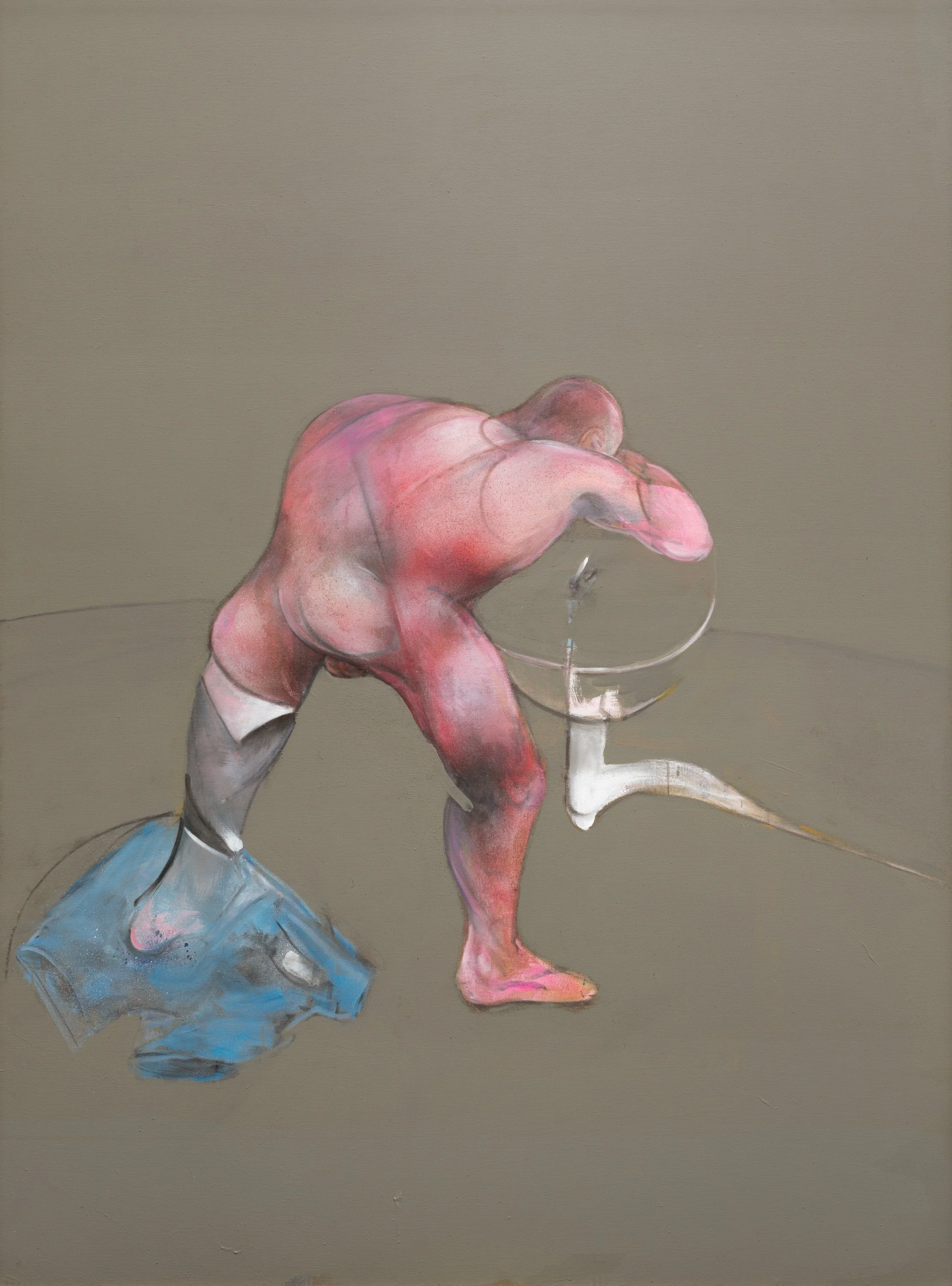
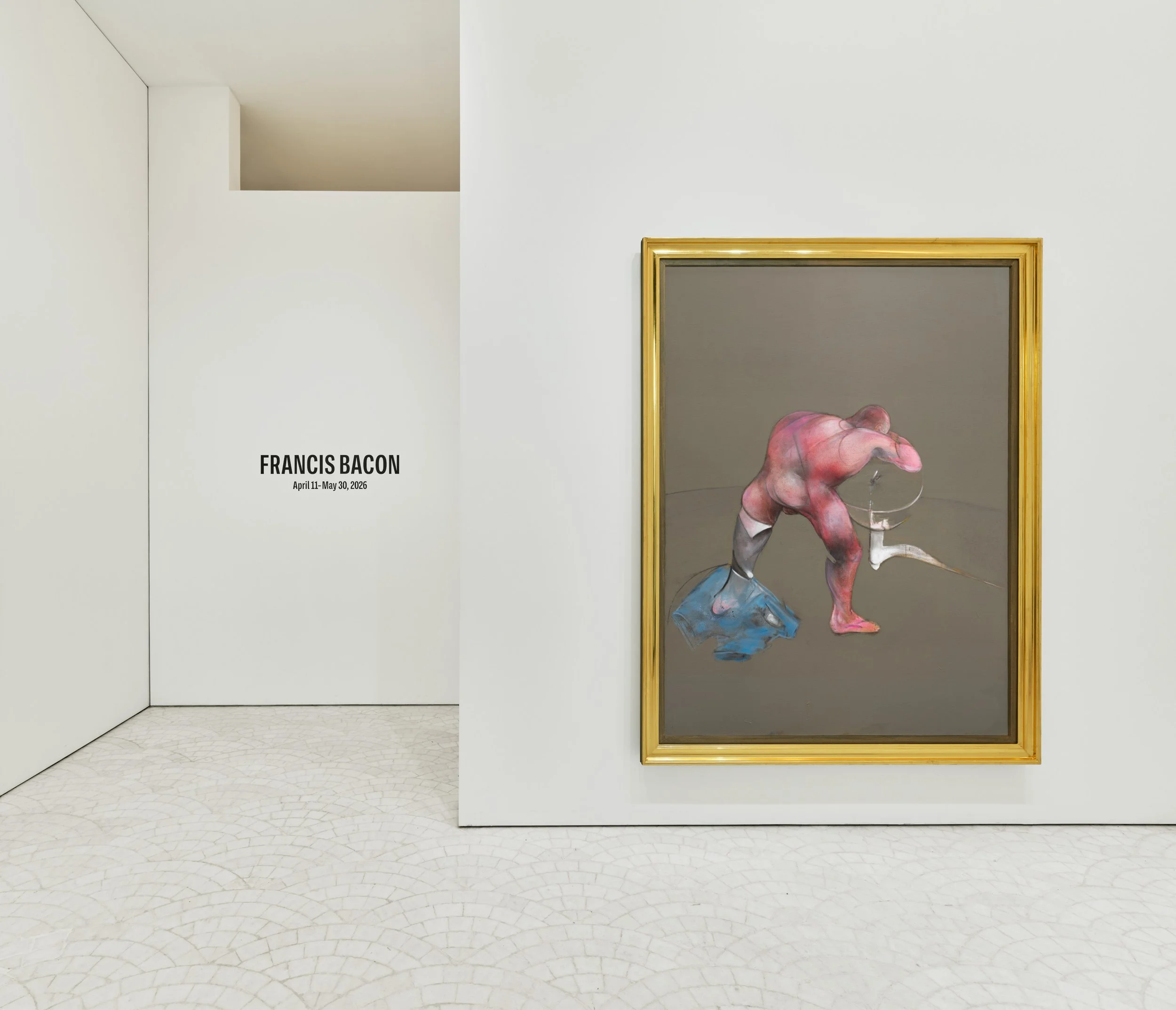
FRANCIS BACON Man at a Washbasin, 1989–90 Oil and aerosol paint on canvas 78 × 58 inches (198 × 147.5 cm) (CR 90-01) © The Estate of Francis Bacon. All rights reserved./DACS, London/ARS, NY 2026 Photo: Annik Wetter Courtesy Gagosian
PARIS,—Gagosian is pleased to announce an exhibition of three major late paintings by Francis Bacon at its rue de Castiglione gallery in Paris, on view from April 11 through May 30.These commanding works crystallize the radical economy and psychological intensity of the artist’s final period while reaffirming his enduring dialogue with the French capital—a city in which he maintained a studio and intellectual foothold between 1975 and 1987, frequenting, among other places, the storied Hôtel La Louisiane.
Widely regarded as one of the most incisive painters of the twentieth century, Bacon forged a singular visual language that collapses the boundaries between modernity and tradition. His figures— simultaneously constrained and exposed within fragile geometric armatures—seem to convulse against saturated chromatic fields, rendering the human body as a site of existential tension rather than stable form.
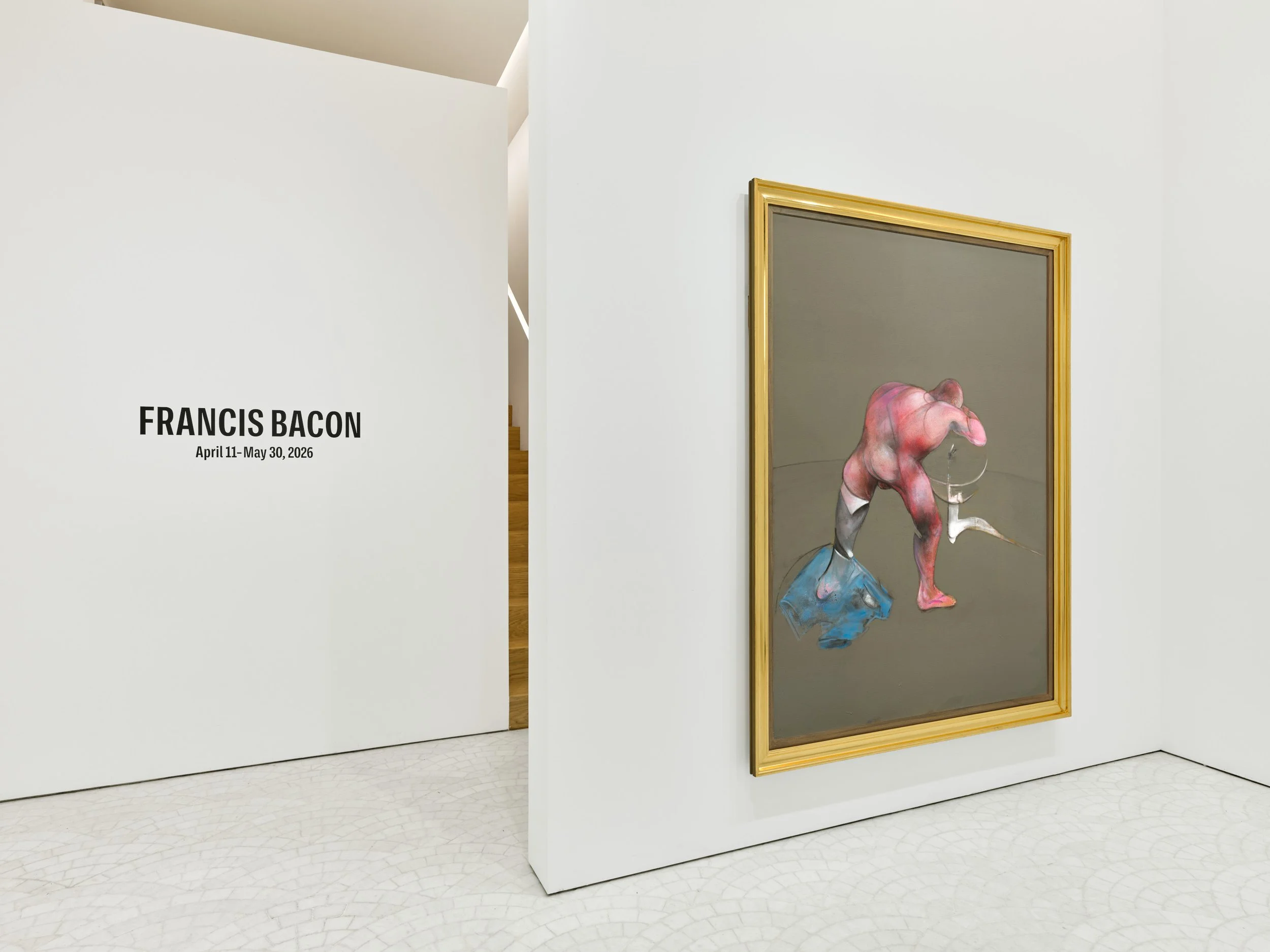
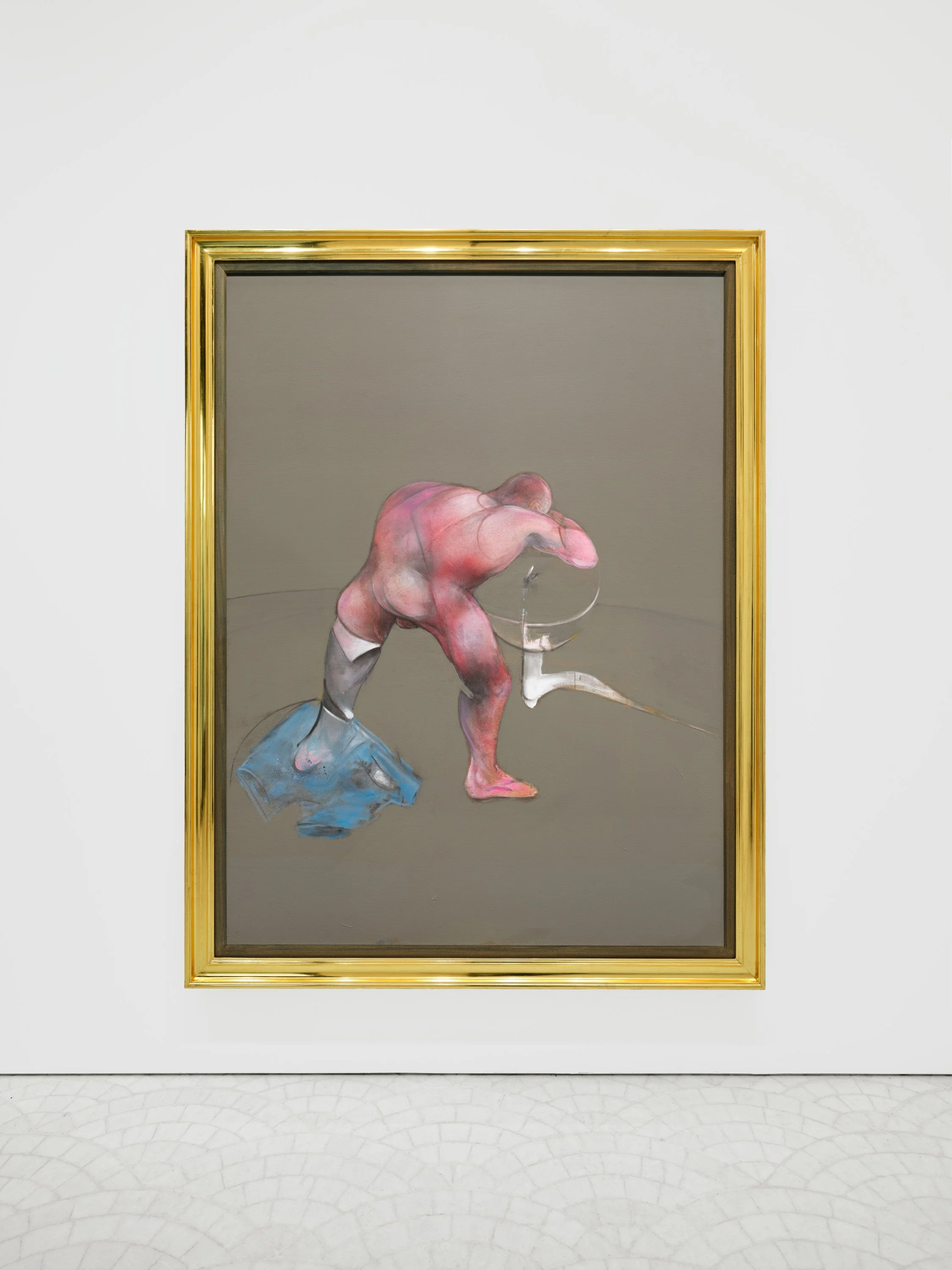
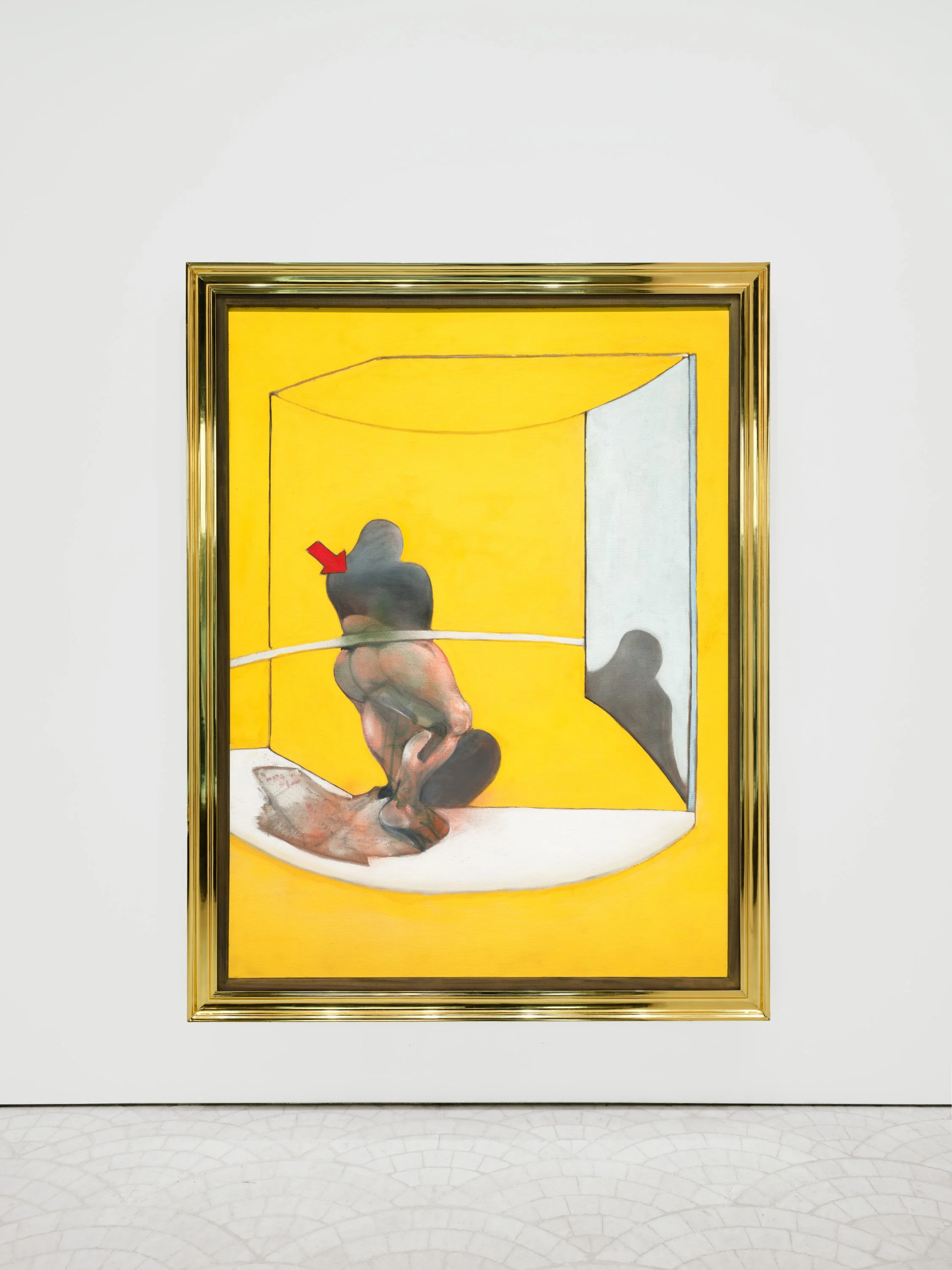
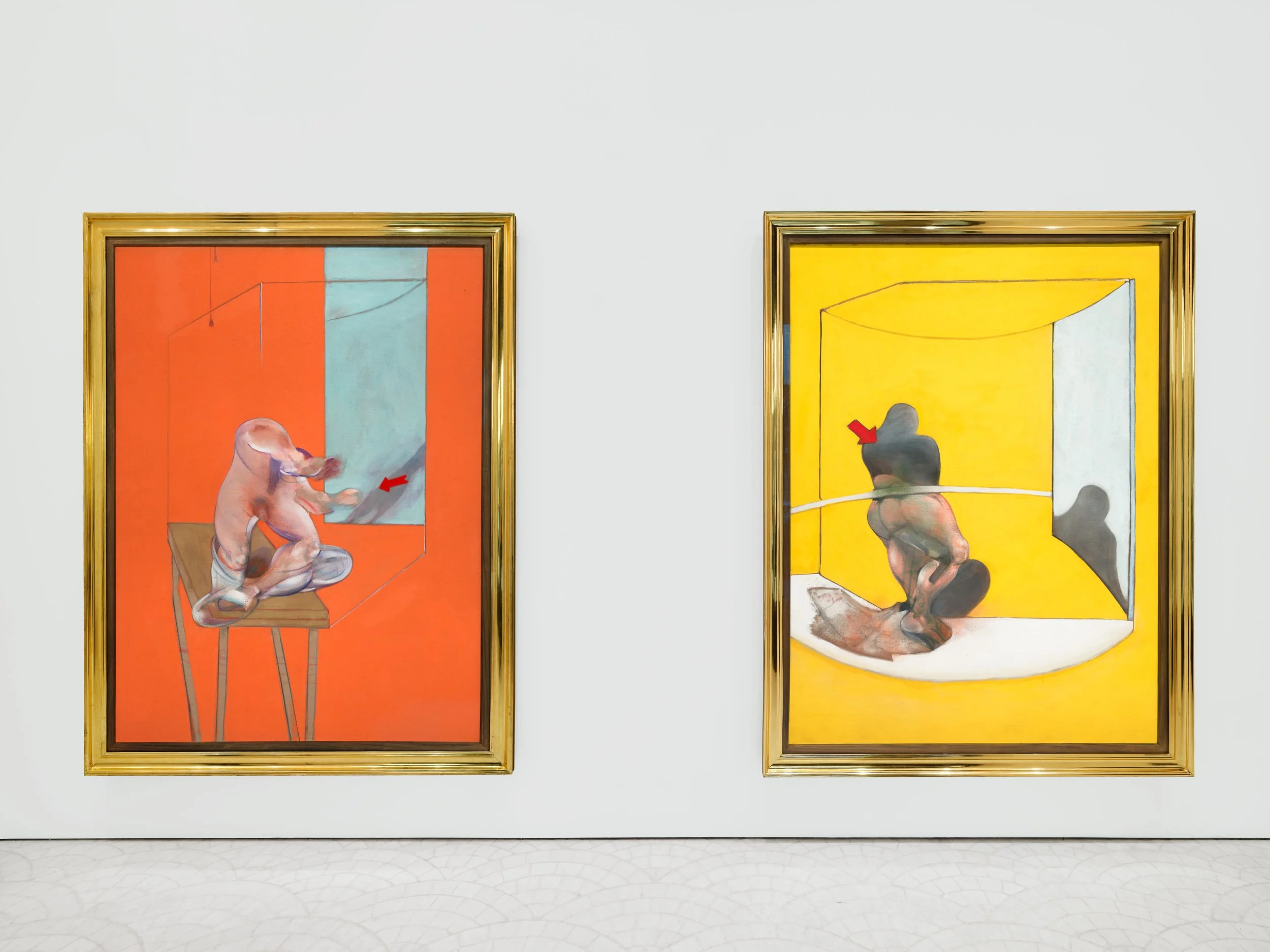
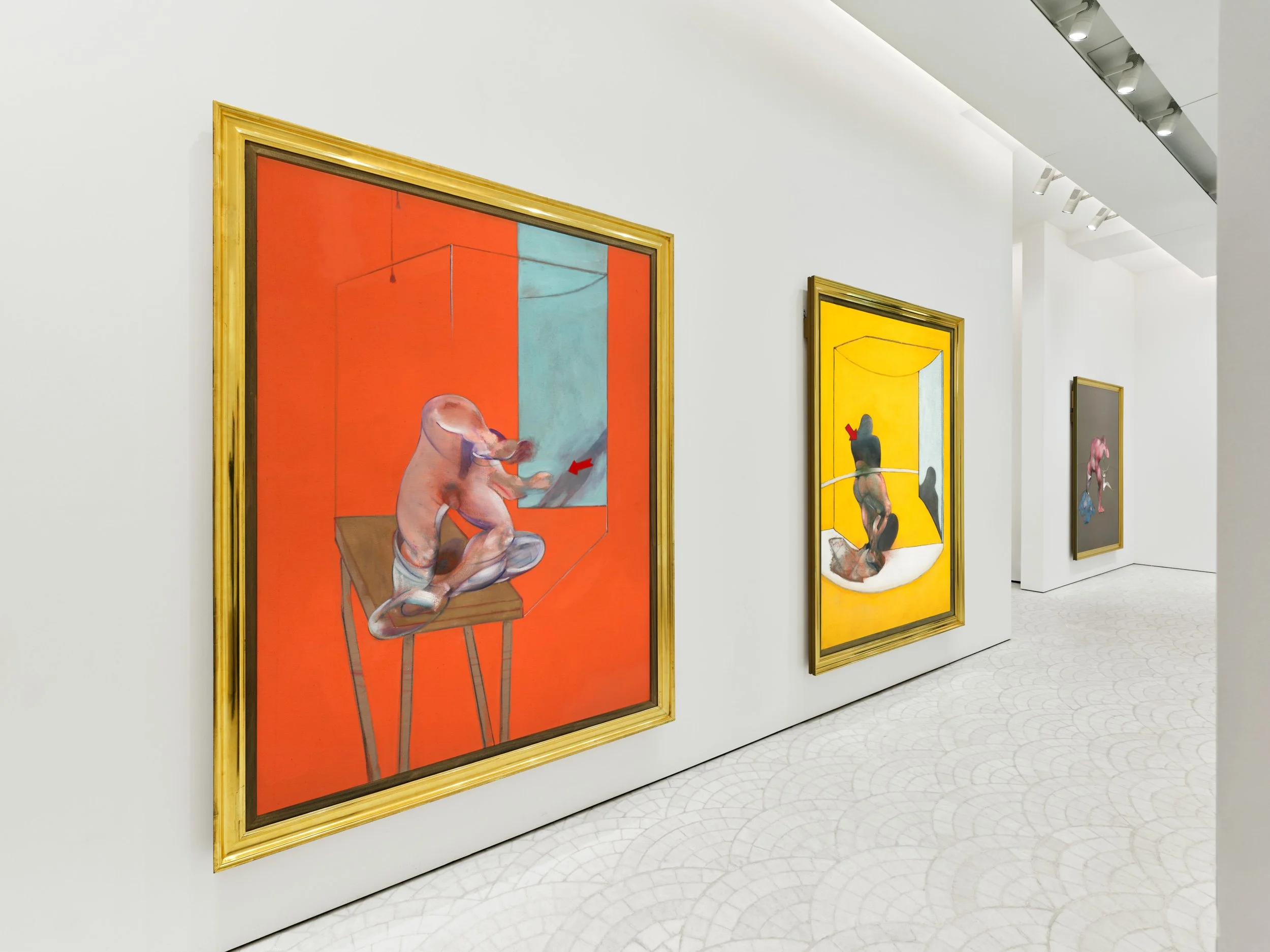
FRANCIS BACON 2026, installation view © The Estate of Francis Bacon. All rights reserved./DACS, London/ARS, NY 2026 Photo: Thomas Lannes Courtesy Gagosian
The three large-scale canvases presented—Study from the Human Body—Figure in Movement (1982), Study from the Human Body (1986), and Man at a Washbasin (1989–90)—are marked by a striking formal austerity. Sparse architectural frameworks and distilled compositions reflect what Bacon himself described as “a kind of shorthand” with which to approach the complexity of lived experience. These works do not merely depict movement, they register its psychological residue, capturing the body under duress through distortion and powerful color. As Gilles Deleuze observed, Bacon’s painting “does not represent violence, it makes visible the violence of the forces exerted on the body.” Across these canvases, the human figure oscillates between flesh and sculpture, presence and dissolution. Bacon’s use of saturated color—at once seductive and destabilizing—reveals a uniquely visceral engagement with the legacies of Color Field and hard-edge abstraction.
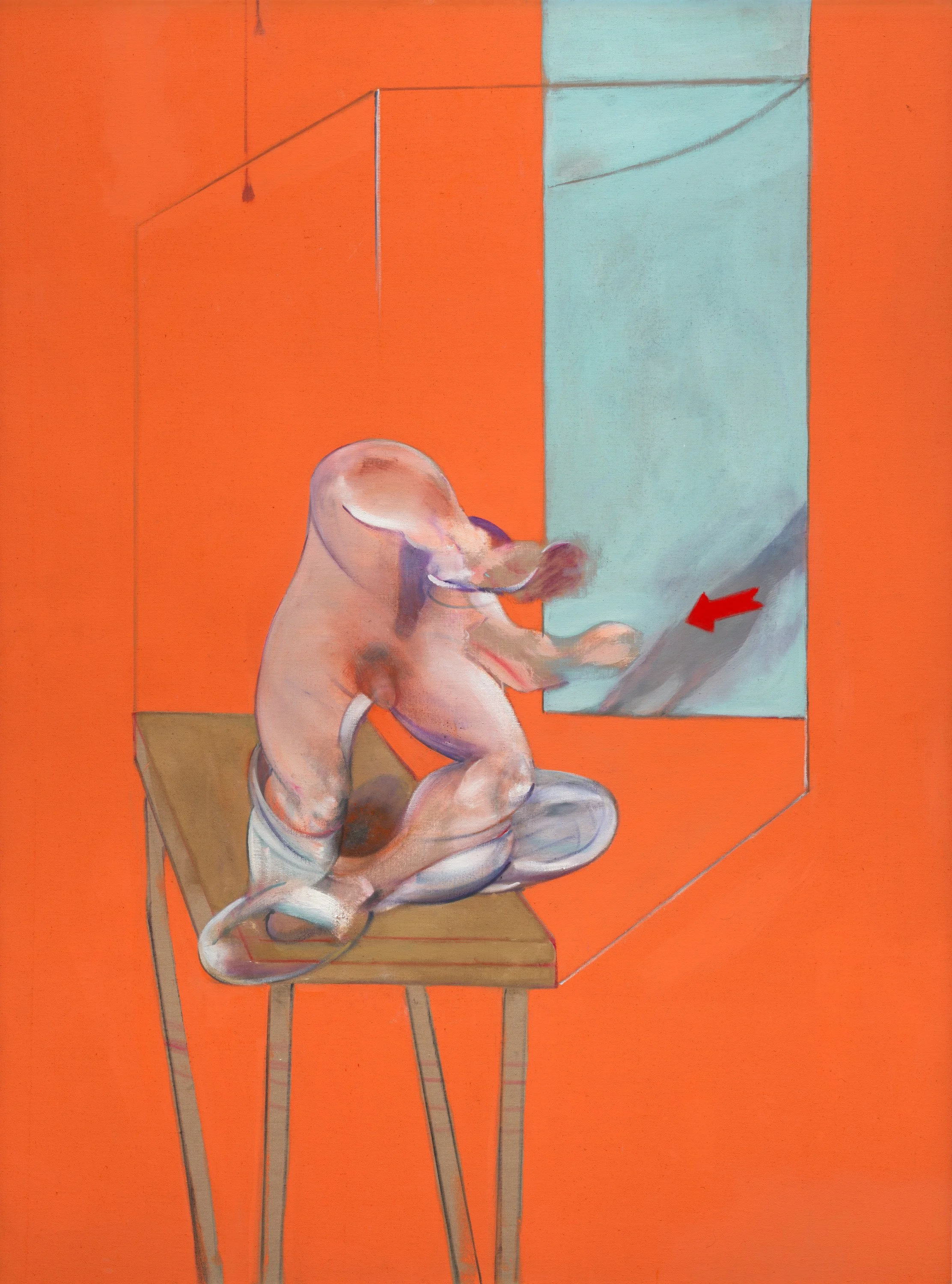
FRANCIS BACON Study from the Human Body—Figure in Movement, 1982 Oil on canvas 78 × 58 inches (198 × 147.5 cm) (CR 82-08) © The Estate of Francis Bacon. All rights reserved./DACS, London/ARS, NY 2026 Photo: Annik Wetter Courtesy Gagosian
Study from the Human Body—Figure in Movement encapsulates two central preoccupations of Bacon’s early 1980s practice: the use of cadmium orange grounds and a fascination with the iconography of cricket. The fleshy, truncated figure—suggestive of a wicketkeeper—is elevated onto a stark, almost theatrical plane, as if exhibited rather than inhabited. Its malformed shadow, reflected in a mirror, constitutes one of Bacon’s final uses of this recurring motif. In Study from the Human Body, a similar pairing of figure and reflection unfolds against a rare field of luminous sunshine yellow, heightening both the immediacy and the estrangement of the image.
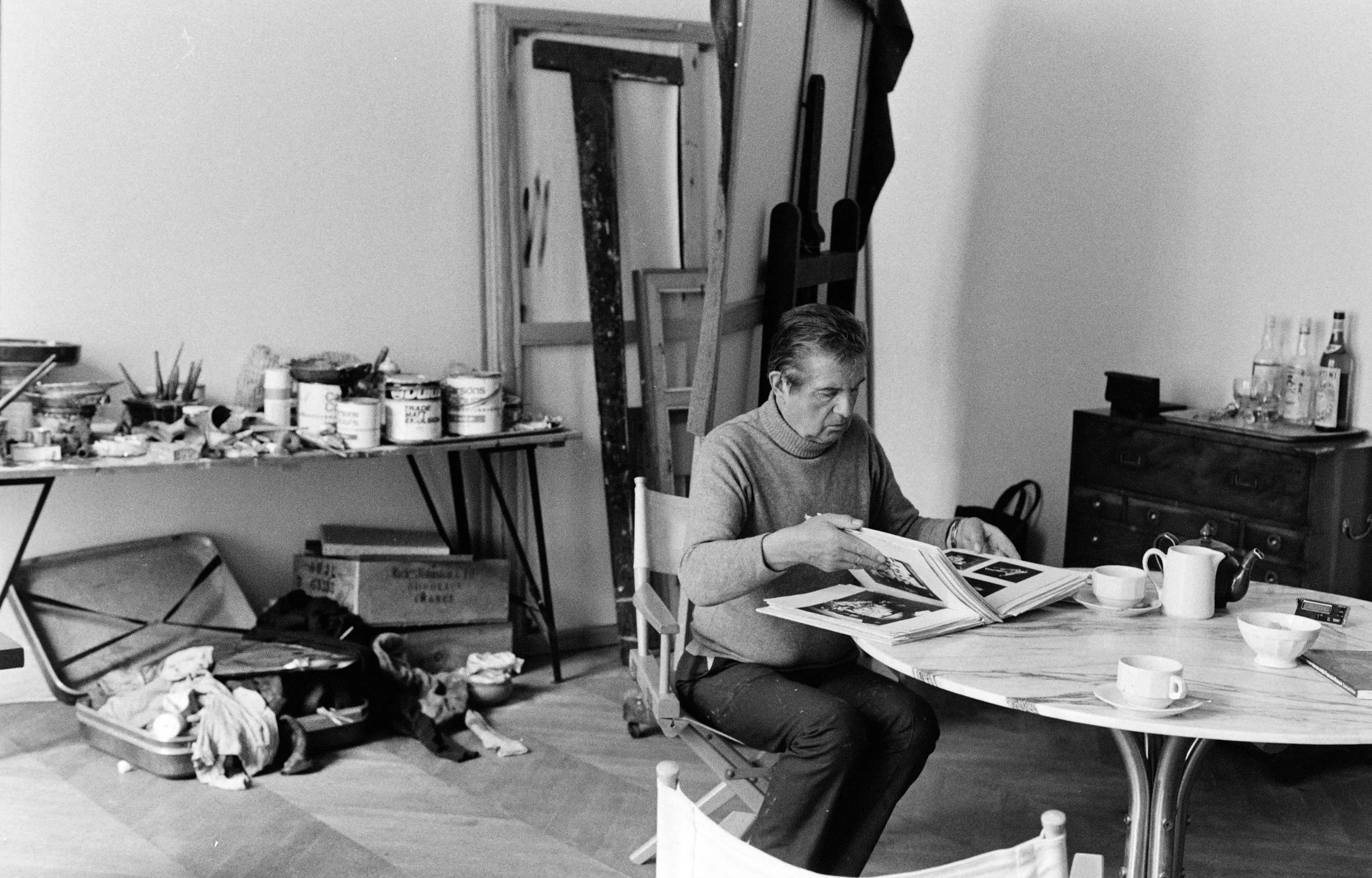
Francis Bacon in his studio on rue de Birague, Paris, 1979. Photo: Edward Quinn
In Man at a Washbasin, Bacon returns to a subject he first explored in 1954, inflecting it with a darker psychological resonance—perhaps alluding to the death of his partner, George Dyer, in a Paris hotel room in 1971. Here, the chromatic exuberance of earlier works gives way to a muted gray tonality, augmenting the scene’s introspective gravity. The hunched figure, legs splayed in a pose derived from Eadweard Muybridge’s 1887 photographic study Man Shadow Boxing recalls Bacon’s admiration for Auguste Rodin, whose treatment of the body as a dynamic, unstable form left a lasting impression on the painter.
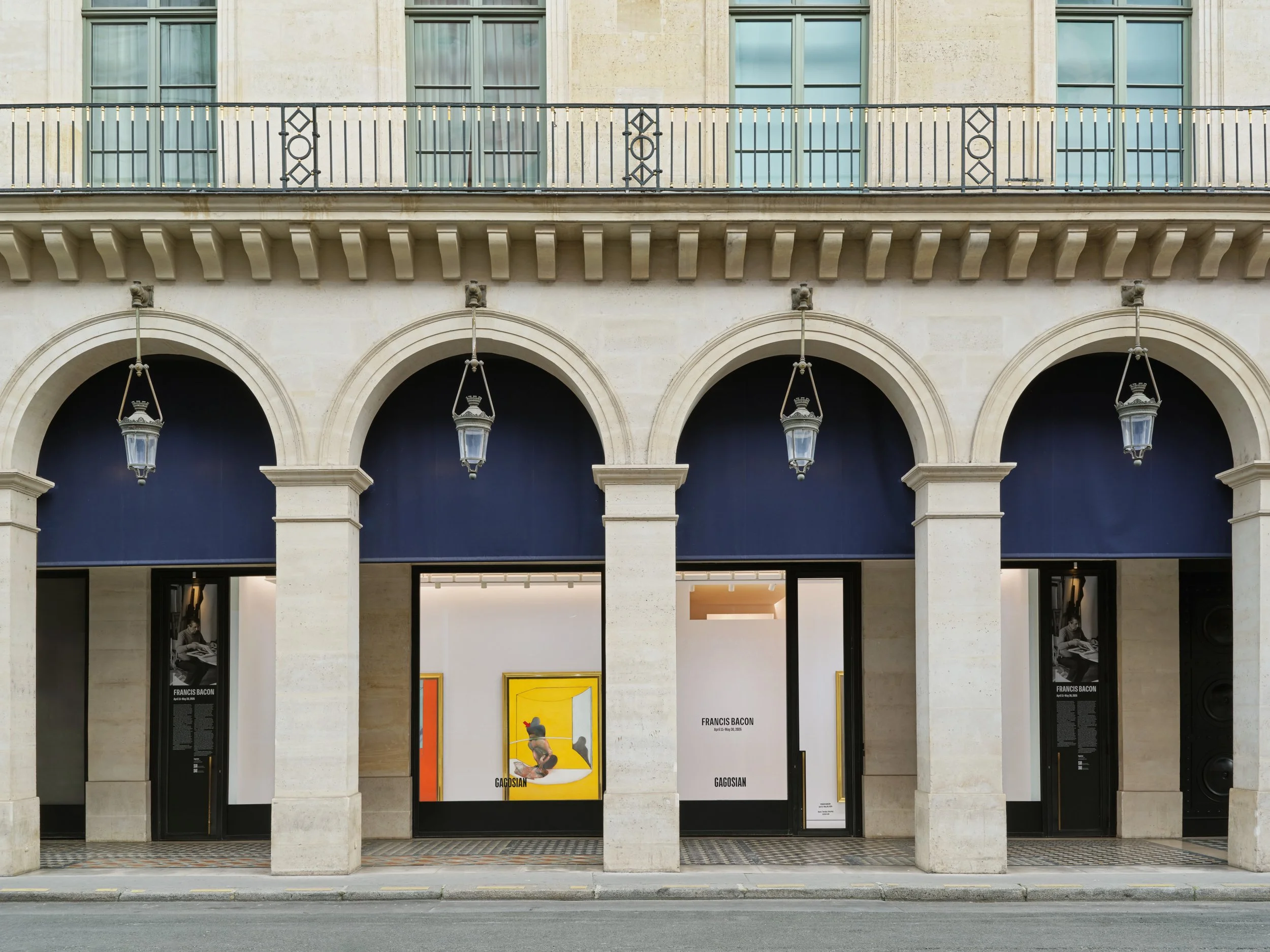
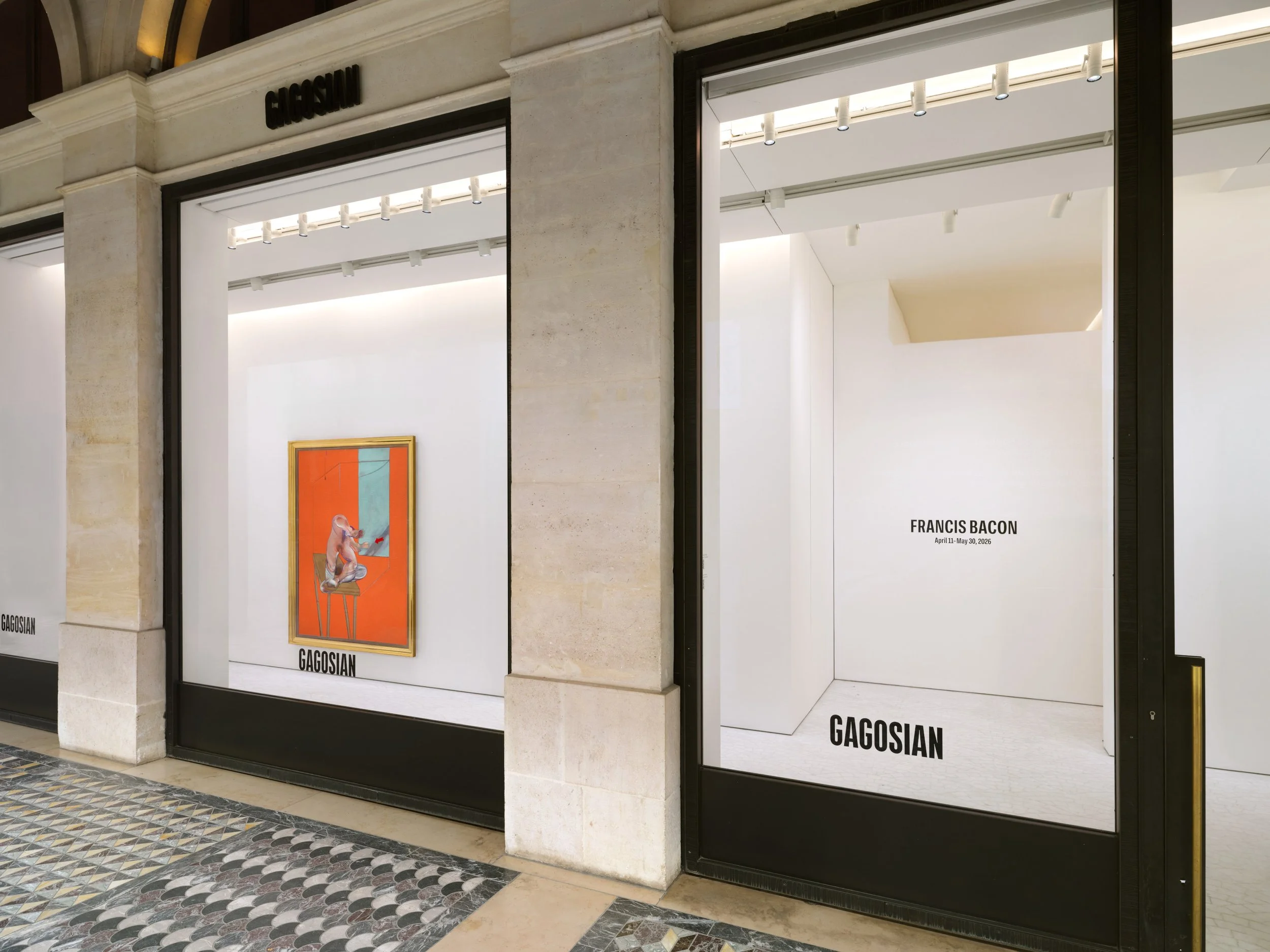
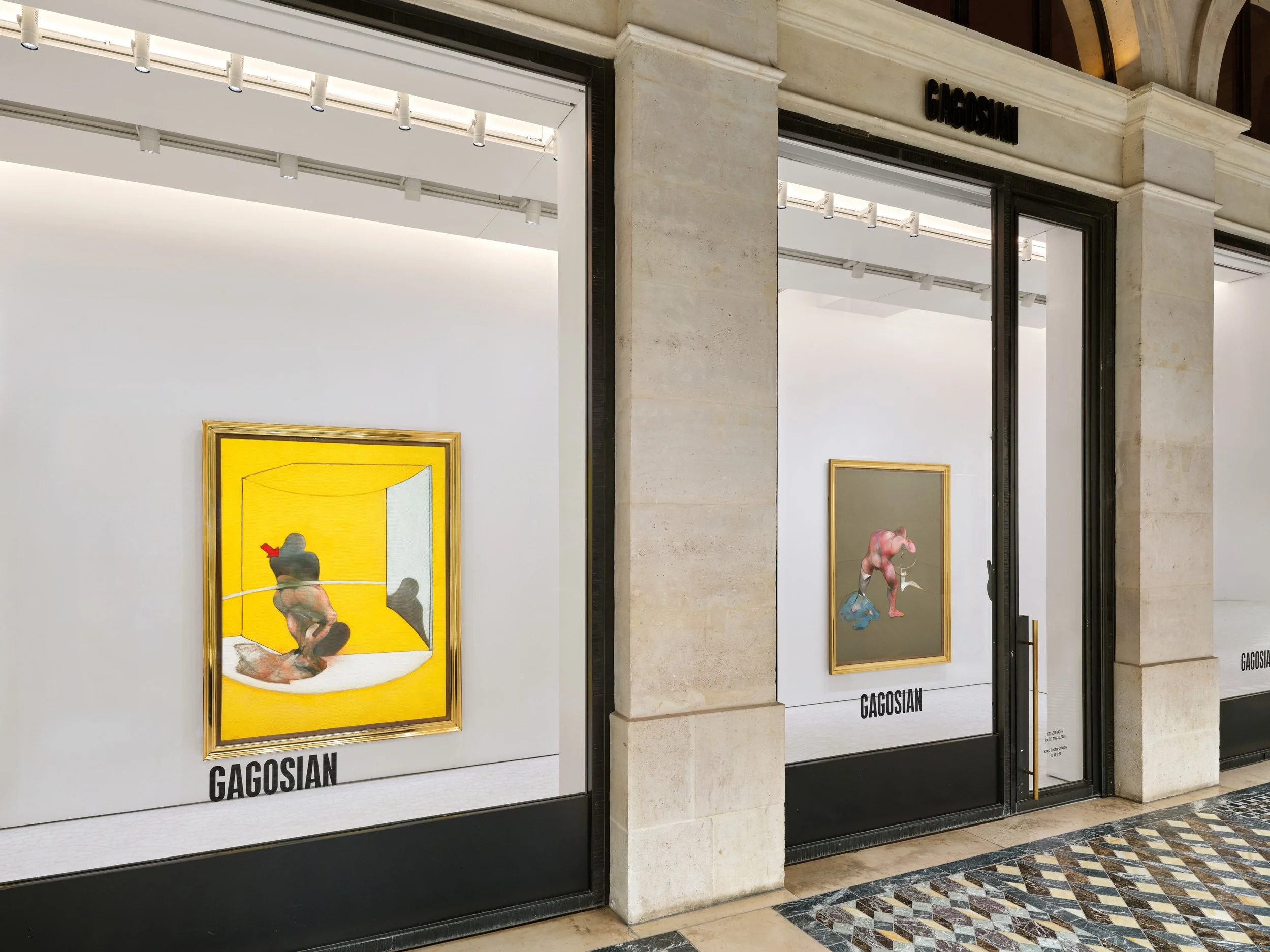
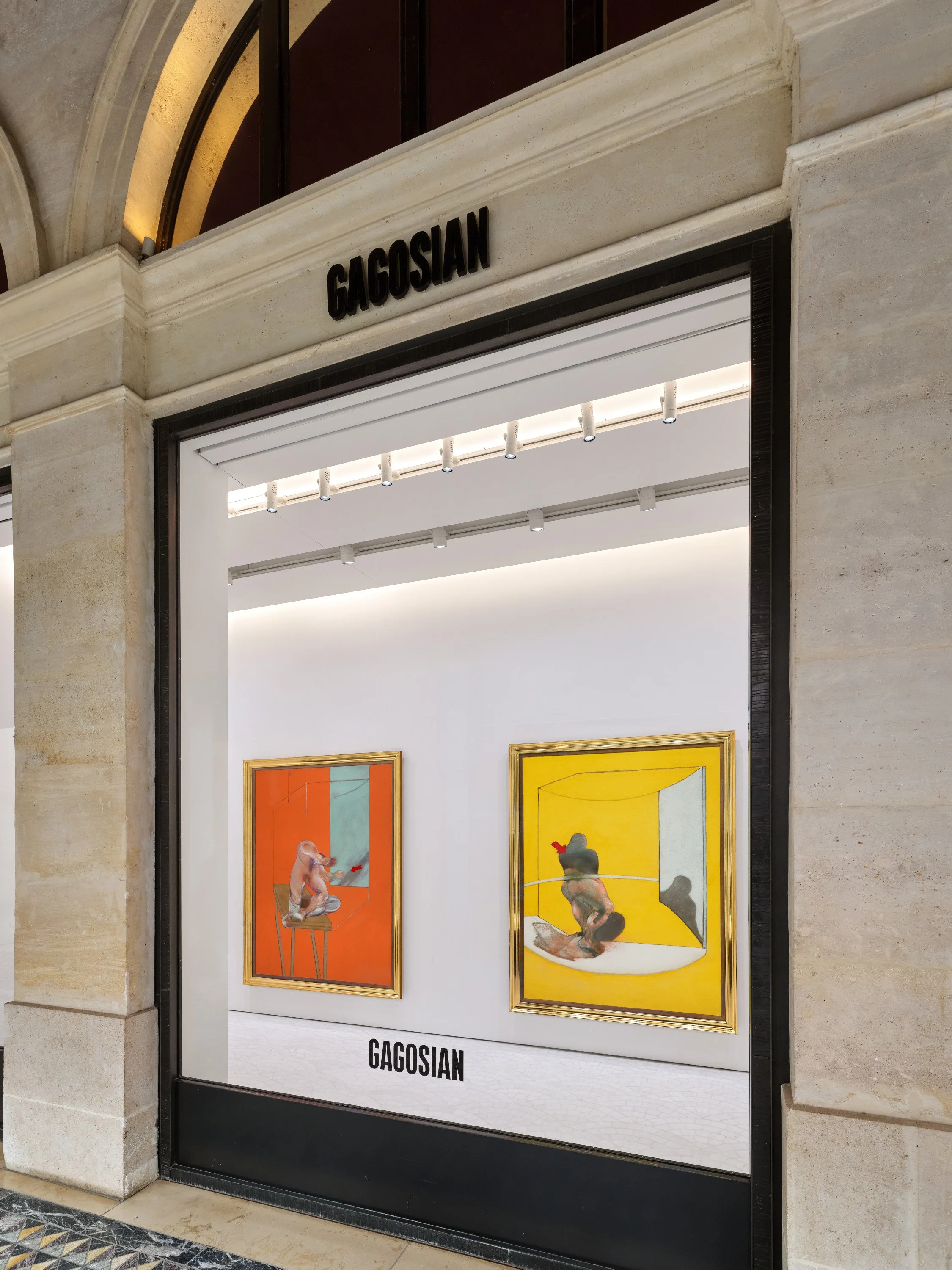
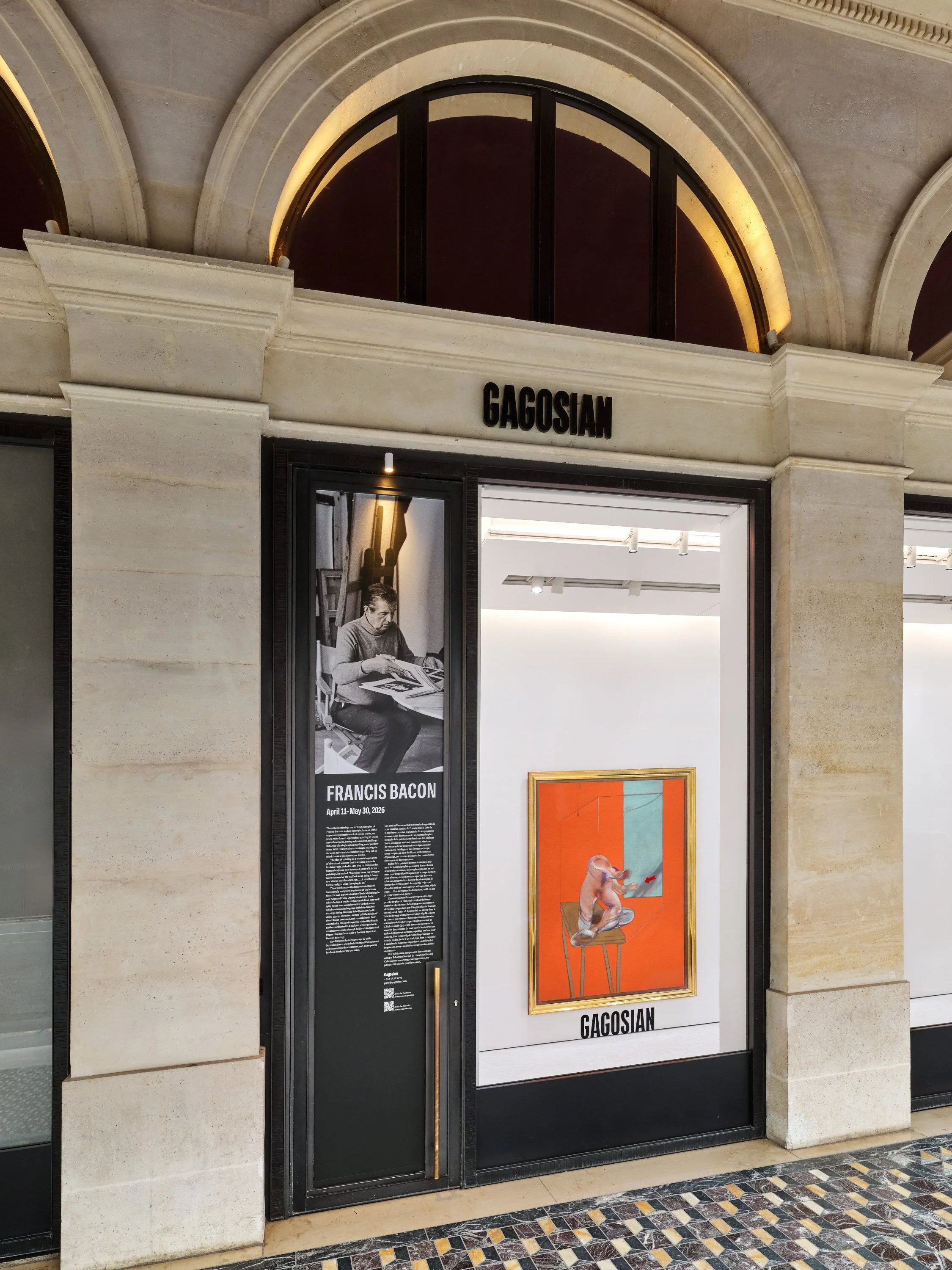
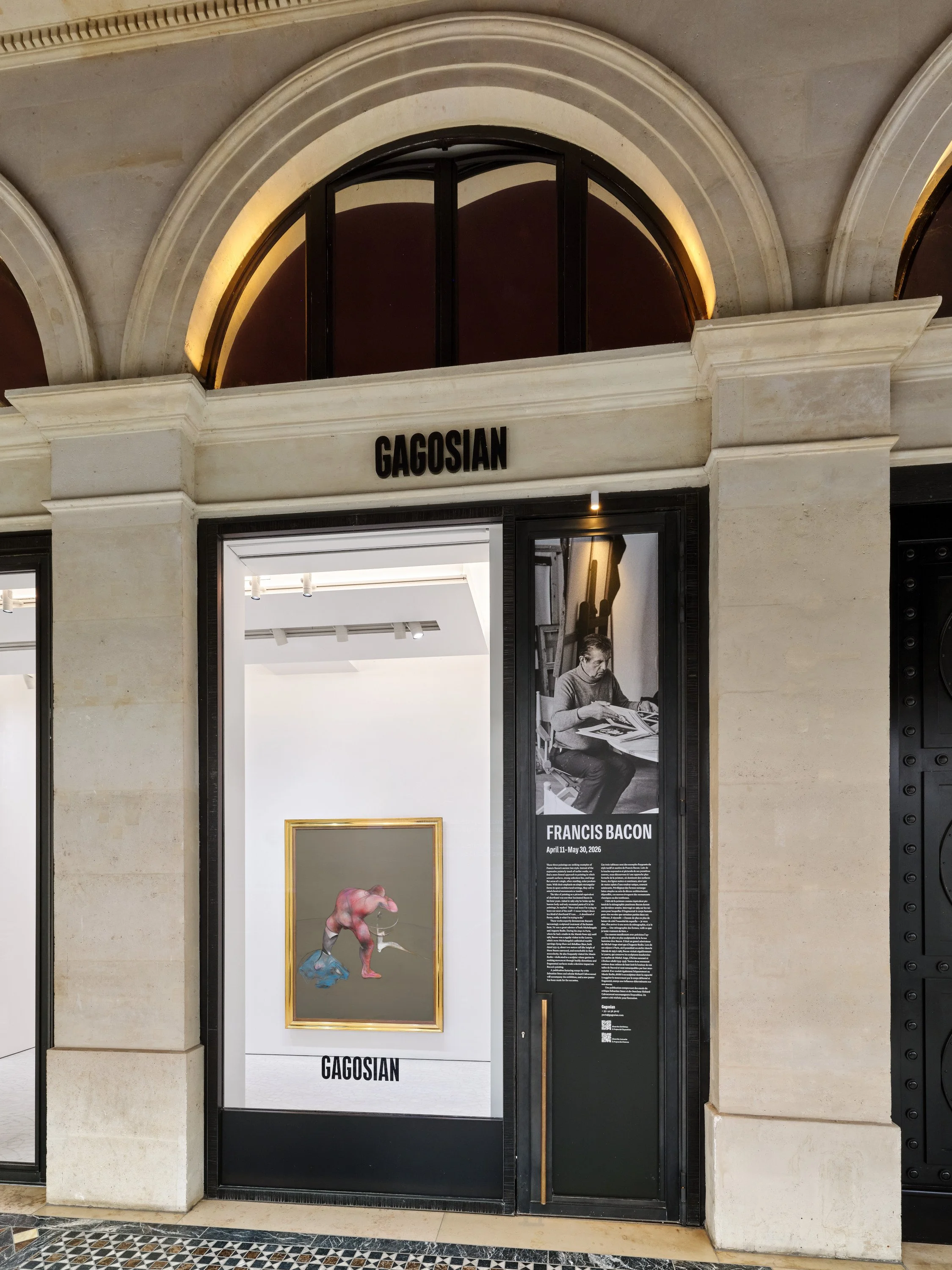
FRANCIS BACON 2026, installation view © The Estate of Francis Bacon. All rights reserved./DACS, London/ARS, NY 2026 Photo: Thomas Lannes Courtesy Gagosian
Considered together, these works affirm art historian Richard Calvocoressi’s assessment that Bacon’s late oeuvre is marked by a resurgence of invention—“as if the artist’s imagination, far from drying up, had been stimulated to create new and ever more intense combinations of color, structure, and form.”
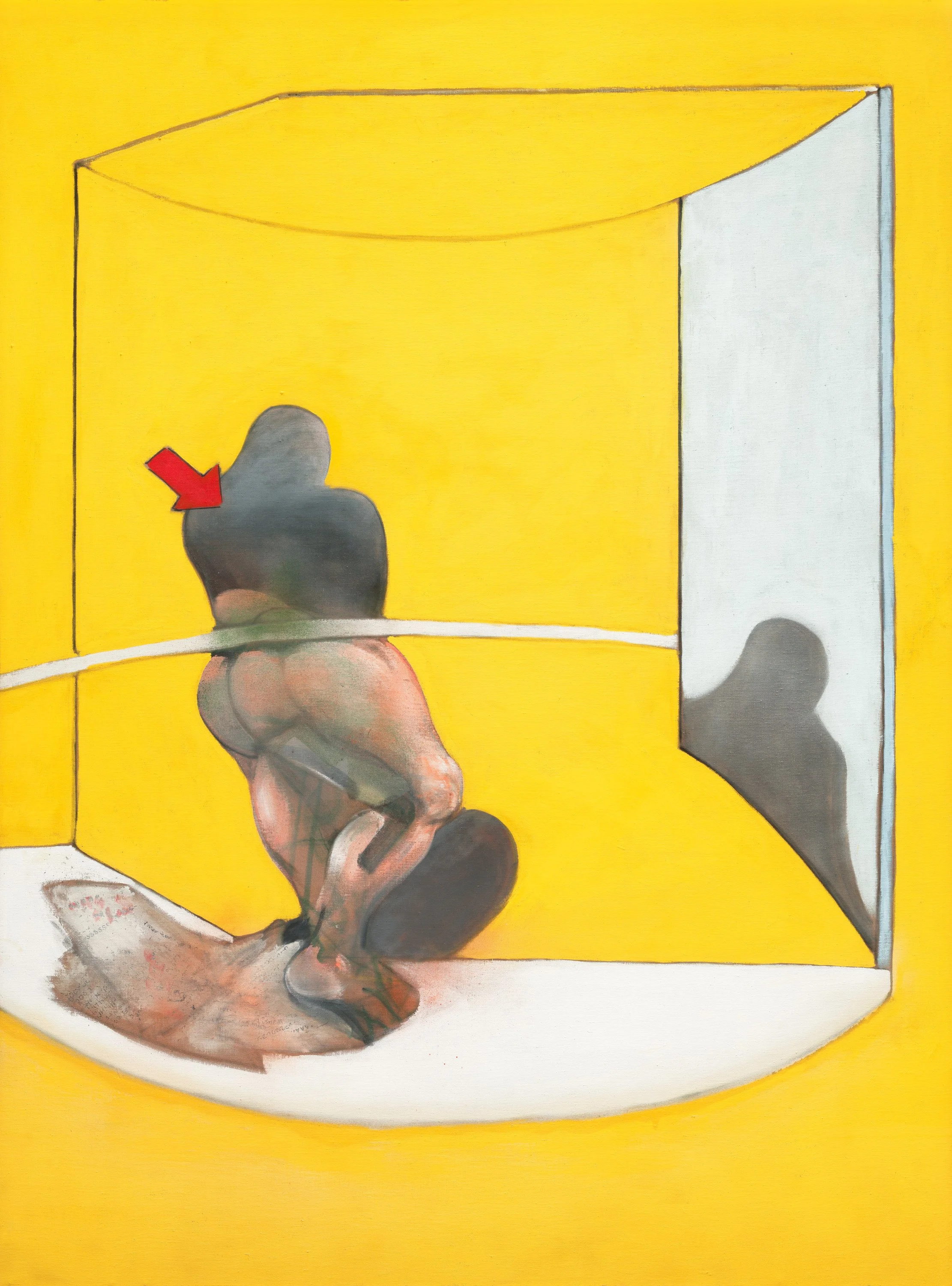
FRANCIS BACON Study from the Human Body, 1986 Oil, pastel, aerosol paint, and dry transfer lettering on canvas 78 × 58 inches (198 × 147.5 cm) (CR 86-03) © The Estate of Francis Bacon. All rights reserved./DACS, London/ARS, NY 2026 Photo: Annik Wetter Courtesy Gagosian
An illustrated catalogue will accompany the exhibition, featuring essays by Calvocoressi and Sebastian Smee as well as artwork texts by Gillian Pistell.
FRANCIS BACON, which opened on April 11th and will close on May 30, 2026, is now being displayed at 9 rue de Castiglione, Paris. For Francis Bacon’s biographical information and exhibition history, please visit here. Additionally information about the artists represented by Gagosian and other exhibitions at the gallery, please visit the gallery’s site here. The gallery can also be found on Pinterest, X,YouTube,Facebook, Instagram, and Artsy.