Alfred Jensen: Diagrammatic Mysteries
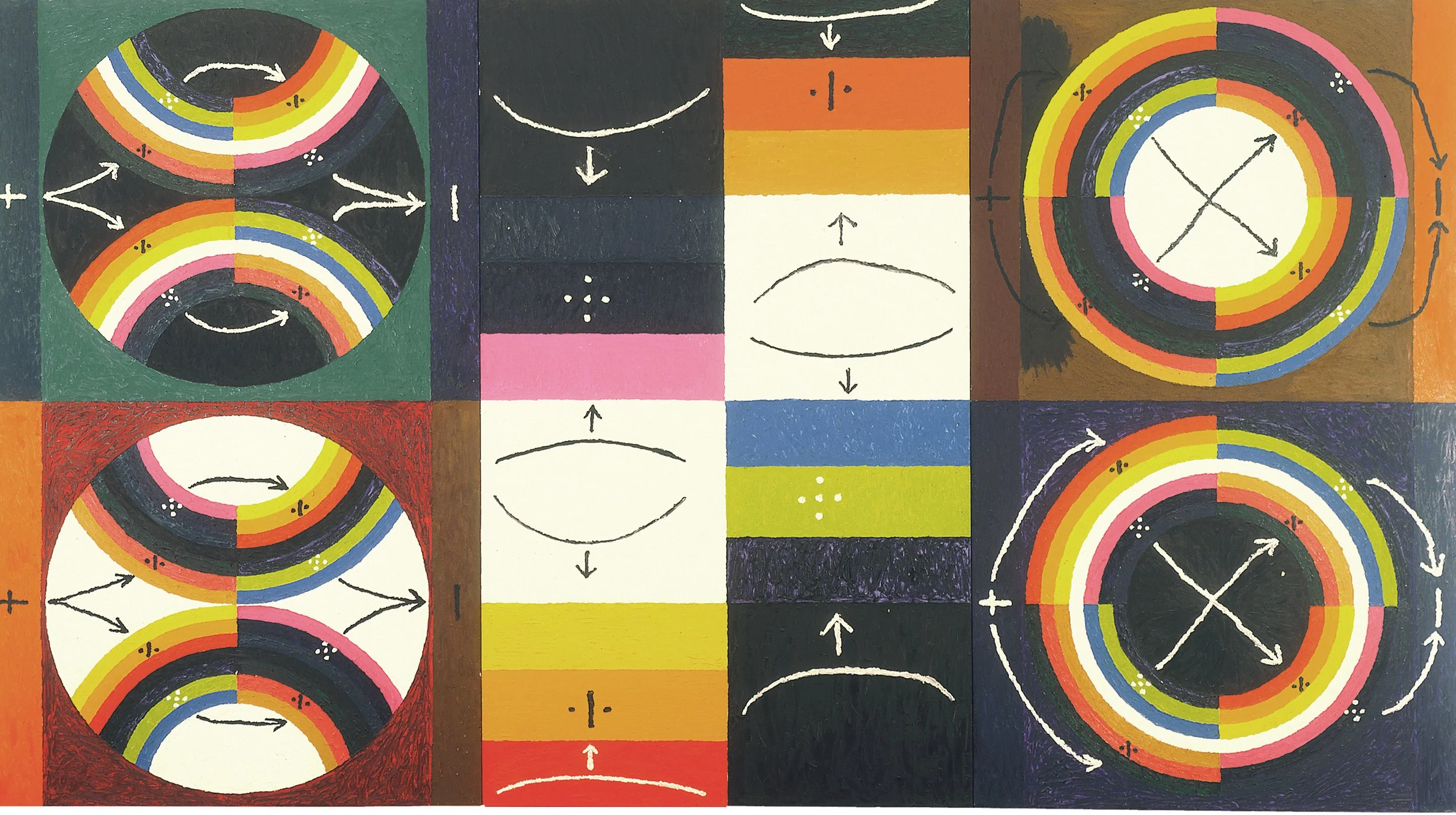
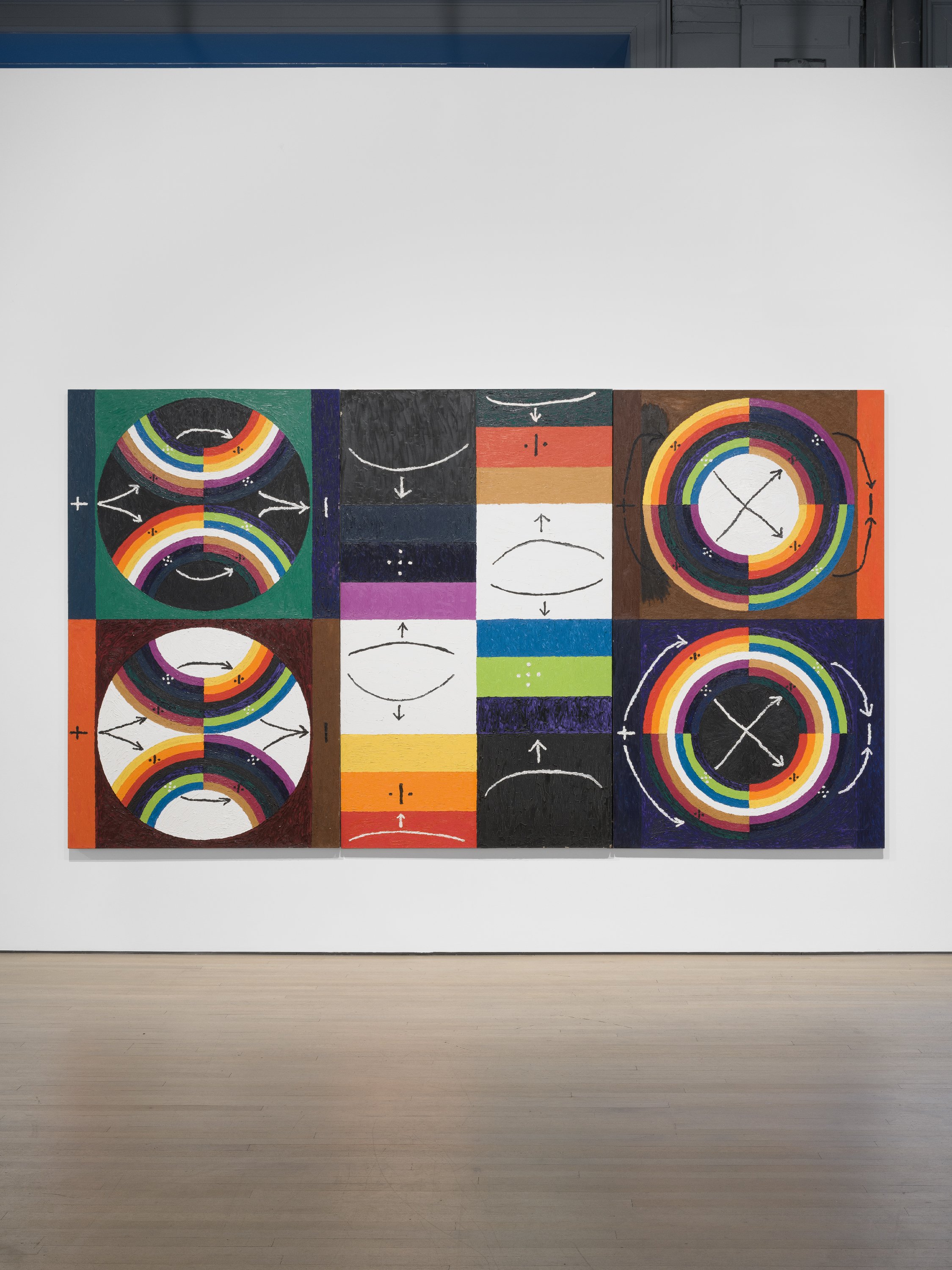
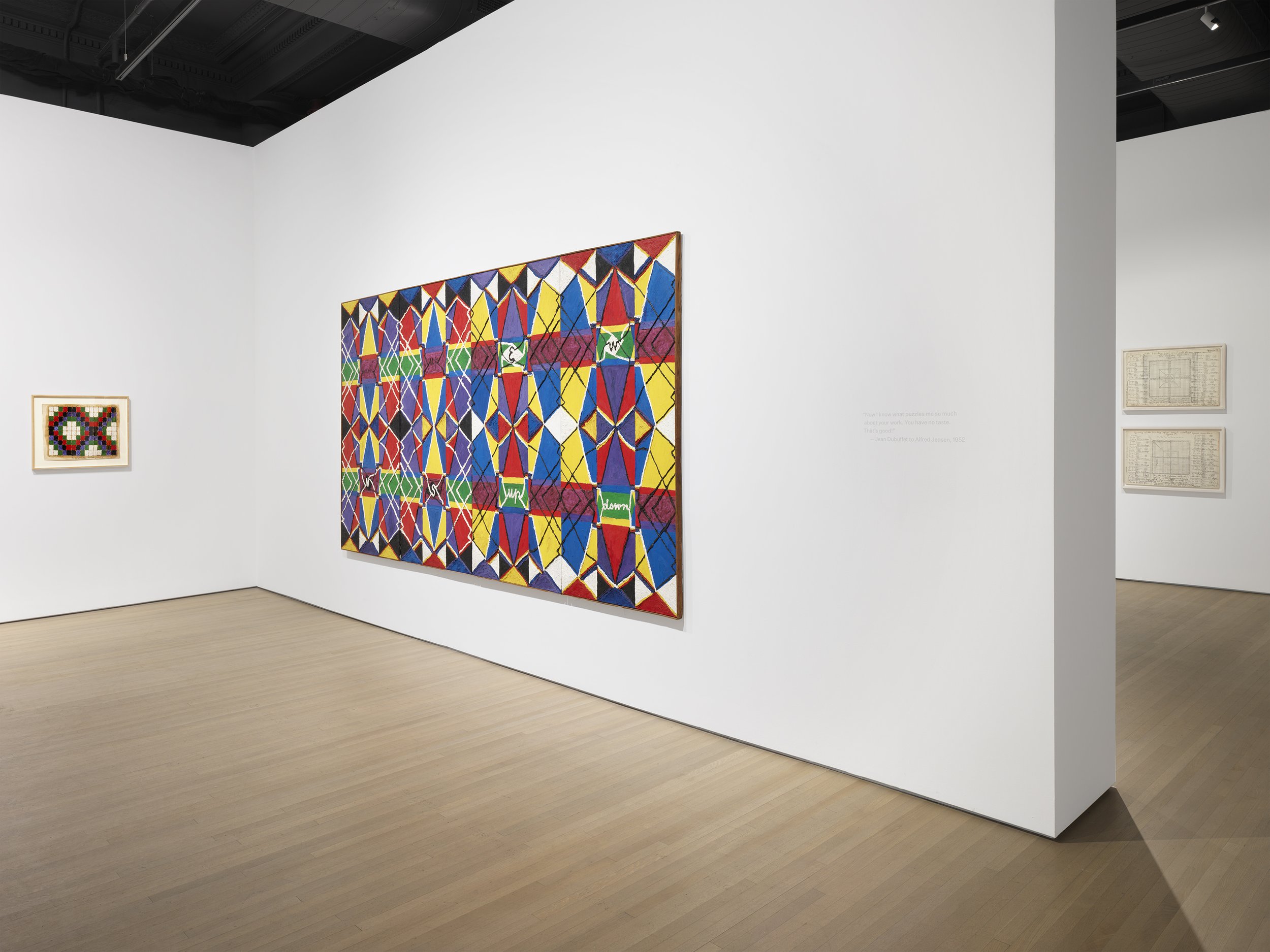
Alfred Jensen Physical Optics, 1975 PAINTING oil on canvas 7' 2" x 12' 9" (218.4 cm x 388.6cm), overall installed 7' 2" x 4'3" (218.4 cm x 129.5 cm), 3 panels, each © Estate of AlfredJensen/ArtistsRightsSociety (ARS), NewYork
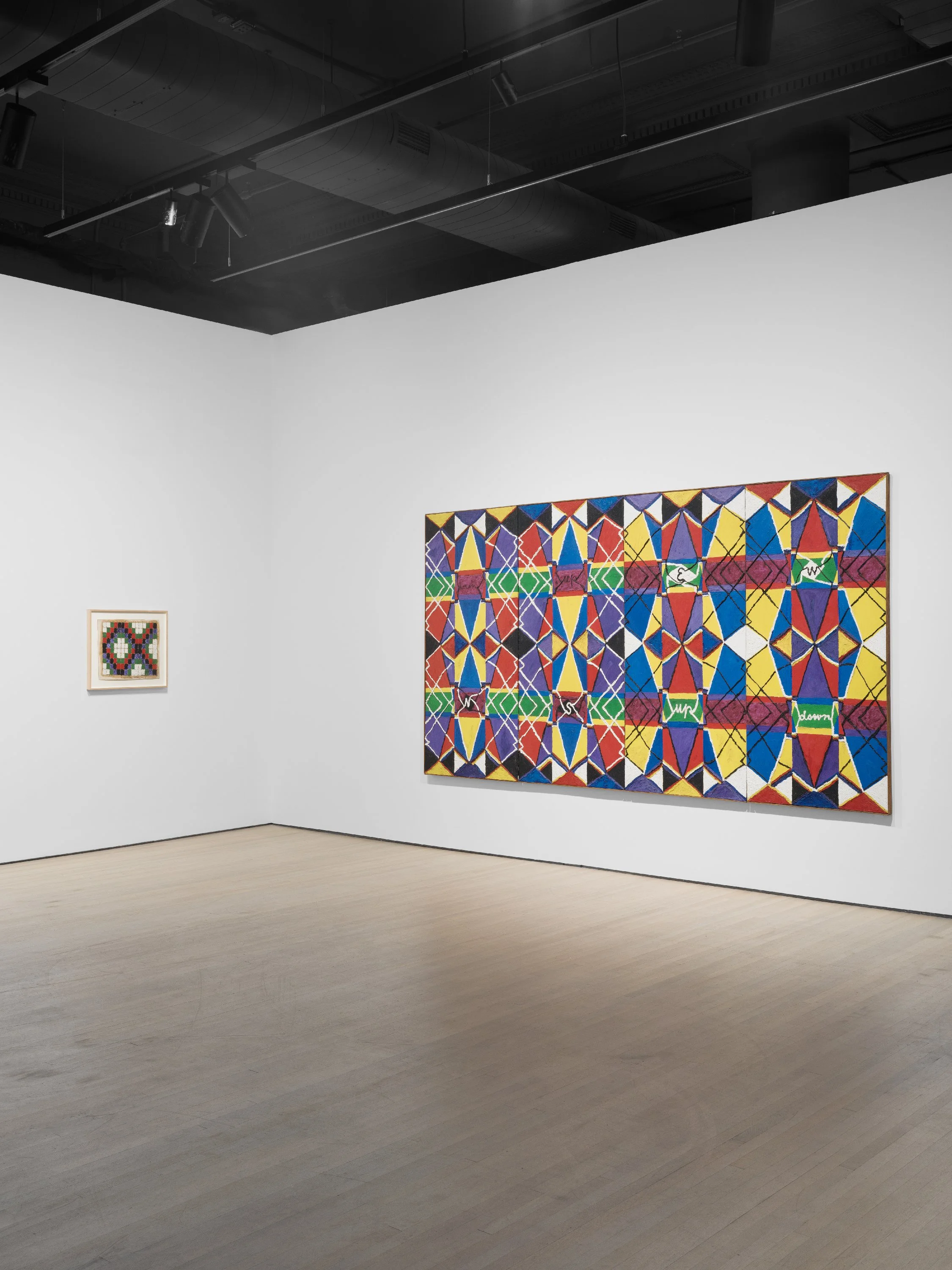
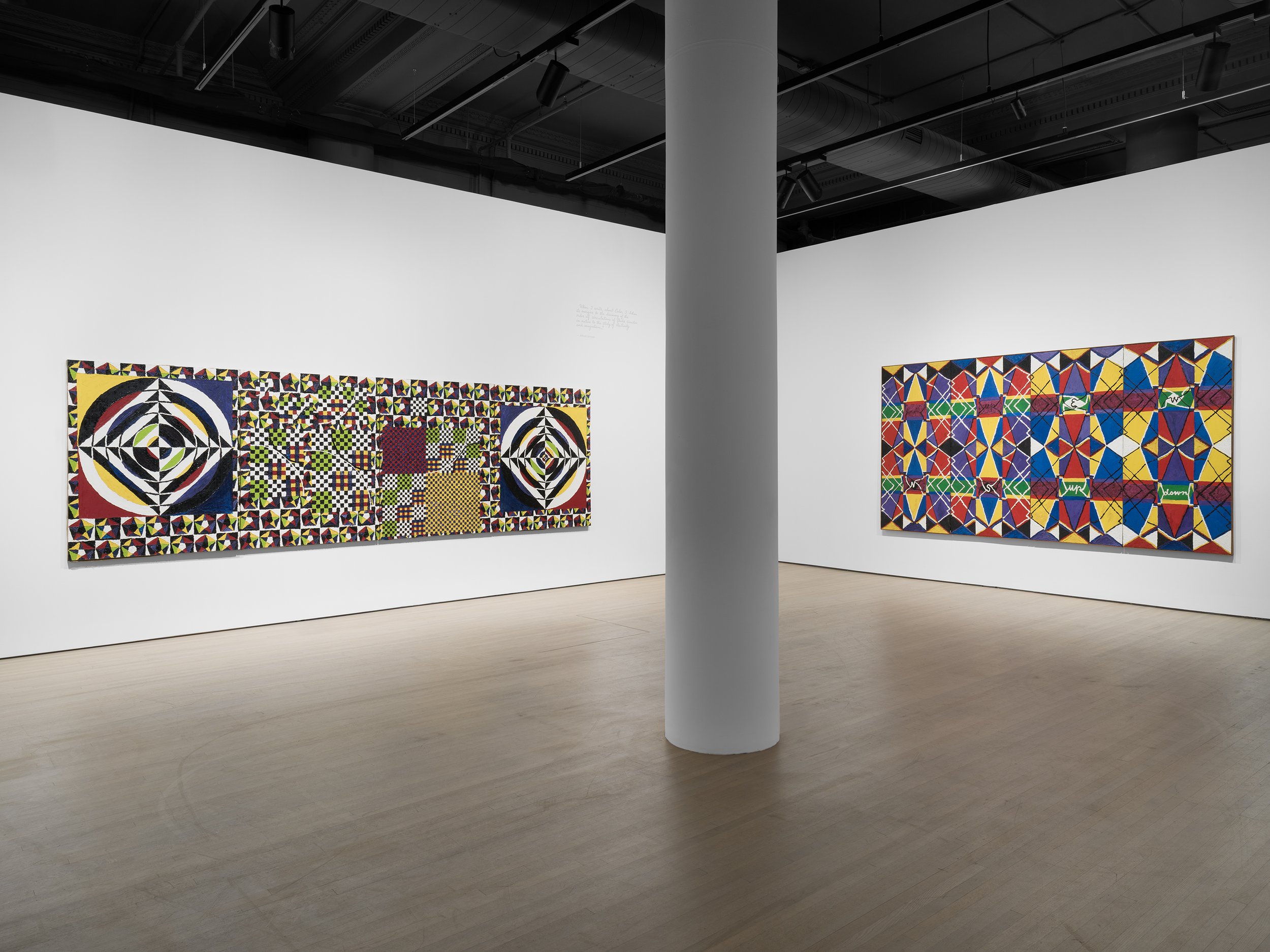
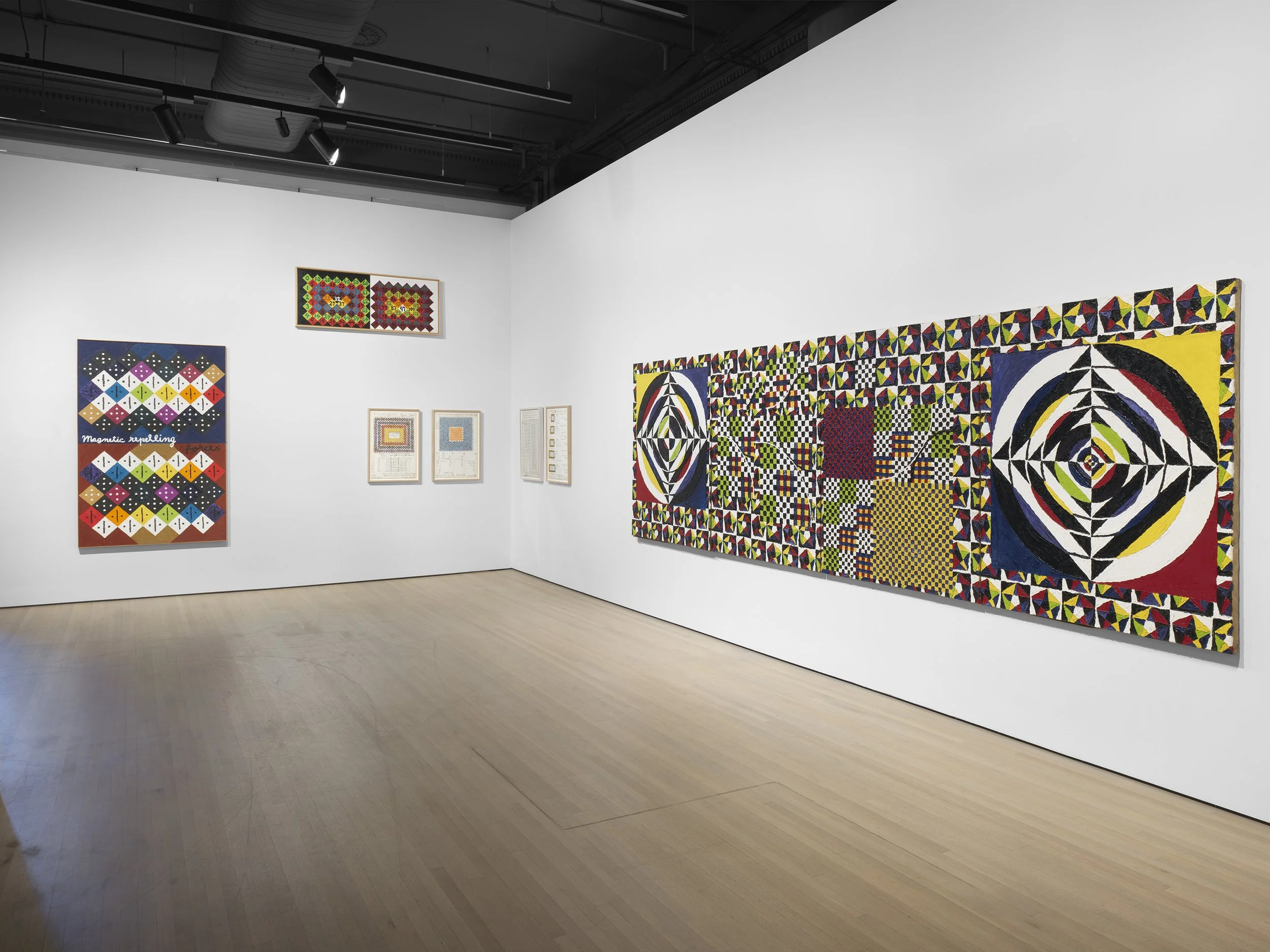
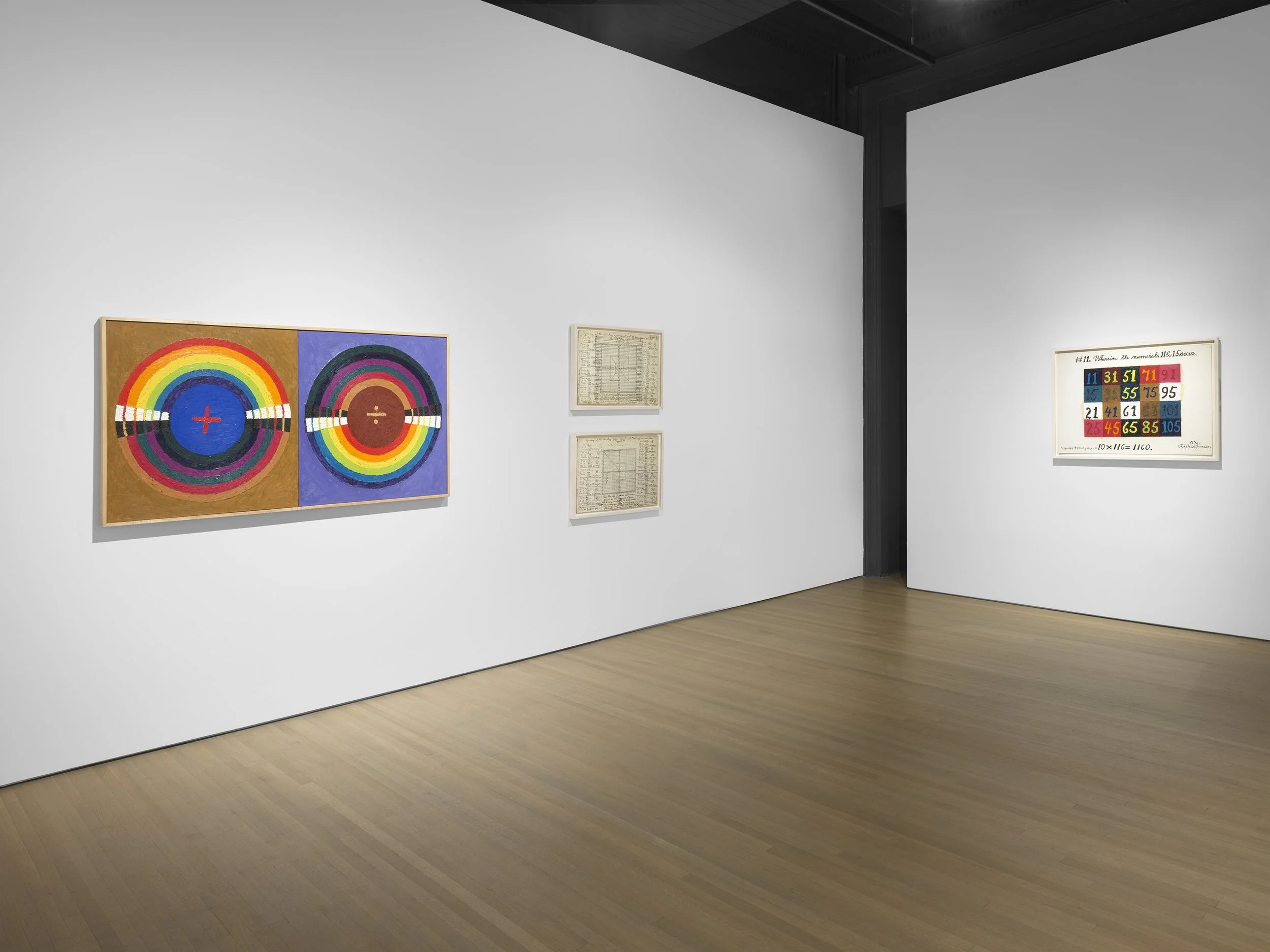
New York – 125 Newbury presents Alfred Jensen: Diagrammatic Mysteries, an exhibition of paintings, studies, and works on paper by the influential Expressionist painter Alfred Jensen, which opened on January 16 and will conclude on February 28. Selected from the collection of the Estate of Alfred Jensen, many of the works on view will be publicly exhibited for the first time. Born in 1903, the same year as his close friend Mark Rothko, Jensen is recognized for his enigmatic universe of grids, diagrams, and fantastic calculations rendered in brilliant, prismatic color. Before settling in New York in the early 1950s, Jensen spent much of his young adult life moving from place to place. He lived in Guatemala until his mother’s death when he was seven years old and moved to Denmark to complete his education. Following many years traveling as an itinerant worker of odd jobs on ships and farms, he found his calling studying art in Munich under Hans Hofmann and later at the
Académie Scandinave in Paris. These experiences informed his lifelong interest in the philosophies, systems, and aesthetics of cultures around the world, which became basic to his art.
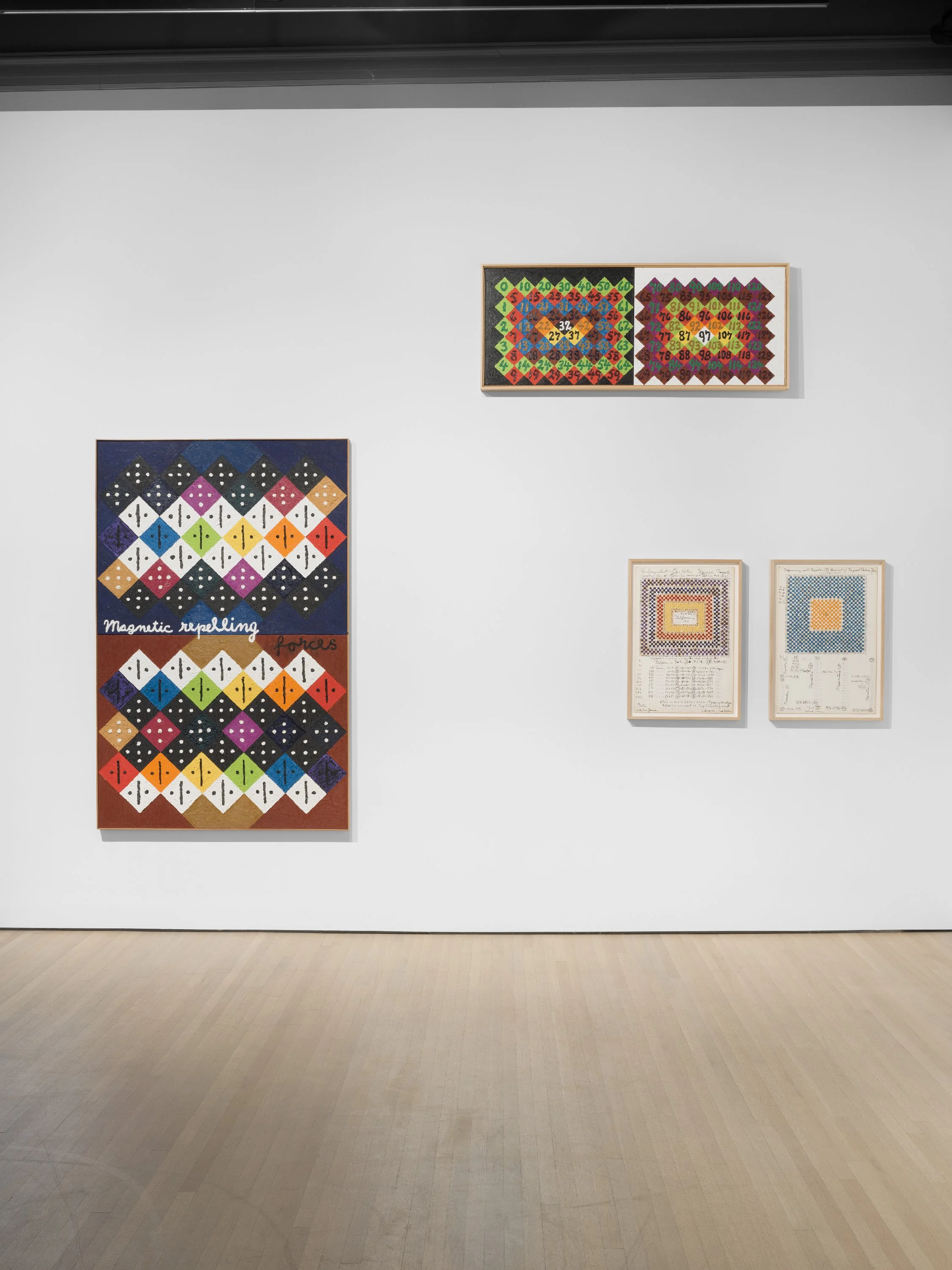
Alfred Jensen: Diagrammatic Mysteries 395 Broadway, NewYork, NY 10013 January 16–February 28, 2026 Photography courtesy Peter Clough
Strongly influenced by Guatemalan textiles and pre-Columbian art, Jensen also drew inspiration from sources ranging from the intuitive to the theoretical and scientific. James Clerk Maxwell’s formulation of electromagnetism and foundational texts like the I Ching, Johann Wolfgang von Goethe’s Theory of Color (Zur Farbenlehre) (1810), and J. Eric S.
Thompson’s Maya Hieroglyphic Writing (1960) were key to his art. The Mayan calendar and the Chinese alphabet held special meaning for Jensen and appear in many of his paintings.
Though Jensen’s grids often take on the familiar appearance of games secreting solutions, these works do not serve as maps toward any unified meaning or objective endpoint. While many of the works in Diagrammatic Mysteries have titles that point to their origins, like The Pythagorean Theorem (1964), or symbols with recognizable meanings, as with the arrows in Physical Optics (1975), these psychic footholds only go so far in orienting us within the compositions, which are ultimately guided by essential mystery. As Donald Judd, who himself was inspired by Jensen, observed in 1963, “The theories are important to him and completely irrelevant to the viewer.”
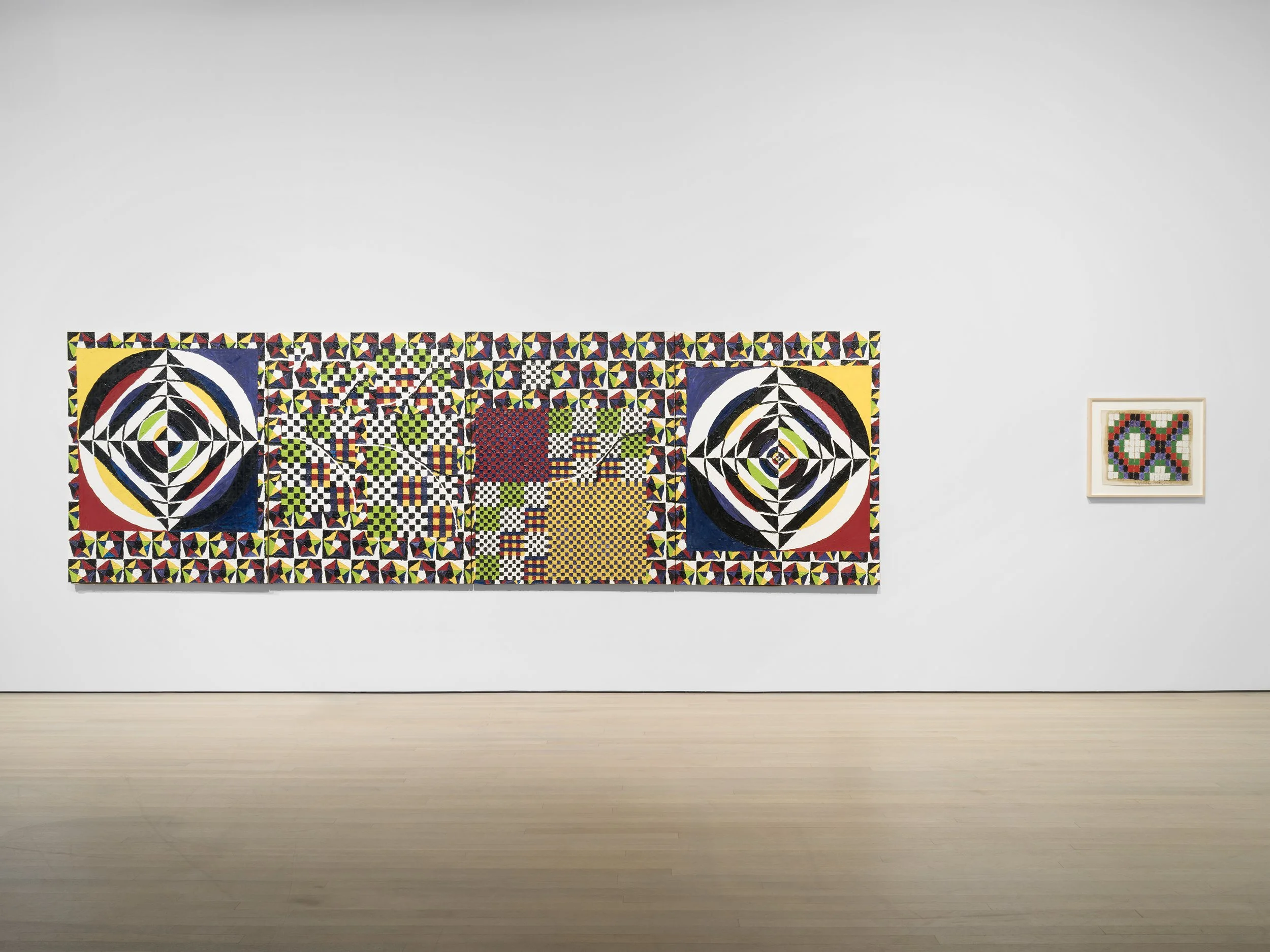
Jensen’s place in contemporary art is perplexing, and, in many ways, he can be viewed as a link between Abstract Expressionism and Pop art. Generationally, he was working in the arena of Abstract Expressionism and was a part of that community. Unlike the Abstract Expressionist’s rejection of Pop art, Jensen developed strong friendships with the next generation. He attended the
Happenings and was a fixture at the Pop openings and parties that took over the scene in the early 1960s. The toy store colors and formats suggesting games in his paintings link him to this scene. However, the Pop artists’ denial of surface was completely opposite to Jensen’s embrace of pigment as thick as frosting on cupcakes. His paintings are as comfortable juxtaposed with Adolph Gottlieb’s Pictographs as they would easily blend into their place on the shelves of Claes Oldenburg’s Store. These challenging works, at once accessible and secret, make us realize that Jensen himself is his greatest mystery.
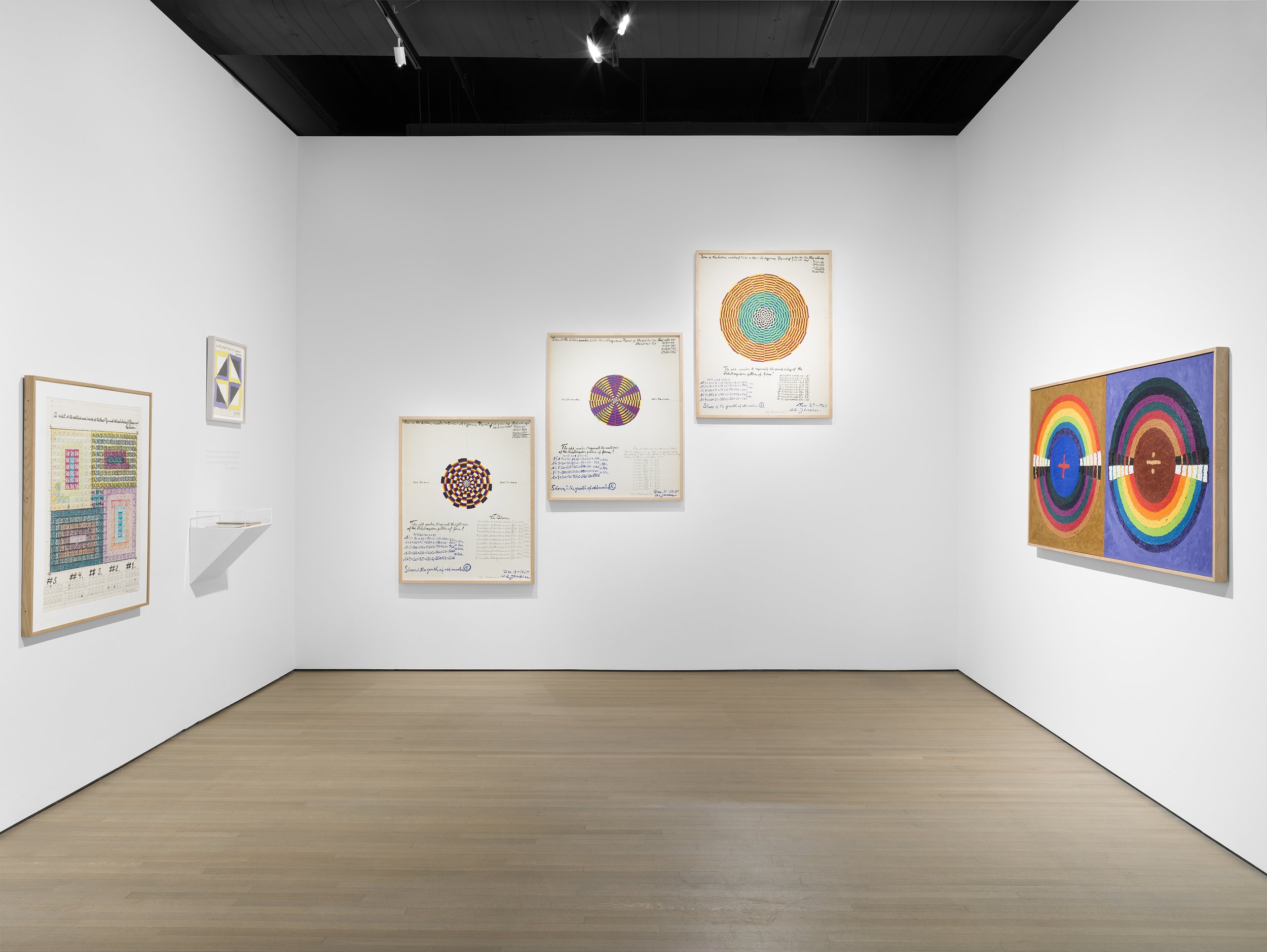
Alfred Jensen: Diagrammatic Mysteries 395 Broadway, NewYork, NY 10013 January 16–February 28, 2026 Photography courtesy Peter Clough
Diagnosed with terminal brain cancer in the late 1970s, Jensen, then one of the stars of the contemporary art world, went into seclusion, and his work disappeared from the scene for decades after his death. Alfred Jensen: Diagrammatic Mysteries is a reawakening of his extraordinary contributions.
Jensen has been the subject of various museum retrospectives, including those at the Solomon R. Guggenheim Museum in 1985, Dia Center for the Arts in 2001, and 1978’s traveling retrospective at institutions including the Albright-Knox Art Gallery in Buffalo, New Museum, Museum of Contemporary Art in Chicago, and San Francisco Museum of Modern Art. His work is held in numerous collections throughout the United States and abroad, including the Museum of Modern Art, Solomon R. Guggenheim Museum, and Whitney Museum of American Art in New York; the Los Angeles County Museum of Art; the San Francisco Museum of Modern Art; the National Gallery of Art in Washington, D.C.; the Kunsthaus Zürich and Kunstmuseum Bern in Switzerland; the Louisiana Museum of Modern Art in Humlebæk, Denmark; and the Art Gallery of Western Australia in Perth.
125 Newbury is a project space in New York City founded in 2022 and helmed by Arne Glimcher, Founder and Chairman of Pace Gallery. Named for the gallery’s original location, which Glimcher opened at 125 Newbury Street in Boston in 1960, the venture is located at 395 Broadway in Manhattan’s Tribeca neighborhood, at the corner of Walker Street. Occupying a 3,900-square-foot ground-floor space in a landmark building with 17-foot ceilings, the interior of 125 Newbury has been fully renovated by Enrico Bonetti and Dominic Kozerski of Bonetti/Kozerski Architecture.
Guided by Glimcher’s six decades of pioneering exhibition-making and steadfast commitment to close collaboration with artists, 125 Newbury presents up to five exhibitions per year. Directing and shaping 125 Newbury’s program, Glimcher organizes exhibitions of work by artists—both within and beyond Pace’s roster—who inspire him, often highlighting a specific aspect or focused period of their practice.
Pace is a leading international art gallery representing some of the most influential contemporary artists and estates from the past century, holding decades-long relationships with Alexander Calder, Jean Dubuffet, Barbara Hepworth, Agnes Martin, Louise Nevelson, and Mark Rothko. Pace enjoys a unique U.S. heritage spanning East and West coasts through its early support of artists central to the Abstract Expressionist and Light and Space movements.
Since its founding by Arne Glimcher in 1960, Pace has developed a distinguished legacy as an artist-first gallery that mounts seminal historical and contemporary exhibitions. Under the current leadership of CEO Marc Glimcher, Pace continues to support its artists and share their visionary work with audiences worldwide by remaining at the forefront of innovation. Now in its seventh decade, the gallery advances its mission through a robust global program— comprising exhibitions, artist projects, public installations, institutional collaborations, performances, and interdisciplinary projects. Pace has a legacy in art bookmaking and has published over five hundred titles in close collaboration with artists, with a focus on original scholarship and on introducing new voices to the art historical canon.
Today, Pace has seven locations worldwide, including European footholds in London and Geneva as well as Berlin, where the gallery established an office in 2023. Pace maintains two galleries in New York—its headquarters at 540 West 25th Street, which welcomed almost 120,000 visitors and programmed 20 shows in its first six months, and an adjacent 8,000 sq. ft. exhibition space at 510 West 25th Street. Pace’s long and pioneering history in California includes a gallery in Palo Alto, which was open from 2016 to 2022. Pace’s engagement with Silicon Valley’s technology industry has had a lasting impact on the gallery at a global level, accelerating its initiatives connecting art and technology as well as its work with experiential artists. Pace consolidated its West Coast activity through its flagship in Los Angeles, which opened in 2022. Pace was one of the first international galleries to establish outposts in Asia, where it operates permanent gallery spaces in Hong Kong and Seoul, along with an office and viewing room in Beijing. In spring 2024, Pace will open its first gallery space in Japan in Tokyo’s new Azabudai Hills development.
For more information about this exhibition and others, please visit the Pace Gallery’s website here. Pace Gallery can be found on Instagram and Artsy, too.