In Discussion with Thierry-Maxime Loriot
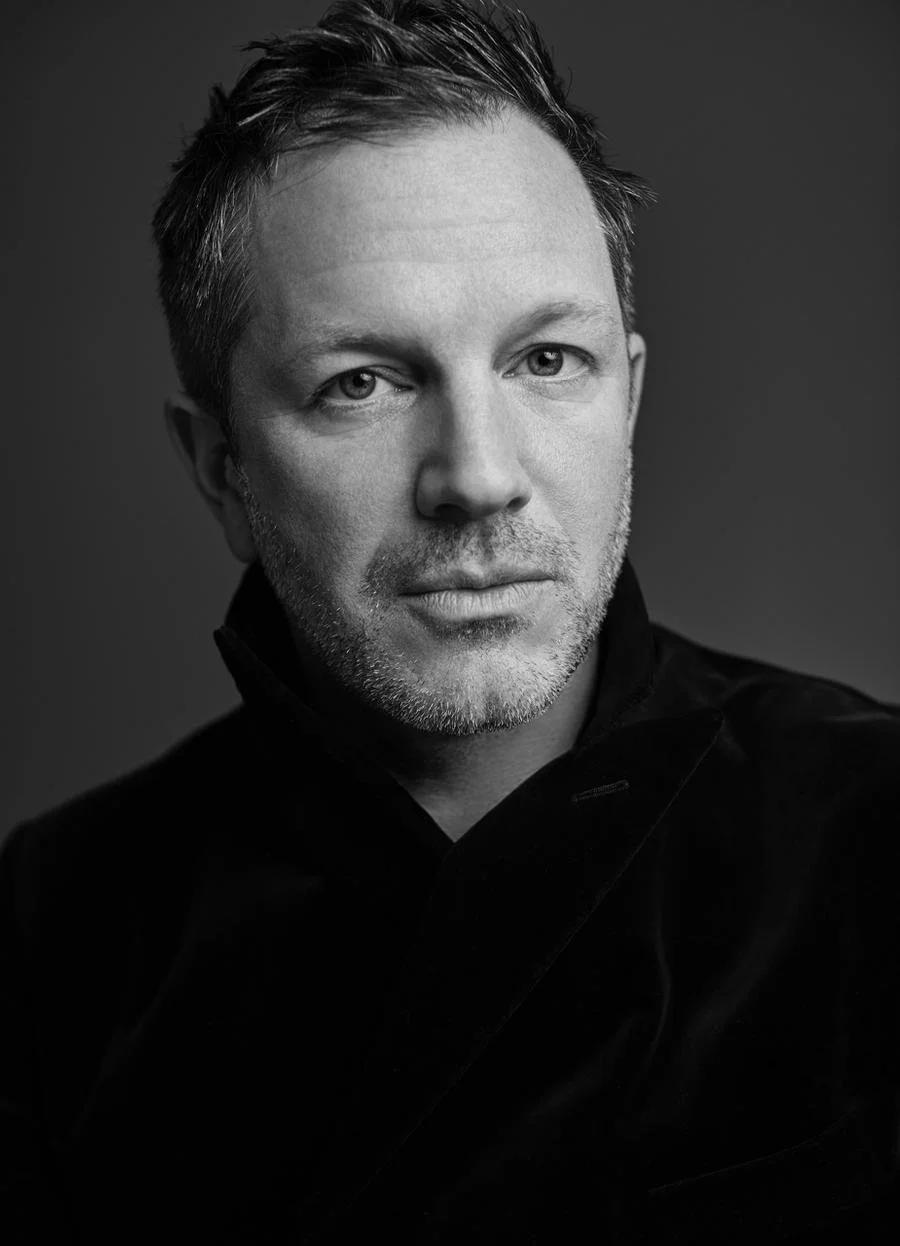
Courtesy of In Discussion with Thierry Maxime Loriot
After working more than ten years in the fashion industry between New York, Milan, London, and Paris, with leading photographers, brands, and magazines, he curated the various renditions of the globally successful touring exhibition The Fashion World of Jean Paul Gaultier: From the Sidewalk to the Catwalk. The retrospective travelled to twelve cities and drew more than 2.1 million visitors, breaking records for any fashion exhibition still to this day.
Opened in Montreal in 2011, the exhibition travelled to Dallas (Dallas Museum of Art), San Francisco (Fine Arts Museums of San Francisco), Madrid (Fundación MAPFRE), Rotterdam (Kunsthal), Stockholm (Swedish Centre for Architecture and Design), Brooklyn (Brooklyn Museum), London (Barbican Centre), Melbourne (National Gallery), Paris (Grand Palais), Munich (Kunsthalle), and Seoul (DDP), where the exhibition tour came to a close in 2016 after five years on the road. A total of six publications on Jean Paul Gaultier have been written by Loriot over the course of this record tour, being awarded, among other prizes, the Grand Prix du Livre de Mode in Paris.
The groundbreaking Jean Paul Gaultier world tour was followed by his exhibition Love is Love: Wedding Bliss for All à la Jean Paul Gaultier, presented at the MMFA in 2016, at the Centro Cultural Kirchner in Buenos Aires, and at the Contemporary Museum of Belgrade in 2020-21. He also curated and wrote the books of the travelling exhibitions Peter Lindbergh: A Different Vision on Fashion Photography, presented in Italy, The Netherlands, and Germany, and two editions of Viktor & Rolf: Fashion Artists, first presented at the National Gallery of Victoria in Melbourne, followed by its presentation in the summer of 2018 at the Kunsthal Rotterdam.
He also curated the touring exhibition and books on French creator Thierry Mugler, Thierry Mugler Couturissime, a world premiere at the Montreal Museum of Fine Arts that opened in 2019 and presented after at Kunsthal Rotterdam, Kunsthalle Munich, and the Musée des Arts Décoratifs in Paris in 2021-22, and the Brooklyn Museum in 2022-2023. Loriot was awarded many accolades for his books and exhibitions; in 2019, he received the Vanguard Award from CAFA (Canadian Arts and Fashion Award) for the important contributions he made to the Arts and Fashion industries.
In 2022, he created for the France Pavilion at the Universal Exhibition in Dubai a new exhibition Jean Paul Gaultier From A to Z, which was seen by more than 720,000 visitors. He also worked on the creative direction of tours, tour books, and album covers for many pop stars. In the spring of 2024, he launched a 30-year retrospective on Viktor&Rolf. Fashion Statements, which premiered in Munich, Germany, and will be touring to the USA and France. He also launched the exhibition Portraits & Fashion Beyond Borders at the McCord Museum, which featured 17 Canadian photographers working abroad. His exhibitions have been visited by almost 7 million visitors.
I had the pleasure and honor of asking Thierry about what inspired him to become a curator. What was the research process like for the iconic history of Viktor Horsting and Rolf Snoeren that inspired him to curate the artwork, and so much more.
UZOMAH: What inspired you to become a curator?
THIERRY: I was always a very curious kid, asking too many questions, reading a lot, watching a lot of tv, interested in many different things. I always loved to discover things and learn the things no one had access to. I was more interested in the process of things than the result, like watching the behind-the-scenes videos on a DVD rather than the actual movie! That’s me! Haute couture is always spectacular and impossible to see in real life. It is easier to see a Picasso artwork in any museum on the planet than a dress by Viktor&Rolf. They are unique in their category - they are fashion artists, not only designers. They use fashion as a form of expression.
U: How would you explain the role of a curator to someone who knows nothing about the art world?
T: We are storytellers. We put a subject, a work, an artist into a context and tell its story within a career, a group, an art movement, or something that represents an important moment, or as we judge it basically. It is not science. And not every artist deserves a retrospective, or to be in a museum collection, and some are not and should be. It is also a very personal choice - an opinion based on personal taste and opinion of historians and other people, and not always right!
U: What is the story that you hope this exhibition tells to the visitors?
T: That no matter where you come from, without any access to the high world of haute couture, being raised in a small village, you can end up doing haute couture and have museum exhibitions. I think it is very important for a young generation to have role models that are not nepo babies!
U: What was the research process like for the iconic history of Viktor Horsting and Rolf Snoeren?
T: I have known them for almost a decade now, and we have an easy relation as we share a lot of the same ideas and aesthetics. It is the third exhibition and book. It is also about trust - they know I respect their work and want to display it in a way that tells their story. There is a thin line that curators sometimes cross when they think they can make their own version of a story and the artist cannot recognize themselves in it. The idea for this exhibition was like in most of my exhibitions to showcase the strong passions and obsessions of the artists and make it clear to visitors to understand in one glance what they see.
U: How did you use your personal style as a curator to develop this exhibition’s overall theme?
T: People often think museums should only be serious. It can be, yes, but it can be serious AND fun. I think today you need to adapt exhibitions to the expectations of visitors. A lot of exhibitions are paid by brands, and it just looks like a luxury store. When you have artists like Viktor&Rolf, they are so creative that in terms of scenography it is quite inspiring to do something that can at the same time tell their stories but also entertain visitors. Now people don’t go to movies, they watch streaming at home, shop online, so how do you attract them to a museum! Word of mouth must be good. I believe visitors want to be transported into a new world to discover and feel like they are taking a step away from the bad news all over the world and be inspired and dream a bit!
U: Can you name the most essential trait of a curator?
T: TWO! Curiosity and an open mind.
U: What unique aspects of the selection process for this exhibition set it apart from any other exhibition you have curated?
T: That there is beauty in difference. That the fashion industry is not only one thing. The work of Viktor&Rolf is beyond fashion, and you can have humor and do fashion and do art and present it in the fashion calendar. They pushed the boundaries of what was fashion and what was considered art!
U: How is fashion wearable art?
T: It is not about wearability, it is about diversity, innovation, extremes, etc. That there is beauty in difference. That the fashion industry is not only one thing. The work of Viktor&Rolf is beyond fashion, and you can have humor and do fashion and do art and present it in the fashion calendar. They pushed the boundaries of what was fashion and what was considered art!
U: The works are accompanied by complex and detailed animated projections designed explicitly for the exhibition by the internationally acclaimed visual effects studio Rodeo FX. How did this collaboration come about for the exhibition?
T: I had worked with them in the past for another project I curated - the Thierry Mugler Couturissime exhibition tour. Overall, it has been two years - from the selection, to scenography, to creating the content with Rodeo FX, the special effects studio who also does all the special effects for Stranger Things, Games of Thrones, Lord of the Rings, etc. This exhibition is fun and educational without being a fashion lesson. I hope it will be inspiring for a young generation, mostly for those who think they are weird and are outsiders, that maybe they are just artists who need to find their way in the world! It is important to elevate the work and transport it and give it a new meaning. I do not think exhibitions should be something trying to just look back with nostalgia and recreate the past - it can be projected in the future and be given a new life!
U: How did your past skills as a curator contribute to the success of this exhibition?
T: I don’t really know to be honest. I think it is important to be passionate about what you do, believe in it and know how to present it properly. If there is no love and passion it does not go anywhere…
U: What makes an exhibition a success in your eyes?
T: The public and how they react to it, not the number of visitors, make it valuable. It is like movies. Some really bad ones now have millions of viewers and eight sequels. Some obscure movies no one has seen but they are masterpieces!
U: Is there a piece of artwork that inspired you to curate?
T: It is more the human behind the work that fascinates me than the work itself…We are surrounded by visuals and beautiful things to look at, but if there is no soul, no storytelling behind it, what is the point!
For more information on Thierry’s work, please visit his site here. He can also be found on Instagram here. The magazine featured the exhibition, “Fashion Statements,” which can be found here.