In Discussion with Andrea Delph
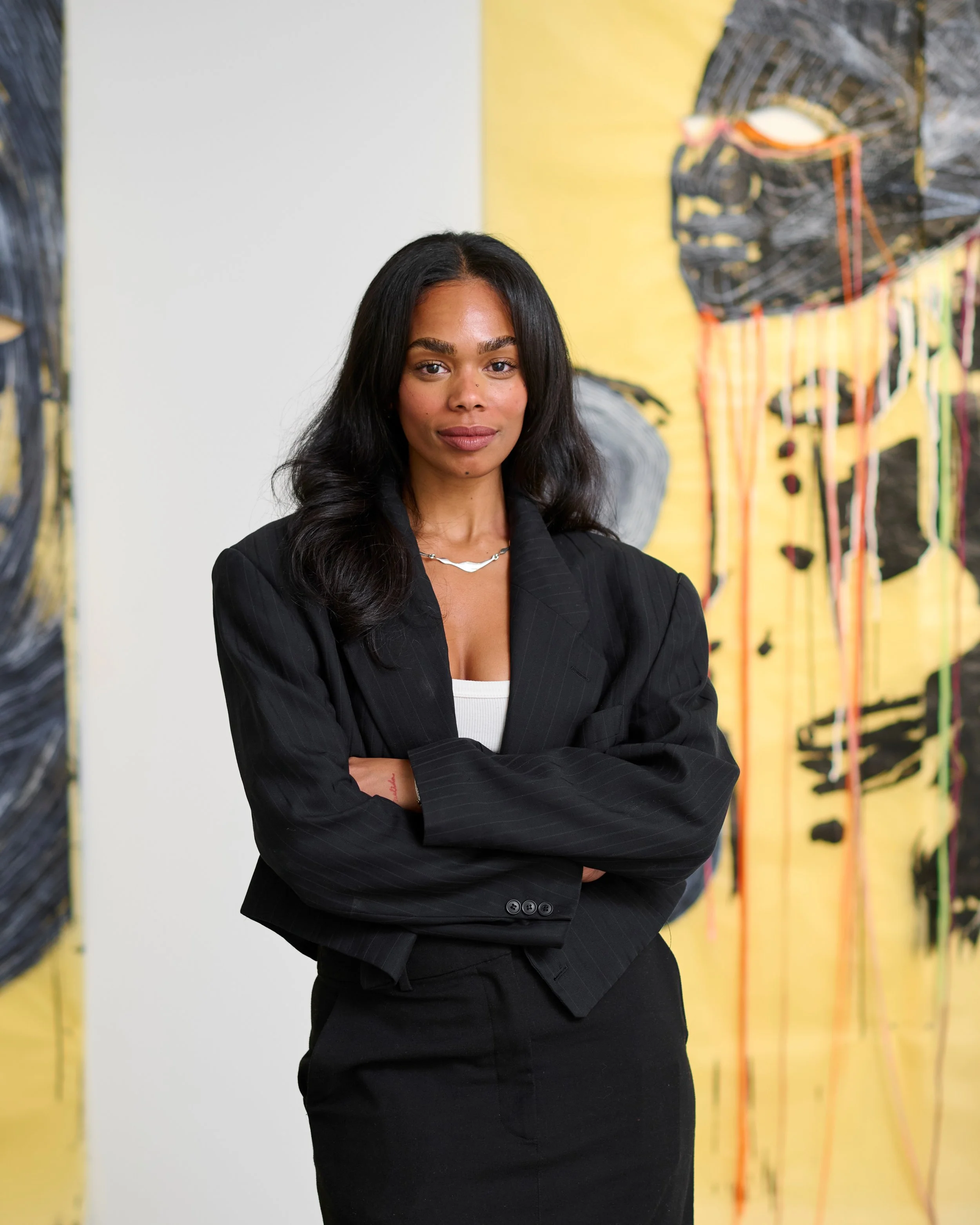
Photo Courtesy of Christopher Wormald and Southern Guild
Andréa Delph is a curator and arts professional whose career has spanned both commercial and non-profit. With a diverse portfolio, Delph has also held positions at Mitchell-Innes & Nash and Nicodim in New York, engaging with artists in both primary and secondary markets. She is currently one of the directors at Southern Guild, a contemporary art and design gallery based in Cape Town and New York. She joined the gallery at the beginning of its pivotal chapter in the US, with the opening of its former Los Angeles outpost in February 2024. Additionally, she has independently curated exhibitions across diverse cities, including Los Angeles, Miami, Cleveland, and New York.
UZOMAH: What key qualities do you prioritize when selecting an artist for exhibition or representation?
ANDRÉA: I look for a clarity of vision that feels both personal and rigorously considered. An artist whose work knows where it comes from, and equally, where it is going. There is also often an immediacy to it, like a formal language that holds me, but also conceptual depth that continues to unfold over time. I’m also really drawn to artists who are in active dialogue with history and context; those who understand their position within lineage but are unafraid to challenge or expand it.
I also pay close attention to the artist’s discipline and capacity for evolution. Sustainability plays a huge part in an artist’s practice and requires a steadiness of thought and commitment, as well as an ability to refine, to edit, and to remain open.
For more personal exhibition selections or curatorial pursuits, a sense of lineage is especially resonant for me in diasporic practices. I’m deeply interested in how artists navigate inherited histories, fragmented geographies, and shared cultural memory. There’s a particular intimacy in encountering work that reflects a heritage as something continuously in motion and being redefined.
U: How would you describe the atmosphere and experience of the Southern Guild’s exhibition opening night?
A: Southern Guild opening nights are more like a gathering of considered, warm, and deeply interconnected energies all in celebration. There’s a real convergence of like-minded people - community members and cultural leaders, longtime supporters of the gallery, close friends, collectors, patrons, donors, and curators all move through the space together. There’s no hierarchy; it’s more of an ecosystem. Our openings invite both intimacy and exchange, moments of reflection with the work and celebration with the artist.
U: Is there a particular medium of art you consistently favor when evaluating artists' work?
A: I wouldn’t say I favor one medium exclusively, but I do find myself consistently drawn to painting. It sits in direct conversation with centuries of image-making, while still allowing for continual reinvention. I’m particularly drawn to how painting can function as a space of inscription where diasporic histories, embodied memory, and fragmented narratives can be layered, obscured, and articulated over time. For me, there is an intimacy in that process, but also a criticality. Waiting also allows for sustained looking. Painting repositions immediacy productively: it asks us to slow down, to sit with ambiguity. That durational relationship is important to me. So, while the medium itself is never the sole criterion, painting continues to offer a depth of inquiry, formally, historically, and conceptually, for me personally.
U: What specific experiences or influences motivated you to pursue a career in the art world?
A: My path into this industry feels less like a decision and more like a condition I grew up in. I was raised within the orbit of the MET in NYC. My mother and grandfather were both security guards there in the 1990’s, so the museum became a kind of extended home during my weekends. I spent many weekends in its galleries, often in the care of the security staff. There was something really formative about being surrounded by objects that carried so much history across continents and time, before I even had language to fully understand them.
That proximity shaped my sensibilities early on. As a first-generation American, I think I was already attuned to questions of inheritance, translation, and belonging. The museum became a place where those ideas took form visually. There, I started to understand how culture is held, preserved, and reinterpreted. As a young adult, I became deeply interested in the ecosystem around museums, institutions, and artists; how practices are shaped; how collections are built; how exhibitions carry a point of view. In college, I naturally gravitated towards those communities - people who were thinking visually, critically and expansively. Over time, I realized that my role was not to make the work, but to hold space for it and to support artists. To help steward their practices and to curate environments that reflect a considered perspective rooted in my own lineage and lived experience.
U: What aspect of your role as a director do you find most exciting or rewarding?
A: I’m particularly energized by the relational aspect of the role. Bringing together collectors, curators, and patrons in a way that feels very intentional and aligned, where a placement is not just transactional, but really enduring. I feel that process begins with a close understanding of both the artist and collector, considering how the work lives, what it carries, and where it will be held with care. When those elements are in dialogue, placement, for me, becomes more considered and starts to feel like an extension of the artist’s practice and the collector’s evolving vision, rather than a singular moment of exchange or transaction. What unfolds from there is most rewarding. A work enters a home, but it doesn’t remain static. Rather, it is lived with, revisited, shared, and often brought into wider conversations through loans, exhibitions, etc. Over time, each placement contributes to a larger ecosystem, one built on trust, continuity, and shared stewardship.
About Southern Guild
Southern Guild platforms artists whose work is ambitious, emotionally resonant, and rooted in personal and collective experience. Founded in 2008 by Trevyn and Julian McGowan and based in Cape Town and New York (opening Spring 2026), the gallery is vested in artmaking as a means to claim agency, materialize cultural memory, and envision progressive futures. Working in the spirit of a guild, Southern Guild fosters collaborative, artist-led practices through rigorous engagement with material and process, comprehensive programming, and the GUILD Residency in Cape Town. Recognized for its bold curatorial vision and commitment to material integrity, the gallery presents at leading international fairs and partners with curators, institutions, and museums to deepen its impact and visibility.
For more information about past, current, and upcoming exhibitions, please visit the Southern Guild Website here; the gallery is also available on Artsy, Instagram, and Facebook. To keep up to date on all the latest news from Frieze, sign up for the newsletter here and follow on Instagram, X, and Frieze Official on Facebook.